
iShares扩展科技软件行业ETF(IGV)

Search documents
期权交易员加码做空软件公司贷款ETF,规模创2023年来新高
Hua Er Jie Jian Wen· 2026-02-24 01:43
Group 1 - The core sentiment in the market indicates a growing pessimism towards the software industry, leading traders to heavily bet against software company loans through record levels of put options on ETFs like Invesco's BKLN [1] - The BKLN ETF has approximately 18% exposure to software company loans, including notable firms like McAfee and Proofpoint, which has driven the surge in bearish bets [1] - Over the past three weeks, the total number of put options on BKLN has exceeded 400,000 contracts, marking the highest open interest in put options since 2023 [1] Group 2 - Recent market transactions reflect investor pessimism, with a notable purchase of 30,000 put options for BKLN with a strike price of $20, indicating expectations of a 3.5% decline [2] - An additional 50,000 put options were traded, betting on a similar decline in the ETF by mid-July [2] Group 3 - The BKLN ETF has seen a decline of about 1% to $20.44, reaching its lowest point since April 10, 2022, and has experienced continuous outflows totaling nearly $1 billion over the past four weeks [3] - Investors are increasingly hedging against the ETF's decline by purchasing put options, with a total of 250,000 put options bought for July expiration [3] Group 4 - Market sentiment has shifted from speculation on a rebound in software stocks to a complete abandonment of bullish positions, as evidenced by the selling of call options on the iShares Expanded Tech-Software ETF (IGV) [4] - This selling action indicates that investors no longer expect a short-term rebound in the software sector, reflecting a broader capitulation in market sentiment [4]
2月18日收盘:美股小幅收高 金融股推动股指反弹
Xin Lang Cai Jing· 2026-02-17 21:09
Core Viewpoint - US stock market experienced a slight increase, supported by gains in financial stocks, but overall gains were limited due to a decline in software stocks [1][10]. Group 1: Market Performance - The Dow Jones Industrial Average rose by 32.26 points, or 0.07%, closing at 49,533.19 points; the Nasdaq increased by 31.71 points, or 0.14%, to 22,578.38 points; and the S&P 500 gained 7.05 points, or 0.10%, ending at 6,843.22 points [3][12]. - Financial stocks such as Citigroup and JPMorgan saw increases, with Citigroup up 2.7% and JPMorgan up 1.7% [3][12]. - Software stocks faced significant declines, with ServiceNow down over 1% (31% year-to-date), Autodesk and Palo Alto Networks down approximately 2% (23% and 11% year-to-date respectively), and Salesforce and Oracle down about 3% (30% and 20% year-to-date respectively) [3][12]. Group 2: Investor Sentiment and Trends - Concerns over artificial intelligence potentially replacing specific software providers have negatively impacted the software industry [5][12]. - A recent Bank of America fund manager survey indicated that the level of stock accumulation has triggered a contrarian sell signal, with the stock overweight ratio reaching its highest level since December 2024 [6][13]. - The Bank of America Bull & Bear Indicator currently reads 8.2, signaling a "sell" recommendation, suggesting that high market optimism may indicate overvaluation of stocks [6][13]. Group 3: Economic Indicators and Future Outlook - The S&P 500 index and Dow Jones both experienced declines over the past week, with the S&P 500 down over 1% and the Nasdaq down over 2% [7][14]. - Concerns regarding AI disruption have overshadowed recent consumer price index (CPI) data, which was milder than expected [7][15]. - Investors are awaiting further information on inflation trends, with a personal consumption expenditures report due soon [7][15]. Group 4: Federal Reserve Insights - Federal Reserve officials are assessing the potential impact of AI on economic growth and productivity, which is crucial for achieving growth without increasing inflation [9][17]. - Fed officials suggest maintaining stable interest rates until more evidence of inflation moving towards the 2% target is observed [9][17].


尾盘:美股走高银行股领涨 标普指数小幅上扬
Xin Lang Cai Jing· 2026-02-17 20:08
软件行业受到打击,原因是市场担忧人工智能工具可能取代特定行业软件提供商。 来源:环球市场播报 北京时间2月18日凌晨,美股周二尾盘走高。受金融股涨幅支撑,主要股指在上周下挫后重新站稳脚 跟。但软件股普遍下跌。 道指涨89.24点,涨幅为0.18%,报49590.17点;纳指涨82.10点,涨幅为0.36%,报22628.77点;标普500 指数涨19.31点,涨幅为0.28%,报6855.48点。 投资者从今年已遭重创的软件股撤出,转而买入花旗集团和摩根大通等金融股。花旗股价跳涨近3%, 摩根大通股价上涨超过1%。 然而,ServiceNow股价下跌超过1%,2026年迄今跌幅约为31%。Autodesk和Palo Alto Networks下跌约 2%。前者今年跌幅达23%,后者下跌11%。Salesforce和Oracle股价下跌约3%,年内跌幅分别为30%和 20%。 iShares扩展科技软件行业ETF(IGV)交易下跌超过2%,年内亏损达23%。 Concurrent Investment Advisors首席投资策略师Leah Bennett在接受采访时表示:"我们只需要时间来看看 这些公司的盈利 ...
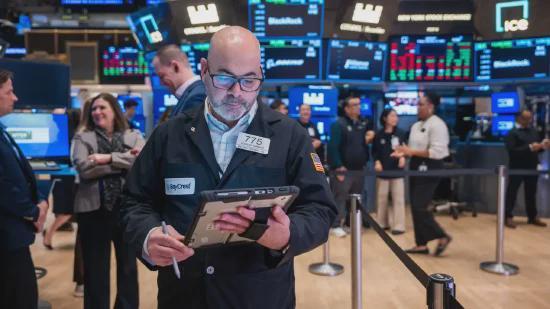
全线大跌!超14万人爆仓!23万亿巨头突然抛售!
天天基金网· 2026-02-12 00:54
Market Overview - The U.S. stock market experienced a significant downturn, with major indices collectively closing lower after an initial rise. The Nasdaq index saw a drop of nearly 1%, while the Russell 2000 index fell over 1%. Software stocks were particularly hard hit, with the iShares Expanded Tech-Software Sector ETF (IGV) declining by 2.55%, and notable companies like ServiceNow and Salesforce dropping over 5% and 4% respectively. Concerns about the impact of AI on the software industry are intensifying, potentially affecting valuation multiples [2][3]. Cryptocurrency Market - The cryptocurrency market faced severe sell-offs, with Bitcoin briefly falling below $66,000, experiencing a drop of over 4% before narrowing to a 1.74% decline. Ethereum and SOL also saw declines exceeding 3%. In the last 24 hours, approximately 144,691 individuals were liquidated, totaling $458 million in liquidations [2]. Asset Management Trends - Amundi, Europe's largest asset management firm with €2.8 trillion (approximately ¥23 trillion) in assets, announced plans to reduce exposure to U.S. dollar assets and shift focus towards European and emerging markets. CEO Valerie Baudson indicated that if U.S. economic policies do not change, the dollar is likely to weaken further [3][4]. Investment Diversification - Amundi has been advocating for investment diversification over the past 12 to 15 months, suggesting clients reduce their dollar asset holdings. This strategy is in response to the perceived over-investment in dollar assets and the associated risks [5]. International Market Shifts - There is a notable shift in capital flows towards international markets, with investors moving funds into international stock ETFs, which saw a net inflow of $51.6 billion in January. This trend is attributed to high valuations in the U.S. stock market, a weakening dollar, and emerging opportunities in overseas markets [6]. Economic Forecasts - Amundi predicts that the U.S. real GDP growth will significantly slow to 1.6% by 2026, down from nearly 3% in 2023-2024. This slowdown is driven by structural factors such as dwindling private demand, diminishing marginal utility of fiscal stimulus, and policy uncertainties [7]. Dollar Asset Dynamics - The dual advantages of dollar assets—growth and yield—are diminishing. The correlation between the dollar and U.S. equities and bonds is reversing, with the dollar no longer acting as a stabilizer but rather amplifying volatility. Concerns over U.S. fiscal sustainability are leading to a new dynamic where the dollar moves in tandem with risk assets [8][9]. Institutional Responses - Other large asset management firms, including PIMCO and Wellington Management, are echoing Amundi's call to reduce U.S. asset exposure. PIMCO highlighted the unpredictability of U.S. policies as a reason for this shift, while Wellington Management is diversifying into currencies like the euro and Australian dollar [9][10].

23万亿资管巨头“去美元化”!美股画风突变:纳指跳水、软件股重挫,比特币暴大4%
Sou Hu Cai Jing· 2026-02-12 00:21
Market Overview - The U.S. stock market experienced a sudden shift, with major indices closing lower after an initial rise, particularly impacting the software sector, which saw the iShares Expanded Tech-Software Sector ETF (IGV) drop by 2.55% [1] - Concerns over the impact of artificial intelligence (AI) on the real economy are growing, especially regarding the potential disruption to the software industry, leading to a decline in valuation multiples [1] Cryptocurrency Market - The cryptocurrency market faced significant sell-offs, with Bitcoin briefly falling below $66,000, experiencing a drop of over 4%, while Ethereum and SOL also saw declines exceeding 3% [1] - Data from CoinGlass indicated that in the last 24 hours, 144,691 traders were liquidated, with total liquidation amounts reaching $458 million [1] Federal Reserve and Interest Rates - U.S. non-farm payroll data exceeded expectations, leading traders to reduce bets on interest rate cuts by the Federal Reserve this year [2] - Kansas City Fed President Jeff Schmieding expressed concerns about persistent inflation, suggesting that rates should remain at a "slightly restrictive" level, while Fed Governor Milan held a contrasting view advocating for rate cuts [2] Asset Management Trends - Amundi, Europe's largest asset management firm with €2.8 trillion in assets, announced plans to reduce exposure to U.S. dollar assets and shift towards European and emerging markets due to concerns over U.S. economic policy [3] - The shift in strategy is echoed by other major institutions, such as the Swedish pension fund Alecta, which has sold off a significant portion of U.S. Treasuries due to concerns over U.S. government unpredictability and rising debt [3] Structural Reasons for Dollar Asset Bearishness - Amundi outlined three structural reasons for its bearish stance on dollar assets: 1. Diminishing private demand due to high interest rates and inflation eroding purchasing power [4] 2. Ineffectiveness of fiscal stimulus as large deficits contribute to inflationary pressures and debt burdens [4] 3. Policy uncertainty, particularly regarding tariffs, suppressing capital expenditure outside of AI [4] - A fundamental shift in the correlation between the dollar and U.S. equities and bonds is noted, with the dollar no longer acting as a stabilizer but rather as a volatility amplifier [4]
凌晨,全线大跌!超14万人爆仓!23万亿巨头突然抛售,发生了什么?
Sou Hu Cai Jing· 2026-02-11 23:36
Market Overview - The US stock market experienced a significant downturn, with major indices, including the Nasdaq and Russell 2000, dropping over 1% [1] - Software stocks faced substantial declines, with the iShares Expanded Tech-Software Sector ETF (IGV) falling by 2.55%, and notable companies like ServiceNow and Salesforce dropping over 5% and 4% respectively [1] - Concerns regarding the impact of AI on the software industry are growing, potentially affecting valuation multiples [1] Cryptocurrency Market - The cryptocurrency market also faced heavy selling, with Bitcoin briefly dropping below $66,000, a decline of over 4%, and Ethereum and SOL falling more than 3% [1] - In the last 24 hours, 144,691 individuals were liquidated, totaling $458 million in liquidations [1] Economic Indicators - US non-farm payroll data exceeded expectations, leading traders to reduce bets on interest rate cuts by the Federal Reserve [1] - Kansas City Fed President Jeff Schmieding indicated that the Fed should maintain rates at a "slightly restrictive" level due to ongoing inflation concerns [1] Asset Management Trends - Amundi, Europe's largest asset management firm with €2.8 trillion (approximately ¥23 trillion) in assets, plans to reduce exposure to US dollar assets and shift towards European and emerging markets [2][3] - CEO Valerie Baudson warned that without changes in US economic policy, the dollar is likely to weaken [3] Investment Diversification - Amundi has been advocating for investment diversification over the past 12 to 15 months, suggesting clients reduce their dollar asset holdings [3] - The firm reported a record net inflow of €88 billion and announced a €5 billion stock buyback plan [3] Capital Flow Trends - International investors are increasingly moving funds to international markets, with a net inflow of $51.6 billion into international stock ETFs in January [5] - This shift is attributed to high valuations in the US stock market, a weakening dollar, and new opportunities in overseas markets [5] Economic Growth Projections - Amundi forecasts a significant slowdown in US real GDP growth to 1.6% by 2026, down from nearly 3% in 2023-2024 [5] - The slowdown is driven by structural factors, including diminished private demand, decreasing marginal utility of fiscal stimulus, and policy uncertainty [6] Dollar Asset Dynamics - The dual advantages of dollar assets—growth and yield—are diminishing, with the correlation between the dollar and US equities/bonds reversing [6] - The dollar is no longer acting as a stabilizer in investment portfolios but is instead amplifying volatility [7] Industry Responses - Other large asset management firms, including PIMCO and Wellington Management, are echoing Amundi's call to reduce US asset exposure [7] - Investment strategies are shifting towards currencies like the euro and Australian dollar, with increased positions in emerging markets [7]
凌晨,全线大跌!超14万人爆仓!23万亿巨头,突然抛售,发生了什么?
券商中国· 2026-02-11 23:35
Market Overview - The U.S. stock market experienced a significant downturn, with major indices collectively closing lower after an initial rise. The Nasdaq index saw a drop of nearly 1%, while the Russell 2000 index fell over 1%. Software stocks were particularly affected, with the iShares Expanded Tech-Software Sector ETF (IGV) declining by 2.55%, ServiceNow dropping over 5%, and Salesforce falling more than 4%. Analysts on Wall Street have raised concerns about the impact of AI on the software industry, suggesting that AI-driven workflows may erode the industry's valuation multiples [1] Cryptocurrency Market - The cryptocurrency market faced a severe sell-off, with Bitcoin briefly falling below $66,000, experiencing a drop of over 4% before narrowing its losses to 1.74%. Ethereum and SOL also saw declines exceeding 3%. In the last 24 hours, 144,691 individuals were liquidated, with a total liquidation amount of $458 million. The U.S. non-farm payroll data exceeded expectations, leading traders to reduce bets on interest rate cuts by the Federal Reserve [2] Asset Management Trends - Amundi, Europe's largest asset management firm with €2.8 trillion (approximately ¥23 trillion) in assets, announced plans to reduce exposure to U.S. dollar assets and shift focus towards European and emerging markets. CEO Valerie Baudson indicated that if U.S. economic policies do not change, the dollar is likely to weaken further. The firm has been advocating for investment diversification over the past 12 to 15 months [3][4] Investment Shifts - Recent data shows that Wall Street investors are accelerating their shift towards international markets, with a net inflow of $51.6 billion (approximately ¥356.7 billion) into international stock ETFs in January. This trend is attributed to high valuations in the U.S. stock market, a weakening dollar, and new opportunities in overseas markets. Amundi predicts that U.S. real GDP growth will slow significantly to 1.6% by 2026, driven by structural factors rather than cyclical adjustments [6] Dollar Asset Concerns - The dual advantages of U.S. dollar assets—growth and yield—are diminishing. Concerns about U.S. fiscal sustainability have led to a fundamental reversal in the correlation between the dollar and U.S. equities and bonds. Historically, when U.S. stocks declined, the dollar would typically strengthen due to its safe-haven status. However, current trends show that the dollar is moving in tandem with risk assets, indicating it is no longer a stabilizer but rather a volatility amplifier [7]

凌晨,全线大跌!超14万人爆仓!23万亿巨头,突然抛售,发生了什么?
Xin Lang Cai Jing· 2026-02-11 23:32
Group 1 - The U.S. stock market experienced a significant downturn, with major indices, including the Nasdaq and Russell 2000, seeing declines of nearly 1% and over 1% respectively, driven by concerns over AI's impact on the software industry [1] - The software sector faced substantial losses, with the iShares Expanded Tech-Software Sector ETF (IGV) dropping by 2.55%, and individual stocks like ServiceNow and Salesforce falling over 5% and 4% respectively [1] - The cryptocurrency market also faced a sell-off, with Bitcoin briefly falling below $66,000 and Ethereum and SOL dropping over 3%, leading to a total liquidation amount of $458 million affecting 144,691 traders [1] Group 2 - Amundi, Europe's largest asset management firm with €2.8 trillion (approximately ¥23 trillion) in assets, announced plans to reduce exposure to U.S. dollar assets and shift focus towards European and emerging markets [2][3] - CEO Valerie Baudson indicated that if U.S. economic policies do not change, the dollar is expected to weaken further, prompting a recommendation for clients to diversify their investments [3] - The firm has seen record net inflows of €88 billion over the past year and has initiated a €5 billion stock buyback program [3] Group 3 - International investors are increasingly turning to gold as a hedge against dollar depreciation, contributing to a significant rise in gold prices over the past year [4] - There has been a notable capital shift towards European and emerging market assets, with emerging markets experiencing their best performance since 2017 [4] - In January, U.S. investors shifted $51.6 billion (approximately ¥356.7 billion) into international stock ETFs, indicating a growing trend of reallocating funds away from the U.S. market due to high valuations and a weakening dollar [5] Group 4 - Amundi forecasts a slowdown in U.S. real GDP growth to 1.6% by 2026, driven by structural factors such as exhausted private demand and diminishing marginal utility of fiscal stimulus [6] - Concerns over U.S. fiscal sustainability have led to a fundamental shift in the correlation between the dollar and U.S. equities, with the dollar no longer acting as a stabilizer but rather amplifying volatility [6][7] - Major asset management firms, including PIMCO and Wellington Management, are echoing Amundi's call to reduce U.S. asset exposure, with strategies focusing on diversifying into other currencies and emerging markets [7]