Shen Zhen Shang Bao

Search documents
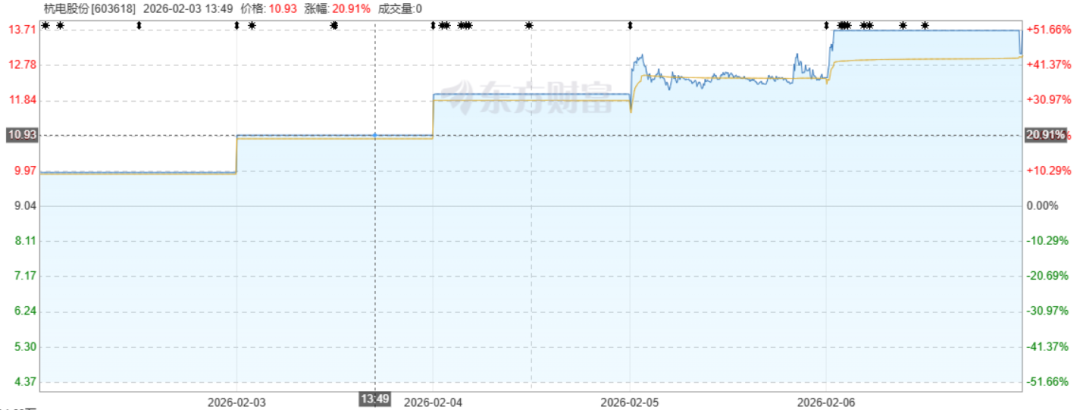
预亏3亿元却喜提5板?
Shen Zhen Shang Bao· 2026-02-08 07:36
Core Viewpoint - Hangzhou Cable Co., Ltd. (杭电股份) has clarified that its main business remains unchanged despite being categorized as a "fiber optic" concept stock by some media outlets. The company has experienced significant stock price fluctuations, raising concerns about potential speculative trading risks [1][3]. Group 1: Stock Performance - From January 30 to February 6, 2026, Hangzhou Cable's stock price hit the daily limit up on five out of six trading days, with a cumulative increase of 66.79%, significantly outperforming peers in the industry [1]. - The trading volume surged on February 5 and 6, with turnover rates of 29.43% and 18.02%, indicating heightened trading activity and associated risks [1]. Group 2: Business Operations - The company reported that its daily production and operational conditions are normal, with no significant changes in the internal or external business environment [3]. - Hangzhou Cable's main business includes power distribution, optical communication, and electronic information materials, with optical communication expected to generate approximately 330 million yuan in revenue for 2024, accounting for only 3.73% of total audited revenue [3]. Group 3: Financial Performance - The company disclosed an anticipated net loss of around 300 million yuan for the fiscal year 2025, primarily due to impairment provisions for fixed assets at its wholly-owned subsidiary, Hangzhou Yongte Information Technology Co., Ltd., amounting to 264.486 million yuan [4]. - The decline in net profit is also attributed to rising raw material costs, which have negatively impacted the gross profit margin [4]. Group 4: Market Capitalization - As of February 6, the stock closed at 13.71 yuan, with a total market capitalization of 9.5 billion yuan [5].


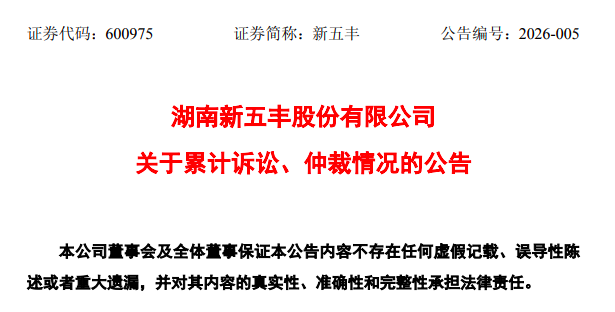
新五丰涉及与家家康诉讼,一年内累计涉案金额超3亿!
Shen Zhen Shang Bao· 2026-02-08 02:33
湖南上市猪企新五丰2月6日晚公告称,近日,公司收到武冈家家康农业综合开发有限公司(简称"家家康")变更和增加诉讼请求申请书,涉及金额为 2823.04万元。本次诉讼中,公司为本诉被告、反诉原告。本诉与反诉案件已立案受理。 新五丰公告披露,因家家康未配合按生物安全防控要求进行整改,猪场保育舍、二期猪场均未按原承诺交付,为落实生猪产能调控政策,优化公司生猪产 能结构,维护公司利益,公司向家家康提出解除租赁合同。家家康对新五丰提起诉讼,新五丰予以应诉并提请反诉,请求法院确认双方签订的《租赁合 同》《补充协议》《二期协议》解除,同时请求法院判令家家康依照合同约定承担违约责任及支付租赁场地添附物补偿款。新五丰提请反诉后,家家康变 更和增加了诉讼请求。 家家康变更和增加后的诉讼请求包括:判令新五丰向家家康支付租金共计人民币8,161,578元,并支付相应的资金占用费人民币619,357.5元;判令新五丰向 家家康支付租赁合同解除后的猪场占有使用费1,456,569.9元及资金占用费16,914.97元;判令新五丰向家家康支付违约金人民币14,976,000元;判令新五丰 赔偿因其违约行为给家家康造成的各项损失共计人民币3 ...

营收暴跌82.67%!同辉信息退市警报拉响
Shen Zhen Shang Bao· 2026-02-08 00:12
2月6日,同辉信息披露的业绩快报显示,该公司2025年实现营收3591.75万元,同比锐减82.67%;归属于上市公司股东的净利润-6114.57万元,同比增长 15.31%;扣除非经常性损益的净利润-5253.64万元,同比增长26.15%。 公开信息显示,同辉信息成立于2008年,2021年在北交所上市,专注于将数字显示、虚拟现实、声学及人工智能技术与行业场景深度融合,为客户提供智 能化、高价值的一站式解决方案。 上市次年起,同辉信息业绩"变脸"。2022年至2024年,该公司分别净亏损4650.22万元、1.28亿元、7194.41万元。 二级市场上,截至2月6日收盘,同辉信息跌1.45%,报6.82元/股,总市值13.59亿元。 同辉信息解释称,报告期内,公司营业收入下降的主要原因是: (1)2024年在战投方的支持下,公司完成了一笔金额为1.27亿元的银行集成业务,本报告期内,公司无重大合同确认收入; (2)报告期内,因公司经营战略调整,大股东与公司董事会针对公司治理存在分歧,持续罢免公司董事,导致公司经营战略调整未能完全落地,造成公司 收入与年初计划有较大差距; (3)经与会计师初步沟通,公司拟将 ...
天禄科技实控人之一卷入债务纠纷!全部持股遭轮候冻结
Shen Zhen Shang Bao· 2026-02-07 15:40
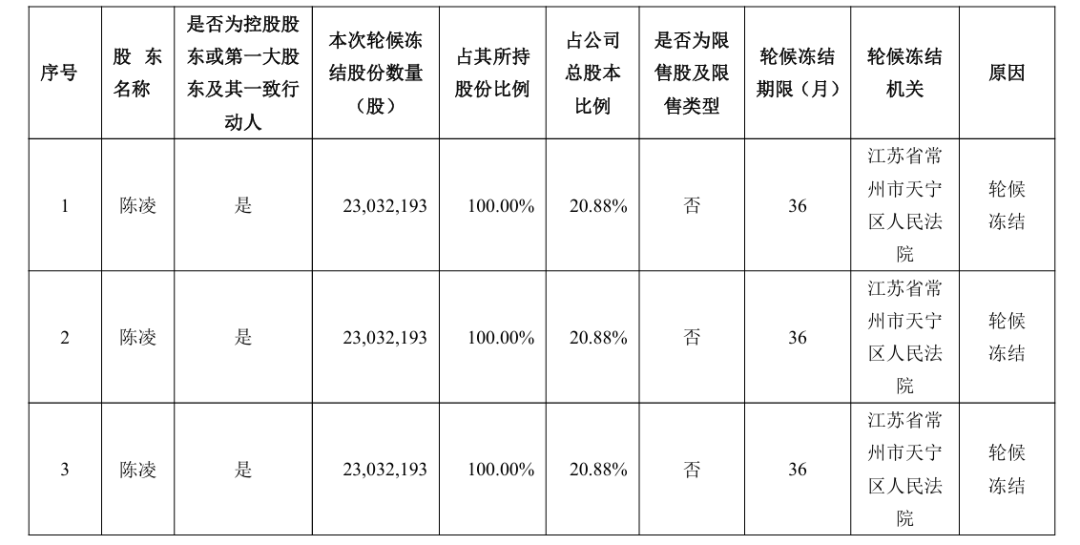
Core Viewpoint - Tianlu Technology's major shareholder, Chen Ling, has had 23.03 million shares frozen due to personal debt disputes, which constitutes 100% of his holdings and 20.88% of the company's total shares. This situation is not expected to affect the company's control or operations significantly [1][2][3]. Group 1: Shareholder Information - Chen Ling's shares are fully frozen, and this action is a result of his debt disputes. He is actively working to resolve these issues [1][2]. - The company confirms that this share freeze will not lead to any changes in control or significantly impact its governance or ongoing operations [2][3]. - Another major shareholder, Mei Tan, holds 26.15 million shares (23.71% of total shares) and is not facing any pledge or freeze issues [2][3]. Group 2: Company Performance - Tianlu Technology, established in 2010 and listed in 2021, has experienced significant fluctuations in net profit, with a continuous decline from 2021 to 2023, but is projected to see a dramatic increase of 206.84% in 2024 [3]. - For the first three quarters of 2025, the company reported revenues of 447 million yuan, a decrease of 9.93% year-on-year, while net profit attributable to the parent company was 25.27 million yuan, an increase of 26.56% [3]. - The company has faced delays in its IPO fundraising project, the "New Optical Board Project," which has been postponed to August 13, 2026, due to external economic factors and construction progress [3]. Group 3: Market Performance - As of February 6, the company's stock price increased by 1.43%, closing at 38.91 yuan per share, with a total market capitalization of 4.292 billion yuan [3].
雪浪环境业绩亏损之际,大股东或套现1.17亿元!
Shen Zhen Shang Bao· 2026-02-07 15:35
2月6日晚间,雪浪环境(300385)公告称,股东杨建平先生和许惠芬女士拟自本公告披露之日起15个交易日后的3个月内通过集中竞价或大宗交易方式减 持公司股份不超过999.43万股,即不超过公司总股本的3%。 与此同时,雪浪环境透露,公司本年度亏损收窄,主要原因是上年度公司对上海长盈环保服务有限公司商誉计提减值准备约1.8亿元;上年度公司对南京 卓越环保科技有限公司资产组计提减值准备约3000万元;上年度公司控股子公司南京卓越环保科技有限公司终止建设固废资源化利用项目,计提资产减值 损失1424.97万元。 ↓↓↓ 雪浪环境表示,杨建平和许惠芬将根据市场情况、公司股价情况等具体情形决定是否实施本次股份减持计划,本次减持计划存在减持时间、数量、价格的 不确定性,也存在是否按期实施完成的不确定性。 另据雪浪环境此前公告,2025年3月24日至6月20日,杨建平和许惠芬合计减持雪浪环境999.29万股。同年9月1日至26日,二人减持999.41万股。 据公开资料,雪浪环境成立于2001年,以环境科技装备智造与废弃物资源化利用为主业。 业绩方面,2022年至2024年,雪浪环境连亏3年。近日,雪浪环境披露业绩预告称,公 ...

涉嫌侵占上亿资金,上市公司百万年薪原董事长被移送起诉!
Shen Zhen Shang Bao· 2026-02-07 14:16
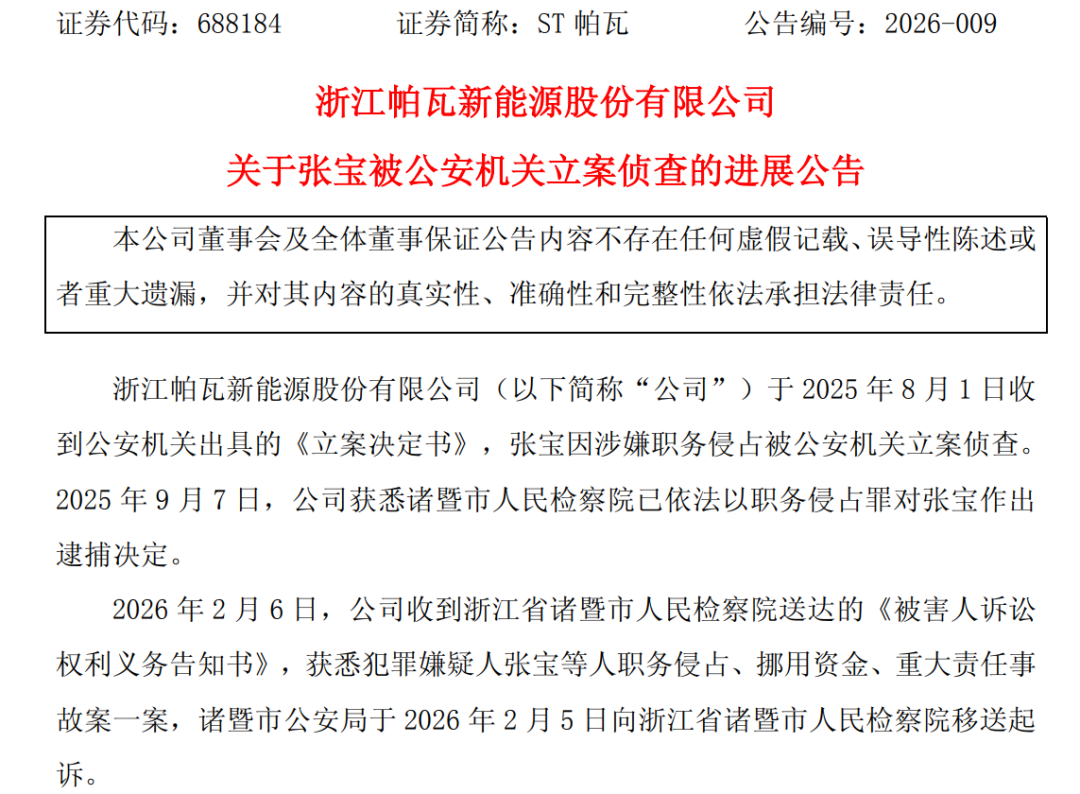
ST帕瓦2月6日晚间公告,公司于当日收到浙江省诸暨市人民检察院送达的《被害人诉讼权利义务告知书》,获悉犯罪嫌疑人张宝等人职务侵占、挪用资 金、重大责任事故案一案,诸暨市公安局于2月5日向浙江省诸暨市人民检察院移送起诉。 资料显示,张宝出生于1971年10月,中南大学冶金物理化学博士、化学工程与技术博士后。其历任中南大学助教、讲师、冶金科学与工程学院副研究员、 校团委书记、冶金与环境学院党委书记、博士生导师等职务。2018年7月起任ST帕瓦董事、总经理,2022年10月起任公司董事长。 截至2025年9月末,张宝持有ST帕瓦股票1656万股,持股比例10.41%,系公司第二大股东。据ST帕瓦2024年年报,张宝当年税前薪酬为120.08万元。 ST帕瓦主要从事医药产品的研发、生产、销售及相关健康服务。 ST帕瓦表示,截至公告披露日,公司生产经营情况一切正常,上述事项不会对公司日常经营活动产生重大影响。 2025年8月1日,ST帕瓦收到公安机关出具的《立案决定书》,张宝因涉嫌职务侵占被公安机关立案侦查。2025年9月7日,ST帕瓦获悉诸暨市人民检察院 已依法以职务侵占罪对张宝作出逮捕决定。 更早之前,2025年5 ...
伊戈尔港股IPO关键期,5名高管拟“组团”减持
Shen Zhen Shang Bao· 2026-02-07 13:06
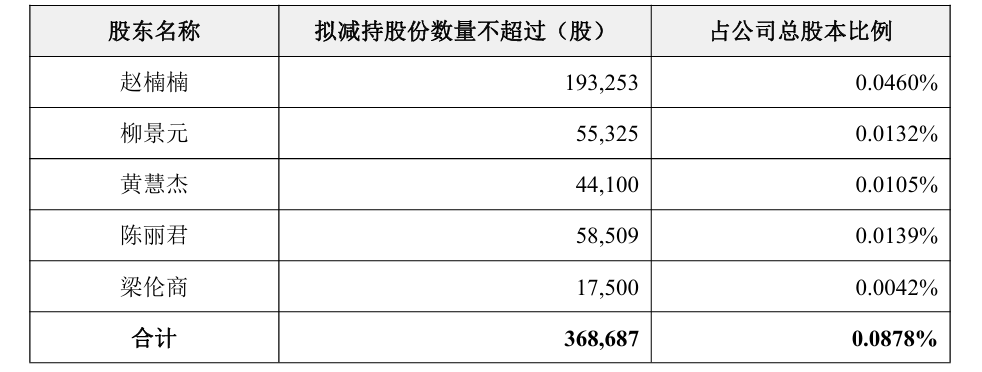
近日,伊戈尔公告称,公司董事、高级管理人员赵楠楠、高级管理人员柳景元、黄慧杰、陈丽君、梁伦商计划于3月5日至6月4日以集中竞价、大宗交易方 式分别减持公司股份不超过19.33万股、5.53万股、4.41万股、5.85万股、1.75万股,拟减持股份分别占公司总股本比例0.0460%、0.0132%、0.0105%、 0.0139%、0.0042%。 | 股东名称 | 拟减持股份数量不超过(股) | 占公司总股本比例 | | --- | --- | --- | | 赵楠楠 | 193,253 | 0.0460% | | 柳景元 | 55,325 | 0.0132% | | 黄慧杰 | 44,100 | 0.0105% | | 陈丽君 | 58,509 | 0.0139% | | 梁伦商 | 17,500 | 0.0042% | | 合计 | 368,687 | 0.0878% | 据伊戈尔公告,为进一步推进公司国际化战略、提升公司国际形象及综合竞争力,公司拟发行境外上市股份(H股)并申请在香港联交所主板挂牌上市。 公司于1月29日递交了上市申请。 伊戈尔表示,公司本次发行尚需取得相关政府机关、监管机构、证券交易所 ...
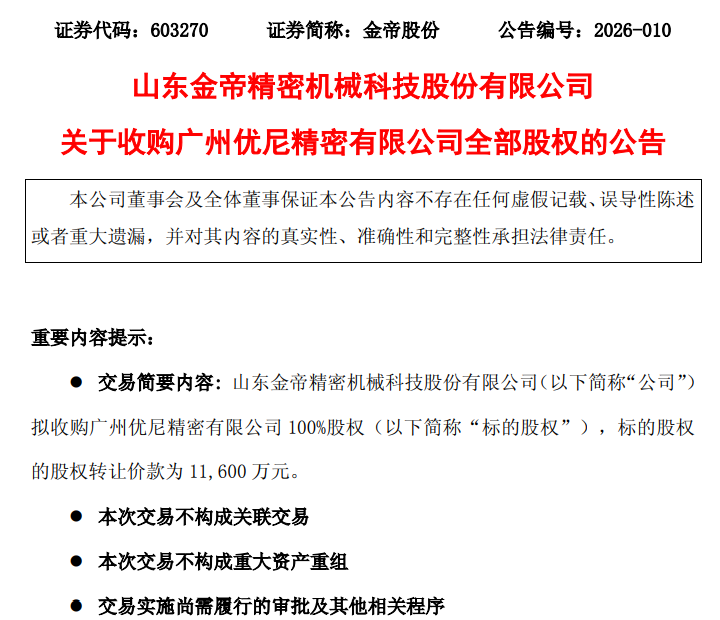
1.16亿元!金帝股份拟斥巨资收购持续亏损公司
Shen Zhen Shang Bao· 2026-02-07 09:48
Core Viewpoint - The company is acquiring 100% equity of Guangzhou Uni Precision Co., Ltd., which has been facing operational challenges and continuous losses in recent years [2][8]. Group 1: Transaction Details - The transaction does not constitute a related party transaction or a major asset restructuring [2]. - The acquisition was approved by the board on February 6, 2026, and is pending shareholder approval [2]. - The transaction price is set at 116 million yuan, based on an asset-based valuation method, reflecting a 23.84% increase over the book net asset value [5][6]. Group 2: Financial Performance of Target Company - Guangzhou Uni Precision reported a revenue of 405 million yuan and a net loss of 83.17 million yuan for the fiscal year 2024 [2][3]. - For the period from January to August 2025, the company generated a revenue of 211 million yuan with a net loss of 51.53 million yuan [2][3]. - As of August 31, 2025, the total assets of the target company were 230 million yuan, with total liabilities of 134 million yuan and net assets of approximately 95.61 million yuan [3]. Group 3: Impact on the Acquiring Company - The investment will utilize the company's own or self-raised funds, ensuring that daily operational funds and business development needs are not affected [7]. - The transaction is not expected to lead to changes in personnel, land leasing, or management structure [7]. - There are no performance guarantees or compensation arrangements set for this transaction, but there are provisions for transitional profit and loss arrangements [5][8].

吉华集团迎来控制权变更,桐庐钧衡接盘
Shen Zhen Shang Bao· 2026-02-07 07:56
吉华集团解释称,本期业绩预减的主要原因为归属于母公司所有者的非经常性损益净额较去年同期下降65.08%至约4890万元,此项变动主要系上期公司 全资孙公司响应政府要求,对部分资产进行拆迁确认资产处置收益1.59亿元。 ↓↓↓ 本次控制权拟变更之前,锦辉机电持有公司196,000,000股(占总股本的28.96%),邵辉持有公司25,234,866股股份(占总股本的3.73%),锦辉机电及邵辉合计 持有公司221,234,86股(占总股本32.69%),锦辉机电为控股股东,邵伯金为实际控制人。 2026年2月6日,锦辉机电、邵辉与桐庐钧衡签署了《股份转让协议》,锦辉机电拟向桐庐钧衡转让所持上市公司196,000,000股股份(占总股本的28.96%), 邵辉拟向桐庐钧衡转让所持上市公司6,308,716股股份(占总股本的0.93%)。本次协议转让完成后,桐庐钧衡持有公司202,308,716股,占公司总股本的 29.89%;邵辉持有公司18,926,150股,占公司总股本的2.80%;锦辉机电不再持有公司股份。公司控股股东将由锦辉机电变更为桐庐钧衡,实际控制人将 由邵伯金变更为苏尔田。 公开资料显示,吉华集团于 ...

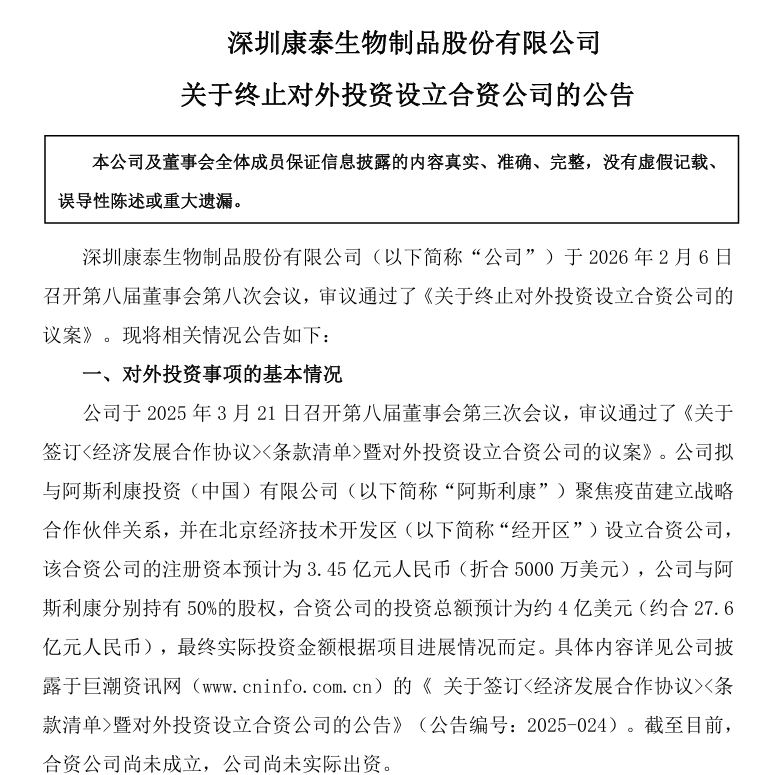
4亿美元疫苗合作告吹,康泰生物终止合资公司设立
Shen Zhen Shang Bao· 2026-02-07 05:59
2月6日,康泰生物(300601)发布公告,称公司董事会审议通过议案,决定终止与阿斯利康投资(中国)有限公司合作设立疫苗领域合资公司的事项,此 次终止未对公司产生重大不利影响。 康泰生物强调,因本次对外投资尚未实际出资,终止事项不会对公司现有业务、财务状况和经营情况产生重大影响,也不会改变公司未来发展规划,不存 在损害公司及全体股东利益的情形。未来公司将继续围绕"内生创新+外延拓展"双轮驱动战略,整合内外部资源,深化国际业务布局,推动公司持续健康 发展。 深圳康泰生物制品股份有限公司的主营业务是人用疫苗的研发、生产和销售。公司的主要产品是13价肺炎球菌多糖结合疫苗、无细胞百白破b型流感嗜血 杆菌联合疫苗(四联苗)、冻干人用狂犬病疫苗(人二倍体细胞)、23价肺炎球菌多糖疫苗等。 作为疫苗企业,康泰生物近年在业务拓展方面受挫。去年1月,康泰生物宣布,经过公司审慎考量,为合理配置公司研发资源,聚焦研发优势项目,决定 终止新型冠状病毒灭活疫苗(Vero细胞)研发。 公告显示,新型冠状病毒灭活疫苗(Vero 细胞)用于预防由新型冠状病毒感染引起的流行性疾病。该疫 苗主要针对新冠病毒原始株进行抗原设计和研发,结合新型冠状 ...