Guo Ji Jin Rong Bao

Search documents
百洋医药:完成出售五维康40.0465%股权
Guo Ji Jin Rong Bao· 2025-12-30 11:53
Core Viewpoint - The company has completed the transfer of its 40.0465% stake in Beijing Wuwei Kang Technology Co., Ltd. to Beijing Baiyangjia Health Management Co., Ltd. for a price of 57.4616 million yuan, and has no longer any equity in Wuwei Kang [1] Group 1 - The company signed a share transfer agreement with Beijing Baiyangjia Health Management Co., Ltd. [1] - The transaction price for the 40.0465% stake was 57.4616 million yuan [1] - The relevant industrial and commercial change registration procedures for Wuwei Kang have been completed [1]
联合精密:控股股东何桂景已减持31.9万股
Guo Ji Jin Rong Bao· 2025-12-30 11:47
Group 1 - The core point of the article is that the controlling shareholder of the company, He Guijing, has reduced his stake by selling 319,000 shares through centralized bidding from December 29 to December 30, 2025 [1] - The previously disclosed reduction plan indicated a total reduction of no more than 3,207,700 shares within three months, with a maximum of 1,069,200 shares through centralized bidding and 2,138,500 shares through block trading [1] - After this equity change, the controlling shareholder and concerted parties hold a total of 61,221,000 shares, accounting for 56.7211% of the company's total share capital, and 57.2569% when excluding shares in the repurchase special account, reaching a 1% integer multiple [1]
中信特钢:全资子公司拟15.1亿元收购富景特100%股权
Guo Ji Jin Rong Bao· 2025-12-30 11:45
中信特钢公告,全资子公司泰富科创拟以自有资金15.1亿元收购广州空港持有的富景特有限公司100% 股权。富景特是全球三大独立钢铁贸易商之一,本次交易将有助于公司加速全球化战略落地,优化产业 链全球化布局,核心能力全面升级。交易价格分两笔支付,第一笔为交易价款的30%,金额为4.53亿 元;第二笔为交易价款的70%,金额为10.57亿元。本次交易不构成关联交易,也不构成《上市公司重 大资产重组管理办法》规定的重大资产重组标准的资产交易事项,且不涉及控制权变更。 ...

ST八菱:与广西德天厚投资有限公司签署股权转让框架协议书
Guo Ji Jin Rong Bao· 2025-12-30 11:24
ST八菱公告,公司与广西德天厚投资有限公司签署股权转让框架协议书,涉及标的公司北京弘润天源 基因生物技术有限公司36%的股权。 ...

数字认证:大股东首都信息发展减持2%
Guo Ji Jin Rong Bao· 2025-12-30 11:20
Group 1 - The major shareholder, Capital Information Development Co., Ltd., reduced its stake by 5.4 million shares, representing 2.00% of the total share capital, between November 24, 2025, and December 30, 2025 [1] - The reduction included 2.7 million shares sold through centralized bidding at an average price of 29.8 yuan per share, and 2.7 million shares sold through block trading at an average price of 27.18 yuan per share [1] - After the reduction, Beijing Data Group and its concerted parties hold a total of 136 million shares, accounting for 50.48% of the total shares [1]


天原股份:子公司投资14.83亿元建设年产10万吨氯化法钛白粉项目
Guo Ji Jin Rong Bao· 2025-12-30 11:15
Core Viewpoint - Tianyuan Co., Ltd. announced that its wholly-owned subsidiary, Yibin Tianyuan Haifeng and Thai Co., Ltd., plans to construct a new project for an annual production capacity of 100,000 tons of titanium dioxide using the chloride method, with a total investment of 1.483 billion yuan and a construction period of 24 months [1] Group 1 - The project funding will be sourced from self-raised funds, with an investment payback period of 6.26 years (excluding the construction period) [1] - The construction of this project is expected to expand the overall production capacity of titanium dioxide for the company, enhancing its market competitiveness [1] - The project will further increase the proportion of new industries within the company and deepen its integrated circular industrial layout of "chlorine-titanium-phosphorus-iron-lithium" [1] Group 2 - The project is designed to effectively realize the resource utilization of solid waste, aligning with the green development concept and the company's development strategy [1]

城发环境:全资子公司城发水务拟以1.49亿元挂牌转让河南城发生态技术有限公司100%股权
Guo Ji Jin Rong Bao· 2025-12-30 10:59
Core Viewpoint - The company announced that its wholly-owned subsidiary, Chengfa Water, plans to publicly transfer 100% equity of Henan Chengfa Ecological Technology Co., Ltd. at a base price of 149 million yuan [1] Group 1: Transaction Details - The transfer will take place at the Henan Provincial Property Rights Trading Center [1] - Henan Urban Development Investment Co., Ltd. is the sole interested buyer and intends to acquire the equity at the listed base price [1] - This transaction is classified as a related party transaction and does not constitute a major asset restructuring [1] Group 2: Financial Implications - Upon completion of the transaction, Chengfa Ecological will no longer be included in the company's consolidated financial statements [1]

华兴源创:公司拟减持不超过0.0977%
Guo Ji Jin Rong Bao· 2025-12-30 10:44
Group 1 - The company plans to reduce its repurchased shares by a maximum of 434,900 shares, which accounts for 0.0977% of the current total share capital [1] - The reduction period is set from January 23, 2026, to July 22, 2026 [1] - The shares to be reduced were repurchased between February 7, 2024, and May 6, 2024, totaling 434,900 shares, also representing 0.0977% of the total share capital [1]

中国流媒体2025增长双翼:会员价值精耕、优质内容出海
Guo Ji Jin Rong Bao· 2025-12-30 10:36
Core Insights - In 2025, iQIYI demonstrated strong content production capabilities across various formats, maintaining a leading market share in drama series and achieving significant viewership for multiple titles [1] - The company's overseas business is recognized as a "second growth curve," with record-high performance in key metrics, indicating successful international expansion [2] Domestic Market Performance - iQIYI's drama series, including titles like "无忧渡" and "唐朝诡事录之长安," achieved market shares exceeding 20% [1] - The introduction of the "加更礼免费看" benefit for Star Diamond members has enhanced user engagement and subscription upgrades, with over 40 series supported by this initiative [3][4] - The company is implementing a tiered membership strategy, with a focus on both high-end Star Diamond memberships and more affordable basic memberships to attract price-sensitive users [4] Membership Strategy - The Star Diamond membership is positioned as a "high-end family" package, offering multiple device logins and premium viewing experiences, which has increased user retention among high-net-worth individuals [3] - iQIYI is expanding its membership services beyond online viewing to include offline lifestyle benefits, enhancing the overall value proposition for members [4][5] International Expansion - iQIYI's overseas business has shown significant growth, with international revenue achieving double-digit growth and membership numbers reaching historical highs [6] - The company employs a "three-pronged" strategy focusing on Chinese content, local production, and micro-short dramas to drive international engagement [7] - Localized content, such as the Thai-dubbed version of "朝雪录," has proven effective in attracting overseas audiences, with significant revenue and viewership records [9] Micro-Short Dramas - Micro-short dramas have emerged as a key driver for user growth in international markets, with iQIYI's self-produced titles performing exceptionally well [10] - The company is increasing its investment in localized micro-short dramas in various languages to appeal to younger global audiences [10] Future Outlook - iQIYI aims to create a comprehensive ecosystem centered around user needs, enhancing emotional connections through content and membership interactions [10]


罕见!珠江人寿“海选”5名高管,偿付能力报告已缺席4年
Guo Ji Jin Rong Bao· 2025-12-30 10:36
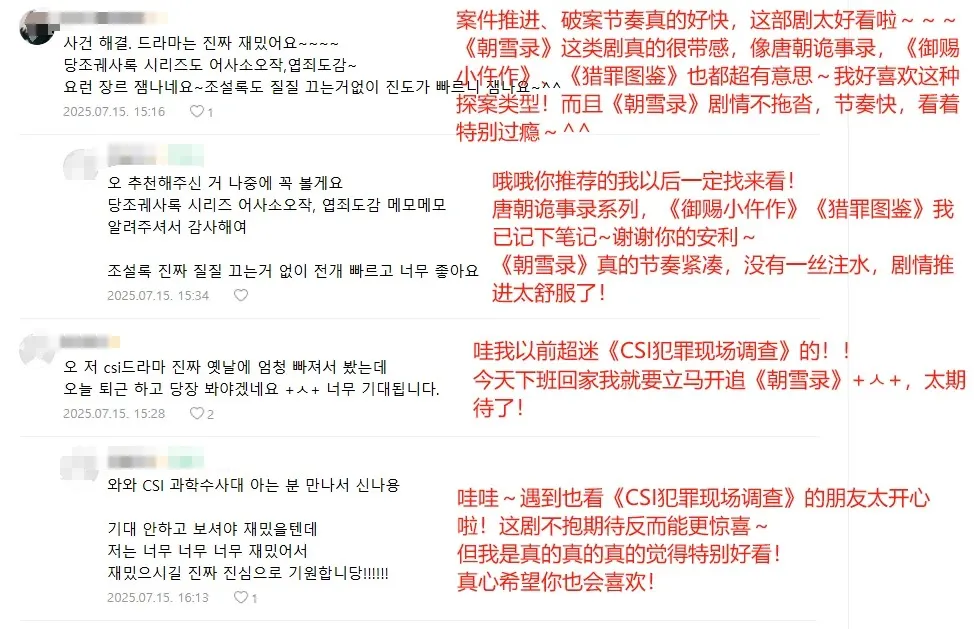
Core Viewpoint - Zhujiang Life Insurance Co., Ltd. has publicly recruited five key executives, including a general manager, for the first time in four years, indicating a strategic transformation phase amid a complex market environment [1] Group 1: Executive Recruitment - The company is seeking to enhance governance and operational standards by hiring a general manager, financial officer, board secretary, chief investment officer, and chief compliance officer [1] - The previous general manager, Fu Anping, had a notable background as one of the first actuaries in China and was involved in drafting the Insurance Law [1] - Fu Anping joined Zhujiang Life in April 2022, but his qualifications were only approved in May 2024, and he is expected to resign by August 2025 [1] Group 2: Company Background - Zhujiang Life was established in September 2012, headquartered in Guangzhou, with a registered capital of 6.7 billion yuan [2] - It is the only national life insurance company based in Guangzhou, with shareholders including Guangdong Zhujiang Investment Holding Group and Guangzhou Financial Holding Group [2] - The company achieved profitability of 42 million yuan in its fourth year, breaking the industry norm of achieving breakeven by the seventh year [2] Group 3: Financial Performance and Risks - Since 2021, Zhujiang Life has not disclosed financial data in its annual reports, and its solvency reports indicated a core solvency ratio of 52.02% and a comprehensive solvency ratio of 104.04% as of Q4 2021, nearing regulatory limits [2] - The company has significant exposure to real estate investments, with a reported overdue amount of 350 million yuan related to a real estate project [2] - As of 2022, the company has not released solvency reports or core operating data, but it claims that its main operating indicators are good and business costs are decreasing [3]