TechCrunch

Search documents
Nvidia launches powerful new Rubin chip architecture
TechCrunch· 2026-01-05 22:16
Core Insights - Nvidia has launched the new Rubin computing architecture, which is positioned as the state of the art in AI hardware and is currently in production, with further ramp-up expected in the second half of the year [1][2] Group 1: Architecture and Features - The Rubin architecture is designed to meet the increasing computational demands of AI, with Nvidia CEO Jensen Huang stating that it is in full production [2] - The architecture consists of six separate chips, including a central Rubin GPU, and addresses bottlenecks in storage and interconnection with improvements in Bluefield and NVLink systems [4] - A new Vera CPU is included in the architecture, aimed at enhancing agentic reasoning capabilities [4] Group 2: Performance Metrics - The Rubin architecture is reported to operate 3.5 times faster than the previous Blackwell architecture for model-training tasks and five times faster for inference tasks, achieving up to 50 petaflops [8] - It also supports eight times more inference compute per watt compared to its predecessor [8] Group 3: Market Impact and Partnerships - Rubin chips are set to be utilized by major cloud providers, including partnerships with Anthropic, OpenAI, and Amazon Web Services, as well as in HPE's Blue Lion supercomputer and the upcoming Doudna supercomputer at Lawrence Berkeley National Lab [3] - The competition for AI infrastructure is intensifying, with significant demand for Nvidia chips and the facilities to support them [9] - Huang has projected that between $3 trillion and $4 trillion will be invested in AI infrastructure over the next five years [10]


Nvidia launches Alpamayo, open AI models that allow autonomous vehicles to ‘think like a human'
TechCrunch· 2026-01-05 20:27
Core Insights - Nvidia has launched Alpamayo, a new family of open-source AI models, simulation tools, and datasets aimed at enhancing the reasoning capabilities of autonomous vehicles in complex driving situations [1][2]. Group 1: Product Features - Alpamayo 1 is a 10-billion-parameter vision language action model that enables autonomous vehicles to reason through complex scenarios, such as navigating traffic light outages without prior experience [2]. - The model breaks down problems into steps, reasoning through possibilities to select the safest path for driving [3]. - Alpamayo not only processes sensor inputs to control vehicle actions but also explains the reasoning behind its decisions and the trajectory it plans to take [4]. Group 2: Developer Tools and Resources - The underlying code for Alpamayo 1 is available on Hugging Face, allowing developers to fine-tune the model for specific vehicle applications or create tools like auto-labeling systems for video data [4]. - Nvidia's Cosmos can be used to generate synthetic data for training and testing Alpamayo-based applications, combining real and synthetic datasets [5]. Group 3: Datasets and Simulation Framework - As part of the Alpamayo rollout, Nvidia is releasing an open dataset containing over 1,700 hours of driving data that covers rare and complex real-world scenarios [7]. - AlpaSim, an open-source simulation framework, is also being launched to validate autonomous driving systems by recreating real-world driving conditions for safe testing [7].

China's Hesai will double production as lidar sensor industry shakes out
TechCrunch· 2026-01-05 18:00
Core Viewpoint - Hesai, a Chinese lidar manufacturer, plans to double its production capacity from 2 million units to 4 million units in 2026, aiming to capture a larger share of the global lidar market [1] Group 1: Company Developments - Hesai has raised hundreds of millions of dollars and is listed on both the Nasdaq and Hong Kong stock exchanges, despite facing accusations from the U.S. government regarding its ties to China's military [3] - The company reported that its production target was doubled due to "accelerating demand" in the automotive and robotics sectors [4] - Hesai has secured 4 million orders for its latest ATX lidar sensor and has 24 automotive customers, including a major European automaker [5] Group 2: Market Context - The automotive market in China has seen a significant adoption of lidar sensors, with 25% of new electric cars sold in the country now equipped with them [5] - The lidar market outside of China has proven to be volatile, as evidenced by Luminar's bankruptcy, which was partly due to failed deals with major automakers like Volvo [6] - The robotics sector is viewed as a promising market for lidar, with Ouster estimating it represents a $14 billion opportunity [6] Group 3: Competitive Landscape - Hesai has contributed to a dramatic reduction in lidar sensor costs, achieving a 99.5% decrease over eight years, which has impacted competitors like Luminar [10] - The company is also involved in providing lidar sensors for autonomous vehicle companies such as Pony AI, Motional, WeRide, and Baidu [9]

Lucid Motors doubled EV output in 2025 after early Gravity SUV struggles
TechCrunch· 2026-01-05 16:51
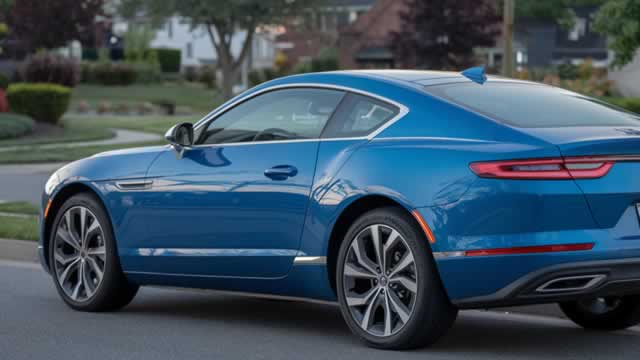
Core Insights - Lucid Motors has significantly increased its electric vehicle production in 2025, building 18,378 EVs, which is double the amount produced in 2024, indicating a recovery from earlier production challenges [1][2] Production and Delivery - The company produced 8,412 vehicles in the fourth quarter of 2025, surpassing the total production in the first half of the year [2] - Lucid delivered a total of 15,841 vehicles in 2025, marking a 55% increase compared to 2024 [2] Future Outlook - The strong performance in 2025 positions Lucid for a crucial year ahead, as it plans to begin production of its first vehicle on a new mid-sized EV platform, expected to be priced around $50,000 [3] - This new vehicle will compete in the same market segment as the Tesla Model Y and Rivian's upcoming R2 SUV [3] Historical Context - The production numbers are significantly lower than the ambitious targets set during Lucid's public listing in 2021, where the company projected 135,000 vehicle deliveries for 2025 [4] - The original targets included 86,000 Gravity SUVs, 42,000 Air sedans, and 7,000 from the yet-to-launch mid-sized EV [4] Challenges Faced - Lucid encountered various production, supply, and demand challenges, particularly in early 2025, as it ramped up production of the Gravity SUV [5] - The company has faced quality issues, leading to customer dissatisfaction, which was acknowledged by interim CEO Marc Winterhoff in a communication to customers [5]


Amazon's AI assistant comes to the web with Alexa.com
TechCrunch· 2026-01-05 15:00
Core Insights - Amazon has launched a new website, Alexa.com, for its AI assistant Alexa+, allowing users to interact with it online similar to other AI chatbots [1][15] - The company aims to expand Alexa+ beyond home devices to mobile and web platforms, enhancing accessibility for users without Alexa devices [2] Expansion and Features - Over 600 million Alexa-powered devices have been sold globally, and Amazon is focusing on making Alexa+ a ubiquitous presence in users' lives [2] - The Alexa mobile app is being updated to feature a chatbot-style interface, emphasizing conversational interactions [3] - Alexa.com will support various tasks such as exploring topics, creating content, and managing family schedules, differentiating itself by focusing on family needs [5][6] Integration and Services - Amazon is integrating services from companies like Angi, Expedia, and Yelp into Alexa+, enhancing its functionality [7] - The website includes a navigation sidebar for quick access to frequently used features, improving user experience [7] Data Management and User Engagement - Amazon encourages users to share personal documents and calendar access with Alexa+, positioning it as a central hub for family management [11] - The ability to manage personal data could be a significant selling point for Alexa+, with 76% of users engaging in unique tasks that other AIs cannot perform [13] User Adoption and Engagement Metrics - Over 10 million consumers have access to Alexa+, with users engaging in two to three times more conversations compared to the original Alexa [16] - Users are reportedly shopping three times more and using recipes five times more frequently with Alexa+ [16] - Complaints about Alexa+'s performance exist, but the company believes they are over-represented, with a low opt-out rate from the service [17][18]

Luminar claims founder Austin Russell is dodging a subpoena in the bankruptcy case
TechCrunch· 2026-01-05 12:10
Core Viewpoint - Luminar is facing challenges in retrieving company-owned devices from its founder and former CEO Austin Russell, which may impact potential legal actions against him [1][2][8]. Group 1: Legal and Compliance Issues - Luminar has been attempting to reclaim devices from Russell since his resignation in May, recovering six computers but still seeking his company-issued phone and a digital copy of his personal phone [2]. - The company has accused Russell and his employees of misleading legal representatives about his location, prompting them to seek court permission to serve him via mail or email [3][8]. - Russell has claimed cooperation and requested assurances regarding the protection of personal data from his devices, but Luminar's lawyers have stated they will follow court-established processes for data handling protections [4][12]. Group 2: Bankruptcy Proceedings - The emergency filing marks a significant development in Luminar's Chapter 11 bankruptcy case, as the company is trying to sell its semiconductor subsidiary to Quantum Computing, Inc., with a January 9 deadline for bids on its lidar division [5]. - Prior to the bankruptcy filing, Russell attempted to buy Luminar through his new venture, Russell AI Labs, and has expressed intentions to bid during the bankruptcy process [6]. Group 3: Investigative Actions - Following Russell's resignation, Luminar's board established a Special Investigation Committee to investigate potential claims related to Russell's actions, including personal loans [9][10]. - Legal representatives from Weil, Gotshal & Manges were engaged to collect Russell's devices, but faced challenges in confirming representation and direct communication with him [11][12].

Tesla annual sales decline 9% as it's overtaken by BYD as global EV leader
TechCrunch· 2026-01-02 16:17
Core Insights - Tesla's annual sales have declined for the second consecutive year, primarily due to the removal of the federal tax credit in the U.S. and increased competition from Chinese automakers [1][4] Sales Performance - Tesla delivered 1.63 million vehicles globally in 2025, marking a 9% decrease from 1.79 million in 2024 [1] - In the fourth quarter, Tesla reported sales of 418,227 vehicles, a 15.6% decline compared to the same period last year, which was significantly below analysts' expectations [2] Market Competition - Tesla's market share in Europe and China has been impacted by the rise of competitors like BYD, which delivered 2.26 million EVs in 2025, surpassing Tesla in global EV sales [3] - Although Tesla faces competition in the U.S., it is not from Chinese automakers due to restrictions on their sales in the country [3] Impact of Tax Incentives - The elimination of the $7,500 U.S. federal tax incentive has had a significant negative effect on Tesla's sales, particularly in the fourth quarter [4] - Prior to the tax credit's removal, Tesla achieved record sales of 497,099 vehicles in the third quarter, a 29% increase from the previous quarter, as consumers rushed to purchase EVs [4] Strategic Shift - CEO Elon Musk is attempting to pivot Tesla's focus from solely manufacturing and selling EVs to exploring opportunities in AI and robotics, promoting a vision of "sustainable abundance" [5] - Despite this strategic shift, the majority of Tesla's revenue still comes from its EV business, with $21.2 billion of the $28 billion generated in the third quarter derived from EV sales [6]


Here's what you should know about the US TikTok deal
TechCrunch· 2025-12-30 14:00
Core Viewpoint - TikTok, owned by ByteDance, has faced significant scrutiny in the U.S. regarding user data security, leading to a deal where a consortium of American investors will acquire a portion of its U.S. operations [1][2][5]. Group 1: Ownership and Investment - TikTok has signed a deal to divest a portion of its U.S. entity to a group of American investors, including Oracle and Silver Lake, following a prolonged negotiation process [2][5]. - The investor group will collectively hold 45% of TikTok's U.S. operations, while ByteDance retains nearly a 20% stake, with TikTok U.S. valued at approximately $14 billion [5]. - A "framework" deal was established between the U.S. and China, allowing U.S. investors to oversee TikTok's U.S. operations, with expectations of an 80% stake for the consortium [6]. Group 2: Operational Changes - The newly formed "TikTok USDS Joint Venture LLC" will manage the app's operations, focusing on data protection and algorithm security, with Oracle as the trusted security partner [10]. - Oracle will replicate and secure a new U.S. version of TikTok's algorithm, ensuring ByteDance does not have access to U.S. user information or influence over the U.S. algorithm [11]. Group 3: Future of TikTok in the U.S. - Reports indicate that once the deal is finalized, the TikTok app may be discontinued in the U.S., requiring users to transition to a new platform, though details about this platform remain unclear [12].


Meta just bought Manus, an AI startup everyone has been talking about
TechCrunch· 2025-12-30 05:39
Core Insights - Meta Platforms is acquiring Manus, a Singapore-based AI startup known for its advanced AI capabilities, including job candidate screening and stock portfolio analysis [1] - Manus achieved a post-money valuation of $500 million after a $75 million funding round led by Benchmark [2] - Manus has signed up millions of users and surpassed $100 million in annual recurring revenue despite initial concerns over its pricing strategy [3] - Meta is paying $2 billion for Manus, aligning with the startup's valuation goals for its next funding round [4] - Meta plans to integrate Manus's AI agents into its platforms while keeping the company operationally independent [5] Company and Industry Summary - Manus was founded by Chinese entrepreneurs and has raised concerns regarding its ties to China, prompting scrutiny from U.S. lawmakers [7] - Following the acquisition, Meta has stated that Manus will sever ties with Chinese investors and cease operations in China [8]


Nvidia acquires AI chip challenger Groq for $20B, report says
TechCrunch· 2025-12-24 22:03
Group 1 - Nvidia is acquiring AI chip startup Groq for $20 billion, marking its largest acquisition to date, which will enhance Nvidia's dominance in chip manufacturing [1] - Groq specializes in a new type of chip called a language processing unit (LPU), which claims to run large language models (LLMs) at 10 times the speed and with one-tenth the energy consumption compared to existing solutions [2] - Groq recently raised $750 million at a valuation of $6.9 billion, experiencing rapid growth by powering AI applications for over 2 million developers, a significant increase from approximately 356,000 developers last year [3]