
The Guardian

Search documents
Klarna says AI drive has helped halve staff numbers and boost pay
The Guardian· 2025-11-18 17:52
Core Insights - Klarna has leveraged AI-related savings to increase staff salaries by nearly 60%, but may consider further job cuts after reducing its workforce by almost half over the past three years [1][4][5] Workforce and Employment - The company's headcount decreased from 5,527 to 2,907 since 2022, primarily due to natural attrition, with technology replacing departing staff rather than hiring new employees [1][4] - Klarna's internal AI program has reduced reliance on outsourced workers, with technology now performing the work of 853 full-time staff, an increase from 700 earlier this year [2] Financial Performance - Klarna reported a 108% increase in revenues while maintaining flat operating costs, which was described as "pretty remarkable" by the CEO [3] - Average employee compensation has risen from $126,000 in 2022 to $203,000 today, reflecting the company's commitment to sharing efficiency gains with employees [5] Revenue Metrics - The revenue per employee metric has reached $1.1 million, with expectations for continued growth in this area, potentially leading to further staff reductions [6] - Klarna reported a 26% increase in revenues for the three months ending September, totaling $903 million, surpassing analysts' expectations [7] Losses and Accounting Changes - Despite revenue growth, Klarna experienced a $95 million loss during the same period, significantly higher than the $4 million loss reported the previous year, attributed to changes in accounting standards following its NYSE listing [8]


Trump reverses course and cuts tariffs on US food imports
The Guardian· 2025-11-14 22:46
Core Points - Donald Trump has issued an executive order to lower tariffs on food imports, including beef, tomatoes, coffee, and bananas, in response to rising cost concerns [1][2] - The new exemptions will take effect retroactively and represent a significant policy shift for Trump, who previously denied that his tariffs contributed to inflation [2][3] - The decision follows recent electoral victories for Democrats, where affordability was a major issue, indicating a political response to public sentiment [2][6] Tariff Changes - The executive order marks a reversal from earlier policies, as Trump had imposed a 10% base tariff on imports from all countries earlier this year [4] - A deal has been announced to reduce US tariffs on Switzerland from 39% to 15%, along with plans to eliminate tariffs on certain food imports from Argentina, Ecuador, Guatemala, and El Salvador [5] Economic Context - Trump has been emphasizing affordability while attributing rising costs to Biden's policies, despite evidence suggesting that his tariffs have contributed to higher grocery prices [6][7] - A Harris poll indicated that a majority of Americans report monthly cost increases between $100 and $749, reflecting widespread economic frustration [7] - Critics, including House Democrats, argue that the Trump administration is acknowledging the negative impact of its own trade policies on consumer costs [7][8]

US tariffs on Swiss goods cut to 15% in deal struck with Trump administration
The Guardian· 2025-11-14 17:16
Trade Agreement Overview - The US has agreed to cut tariffs on Switzerland from 39% to 15% as part of a new trade pact, which aims to improve economic ties and support Swiss exporters [1][2] - The agreement includes a "non-binding memorandum of understanding" following bilateral talks and lobbying by Swiss firms [1][2] Tariff and Quota Details - The new deal aligns US tariffs on Switzerland with those on the European Union, providing Swiss exporters with competitive parity [3] - Switzerland will reciprocate by reducing tariffs on a range of US products, including industrial goods, fish, seafood, and non-sensitive agricultural products [3] - Specific quotas for US goods exported to Switzerland will be established, including 500 tonnes of beef, 1,000 tonnes of bison meat, and 1,500 tonnes of poultry [3] Implementation and Economic Impact - The implementation date for the new tariffs and quotas is yet to be finalized, with coordination between the US and Switzerland to ensure simultaneous customs duty reductions [4][5] - The deal is expected to encourage Swiss companies to invest approximately $200 billion in the US by the end of 2028 [6] Corporate Engagement - Leading Swiss executives met with the US President to finalize the deal, indicating strong corporate interest in the new trade relationship [6] - Rolex, a prominent Swiss luxury watchmaker, has engaged with the US administration, highlighting the personal interactions between corporate leaders and government officials [7][8]

EU investigates Google over ‘demoting' commercial content from news media
The Guardian· 2025-11-13 11:09
Core Points - The EU has initiated an investigation into Google Search due to concerns that the company is "demoting" commercial content from news media sites, leading to reduced visibility in search results [1][5] - The investigation is focused on the potential unfair loss of visibility and revenue for media owners, which may stem from Google's anti-spam policy [2][5] - The European Commission emphasizes that media partnerships with businesses should be treated fairly in the online marketplace, similar to offline practices [3][4] Group 1 - The investigation is not about the overall indexing of newspapers but specifically targets commercial content provided by third parties [3] - Evidence suggests that certain sub-domains of newspapers, such as those offering discounts in partnership with brands like Nike, are being demoted to the point of being unfindable in Google Search [4] - The European Commission is collecting evidence from publishers regarding the impact on traffic and revenues due to suspected unfair practices [5][6] Group 2 - The EU aims to protect traditional media, which faces challenges in the online marketplace, especially with the rise of AI and threats to media funding [7] - The investigation is categorized as a "normal non-compliance" inquiry, with potential fines of up to 20% of revenue if systematic non-compliance is found [8]


Meta could face millions in fines for not signing content deals in Australia
The Guardian· 2025-11-12 14:00
Core Points - Meta and other tech companies face potential fines under new Australian media bargaining rules aimed at securing payments from platforms that refuse to sign content deals [1][3][4] - The new rules will apply to platforms with Australian-derived revenue of at least $250 million, regardless of whether they carry news content [1][6] - The Labor government is moving forward with the new penalties despite concerns over potential retaliation from the US [2][10] Group 1: New Media Bargaining Rules - The new media bargaining incentive plan is designed to force payments from platforms that opted out of the previous news media bargaining code, which has generated approximately $200 million to $250 million annually for publishers [3][11] - Platforms can avoid penalties by withdrawing news content entirely, a strategy already adopted by Meta in Canada [5][6] - The proposed penalties could amount to 2.25% of revenue generated in Australia, compared to the existing deals valued at roughly 1.5% of revenue [8] Group 2: Financial Impact on Media Companies - Major media operators like News Corp, Nine, and Seven West Media have faced declining advertising revenues, leading to staff redundancies and cost-cutting measures [4] - The new incentive plan aims to support news publishers, particularly smaller ones that rely heavily on digital platforms for content distribution [5][11] - Treasury supports a $250 million annual revenue threshold for the new system, using total group revenue generated in Australia as the main metric for payments [7] Group 3: Legislative Process and Consultation - The government will conduct a month-long public consultation on the new incentive plans, with a final approach expected to be settled by 2026 [2][12] - Companies will be required to self-assess their liabilities under the new rules, which will rely on common definitions of social media and search [9]


SoftBank sells stake in Nvidia for $5.8bn as it doubles down on OpenAI bets
The Guardian· 2025-11-11 16:44
Core Viewpoint - SoftBank has sold its stake in Nvidia for $5.8 billion to finance its substantial investments in OpenAI, indicating a strategic shift in its investment focus within the AI sector [2][3]. Group 1: Financial Performance - SoftBank reported a second-quarter net profit of 2.5 trillion yen (£12.2 billion), more than doubling from previous results, primarily due to valuation gains in its OpenAI holdings [2]. - The sale of Nvidia shares was part of a broader strategy to raise funds for AI investments, with SoftBank's investment in OpenAI expected to exceed $30 billion this year [3]. Group 2: Market Reactions - Following the announcement of SoftBank's sale, Nvidia's shares fell by 3.5% in morning trading in New York, reflecting investor concerns about the tech sector's valuation [3]. - The Nasdaq Composite index dropped by 0.85% in early trading, with other tech stocks like Arm and Micron also experiencing declines [4]. Group 3: Investment Strategy - SoftBank's decision to divest from Nvidia suggests a belief that the valuation of Nvidia may be too high, and the company is reallocating resources to what it perceives as more promising investments in AI [5][6]. - Analysts suggest that SoftBank's move to cash in on Nvidia could be a prudent strategy to prepare for the next wave of AI-related investments, as the company sees OpenAI as a potentially better investment opportunity moving forward [7][8].


US consumer sentiment drops to near record low as shutdown persists
The Guardian· 2025-11-07 19:12
Core Insights - The federal government shutdown has significantly impacted consumer sentiment in the US, bringing it to a near record low in November 2025, with the consumer sentiment index dropping to 50.3 from 53.6 in October, which is nearly three points below economists' expectations [1][2]. Consumer Sentiment - The consumer sentiment index's current level of 50.3 is the lowest since June 2022 and the lowest reported since at least 1978, indicating widespread concern among consumers about the economy due to the prolonged government shutdown [2]. - The decline in consumer sentiment is noted to be widespread across various demographics, including age, income, and political affiliation, reflecting a broad-based loss of confidence [3]. Employment Data - ADP reported that private employers added 42,000 new jobs in October, which, while better than expected, represents a significant slowdown compared to the three-month moving average of 188,000 jobs [4]. - Additionally, US-based employers announced 153,074 job cuts in October, marking a 175% increase from the previous year and the highest level of layoffs for any October since 2003 [4]. Economic Outlook - Analysts express concerns that the current economic management is leading to a loss of faith among Americans, as households face record debt and rising prices, contributing to the low consumer sentiment [5][6].

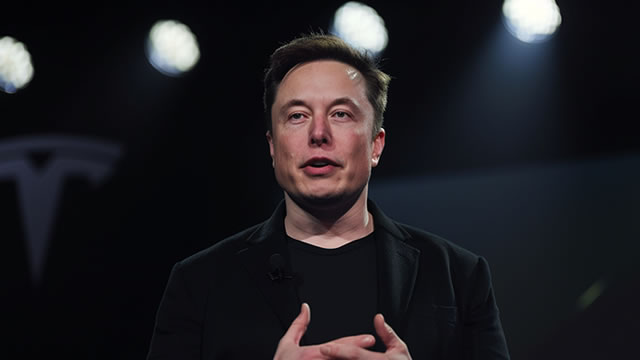
‘Musk is Tesla and Tesla is Musk' – why investors are happy to pay him $1tn
The Guardian· 2025-11-07 15:15
Core Insights - Tesla shareholders have approved a $1 trillion compensation plan for Elon Musk, which could make him the world's first trillionaire if he meets ambitious targets [2][11] - Despite controversies surrounding Musk's behavior and political affiliations, investors remain supportive, with Tesla shares rising nearly two-thirds since May [7][8] - The company's market value is currently $1.4 trillion, with a target of reaching $8.5 trillion [2] Company Performance - Tesla's third-quarter deliveries exceeded Wall Street estimates, driven by U.S. consumers taking advantage of expiring federal tax credits for electric vehicles, although European sales faced challenges [7] - The company has faced declining consumer regard, particularly after Musk's acquisition of Twitter (now X) and subsequent actions [4][10] - Analysts express concerns that Tesla's core car business may have peaked, and the ambitious autonomous vehicle plans may not be the best in the market [10] Investor Sentiment - Investors are inclined to support high-profile innovators like Musk, reflecting a cultural tendency in the U.S. to back entrepreneurial figures [8][9] - Despite concerns about Musk's focus on the company, most shareholders prefer him to remain involved rather than stepping down [8] - The $1 trillion pay package includes ambitious targets such as delivering 20 million Tesla vehicles and 1 million robotaxis, which require significant innovation [9]

Death toll from UPS plane crash at Louisville airport rises to 13
The Guardian· 2025-11-07 00:42
Core Points - The explosion of a UPS cargo plane has resulted in a death toll of 13, confirmed by the Louisville mayor [1][2] - UPS has released the names of the three victims aboard the plane, which included two pilots and an international relief officer [2] - The incident occurred shortly after takeoff from Louisville Muhammad Ali International Airport, with the left wing catching fire and an engine falling off [4] Company Response - UPS expressed condolences to those affected and emphasized their commitment to supporting the impacted community [3] - Operations at UPS Worldport resumed the night following the incident, with all runways at the Louisville airport reopening [8] Investigation Details - The National Transportation Safety Board (NTSB) is investigating the plane's maintenance history, particularly focusing on repairs conducted in Texas prior to the crash [4][5] - The cockpit voice recorder and data recorder were recovered and appeared intact, with final data showing an altitude of 475 feet and a speed of 210 mph before the crash [6] - A structural crack in the center wing fuel tank was noted in FAA records prior to the incident [7]


Tesla shareholders approve $1tn pay package for Elon Musk
The Guardian· 2025-11-06 22:02
Core Points - Tesla shareholders approved a $1 trillion compensation plan for CEO Elon Musk, which could be the largest corporate payout in history if performance goals are met [1][2] - Over 75% of investors voted in favor of the plan, indicating strong belief in Musk's leadership amid advancements in robotics and AI [2] - Musk aims to exert more control over Tesla and its future direction, particularly in robotics [2] Compensation Plan Details - The compensation plan is structured in 12 tranches, requiring Musk to guide Tesla to a market capitalization of $8.5 trillion, eight times its current value [3][4] - Musk must remain vested in the company for at least 7.5 years and develop a long-term succession plan [4] - If successful, Musk could increase his ownership of Tesla stock to 25% [5] Performance Milestones - Musk is tasked with delivering 20 million electric vehicles, selling 10 million full self-driving subscriptions, developing 1 million humanoid robots, and deploying 1 million robotaxis over the next decade [5] - The plan also requires Tesla to achieve $400 billion in actual earnings for four consecutive quarters [6] - Tesla's actual earnings for Q3 2025 were reported at $4.2 billion, a 9% decrease from the previous year [6]
