AI前线

Search documents
智元机器人发布并开源首个机器人动作序列驱动的世界模型
AI前线· 2025-05-26 06:46
Core Viewpoint - The article highlights the significant breakthroughs by ZhiYuan Robotics in the field of embodied intelligence, introducing the world's first action sequence-driven embodied world model EVAC and the evaluation benchmark EWMBench, both of which are now open-source, aiming to create a new development paradigm for low-cost simulation, standardized evaluation, and efficient iteration [1][2]. Group 1: EVAC Overview - EVAC represents a dynamic world model capable of accurately reproducing complex interactions between robots and their environments, marking a transition from traditional simulation to generative simulation [4]. - The core capability of EVAC includes precise mapping from "physical execution" to "pixel space," utilizing a multi-level action condition injection mechanism to achieve end-to-end generation of physical actions and visual dynamics [6]. Group 2: Key Features of EVAC - High-precision alignment of robot actions and pixels is achieved by projecting the 6D pose of robotic arms into an action map, ensuring pixel-level alignment for complex dynamic behaviors such as "grasping," "placing," and "colliding" [8]. - EVAC introduces dynamic multi-view modeling through Ray Map encoding of camera motion trajectories, enabling consistent and coherent visual scene generation from multiple perspectives [8]. Group 3: Generative Simulation Evaluation - To address the high costs and risks associated with real machine evaluations, EVAC proposes a generative simulation evaluation scheme that constructs a complete interactive evaluation pipeline, showing high consistency with real machine evaluation success rates [10]. - The data augmentation engine of EVAC can significantly enhance task success rates by up to 29% using minimal expert trajectory data through action interpolation and high-fidelity image generation techniques [12]. Group 4: EWMBench Introduction - EWMBench is introduced as the world's first evaluation benchmark for embodied world models, aiming to fill a gap in the industry by establishing a unified and credible evaluation standard [15]. - The evaluation system consists of three dimensions: scene consistency, motion correctness, and semantic alignment & diversity, providing a comprehensive analysis of the generated models [17]. Group 5: Performance and Data Support - EWMBench demonstrates superior performance in aligning evaluation results with human subjective judgments compared to existing benchmarks, reflecting the actual capabilities of embodied world models in interaction understanding and visual consistency [21]. - The benchmark is built on the AgiBot World dataset, which includes over 300 carefully designed test samples across various robotic tasks, ensuring robust validation of models in complex environments [22].


印度国家级大模型上线两天仅 300 余次下载,投资人直呼“尴尬”:韩国大学生模型都有20万!
AI前线· 2025-05-26 06:46
Core Viewpoint - Sarvam AI has launched the Sarvam-M model, a 24 billion parameter mixed language model, which is considered a breakthrough in India's AI research but has received a lukewarm response in terms of downloads and usage [1][3][4]. Group 1: Model Overview - Sarvam-M is based on Mistral Small and supports 10 Indian languages, including Hindi and Bengali [1]. - The model has only achieved 718 downloads on Hugging Face, leading to criticism from industry experts [1][3]. - Comparatively, a similar model developed by two South Korean students received around 200,000 downloads, highlighting Sarvam-M's underperformance [3]. Group 2: Company Background - Sarvam AI was founded in July 2023 by Vivek Raghavan and Pratyush Kumar, with a mission to popularize generative AI in India [6]. - Kumar emphasizes the need for India to develop its own foundational AI models using local data, rather than merely adapting Western models [6][7]. - The company has raised $41 million from notable investors, with a projected valuation of $111 million by March 2025 [11]. Group 3: Performance and Criticism - Despite claims of outperforming Llama-4 Scout, Sarvam-M showed a slight decline in English knowledge assessments [7]. - Critics argue that the model lacks a substantial audience and practical utility, questioning the rationale behind its development [3][11]. - Some users have pointed out potential applications for Sarvam-M, but concerns remain about its market fit and the readiness of target users to adopt such technology [12][19]. Group 4: Broader Implications - The launch of Sarvam-M reflects a broader ambition for India to establish its own AI technology stack, but the gap between expectations and actual results raises questions about the viability of this initiative [15][19]. - The challenges of developing AI solutions tailored to India's diverse linguistic landscape are acknowledged, with a call for more focus on practical applications [18][19].

业界对 Agent 的最大误解:它能解决所有问题
AI前线· 2025-05-25 04:24
Core Viewpoint - The article emphasizes that AI Agents cannot solve all problems and not all problems require AI solutions. The focus should be on whether the technology can address real business issues, especially when integrated with core business functions [1][2]. Group 1: AI Agent Overview - AI Agents are a competitive focus for tech companies, with IBM launching the watsonx Orchestrate solution, which allows businesses to build their own AI Agents in five minutes and manage their lifecycle [1]. - The market is witnessing a surge in AI Agents, but there is a distinction between genuine AI Agents and traditional AI tools repackaged as AI Agents [4]. Group 2: Challenges in AI Agent Implementation - Building AI Agents is relatively easy, but scaling their application within enterprises poses challenges, including integration across different frameworks and applications, identifying high ROI scenarios, and managing the entire lifecycle [5][6]. - IBM's watsonx Orchestrate provides a structured approach to address these challenges, featuring a matrix of pre-built domain-specific AI Agents [8]. Group 3: Data and Automation - High-quality data is essential for AI applications, and enterprises must assess their data readiness, particularly focusing on non-structured data [12][18]. - The watsonx.data integration tool supports both structured and unstructured data, enhancing data governance and accessibility for AI Agents [17][19]. Group 4: Integration and Resource Management - Effective integration of AI Agents with existing enterprise systems is crucial, as many organizations have numerous applications that need to be connected [22][23]. - IBM emphasizes the importance of resource allocation and efficiency, with tools to monitor AI performance and optimize resource usage [25][26]. Group 5: Business-Centric AI Strategy - The essence of enterprise AI lies in business restructuring rather than mere technological advancement. Companies must focus on their specific pain points and ensure that AI solutions are tailored to their needs [30][29]. - IBM advocates for a methodical approach to deploying AI, starting with proof of concept (POC) to validate ROI before large-scale implementation [29].


顶刊论文“飙脏话辱骂第二作者”,期刊回应;刚上线就卡塞? 昆仑万维:已限流;马斯克宣布回归 7x24 小时工作状态 | AI周报
AI前线· 2025-05-25 04:24
Group 1 - ByteDance issued a compliance notice urging business partners not to give gifts or cash to employees, emphasizing a zero-tolerance policy towards corruption and bribery [2] - Kuaishou faced allegations of requiring employees to use its app for one hour daily, which was later denied by internal sources, stating that while usage is encouraged, it is not mandatory [3] - Kunlun Wanwei's newly launched AI product experienced high user traffic leading to service limitations, indicating strong initial demand [4] Group 2 - The co-founder of Zero One Everything, Gu Xuemai, has left the company to pursue new entrepreneurial ventures, as the company shifts its focus towards lightweight model training and application [5] - A paper published in a top journal was found to contain inappropriate language, prompting an investigation by the journal [6][7] - Elon Musk announced his return to a 24/7 work schedule, emphasizing the need for operational improvements at X and Tesla [9][10] Group 3 - NVIDIA's Blackwell GPU set a new record for AI inference speed, achieving 1000 tokens per second per user, showcasing advancements in AI processing capabilities [11] - Apple plans to open its AI models to third-party developers to stimulate new application development, aiming to enhance its competitive position in the AI market [12] - OpenAI is acquiring AI device company io for $6.5 billion, marking its largest acquisition to date and expanding its hardware capabilities [13] Group 4 - JD.com is investing in ZhiYuan Robotics, indicating strong interest in the embodied intelligence sector, with the company positioned among the top players in this field [14] - Google announced the launch of Google AI Ultra, a comprehensive AI suite aimed at enhancing productivity across various industries [18][19] - Tencent introduced a smart agent development platform and plans to open-source multiple models, reflecting its commitment to advancing AI technology [21][22]






打破资源瓶颈!华南理工&北航等推出SEA框架:低资源下实现超强多模态安全对齐
AI前线· 2025-05-24 04:56
Core Viewpoint - The article discusses the SEA framework (Synthetic Embedding for Enhanced Safety Alignment) developed by the team at Beihang University, which addresses the low-resource safety alignment challenges of multimodal large language models (MLLMs) by using synthetic embeddings instead of real multimodal data [1][2][3]. Summary by Sections Introduction - The SEA framework innovatively replaces real multimodal data with synthetic embeddings, providing a lightweight solution for the safe deployment of large models [1]. Challenges in MLLM Safety Alignment - MLLMs face three main challenges in safety alignment: 1. Reducing the cost of constructing multimodal safety alignment datasets [4]. 2. Overcoming the limitations of text alignment methods in non-text modal attack scenarios [5]. 3. Providing a universal safety alignment solution for emerging modalities [6]. SEA Framework Overview - SEA synthesizes embeddings from the representation space of modal encoders, allowing for cross-modal safety alignment using only text input, thus overcoming the high costs and strong modality dependencies of real data [6][8]. Data Preparation - The framework requires a text safety alignment dataset containing harmful instructions, which are used to optimize a set of embedding vectors [12]. Embedding Optimization - The optimization process aims to maximize the probability of the MLLM generating specified outputs based on the optimized embeddings, while keeping the MLLM parameters frozen [16][17]. Safety Alignment Implementation - To integrate the embedding vectors with the text dataset, specific prefixes are added to the text instructions, allowing for the construction of multimodal datasets for safety alignment training [19]. VA-SafetyBench: Safety Evaluation Benchmark - VA-SafetyBench is a safety evaluation benchmark for MLLMs that includes video and audio safety assessments, expanding upon existing image safety benchmarks [20][21]. Experimental Results - The SEA framework demonstrated effectiveness in reducing the success rate of multimodal attacks compared to traditional methods, particularly in complex attack scenarios involving images, videos, and audio [32][36]. Conclusion - The SEA framework shows promise as a solution for the safety alignment of emerging MLLMs, allowing for effective multimodal safety alignment using synthetic embeddings, which significantly reduces resource requirements [37].

用印度程序员冒充 AI 的“独角兽”彻底倒闭了!伪 AI 烧光 5 亿美元,连微软和亚马逊都被“坑”了
AI前线· 2025-05-24 04:56
Core Viewpoint - Builder.ai, a tech startup supported by Microsoft, has officially entered bankruptcy after acknowledging issues within its former management, leaving it with significant debts to Amazon and Microsoft, prompting reflections on the application of AI in coding practices [1][2]. Group 1: Company Overview - Builder.ai was once valued close to $1 billion and raised $250 million in its D round of financing 24 months ago, supported by major investors including Microsoft [2][23]. - The company aimed to provide a no-code application building platform for users capable of addressing technical complexities, branding itself as an "AI-driven assembly line" for app development [3][5]. - Its core system, Natasha, was marketed as the "world's first AI product manager," designed to assist clients in designing and creating applications [3][5]. Group 2: Financial Struggles - Builder.ai's debts to Amazon and Microsoft exceed $100 million, with $85 million owed to Amazon and $30 million to Microsoft [2][23]. - The company reportedly burned over $500,000 daily, with its last annual report indicating that its revenue covered less than 9% of its expenses [20][22]. - In March 2023, the company had only $7 million in cash reserves, which dwindled further, leading to its inability to maintain basic operations [22]. Group 3: Operational Issues - Despite claims of AI-driven development, the company heavily relied on manual labor, employing thousands of low-cost developers to perform tasks it advertised as automated [8][18]. - Internal criticisms highlighted a chaotic and inefficient development experience, with claims that the company's UI engine failed to generate usable code, making manual coding faster and more reliable [12]. - Reports indicated that the company faced significant employee dissatisfaction due to practices that pressured developers and led to unpaid work hours [13][14]. Group 4: Leadership and Legal Challenges - CEO Sachin Dev Duggal stepped down in March 2023 amid ongoing legal issues, including a criminal investigation in India related to money laundering [16][18]. - The new CEO, Manpreet Ratia, revealed the dire financial situation during a bankruptcy call, confirming the company's inability to pay employees and maintain operations [22]. Group 5: Industry Implications - Builder.ai's collapse serves as a cautionary tale for other AI startups that may rely on human labor disguised as AI capabilities, raising concerns about the sustainability of such business models [25][28]. - The trend of "pseudo-AI" companies, which prioritize marketing over genuine technological development, has been observed, with several startups facing similar scrutiny and challenges [25][28].

大模型时代,数据智能的构建路径与应用落点 | 直播预告
AI前线· 2025-05-24 04:56
Group 1 - The core theme of the live broadcast is the construction path and application points of data intelligence in the era of large models [2] - The event features a panel of experts from various companies discussing the real challenges and solutions in implementing data intelligence in enterprises [3] - The discussion will cover practical experiences and reflections on data construction, agent implementation, and system integration [3] Group 2 - The live broadcast is scheduled for May 26, from 20:00 to 21:30 [1] - The host of the event is Guo Feng, co-founder and CTO of DaoCloud, with guests including experts from Zhongdian Jinxin, Data Xiangsu, and Huolala [2]

腾讯混元TurboS技术报告首次全公开:560B参数混合Mamba架构,自适应长短链融合
AI前线· 2025-05-22 19:57
Core Viewpoint - Tencent's Hunyuan TurboS model ranks 7th globally in the latest Chatbot Arena evaluation, showcasing its advanced capabilities and innovative architecture [1][2]. Group 1: Model Architecture and Innovations - Hunyuan TurboS employs a hybrid Transformer-Mamba architecture, achieving a balance between performance and efficiency through the integration of Mamba's long-sequence processing and Transformer’s contextual understanding [2][7]. - The model features 128 layers and utilizes an innovative "AMF" (Attention → Mamba2 → FFN) and "MF" (Mamba2 → FFN) interleaved module pattern, maintaining high computational efficiency while having a total of 560 billion parameters [7][14]. - An adaptive long-short thinking chain mechanism allows the model to dynamically switch between quick response and deep thinking modes based on problem complexity, optimizing resource allocation [2][7]. Group 2: Training and Evaluation - The model was trained on a dataset comprising 16 trillion tokens, significantly enhancing its performance compared to previous iterations [10][13]. - Hunyuan TurboS achieved an overall score of 1356 in the LMSYS Chatbot Arena, ranking it among the top 7 out of 239 models evaluated [2][49]. - The model demonstrated strong performance across various benchmarks, particularly excelling in multi-task capabilities and multilingual support, ranking first in Chinese, French, and Spanish [4][42]. Group 3: Post-Training Strategies - The post-training process includes four key modules: Supervised Fine-Tuning (SFT), Adaptive Long-short CoT Fusion, Multi-round Deliberation Learning, and Two-stage Large-scale Reinforcement Learning [8][22]. - SFT data was meticulously curated across multiple themes, ensuring high-quality samples for training [24][26]. - The adaptive long-short CoT fusion method allows the model to choose between long and short reasoning chains based on the complexity of the task, enhancing its reasoning capabilities [26][29]. Group 4: Performance Metrics - Hunyuan TurboS outperformed many leading models in key areas such as mathematical reasoning, logic reasoning, and knowledge-intensive tasks, particularly in Chinese evaluations [41][42]. - The model achieved a cost-effective output generation, using only 52.8% of the tokens compared to similar models while maintaining performance [43][45]. - The model's architecture and training optimizations resulted in a 1.8x acceleration in inference compared to pure Transformer MoE models [47].


全球最强编码模型 Claude 4 震撼发布:自主编码7小时、给出一句指令30秒内搞定任务,丝滑无Bug
AI前线· 2025-05-22 19:57
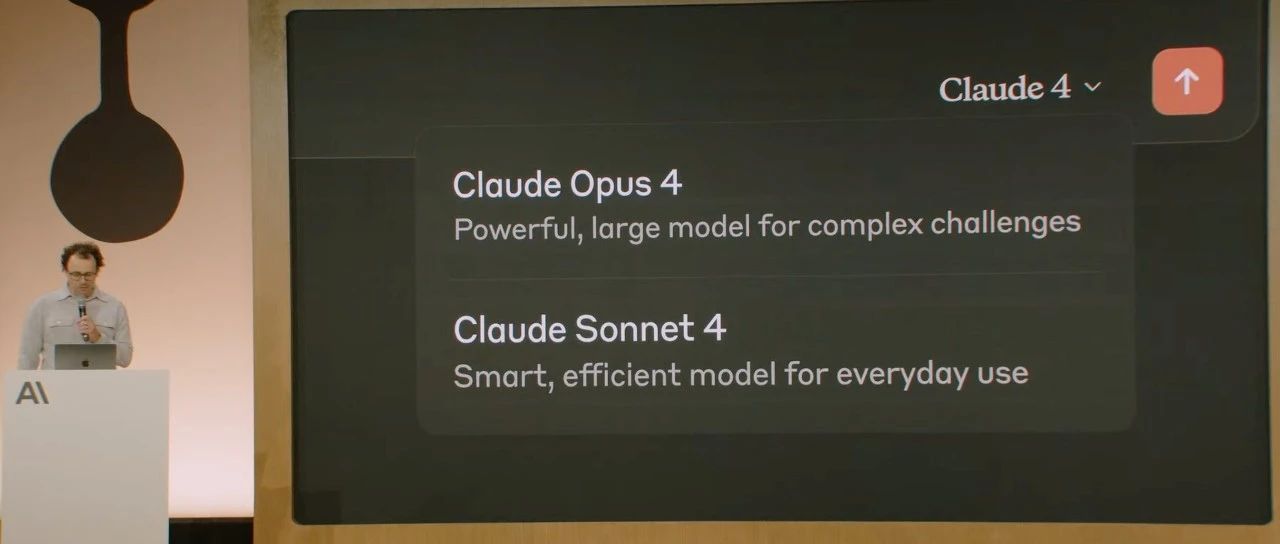
Core Insights - Anthropic has officially launched the Claude 4 series, which includes Claude Opus 4 and Claude Sonnet 4, setting new standards for coding, advanced reasoning, and AI agents [1][3] Model Performance - Claude Opus 4 is described as the most powerful AI model from Anthropic, capable of running tasks for several hours autonomously, outperforming competitors like Google's Gemini 2.5 Pro and OpenAI's models in coding tasks [6][8] - In benchmark tests, Claude Opus 4 achieved 72.5% in SWE-bench and 43.2% in Terminal-bench, leading the field in coding efficiency [10][11] - Claude Sonnet 4, a more cost-effective model, offers excellent coding and reasoning capabilities, achieving 72.7% in SWE-bench, while reducing the likelihood of shortcuts by 65% compared to its predecessor [13][14] Memory and Tool Usage - Claude Opus 4 significantly enhances memory capabilities, allowing it to create and maintain "memory files" for long-term tasks, improving coherence and execution performance [11][20] - Both models can utilize tools during reasoning processes, enhancing their ability to follow instructions accurately and build implicit knowledge over time [19][20] API and Integration - The new models are available on Anthropic API, Amazon Bedrock, and Google Cloud's Vertex AI, with pricing consistent with previous models [15] - Anthropic has also released Claude Code, a command-line tool that integrates with GitHub Actions and development environments like VS Code, facilitating seamless pair programming [17] Market Context - The AI industry is shifting towards reasoning models, with a notable increase in their usage, growing from 2% to 10% of all AI interactions within four months [31][35] - The competitive landscape is intensifying, with major players like OpenAI and Google also releasing advanced models, each showcasing unique strengths [36]
砸65亿美元招揽58岁乔布斯门生!55名苹果元老工程师尽归OpenAI,奥特曼终拿下“盯了”两年多的AI产品!
AI前线· 2025-05-22 04:30
整理 | 华卫 今日凌晨,OpenAI 的 CEO Sam Altman 突然宣布,他们将收购 IO——这家成立仅一年、由苹果前 高管、iPhone 设计师 Jony Ive 领导的初创公司。 在联合采访中,Ive 和 Altman 拒绝透露这类设备的具体形态和运作方式,但表示希望明年分享细 节。58 岁的 Ive 将这一愿景形容为"星际级",目标是创造"提升人类的卓越产品"。40 岁的 Altman 则 补充称:"我们已经等待下一个重大突破 20 年了。我们想为人们带来超越长期使用的传统产品的新事 物。" 斥资 65 亿美元, 前苹果关键设计团队加盟 此次收购主要是全股权交易。据外媒报道,该收购案的价格高达 65 亿美元。两位知情人士透露,根 据去年底双方达成的协议,OpenAI 已持有 IO 23% 的股份,因此此次需支付约 50 亿美元完成全额 收购。 作为交易的一部分,OpenAI 将把 IO 公司约 55 名工程师和产品开发人员都纳入 OpenAI,其中包括 前苹果资深员工 Scott Cannon、Evans Hankey 和 Tang Tan,他们都是 iPhone、iPad 和 Apple W ...