QYResearch

Search documents
行业聚焦:全球航天器太阳能电池行业头部企业排名情况(附TOP3 厂商介绍)
QYResearch· 2025-11-11 02:10
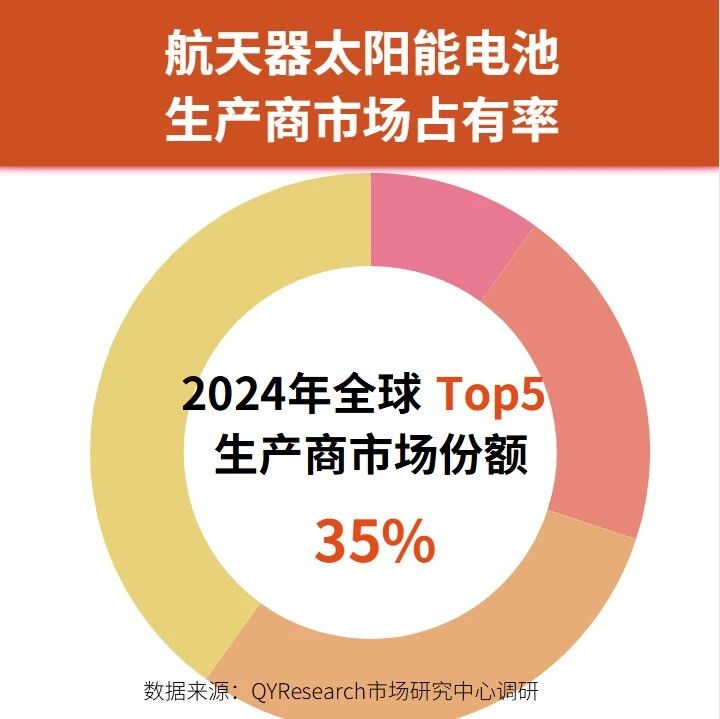
Core Viewpoint - The spacecraft solar cell market is projected to reach $3.1 billion by 2031, with a compound annual growth rate (CAGR) of 12% in the coming years [3]. Market Overview - The global spacecraft solar cell market is expected to grow significantly, driven by advancements in technology and increasing demand for reliable power sources in space applications [3]. - The market is characterized by a few key players, with the top five manufacturers holding approximately 35% of the market share in 2024 [6]. Key Manufacturers - Major manufacturers in the spacecraft solar cell industry include Boeing (Spectrolab), AZUR SPACE Solar Power GmbH, CESI SpA, Rocket Lab (SolAero Technologies), and Sharp Corporation [5][6]. - Spectrolab is recognized for its high-performance solar cells, achieving over 30% efficiency and providing power for critical space missions [7]. - AZUR SPACE specializes in multi-junction solar cells and has been involved in significant European space projects, ensuring high efficiency and radiation resistance [9]. Industry Chain Analysis - The upstream segment focuses on the supply of high-purity semiconductor materials and essential components for solar cell production [11]. - The midstream involves the manufacturing and integration of solar cells, utilizing advanced micro-nano processing techniques to create efficient solar panels [12]. - The downstream segment includes the application of solar cell arrays in various spacecraft, providing essential power for satellites, space stations, and deep-space probes [13]. Industry Trends and Opportunities - Rapid technological advancements are leading to the emergence of perovskite solar cells, which offer lightweight and flexible solutions with efficiencies exceeding 26% [14]. - The commercial space market is expanding, with increasing demand for low Earth orbit satellite constellations and the rise of small spacecraft utilizing flexible solar cells [15]. - Policy support and funding initiatives, such as China's strategic focus on space energy systems and the EU's Horizon Europe program, are fostering industry growth [15]. Challenges and Barriers - Technical challenges include the need for advanced manufacturing processes and the stability of new solar cell technologies, which may limit their application in long-term missions [16]. - High production costs and supply chain risks related to rare metals like gallium and indium pose significant challenges for manufacturers [17]. - The industry has high entry barriers due to the complex technical requirements and long development cycles needed to achieve competitive capabilities [18].


行业聚焦:全球航空级铝材行业头部企业排名情况(附TOP3 厂商介绍)
QYResearch· 2025-11-11 02:10
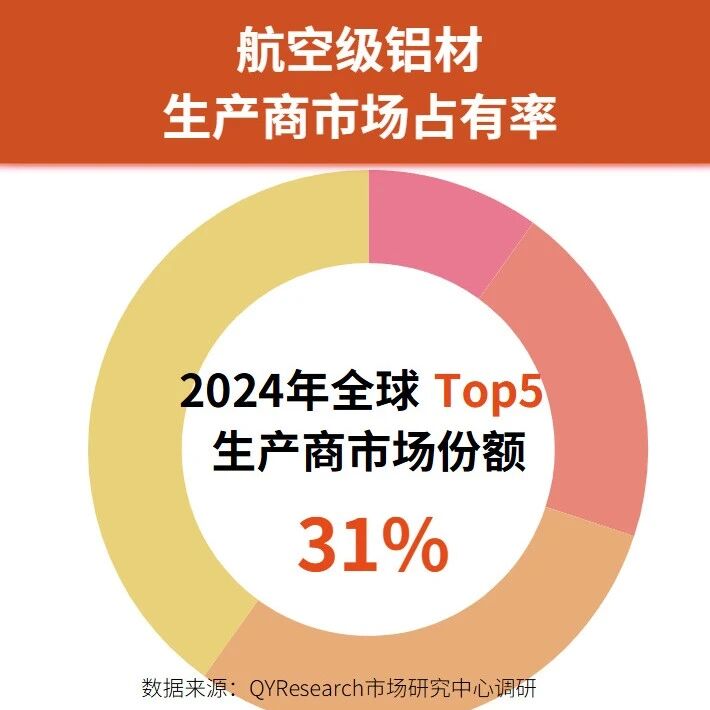
航空级铝材是一类用于航空航天领域的高性能铝合金材料,它通过精密的成分设计和严格的固溶、淬火、时效等热处理工艺, 使其具备比普通铝合金更高的比强度、优异的耐腐蚀性、良好的抗疲劳性能和韧性,能够在极端环境下满足飞行器对结构减 重、安全可靠及长寿命的苛刻要求。 航空级铝材全球市场总体规模 01 根据 QYResearch 最新调研报告显示,到 2024 年,全球航空级铝材产能约 55 0 万 吨,产量约 360 万 吨,全球市场平均价格约为 每吨 3 , 500 美元,行业毛利率约 32% 。市场规模方面,预计 2031 年全球航空级铝材市场规模将达到 206 亿美元,未来几年年 复合增长率 CAGR 为 7.30 % 。 | 序号 | 企业 | | --- | --- | | 1 | Constellium | | 2 | Rio Tinto | | 3 | UC Rusal | | 4 | Kaiser Aluminum | | 5 | Alcoa | | 6 | 中国铝业股份有限公司 | | 7 | Aleris | | 8 | Pierce Aluminum | | 9 | Bunty LLC | | 10 ...
井下装载机市场调研报告:全球市场规模及行业动态
QYResearch· 2025-11-11 02:10
Core Viewpoint - The underground loader industry is experiencing steady growth driven by the rigid demand for mineral resources and advancements in automation and technology [3][11]. Market Demand - The demand for underground loaders is increasing due to the rigid demand for mineral resources such as copper, gold, lithium, and nickel [3]. - The automation level in domestic metal and non-metal mining is improving, leading to equipment upgrades [3]. - Diesel power remains the mainstream power system, but electric options are expected to rise in the future [3]. - Remote control and automation technologies are becoming more prevalent, enhancing safety and efficiency [3]. - The product structure includes small machines (1-3 tons) for narrow tunnels and stable demand, and medium machines (3.1-5 tons) widely used in both metal and non-metal mining [3]. Industry Development Trends - Domestic manufacturers are gradually closing the gap with international counterparts [4]. - Demand for underground loaders is increasing in non-metal mining sectors such as salt and gypsum [4]. - The future direction includes smart and unmanned operations, with remote control and automated navigation improving safety, especially in hazardous environments [4]. Global Market Analysis - The global underground loader market sales reached $51.53 million in 2024 and is projected to reach $69.68 million by 2031, with a CAGR of 4.01% from 2025 to 2031 [6]. - Major manufacturers like XCMG, Liugong, and Epiroc hold about 49% of the international market share [8]. - The 1-3 ton category is significant, expected to account for 75.80% of the market share by 2031, with metal mining holding approximately 83.66% of the market share in 2024 and a CAGR of 6.43% [9]. Industry Opportunities and Drivers - The replacement demand and the need for upgrading old equipment are driving the procurement of new underground loaders [13]. - There is potential for market expansion in developing regions like South America, Africa, and Southeast Asia, where Chinese manufacturers can leverage cost advantages and localized service capabilities [14]. - The push for smart mining is promoting the adoption of remote control and automated systems, which can reduce human exposure to risks and enhance production efficiency [14]. Policy and Safety Standards - The government is accelerating the construction of smart mines and promoting the use of intelligent equipment to replace hazardous manual operations, positively impacting the demand for automated underground equipment [17][18]. - Stricter safety and environmental standards are guiding the procurement of low-emission or electric equipment to reduce ventilation and safety costs [17][18].

行业聚焦:全球非接触式AFM探针行业头部生产商市场份额及排名调查
QYResearch· 2025-11-10 01:43
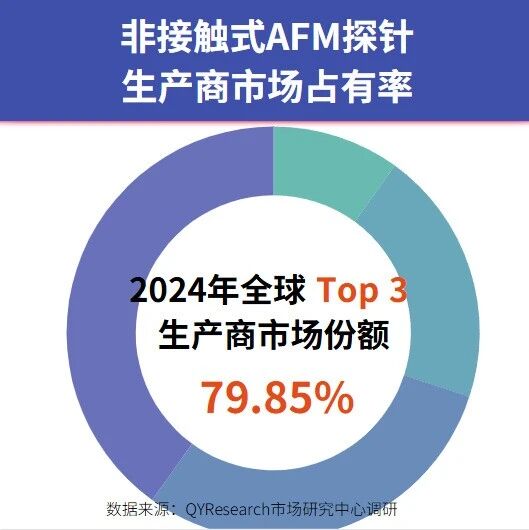
Core Insights - The global market for non-contact AFM probes is projected to reach $0.67 billion by 2031, with a compound annual growth rate (CAGR) of 3.59% in the coming years [3]. Market Overview - Major manufacturers of non-contact AFM probes include NanoWorld Holding, Bruker, and Team Nanotec, which collectively hold approximately 79.85% of the market share [6]. - Silicon non-contact AFM probes are the dominant product type, accounting for about 71.56% of the market [8]. - The primary demand source for non-contact AFM probes is the life sciences and bioimaging sector, which represents around 30.12% of the market [10]. Market Drivers - Government policies and increased R&D investments are driving demand, as high-end scientific instruments like AFM are prioritized for funding [13]. - Expansion in downstream applications, particularly in the semiconductor and biopharmaceutical industries, is shortening probe replacement cycles and increasing demand [14]. - Technological innovations and industry upgrades, including the integration of micro-nano processing with AI and big data, are enhancing probe performance [15]. Market Challenges - Core technology and patent barriers exist, with foreign companies holding most foundational structure patents, leading to performance gaps in domestic products [16]. - Upstream supply and cost pressures are influenced by price fluctuations of key raw materials, affecting production costs [17]. - System performance instability due to environmental interference and limitations in probe dynamics and control systems can impact stability and precision [18]. Industry Opportunities - High-end application expansion in semiconductor processes and biomedicine is increasing the demand for specialized high-performance probes [19]. - Policy-driven domestic substitution initiatives are supporting local manufacturers in achieving import replacement in government procurement and research sectors [20]. - Breakthroughs in technology, including new materials and smart data analysis, are helping to overcome existing bottlenecks [21].
行业聚焦:全球光学超构透镜行业头部生产商市场份额及排名调查
QYResearch· 2025-11-10 01:43
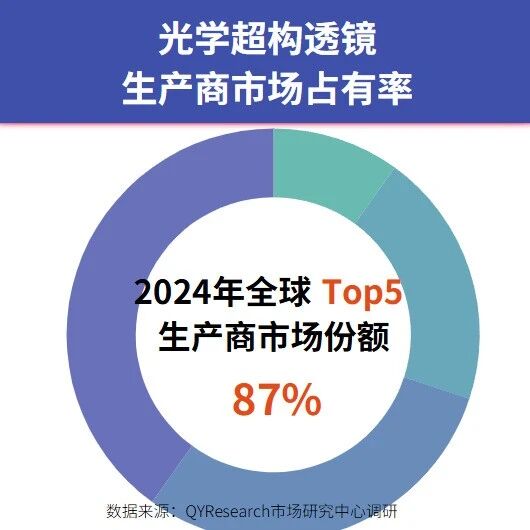
Core Viewpoint - Optical meta-lenses, or Metalens, are poised to revolutionize various optical technologies by providing thinner and lighter alternatives to traditional lenses, with significant potential for applications in cameras, microscopes, and virtual reality devices [2][3]. Market Overview - The global market for optical meta-lenses is projected to reach $3.372 billion by 2031, with a compound annual growth rate (CAGR) of 92% over the coming years [3]. - The primary manufacturers of optical meta-lenses include Metalenz, Inc., NIL Technology, Maitalan, Nanjing Technology, and Shanhua Yuanjing, with the top five companies holding approximately 87% of the market share [5]. Product Segmentation - Infrared meta-lenses currently dominate the product type segment, accounting for about 97% of the market share [8]. - The industrial sector is the largest demand source for optical meta-lenses, representing approximately 35% of the market [9]. Driving Factors - Unique performance advantages of meta-lenses include being lighter, lower cost, superior imaging, easier integration, higher efficiency, and greater design flexibility [16]. - Continuous technological innovation is enhancing the design and manufacturing processes of meta-lenses, leading to improved performance and stability [16]. - Growing market demand in consumer electronics, automotive electronics, medical, and industrial sectors is driving the need for high-precision optical devices [16]. Challenges - The complexity of manufacturing meta-lenses requires advanced nanofabrication technologies, which can be both complicated and costly [17]. - The lack of standardized regulations and certifications for meta-lenses poses challenges for market development and product quality assessment [17]. - High production costs associated with advanced manufacturing methods and materials may limit the market appeal of meta-lenses compared to traditional optical devices [17]. Industry Opportunities - Expanding application fields for meta-lenses in super-resolution microscopy, holographic optics, biomedical imaging, VR/AR, and autonomous driving present new growth opportunities [19]. - The application of new materials and processes, such as graphene and two-photon polymerization (TPP) technology, is enhancing the design and manufacturing capabilities of meta-lenses [19]. - Government policies supporting the optical industry are providing a favorable environment for the growth of the meta-lens market [19]. Collaborative Development - Strengthening collaboration among upstream and downstream companies in the meta-lens supply chain is essential for promoting healthy market development [20].
全球与中国汽车座舱舒适系统市场现状及未来发展趋势
QYResearch· 2025-11-10 01:43
Core Viewpoint - The automotive cabin comfort system is an integrated technological solution designed to enhance passenger comfort, health, and overall driving experience, incorporating features like seat heating, ventilation, massage, adjustable lumbar support, and climate control [2][4]. Market Demand and Trends - There is a significant growth in market demand as automotive consumption shifts from "transportation tools" to "intelligent mobile spaces," leading to increased consumer expectations for comfort in driving experiences [5]. - Traditional comfort features have become standard in mid-to-high-end models, while advanced systems like massage and multi-zone climate control are increasingly being integrated into mainstream vehicles [5]. Technological Integration - Comfort systems are evolving from standalone modules to deeply integrated systems with onboard sensors and intelligent control platforms, utilizing temperature and pressure sensors along with AI algorithms for smart adjustments [6][10]. - The trend towards full-function multi-mode comfort systems is emerging, which consolidates various control functions into a single controller, enhancing adaptability and reducing complexity in production [9][11]. Impact of Electrification and New Energy Vehicles - New energy vehicle manufacturers are focusing more on user experience, making comfort a key selling point, which is driving the adoption of comfort systems [8]. - For instance, electric vehicles are using seat heating as a primary heating method in winter, while the quiet environment of electric vehicles enhances the experience of massage and ventilation systems [12]. Market Size and Growth Projections - The global automotive cabin comfort system market is projected to reach $5.184 billion in sales by 2024 and is expected to grow to $10.559 billion by 2031, with a compound annual growth rate (CAGR) of 10.06% from 2025 to 2031 [15]. - The market is characterized by a competitive landscape where international companies dominate the high-end market, while local Chinese firms are rapidly emerging due to cost and supply chain advantages [15][17]. Key Manufacturers - Major global manufacturers in the automotive cabin comfort system sector include Gentherm, Lear, Forvia, Toyota Boshoku, Hyundai Transys, AEW, Adient, Leggett & Platt, Brose Fahrzeugteile, and others [17][22]. Future Development Directions - The future of automotive cabin comfort systems is expected to focus on further advancements in intelligence, personalization, and health integration, leveraging sensor fusion, AI control algorithms, and human-machine interaction to enhance user experience [17]. - Companies will need to balance technological innovation, functional differentiation, and cost control to meet diverse demands from automakers and consumers in a competitive market [17].

深耕再生塑料行业调研,以专业洞察引领循环经济新浪潮
QYResearch· 2025-11-10 01:43
Core Viewpoint - The recycled plastic industry is experiencing unprecedented development opportunities amid the global circular economy trend, with QYR positioned as a leader in market research since 2015, providing insights to help clients navigate challenges and seize opportunities [2]. Group 1: Market Research Expansion - QYR has expanded its research services to address rapid market changes and diverse client needs, including a specialized survey for the Chinese market to help local companies capitalize on policy shifts [4]. - The research scope has broadened from PCR products to include high-performance engineering plastics such as recycled PS, PC, ABS, and food-grade recycled polyolefins, enabling QYR to offer comprehensive solutions across multiple application areas [4]. Group 2: Technological Innovation - QYR has proactively included emerging technologies like chemical recycling in its research, focusing on the entire chain from chemical recycling of PET to differentiated downstream polyester products, providing clients with a roadmap for future technological advancements [5][6]. - The company emphasizes that technological innovation is crucial for overcoming cost barriers and achieving scalable development in the recycled plastic industry [6]. Group 3: Application Market Insights - The application fields for recycled plastics are expanding, with packaging and consumer goods remaining the largest sectors, projected to account for 37.46% of the market share by 2024 [7]. - China's actual consumption of recycled plastics is expected to reach approximately 19.2 million tons in 2024, reflecting a 5.39% increase from 2023, driven by rising consumer environmental awareness and corporate sustainability strategies [7]. Group 4: Global Perspective and Regional Services - QYR has successfully expanded its service network beyond traditional Western markets to emerging markets in China, Japan, South America, and Southeast Asia, providing localized insights through targeted regional surveys [8]. - The company has established a research network covering major markets to accurately capture regional policy differences, market characteristics, and competitive landscapes, offering clients globally informed yet locally relevant services [8]. Group 5: Driving Sustainable Future - QYR believes that the traditional growth model reliant on resource and capital investment is unsustainable, with true economic growth driven by continuous innovation [9]. - The company has undergone two significant innovation leaps, focusing on niche market research and advancing market segmentation studies to better understand macro trends [9]. - QYR aims to leverage its extensive database and integrate big data and AI technologies to provide forward-looking market intelligence, supporting clients in achieving sustainable development goals in the circular economy [9].

全球与中国电动机械制动(EMB)系统市场现状及未来发展趋势
QYResearch· 2025-11-07 08:55
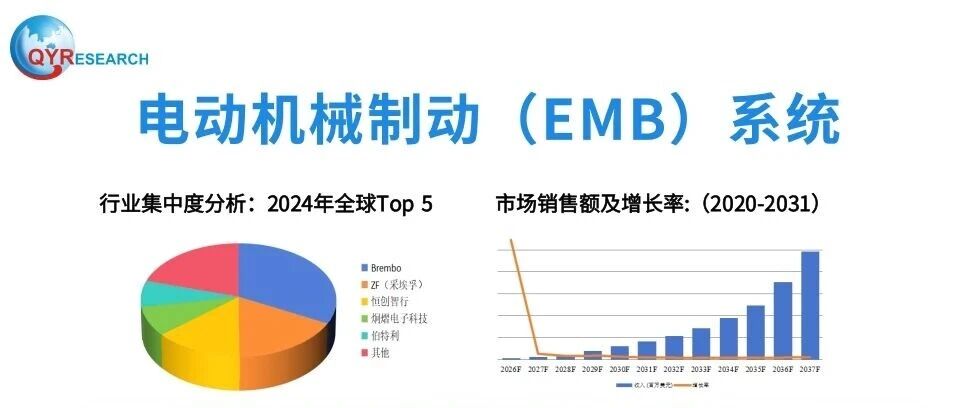
电子机械制动( EMB )系统在现代汽车工业中扮演着重要的角色,它融合了电子控制技术和机械制动系统,为车辆提供了更高效、智能的制 动解决方案。纯电控制的电子机械制动系统( EMB )完全不含机械结构,由电机产生制动力,控制制动器制动。在后续发展中完全通过信号 线接受计算机提供的制动信号来提供制动力,因此也成为线控系统。 注:当前 市场 EHB 液压式线控制动是主流系统, EMB 是未来发展方向,目前 EMB 产品尚未商业化, 但是已经有部分企业已经实现了 EMB 系统 的 完 整 设计并且通过 整车 试验,并给出了预计的商业化年限。 本报告中, 2022 年 -20 25 年的数据基于 EMB 制造商测试样本产生的收入, 2 026 -203 7 年 的数据基于 EMB 逐步商业化后的预测数据。 QYR 电动机械制动(EMB)系统行业目前现状分析 研发进度与技术成熟度 当前 EMB 经过二十余年的技术演进,随着电机、传动机构与控制算法的进步,研发进入从试验样机向小批量可量产的转化期。核心技术集中 在小直径高精度电机、滚珠丝杠等高精传动件、轮边执行器的热管理与磁衰退控制、以及能够替代传统力传感器的电机闭环控制算 ...
行业聚焦:全球充电桩双向变换模块行业头部生产商市场份额及排名调查
QYResearch· 2025-11-07 08:55
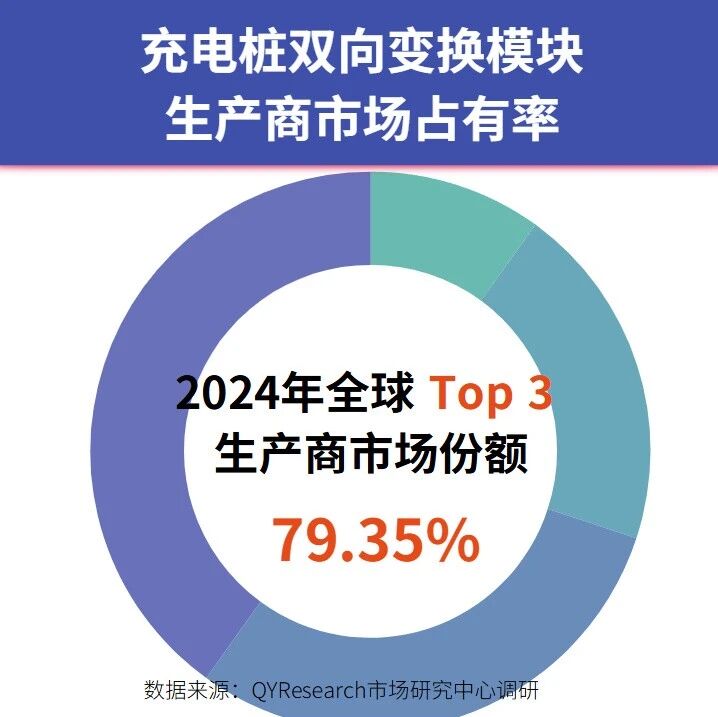
Core Viewpoint - The bidirectional power converter for EV chargers is a crucial component in electric vehicle charging systems, enabling two-way energy flow between the grid and vehicles, thus enhancing energy efficiency and supporting distributed energy storage and smart grid interactions [2][4]. Market Overview - The global market for bidirectional power converters is projected to reach $0.9 billion by 2031, with a compound annual growth rate (CAGR) of 22.5% over the coming years [4]. - In 2024, the top three manufacturers are expected to hold approximately 79.35% of the market share [9]. Industry Chain Analysis - The bidirectional converter typically consists of power semiconductor devices (IGBT, SiC MOSFET), bidirectional DC/DC converters, AC/DC rectifiers, digital control units, and electromagnetic interference suppression systems [11]. - The upstream supply chain includes manufacturers of power semiconductors, inductors, transformers, electrolytic capacitors, and control chip designers, with key players like Infineon, Mitsubishi Electric, and Texas Instruments leading in SiC and GaN power devices [11]. - The midstream involves circuit design, power topology optimization, thermal management, control algorithm integration, and assembly/testing, characterized by high technical barriers and customization [12]. - The downstream market covers public and home charging stations, with public charging stations benefiting from energy storage regulation and home charging stations supporting energy management systems [12]. Industry Development Opportunities and Risks - The rapid growth of global electric vehicle ownership is driving demand for bidirectional energy interaction in charging infrastructure [13]. - The implementation of energy internet and smart grid strategies positions electric vehicles as distributed energy storage units [13]. - The commercialization of SiC and GaN devices significantly enhances energy conversion efficiency [13]. - Challenges include the complexity of bidirectional power topology, high costs, and the lack of unified international standards [14]. Industry Development Trends - SiC power devices are expected to replace traditional silicon devices, achieving higher power density and lower losses [15]. - Cloud control and AI energy scheduling will become mainstream, enabling remote monitoring and adaptive energy management [15]. - The integration of modules with photovoltaics, energy storage, and electric vehicles will support the development of urban microgrids and distributed energy systems [15].
行业聚焦:全球安全监测云平台行业头部生产商市场份额及排名调查
QYResearch· 2025-11-07 08:55
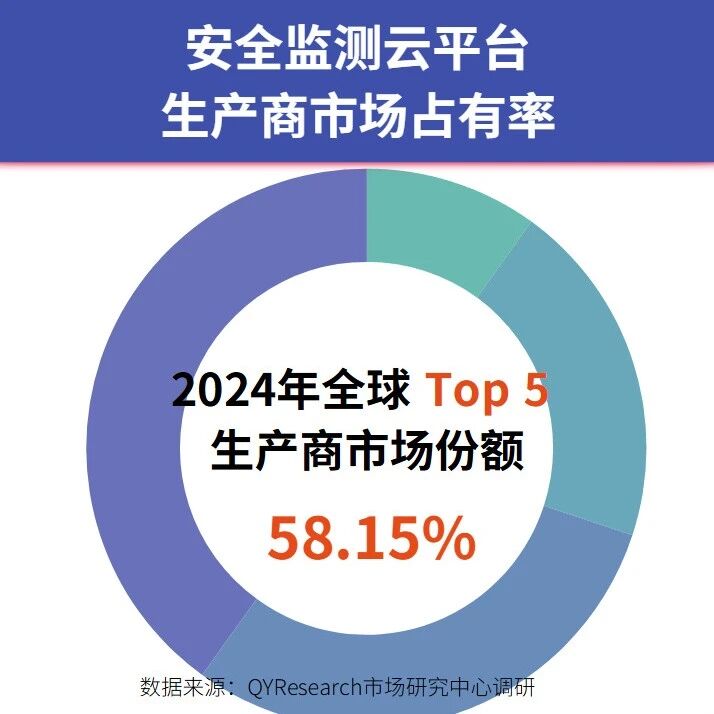
Core Insights - The article discusses the growth and significance of the global security monitoring cloud platform market, projecting a market size of $1.423 billion by 2031 with a compound annual growth rate (CAGR) of 7.51% in the coming years [2]. Market Overview - The security monitoring cloud platform is a service based on cloud computing architecture that collects system logs, performance metrics, and security event data for centralized analysis and management [2]. - Major players in the global market include Microsoft, AWS, Cisco, and CrowdStrike, with the top five companies holding approximately 58.15% of the market share [7]. Key Drivers - Accelerated digital transformation and the adoption of multi-cloud and hybrid cloud architectures create a pressing demand for unified security visualization [9]. - Increasing complexity of cyber threats, such as ransomware and APT attacks, necessitates the development of proactive defense cloud platforms [9]. - Stricter compliance regulations, including GDPR and cybersecurity laws, require companies to implement security monitoring systems [9]. - Maturity of AI and big data technologies enhances threat detection accuracy and response speed through machine learning [9]. - The rise of remote work necessitates centralized platforms for comprehensive security situational awareness [9]. Major Challenges - Data privacy and compliance risks arise from cross-regional data transfers, potentially violating local regulations [10]. - High integration complexity due to heterogeneous IT environments makes data collection and interface unification challenging [10]. - High false positive rates and alert fatigue can reduce operational efficiency [10]. - Initial investment costs can be burdensome, especially for small and medium-sized enterprises [10]. - A shortage of professionals with cloud security and data analysis skills poses a significant challenge [10]. Industry Opportunities - The promotion of zero-trust architecture positions security monitoring cloud platforms as essential components for continuous verification [12]. - The trend of SASE (Secure Access Service Edge) integration drives the embedding of monitoring platforms into network services [12]. - The rise of Managed Security Service Providers (MSSPs) offers on-demand subscription-based security operations for SMEs [12]. - Integration of AI automation (SOAR) enhances threat response capabilities and adds value to products [12]. - The acceleration of domestic alternatives in critical industries creates opportunities for local vendors [12].