QYResearch

Search documents
行业聚焦:全球工业氯化铁市场头部企业份额调研(附Top10厂商名单)
QYResearch· 2025-09-02 08:44
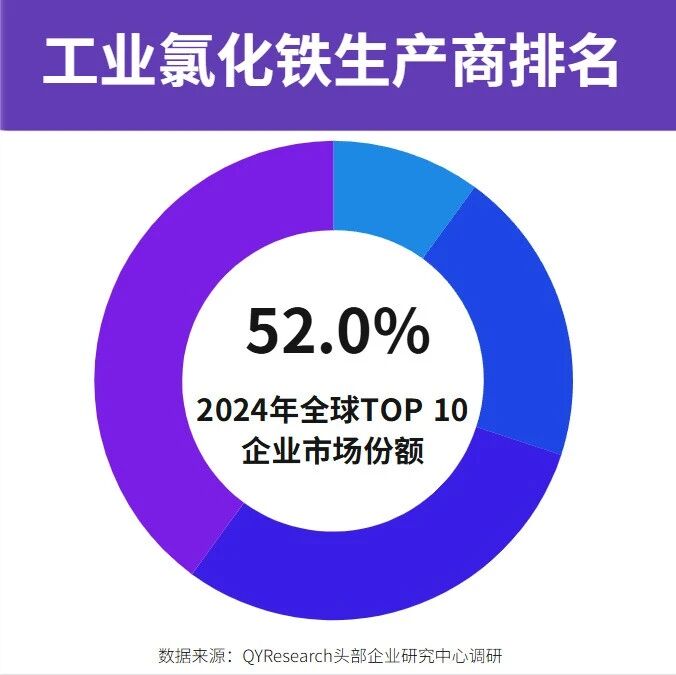
氯化铁,又称三氯化铁,是一种商品化学品,其天然形态很少见。氯化铁在全球范围内被广泛用作水处理中的絮凝剂。氯化铁的其他应用 包括用于印刷电路板的生产和作为有机合成的催化剂。在本报告中,我们主要基于液体进行计算, 1 吨固体氯化铁可以转化为约 2 吨液体 氯化铁。 工业氯化铁全球市场总体规模 据 QYResearch 调研团队最新报告"全球工业氯化铁市场报告 2025-2031 "显示,预计 2031 年全球工业氯化铁市场规模将达到 14.5 亿美元, 未来几年年复合增长率 CAGR 为 5.4% 。 根据 QYResearch 头部企业研究中心调研,全球范围内工业氯化铁生产商主要包括 Kemira 、 Tessenderlo Group 、 PVS Chemicals 、昌邑宏 达化工、 Feralco 、 SIDRA Wasserchemie 、坤彩科技、 BASF 、 Basic Chemical Industries 、 Chemifloc 等。 2024 年,全球前十强厂商占有 大约 52.0% 的市场份额。 就产品类型而言,目前液态氯化铁是最主要的细分产品,占据大约 75.8% 的份额。 就产品应用而 ...

中国乘用车直流充电枪市场现状研究分析与发展前景预测报告
QYResearch· 2025-09-02 08:44
Core Viewpoint - The article discusses the rapid growth and development of the passenger car DC charging gun market in China, highlighting the increasing demand driven by the rise of electric vehicles and the expansion of public fast charging networks [6][8]. Product Definition and Market Overview - Passenger car DC charging guns, also known as fast charging guns, are characterized by high power and current, enabling quick charging of electric vehicles, especially suitable for long-distance travel or urgent charging needs [3]. - The market for passenger car DC charging guns in China is projected to reach a sales revenue of 1.658 billion yuan in 2024, with an expected growth to 4.824 billion yuan by 2031, reflecting a compound annual growth rate (CAGR) of 14.55% from 2025 to 2031 [6]. Product Type Segmentation - Ordinary DC guns are standard devices that provide rapid charging services, significantly reducing charging time and are essential for public charging stations [4]. - Liquid-cooled supercharging guns utilize a liquid cooling system to enhance charging efficiency and speed, with current levels reaching around 500A, addressing heat generation issues during high current charging [4]. Application Field Segmentation - Public fast charging stations play a crucial role in urban areas, providing efficient charging services for taxis, ride-hailing vehicles, and private cars, with a market share of approximately 64.54% in 2024 [5][6]. - Fast charging in highway service areas is essential for long-distance travel, requiring higher power levels for efficient charging [5]. Market Dynamics and Competitive Landscape - Key players in the Chinese market include companies like Wolong Nuclear Materials, Yonggui Electric, and Phoenix Electric, with the top three companies holding about 62.92% of the market share in 2024 [7]. - The industry is expected to see increased competition, with a focus on higher power, better compatibility, and improved heat dissipation capabilities in charging guns [7]. Driving Factors - The rapid increase in the penetration rate of new energy vehicles is a significant driver for the expansion of the passenger car DC charging gun market, with new energy vehicle production and sales growing by 34.4% and 35.5% respectively in 2024 [10]. - Government policies supporting the development of charging infrastructure and the promotion of high-power DC fast charging technology are crucial for the industry's growth [10][11]. Industry Challenges - The uneven development of charging infrastructure across regions poses a challenge, particularly in less developed areas where public charging facilities are lacking [15]. - Cost pressures from fluctuating prices of high-performance materials and intense market competition are significant concerns for manufacturers [15]. Key Policies - Various government policies aim to enhance the charging infrastructure, including the construction of high-speed charging stations and urban fast charging networks, to support the growing demand for electric vehicles [17].

全球数字减影血管造影系统市场前10强生产商排名及市场占有率
QYResearch· 2025-09-01 09:42
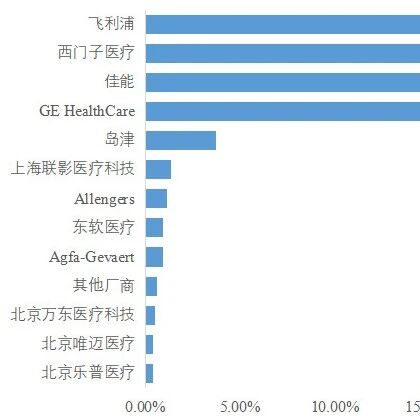
Core Viewpoint - The digital subtraction angiography (DSA) system market is projected to reach $7.974 billion by 2031, with a compound annual growth rate (CAGR) of 7.18% in the coming years [1][4]. Market Overview - Major manufacturers of DSA systems globally include Philips, Siemens Healthineers, and Canon, with the top five companies holding approximately 92.90% of the market share [4]. - The primary product type is the floor-mounted C-arm system, which accounts for about 51.50% of the market [5]. - Cardiovascular diseases represent the largest demand source, capturing around 67.60% of the market [10]. Key Drivers - **Aging Population and Disease Burden**: The acceleration of aging in China and the rising incidence of cardiovascular diseases are driving the demand for DSA in interventional surgeries [14]. - **Policy Support**: The Chinese government is encouraging domestic production of high-end medical equipment through policies like the "Healthy China 2030" plan, which includes funding and tax incentives [14]. - **Technological Integration and Upgrades**: The integration of AI and 3D reconstruction technologies is enhancing diagnostic efficiency and promoting the development of DSA towards precision and minimally invasive procedures [14]. Challenges - **Dependence on Core Components**: High-end DSA equipment relies on advanced components, and while domestic companies have made progress, they still lag behind international giants in key technologies [16]. - **Patent Barriers**: Domestic companies face potential patent infringement issues during R&D, which can hinder innovation [16]. - **Service and Maintenance Costs**: High maintenance costs and insufficient service network coverage for domestic companies compared to international brands pose challenges [17]. Industry Opportunities - **Government Initiatives**: The National Health Commission's guidance on promoting domestic high-end medical equipment development is expected to support local companies [18]. - **Market Expansion in Rural Areas**: The "Thousand County Project" aims for 90% of county-level hospitals to be equipped with DSA devices by 2027, with financial support covering 30%-40% of procurement costs [18]. - **Regulatory Support for Innovation**: The introduction of expedited approval processes for DSA devices with integrated AI functionalities is likely to enhance market entry for innovative products [18].
中国再生塑料市场现状研究分析与发展前景预测报告
QYResearch· 2025-09-01 09:42
Core Viewpoint - The recycled plastic market is expanding due to increasing consumer demand for sustainable products and government initiatives promoting environmental protection [6][13]. Group 1: Market Overview - Recycled plastic is produced from waste plastic through collection, sorting, cleaning, and reprocessing into new resin pellets, contributing to a circular economy [2][4]. - The market for recycled plastic in China is projected to reach approximately 19.2 million tons in actual consumption by 2024, reflecting a growth of 5.39% compared to 2023 [8]. - The largest application area for recycled plastic is packaging and consumer goods, expected to account for 37.46% of the market share in 2024 [8]. Group 2: Industry Chain - The recycled plastic industry chain consists of three main segments: front-end plastic recycling, mid-end plastic regeneration, and back-end utilization of recycled plastics [4]. - Key players in the Chinese recycled plastic market include companies like Veolia Huafei Group, Kingfa Technology, and Dongfang Shenghong, which together will hold a market share of 10.54% in 2024 [11]. Group 3: Challenges and Policies - The recycled plastic market faces challenges such as competition with virgin resin prices and rising recycling costs due to import bans on waste materials in countries like China and India [13]. - Governments worldwide are implementing policies to encourage the use of recycled plastics, including waste treatment cost reductions, tax incentives, and mandatory recycling standards [13][14]. - Significant policies affecting the recycled plastic industry include the revised Solid Waste Pollution Prevention and Control Law and the "14th Five-Year" Circular Economy Development Plan, which emphasize plastic waste recycling and resource utilization [14].

全球碳纳米管冷阴极X射线管市场前10强生产商排名及市场占有率
QYResearch· 2025-09-01 09:42
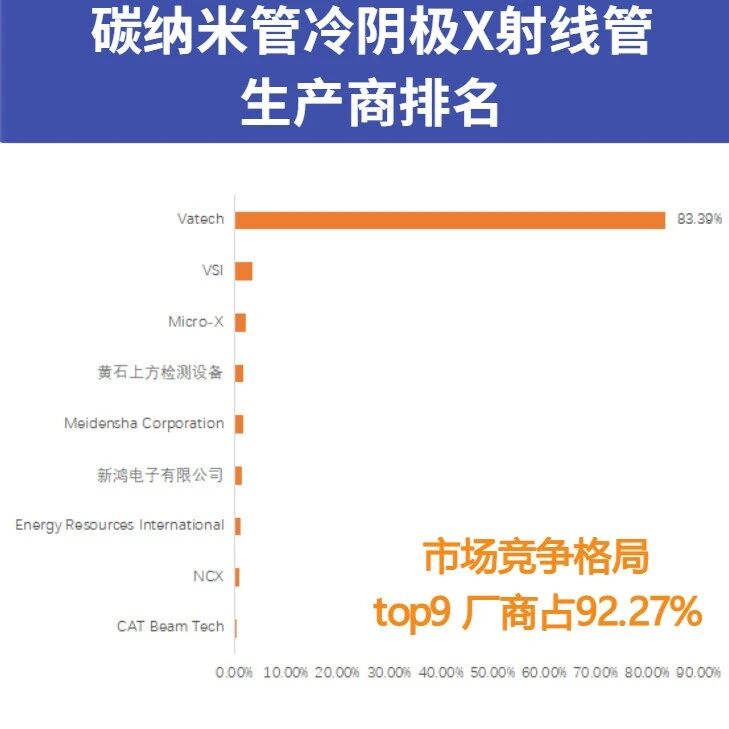
Core Viewpoint - The carbon nanotube cold cathode X-ray tube is a new type of X-ray generator based on the field emission principle of carbon nanotubes, which eliminates the need for traditional heating processes, offering advantages such as microsecond response, low power consumption, and long lifespan [1][6][10]. Market Overview - According to QYResearch, the global market size for carbon nanotube cold cathode X-ray tubes is expected to reach $0.89 billion by 2030, with a compound annual growth rate (CAGR) of 12.15% in the coming years [1]. - The top five manufacturers in the global market hold approximately 92.27% of the market share, with major producers located in the Asia-Pacific region [5]. Applications in Medical Field - In the medical sector, applications include static CT systems for rapid 3D imaging without mechanical movement, enhancing cardiovascular monitoring and oral diagnostics [6]. - Ultra-fast dental tomography equipment provides richer 3D details at the same radiation dose, significantly improving the detection of small lesions [6]. Future Development Trends in Medical Applications - The future trends focus on three main areas: 1. Breaking through imaging speed limitations towards sub-millisecond scanning for real-time monitoring of dynamic organs [6]. 2. Miniaturization and low-dose technology to promote portable dental CT and breast imaging devices, further reducing radiation exposure [6]. 3. Multi-modal intelligent imaging that integrates gene sequencing and AI algorithms for customized stents and drugs, enhancing targeted treatment precision [6]. Applications in Security and Industrial Fields - In security, the static CT intelligent inspection system utilizes hundreds of independently controllable carbon nanotube cathodes for high-resolution 3D imaging, capable of automatically identifying explosives and drugs [9]. - In industrial applications, the technology is used in nuclear power detection systems and materials science research tools, enabling precise analysis at the nanoscale [13]. Future Development Trends in Security and Industrial Applications - Future trends in security and industrial applications include: 1. Upgrading scanning speed and channel size to exceed 1 meter per second, accommodating large cargo demands [9]. 2. Integrating low-dose technology with intelligent algorithms to enhance the accuracy of prohibited item detection [9]. 3. Multi-modal integration for improved penetration analysis of complex items [9]. 4. Domestic breakthroughs in high-pressure micro-focus X-ray sources to promote localization and reduce reliance on international giants [9]. Summary of Key Manufacturers - Major manufacturers in the carbon nanotube cold cathode X-ray tube market include Vatech, VSI, VEC Imaging, Micro-X, and others, focusing on applications in medical, security, and industrial sectors [15].
以数据见证专业:QYResearch 2025年8月权威引用案例精选
QYResearch· 2025-08-29 23:04
Group 1 - The global game console accessories market is projected to reach $16.49 billion in 2024 and $34.24 billion by 2031, with a compound annual growth rate (CAGR) of 11.2% from 2025 to 2031 [4] - The flexible tactile sensor market is expected to grow from approximately $1.53 billion in 2022 to $5.32 billion by 2029, with a CAGR of 17.9% [7][28] - The IoT smart terminal market for two-wheeled vehicles is forecasted to reach $19.75 billion by 2031, with a CAGR of 16.3% from 2025 to 2031 [11] Group 2 - The Southeast Asian metal packaging market for food and beverages is anticipated to reach $5.75 billion by 2029, providing significant growth opportunities for companies in the region [13] - The global electric scooter market is projected to reach $2.37 billion in 2024 and $5.685 billion by 2031, with a CAGR of 13.5% from 2025 to 2031 [16] - The automotive micro-motor market is expected to reach $20.4 billion by 2031, driven by the increasing use of micro-motors in high-end electric vehicles [18] Group 3 - The global SiC power module market is estimated to reach $65.71 billion by 2030, with a CAGR of 24.1% from 2024 to 2030 [20] - The edge AI chip market is projected to grow from $3.246 billion in 2024 to $9.342 billion by 2031, with a CAGR of 16.5% [22] - The quartz crystal component market is dominated by the top ten manufacturers, holding a combined market share of 66.4%, with the company ranking ninth globally at 3.08% [24] Group 4 - The global robotic multi-finger dexterous hand market is expected to exceed $5 billion by 2030, with a CAGR of 64.6% from 2024 to 2030 [51] - The global high-pressure cleaning machine market is projected to reach $4.42 billion by 2031, with a CAGR of 4.7% from 2025 to 2031 [53] - The global FMM market is expected to grow from $365 million in 2024 to $952 million by 2031, indicating a shift in industry dynamics [56]

全球防飞溅片市场前10强生产商排名及市场占有率
QYResearch· 2025-08-29 08:37
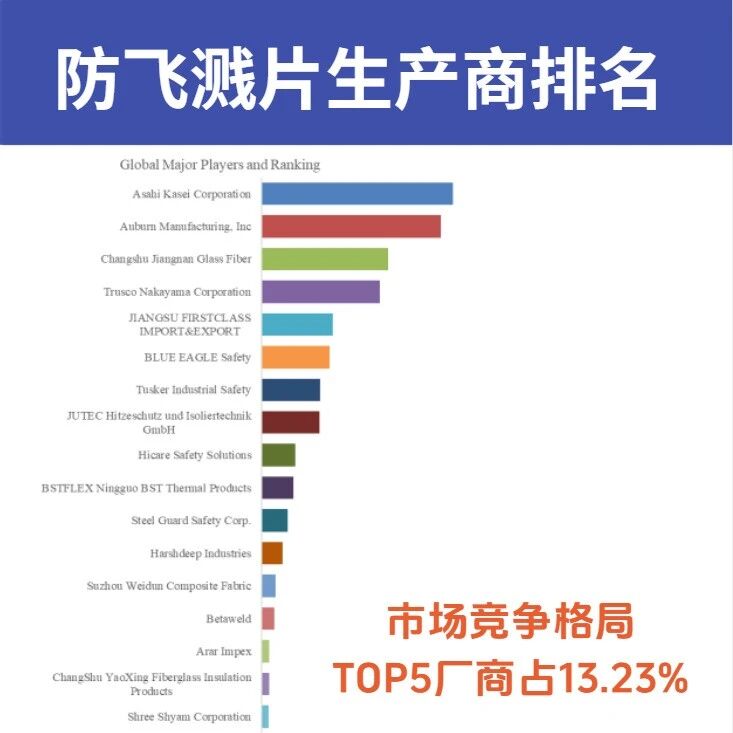
Core Viewpoint - The global spatter sheet market is projected to reach $186 million by 2031, with a compound annual growth rate (CAGR) of 5.19% in the coming years [1]. Market Overview - The primary manufacturers of spatter sheets globally include Asahi Kasei Corporation, Auburn Manufacturing, Inc., and Jiangnan Glass Fiber, with the top five companies holding approximately 13.23% of the market share [5]. - The core manufacturers are mainly located in the Asia-Pacific and Europe-America regions [5]. Product Segmentation - Carbon fiber and carbonized fiber are the leading product types, accounting for about 46% of the market share [7]. - In terms of sales volume, glass fiber and silicon fiber dominate, representing approximately 49% of the market share [9]. - The industrial sector is the primary source of demand, making up around 79% of the market [12]. Driving Factors - The surge in electric vehicle (EV) battery production is a major driver, as manufacturers like Tesla and CATL expand battery module output, necessitating materials that meet ESD standards [16]. - Innovations such as graphene-enhanced coatings and 3D printed composite materials are transforming performance capabilities [16]. - The next generation of spatter sheets is expected to exceed temperature resistance of 1600 °C due to advancements in quartz fiber composite technology [16]. Challenges - Fluctuations in raw material prices, such as bauxite and high-purity silica, significantly impact production costs, particularly for small and medium enterprises lacking vertical integration [17]. - The market faces intense competition, with low-cost Asian manufacturers dominating price-sensitive segments, while high-end markets contend with diversified international giants [17]. Industry Opportunities - Technological advancements in welding and coating are reducing the demand for traditional spatter sheets, prompting manufacturers to explore high-end solutions like graphene-enhanced composites [18]. - The report by QYResearch provides insights into the overall market size, major companies' market shares, and trends over the past and next five years [18].
全球电池包壳体市场前10强生产商排名及市场占有率
QYResearch· 2025-08-29 08:37
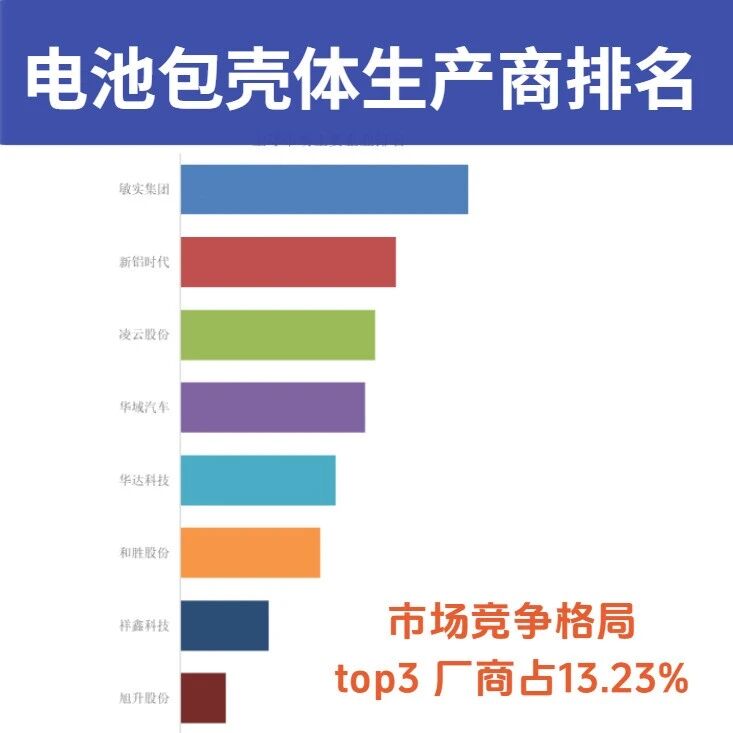
Core Viewpoint - The global battery pack casing market is projected to reach $16.35 billion by 2031, with a compound annual growth rate (CAGR) of 15.1% in the coming years [1]. Market Overview - The battery pack casing is a critical structure in electric vehicles and energy storage systems, providing a stable and sealed space for battery modules and protecting them from impacts and environmental factors [1]. - Major manufacturers in the global battery pack casing market include Minth Group and others, with the top three companies holding approximately 16.98% market share in 2024 [5]. Product Segmentation - Aluminum is the dominant product type, accounting for about 86.9% of the market share [7]. - The primary application for battery casings is in power batteries, which represent approximately 79.0% of the demand [8]. Market Drivers - The rapid growth of the global new energy vehicle market and home/industrial energy storage market is driving the demand for battery pack casings [8]. - Advances in material science, structural design, and thermal management technology are enhancing the impact resistance, thermal conductivity, flame retardancy, and lightweight characteristics of battery pack casings [8]. Market Challenges - Economic slowdown in global and Chinese markets may indirectly pressure the demand for new energy vehicles, affecting the battery pack casing market [8]. - Global supply chain issues, including international trade policies and geopolitical factors, can impact the costs and delivery timelines for battery pack casings [8]. Industry Opportunities - Supportive policies for new energy vehicles and energy storage systems, including subsidies and safety standards, provide a dual guarantee of policy and technology for battery pack casing manufacturers [8].
中国新能源汽车高压配电盒市场现状研究分析与发展前景预测报告
QYResearch· 2025-08-29 08:37
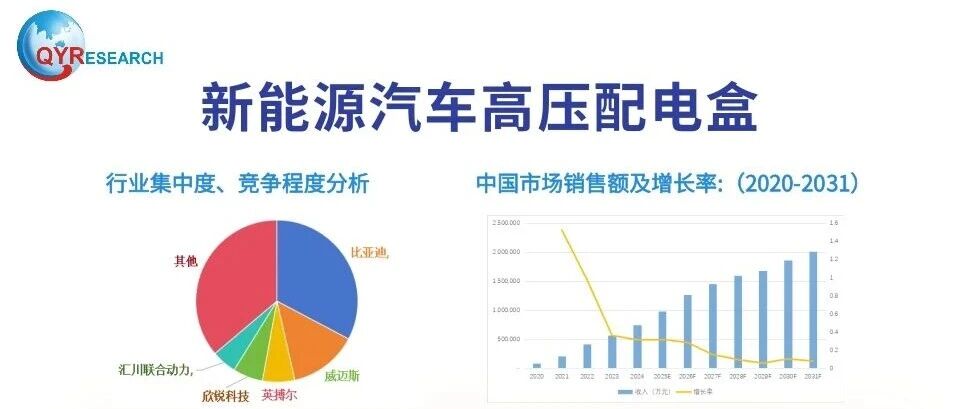
Core Viewpoint - The Chinese high-voltage distribution box (PDU) market for new energy vehicles is experiencing rapid growth, driven by increasing demand for electric vehicles and advancements in technology, with a projected market size of 20.12 billion yuan by 2031, growing at a CAGR of 12.67% from 2024 [2][11]. Market Overview - The market for high-voltage distribution boxes in China is expected to reach 7.452 billion yuan in 2024, with significant growth anticipated in the following years [2]. - The market is primarily divided into integrated and independent high-voltage distribution boxes, with integrated boxes dominating the market due to their compact design and reliability, accounting for 91% of revenue in 2024 [5]. - Pure electric vehicles are the largest application segment, representing 70% of the revenue share in the high-voltage distribution box market in 2024 [6]. Competitive Landscape - The market is characterized by a concentration of leading companies, with BYD maintaining a dominant position due to its vertical integration capabilities [7]. - Other key players include Weimais, Yingboer, Xinrui Technology, Huichuan United Power, and Futec Technology, which excel in high-voltage electrical technology and customer responsiveness [7]. - Huawei Digital Energy is emerging as a significant player by leveraging its expertise in smart hardware and energy management [7]. Industry Drivers - The rapid growth in new energy vehicle sales and the global shift towards electrification are driving the demand for high-voltage distribution boxes, which are essential components of electric vehicle electrical systems [13]. - Government policies supporting the development of new energy vehicles, including subsidies and infrastructure investments, are creating a favorable environment for market growth [13]. - Technological innovations in high-voltage distribution boxes, such as improvements in pressure resistance, thermal management, and EMC protection, are enhancing product performance and safety [13]. Industry Challenges - Increasing cost pressures and intensified price competition are challenges faced by manufacturers, as the need for high-performance products drives up R&D and production costs [14]. - Supply chain stability is a concern due to reliance on high-precision components and new materials, with disruptions potentially impacting production and costs [14]. - The lack of unified industry standards across different regions complicates manufacturing processes and may affect product quality and safety [16].

全球三相电能质量分析仪市场前10强生产商排名及市场占有率
QYResearch· 2025-08-28 09:47
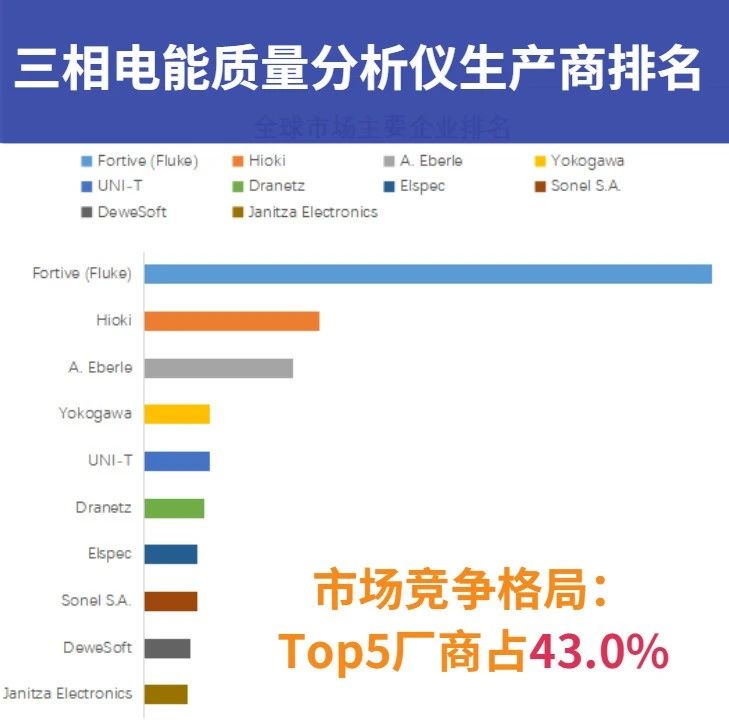
Core Viewpoint - The global market for three-phase power quality analyzers is projected to reach $270 million by 2030, with a compound annual growth rate (CAGR) of 4.8% in the coming years [3]. Market Overview - The three-phase power quality analyzer is a specialized electrical measurement instrument used to monitor, record, and analyze power quality in three-phase power systems [1]. - Key parameters measured include voltage, current, frequency, power factor, harmonics, transients, flicker, and imbalance, which are essential for diagnosing power-related issues and optimizing system performance [1]. Market Size and Growth - According to QYResearch, the global market size for three-phase power quality analyzers is expected to reach $270 million by 2030, with a CAGR of 4.8% [3]. Key Players - Major manufacturers in the global market include Fortive (Fluke), Hioki, A. Eberle, Yokogawa, UNI-T, Dranetz, Elspec, Sonel S.A., DeweSoft, and Janitza Electronics [5]. - The top five manufacturers are expected to hold approximately 43.0% of the market share in 2024 [5]. Product Segmentation - The Portable Type is the dominant product segment, accounting for about 84.2% of the market share [7]. Application Segmentation - The Electric Power Enterprise is the primary source of demand, representing approximately 50.8% of the market [9]. Key Drivers - The expansion of renewable energy and distributed generation is driving the demand for advanced power quality monitoring, as these sources can introduce volatility and harmonics into the grid [11]. - The growing need for reliable power in critical infrastructure such as hospitals, data centers, and manufacturing facilities is also a significant driver for the adoption of power quality analyzers [12]. Challenges - Competition from alternative monitoring solutions, such as multifunction smart meters and integrated energy management systems, poses a challenge to the demand for dedicated analyzers [13]. - Market fragmentation and price pressure due to the presence of numerous small and medium-sized manufacturers, particularly in Asia, may erode profit margins [16]. - Low awareness among end-users regarding the long-term benefits of power quality analyzers can hinder market growth [17].