QYResearch

Search documents
《全球及中国植入式给药装置市场:规模扩张与增长前景》
QYResearch· 2025-05-28 09:30
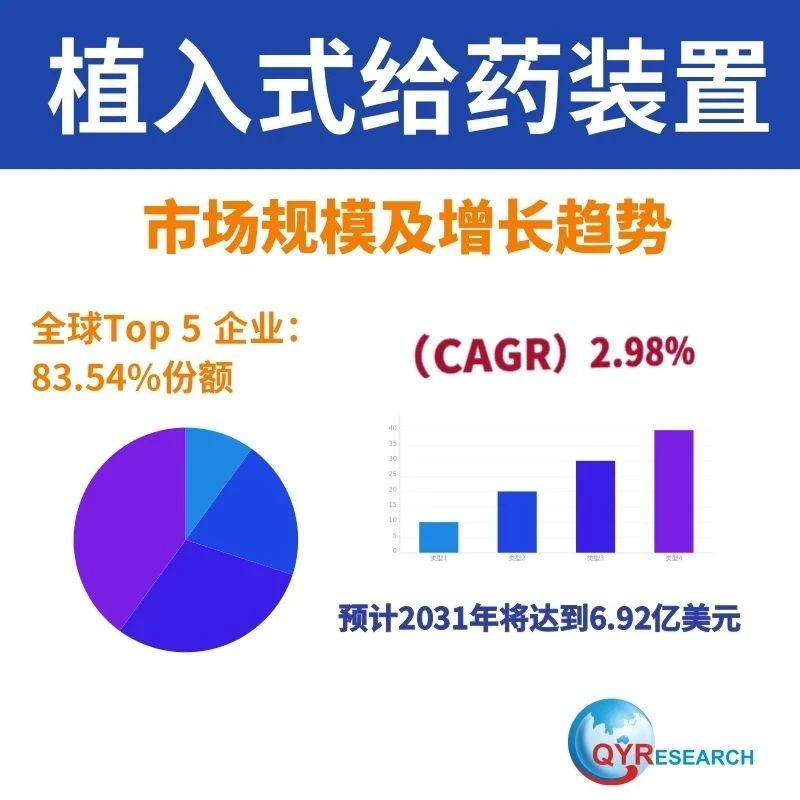
Core Viewpoint - The article discusses the growth and trends in the global and Chinese implantable drug delivery device market, highlighting the increasing demand driven by chronic diseases and advancements in medical technology [1][5][7]. Market Overview - The global implantable drug delivery device market is projected to reach $565 million in sales by 2024 and $692 million by 2031, with a compound annual growth rate (CAGR) of 2.98% from 2025 to 2031 [1]. - The Chinese market is expected to grow from $9 million in 2024 to $13.4 million by 2031, representing approximately 16% and 1.93% of the global market, respectively [4]. Competitive Landscape - The market is highly concentrated, with the top five companies (BD, B. Braun, AngioDynamics, ICU Medical, and Linhua Medical) holding 83.54% of the market share in 2024 [4]. - BD leads the industry with innovative infusion solutions and a global supply chain, while other companies focus on specific market segments to meet diverse clinical needs [4]. Growth Drivers - The increasing prevalence of chronic diseases such as cancer and diabetes is driving the demand for long-term intravenous infusion, making implantable drug delivery devices more appealing due to their advantages in reducing repeated punctures and vascular damage [5]. - Advances in medical technology, including safer anti-infection coatings and smart monitoring features, enhance device reliability and patient experience [5]. - Improved healthcare systems and expanded insurance coverage are reducing the financial burden on patients, facilitating market penetration [5]. Challenges - High costs associated with implantable drug delivery devices, including surgical and post-care expenses, limit their adoption in developing countries [5]. - Despite technological advancements, risks of complications such as infections and thrombosis remain, requiring skilled operation by healthcare professionals [5]. - Regulatory complexities and varying standards across countries prolong product approval timelines, impacting market entry [5]. Future Trends - The market is expected to evolve towards technological innovation and smart solutions, with advancements in biocompatible materials and remote monitoring technologies enhancing safety and patient comfort [6][7]. - The demand for personalized medication plans is increasing, pushing products towards more efficient, safer, and smarter designs [7]. - The competition will intensify, focusing on product innovation, market expansion, and cost control, particularly in high-value areas like anti-infection technology and smart infusion [6][7].

中国针头滤器市场现状研究分析与发展前景预测报告
QYResearch· 2025-05-28 09:30
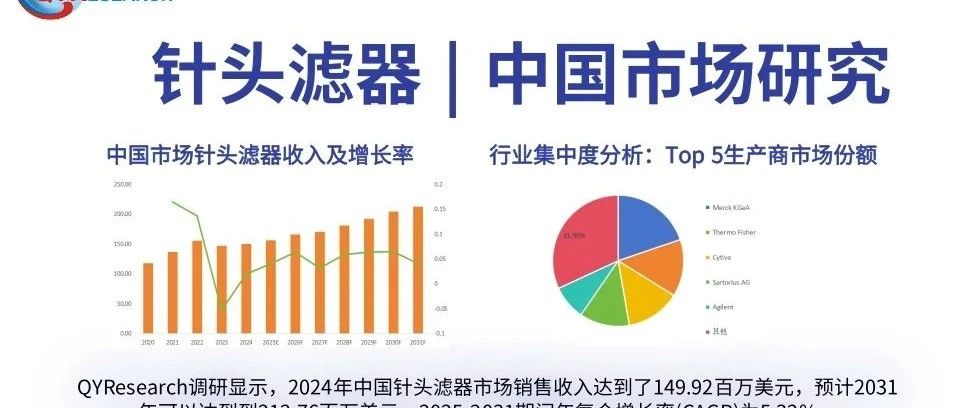
Core Viewpoint - The needle filter market in China is expected to grow steadily, with a projected market size of approximately $149.92 million in 2024, reaching $212.76 million by 2031, reflecting a compound annual growth rate (CAGR) of 5.32% from 2025 to 2031 [6]. Market Overview - The needle filter market in China is characterized by a significant presence of international manufacturers, with the top three companies holding about 47.27% of the market share in 2024 [6]. - Major international players include Merck KGaA, Thermo Fisher, and Cytiva, which dominate the market due to their high product prices, strong brand recognition, and high market acceptance [6]. - Domestic manufacturers such as Tianjin Jinteng Experimental Equipment, Meibolai, and Anpu Experimental are also notable in the market [6]. Product and Application Insights - Nylon needle filters are a key product type, with a projected sales volume of 129.14 million units in 2024, accounting for 31.65% of the total sales volume [9]. - The pharmaceutical sector is the largest application market for needle filters, expected to reach a market size of $69.14 million in 2024, representing 46.12% of the total market [9]. Industry Drivers - The expansion of the pharmaceutical and biotechnology markets, particularly post-COVID-19, has led to increased demand for high-quality needle filters [12]. - Technological advancements and automation in manufacturing have reduced production costs and improved product consistency and reliability [12]. - The growing needs in scientific research and industrial applications have further broadened the market scope for needle filters [12]. Industry Constraints - Intense market competition and price pressures are prevalent, with low barriers to entry leading to potential profit erosion for companies [13]. - Fluctuations in raw material costs and supply chain instability can directly impact production capacity and profitability [13]. - Continuous investment in research and development is necessary for companies to maintain technological leadership, which can strain financial resources [13]. Strategic Analysis - The Chinese needle filter market is experiencing excessive competition, necessitating ongoing product innovation and development to enhance product value [11]. - Companies are encouraged to explore overseas markets, particularly in South Asia and Southeast Asia, to mitigate risks associated with export concentration in developed countries [11].
北美氨裂解技术市场前4强生产商排名及市场占有率
QYResearch· 2025-05-27 08:36
Core Viewpoint - Ammonia cracking technology is a key method for hydrogen production, providing an efficient solution for hydrogen storage and transportation, playing a crucial role in global energy transition and hydrogen economy [1][8]. Market Overview - The North American ammonia cracking technology market is projected to reach $2.1 billion by 2031 [1]. - Aramco is the leading producer in North America, holding approximately 100% market share [3]. Product Segmentation - By 2031, green ammonia is expected to dominate the product segmentation, accounting for about 77% of the market share [5]. - The industrial sector is anticipated to be the primary demand source, representing approximately 94% of the market [7]. Key Drivers - **Technological Maturity and Commercialization**: Increased research investment and ongoing technological iterations have led to the maturation and wider commercial application of ammonia cracking technology, particularly in hydrogen energy [8]. - **Catalyst Improvement and Innovation**: The development of non-precious metal catalysts is a focus area, aiming to reduce production costs and enhance cracking efficiency. New materials like nitrides and carbides are being explored for their high catalytic activity at lower temperatures [9]. - **System Integration and Optimization**: Modular design of ammonia cracking systems allows for easier upgrades and maintenance, improving operational efficiency [10]. Major Challenges - **Low Catalyst Performance**: Non-precious metal catalysts still lag behind precious metal catalysts in performance, particularly at high temperatures, which increases energy consumption and reduces economic benefits [11]. - **Low System Efficiency**: Current systems face challenges in energy consumption and efficiency, necessitating further optimization [12][13]. - **Safety and Environmental Risks**: The toxic nature of ammonia poses safety risks during storage and transportation, and potential pollutants from the cracking process require effective management [14]. Industry Development Opportunities - **Policy Support**: Governments are increasingly supporting clean energy and hydrogen industries, with ammonia's lower production and transportation costs compared to liquid hydrogen and other carriers providing a cost-effective solution [15]. - **Growing Market Demand**: The demand for hydrogen as a clean energy source is rising, with ammonia cracking technology being a vital method for hydrogen storage and transportation [16]. - **Technological Advancements**: Continuous breakthroughs in catalyst development and production efficiency are expected to drive the rapid advancement of ammonia cracking technology [17].
2025年全球与中国小型无人机市场现状及未来发展趋势
QYResearch· 2025-05-27 08:36
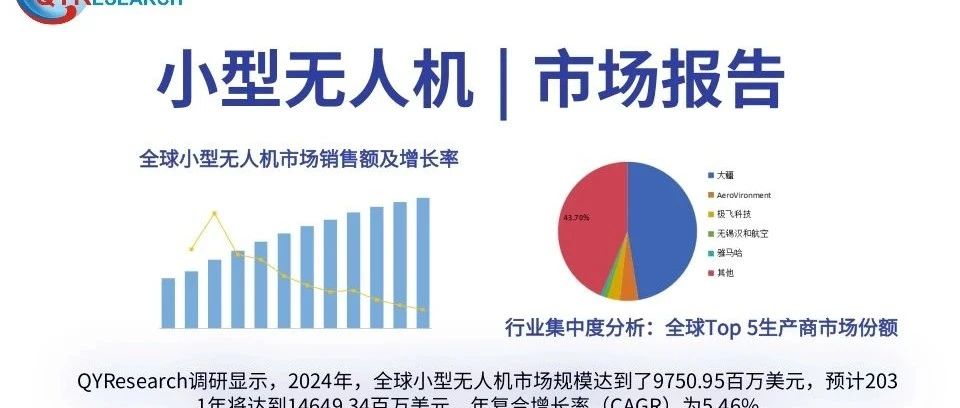
适用场景:农业植保、物流运输、航拍摄影、电力巡检等。需实名登记:在中国境内飞行的小型无人机,需通过 UTMISS 系统进行实名认证。飞 行限制:未经批准不得在管制空域(如机场、军事区)飞行。 2024年,全球小型无人机市场规模达到了9750.95百万美元,预计2031年将达到14649.34百万美元,年复合增长率(CAGR)为5.46%。 小型无人机:空机重量 4 千克< W ≤ 15 千克(不含电池、载荷等)。满载重量不超过 25 千克。 全球小型无人机市场规模总体概况 地区层面来看,中国市场在过去几年变化较快,2024年市场规模为3126.73百万美元,约占全球的32.07%,预计2031年将达到5431.51百万美元, 届时全球占比将达到37.08%。 小型无人机产品类型细分 电动 电动小型无人机指以电力驱动、重量≤25kg的无人飞行器。 油动 油动小型无人机采用燃油发动机(如汽油发动机)或油电混合动力,兼具油动长续航与电动操作稳定性,满载续航可达45分钟。 对比电动无人机,油动机型动力成本更低:每亩作业成本约0.4元(油动) vs 2.3元(电动),且无需频繁更换电池。 油动小型无人机凭借长航时、高载 ...
北美饮料无菌灌装设备市场前10强生产商排名及市场占有率
QYResearch· 2025-05-27 08:36
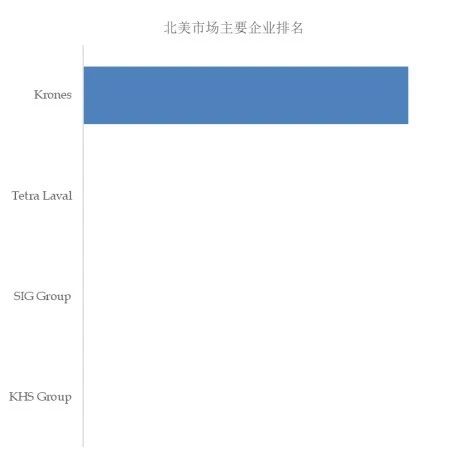
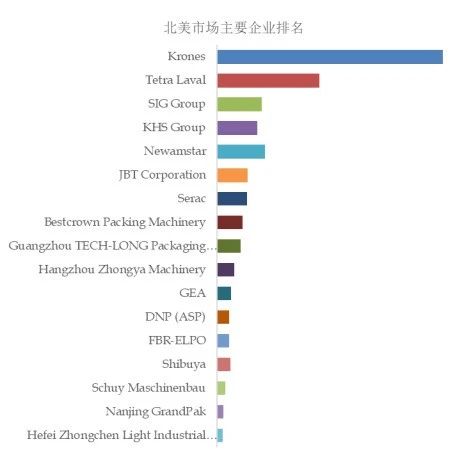
Core Viewpoint - The North American beverage aseptic filling equipment market is projected to reach $385 million by 2029, with a compound annual growth rate (CAGR) of 2.18% in the coming years [1][14]. Market Overview - Aseptic filling equipment is specialized for filling beverages in a sterile environment, utilizing methods such as ultra-high temperature (UHT) sterilization, sterile filtration, or chemical sterilization to ensure long-term preservation without spoilage [1]. - The equipment is widely used in the liquid food industry, particularly for juices and dairy products, offering advantages such as extended shelf life, retention of nutritional components, and reduced use of preservatives [1]. Market Share and Key Players - The top five manufacturers in North America hold approximately 44% of the market share, with major players including Krones, Tetra Laval, SIG Group, KHS Group, and Newamstar [5]. - Fully automatic systems dominate the product type segment, accounting for about 92% of the market share [7]. Product Demand - PET bottles represent the primary demand source, capturing around 34% of the market share [9]. Driving Factors - **Technological Upgrades and Automation**: The shift from traditional thermal sterilization to efficient sterilization technologies enhances product quality and production efficiency [15]. - **Environmental Sustainability**: Aseptic filling technology reduces the need for preservatives and minimizes energy consumption and packaging waste, aligning with green production goals [16]. - **Flexible Production**: Modular designs allow for quick switching between different products, catering to niche and customized market demands [17]. Barriers to Growth - **Technical Limitations**: High reconfiguration costs and challenges in sterilizing high-viscosity liquids or those with particulates can hinder market growth [18]. - **Market Awareness**: Some companies still prefer traditional methods due to cost considerations, lacking awareness of the benefits of aseptic technology [19]. - **Supply Chain Dependencies**: Reliance on upstream suppliers for critical components can expose manufacturers to trade-related risks [20]. Industry Opportunities - **Consumer Demand for Quality**: The ability of aseptic filling equipment to preserve beverage quality aligns with consumer preferences for natural and additive-free products [21]. - **Regulatory Compliance**: Increasingly stringent regulations on microbial control in food and beverages make aseptic technology essential for compliance [22]. - **Technological Advancements**: Integration of IoT and big data analytics in aseptic filling equipment enhances production monitoring and optimization [23].
QYResearch十八周年庆:一场去仪式化的山水成人礼
QYResearch· 2025-05-27 08:36
Core Viewpoint - QY Research celebrated its 18th anniversary in a unique and natural way, emphasizing genuine connections among employees rather than formal ceremonies [1][6]. Group 1: Celebration Activities - The celebration took place in Guilin, where employees from 14 cities participated in a three-day event without formal speeches or cake-cutting [1][2]. - Employees engaged in various activities, such as exploring the city, enjoying local cuisine, and forming spontaneous connections during their free time [2][3]. - Informal gatherings, like the boat trip on the Li River, fostered natural interactions among colleagues, leading to deeper connections [3][4]. Group 2: Employee Experience - Employees expressed joy and camaraderie, highlighting that the absence of structured events allowed for more authentic interactions [5][6]. - The trip concluded with a serene experience in a picturesque setting, symbolizing the peaceful yet forward-moving nature of the company [4][5]. - The founder's message emphasized that the essence of the celebration was not in the formality but in the shared experiences and relationships built over time [6].

2025年中国新能源汽车环境试验箱市场现状研究分析与发展前景预测报告
QYResearch· 2025-05-26 08:57
新能源汽车环境试验箱是用于模拟各种气候条件和环境因素对新能源汽车及其组件进行测试的设备。这些试验箱对于确保新能源汽车在 不同环境条件下能够正常运行、保证安全性和可靠性至关重要。 中国市场新能源汽车环境试验箱市场规模调查 据QYResearch最新调研,2024年中国新能源汽车环境试验箱市场销售收入达到了11.43亿元,预计2031年可以达到25.59亿元,2025-2031 期间年复合增长率(CAGR)为11.67%。 中国市场核心厂商包括拓米洛、ESPEC、广五所、苏试试验、肖克利能源技术和重庆银河等,按收入计,2024年中国市场前三大厂商占 有大约31.24%的市场份额。预计未来几年行业竞争将更加激烈。在国际市场上,中国环境试验箱企业正逐步提升自身品牌形象和技术实 力,积极通过出口和国际合作来拓展市场份额。随着国内制造业的升级和技术进步,越来越多的中国企业开始注重研发创新,致力于开 发出更加高效、精准且具有竞争力的新能源汽车环境试验箱产品。 从产品类型方面来看,恒温恒湿箱占有重要地位,预计2031年收入份额将达到55.80%。同时就应用来看,纯电动汽车在2024年份额大约 是62.79%,未来几年(202 ...

全球Z-L-缬胺酸市场强生产商排名及市场占有率
QYResearch· 2025-05-26 08:57
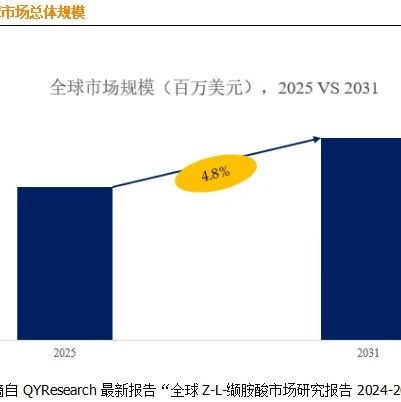
Core Viewpoint - The global Z-L-Valine market is projected to reach $0.7 billion by 2031, with a compound annual growth rate (CAGR) of 4.8% in the coming years [2]. Market Overview - The global Z-L-Valine market is primarily driven by the pharmaceutical industry's demand for drug synthesis, which accounts for approximately 92.2% of the market [13]. - The leading manufacturers in the Z-L-Valine market include ISOCHEM, Alfa Chemistry, Caming Pharmaceutical, Chemos GmbH, and P&S Chemicals, with the top five companies holding about 58.0% of the market share in 2024 [6]. Product Segmentation - In terms of product purity, the 98% purity segment is the most significant, capturing around 67.7% of the market share [9]. Regional Analysis - The report highlights key production regions and their market shares, focusing on North America, Europe, Japan, Southeast Asia, and China [24]. Driving Factors - The growth of downstream applications, such as targeted drug delivery systems and biodegradable materials, is expected to sustain the demand for Z-L-Valine NCA [16]. - Technological innovations, particularly in controlled polymerization techniques, are crucial for market growth [16]. - Regulatory restrictions on toxic reagents are prompting companies to adopt safer synthesis methods, indirectly promoting market expansion [16]. Challenges - The complexity of production processes and strict synthesis conditions increase equipment investment and energy costs [17]. - Fluctuations in raw material prices directly impact production costs and market competitiveness [18]. - New polymer monomers, such as polylactic acid (PLA) and polycaprolactone (PCL), pose direct competition to Z-L-Valine [19]. Industry Trends - Breakthroughs in green synthesis technologies, such as the promotion of non-phosgene processes, are expected to reduce production risks and enhance capacity [20]. - The development of multifunctional copolymers that integrate fluorescent groups and targeting molecules is a growing trend [21].
全球亚克力板市场前10强生产商排名及市场占有率
QYResearch· 2025-05-23 09:07
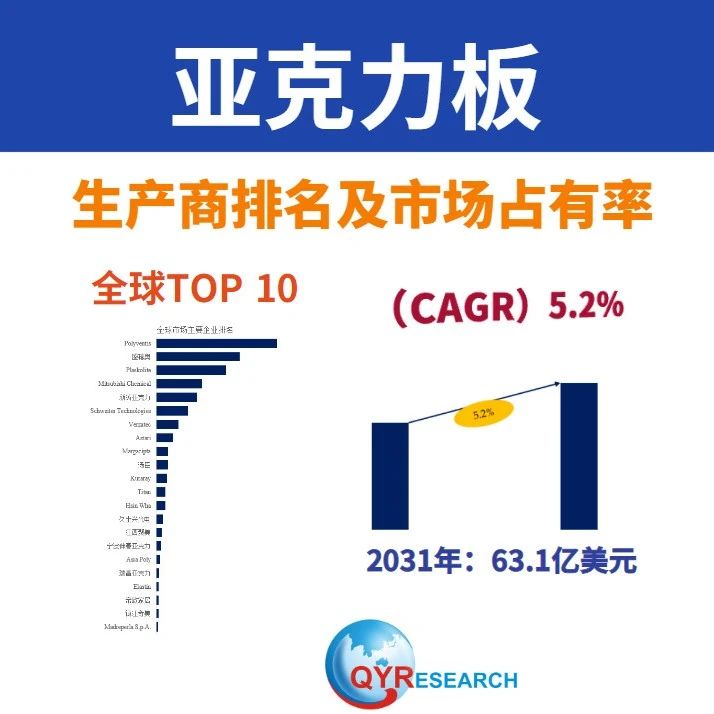
Core Viewpoint - The global acrylic sheet market is projected to reach USD 6.31 billion by 2031, with a compound annual growth rate (CAGR) of 5.2% in the coming years [1]. Market Overview - Acrylic sheets are durable, lightweight, and transparent plastic materials made from polymethyl methacrylate (PMMA), serving as an excellent alternative to glass due to their high impact resistance and clarity [1]. - The market is dominated by cast acrylic sheets, which hold approximately 51.7% of the market share [9]. - The construction industry is the largest downstream market for acrylic sheets, accounting for about 34.4% of the demand [9]. Key Players - Major global acrylic sheet manufacturers include Polyventis, Mitsubishi Chemical, Plaskolite, and others, with the top ten companies holding around 56.0% of the market share in 2024 [5][22]. Driving Factors - The growth of the construction industry, driven by urbanization and infrastructure development, is increasing the demand for acrylic sheets [17]. - High transparency, durability, and customization options make acrylic sheets popular in signage, advertising displays, and light boxes, further boosting demand [17]. - The ease of processing and manufacturing, along with sustainability considerations, enhances the appeal of acrylic sheets across various industries [17]. Challenges - Acrylic sheets are non-biodegradable, leading to potential plastic waste pollution, which may restrict market expansion due to stringent environmental regulations [18]. - Competition from materials like glass and polycarbonate, which offer higher impact resistance, poses a challenge to acrylic sheet adoption [18]. - The production processes for acrylic sheets are energy-intensive, resulting in high operational costs and a significant carbon footprint [19]. Industry Trends - Emerging markets, particularly in Asia, are expected to see increased demand for acrylic sheets as global needs grow [20]. - The Asia-Pacific market is still developing, lacking industry standards and major players, indicating a trend towards market consolidation in the coming years [21]. - Competition among suppliers is anticipated to intensify, with a focus on pricing, user-friendly interfaces, and value-added services [21]. - Continuous innovation in technology is crucial for suppliers to maintain competitiveness in a rapidly evolving market [21].
中国铝合金地垫市场现状研究分析与发展前景预测报告
QYResearch· 2025-05-23 09:07
Core Viewpoint - The aluminum alloy mat market in China is experiencing slow growth, with a projected market size of 1.351 billion yuan in 2024, expected to reach 1.438 billion yuan by 2031, reflecting a compound annual growth rate (CAGR) of only 0.38% [2]. Market Overview - The penetration rate of aluminum alloy mats in traditional application scenarios such as office buildings and commercial centers is already high, limiting growth potential due to a significant decrease in new construction projects. The completion area of office buildings is expected to decline by 35.2% year-on-year in 2024, while commercial properties are projected to drop by 31.6% [5]. - The CAGR for sales in office buildings and commercial centers is forecasted at 0.12% and 0.87%, respectively. In contrast, the transportation hub sector is expected to see a CAGR of 2.08%, benefiting from the "14th Five-Year Plan" for transportation infrastructure [5]. Product Segmentation - Embedded aluminum alloy mats account for over 80% of the revenue market share, offering advantages such as aesthetics, durability, safety, and ease of maintenance. They are widely used in high-traffic areas like commercial centers, airports, hotels, office buildings, and subway stations [6]. - The market is highly fragmented, with the top three manufacturers (Qingdao Deljie, 3M, and Beijing Futai Technology) holding only 11.26% of the market share, indicating a "long-tail competition" characteristic [6]. Industry Drivers - Accelerated infrastructure and urbanization construction are increasing demand for durable, safe, and aesthetically pleasing aluminum alloy mats, offsetting declines in the commercial center and office building markets [6]. - Government policies supporting new urbanization, industrial upgrades, and environmental improvements are providing market space and policy benefits for the aluminum alloy mat industry [6][8]. Industry Challenges - Fluctuations in raw material prices and supply chain instability are putting pressure on production costs, with significant risks associated with rising costs impacting pricing and profit margins [8]. - Intensified market competition is leading to product homogenization and frequent price wars in low-end products, which may reduce overall industry profit margins and affect long-term investments in research and market development [8]. Future Trends - The aluminum processing industry is witnessing technological advancements and the development of new materials, enhancing the performance and quality of aluminum alloy mats to meet market demands for high-quality products [8]. - The Chinese government is actively promoting green building and energy-saving materials, with policies encouraging the use of environmentally friendly, energy-efficient, and recyclable building materials, positioning aluminum alloy mats favorably in the market [8].