QYResearch

Search documents
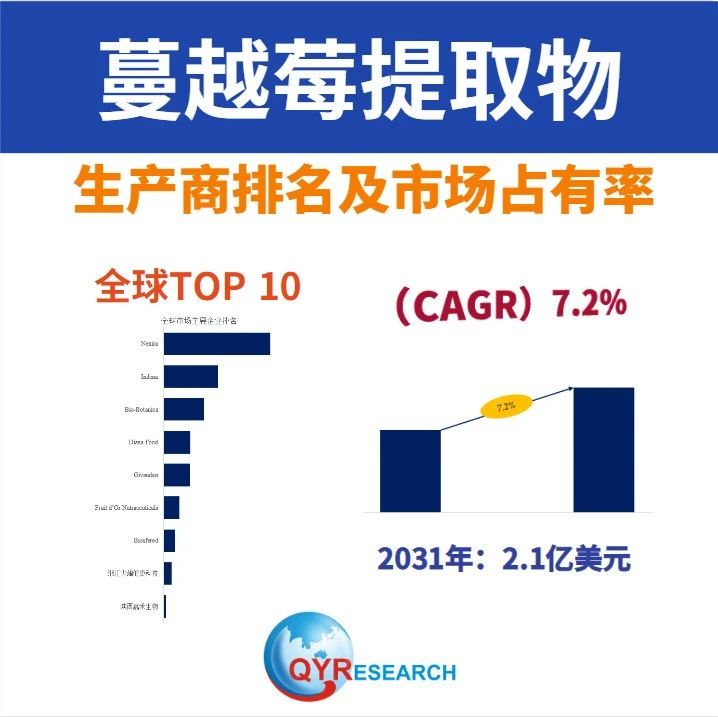
全球蔓越莓提取物市场前10强生产商排名及市场占有率
QYResearch· 2025-05-23 09:07
Core Viewpoint - The global cranberry extract market is projected to reach USD 210 million by 2031, with a compound annual growth rate (CAGR) of 7.2% in the coming years [1]. Market Overview - The leading manufacturers in the global cranberry extract market include Nexira, Indena, Bio-Botanica, Diana Food, Givaudan, and Fruit d'Or Nutraceuticals, with the top five companies holding approximately 61.0% of the market share in 2024 [5]. - Cranberry powder extract dominates the market, accounting for about 98.4% of the total share [9]. - The healthcare industry is the largest downstream market for cranberry extract, representing approximately 79.5% of the demand [11]. Market Drivers - Increasing awareness of preventive healthcare is a major driver for the cranberry extract market, as consumers seek natural solutions to enhance immunity and urinary tract health [17]. - The growing preference for plant-based, clean-label, and natural products is significantly boosting the cranberry extract industry [17]. - Technological advancements in extraction methods, such as cold pressing and enzymatic methods, have improved the efficiency and quality of cranberry extracts, further driving market growth [17]. Market Challenges - The cultivation of cranberries is highly dependent on climatic conditions, leading to fluctuations in crop yields and potential supply and price volatility [18]. - Regulatory standards for cranberry extract usage vary by region, complicating compliance for manufacturers [18]. - There is ongoing consumer misunderstanding regarding the effectiveness of cranberry extracts in preventing urinary tract infections (UTIs), which poses challenges for marketers and formulators [19]. Industry Trends - There is a growing consumer preference for natural, organic, and clean-label cranberry extract products, aligning with broader trends towards healthier lifestyles and food label transparency [20]. - Cranberry extracts are increasingly popular in the cosmetics and personal care industries due to their antioxidant properties and potential skin health benefits [20]. - Advances in extraction and processing technologies are enhancing the efficacy, purity, and bioavailability of cranberry extracts, expanding their applications across various industries [20].

2025年全球与中国自动抄表设备市场现状及未来发展趋势
QYResearch· 2025-05-22 08:38
Core Viewpoint - The automatic meter reading (AMR) industry is experiencing rapid growth driven by increasing demand for efficient energy management, technological innovations, and supportive government policies [2][6][8]. Market Demand Growth - The global demand for efficient energy management is propelling the rapid expansion of the AMR market, particularly in emerging economies where infrastructure development is accelerating [2]. - The market is expected to grow from $13.266 billion in 2024 to $22.134 billion by 2031, with a compound annual growth rate (CAGR) of 7.14% [6]. Technological Innovation - Advances in IoT and big data technologies are making AMR devices more intelligent, enabling remote reading and data analysis to optimize resource usage [2]. - The integration of AI technology is expected to enhance energy management and customer service [3]. Policy Support - Government initiatives promoting energy conservation and smart city projects are providing strong support for the AMR industry, facilitating the application of new technologies and product development [2]. Development Trends - The AMR devices are moving towards higher levels of intelligence and integration, supported by 5G networks which enhance communication capabilities [3]. - Data security and privacy protection are becoming increasingly important, with a focus on advanced encryption technologies and compliance with regulations [3]. Global Market Analysis - China is projected to lead global consumption with $5.078 billion in 2024, maintaining a 38.42% share by 2031 [6]. - Europe and North America are significant markets, accounting for 26.29% and 17.13% of consumption in 2024, respectively [6]. Competitive Landscape - The competitive landscape is tiered, with leading companies like Landis+Gyr and Itron dominating the high-end markets in Europe and North America, while Chinese manufacturers are gaining market share through cost advantages [7]. - The core competitiveness of companies will depend on their ability to customize solutions, global compliance, and collaborative efficiency [7]. Industry Opportunities - The rapid growth of the AMR industry is driven by global policies and energy transitions, with significant infrastructure demands from smart city initiatives [8]. - Technological breakthroughs, such as low-power wide-area networks, are reducing communication costs and enabling coverage in remote areas [8]. Market Demand Trends - There is a multi-tiered explosion in market demand, with public utilities replacing manual meter reading with AMR, and commercial users seeking energy monitoring systems for cost savings [8].

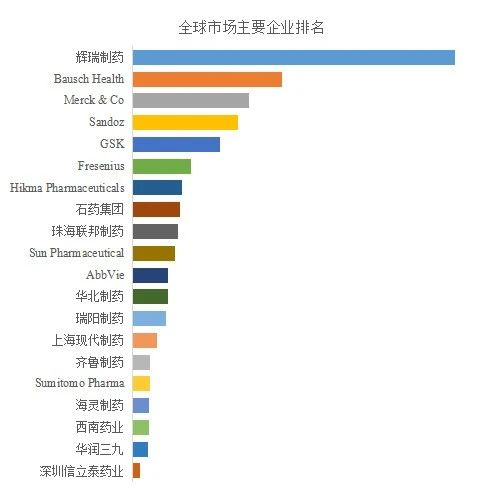
全球抗生素药物市场前10强生产商排名及市场占有率
QYResearch· 2025-05-22 08:38
Core Viewpoint - The global antibiotic drug market is projected to reach a size of $65.84 billion by 2031, with a compound annual growth rate (CAGR) of 3.2% in the coming years [1]. Market Overview - The major manufacturers in the global antibiotic drug market include Pfizer, Bausch Health, Merck & Co, Sandoz, and GSK, with the top five companies holding approximately 19.0% of the market share in 2024 [5][17]. - Injectable antibiotics dominate the market, accounting for about 49.8% of the total market share [7]. - Hospitals represent the largest downstream market for antibiotics, capturing around 54.6% of the demand [9]. Market Drivers - The high incidence of infectious diseases globally, particularly in developing countries and densely populated areas, continues to drive the rigid demand for antibiotics [14]. - The aging population is increasing reliance on antibiotics due to a higher susceptibility to infections [14]. - Improved healthcare systems, especially in China, enhance patient access to medications, further boosting demand for antibiotic formulations [14]. - The "volume-based procurement" policy, while lowering prices, encourages industry consolidation and scale, benefiting leading companies [14]. - The Belt and Road Initiative is providing new growth opportunities for Chinese antibiotic manufacturers in emerging markets such as Southeast Asia, Africa, and the Middle East [14]. Market Challenges - There is heightened global scrutiny and regulatory pressure regarding antibiotic misuse, leading to restrictions that compress market space [15]. - The low barriers to entry for antibiotic generics result in severe product homogeneity, intensifying competition and price wars, which compress profit margins [15]. - Stricter environmental regulations increase the costs for manufacturers, particularly in the production of raw materials [15]. - Rising trade barriers and registration requirements in international markets, especially in Europe and the U.S., hinder the export expansion of Chinese companies [15]. Future Trends - The antibiotic market is expected to evolve towards high-end and differentiated products, with increasing demand for effective, safe, and targeted new antibiotic formulations [16]. - The shift from broad-spectrum antibiotics to more specific narrow-spectrum and combination formulations is becoming a clinical preference [16]. - There is a stable demand for intravenous formulations, particularly in hospital settings, where injectables remain the first choice for severe infections [16].
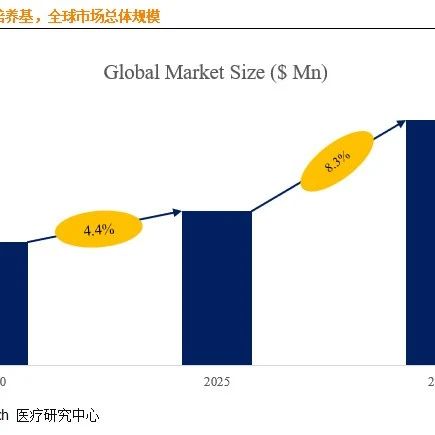
全球无血清细胞冻存培养基市场前10强生产商排名及市场占有率
QYResearch· 2025-05-22 08:38
Core Viewpoint - The article discusses the advantages and market potential of serum-free cell freezing media, highlighting its growing importance in cell therapy, regenerative medicine, and biopharmaceuticals, while also addressing the challenges faced in its market adoption [1][2][3]. Group 1: Advantages of Serum-Free Cell Freezing Media - Serum-free cell freezing media offers clear composition, better batch stability, reduced immunogenicity, and lower contamination risks compared to traditional serum-containing freezing solutions [1]. - The media typically contains appropriate cryoprotectants (like DMSO), carbon sources, buffering agents, and cell-protective factors, effectively maintaining cell viability during freezing and thawing processes [1]. - The rapid market growth is driven by the increasing demand for high-value cell products such as stem cells, immune cells, and CAR-T therapies, which require high-quality freezing media [1][3]. Group 2: Market Challenges - The development of serum-free formulations has a high technical barrier, requiring extensive experimentation to optimize cell survival and functionality, leading to long development cycles and high costs [2]. - There is a lack of universal products due to the varying dependence of different cell types on freezing environments, which limits large-scale adoption [2]. - Cost sensitivity among users leads some to still prefer traditional serum-containing freezing solutions, and the absence of standardized product evaluation criteria creates information asymmetry for users [2]. Group 3: Future Market Trends - The serum-free cell freezing media market is expected to evolve towards customization, high performance, and compliance, with advancements in AI and high-throughput screening enabling more precise formulation development [3]. - Increasing regulatory scrutiny on cell-based therapies is pushing companies to expedite the registration and certification processes for serum-free products [3]. - The Asia-Pacific region, particularly China, is projected to be one of the fastest-growing markets due to supportive policies, biopharmaceutical investments, and technological advancements [3]. - According to QYResearch, the global serum-free cell freezing media market is expected to reach USD 410 million by 2031, with a compound annual growth rate (CAGR) of 8.3% in the coming years [3]. Group 4: Market Share and Key Players - Major manufacturers in the global serum-free cell freezing media market include Thermo Fisher, Merck, Zenoaq, Cytiva, and STEMCELL, with the top five companies holding approximately 70% of the market share as of 2024 [8]. - DMSO-containing products dominate the market, accounting for about 84.6% of the total share [10]. - Biopharmaceutical companies represent the largest downstream market, capturing around 53.9% of the demand for serum-free cell freezing media [12].
全球汽车EMC底盘测功机市场前10强生产商排名及市场占有率
QYResearch· 2025-05-21 09:03
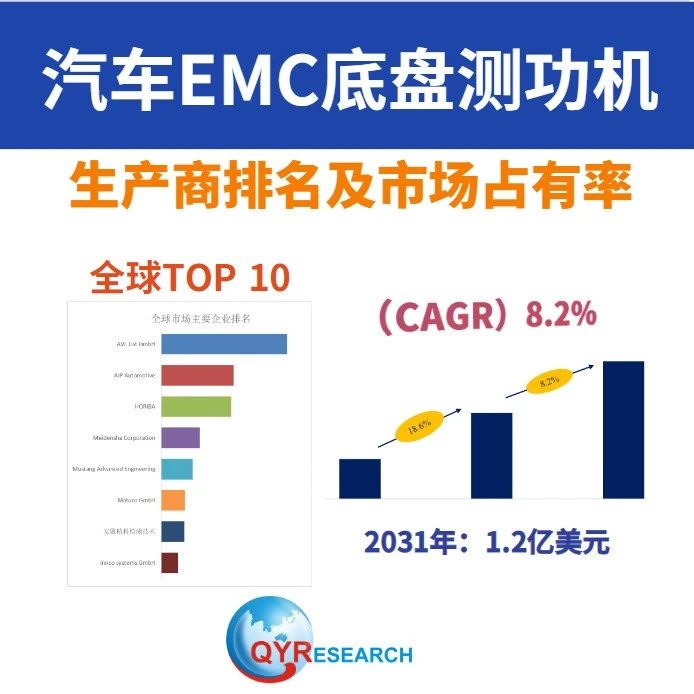
Core Viewpoint - The article discusses the global market for automotive EMC chassis dynamometers, highlighting its expected growth and the key players in the industry [2][10]. Market Overview - The global automotive EMC chassis dynamometer market is projected to reach $120 million by 2031, with a compound annual growth rate (CAGR) of 8.2% over the coming years [2]. - The market is driven by advancements in technology that enhance testing precision and efficiency, as well as the increasing demand for EMC testing due to the rise of electric vehicles [10]. Key Manufacturers - Major manufacturers in the automotive EMC chassis dynamometer market include AVL List GmbH, AIP Automotive, HORIBA, Meidensha Corporation, and Mustang Advanced Engineering, with the top five companies holding approximately 71% of the market share [5][13]. Market Segmentation - The market is segmented by product type into integrated and standalone systems, and applications include automotive OEMs and third-party service providers [13]. Regional Focus - Key regions of interest for the automotive EMC chassis dynamometer market include North America, Europe, China, and Japan [13]. Challenges - Customization demands from different clients increase development costs and time, while varying EMC standards across countries require manufacturers to adapt their products [11].
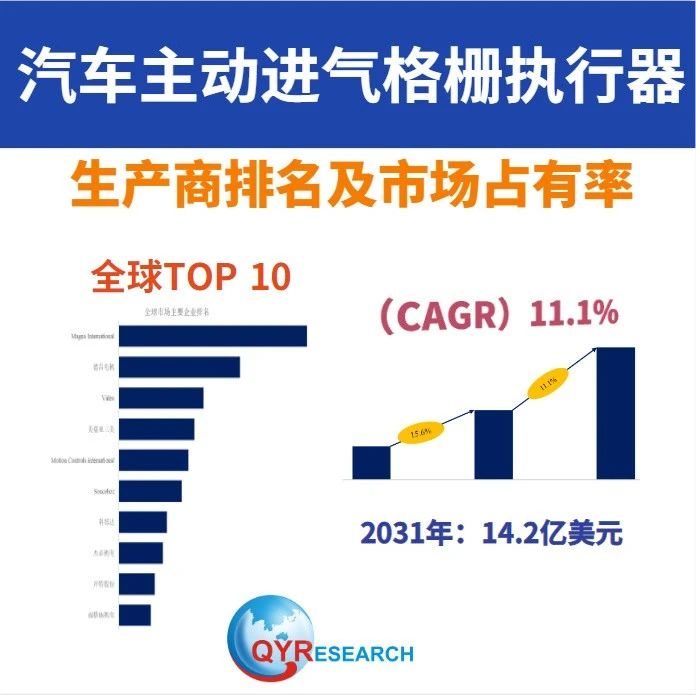
全球汽车主动进气格栅执行器市场前10强生产商排名及市场占有率
QYResearch· 2025-05-21 09:03
汽车主动进气格栅执行器是现代车辆的一个部件,主要用作主动进气格栅系统的一部分。该系统通过根据车辆的运行条件自动打开 和关闭格栅百叶窗来优化车辆的空气动力学性能和热效率。 据 QYResearch 调研团队最新报告"全球汽车主动进气格栅执行器市场报告 2025-2031 "显示, 预计 2031 年全球汽车主动进气格栅执 行器市场规模将达到 14.2 亿美元 ,未来几年年复合增长率 CAGR 为 11.1% 。 全球 汽车主动进气格栅执行器 市场前 10 强生产商排名及市场占有率(基于 2024 年调研数据;目前最新数据以本公司最新调研数 据为准) 根据 QYResearch 头部企业研究中心调研,全球范围内汽车主动进气格栅执行器生产商主要包括 Magna International 、德昌电机、 Valeo 、美蓓亚三美、 Motion Controls international 、 Sonceboz 、科博达、杰必机电、开特股份、福格纳机电等。 2024 年,全球前 五大厂商占有大约 8.0% 的市场份额。 汽车主动进气格栅执行器 ,全球市场规模,按产品类型细分 汽车主动进气格栅执行器 ,全球市场规模,按 ...
中国区熔硅片市场现状研究分析与发展前景预测报告
QYResearch· 2025-05-21 09:03
区熔硅片( Float Zone Wafer )是采用悬浮区熔法 (Float Zone) 长晶而成,亦称区熔晶圆、 FZ 晶圆,是一种高纯度的硅晶圆,可替代以 CZ 单晶直拉工艺而成的硅片。区熔硅片由于在长晶的过程中没有跟石英坩埚接触,硅材料处于悬浮状态,因此长晶过程中受污染少。 碳含量和氧含量更低,杂质更少,电阻率更高,适用于功率器件和某些耐高压电子器件的制造。 根据QYResearch研究团队调研统计,中国市场在过去几年变化较快,2024年中国区熔硅片市场销售额达到了20.14亿元,预计2031年将达 到45.43亿元,年复合增长率(CAGR)为11.60%(2025-2031)。 按区熔硅片数量统计,2024年中国区熔硅片总销量为883万片,其中硅片直径小于6英寸销量为663.1万片、硅片直径8英寸销量为219.9万 片、其中硅片直径8英寸份额将由2024年的24.90%增长到2031年的27.45%。 国内市场占有率和排名来看,主要厂商有中环领先,环球晶圆,信越化学,Siltronic,SUMCO,京运通等,2024年前六大厂商占据国内 市场大约80%的份额。 产品应用方面,IGBT应用处于主导地位 ...

全球TCP和RTP管道市场前10强生产商排名及市场占有率
QYResearch· 2025-05-20 09:04
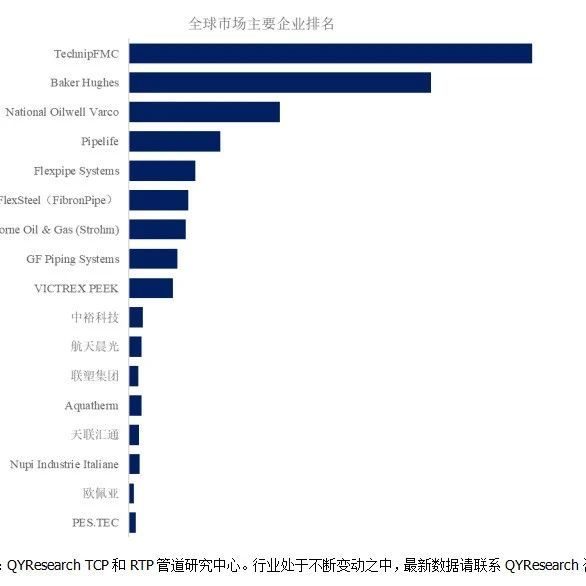
Core Viewpoint - The article discusses the emerging market for Reinforced Thermoplastic Pipes (RTP) and Thermoplastic Composite Pipes (TCP), highlighting their structural differences, applications, and market growth potential, with a projected market size of $7.36 billion by 2031 and a CAGR of 4.7% from 2025 to 2031 [1][5]. Market Overview - RTP consists of a thermoplastic inner pipe, a reinforcement layer (usually made of aramid fiber, steel wire, or glass fiber), and a thermoplastic outer layer, combining the strength of metal pipes with the rigidity of plastic pipes [1]. - TCP is a fully plastic pipe structure made from continuous fiber-reinforced thermoplastic composite materials, typically lighter and without metal components [1]. Market Drivers - The demand for TCP and RTP pipes is increasing due to the growing exploration of oil and gas resources, particularly in offshore fields, shale gas, and deep-water developments, which require high-pressure and corrosion-resistant pipelines [8]. - Rising oil and gas prices encourage energy companies to invest more in upstream projects, thereby increasing the demand for high-performance pipelines [8]. Market Challenges - The production of TCP and RTP pipes relies on various polymers and composite materials, making them vulnerable to fluctuations in raw material prices, particularly petrochemical raw materials [11]. - Supply chain disruptions, such as natural disasters or political instability, can impact the timely delivery of raw materials, affecting production and delivery schedules [12][13]. Competitive Landscape - Major manufacturers in the global TCP and RTP pipe market include TechnipFMC, Baker Hughes, National Oilwell Varco, Pipelife, and Flexpipe Systems, with the top five companies holding approximately 53.0% of the market share in 2024 [5][6]. - The market is becoming increasingly competitive, with new entrants, particularly low-cost suppliers, potentially leading to price pressures and reduced profit margins for existing manufacturers [13]. Future Trends - The article emphasizes the rapid development of thermoplastic composite materials, which enhance the performance characteristics of TCP and RTP pipes, such as flexibility, thermal stability, and compressive strength [10]. - The report also indicates a focus on automation in manufacturing and advancements in online inspection technologies, which are expected to drive the products into higher-end markets [10].
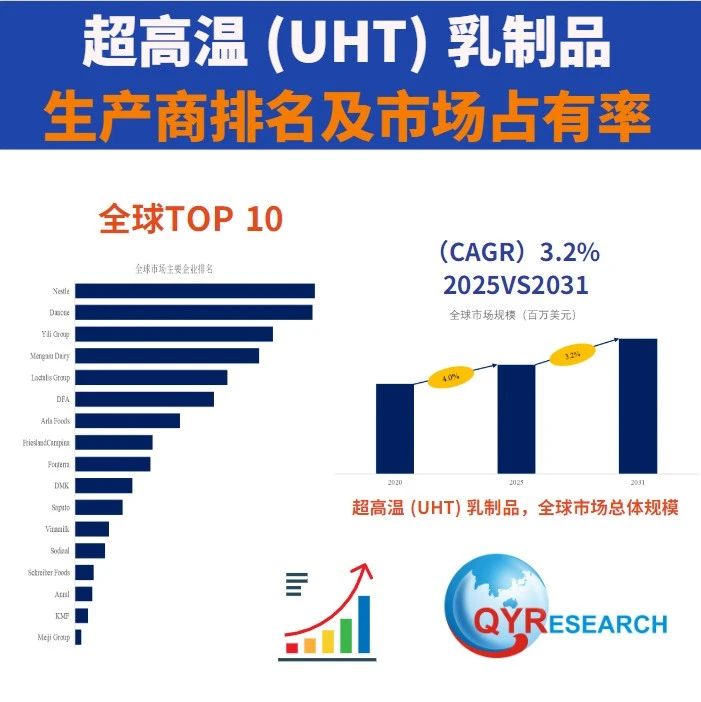
全球超高温 (UHT) 乳制品市场前10强生产商排名及市场占有率
QYResearch· 2025-05-20 09:04
UHT 乳制品(超高温灭菌乳制品)是指采用 UHT (超高温)方法加工的乳制品。 UHT 是一种热处理工艺,旨在延长乳制品的保质期, 无需冷藏。该工艺需要将牛奶或其他乳制品在极短的时间内(通常为 2 至 5 秒)加热到极高的温度(通常约为 135 ° C 至 150 ° C 或 275 ° F 至 302 ° F ),然后迅速冷却。 据 QYResearch 调研团队最新报告"全球超高温 (UHT) 乳制品市场报告 2025-2031 "显示,预计 2031 年全球超高温 (UHT) 乳制品市场规模 将达到 1831.2 亿美元,未来几年年复合增长率 CAGR 为 3.2% 。 全球 超高温 (UHT) 乳制品 市场前 17 强生产商排名及市场占有率(基于 2024 年调研数据;目前最新数据以本公司最新调研数据为准) 根据 QYResearch 头部企业研究中心调研,全球范围内超高温 (UHT) 乳制品生产商主要包括 Nestle, Danone, Yili Group, Mengniu Dairy, Lactalis Group, DFA, Arla Foods, FrieslandCampina, Fon ...
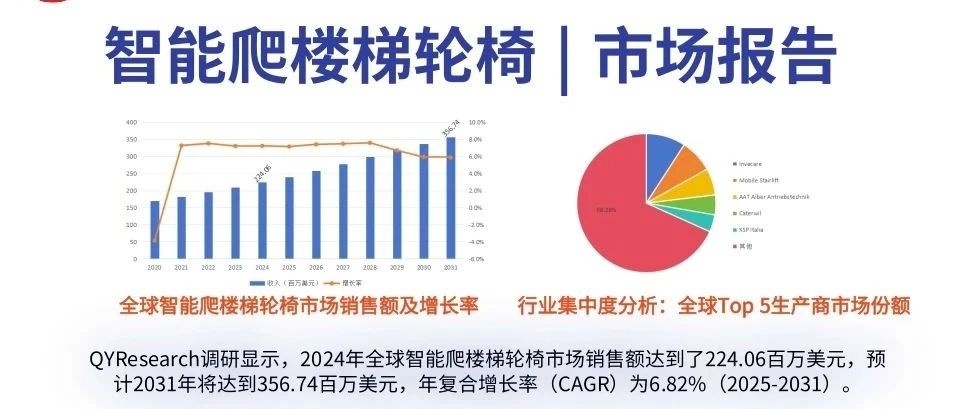
2025年全球与中国智能爬楼梯轮椅市场现状及未来发展趋势
QYResearch· 2025-05-20 09:04
Core Viewpoint - The smart stair-climbing wheelchair market is experiencing rapid growth due to global aging and improved accessibility policies, with a projected market size of $224.06 million in 2024 and $356.74 million by 2031, reflecting a CAGR of 6.82% from 2025 to 2031 [3]. Market Overview - The smart stair-climbing wheelchair is designed for individuals with mobility impairments, enabling safe and smooth movement on stairs and flat surfaces, significantly enhancing user independence and quality of life [1]. - The market is driven by the increasing elderly population and the demand for assistive devices, with the elderly population in China expected to exceed 300 million by the end of the "14th Five-Year Plan" [8]. Product Segmentation - In 2024, the market share by product type shows that track-type wheelchairs account for 59.63% of sales, with over 59,070 units sold, followed by star-wheel type at 29.27% with over 28,990 units sold [4]. Competitive Landscape - The market features both international brands with technological advantages and emerging Chinese companies offering cost-effective products and localized services. Invacare leads the market with a revenue share of 9.17% in 2024 [5]. Technological Advancements - The industry is undergoing rapid upgrades through breakthroughs in lightweight materials, smart control systems with multi-modal sensors, and high-performance battery technologies, enhancing portability and user experience [9]. Policy Support - Various countries are implementing policies to encourage the construction of accessible facilities, creating a favorable environment for the smart stair-climbing wheelchair market [9]. Market Challenges - The complexity of after-sales maintenance poses significant risks, as users heavily rely on manufacturer support due to the high technical demands of the devices [9]. - Price sensitivity is a notable barrier to market penetration, with high-end products averaging $25,000, which exceeds the willingness to pay for many households [9]. - The competitive landscape is intensifying, with established brands and alternative assistive devices posing challenges for new entrants [9].