QYResearch

Search documents
2025年全球与中国手持激光焊机市场现状及未来发展趋势
QYResearch· 2025-05-19 08:23
Core Viewpoint - The handheld laser welding machine is a portable welding device that utilizes high-energy laser beams for precise control in welding applications, offering advantages such as high flexibility, ease of operation, fast welding speed, and minimal heat-affected zones, making it suitable for various industries including metal sheets, precision parts, and electronic components [1]. Industry Current Status Analysis - The development of handheld laser welding machines dates back to the 1960s, initially used in aerospace, military, and research fields. By the 1980s, advancements in laser technology allowed for industrial applications, although early models were large and costly, limiting their use to automated production lines [3]. - The breakthrough in fiber laser technology in the 21st century led to the miniaturization and efficiency of laser welding equipment. Since 2015, portable fiber lasers have made handheld laser welding machines viable, offering high precision, minimal thermal impact, and improved welding quality without the need for additional welding wire [3][4]. Market Demand and Trends - The handheld laser welding machine market is experiencing rapid growth, with traditional welding methods like TIG and resistance welding being gradually replaced. The technology is particularly advantageous for thin metal welding, high-precision tasks, and special materials [4]. - The integration of artificial intelligence and automation in handheld laser welding machines is emerging, with features like smart control systems and automatic power adjustment, making them user-friendly even for non-professional welders [4]. - The global market for handheld laser welding machines is expanding from high-end manufacturing to small and medium enterprises, especially in manufacturing powerhouses like China, Germany, and Japan. The technology is becoming a key development direction in the welding industry due to its environmental benefits and efficiency [4][10]. Future Development Trends - Future handheld laser welding machines are expected to have increased power, moving from the current range of 1000W-3000W to higher levels to accommodate thicker materials and stronger metals. The adaptability to various materials will also expand to include titanium alloys and copper [5]. - The machines will incorporate enhanced automation and smart features, utilizing AI algorithms for optimizing welding parameters and potentially integrating visual recognition systems for precise welding [5]. - There will be a focus on portability and ergonomic design, making devices lighter and more compact for ease of use, while also improving user comfort and safety [5]. - Environmental considerations will drive the development of energy-efficient and low-emission welding machines, aligning with stricter regulations and sustainability goals [5]. Global Market Scale Analysis - The global handheld laser welding machine market is projected to reach approximately $876 million in 2024, with an expected growth to $2.422 billion by 2031, reflecting a compound annual growth rate (CAGR) of 15.20% from 2025 to 2031. Sales volume is anticipated to increase from about 211,000 units in 2024 to 1,068,000 units by 2031, with a CAGR of 24.10% [9]. - Handheld laser welding machines demonstrate significant advantages in industrial applications, achieving energy savings of 80%-90% compared to traditional arc welding and reducing processing costs by about 30% [9]. - Major manufacturers in the market include IPG Photonics and STAHLWERK, with the top three companies holding approximately 25.07% of the market share in 2024 [9]. China Market Development - China's laser welding machine market is rapidly growing, with applications expanding across various sectors, including Fortune 500 companies. The trend indicates that fiber laser welding technology will gradually replace traditional methods, supported by government initiatives promoting laser technology development [10]. - The global handheld laser welding machine market is driven by increasing automation in manufacturing, the expansion of lightweight material applications, and continuous advancements in laser technology. The demand for efficient and precise welding solutions is particularly strong in the automotive, aerospace, electronics, and medical device sectors [10].


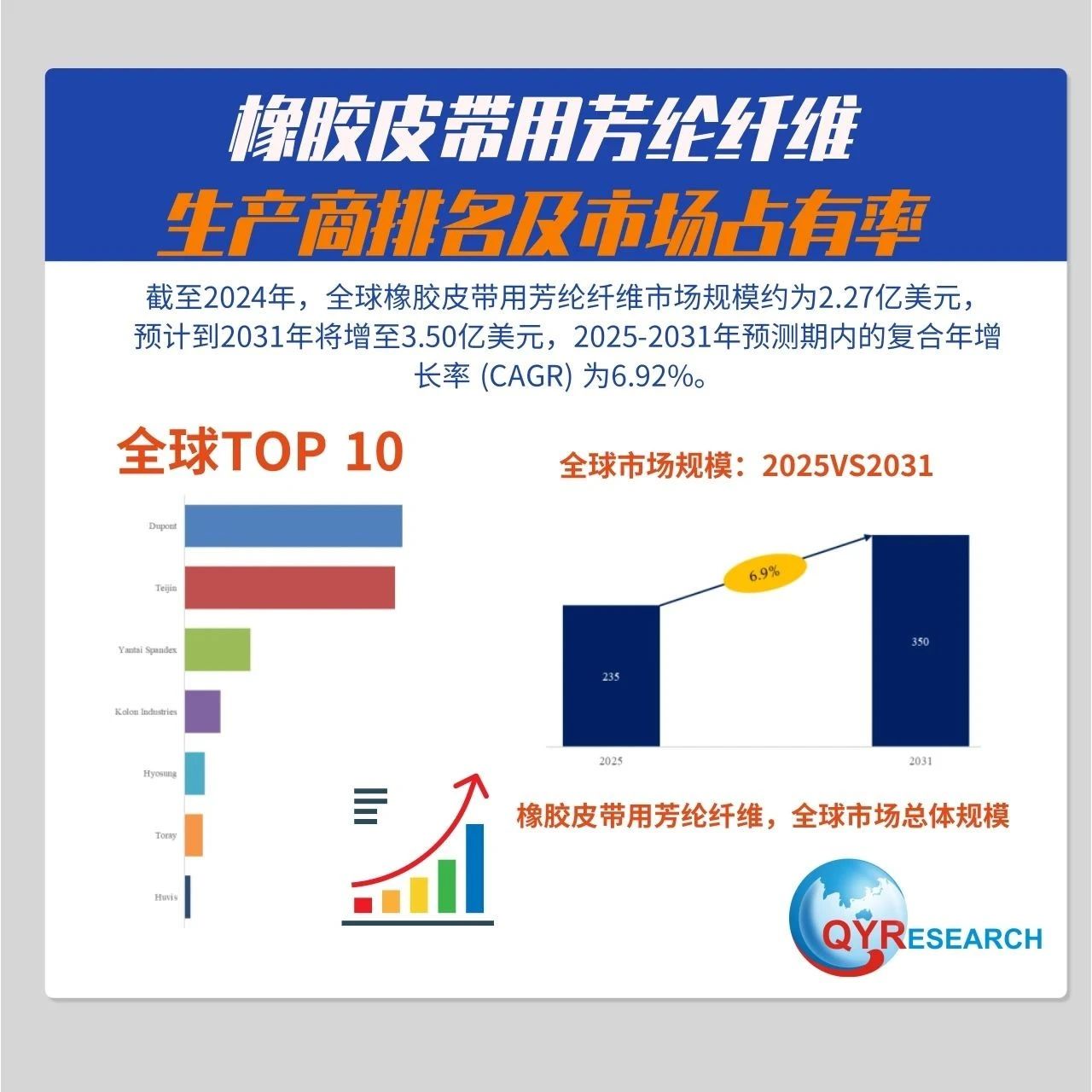
全球橡胶皮带用芳纶纤维市场前10强生产商排名及市场占有率
QYResearch· 2025-05-19 08:23
Core Viewpoint - The aramid fiber market for rubber belts is projected to grow from approximately $227 million in 2024 to $350 million by 2031, with a CAGR of 6.92% from 2025 to 2031, driven by increasing demand in various industries and a shift towards sustainable materials [1][6]. Market Overview - Aramid fiber is recognized for its high tensile strength, lightweight properties, and resistance to heat, wear, and chemical corrosion, making it an ideal alternative to traditional materials like steel and polyester in rubber belts [1]. - The market's resilience is highlighted by its alignment with broader industrial trends, including automation in bulk material handling systems and stricter safety regulations [1]. Competitive Landscape - The market is concentrated and technology-intensive, with the top five manufacturers—DuPont, Teijin, Kolon Industries, Hyosung, and Toray—accounting for 84.16% of total revenue in 2024 [5]. - New entrants, particularly from Asia, are gradually entering the market through localized production strategies and cost-competitive products, creating a competitive dynamic between high-end and mid-range aramid fibers [5]. Regional Insights - Developed markets like North America and Europe maintain strong demand due to mature mining, automotive, and industrial machinery sectors [5]. - The Asia-Pacific region, led by China, India, and Southeast Asia, is emerging as the fastest-growing area, benefiting from accelerated infrastructure development and domestic consumption growth [5]. Market Drivers and Challenges - Key drivers include the growing demand for high-performance rubber belts in heavy and energy-intensive industries, the increasing application of aramid fibers in electric vehicles (EVs), and rapid industrialization in emerging economies [6]. - Challenges include high production costs due to complex polymerization processes, technical difficulties in achieving uniform dispersion in rubber matrices, and supply chain vulnerabilities influenced by geopolitical uncertainties [6]. Future Opportunities - The industry outlook remains optimistic, with increasing interest in circular economy models and sustainable product designs prompting manufacturers to explore recyclable aramid composites and bio-based alternatives [7]. - Strategic collaborations between fiber producers and original equipment manufacturers are fostering innovation in next-generation materials tailored to specific application needs [7].


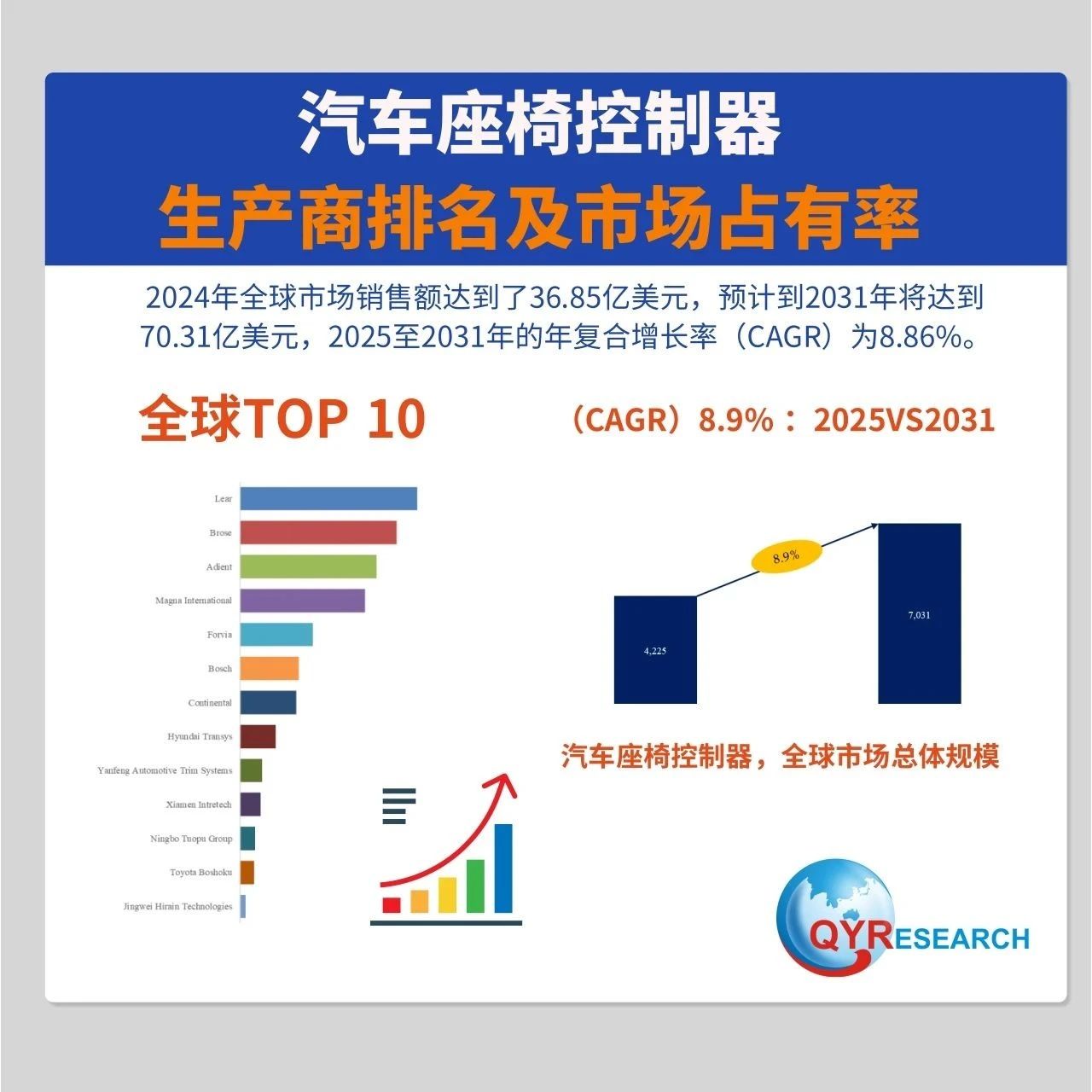
全球汽车座椅控制器市场前10强生产商排名及市场占有率
QYResearch· 2025-05-19 08:23
Core Viewpoint - The global automotive seat controller market is experiencing rapid growth, driven by advancements in comfort, intelligence, and personalization in automotive seating systems [2][12]. Market Overview - The global market for automotive seat controllers is projected to reach $3.685 billion in sales by 2024 and is expected to grow to $7.031 billion by 2031, with a compound annual growth rate (CAGR) of 8.86% from 2025 to 2031 [2]. - The growth is attributed to the evolution of seat control technology, which is becoming more integrated and multifunctional, enhancing vehicle quality and user experience [2]. Competitive Landscape - The market is highly concentrated, with the top 10 manufacturers holding 79.53% of the market share in 2024. Key players include Lear, Brose, Adient, Magna International, and Forvia [6]. - These companies leverage strong R&D capabilities and global resources to maintain a competitive edge, particularly in high-end product segments [6]. Regional Analysis - Europe is the largest market for automotive seat controllers, accounting for 30.98% of the market share in 2024, followed by North America at 29.13% and China at 21.07% [10]. - China's market is rapidly expanding, projected to grow from $0.776 billion in 2024 to $1.708 billion by 2031, representing 24.29% of the global market [10]. Future Outlook - The ongoing trends of electrification, intelligence, and connectivity in vehicles are expected to create significant opportunities for seat controllers [12]. - Key technological directions include multifunction integration, miniaturization, low power consumption, and enhanced hardware-software collaboration [12]. - The demand for adaptable seat structures and automatic adjustment features will increase, necessitating more complex sensing and control requirements for seat controllers [12].
全球单级热电制冷器件市场前10强生产商排名及市场占有率
QYResearch· 2025-05-16 07:56
热电制冷组件的历史可以追溯到 19 世纪珀尔帖效应的发现,但直到 20 世纪中期,随着半导体材料的发展,热电制冷组件技术才真正实现 商业化。早期的热电制冷组件主要应用于军事和航空航天领域, 20 世纪 80 年代以后,随着电子工业的快速发展,热电制冷组件逐渐进入 消费电子、医疗设备和工业领域。 单级热电制冷器件是基于珀尔帖效应工作,当电流通过由 p 型和 n 型半导体材料组成的热电偶时,一端吸收热量(冷端),另一端释放热 量(热端),从而实现制冷或加热的效果。这种固态热管理技术无需机械运动部件,具有结构紧凑、无噪音、可靠性高、温度控制精确等 特点。此外,通过反转电流方向,单级热电制冷器件还可以实现加热功能,使其在双向温控应用中具有独特优势。单级热电制冷器件的核 心优势在于其固态设计和精确温控能力,但其效率相对较低,通常用于小功率或对空间、噪音要求较高的场景。 随着 5G 通信、人工智能、物联网等技术的普及,加速了单级热电制冷器件在消费电子、通信、汽车、医疗等领域的发展,根据我们的数 据, 2024 年全球单级热电制冷器件出货量突破 1.3 亿件,预计到 2030 年将以年均复合增长率( CAGR )超过 9% ...

全球高速背板连接器市场前10强生产商排名及市场占有率
QYResearch· 2025-05-16 07:56
Core Viewpoint - The global high-speed backplane connector market is projected to reach USD 2.76 billion by 2030, with a compound annual growth rate (CAGR) of 9.6% in the coming years [1]. Market Overview - The top four manufacturers in the global high-speed backplane connector market are expected to hold approximately 87.0% market share in 2024 [5]. - The primary product type is data transmission speed of 25, which accounts for about 66.6% of the market share [7]. - The telecommunications and data communication sector is the largest downstream market, representing approximately 95.8% of the demand [10]. Market Drivers - The growth in data transmission demand due to the development of data centers, cloud computing, and big data applications is driving the need for higher frequency and transmission speed [15]. - Technological innovations and standard upgrades, such as PCIe 5.0/6.0, USB4, and HDMI 2.1, are increasing the demand for high-speed connection solutions [16]. - The miniaturization and high-performance requirements of electronic devices are pushing backplane connector designs towards compact and high-density solutions [17]. - The rise of 5G and edge computing is creating a demand for high-speed and reliable connections, expanding the backplane connector market [18]. - The growth of automation and industrial applications is increasing reliance on high-speed data communication, accelerating the adoption of backplane connectors [19]. Market Challenges - Signal integrity challenges, such as signal distortion, crosstalk, and reflection, can affect performance during high-speed transmission [20]. - Heat management issues arise from increased heat generation during high-speed transmission, raising costs and design complexity [21]. - The complexity and cost of manufacturing increase due to the need for advanced manufacturing processes for high-precision and high-density designs [22]. - Rapid changes in industry standards can lead to quick product obsolescence, affecting compatibility and return on investment [23]. - Reliability and durability issues arise as high-frequency connectors require higher durability and long-term reliability, complicating design and testing [24]. - Market competition and technological barriers exist, as significant investment in new technology development is required, making it difficult for some companies to keep pace with market demands [25]. Industry Opportunities - The industry is evolving towards higher speeds to support standards like PCIe 6.0, USB4, and Thunderbolt 4, meeting the growing data transmission speed requirements [26]. - High-density and compact designs are being promoted to enhance connection density for space-constrained applications [27]. - Innovations in materials and processes, such as low-loss materials and advanced manufacturing techniques, are improving signal quality and performance [28]. - Enhancing electromagnetic compatibility (EMC) through structural optimization and shielding technology is addressing challenges posed by high-speed signals [29]. - The integration of smart connectivity and plug-and-play technology is increasing system intelligence and maintenance convenience [30]. - There is a continuous growth in demand across various sectors, including data centers, cloud computing, artificial intelligence, 5G base stations, industrial automation, and high-performance computing [31]. - The focus on green and sustainable development is driving efforts to reduce energy consumption and use environmentally friendly materials [32].

全球热流道行业总体规模、主要企业国内外市场占有率及排名
QYResearch· 2025-05-16 07:56
热流道( Hot Runner Systems )是在注塑模具中使用的,将融化的塑料粒子注入到模具的型腔中的加热组件系统。 热流道模具是将传统 式模具或三板式模具的浇道与流道经过加热,于每一成形时即不需要取出流道和浇道的一种崭新构造。 热流道行业发展总体概况 热流道在众多行业得到了极为广泛的应用。从日常生活中的塑料制品,到高端的电子设备、汽车零部件等生产领域,热流道系统都发挥 着不可或缺的作用。 全球热流道系统市场展现出极为鲜明的行业集中性与区域分化特征。在 2024 年,汽车行业以 34.83% 的全球市场份额傲然稳居需求首 位。新能源汽车的迅猛发展,促使其对轻量化的追求达到了新高度。热流道系统能够通过优化注塑工艺,有效减轻汽车零部件的重量, 同时不影响其性能,这为新能源汽车实现更长续航里程提供了有力支持。此外,智能车灯技术的快速迭代,对车灯注塑件的精度和质量 提出了严苛要求,热流道系统凭借其精准的温度控制和稳定的熔体输送,成为满足这些需求的关键技术,进而推动了汽车行业对热流道 系统的强劲需求。 在消费市场方面,全球消费增速处于相对平稳的态势。中国、欧洲和北美凭借其庞大的消费群体、成熟的工业体系以及较高的技 ...

全球无人机激光雷达测绘市场前10强生产商排名及市场占有率
QYResearch· 2025-05-15 09:11
无人机激光雷达测绘是一项利用搭载激光雷达传感器的无人机( UAV )采集地球表面高精度三维数据的技术。无人机上的激光雷达传感 器向地面发射激光脉冲,并测量脉冲反射回来的时间。通过计算激光脉冲的飞行时间,可以计算出激光雷达传感器与地面之间的距离。在 此基础上,可以采集地面的高程数据,从而创建数字地形模型。此外,无人机上还搭载惯性测量单元( IMU )和全球导航卫星系统( GNSS )接收器,以提高数据采集精度,为无人机提供更精确的位置、速度和姿态信息。 无人机能够快速覆盖大面积区域,激光雷达传感器每秒可发射数千甚至数十万个激光点,能够快速获取大量三维数据。激光雷达技术对植 被具有一定的穿透能力。与传统的有人驾驶飞机航测方法相比,无人机激光雷达测绘作业成本更低,无需大规模飞行团队和复杂的飞行保 障设备,灵活性更高。 它可用于快速进行大面积点云测绘,帮助操作员高效完成地形测量任务。点云数据提取后,可自动处理生成标准格式的三维点云、数字高 程模型( DEM )和土方量等多种结果。它可用于测绘森林的冠层高度和密度,从而更好地进行森林管理和监测森林健康状况。它还可以 分析树木的冠幅、生长密度、面积、体积和生长趋势,动态监 ...

中国高光谱相机市场现状研究分析与发展前景预测报告
QYResearch· 2025-05-15 09:11
Core Viewpoint - The hyperspectral camera technology is rapidly developing in China, with significant market growth expected, driven by advancements in technology and increasing domestic demand for applications in various fields [2][9]. Market Overview - In 2023, the Chinese hyperspectral camera market reached a size of $30.59 million, projected to grow to $103.77 million by 2031, with a compound annual growth rate (CAGR) of 18.29% [2]. - The market has historically been dominated by foreign brands, but domestic companies are increasing R&D investments, improving technology, and gaining market share due to price and service advantages [2]. Key Players - Major companies in the Chinese market include Color Spectrum Technology, Shuangli He Pu, Zhongda Ruihe, Specim, Headwall Photonics, Hangzhou Gaopu Imaging Technology, and others, with the top three companies expected to hold approximately 60.93% of the market share by 2024 [4]. Product Types - Hyperspectral cameras are categorized into five main types: Visible/Near Infrared (VNIR), Shortwave Infrared (SWIR), Midwave Infrared (MWIR), Longwave Infrared (LWIR), and others. VNIR cameras are the most prevalent, projected to account for 48.48% of the market in 2024, with a size of $14.84 million [8]. Application Areas - Hyperspectral cameras have broad applications, including: - **Precision Agriculture**: Monitoring crop growth, pest control, and soil fertility [10]. - **Environmental Monitoring**: Real-time monitoring of water quality, air quality, and soil conditions [10]. - **Geological Exploration**: Identifying mineral resources and geological structures [11]. - **Medical Field**: Non-invasive diagnostics and early detection of diseases [11]. Driving Factors - **Policy Support**: The Chinese government emphasizes the development of hyperspectral imaging technology through funding and policy initiatives, enhancing market demand [9]. - **Technological Advancements**: Improvements in imaging technology and data processing capabilities, including AI integration, are expanding the application range of hyperspectral cameras [12]. Challenges - **Technical Limitations**: Dependence on imported core components and complex data processing requirements hinder domestic product competitiveness [15][16]. - **High R&D Costs**: The development of hyperspectral cameras requires significant investment, leading to high product prices [16]. - **Talent Shortage**: A lack of skilled professionals in the field affects innovation and product development [17]. Market Awareness - There is a need for increased market awareness regarding the capabilities and advantages of hyperspectral cameras, as well as the establishment of industry standards to facilitate market growth [18].

北美数字雷达测速标志市场前20强生产商排名及市场占有率
QYResearch· 2025-05-15 09:11
Core Viewpoint - The North American digital radar speed signs market is projected to reach $100 million by 2030, with a compound annual growth rate (CAGR) of 3.2% in the coming years [2]. Market Overview - The digital radar speed sign market in North America is primarily driven by increasing government investments in road safety technologies to reduce accidents and fatalities [13]. - The market is dominated by solar-powered products, which account for approximately 59.4% of the market share [9]. - Urban roads represent the largest application segment, holding about 57.6% of the market [10]. Key Players - Major manufacturers in the global digital radar speed sign market include MPD, Ver-Mac, All Traffic Solutions, Traffic Logix, TAPCO, Photonplay Systems, Radarsign, Stalker Radar (Applied Concepts), Carmanah Technologies, and IRD, with the top five companies holding around 43.0% of the market share in 2024 [7]. Challenges - High initial investment costs related to procurement, installation, and maintenance are significant barriers to adoption, particularly for budget-constrained municipalities [15]. - Infrastructure limitations, such as inadequate power supply and lack of internet connectivity, may hinder the deployment of radar speed warning signs in certain areas [15]. Industry Opportunities - Rapid urbanization and population growth in North America are leading to increased traffic and congestion, creating opportunities for radar speed warning signs to enhance road safety and improve urban traffic quality [16].

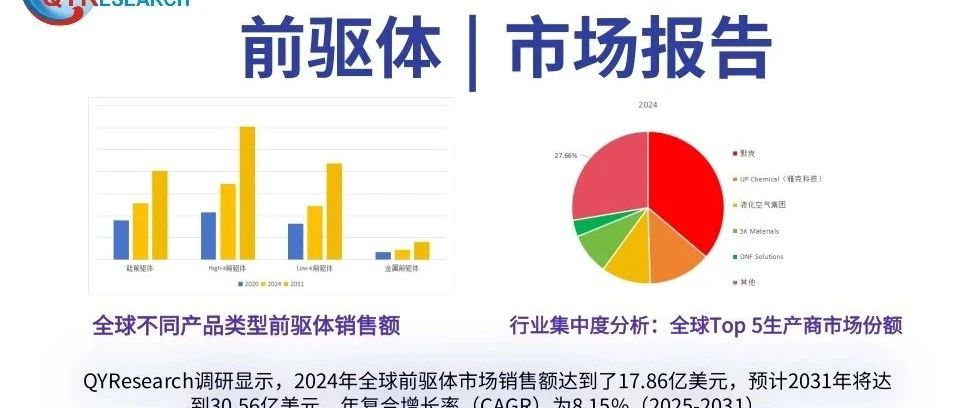
全球前驱体市场:2024-2031稳步增长,中国市场规模扩张占比将超26%
QYResearch· 2025-05-14 08:56
Core Viewpoint - The precursor market in the semiconductor industry is experiencing significant growth driven by increasing demand for high-purity and high-stability materials essential for advanced chip manufacturing processes [1][5]. Group 1: Current Status of the Precursor Industry - The production of semiconductor precursors requires highly specialized technology and knowledge across chemical synthesis, materials science, and semiconductor processes [3]. - Rapid innovation is necessary as the semiconductor industry evolves quickly, necessitating close collaboration between precursor manufacturers and semiconductor producers to meet new demands [3]. - Quality control is critical, with manufacturers needing to establish strict systems to ensure the purity, stability, and consistency of precursors [3]. - There is a growing demand for customized precursors tailored to specific processes and applications, requiring manufacturers to work closely with clients [3]. Group 2: Development Trends of Precursors - There is an increasing requirement for high purity and stability in precursors due to the shrinking size and enhanced performance of semiconductor devices [4]. - New types of precursors are being developed to meet the needs of next-generation semiconductor devices, including those for two-dimensional materials and novel memory applications [4]. - The trend towards atomic layer deposition (ALD) necessitates the development of more precise precursors to achieve higher atomic layer control and film uniformity [4]. - Precursors must be adaptable to both high-temperature and low-temperature applications, with a focus on developing suitable low-temperature precursors for film growth [4]. Group 3: Global Precursor Market Analysis - The global precursor market is projected to reach $1.786 billion in sales by 2024 and $3.056 billion by 2031, with a compound annual growth rate (CAGR) of 8.15% from 2025 to 2031 [7]. - The Chinese precursor market is expected to grow from $380.21 million in 2024 (21.28% of the global market) to $812.66 million by 2031 (26.59% of the global market) [7]. - Taiwan is currently the largest consumer market for precursors, with a projected market share of 28.58% in 2024, followed by South Korea and mainland China [7]. - Europe is the largest production region for precursors, holding a 50.32% market share in 2024, while mainland China is expected to experience the fastest growth [7]. Group 4: Product and Application Insights - High-k precursors are expected to hold a significant market share, projected to reach 38.62% of revenue by 2031 [10]. - The PVD/CVD/ALD applications are anticipated to account for approximately 91.99% of revenue in 2024, with a CAGR of about 8.34% in the coming years [10]. Group 5: Key Manufacturers - Major global precursor manufacturers include Merck, UP Chemical, Air Liquide, SK Materials, DNF, SoulBrain, and others [13][17]. - The report provides insights into the production capacity, sales volume, revenue, and market share of these key players [15].