Z Potentials

Search documents
深度|解读AnyGen:飞书在探索AI 办公的新形态
Z Potentials· 2026-01-14 03:55
Group 1 - The core product AnyGen is an exploratory AI tool developed by Lark, aimed at the overseas market, currently in the product refinement stage [2] - AnyGen's design philosophy emphasizes reliable human-machine collaboration rather than showcasing "AI magic," focusing on high-quality deliverables through effective teamwork [4][22] - The product aims to reduce the friction in office tasks by allowing users to maintain control over the final output while AI handles initial content generation [6][21] Group 2 - AnyGen excels in search research by structuring information effectively, allowing users to edit and guide the content generation process in real-time [6][19] - The product's approach to creating presentations shifts the focus from mere generation to collaboration and editing, enhancing the quality of the final output [8][12] - Users have reported that AnyGen functions more like a collaborative AI editor, significantly reducing their workload while ensuring the final results align with their intentions [21][24] Group 3 - AnyGen's design philosophy prioritizes human judgment and editing over automated completion, recognizing that high-quality outputs require human intervention [23][25] - The product fosters a partnership-like relationship between users and AI, emphasizing the importance of iterative refinement and professional standards in content creation [26][28] - The development team is focused on refining the core user experience with early adopters, indicating a commitment to long-term product evolution [29]


速递|估值飙升170%:AI芯片Cerebras拟以220亿美元估值,融资10亿美元
Z Potentials· 2026-01-14 03:55
Core Viewpoint - Cerebras Systems, an AI chip startup, is negotiating to raise approximately $1 billion, with a pre-funding valuation of $22 billion, and is preparing for an IPO this year [1]. Group 1: Company Valuation and Funding - The company's valuation has significantly increased from its last private valuation of $8.1 billion in September 2025, when it raised $1.1 billion from investors like Fidelity Management and Atreides Management [1]. - Cerebras is expected to announce a new high-profile client soon, which will reduce its reliance on Group 42, its main customer [2]. Group 2: Market Context and Competition - The new funding and valuation come after Nvidia agreed to a $20 billion non-exclusive technology licensing deal with Groq, a competitor of Cerebras, indicating strong market demand for specialized chips that can run AI applications quickly and cost-effectively [2]. - Cerebras, like Groq, develops and sells custom chips for training and running AI models, highlighting ongoing investor interest in startups competing in the specialized chip market for AI [2].

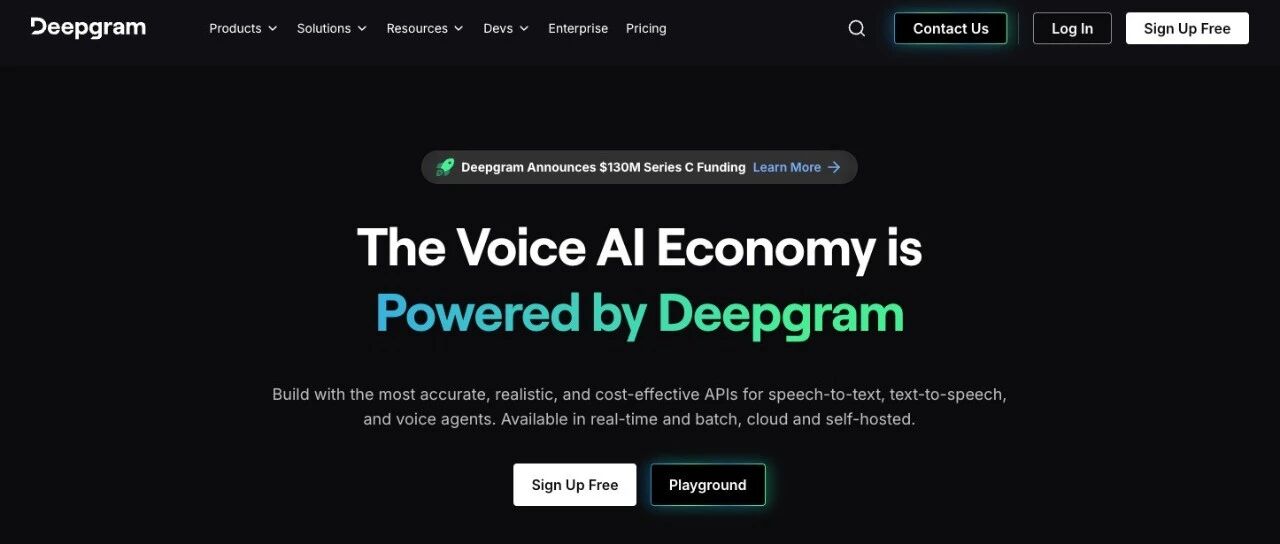
速递|AI语音Deepgram以13亿美元估值融资1.3亿美元,并收购YC初创公司OfOne
Z Potentials· 2026-01-14 03:55
AVP 合伙人 Elizabeth de Saint-Aignan 向 TechCrunch 表示,当该基金与企业探讨其 AI 应用情况时,语音技术频繁被提及,这促使他们开始关注该领域的 公司。 "2024 年,我们在与企业探讨如何在其业务中应用 AI 时,开始听到他们将语音 AI 应用于呼叫中心和销售发展等流程。进一步交流后,我们发现许多语音 AI 技术都由 Deepgram 提供支持,这促使我们最终联系了他们( Deepgram )。 " de Saint-Aignan 说道。 她指出,语音人工智能能帮助提升客户与企业互动体验,同时为企业降低成本,而 Deepgram 可在其中发挥核心作用。 Deepgram 拥有多款与文本转语音及语音转文本相关的模型,并提供支持低延迟对话语音识别与中断处理的平台及 API 。 该公司透露,已有超过 1,300 家 机构使用其语音 AI 产品与模型,包括会议记录工具 Granola 、语音助手初创公司 Vapi 以及 Twilio 。 在过去的几年里,语音 AI 在销售、市场营销、客户支持和消费者应用中的使用量急剧上升。因此,模型提供商获得了更多的业务,同时也引起了投资者 ...
喝点VC|红杉对话全球最火的AI生成媒体平台Fal CEO:当内容生成变得无限时,有限的东西反而会更有价值
Z Potentials· 2026-01-13 03:40
Core Insights - The article discusses the rise of generative video technology and its challenges, emphasizing the need for optimization and application in various industries [4][6][30] - The generative video market is expected to grow significantly, with a unique set of applications and customer bases compared to generative text models [6][41] Group 1: Generative Video Technology and Market Dynamics - Generative video technology is compared to the early days of animation, where initial resistance was met with eventual acceptance as technology evolved [4][5] - The Fal platform provides access to over 600 generative media models, highlighting the diversity and rapid evolution of video models [4][5] - Video generation requires significantly more computational power than text generation, with a 5-second video consuming 12,000 times the resources needed for generating 200 tokens of text [5][19] Group 2: Challenges and Opportunities in the Generative Video Market - The generative video sector has been overlooked due to unclear application scenarios and slower initial investment compared to language models [6][7] - The quality and stability of video models are crucial for their adoption in education and other sectors, indicating a vast potential market [9][41] - The rapid iteration of video models, with a half-life of only 30 days, reflects a dynamic and competitive landscape [25] Group 3: Technical Infrastructure and Optimization - The Fal platform's core technology focuses on a reasoning engine that can adapt to multiple models, ensuring high performance across various applications [10][11] - Optimizing video models presents unique challenges, particularly in managing computational resources effectively [12][13] - The company has developed a distributed computing approach to manage GPU resources efficiently, allowing for real-time video generation [15][16] Group 4: Application Scenarios and Future Prospects - The platform supports a wide range of applications, from dynamic training systems in education to AI-native studios producing high-quality content [41][42] - The demand for personalized advertising and user-generated content is growing, showcasing the versatility of generative video technology [41][42] - The article highlights the potential for generative video to transform traditional media and create new business models in various sectors [41]

速递丨前阿里钉钉最年轻副总裁AI项目获数千万投资,发布全球首个全自动赚钱的商业Agent Moras
Z Potentials· 2026-01-13 03:40
Core Insights - K2 Lab, founded by Wang Ming, has completed a seed round financing of several tens of millions, with funds primarily aimed at product development, AI capabilities, user growth, and building an AI Native team [1] - The first product, Moras, is an automated commercial Agentic AI designed to assist creators in monetizing their content through an end-to-end automated loop [3][4] - K2 Lab envisions a future where every consumer, merchant, and influencer will have their own Agent, with Moras exploring key aspects of new production relationships [6] Product Development - Moras utilizes a reinforcement learning flywheel to automate processes from content understanding to product recommendations and video production [3] - The platform has already demonstrated significant GMV increases for early co-creation clients, enhancing commercialization for global super individuals in the video content ecosystem [4] - Future iterations of Moras will include various agents for traffic management and supply chain management, aiming to create a decentralized e-commerce interface for super individuals [6] Market Vision - The year 2026 is projected to be pivotal for creator economies, with AI content creation expected to explode as barriers lower [3] - K2 Lab's long-term vision includes building a multi-modal "AI Shopify" through an Agent-as-a-Service model, supporting super individuals in managing traffic and supply chains [6] - The founders emphasize the importance of innovative business models and ecosystem building to achieve competitive advantages in the AI landscape [11] Founding Team - The founding team consists of experienced professionals from Alibaba DingTalk, with backgrounds in AI product incubation, ecosystem operations, and commercialization [7] - CEO Wang Ming has a history of leading significant projects and building large enterprise service ecosystems [7] - The team combines expertise in technology engineering, model algorithms, industry know-how, and business acumen [7] Future Plans - Moras is set to launch commercial promotion and user growth initiatives in Q1 2026, focusing on refining its product and algorithms [8] - The company aims to enhance its Multi-Agent architecture and establish a robust AI infrastructure for KOC ecosystems [8]

速递|种子轮即达5000万美元:前谷歌、苹果研究人员创办AI初创企业
Z Potentials· 2026-01-12 03:20
Core Insights - Andrew Dai, a seasoned AI researcher with 14 years of experience, has left Google DeepMind to establish a startup named Elorian, focusing on developing AI models that can understand and process text, images, video, and audio simultaneously [1] - Elorian is currently in discussions to raise approximately $50 million in seed funding, with Striker Venture Partners, founded by former VC partner Max Gazor, considering leading this round [1] - Co-founder Yang Yinfeng, a former Apple researcher, contributed to the development of Elorian's AI models before leaving Apple in December [1] Company Focus - Elorian aims to create AI models that visualize and analyze the physical world by synchronously processing images, videos, and audio [1] - While robotics is a potential application for Elorian's AI, the company envisions a broader range of applications, although specific use cases have not been disclosed [1] Industry Trends - Early AI models, such as those from OpenAI, primarily trained on text but have shifted towards image and video training, marking a significant trend in the field known as visual reasoning [2] - Visual reasoning models are designed for complex AI applications, integrating multiple functionalities and reducing the need for developers to piece together different AI models [2] - This technology is particularly valuable for AI agents that need to interpret and understand images, supporting advanced tasks like processing retail product returns and reviewing legal documents [2] Research Background - Andrew Dai has a strong background in pre-training models, having co-led data-centric pre-training work at Google DeepMind, which laid the groundwork for the Gemini series of models [2] - He is recognized as a pioneer in the field of language models, with a focus on developing techniques to assess the quality of training data for AI models [2]

独家 | Humanify 获数千万元首轮融资打造 AI OS,97 年创始人不卷 AI 智商、押注 “类人认知”
Z Potentials· 2026-01-12 03:20
Core Insights - Humanify, an AI startup, has recently completed a seed round financing of several tens of millions, led by Wuyuan Capital and followed by Qiji Chuangtan [2] - The company aims to develop next-generation human-like models and AI-native operating systems, focusing on integrating human-like cognition and autonomy into everyday life [2][4] - Humanify's long-term vision is to make reliable AI companionship a part of daily life, extending human cognition, emotions, and relationships [7] Company Overview - Founded in 2024, Humanify's core team includes talents from prestigious institutions like Zhejiang University and Tsinghua University, specializing in AI model algorithms, systems engineering, and product design [2] - The founder, Aaron Yee, has a background in AI from Zhejiang University and has experience in creating reliable infrastructure for over a million users [2] AI Development Perspective - Current AI capabilities are advanced but lack emotional intelligence, awareness, and autonomy, remaining in a passive response mode [3] - Humanify believes the next generation of AI will evolve from tools to intelligent agents with human-like cognition and autonomy, significantly reducing communication costs between humans and AI [4] Operating System Innovation - Humanify is developing a new AI-native operating system that integrates human-like cognition, aiming to simplify the integration of AI models into various software and hardware environments [5] - The goal is to create an OS-level capability that allows developers to easily build natural intelligence within existing frameworks and hardware platforms [5]

喝点VC|YC 内部内部复盘:AI 正在进入稳定期,并逐渐形成一套可复用的AI原生公司构建路径
Z Potentials· 2026-01-11 02:00
Core Insights - The AI economy is stabilizing, with clear differentiation between model, application, and infrastructure layers, leading to a more mature path for building AI-native companies [32][20][17] - Anthropic has surpassed OpenAI as the most preferred API among YC founders, with a usage rate exceeding 52% in the latest Winter26 batch, marking a significant shift in the competitive landscape [7][5][6] - The emergence of various models, including Gemini, is reshaping preferences, with Gemini gaining traction and accounting for approximately 23% of usage in the Winter26 batch [8][10] Group 1: AI Model Preferences - Anthropic's rapid growth is attributed to its performance in coding tools and the emergence of vibe coding, which has created significant value [7][6] - The competitive landscape is shifting from model capabilities to productization, as models become commoditized and computational power becomes cheaper [7][8] - Founders are increasingly using multiple models for specific tasks, indicating a trend towards model orchestration in AI applications [15][16] Group 2: AI Bubble Discussion - Concerns about an AI bubble are likened to the telecom bubble of the 1990s, where excess infrastructure investment ultimately led to the emergence of successful applications like YouTube [17][18] - The current phase is seen as an installation stage, with heavy capital investment in infrastructure, which will eventually lead to a deployment phase where applications flourish [20][21] - The competitive dynamics among AI labs and model companies are expected to benefit startups entering the application layer, similar to the opportunities seen during the internet boom [19][18] Group 3: Trends in AI Startups - There is a growing interest in establishing smaller models and niche applications, reminiscent of the early days of SaaS startups [26][27] - The ability to fine-tune models for specific domains, such as healthcare, is becoming more prevalent, with some startups outperforming larger models like OpenAI in specific benchmarks [28][29] - The expectation is that as more models become available, there will be an increase in AI applications tailored for various tasks, driven by advancements in open-source models and reinforcement learning [28][27] Group 4: Workforce and Efficiency - AI has improved efficiency for startups, but the expectation for higher performance has led to continued hiring rather than a reduction in workforce [36][35] - The trend indicates that while AI can enhance productivity, the demand for skilled personnel remains high to meet growing customer expectations [39][36] - The narrative around AI's impact on employment is evolving, with some believing it will lead to fewer employees needed, while others argue it will necessitate more hiring to maintain service quality [39][36]

深度|AI教母李飞飞:AI绝对是一种文明级技术;人们正在忽视“人”在AI中的重要性
Z Potentials· 2026-01-10 03:49
Core Insights - The article emphasizes the importance of human involvement in the development and application of AI, highlighting that AI is fundamentally a "civilizational technology" that significantly impacts society and culture [38][41]. Group 1: Background and Development of AI - Fei-Fei Li, known as the "godmother of AI," discusses her journey from a typical Chinese middle-class upbringing to becoming a leading figure in AI research, emphasizing the role of her parents in shaping her curiosity and resilience [13][15][16]. - The creation of ImageNet marked a pivotal moment in AI, representing a shift towards utilizing big data in the field, which had previously been stagnant during the so-called "AI winter" [20][21]. - ImageNet was developed between 2007 and 2009, becoming the largest dataset for computer vision training and evaluation at that time, which was crucial for advancing AI capabilities [20][21]. Group 2: Key Factors for ImageNet's Success - The success of ImageNet can be attributed to the timely recognition of the potential impact of big data, as well as the formulation of the correct scientific hypotheses regarding visual recognition [29][30]. - The project utilized Amazon Mechanical Turk for crowdsourcing image labeling, which allowed for the collection of millions of high-quality images necessary for training AI models [34][35]. - The careful consideration of data quality and the implementation of rigorous testing for labelers ensured the reliability of the dataset, which was essential for the project's success [36][37]. Group 3: Current AI Landscape and Future Directions - The article highlights the current cultural and economic significance of AI, noting that AI contributed to 50% of the GDP growth in the U.S. last year, indicating its transformative potential [38][39]. - There is a concern that discussions around AI often overlook the human element, which is crucial for ensuring that technology serves humanity and maintains individual dignity [41]. - The establishment of WorldLabs aims to develop spatial intelligence in AI, which is seen as a foundational capability for enhancing human creativity and interaction with the environment [45][46].

速递|矩阵超智发布新一代旗舰级人形机器人,迈入“理解并适应物理世界”的新阶段
Z Potentials· 2026-01-10 03:49
Core Viewpoint - The article highlights the launch of MATRIX-3, a third-generation humanoid robot by Matrix Robotics, which signifies a shift from executing preset commands to understanding and adapting to the physical world [1][12]. Group 1: Technological Advancements - MATRIX-3 incorporates significant advancements in materials science, drive technology, perception algorithms, and artificial intelligence, resulting in three fundamental advantages: bionic design and perception, dexterous manipulation and humanoid gait, and cognitive core with zero-shot generalization [4][5]. - The robot features a 3D woven flexible fabric skin that enhances safety and interaction, along with a multi-modal perception system that allows it to understand and manipulate objects like a human [9]. - The dexterous hand of MATRIX-3 has 27 degrees of freedom, enabling it to perform complex tasks with precision, while its natural gait is achieved through a universal motion control model based on human movement data [10]. Group 2: Application and Future Prospects - MATRIX-3 paves the way for the practical application of humanoid robots in various sectors, including commercial services, manufacturing, logistics, healthcare assistance, and future household services [8]. - The robot's zero-shot learning capability allows it to adapt to new tasks and environments without extensive prior training, significantly expanding its application boundaries and deployment speed [11]. - Matrix Robotics plans to initiate pilot deployments of MATRIX-3 in 2026, targeting specific industry partners for early experience programs [12].