Z Potentials

Search documents
深度|微出行初创Also半年成独角兽,电动智能出行领域再现新投资热潮
Z Potentials· 2026-01-23 04:13
Core Viewpoint - The electric mobility industry in 2025 is experiencing a dichotomy, with traditional new energy passenger vehicles facing intense competition and significant sales declines, while the emerging micro-mobility sector is attracting substantial capital investment, indicating a shift in investment logic from "oil vehicle replacement" to "demand-driven" growth [3][4]. Group 1: Market Dynamics - The traditional new energy vehicle market is becoming a red ocean, with Tesla experiencing an 8.5% decline in annual sales, while BYD has emerged as the global leader in pure electric vehicle sales [3]. - The micro-mobility sector, which includes electric bicycles, scooters, and light electric trucks, is gaining traction due to policy incentives, technological maturity, and essential demand, leading to a significant increase in venture capital interest [3][4]. Group 2: Investment Trends - Also, a micro-mobility company spun off from Rivian, achieved a valuation of $1 billion after raising $200 million, marking a pivotal moment for the micro-mobility sector and indicating a shift in valuation logic from hardware manufacturing to ecosystem entry points [4][7]. - The global micro-mobility financing in the second half of 2025 saw a 120% year-on-year increase, with over 60% of the funds directed towards electric bicycles and light electric trucks [4][11]. Group 3: Demand and Policy Drivers - The global micro-mobility market is projected to grow from approximately $78 billion in 2024 to between $214 billion and $437 billion by 2035, with a compound annual growth rate (CAGR) of 13% to 17.4% [11]. - The increasing urbanization and the need for efficient short-distance travel are driving demand, with electric scooters and bicycles becoming preferred commuting options in cities [11][12]. Group 4: Competitive Landscape - The competition in the micro-mobility sector is evolving into a comprehensive battle of technology, products, and ecosystems, with traditional automakers and startups vying for market share [13][14]. - Traditional automakers are adopting a hybrid approach, leveraging their technological strengths while collaborating with local companies to enhance supply chain and distribution capabilities [13]. Group 5: Future Outlook - The long-term growth of the micro-mobility sector will depend on overcoming technological, operational, and policy challenges, with trends indicating accelerated technology integration, increased ecosystem collaboration, and a balance between globalization and localization [18]. - The emergence of companies like Also signifies the beginning of a value reassessment in the micro-mobility sector, transitioning from a focus on hardware to comprehensive solutions that integrate AI and smart technologies [7][15].




速递|AI语言学习平台Preply,D轮融资1.5亿美元估值翻三倍达12亿美元
Z Potentials· 2026-01-22 03:58
Group 1 - Preply raised $150 million in its latest funding round, increasing its valuation to $1.2 billion, nearly tripling its previous valuation [1] - The D round of financing was led by WestCap, bringing Preply's total funding to over $299 million [1] - Preply, founded in 2012, uses AI technology to match over 100,000 tutors with learners in 180 countries, offering more than 90 language types [1] Group 2 - The CEO, Kirill Bigai, stated that the company has achieved positive earnings before interest, taxes, depreciation, and amortization (EBITDA) since Q4 2024 [1] - Preply plans to use the new funding to expand its engineering department, particularly in its New York and London offices, and to develop personalized AI tools [1] - The company aims to hire over 100 core technical positions, including product managers, designers, engineers, and AI specialists [1] Group 3 - Allen Mask from WestCap will join Preply's board, with WestCap managing over $6 billion in assets and having previously invested in companies like Airbnb and StubHub [2] - Bigai emphasized the importance of finding investment partners who understand how to build enduring brands and support companies in later growth stages [4] - Preply's goal is to conduct an initial public offering (IPO), although no specific timeline has been disclosed [4]

速递|AI网络Upscale AI估值突破10亿美元,建构新网络基础,挑战思科、博通
Z Potentials· 2026-01-22 03:58
Core Insights - Upscale AI has successfully completed a $200 million funding round, raising its valuation to over $1 billion, positioning itself as a competitor to Cisco Systems and Broadcom in the network equipment sector [1][2]. Group 1: Funding and Valuation - The recent funding round was led by Tiger Global Management, Premji Invest, and Xora Innovation, with participation from several other investors including Intel Capital and Qualcomm Ventures [1]. - Upscale had previously raised $100 million in a seed funding round just four months prior to this latest round [1]. Group 2: Product Development and Market Position - Upscale aims to develop network devices specifically designed to handle the data demands of artificial intelligence, addressing issues like network congestion that affect current cloud computing systems [2]. - The company plans to launch a usable product later this year and is already engaging with potential customers, including data center giants and sovereign AI projects [2][4]. Group 3: Leadership and Experience - The leadership team includes Barun Kar, a former senior vice president at Palo Alto Networks, and Rajiv Khemani, who co-founded Innovium, indicating a strong background in the tech industry [3]. - Upscale was founded in 2022 and has already secured over $300 million in funding from various investors, showcasing significant investor confidence in its potential [3]. Group 4: Growth Plans - The newly raised funds will be used to expand engineering operations, with the current employee count of 150 expected to double by the end of the year [4]. - The company is focused on developing a mature product to gain customer recognition and market share from competitors like Broadcom [6].

喝点VC|a16z复盘消费级AI:为什么还没有AI社交软件?2026年多模态与应用生成为破局关键
Z Potentials· 2026-01-22 03:58
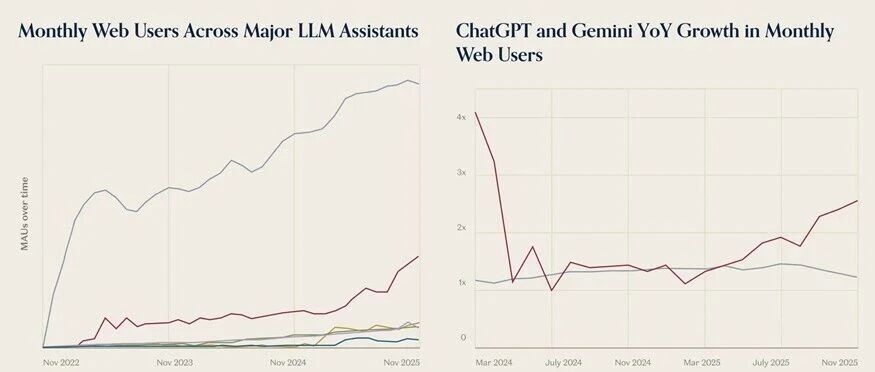
Market Landscape of Consumer AI in 2025 - The consumer AI market in 2025 is characterized by a "winner-takes-most" trend, with OpenAI and Google leading the charge in product launches and user engagement [3][5] - ChatGPT is currently the dominant player with weekly active users estimated between 800 million to 900 million, while Gemini's user base is approximately 35% of ChatGPT's on the web and 40% on mobile [4][6] - Only 9% of users are willing to pay for more than one product among leading LLMs like ChatGPT, Gemini, Claude 3, and Cursor, indicating a strong preference for a single dominant platform [5] Product Innovations and Core Technologies - Significant advancements in image and video generation models have been made, particularly in realism and reasoning capabilities, allowing for more lifelike and coherent outputs [10][11] - OpenAI's ChatGPT-4o and Google's VO series models, including Nano Banana, have gained substantial popularity, showcasing the competitive landscape of product offerings [8][9] - The integration of search capabilities into models like Nano Banana enhances their functionality, allowing for more accurate and contextually relevant outputs [12] User Experience and Product Design - The design of consumer AI products is crucial, with successful applications needing to balance content creation and consumption, as seen in platforms like TikTok and YouTube [33] - ChatGPT's user interface is noted for its engaging design, which encourages user interaction and exploration of features, contrasting with Gemini's more utilitarian approach [24][25] - The potential for "super apps" that integrate various functionalities is highlighted, with ChatGPT aiming to leverage its high user engagement for proactive service offerings [16][40] Competitive Dynamics and Emerging Players - Emerging players like Perplexity and Grok are making strides in the market, with Perplexity's Comet browser showing impressive user retention and engagement [20][21] - The competitive landscape is evolving, with companies like Anthropic focusing on niche markets and specialized user needs, while also facing challenges in broader consumer adoption [34][36] - Meta and Grok are also recognized as challengers, with Grok rapidly advancing in image and video generation capabilities, indicating a dynamic and competitive environment [37][39] Predictions for 2026 - The enterprise market is expected to see significant growth for ChatGPT, with a reported 7-8 times increase in enterprise users, which may drive further consumer adoption [40][41] - The trend towards multi-modal capabilities in AI is anticipated to continue, with expectations for models to handle diverse input types and generate rich, varied outputs [43][44] - Initial explorations into generative technologies by leading firms may pave the way for innovative applications, allowing startups to leverage advanced models for niche market opportunities [42][45]


Z Product|超10万五星好评!平均年龄仅20岁的AI健康团队研发Cal AI,8个月月收入超200万美金
Z Potentials· 2026-01-21 05:52
Core Insights - The article discusses the rapid growth of the calorie tracking app market, which reached $2.1 billion in 2023 and is projected to grow to $4.7 billion by 2032, driven by increasing health awareness and the prevalence of obesity and chronic diseases [3][4] - Cal AI targets ordinary users with a simplified interface, addressing the pain points of complex existing applications like MyFitnessPal, which often overwhelm users with features [5][6] - The app utilizes advanced AI models, achieving a food recognition accuracy of 90%, which is above the industry average, and focuses on user experience tailored to non-professional users [6][10] Market Trends - The demand for calorie tracking apps is evolving towards simplicity and ease of use, with a shift from fitness enthusiasts to the general public who prefer straightforward experiences [3][6] - Users are increasingly seeking specific features such as precise identification of food types and personalized guidance, prompting developers to create more targeted products [4][6] Product Features - Cal AI offers several key functionalities: food tracking through photo analysis, barcode scanning for nutritional information, weight monitoring with AI suggestions, and hydration and exercise tracking [11][12] - The app employs a free-to-use model with premium features, but users have expressed concerns about hidden subscription costs and the complexity of accessing full functionalities [14][15] Marketing Strategy - Initial marketing efforts focused on collaborations with fitness influencers on platforms like TikTok and Instagram, with a significant budget allocated for advertising [17] - The app's marketing expenditures have reportedly reached over $770,000 monthly, indicating a strong investment in user acquisition [17] Company Background - Cal AI was founded by a small team of four, leveraging the entrepreneurial experience of its founders, who have backgrounds in programming and growth marketing [19][20][21] - The company has achieved significant revenue growth, surpassing $1 million in revenue within four months of launch and stabilizing at over $2 million monthly [24][27] User Engagement - Cal AI boasts high user satisfaction ratings, with scores of 4.8 and 4.7 on App Store and Google Play, respectively, and a 30-day retention rate exceeding 30% [24] - The app's design and user experience are crafted to create emotional connections with users, enhancing engagement and retention [13][14]

速递|AI推理服务商Baseten Labs再融3亿美元,英伟达、Alphabet联手下注
Z Potentials· 2026-01-21 05:52
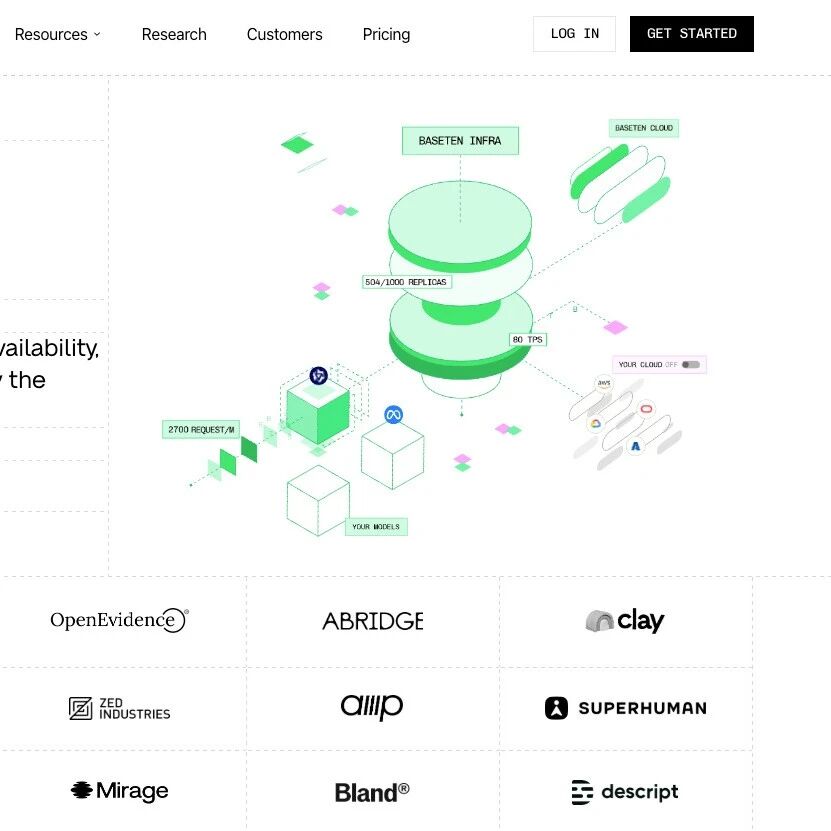
Core Insights - Baseten Labs, an AI startup, has raised $300 million at a valuation of $5 billion, more than doubling its valuation from a previous round six months ago [3] - The company specializes in AI inference, which is the process of running AI systems after they have been trained [3] - In September of the previous year, Baseten raised $150 million at a valuation of $2.15 billion [3] - The latest funding round was led by venture capital firm IVP and Alphabet's growth investment arm CapitalG, with NVIDIA participating by investing $150 million [3] Funding Details - The recent $300 million funding round significantly increased Baseten's valuation from $2.15 billion to $5 billion within a short span [3] - The participation of notable investors like IVP, CapitalG, and NVIDIA highlights the growing interest in AI inference technologies [3] Company Focus - Baseten Labs is focused on AI inference, which is crucial for deploying AI models in real-world applications [3] - The rapid increase in valuation indicates strong market confidence in the company's technology and growth potential [3]

速递|“新实验室”浪潮汹涌:前OpenAI团队创立的Applied Compute,13亿美元估值融资在即
Z Potentials· 2026-01-21 05:52
Core Insights - Applied Compute, a startup founded by three former OpenAI researchers, is negotiating to raise new funding at a valuation of $1.3 billion, more than doubling its previous valuation of approximately $500 million from less than three months ago [1][2]. Group 1: Company Overview - Applied Compute focuses on helping businesses customize AI models using their own data, specifically targeting sectors like finance and law [3]. - The company employs reinforcement learning techniques to optimize model performance by rewarding desired behaviors and penalizing others [3]. - Applied Compute collaborates with clients such as DoorDash, Cognition, and Mercor to develop AI agents that can perform tasks on behalf of employees [3]. Group 2: Funding and Valuation - The current funding round may raise up to $70 million, with venture capital firm Kleiner Perkins reportedly leading the investment [2]. - The company has previously raised $80 million from investors including Sequoia Capital, Benchmark, and Lux Capital [2]. - The investment interest in startups focused on research, often referred to as "new labs," is growing, as these companies aim to advance model and product development in ways that larger labs like OpenAI and Anthropic may overlook [2]. Group 3: Financial Performance - As of November last year, Applied Compute achieved an annualized revenue of $12.8 million [5]. - The company is still in the early stages of revenue generation, indicating potential for growth as it scales its operations [5]. Group 4: Industry Context - Applied Compute is not the only well-funded startup aiming for customization; other companies like Thinking Machines Lab are also pursuing similar goals but face challenges such as employee turnover [4]. - The trend of researchers establishing their own companies continues, driven by the desire to innovate beyond the constraints of larger organizations [2].

速递|Gemini API月度请求五个月翻倍至850亿次,谷歌AI的“两条腿”战略
Z Potentials· 2026-01-20 02:57
Core Insights - Google's Gemini AI model improvements are driving significant growth in the company's core revenue, particularly in cloud services as clients increase their investments in AI [1][2] - The upcoming Q4 earnings report on February 4 is expected to reflect the returns on Google's substantial investments in AI, with capital expenditures projected between $91 billion and $93 billion [2] - The Gemini API usage has surged from approximately 35 billion requests in March to around 85 billion in August, indicating a strong demand for AI capabilities [3][7] Group 1: Business Growth and Performance - The Gemini AI model sales have seen explosive growth over the past year, attributed to continuous quality improvements [1] - The Gemini Enterprise version has reached 1,500 companies with 8 million subscribers, showcasing ongoing expansion in this business segment [3] - Despite the growth, customer feedback on Gemini Enterprise is mixed, with slightly over half of the clients reporting positive experiences [4] Group 2: Challenges and Customer Feedback - A significant challenge for Google is convincing enterprises to pay for complex software developed using its AI models, as many clients prefer to build customized solutions [5] - Customer satisfaction varies, with some clients finding Gemini Enterprise useful for specific tasks, while others report difficulties in creating custom applications [10][11] - The Gemini models initially struggled with profitability, but improvements in model quality have allowed for better competition based on quality rather than just price [8][9] Group 3: Market Position and Future Outlook - The success of the Gemini API has not only driven direct sales but also increased consumption of other Google Cloud products [9] - Analysts note that while Gemini Enterprise performs well for general queries, it struggles with highly specific tasks, indicating areas for improvement [11][12] - Overall, there is a cautious optimism among clients regarding the potential of Gemini Enterprise, with many expressing a willingness to continue exploring its capabilities [12][13]

速递|Yann LeCun携“世界模型”创业,融资约3.5亿欧元,估值冲30亿欧元
Z Potentials· 2026-01-20 02:57
Core Insights - AMI Labs, an AI startup founded by Yann LeCun, is reportedly valued at €3 billion (approximately $3.5 billion) and is in discussions for a funding round that aims to raise €350 million, with a long-term goal of €500 million [1][2]. Group 1: Investment and Funding - The startup has attracted interest from potential investors, including Cathay Innovation, Hiro Capital, and Greycroft, with negotiations still ongoing [1]. - Other potential investors include HV Capital, Bpifrance, 20VC, and Daphni, although representatives from these firms have declined to comment [2]. Group 2: Company Vision and Technology - AMI Labs is exploring alternatives to large language models (LLMs) and aims to develop "world models" that assist AI systems in navigating the physical world, particularly in robotics [2]. - The company plans to focus on research and development initially, with a strategy to generate revenue through industry partnerships and technology licensing [4]. Group 3: Team and Operations - The company has recruited researchers from Meta and Elon Musk's xAI and will operate in cities including Paris, New York, Montreal, and Singapore [5]. - AMI Labs joins a trend of startups achieving high valuations without commercial products, similar to other companies in the AI space [6].

喝点VC|a16z 2026预测:创业公司的机会在“有主见”的交互界面
Z Potentials· 2026-01-20 02:57
Core Insights - This year marks a significant surge in consumer AI product launches, with major players like OpenAI and Google releasing numerous new tools and features [5][6] - While AI usage is increasing, most consumers still predominantly use a single product, indicating a highly concentrated market where a few players dominate [6][7] - OpenAI's ChatGPT maintains a leading position with an estimated 800 to 900 million weekly active users, significantly outpacing competitors like Gemini [7][9] - Gemini has shown impressive growth, particularly in paid subscriptions, with a nearly 300% increase compared to ChatGPT's 155% [8][12] - The competition landscape suggests that while there are multiple players, the market is leaning towards a few dominant entities capturing the majority of consumer engagement [6][7] OpenAI - OpenAI launched several new features for ChatGPT, including image generation and enhanced user experiences, but these have not significantly improved user retention or engagement [9][10] - ChatGPT's user engagement metrics, such as a daily to monthly active user ratio of 36%, indicate strong retention compared to Gemini's 21% [7][12] - The introduction of new applications like Sora and Atlas has had mixed results, with Sora achieving over 12 million downloads but struggling with user retention [10][11] Google - Google has made substantial progress with its Gemini product, achieving a 155% growth in user engagement and introducing innovative models like Nano Banana [12][13] - The launch of NotebookLM has been particularly successful, doubling its web user base and reaching 8 million monthly active users [12][13] - Despite releasing several products, Google faces challenges in making these offerings easily accessible to users, which could hinder their overall impact [13][14] Other Key Players - Anthropic focuses on professional consumers, enhancing its Claude product with new features aimed at tech-savvy users [15] - Perplexity has targeted efficiency enthusiasts with products like Comet and a new conversational shopping assistant, achieving a significant revenue increase [17] - xAI's Grok has rapidly gained users, reaching 9.5 million daily active users by integrating more deeply with the X platform [18][19] - Meta's AI initiatives have seen mixed results, with its MetaAI app growing but facing challenges in user engagement [20] Opportunities for Startups - The current landscape presents significant opportunities for startups to create specialized consumer experiences, as larger companies focus on core capabilities [21][22] - Successful consumer AI products have emerged by offering unique interfaces and functionalities that exceed what model companies provide [22]