半导体行业观察

Search documents
苹果自研WiFi芯片,正式发布
半导体行业观察· 2025-09-09 22:39
Core Viewpoint - Apple has introduced new self-developed chips, including WiFi & Bluetooth chip, baseband chip, and the A19 mobile chip, which are essential for the design of the iPhone Air and enhance its energy efficiency [1][2][3]. Chip Developments - The A19 Pro chip features a 6-core CPU and a 5-core GPU, making it the fastest CPU among smartphones, with a performance increase of up to 40% compared to previous generations [4][18]. - The A19 chip includes four efficiency cores and two performance cores, with advancements in hardware acceleration for ray tracing and improved image processing capabilities [13][17]. - The N1 wireless chip supports Wi-Fi 7, Bluetooth 6, and Thread technology, enhancing the performance and reliability of features like personal hotspots and AirDrop [12][20]. Modem Enhancements - The new C1X modem offers speeds up to 2 times faster than its predecessor C1, with a 30% reduction in overall power consumption, making it the most energy-efficient modem in an iPhone [12][24]. - The C1X modem supports sub-6GHz 5G and 4G LTE networks, outperforming Qualcomm's modem in the iPhone 16 Pro under the same cellular technology [22][24]. Product Launches - Apple announced the release of several new products, including the iPhone 17, iPhone Air, iPhone 17 Pro, and Pro Max, along with new versions of AirPods and Apple Watch [23].


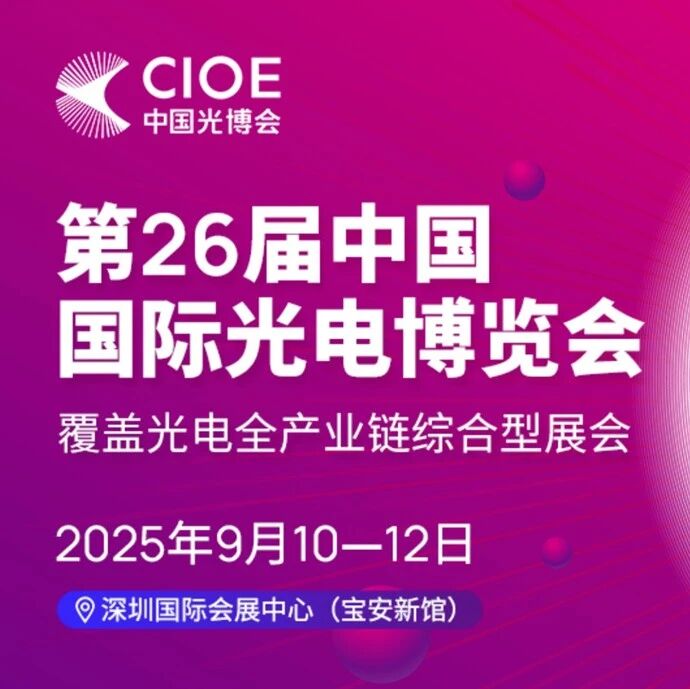
展会预告 | 诚邀您参加2025深圳光博会(CIOE 2025)
半导体行业观察· 2025-09-09 01:02
Core Insights - Tower Semiconductor focuses on advanced technologies in silicon photonics, silicon germanium, and RF solutions to support next-generation mobile communications, AI, and optical networks [3][4][5]. Group 1: Technology Platforms - The silicon photonics platform supports high-speed, low-loss optical integrated circuits for data centers, AI, telecommunications, and quantum applications, addressing the growing bandwidth demand [5]. - The germanium-silicon platform provides high-performance, low-noise RF and millimeter-wave solutions for 5G smartphones, infrastructure, and automotive radar, catering to the increasing demand in the Chinese market [4]. Group 2: Design Enablement Services - Tower offers comprehensive design enablement services, including advanced process design kits (PDK), silicon-validated IP cores, and expert technical support, aimed at accelerating time-to-market and ensuring successful designs for chip design companies in China [6]. Group 3: Company Overview - Tower Semiconductor serves over 300 global customers with integrated circuit technology development and process platforms, including silicon photonics, germanium-silicon, BiCMOS, power/mixed-signal CMOS, RF CMOS, CMOS image sensors, non-imaging sensors, display, and MEMS technologies [7]. Group 4: Upcoming Events - Tower Semiconductor will host the 2025 Global Technology Symposium (TGS 2025) in Shanghai on September 16, 2025, focusing on key market trends in AI, high-speed interconnects, and advanced imaging solutions [8][12]. - The event will feature a keynote by CEO Russell Ellwanger and expert-led discussions on industry-leading solutions in silicon photonics, silicon germanium, RF SOI, power management, image sensors, and advanced display technologies [11][13].
英特尔高层巨震:挖了一位Arm高管
半导体行业观察· 2025-09-09 01:02
Core Viewpoint - Intel has appointed Kevork Kechichian from Arm as the new head of its Data Center Group, following the departure of Michelle Johnston Holthaus, who recently served as the Chief Executive Officer of Intel's product division [1][3][7]. Executive Changes - Intel announced several executive changes, including Jim Johnson temporarily leading the Client Computing Group and Srinivasan Iyengar heading a new Central Engineering Group [2][4]. - Holthaus, who has been with Intel for nearly 30 years, briefly served as the Chief Executive Officer of Intel's product division and was one of the interim co-CEOs after Pat Gelsinger's sudden retirement [7]. Kechichian's Background - Kechichian has over two years of experience at Arm, where he led technology development with ecosystem partners and managed the company's transition from IP licensing to full-stack solutions [3]. - Prior to Arm, he worked at NXP Semiconductors and Qualcomm, holding various senior engineering positions [3]. Strategic Focus - Intel's restructuring under new CEO Lip-Bu Tan emphasizes a focus on CPU development while transferring AI accelerator chip work to a new team led by Sachin Katti [3][5]. - The company aims to create a more integrated structure covering technology development, manufacturing, and marketing to better serve customers [6]. Leadership Experience - Jim Johnson, who has been with Intel for 40 years, will officially lead the Client Computing Group after serving in an interim capacity since December [4]. - Iyengar's role has expanded to lead the Central Engineering Group, focusing on custom chip design for clients [5].
硅光芯片,强强联合
半导体行业观察· 2025-09-09 01:02
Core Viewpoint - The explosive growth in AI computing demand is driving the semiconductor industry towards new technologies like Co-Packaged Optics (CPO), with potential market value reaching tens of billions by 2026, particularly benefiting companies collaborating with NVIDIA and TSMC [2][4]. Group 1: AI and Semiconductor Industry Dynamics - The collaboration between TSMC and NVIDIA aims to capture significant opportunities in AI data centers, with the introduction of the Rubin architecture and CPO technology [2]. - Companies such as Borowiec and Guangsheng are positioned to lead in fiber optic components and connectors, while others like Zhisheng and Hongsu are entering the packaging and testing equipment supply chain [2][3]. Group 2: Technological Advancements - TSMC has developed a complete process design kit (PDK) for photonic integrated circuits (PIC), showcasing its technological capabilities in optical solutions [3]. - The CPO technology, utilizing micro-ring modulators, is expected to enhance power efficiency by 3.5 times and network resilience by 10 times, addressing the bottlenecks in AI computing [3]. Group 3: Market Projections - If the Rubin architecture is fully implemented, it could create a new market worth over $10 billion by 2026, with CPO expected to account for over 50% of high-speed data transmission solutions by 2030 [4].

博通要把英伟达拉下马?
半导体行业观察· 2025-09-09 01:02
Core Viewpoint - The article argues that the competition between Broadcom and Nvidia in the AI data center space is misleading, as both companies are pursuing different strategies that are not mutually exclusive [2][20]. Nvidia's Platform Strategy: Dominating the AI Factory - Nvidia has built a vertically integrated computing and software platform, positioning itself as an essential supplier for companies looking to establish AI factories [3]. - The core of Nvidia's stack includes GPUs like Hopper and Blackwell, paired with NVLink/NVSwitch interconnect technology, creating high-bandwidth, low-latency computing domains optimized for AI workloads [3][4]. - Nvidia's software ecosystem, including CUDA and numerous libraries, locks in developers and supports a wide range of use cases, reinforcing its position as a platform provider [4]. Broadcom's Franchise Model: Sustainable, Open, Profitable - Broadcom's strategy differs significantly from Nvidia's, focusing on finding sustainable franchises and establishing a technology leadership position without pursuing GPUs or large AI systems [5]. - Broadcom dominates the connectivity space in semiconductors, with products like Tomahawk and Jericho leading in commercial Ethernet switching [5][6]. - The company recently announced a $10 billion custom chip deal with OpenAI, indicating its deep integration into large-scale AI infrastructure [6][19]. Financial Performance Comparison - Nvidia's annual revenue run rate is approximately $187 billion, with a year-over-year growth of 56%, and impressive gross and operating margins of 73% and 65%, respectively [16][18]. - In contrast, Broadcom's annual revenue run rate is about $64 billion, with a year-over-year growth of 22%, and gross and operating margins of 67% and 37%, respectively [16][18]. - Broadcom's operating cash flow margin is notably high at 45%, reflecting its strong cash generation capabilities [18]. Strategic Implications - The strategies of both companies highlight that they are not in a zero-sum game; both can thrive by focusing on their respective strengths in AI infrastructure and software monetization [20][22]. - Nvidia leads in accelerated computing, while Broadcom excels in connectivity and software, forming valuable long-term partnerships with major platforms in the AI era [20][22]. - The competition is not between the two companies but rather between the new architectures they are developing and the traditional computing stacks they are replacing [22].
大模型需要什么芯片?Transformer发明人最新预测
半导体行业观察· 2025-09-09 01:02
Core Insights - The presentation by Google's Noam Shazeer at the Hot Chips conference emphasized the importance of language modeling and the increasing computational demands of large language models (LLMs) [1][3][12] - The growth of LLMs is driving significant capital expenditure in data centers, with projections indicating that AI infrastructure spending could reach $3 trillion to $4 trillion over the next five years [12][14] - The demand for higher computational power, memory capacity, and bandwidth is critical for the advancement of future AI models [11][21][38] Group 1: Language Modeling and Computational Needs - Shazeer highlighted that language modeling is one of the best problems to solve, and the performance of LLMs can be enhanced through better hardware utilization [3][6] - The scale of LLMs is expected to grow significantly, with training moving from 32 GPUs in 2015 to potentially hundreds of thousands of GPUs in the future [8][12] - The need for high FLOPS (floating-point operations per second) is crucial as LLMs require more parameters and deeper architectures, leading to increased computational demands [6][11] Group 2: Data Center Capital Expenditure - The rise of foundational models like ChatGPT and Gemini is a key driver behind the exponential growth in annual recurring revenue (ARR) for companies involved in AI [14][15] - OpenAI's ARR is projected to double from $5 billion to over $10 billion by mid-2025, while Anthropic's ARR is expected to grow fivefold in the same period [14] - The demand for hardware to support LLMs is increasing, with companies needing to invest in more GPUs and specialized infrastructure [15][16] Group 3: Hardware and Memory Requirements - The integration of high-bandwidth memory (HBM) with GPUs is essential for meeting the data demands of LLMs, as HBM provides significantly higher bandwidth compared to traditional DRAM [21][22] - The memory hierarchy is evolving to accommodate the vast memory requirements of LLMs, with smart allocation strategies improving efficiency [22][24] - Innovations in memory devices and structures are being developed to support the growing needs of AI applications, including large memory pools connected to GPU pods [24][26] Group 4: Networking Innovations - The networking infrastructure for AI data centers is undergoing significant changes to support the high bandwidth and low latency required for training large models [26][29] - New technologies, such as co-packaged optical devices, are being introduced to reduce power consumption and improve interconnectivity between GPUs [35][38] - Companies are exploring various networking solutions, including custom switches and protocols, to enhance the scalability and efficiency of AI workloads [30][31]
壹号本游侠X1 Air三合一PC正式发布,佰维Mini SSD带来端侧AI存储新体验
半导体行业观察· 2025-09-09 01:02
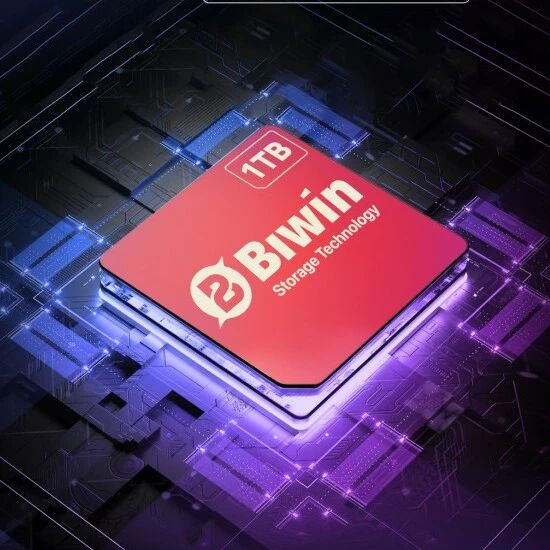
公众号记得加星标⭐️,第一时间看推送不会错过。 9月8日,壹号本(OnexPlayer)召开新品发布会,重磅推出年度旗舰级三合一AI PC产品——X1 Air,一款集平板电脑、迷你笔记本与大屏掌机于一体的多形态智能终端。该产品创新搭载 佰维Mini SSD ,突破性地实现"双硬盘协同"架构,全面激发 数据传输性能 、实现 存储容量灵活倍增 ,支撑 X1 Air在办公、创作、游戏等 多场景、全形态下的流畅体验 ;同时,佰维Mini SSD采用模块化 卡 槽式插拔设计 ,安装便捷、即插即用,为用户带来 高效、自由的存储扩容体验。 佰维存储创始人孙日欣先生受邀出席OnexPlayer发布会,解读Mini SSD技术与应用 以下文章来源于BIWIN佰维 ,作者存储中国芯 BIWIN佰维 . 存储无限,策解无疆 / lnfinite storage, Unlimited solutions Mini SSD 传统存储方案 VS | | | | | | --- | --- | --- | --- | | 存储类型 | Mini SSD | UFS | microSD Express存储卡 | | 接口 | PCle 4. ...
半导体大厂,计划出售
半导体行业观察· 2025-09-09 01:02
Core Viewpoint - IQE is undergoing a strategic review that includes the potential sale of the company, as the board seeks buyers amid declining revenue forecasts and macroeconomic uncertainties [1][3][5] Financial Performance - IQE has revised its revenue forecast for 2025 to between £90 million (approximately $121.5 million) and £100 million, down from a previous estimate of £115.1 million to £123 million, due to contract delays [1][3] - The company expects adjusted EBITDA for 2025 to be between £5 million and £2 million, with first-half revenue projected to be at least £44 million [3][4] Market Conditions - The wireless market is experiencing ongoing weakness, primarily due to poor mobile phone sales, which is expected to continue until 2025 [1][3] - Delays in federal funding cycles for the U.S. military and defense sectors have pushed orders to 2026, further impacting revenue [1][3] Strategic Initiatives - IQE is in discussions regarding the potential sale of its Taiwan operations, with proceeds expected to be used to repay credit facilities and invest in core business areas [1][4] - Lazard is providing advisory services to the board regarding the strategic review [4] Future Outlook - The board remains confident in IQE's market opportunities due to its leading position in advanced compound semiconductors across multiple vertical markets and global brand clients [1][3][5]
收购审议通过,中芯国际复盘
半导体行业观察· 2025-09-09 01:02
Core Viewpoint - The article discusses the acquisition plan of SMIC (Semiconductor Manufacturing International Corporation) to purchase the remaining 49% stake in SMIC North from various investors, which will make SMIC North a wholly-owned subsidiary of SMIC. This transaction is expected to enhance the asset quality and business synergy of SMIC, promoting its long-term development [2][3][4]. Group 1: Acquisition Details - SMIC plans to issue shares to acquire the 49% stake in SMIC North, which will increase its ownership from 51% to 100% [2][3]. - The acquisition is not expected to change the main business scope of SMIC, and the company will still have no actual controller post-transaction [3][4]. - The transaction aligns with national industrial policies and is consistent with the positioning of the Sci-Tech Innovation Board [4]. Group 2: Strategic Benefits - The acquisition is anticipated to improve the asset quality of SMIC and enhance business synergy, benefiting all shareholders [4]. - By integrating profitable assets, SMIC aims to increase its net profit significantly, as SMIC North is at its peak profitability [4][5]. - The transaction also addresses the exit needs of certain shareholders, particularly the National Integrated Circuit Fund, which has been a major shareholder for nearly 11 years [5].

3个月研发、6个月量产:苏磁科技如何用磁悬浮技术撕开半导体垄断缺口?
半导体行业观察· 2025-09-08 01:01
Core Viewpoint - The semiconductor industry prioritizes cleanliness, with magnetic levitation technology emerging as a key solution to enhance cleanliness and efficiency in semiconductor manufacturing [1][2][8]. Group 1: Magnetic Levitation Technology - Magnetic levitation technology, initially proposed over a century ago, has recently gained traction in the semiconductor sector due to its ability to reduce contamination and improve energy efficiency [2][5]. - The technology's unique characteristics, such as non-contact operation, prevent particle pollution, making it essential for semiconductor manufacturing [8][12]. Group 2: Domestic Breakthroughs - Suji Technology has emerged as a pioneer in the application of magnetic levitation technology within the semiconductor industry, successfully integrating its products into the supply chains of several domestic semiconductor companies [5][12]. - The company rapidly developed wafer turntables and other key components, achieving a remarkable speed of product development and deployment [12][25]. Group 3: Market Potential and Competition - The market for magnetic levitation components in semiconductor manufacturing is projected to be in the hundreds of billions, with domestic products expected to capture over 90% market share in the turntable sector [12][17]. - Suji Technology's magnetic levitation pumps are gaining traction due to their superior performance and cost-effectiveness compared to traditional alternatives, with expectations of significant market share growth [16][17]. Group 4: Addressing Industry Pain Points - Suji Technology focuses on solving critical pain points in the semiconductor industry, ensuring high precision and cleanliness in its products to enhance overall yield [19][20]. - The company employs a "on-site service" model to provide rapid technical support, which has helped establish a strong reputation among clients [19][20]. Group 5: Standardization and Internationalization - Suji Technology is actively involved in setting industry standards, having initiated the first domestic standard for ultra-clean magnetic levitation self-bearing pumps [21][24]. - The company is also expanding its international presence, adapting to different customer needs and emphasizing technological innovation [24][25]. Group 6: Future Outlook - The company aims to solidify its position in the semiconductor market while exploring applications of magnetic levitation technology in other industries such as biomedicine and fine chemicals [25][26]. - The long-term vision includes transitioning from domestic substitution to proactive innovation, contributing to the evolution of China's semiconductor industry [25][26].