半导体行业观察

Search documents
NoC,面临挑战
半导体行业观察· 2026-03-29 01:46
Core Viewpoint - The article discusses the evolution and challenges of on-chip networks (NoC) in the context of increasing data demands and the integration of artificial intelligence, emphasizing the need for innovative topologies and architectures to manage data flow effectively [1][2][22]. Group 1: Challenges in NoC Design - The complexity of NoC design is driven by the need for scalability, congestion management, traffic fairness, and predictable latency in heterogeneous IP modules [1][2]. - As SoC architectures expand to hundreds or thousands of endpoints, managing dynamic traffic systems under strict power, delay, and layout constraints becomes increasingly difficult [1][2]. - AI-driven designs exacerbate these challenges, requiring networks to handle bursty, high fan-in traffic while avoiding queue blocking or pathological congestion [1][2]. Group 2: Evolution of NoC Topologies - NoC topologies have evolved from crossbar structures to star, ring, mesh, toroidal, and other advanced configurations to meet changing data demands [2][3]. - Hybrid network architectures are emerging, combining mesh, ring, and hierarchical structures to balance bandwidth and power consumption [2][3]. - Future NoC architectures are expected to be dynamic and self-optimizing, capable of adapting to workload patterns and performing congestion prediction [3]. Group 3: Heterogeneity in Design - Heterogeneous design allows for the integration of different types of processors and networks within the same SoC, addressing various problem types [2][15]. - While heterogeneity solves some issues, it introduces integration challenges, particularly when layering AI accelerators and real-time workloads onto traditional platforms [2][15]. - Different topologies are suited for different challenges, with consistency structures being crucial for CPU clusters, while bandwidth and efficiency are prioritized for NPUs and DSPs [8][15]. Group 4: Data Management and AI Workloads - AI workloads require continuous bandwidth assurance, multicast efficiency, and memory consistency, with data quality and correctness becoming critical [22]. - The management of data flow must ensure deterministic delays, traffic isolation, and fault control to maintain safety in physical AI systems [15][22]. - The transition from digital reasoning to physical interactions highlights the importance of rigorous data management to prevent performance degradation and safety risks [22]. Group 5: Chip Group Challenges - Chip groups face unique challenges in managing inter-chip communication, especially under high-speed I/O conditions, requiring careful consideration of data clarity and signal integrity [20][21]. - The complexity of chip group solutions increases as multiple chipsets are combined, leading to larger system scales and runtime configurability not present in traditional SoCs [21]. - The choice of NoC type depends on the specific connections being made, with different requirements for CPU-to-CPU versus CPU-to-accelerator communications [20].



DDR 5,终于降价了,几个月来首次
半导体行业观察· 2026-03-29 01:46
Group 1 - The core point of the article is that DDR5 memory prices have recently experienced a significant decline, with discounts of up to $100 per set, although this is limited to a few suppliers [1][2] - Retailers in the US, including Amazon, have reported substantial price drops for DDR5 memory products, with a notable example being the Corsair 32GB VENGEANCE DDR5 memory now priced at approximately $379.99, down from around $490 [1] - The decline in memory prices is attributed to the release of Google's TurboQuant compression algorithm, which has sparked intense discussions in the memory industry and led to significant market value losses for DRAM suppliers like Micron [2] Group 2 - The price reductions are not exclusive to Amazon, as similar products can be found on Newegg, with Corsair's memory products seeing larger price cuts compared to other manufacturers [2] - The TurboQuant algorithm can potentially reduce memory demand for AI workloads by up to six times, which may alter future memory demand dynamics, although some experts are skeptical about this claim [2] - The current price drop may be a result of inventory sell-offs following the positive industry response to the TurboQuant algorithm, although this remains speculative [2]

中国半导体重要开拓者——追忆吴德馨先生
半导体行业观察· 2026-03-29 01:46
Core Viewpoint - The article commemorates the contributions of Wu Dexin, a prominent figure in China's semiconductor industry, highlighting her dedication to the development of semiconductor technology and her lifelong commitment to serving the nation [2][21]. Group 1: Early Life and Career - Wu Dexin was born in 1936 in Hebei Province and graduated from Tsinghua University in 1961, subsequently joining the Semiconductor Research Institute [3]. - The establishment of the Semiconductor Research Institute in 1960 was part of China's strategic plan to enhance semiconductor technology, which Wu Dexin actively contributed to from its inception [3]. Group 2: Key Achievements - From 1962 to 1964, under the guidance of Wang Shouwu, Wu Dexin led a project on planar high-speed switching transistors, achieving a switching speed that matched international standards, which significantly benefited China's technological capabilities [5]. - In 1965, she became the leader of the device research group and later developed digital integrated circuits and high-impedance operational amplifiers, laying the groundwork for China's early digital and analog integrated circuit development [5]. Group 3: Contributions to Integrated Circuits - In 1978, Wu Dexin played a crucial role in the development of the N-MOS 4096-bit dynamic random-access memory (DRAM), introducing advanced techniques that improved yield rates significantly [11]. - Her work on the 16K and 64K DRAM technologies further advanced China's memory technology, earning her accolades including the Chinese Academy of Sciences' Science and Technology Achievement Award [12]. Group 4: Leadership and Legacy - In 1986, Wu Dexin was appointed as the deputy director of the newly established Microelectronics Center, continuing her leadership in semiconductor research and development [15]. - Throughout her career, she remained committed to supporting the Semiconductor Research Institute, contributing to various projects and mentoring young scientists, thus leaving a lasting impact on the field [15][21].

光刻机巨头,轰然“倒塌”
半导体行业观察· 2026-03-29 01:46
Core Viewpoint - Nikon has issued a severe profit warning, predicting a loss of 85 billion yen for the fiscal year 2025, marking the worst performance in its history since its establishment in 1917. The company's core lithography business is facing a complete collapse, leading to an unprecedented survival crisis [1]. Group 1: Nikon's Decline - Nikon's lithography machines shipped only 9 units in the past six months, all of which were low-tech, mature process equipment, indicating a significant technological lag [1]. - Once a dominant player with a 40% market share in the global lithography market in 2001, Nikon's market share has now fallen to single digits, reflecting a near-total loss of competitive strength [3]. - The company's downfall is attributed to a series of missteps, including rejecting the immersion lithography technology proposed by TSMC in 2002, which later became a game-changer for the industry [6][7]. Group 2: ASML's Ascendancy - ASML has emerged as the absolute leader in the high-end lithography market, with a 100% market share in EUV lithography machines and over 90% in high-end DUV lithography machines [12]. - The company has not only maintained its dominance but is also expanding into advanced packaging equipment, recognizing the need to control the entire semiconductor manufacturing process [13][15]. - ASML's strategic partnerships and open collaboration with top suppliers have allowed it to rapidly enhance product performance and reduce R&D costs, contributing to its market monopoly [25][26]. Group 3: Canon's Strategy - Canon has chosen a different path by focusing on the mature process lithography market, providing cost-effective products and maintaining high loyalty among second and third-tier wafer fabs [19]. - The company is exploring nanoimprint lithography (NIL) technology, which could potentially bypass the EUV system, although it faces significant challenges in terms of template lifespan and defect control [20][21]. - Canon's approach highlights the importance of finding niche markets and differentiating strategies in a landscape dominated by larger competitors [22]. Group 4: Industry Insights - The evolution of the lithography market reflects broader changes in the semiconductor industry, emphasizing the need for companies to adapt to disruptive technological changes and avoid path dependency [24][30]. - The competition is shifting from individual machine capabilities to comprehensive system-level solutions, with companies needing to provide integrated solutions to reduce complexity and speed up time-to-market [28]. - Geopolitical factors are increasingly influencing the semiconductor equipment market, necessitating a diversified supply chain strategy to mitigate risks [28].

显示驱动芯片,大涨
半导体行业观察· 2026-03-28 01:12
Core Insights - The article highlights the increasing cost pressures faced by Display Driver IC (DDIC) manufacturers due to rising semiconductor wafer foundry and backend packaging testing costs starting from 2025, compounded by the escalating prices of precious metal raw materials [1][2] Cost Structure Analysis - Wafer foundry costs account for 60% to 70% of the overall DDIC costs, while backend packaging and testing costs represent about 20% [1] - Recent increases in raw materials, energy, and labor costs have led to higher wafer foundry prices, particularly due to the long-term lack of expansion in 8-inch capacity, which is being occupied by power management chips (PMIC) and discrete power devices, resulting in tight supply and increased costs for DDIC high-voltage processes [1] Backend Packaging and Testing - The backend process for DDIC products involves multiple steps, including gold bumping, packaging, and testing, with current packaging capacity being tight and costs rising due to increased material and labor expenses [2] - The international gold price has been rising since 2024, leading to increased costs for gold bump materials, although some manufacturers are gradually introducing alternative solutions to reduce reliance on gold, which cannot fully offset the cost pressures in the short term [2] Pricing Adjustments and Market Impact - Some DDIC suppliers are evaluating price adjustments to counteract upstream price increases, and if the trend of rising wafer foundry and packaging costs continues, the likelihood of DDIC price increases will grow [2] - The adjustment of DDIC prices will depend on upstream cost trends, supply-demand relationships, and changes in end-market demand, which are key indicators to monitor in the industry [2]
诺基亚,裁员数千人
半导体行业观察· 2026-03-28 01:12
Core Viewpoint - The article highlights the significant decline in sales of 5G network products, leading to substantial layoffs at Ericsson and Nokia, with both companies struggling to maintain their workforce and profitability in a challenging market environment [1][3][4]. Group 1: Company Layoffs and Workforce Changes - Ericsson's workforce has decreased from over 105,000 employees in 2022 to below 89,000 by the end of the previous year, with ongoing layoffs expected [1][3]. - Nokia's employee count has dropped from approximately 103,000 in 2018 to about 75,600 by the end of 2024, with a planned reduction of 1,500 positions in 2025 [1][3][4]. - Nokia's CEO has indicated that the company will need to cut an additional 14,000 jobs by the end of the year to achieve a cost reduction target of €1.2 billion (approximately $1.4 billion) [4][5]. Group 2: Market Challenges and Financial Performance - The global telecom operators have significantly reduced their 5G investments, with spending on wireless access network (RAN) products expected to decline from $45 billion in 2022 to $40 billion in 2023 and further to $35 billion in 2024 [3][4]. - Nokia's mobile network business saw a drastic drop in operating profit margin from 8.8% in 2022 to 2.8% last year, indicating severe financial strain [4][5]. - Despite a significant investment from NVIDIA of $1 billion, Nokia's R&D spending in its mobile network segment decreased by 4% to €2.08 billion (approximately $2.4 billion) [5][6]. Group 3: Strategic Restructuring and Future Outlook - Nokia plans to integrate its mobile network, technology, and cloud services into a new mobile infrastructure business group, which may lead to further layoffs and cost reductions [6][8]. - The restructuring aims to eliminate overlapping positions and improve efficiency, although it may obscure the financial performance of core business segments [6][9]. - The company faces challenges in regaining lost market share in North America, particularly with major clients like Verizon and AT&T, who have shifted to competitors [9][10].


对话喆塔赵文政:当Agent进入产线,CIM 2.0如何重构晶圆厂运行范式?
半导体行业观察· 2026-03-28 01:12
Core Viewpoint - The article emphasizes the strategic importance of CIM (Computer Integrated Manufacturing) in the semiconductor industry, highlighting its evolution from a backend support system to a core component that influences yield, efficiency, and supply chain security, especially in the context of domestic substitution and industrial chain restructuring [1][2]. Group 1: Importance of CIM - CIM is recognized as the "brain" of wafer fabs, essential for achieving high production efficiency and yield control [1]. - The shift from reliance on foreign systems to a focus on domestic CIM solutions is crucial for ensuring supply chain security and operational independence [2]. Group 2: AI Integration and ZetaAgent - ZetaAgent is introduced as a vertical industry intelligent agent platform that enhances the usability and cost-effectiveness of AI in production lines, allowing for dynamic operation and data analysis [3][4]. - The platform supports a full closed-loop process for industrial vision, from data annotation to model training, improving the accuracy of visual models over time [3]. Group 3: Challenges in Domestic Substitution - The challenges of domestic substitution in semiconductor CIM include overcoming technical, ecological, and industry experience barriers, as well as the entrenched market position of foreign vendors [4][5]. - Trust and the high cost of trial and error are significant hurdles, as wafer fabs require extremely stable CIM systems to avoid production losses [5]. Group 4: CIM 2.0 and Data Integration - CIM 2.0 and AI-native architecture aim to address the issues of siloed data and the inability of traditional systems to adapt to AI advancements [6][7]. - The new architecture promotes a unified data model that facilitates seamless data flow across all modules, effectively eliminating data silos [6]. Group 5: Practical AI Applications - The ZetaAIP platform integrates knowledge, models, and intelligent agents to address core needs such as process optimization and predictive maintenance, ensuring that AI applications are practical and value-driven [9][10]. - In yield optimization scenarios, the platform can quickly identify root causes of yield fluctuations, generating actionable reports and optimization plans [10]. Group 6: Future Outlook - The transition to CIM 2.0 represents a significant leap from merely replicating software to achieving generational advancement in semiconductor manufacturing [12]. - The development of a fully autonomous and self-optimizing factory is positioned as a key goal, enhancing the resilience and competitiveness of Chinese chip manufacturing [12].
硅光,两项全球首创
半导体行业观察· 2026-03-28 01:12
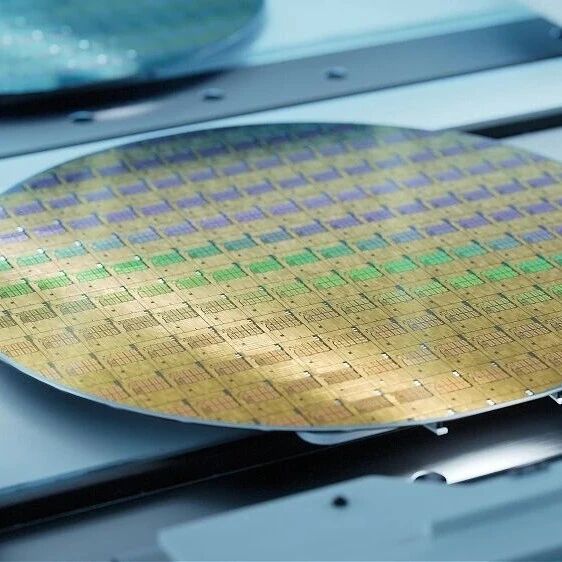
Core Viewpoint - The article discusses the advancements in optical communication technology, particularly focusing on the integration of lithium niobate and lithium tantalate modulators with silicon photonic platforms using innovative micro-transfer printing technology, which enables high-speed data transmission and addresses the growing demand for efficient data centers [1][2][6]. Group 1: Technology Advancements - The demand for ultra-high-speed, low-energy optical interconnects is increasing due to the proliferation of cloud computing and artificial intelligence, necessitating data transmission rates that exceed the current standard of 200 Gb/s [1]. - Lithium niobate (LiNbO₃) and lithium tantalate (LiTaO₃) are highlighted as key materials for high-speed optical communication systems due to their excellent electro-optic properties, although their integration with mainstream CMOS manufacturing processes poses challenges [1][6]. - imec has introduced a micro-transfer printing technology that allows for the efficient heterogeneous integration of lithium niobate and lithium tantalate onto silicon photonic platforms, representing a significant breakthrough in the field [2][6]. Group 2: Achievements and Results - At the European Conference on Optical Communication (ECOC), imec and Ghent University demonstrated a novel high-speed integrated circuit capable of achieving 320 Gb/s optical links over 2 kilometers of standard single-mode fiber, marking a global first [2][5]. - The integration of thin-film lithium niobate modulators with silicon photonic platforms has been successfully validated, optimizing the entire silicon photonic process flow and maximizing performance potential [3][5]. - The micro-transfer printing technique has also been successfully adapted for lithium tantalate modulators, showcasing its versatility and potential for future optical materials integration [6]. Group 3: Future Implications - The series of research outcomes from imec emphasizes the ongoing efforts to push the boundaries of high-speed optical and electronic circuit design, with the goal of achieving 400 Gb/s optical interconnect technology [6]. - Although the technology is not yet fully mature for commercial deployment, the exploration of new materials and cutting-edge techniques is crucial for establishing a foundation for next-generation optical interconnect technologies [6].
具身智能走进半导体,优艾智合全球首发三款新品
半导体行业观察· 2026-03-28 01:12
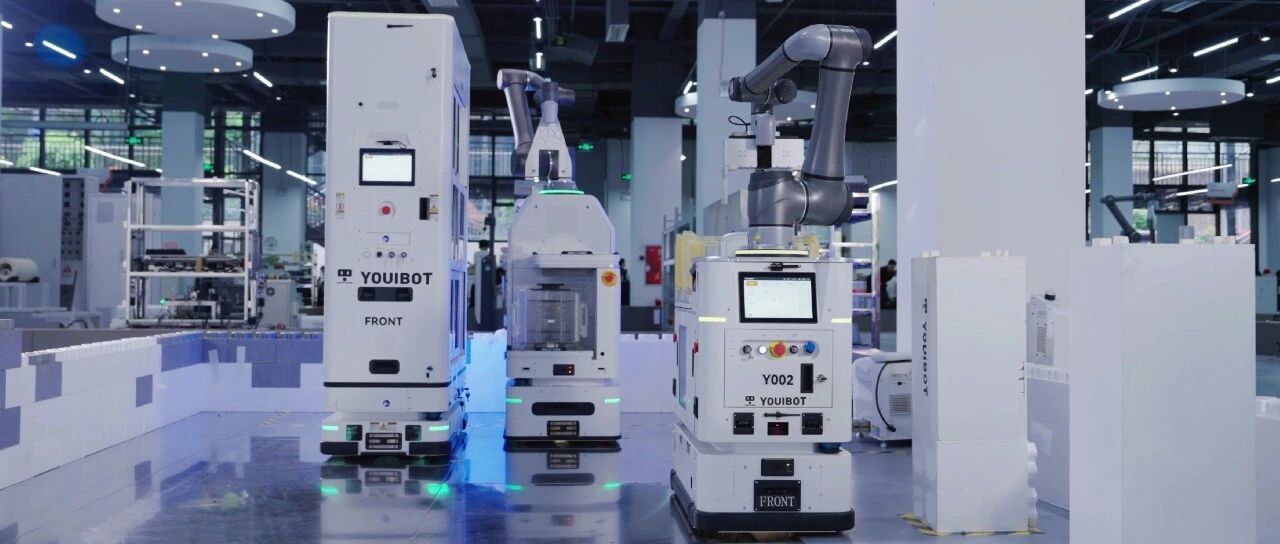
在优艾智合展台,三台移动操作机器人正在模拟的半导体工厂环境中协同作业。从取料到 运输再到对接放料,一整套完整的物料智能化流转闭环跃然眼前。 这是优艾智合在本次展会上全球首发的三款新一代半导体具身智能移动操作机器人OW12- 300、OW8-350、ATS6F。三款产品分别指向12寸晶圆全工艺段、8寸晶圆前道工程、跨 洁净度物料转运三大场景,共同构成了覆盖半导体全工艺链的工业物流解决方案。 效率革命:7×24小时不间断作业 在半导体制造这样一个对精度、洁净度、稳定性要求近乎苛刻的行业里,优艾智合此次新品集中亮 相,从效率、洁净、连续作业三个维度发起一场"效率革命"。 OW12-300可兼容FOUP、FOSB、Metal CST等12寸晶圆制程的载具,实现工艺全覆盖。OW8- 350则应用于半导体前道工艺,可在650mm窄道通行。 OW12-300 现场演示显示,OW12-300和OW8-350均实现了最快25秒以内的空满交换时间,这意味着物料对 接节点上,移动操作机器人已经具备了与天车系统同量级的作业节拍,作为OHT的柔性补充,有 效打通厂内物流瓶颈。 3月25日,SEMICON CHINA 2026在上海拉开 ...
这种半导体原料,告急
半导体行业观察· 2026-03-28 01:12
Core Viewpoint - The ongoing conflict in the Middle East has led to a tightening supply of helium, a critical but often overlooked component in the artificial intelligence and data infrastructure industry, particularly in semiconductor manufacturing and cooling systems [1][2]. Group 1: Importance of Helium - Helium plays a crucial role in semiconductor manufacturing by providing a stable gas environment that ensures precision in production processes, preventing chemical reactions that could lead to defects [1][2]. - In cooling systems, helium efficiently dissipates heat from servers and core components, making it essential for high-density operations in AI data centers [1]. - Helium is necessary for various processes in wafer manufacturing, including plasma etching and chemical vapor deposition, ensuring uniform temperature control during high-precision procedures [1]. Group 2: Supply Chain Risks - The helium supply chain is under significant threat due to the ongoing Middle East conflict, with Qatar, which produces about one-third of the world's helium, facing production disruptions [2][3]. - Damage to Qatar's energy infrastructure, particularly the Ras Laffan industrial city, has resulted in a projected 14% reduction in annual helium exports, with recovery expected to take several years [3]. - The U.S. is the largest helium producer, but domestic consumption limits its ability to quickly address global supply shortages [2][3]. Group 3: Market Impact - The price of helium has doubled since the onset of the conflict, with further increases anticipated as supply chain disruptions continue [4]. - The semiconductor industry may face production slowdowns or halts if helium shortages persist, as companies rely heavily on this gas for manufacturing processes [3][4]. - Finding alternative solutions is challenging due to long-term contracts in helium trade and strict purity requirements for semiconductor manufacturing [4].