半导体行业观察

Search documents
InfiniBand,如临大敌
半导体行业观察· 2025-09-11 01:47
Core Viewpoint - The article discusses the emergence and significance of Ultra Ethernet (UE) in high-performance computing (HPC) and artificial intelligence (AI) sectors, highlighting its advantages over traditional InfiniBand networks, particularly in large-scale deployments [1][27]. Group 1: Ultra Ethernet Overview - Ultra Ethernet Consortium (UEC) was established in July 2023, comprising major companies like AMD, Intel, and Microsoft, aiming to develop an open standard for high-performance Ethernet [2]. - The UE specification 1.0 is set to be released in June 2025, with over 100 member companies expected by the end of 2024 [2]. Group 2: Compatibility and Scalability - UE is designed to be compatible with existing Ethernet infrastructures, allowing for easy deployment without the need to dismantle current systems [3]. - It supports massive scalability, accommodating millions of network endpoints, which is essential for future AI systems [3]. Group 3: Performance Features - High performance is achieved through efficient protocols designed for large-scale deployments, enabling point-to-point reliability without added latency [4]. - UE introduces features like packet spraying to enhance load balancing and reduce congestion issues [16]. Group 4: Network Types and Applications - UE distinguishes between three network types: local networks, backend networks, and frontend networks, with a primary focus on backend networks for high bandwidth applications [6][8]. - The specification supports various configurations tailored for HPC and AI workloads, allowing for flexibility in implementation [15]. Group 5: Loss Detection and Recovery - UE defines advanced loss detection mechanisms to improve response times for lost packets, including packet trimming and out-of-order counting [19][20]. - The framework allows for efficient handling of packet loss scenarios, reducing unnecessary retransmissions and optimizing bandwidth usage [19]. Group 6: Future Outlook - The anticipated hardware for UE is expected to launch in Fall 2025, with initial products already being developed by various suppliers [24][25]. - As UE gains traction, it may emerge as a competitor to InfiniBand, particularly in AI-driven data center networks, while still leveraging the strengths of existing Ethernet technologies [27].


这类芯片,最高涨价70%
半导体行业观察· 2025-09-11 01:47
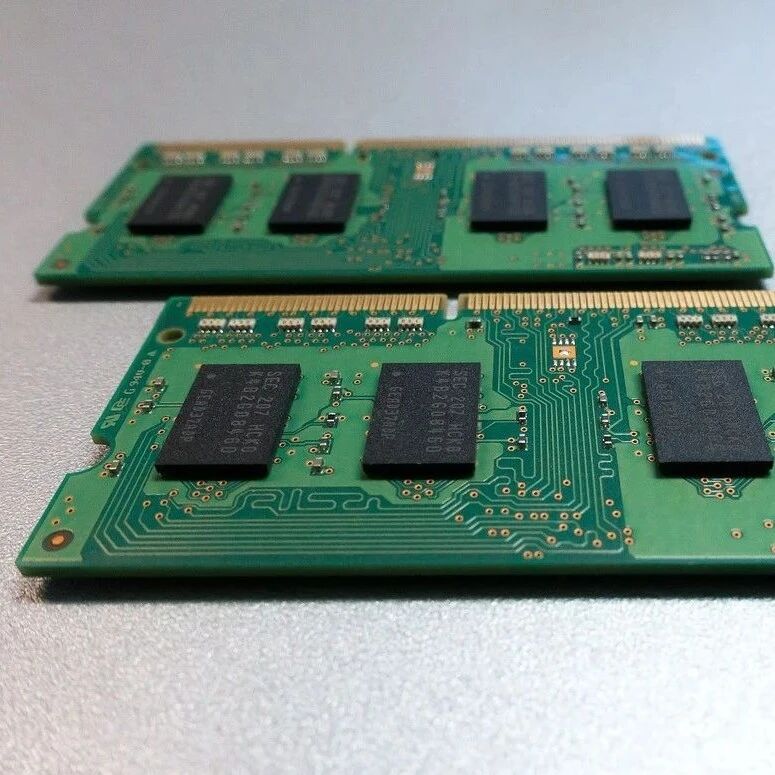
Core Viewpoint - The memory market is experiencing a price surge, with expectations of a 20% to 50% increase in the fourth quarter following a 70% increase in contract prices for Nanya Technology in the third quarter [2]. Group 1: Market Dynamics - The demand for memory products, particularly driven by AI, is significantly increasing, leading to a fundamental shift in the global memory supply-demand structure [2]. - Major manufacturers like Samsung, SK Hynix, Micron, and ChangXin Storage are closing DDR4 production lines, resulting in a projected reduction of global DDR4 capacity to only 25% to 33% of the first quarter of 2025 by the fourth quarter of 2026 [2]. Group 2: Competitive Landscape - Taiwanese manufacturers Nanya Technology and Winbond are increasing their DDR4 production capacity by 50% and introducing new products, positioning themselves to fill the gap left by international competitors [3]. - By the second half of 2026, the top two suppliers in the DDR4 market are expected to shift from "Samsung and SK Hynix" to "Samsung and Nanya Technology," indicating a growing influence of Taiwanese companies in this sector [3]. Group 3: Demand Trends - Despite the rapid upgrade to DDR5 in high-end PCs and smartphones, demand for DDR4 remains strong in budget smartphones and various consumer electronics, ensuring a steady market for DDR4 products [3]. - The DDR4 and DDR3 markets are anticipated to see continued price increases due to the established supply-demand gap, further enhancing the operational momentum of Taiwanese manufacturers [3].
全球最贵芯片打工人,年薪最高可达44亿
半导体行业观察· 2025-09-10 01:25
陈福阳上周表示,博通已在该领域获得一个重要的新客户——后来知情人士透露是 OpenAI——并表 示 2026 年定制 AI 芯片的销量将远高于之前的预测。 陈福阳周二在高盛集团的一次会议上表示,他拒绝透露明年或2027年该业务的销售额预期。彭博社调 查的分析师平均预计,2025年的AI芯片销售额将接近200亿美元。 陈福阳上周表示,他和董事会已达成一致,他将"至少"留任博通首席执行官至2030年。 博通加大力度挑战英伟达 公众号记得加星标⭐️,第一时间看推送不会错过。 来源 : 内容 编译自彭博社 。 博通公司首席执行官陈福阳(Hock Tan)的续约合同中包含一项条款,如果公司到2030年人工智能 产品销售额达到1200亿美元,他将获得数亿美元的股票薪酬。 根据周二提交的监管文件,如果到2030财年人工智能收入达到900亿美元,陈福阳将获得610,521股 博通股票。按目前的股价计算,这些股票价值约为2.055亿美元。如果销售额达到1200亿美元,陈福 阳将获得300%的薪酬,按当前水平计算约为6.166亿美元(约43.91亿人民币)。 这笔薪酬方案凸显了博通致力于成为人工智能计算领域主要参与者的使命。该公 ...
Marvell,跌落神坛!
半导体行业观察· 2025-09-10 01:25
Core Viewpoint - Marvell, once a semiconductor giant benefiting from AI custom chip demand, has faced a dramatic stock price decline, dropping 18.6% in a single day and over 40% year-to-date, raising concerns about its future growth prospects in the AI sector [1][2][3]. Financial Performance - Marvell's Q2 revenue reached $2.01 billion, a 58% year-over-year increase, but the Q3 revenue guidance of approximately $2.06 billion fell short of analyst expectations of $2.11 billion, triggering market reactions [4][7]. - The data center segment, which is crucial for Marvell, saw a 69% year-over-year revenue growth to $1.49 billion, but it did not meet market expectations, leading to investor concerns about future growth [7][8]. Market Dynamics - Marvell's reliance on major clients like Amazon and Microsoft has created vulnerabilities, especially as these clients adjust their strategies, impacting Marvell's order flow and revenue expectations [9][10]. - The competitive landscape has shifted, with Nvidia entering the ASIC market and maintaining high growth, contrasting sharply with Marvell's recent struggles [3][12]. Business Structure Challenges - Marvell's business model is heavily dependent on its data center segment, which contributes approximately 75% of total revenue, making it susceptible to fluctuations in demand from a few large clients [9][10]. - Other business segments, such as carrier infrastructure and consumer electronics, have underperformed, further exacerbating Marvell's challenges as they fail to provide a buffer against the slowdown in the data center business [13][14][15]. Competitive Pressures - The ASIC market is becoming increasingly competitive, with companies like Broadcom dominating with a market share of 55%-60%, while Marvell holds only 13%-15% [16][17]. - Nvidia's emphasis on its GPU ecosystem and performance efficiency poses a significant challenge to Marvell's ASIC offerings, raising doubts about their competitiveness in the AI market [16][17]. Future Outlook - Despite current challenges, Marvell has opportunities for recovery, particularly in its high-speed interconnect business and the long-term growth potential of the ASIC market [22][23]. - To regain stability, Marvell must diversify its client base, enhance its technological capabilities, and optimize profitability to navigate the competitive landscape effectively [24][25].
台积电先进封装,疯狂扩产
半导体行业观察· 2025-09-10 01:25
Core Viewpoint - TSMC is experiencing a surge in demand for advanced packaging due to the rapid development of AI chips, necessitating a shift in production timelines and strategies to meet client needs [2][5][6]. Group 1: Advanced Packaging Demand - TSMC's advanced packaging operations are under pressure to accelerate production timelines, with some projects needing to be completed within three quarters instead of the traditional longer timelines [2][5]. - The strong demand for AI chips is driving the need for advanced packaging solutions, highlighting the importance of TSMC's capabilities in this area [2][5][6]. Group 2: Organizational Changes - TSMC is establishing a dedicated organization for back-end advanced packaging, marking a significant shift in its operational structure and emphasizing the importance of this segment in the AI chip market [5]. - The new leadership for this segment will be taken on by Chen Cheng-hsien, who has extensive experience in TSMC's advanced packaging operations [5][6]. Group 3: Technological Advancements - TSMC has integrated advanced packaging into its 3DFabric platform, which includes various technologies such as TSMC-SoIC, CoWoS, and InFO, with plans for new technologies like CoWoS-L and SoW-X in the coming years [3][6]. - The SoIC technology, which allows for stacking multiple chip layers in a limited area, is expected to gain traction as AI chip demand grows, despite its current low production volume [6][7]. Group 4: Production Facilities - TSMC operates five advanced packaging facilities, with the most advanced located in Zhunan, and is expanding its capabilities with new facilities in Chiayi [7]. - The upcoming facilities will focus on CoPoS and SoIC technologies, which are anticipated to become the mainstay of TSMC's advanced packaging offerings [7].
全球芯片规模暴增17.6%,直逼8000亿美元
半导体行业观察· 2025-09-10 01:25
公众号记得加星标⭐️,第一时间看推送不会错过。 来源 : 内容 编译自IDC 。 DC 的会计师们汇总了一些数字,并除以他们的总尺码,估计全球半导体市场规模将在 2025 年达到 8000 亿美元,比去年的 6800 亿美元增长 17.6%。 这比他们之前预测的15.5%的增长率有所上调,这得益于人工智能的淘金热。数据中心芯片正在源源 不断地吸金,将汽车和工业市场从疫情后的低迷中拉出来。 一家半导体公司的年收入有望首次突破2000亿美元,这一数字凸显了人工智能驱动的产业发展已取得 多么显著的主导地位。IDC表示,仅计算芯片市场今年的收入就将飙升36%,达到3490亿美元,五年 复合年增长率将达到12%。 网络正在蓬勃发展。IDC 指出,随着超大规模数据中心运营商争相解决数据传输而非原始计算方面的 瓶颈问题,对高容量以太网交换机、智能网卡 (SmartNIC) 和数据处理单元 (DPU) 的需求不断增 长。随着云服务提供商和电信运营商纷纷淘汰旧设备以应对 AI 工作负载,光纤互连也成为其中的热 门选择。 汽车硅片市场在经历两年的低迷后正在逐渐复苏,由于中国库存恢复正常,供应商报告称其销量连续 增长。 IDC集团 ...
无锡“芯”火续燃,再迈新征程
半导体行业观察· 2025-09-10 01:25
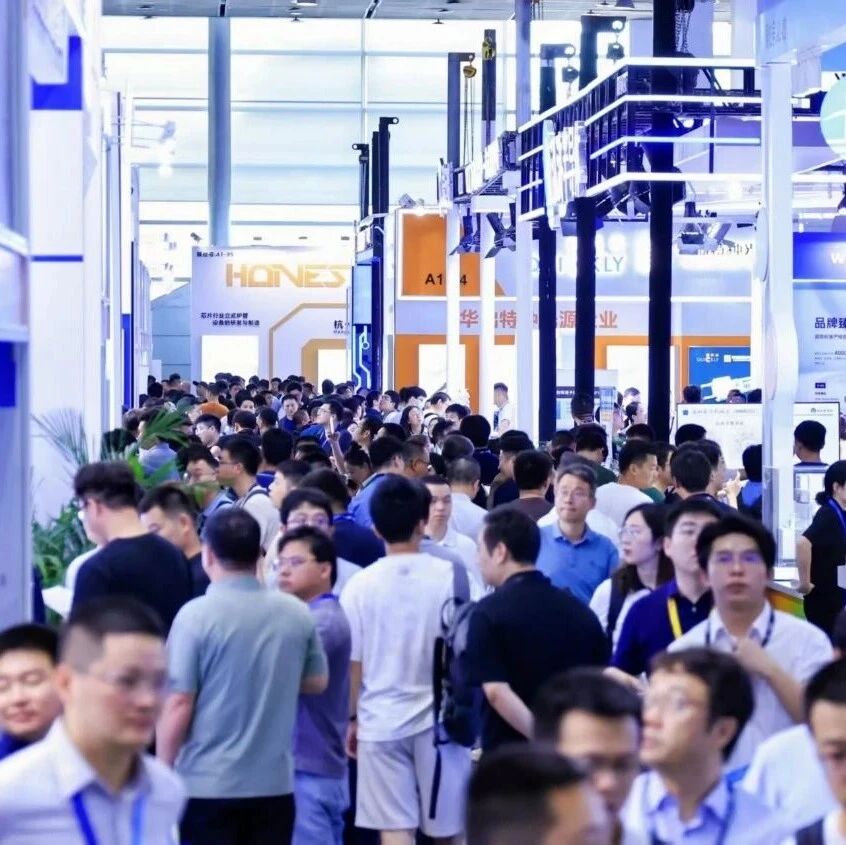
公众号记得加星标⭐️,第一时间看推送不会错过。 席,围绕集成电路领域的科技前沿突破、产业转型趋势、核心技术攻关及生态协同建设等关键议题, 进行了深度研讨与交流,为产业高质量发展凝聚共识、擘画路径。 江苏省副省长李忠军、无锡市委书记杜小刚、工业和信息化部电子司副司长王世江等领导出席大会并 发表致辞,既充分传递了对本次大会的重视与期许,同时高度肯定无锡市集成电路产业的发展成效, 还就产业未来突破方向提出殷切期望,并明确了下一步的发展目标与规划布局。 杜小刚在致辞中指出,当前集成电路产业在技术迭代加速、市场需求扩容与政策引导加力的多重推动 下,正处于大有可为的变革期与突破期。从国家长远发展需求与战略布局出发,集成电路作为关键支 撑产业,肩负着重要使命,而无锡始终致力于成为我国集成电路产业高质量发展的战略支点。借此大 会契机,他围绕产业发展分享了四点思考与建议: 全球半导体重构浪潮, 无锡锚定战略新机遇 此次大会由无锡市人民政府、江苏省工业和信息化厅联合举办,市工业和信息化局承办,聚焦集成电 路产业链核心需求,广泛集聚国内外重点企业与优质产业资源,通过搭建资源共享平台、推动企业优 势互补、促进产学研协同创新,着力实现 ...
被AI改变命运的两家芯片公司
半导体行业观察· 2025-09-10 01:25
全永铉反复提及他的"恐龙理论",在任职十四个月期间,他在正式会议上提到了五六次。他的观点始 终如一:组织规模越大,就越有可能忽视潜在的问题,或者抵制变革,直到为时已晚。为了让教训更 加切实,他甚至用恐龙模型装饰他的办公室,并用它们来警告来访的高管浪费三星机会之窗的代价。 公众号记得加星标⭐️,第一时间看推送不会错过。 来源 : 内容 编译自koreajoongangdaily 。 受生成式人工智能爆炸式增长的推动,韩国半导体行业正经历一场剧烈的变革。市场领导者正在节节 败退,而曾经被忽视的弱势企业则势头强劲。本文将深入剖析推动这一转变的因素,并探讨未来几年 行业新的层级结构可能如何形成。 去年五月,三星电子副会长兼半导体部门负责人全永铉就(Jun Young-hyun )任三星半导体部门负 责人时,曾用一个直白的比喻震撼了全场。他告诉高管们:"目前,三星的半导体业务就像一只食草 恐龙。"这种比喻——体型过大、适应速度过慢、最终注定灭绝——迅速在公司内部传播开来。 在公司发布第三季度财报后,全永铉更进一步,发布了他所谓的"忏悔信"。他承认自己引发了人们对 三星核心技术竞争力和公司长期前景的担忧,并承诺将公开揭露 ...

英伟达首颗推理芯片,突然发布
半导体行业观察· 2025-09-10 01:25
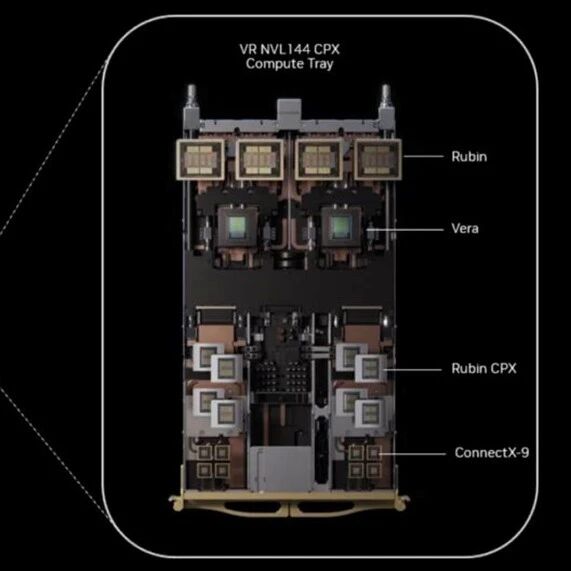
Core Viewpoint - NVIDIA has introduced the Rubin CPX GPU, designed for massive context inference, significantly enhancing AI systems' ability to process millions of tokens in software encoding and video generation [8][9][10]. Group 1: Product Features - The Rubin CPX GPU is integrated into the NVIDIA Vera Rubin NVL144 CPX platform, which includes NVIDIA Vera CPUs and Rubin GPUs, providing an AI computing capability of 8 exaFLOPS [8]. - It features 128GB of GDDR7 memory and offers 30 PFLOPS of NVFP4 performance, which is three times the index computing power of the GB300 [4][11]. - The architecture allows for high memory bandwidth of 1.7 PB/s and 100 TB of fast memory within a single rack [8][11]. Group 2: Market Positioning - NVIDIA aims to leverage its technology to create large monolithic GDDR GPUs, a space where competitors like AMD and Intel have made less progress [7]. - The Rubin CPX is expected to transform AI coding assistants into complex systems capable of understanding and optimizing large software projects, addressing the limitations of traditional GPU computing [10][11]. Group 3: Future Outlook - The Rubin NVL144 CPX rack design incorporates many future technologies, with a target launch date set for the end of 2026 [7]. - The platform is designed to support the growing demand for AI applications, particularly in video processing and long-context inference tasks, which are becoming increasingly challenging [4][10].
这家公司,拯救日本芯片?
半导体行业观察· 2025-09-10 01:25
Core Viewpoint - The article discusses the ambitious efforts of Rapidus, a Japanese semiconductor company, to re-establish Japan as a leader in advanced chip manufacturing, particularly with the goal of producing 2nm chips by 2027, supported by IBM and significant government funding [1][16]. Group 1: Rapidus and Its Goals - Rapidus was established in 2022 amid rising global demand for semiconductor manufacturing capacity, driven by AI and geopolitical pressures for local production [1]. - The company aims to produce 2nm chips by 2027 and is preparing for nodes beyond 2nm with IBM's support [1]. - Rapidus has achieved several milestones, including a pilot project for a 2nm wafer fab in Hokkaido and partnerships with Siemens, imec, and Tenstorrent [3]. Group 2: Comparison with TSMC - The article highlights the successful model of TSMC, which was founded with a mix of government and private investment, leading to Taiwan's semiconductor rise [2]. - TSMC's model relies on a strong ecosystem of IP suppliers and a self-reinforcing cycle of demand and supply, which Rapidus is struggling to replicate [5][6]. - Analysts estimate that by 2026, Rapidus's wafer production may only reach 25,000 wafers per month, a fraction of TSMC and Samsung's output [6]. Group 3: Financial and Structural Challenges - Rapidus is reportedly providing upfront payments to IP suppliers to secure early support, diverging from TSMC's traditional royalty-based model [3][6]. - The company faces a significant financial burden, needing approximately 5 trillion yen (around 340 to 350 billion USD) for full-scale production, with government subsidies and corporate investments covering the costs [7]. - The reliance on upfront payments raises concerns about long-term sustainability and the potential for a narrow ecosystem of IP suppliers [12][13]. Group 4: Ecosystem Development - Rapidus recognizes that having expensive equipment is not the most challenging aspect of launching advanced nodes; rather, establishing a robust design ecosystem is crucial [9]. - The company aims to differentiate itself by offering faster turnaround times for wafer processing, which could attract customers despite ecosystem challenges [9][14]. - The article draws parallels with GlobalFoundries, which also provided financial incentives to attract IP suppliers but ultimately struggled to maintain a healthy ecosystem [11]. Group 5: Future Outlook - Rapidus's strategy of upfront payments may not guarantee customer adoption or sustainable economic benefits, highlighting the need for a self-sustaining ecosystem [16]. - The success of Rapidus will depend on its ability to convert early arrangements into long-term ecosystem dynamics, contrasting with TSMC's organically grown model [16].