量子位

Search documents
Agent当上群主后,群聊变成办事大厅了
量子位· 2026-02-02 03:39
Core Viewpoint - The article discusses the innovative "multi-agent group chat" feature of the Wenxin APP, which aims to transform group chats from casual conversations into efficient collaborative environments where multiple AI agents assist users in real-time decision-making and task execution [2][15][45]. Group 1: Functionality and Use Cases - The Wenxin APP's group chat feature allows users to create a collaborative space where various agents can assist with specific tasks, enhancing communication efficiency [4][13]. - For example, during health discussions, an agent can provide immediate, understandable insights on medical reports, alleviating concerns among family members [6][8]. - In travel planning scenarios, the group chat agents can proactively suggest itineraries and real-time information based on user preferences, streamlining the planning process [10][11]. Group 2: Technical Challenges and Solutions - Integrating multiple AI agents into a group chat presents significant technical challenges due to the chaotic nature of group conversations, which differ fundamentally from one-on-one interactions [18][21]. - The Wenxin team developed the Group-MAS (Multi-Agent System) to manage agents, context, user interactions, and permissions, creating a sophisticated operational environment [22]. - To address the issue of noise in group chats, the system employs a Hub-and-Spoke architecture, where a central node (Master) categorizes messages and distributes relevant tasks to specialized agents [24][26]. Group 3: Collaboration and Task Management - The Group-MAS framework enables efficient collaboration among agents, allowing them to work together like a well-trained team, with a unified architecture and task scheduling mechanism [30][31]. - When users present complex requests, the Master analyzes and categorizes tasks, routing them to appropriate agents based on their capabilities, ensuring focused execution [34][35]. - The system employs a dynamic task dependency graph to manage multiple simultaneous requests, allowing for independent execution of tasks while handling dependencies intelligently [37][40]. Group 4: User Experience and Interaction - The agents are designed to engage proactively, understanding when to intervene in conversations without requiring explicit prompts from users, enhancing the overall user experience [42][43]. - The dynamic style preference system allows agents to adjust their communication style based on user preferences and contextual needs, ensuring relevant and timely interactions [43][44]. - This proactive observation and decision-making capability positions the agents as valuable team members rather than passive tools, improving collaboration in group settings [44][45]. Group 5: Future Developments and Implications - The Wenxin APP's group chat feature represents a significant step in integrating AI into collaborative workflows, showcasing the potential for AI to enhance human interaction in real-time [45][46]. - The architecture supports future expansions, allowing for easy integration of new specialized agents, indicating a move towards a more standardized approach to AI collaboration [48][49]. - Upcoming features will include task reminders and additional agent functionalities, further enhancing the collaborative capabilities of the platform [50].



具身机器人抢着砸钱上春晚,投资人回应了
量子位· 2026-02-02 00:37
Core Viewpoint - The competition among embodied intelligent robots is intensifying, particularly with their presence at the Spring Festival Gala, which is seen as a significant platform for visibility and market engagement [1][5]. Group 1: Industry Participation - Companies like Yushu Technology and Magic Atom are participating as strategic partners for the Spring Festival Gala, highlighting the growing interest in embodied intelligence [2]. - Chasing Technology has secured a position as the strategic partner for intelligent technology ecosystems at the Gala, with its subsidiaries also taking on roles in smart travel and consumer electronics [3]. - Galaxy General Robotics, valued at over 20 billion RMB, has been designated as the "official embodied large model robot" for the 2026 Spring Festival Gala, indicating its prominence in the sector [4]. Group 2: Investment Insights - Investors are curious about why early-stage embodied intelligence companies are willing to invest heavily in visibility at events like the Spring Festival Gala, as traditionally, companies wait until they are more established [5]. - GGV Capital's partner, Fu Jixun, compares the current state of the embodied intelligence industry to the early days of the internet and electric vehicles, emphasizing the need for high visibility to attract more business opportunities and support [5][12]. - The capital invested in these companies aims to enhance their visibility, which can lead to increased market attention, customer procurement, and investor interest, as seen with Yushu's previous participation [5]. Group 3: Market Dynamics - The embodied intelligence sector is still in its early stages, lacking a complete commercial loop, and requires time for maturation and validation [12]. - GGV Capital has invested in over 50 AI-related companies and 8 embodied intelligence companies, with a significant increase in investment scale over the past year [13]. - The current focus on data collection and application in the embodied intelligence field is critical, as the high cost of data acquisition remains a core challenge [24]. Group 4: Competitive Landscape - China has advantages in the embodied intelligence sector, including abundant application scenarios and a strong talent pool, but faces challenges in capital market development compared to other countries [14][15]. - Concerns about valuation bubbles exist, with many companies still struggling with low revenue and commercial viability [17]. - The industry is expected to see a wave of companies going public, which could provide a boost to the sector, but companies must still focus on achieving commercialization [20][21]. Group 5: Strategic Differentiation - Companies are encouraged to focus on specific niches within the embodied intelligence space to build competitive advantages, as larger firms cannot cover all segments [26]. - GGV Capital's strategy includes leveraging its unique position to assist portfolio companies in exploring overseas markets, which differentiates it from other investors [27].

狂发钱的元宝派,除了领红包还能用来干嘛?
量子位· 2026-02-02 00:37
闻乐 发自 凹非寺 量子位 | 公众号 QbitAI 用10亿新春红包吸引人来薅福利,引爆AI春节档。 狂发钱的元宝派,到底是用来干嘛的? 本着"有便宜不占xxx"的原则,我也抢了几个红包,顺势就被拉进了 元宝派 的内测世界…… 哦,原来是腾讯的社交新实验,还是AI社交的那种。 没想到直接玩上头。 连续三天摸鱼都在刷 不会冷场的群聊 元宝派是腾讯新推的一种社交模式,简单来说就是群聊,和普通社交群唯一的区别就是,群里永远有个 元宝 ,24小时在线,随叫随到。 界面就不多说了,跟平时用的群聊几乎一模一样,用起来可以说是零学习成本。 点创建、拉人、直接开玩,甚至连只会用微信的长辈来了都不用教,上手就会。 灵机一动,给小伙伴们拉了个海龟汤群。 以往玩海龟汤,最痛苦的不是猜不出来,是没人愿意当那个主持大局的裁判。但在元宝派里,这活儿直接甩给元宝就行。 让元宝准时通知大家,有空的朋友直接就位开玩。 第一题来了,派友们立马开启猜猜猜模式。 经过几轮推理,虽然谜底是猜出来了,但大家也开始了对元宝的讨伐"元宝你什么意思?",元宝还挺会狡辩(bushi)。 比如有一题猜了好久都没头绪,元宝就悄悄给了点小提示。有元宝在的群里,气氛 ...


Nature | 清北合作研发全球首个全柔性存算一体AI芯片
量子位· 2026-02-01 08:00
Core Viewpoint - The development of a flexible artificial intelligence chip represents a significant advancement in flexible electronics, enabling real-time AI applications in various fields such as healthcare and robotics [3][4][12]. Group 1: Significance of the Flexible AI Chip - The flexible AI chip can bend and conform to various surfaces, overcoming the limitations of traditional rigid silicon chips, which are prone to failure when bent [7][8]. - This technology opens up new applications in wearable health monitoring, flexible robotics, and large-scale data collection in the Internet of Things (IoT), which traditional silicon chips cannot achieve [11][12]. Group 2: Capabilities of the Flexible AI Chip - The chip features an innovative in-memory computing architecture that enhances processing speed and energy efficiency, allowing it to run neural network models independently [15]. - It can perform tasks such as arrhythmia detection and motion recognition, marking a transition from mere sensing to cognitive processing in flexible electronics [15]. Group 3: Future Directions - The integration of flexible electronics and AI is paving the way for a new paradigm in technology, where devices can be more adaptable and less constrained by traditional structures [18]. - This advancement highlights the potential for flexible chips to replace conventional chips, leading to widespread applications in various industries [18].

两个95后华人,搞出硬件版Clawdbot,售价1700元
量子位· 2026-02-01 06:00
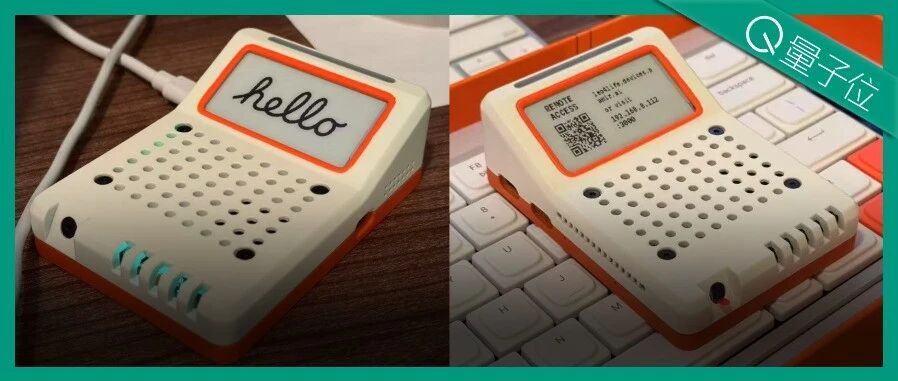
Core Insights - OpenClaw, now known as Distiller Alpha, is gaining significant attention as a hardware-software integrated solution for local agents, allowing users to interact with AI in a compact form factor [1][21][26] - The device is priced at $250 (approximately 1700 RMB) and is designed to be user-friendly, enabling users to engage with AI functionalities without extensive technical knowledge [5][11][21] - Distiller Alpha is built on a Raspberry Pi CM5 platform, featuring 8GB of RAM and 64GB of storage, and includes various integrated components such as a microphone, speaker, and camera [7][52] Product Features - Distiller Alpha is a mini Linux PC that allows users to run various applications, primarily focusing on Vibe coding, which enables coding on-the-go [27][28] - The device supports a range of hardware integrations, allowing users to control and develop various devices through simple commands [30][35] - Users can utilize the device for tasks such as file management, email communication, and even complex interactions like controlling smart home devices [11][39][90] User Experience - The device is designed to be intuitive, requiring minimal setup; users simply need to connect to Wi-Fi and scan a QR code to start using it [113][115] - Distiller Alpha aims to enhance productivity by automating repetitive tasks, allowing users to focus on higher-level decision-making and creative processes [125][128] - The product has been well-received in the market, with users appreciating its compact design and the ability to perform tasks traditionally reserved for larger computers [99][100] Market Positioning - The company positions Distiller Alpha as a more suitable alternative to traditional computers like the Mac mini, emphasizing its tailored design for agent functionalities rather than general computing [69][70] - The focus on hardware integration and user-friendly design differentiates Distiller Alpha from competitors, particularly in the context of the growing demand for local agents [58][134] - The company recognizes the importance of creating a unique user experience that transcends traditional computing paradigms, aiming to redefine personal computing [169][170]
爆火“赛博鳌太线”模拟器实测:开局一万块猛配装备,我却只活了四天......
量子位· 2026-02-01 04:10
梦瑶 发自 凹非寺 量子位 | 公众号 QbitAI "不卖烤肠的山,不要爬"。 原本我以为,听完《神秘园》的劝,这辈子大概就和 勇闯鳌太 这事儿彻底绝缘了。 直到事情开始朝着一个有点离谱的方向发展—— 昨天半夜,我只是顺手点开了网友发来的一个链接,下一秒,人就已经魂穿 赛博鳌太线 ,开始玩命进山了: 在这儿,你压根不用操心预算经费的问题,开局一笔巨款,顶级装备直接塞爆背包,主打一个信心满满: 但现实很快啪啪打脸,就算到了赛博世界,鳌太线依旧专治各种蜜·汁·自·信。 《神秘园》里讲过的 失温、饥饿、体力透支、幻觉 ……这些经典的驴友噩梦,一个不落,直接在我身上轮番上演: 以至于在进山的第二天,我再次原地报废。 实不相瞒,已经是我第四次"死"在同一个山头了(微笑): 真正玩下来,最大的感受是:没什么复杂任务,也没什么上手门槛,场景足够真实,但想要活下来,属实有点难...... 现在的我,已经在老老实实研读网友们分享的攻略笔记了。(已老实 这,就是最近在社交媒体火出圈的生存模拟器游戏—— 《赛博徒步·生死鳌太线》 ,出自小红书博主 @赛博徒步-小白薯 之手。 具体火到啥程度呢? 在抖音上, 相关视频播放量已经一路 ...

量子位编辑作者招聘
量子位· 2026-02-01 04:10
Core Viewpoint - The article emphasizes the ongoing AI boom and invites individuals to join the company "Quantum Bit," which focuses on tracking AI advancements and has established itself as a leading content platform in the industry [1]. Group 1: Job Opportunities - The company is hiring for three main directions: AI Industry, AI Finance, and AI Product, with positions available for both experienced professionals and fresh graduates [2][4]. - Positions are open for various levels, including editors, lead writers, and chief editors, with a focus on matching roles to individual capabilities [6]. Group 2: Job Responsibilities - **AI Industry Direction**: Responsibilities include tracking innovations in infrastructure, such as chips, AI infrastructure, and cloud computing, as well as interpreting technical reports from conferences [6][7]. - **AI Finance Direction**: Focuses on venture capital, financial reports, and capital movements within the AI industry, requiring strong analytical skills and a passion for interviews [11]. - **AI Product Direction**: Involves monitoring AI applications and hardware developments, producing in-depth evaluations of AI products, and engaging with industry experts [11]. Group 3: Benefits and Work Environment - The company offers competitive salaries, comprehensive benefits including social insurance, meal allowances, and performance bonuses, along with a dynamic and open work culture [6]. - Employees will have opportunities to enhance their personal influence through original content creation and networking with industry leaders [6]. Group 4: Company Growth and Reach - By 2025, Quantum Bit aims to have over 2.4 million subscribers on WeChat and more than 7 million users across platforms, with a daily reading volume exceeding 2 million [12].

奥特曼无能,英伟达撤单OpenAI投资?黄仁勋街头回应了
量子位· 2026-02-01 04:10
Core Viewpoint - The article discusses the ongoing relationship between Nvidia and OpenAI, emphasizing that despite rumors of a stalled partnership, Nvidia's CEO Jensen Huang has confirmed a significant investment in OpenAI's upcoming funding round, potentially the largest in history [1][5][11]. Investment Details - Nvidia and OpenAI signed a non-binding letter of intent in September 2025 for a potential investment of up to $100 billion, alongside plans to build at least 10GW of AI data centers [6][24]. - The scale of the investment is compared to the peak electricity consumption of New York City, highlighting its significance [7]. - Huang's recent comments suggest that Nvidia is committed to participating in OpenAI's funding, with estimates indicating Nvidia's investment could be in the hundreds of billions [12][13]. Historical Context - The collaboration between Nvidia and OpenAI dates back to 2016 when Nvidia provided a DGX-1 supercomputer to OpenAI, which has since relied on Nvidia's GPUs for its major AI models [15][16]. - The partnership has evolved from a technical collaboration to a strategic financial relationship, with Nvidia becoming a shareholder in OpenAI during a $6.6 billion funding round that valued OpenAI at $157 billion [20][21]. Recent Developments - Huang's public statements have clarified that the partnership is not in jeopardy, and he expressed strong support for OpenAI, indicating that the collaboration will continue to grow [11][27]. - Other major players, including Amazon and Microsoft, are also looking to invest in OpenAI, with Amazon reportedly planning a $50 billion investment [12][13]. Future Prospects - The first gigawatt of the planned 10GW infrastructure is expected to be operational by the second half of 2026, utilizing Nvidia's Vera Rubin platform [25]. - Huang's commitment to OpenAI suggests a long-term strategic alignment, reinforcing Nvidia's position in the AI industry [27].


抛弃向量推荐!蚂蚁用8B小模型构建「用户“话”像」,实现跨任务跨模型通用并拿下SOTA
量子位· 2026-01-31 09:30
Core Insights - The article discusses the development of a new paradigm for personalized large model applications, emphasizing the importance of user-centric approaches in AI, particularly through the introduction of AlignXplore+ [1][10]. Group 1: Paradigm Shift in Personalization - Traditional recommendation systems rely on ID embedding or specific parameters, which are often opaque and difficult to transfer across models [5][7]. - AlignXplore+ introduces a text-based user modeling approach that allows for better understanding and interpretation of user preferences, moving from a "black box" to a "white box" paradigm [1][8]. - This new method enables a universal interface for various downstream models, enhancing the ability to perform diverse tasks without being model-specific [9][11]. Group 2: Key Features of AlignXplore+ - AlignXplore+ breaks down data silos by processing heterogeneous data sources, allowing for a comprehensive understanding of user preferences from fragmented digital footprints [10]. - It achieves extreme transferability, enabling user profiles to be utilized across different applications and models, thus enhancing the versatility of AI systems [11][21]. - The framework adapts to real-world data noise, evolving user preferences without needing to reprocess all historical interactions, thereby maintaining stable reasoning capabilities [12][26]. Group 3: Technical Framework - The framework consists of two main phases: SFT (Supervised Fine-Tuning) and RL (Reinforcement Learning), focusing on generating high-quality training data and optimizing user preference summaries [16][18]. - SFT involves a "generate-validate-merge" process to create accurate preference summaries based on potential future interactions [17]. - The RL phase employs curriculum pruning and cumulative rewards to enhance the long-term effectiveness of user preference summaries in dynamic environments [18]. Group 4: Performance Metrics - AlignXplore+ demonstrates superior performance in user understanding accuracy, transferability, and robustness compared to existing methods, achieving state-of-the-art results in various benchmark tests [19][20]. - The model shows impressive zero-shot transfer capabilities, effectively guiding tasks across different domains and models [21][23]. - Even in the absence of negative feedback, AlignXplore+ maintains significant performance advantages, showcasing its robustness in real-world scenarios [26][28]. Group 5: Future Directions - The team aims to explore the limits of streaming inference, comprehensive user behavior analysis, and the development of a truly universal personalized reasoning engine [30].

年度AI产品十大赛道TOP 3|量子位智库AI 100
量子位· 2026-01-31 07:30
Core Insights - The article discusses the significant evolution of AI products in 2025, highlighting a shift from merely "talking" to "doing" [3][4] - The focus is on the transformation of interaction paradigms and the integration of AI into both digital and physical realms [5][6] - The article introduces the "AI 100" product list, categorizing AI products into flagship and innovative segments, along with five major application categories [6][9] Group 1: AI Product Development - AI products have shown differentiated growth across various sectors, with strong demand in general scenarios and AI efficiency, while AI life products are exploring better user experiences [14] - The common goal across all sectors is moving towards end-to-end delivery of productivity, shifting the value measurement from "how well it answers" to "how completely it delivers" [14][15] Group 2: Flagship AI Products - The "Flagship AI 100" and "Innovative AI 100" categories represent the strongest and most promising AI products, respectively [7][13] - The article outlines ten core tracks for AI applications, including AI smart assistants, AI agents, AI browsers, AI workstations, Vibe Coding, AI education, AI entertainment, AI health, multimodal creation, and AI consumer hardware [9][10] Group 3: AI Smart Assistants - AI smart assistants are the most traffic-intensive and revenue-near segment, evolving from answering questions to solving problems [16] - Top products in this category include: - Doubao from ByteDance, with over 57 million daily active users [18] - DeepSeek, known for its innovative interaction method that showcases AI reasoning [20] - Tencent Yuanbao, integrating various social networks for enhanced user experience [22] Group 4: AI Agents - AI agents have transitioned from mere conversational tools to executing tasks [23] - Notable products include: - Nano AI from 360 Group, which integrates over 80 large models for task execution [24] - Kouzi, a one-stop AI office space from ByteDance, automating complex workflows [26] - Xingliu, a new generation AI creation tool from Singularity Star, facilitating end-to-end creative processes [30] Group 5: AI Browsers - AI browsers are evolving from passive information displays to active task executors [32] - Key products include: - QQ Browser from Tencent, which integrates AI capabilities to understand user intent [33] - Quark from Alibaba, combining search, reading, and creation functionalities [36] - Fellou, focusing on a unified search and task experience [40] Group 6: AI Workstations - The competition in AI workstations has shifted from the number of features to complete workflow integration [41] - Leading products include: - Baidu Wenku, transforming from a document tool to a knowledge productivity platform [42] - Feishu, integrating AI capabilities into team workflows [46] - Tiangong, focusing on enhancing office and creative efficiency [50] Group 7: AI Education - AI education products are evolving to provide personalized tutoring and enhance learning experiences [61] - Top products include: - KuaiDui AI from Zuoyebang, focusing on personalized tutoring [62] - XiaoYuan AI from Yuanfudao, assisting parents and teachers in managing homework [65] - CapWords, an innovative language learning tool [69] Group 8: AI Entertainment - AI entertainment products are exploring how to provide unique value beyond traditional non-AI products [70] - Notable products include: - Kapi Camera, which enhances user photography experiences [73] - Xingye, a platform for emotional companionship and content creation [76] - DouDou Game Partner, focusing on gaming companionship [79] Group 9: AI Health - The AI health sector is cautiously exploring compliance and user experience [80] - Key products include: - Antifufu, a health management assistant from Ant Group [81] - XiaoHe AI Doctor, providing health consultations based on authoritative medical data [85] - OtterLife, a gamified health management product [88] Group 10: Multimodal Creation - AI creation tools are becoming integral to daily workflows for content creators [90] - Leading products include: - Jidream AI, focusing on video creation processes [91] - Liblib AI, a comprehensive AI creation platform [95] - Keling AI, a creative productivity platform leveraging short video and advertising [97] Group 11: AI Consumer Hardware - The AI consumer hardware sector is characterized by rapid innovation and high turnover [98] - Notable products include: - Plaud Note, an AI note-taking tool [99] - Thunderbird V3 AI glasses, integrating various functionalities [102] - CocoMate, an emotional companion toy [107]