
量子位

Search documents
百度AI芯片公司冲刺IPO:出货量国产第二
量子位· 2026-01-03 06:16
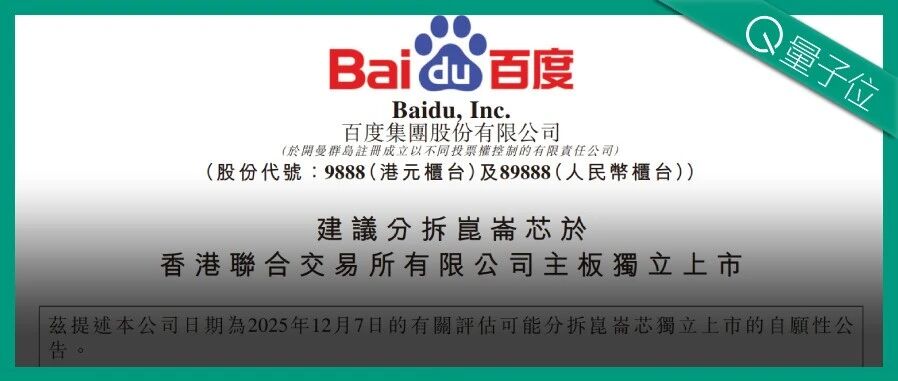
一水 发自 凹非寺 量子位 | 公众号 QbitAI 又一家国产芯片即将赴港IPO! 就在元旦假期期间,百度突然官宣了 "昆仑芯已向港交所提交上市申请" 的消息。 消息一出,百度当日股价一度上涨超8%。 昆仑芯最早诞生于百度内部,由于发展不错,于是从2021年开始独立融资和运营。 目前百度持有这家公司 59.45%的股份 ,且独立上市之后,昆仑芯仍将属于百度附属公司。 该公司最新一轮融资发生于2025年7月,当时估值 210亿元人民币 ,目前投资方除了百度还有上河动量资本、山证投资、比亚迪等。 而随着昆仑芯加入IPO阵营,国产芯片最近掀起的上市潮也再次迎来一波讨论—— 前有已经登陆科创板的沐曦和摩尔线程 (以及昨天登陆港股的壁仞科技) ,中间有刚刚完成上市辅导的燧原科技,同期赴港上市的还有天数 智芯等公司。 国产芯片,正在打响开年第一战。 昆仑芯赴港IPO详情 根据百度最新公告,昆仑芯(北京)科技股份有限公司 (全文简称昆仑芯) 已于2026年1月1日 以保密方式 向港交所提交了主板上市申请。 不提前暴露财务数据、不泄露业务细节、不锁死时间表。 而从本次透露的、为数不多的信息来看,百度核心把目光放在了 "分拆 ...


中国“人造太阳”突破密度极限,聚变点火迎来新路径 | Science子刊
量子位· 2026-01-03 04:44
Core Viewpoint - The research led by Professor Zhu Ping from Huazhong University of Science and Technology and Associate Professor Yan Ning from the Hefei Institute of Physical Science has made significant breakthroughs in the study of the Tokamak device, confirming the existence of a "density-free regime" and providing new pathways for fusion ignition [1][4][48]. Summary by Sections Breakthroughs in Tokamak Research - The study validates the boundary plasma-wall interaction self-organization (PWSO) theoretical model, confirming the mechanisms behind the long-standing density limit in Tokamak operations [3][4]. - The research demonstrates that the density limit, traditionally viewed as a hard boundary, can be surpassed, allowing for higher plasma density and improved fusion efficiency [4][41]. Understanding Density Limit - The density limit is a critical challenge in magnetic confinement nuclear fusion, as it directly impacts the conditions necessary for fusion reactions to occur, according to the Lawson Criterion [5][6]. - The Greenwald density limit, an empirical scaling law, has historically constrained Tokamak operations, with most devices operating below 1.0 times this limit [10][14]. PWSO Theory and Its Implications - The PWSO model shifts the perspective from viewing core plasma as an isolated fluid to a coupled self-organizing system with the device walls, highlighting the importance of plasma-wall interactions [16][18]. - The model introduces a new critical density limit that incorporates plasma transport parameters and wall interaction physics, revealing a complex relationship between critical density and various physical factors [22][23]. Experimental Validation - The EAST (Experimental Advanced Superconducting Tokamak) utilized its tungsten wall to conduct experiments that successfully crossed the Greenwald limit, maintaining electron density between 1.3 to 1.65 times the limit without experiencing disruptions [41][42]. - The experiments showed that under specific high-pressure conditions, increasing heating power led to a decrease in plasma temperature, effectively triggering the "switch" to enter the density-free regime [43][46]. Future Implications - The findings suggest that future fusion reactors could achieve high-density steady-state operations without the need for impurity injection, paving the way for breakthroughs in achieving fusion ignition and sustainable energy [47][48].

马斯克宣布:量产脑机接口,手术全自动化
量子位· 2026-01-02 05:38
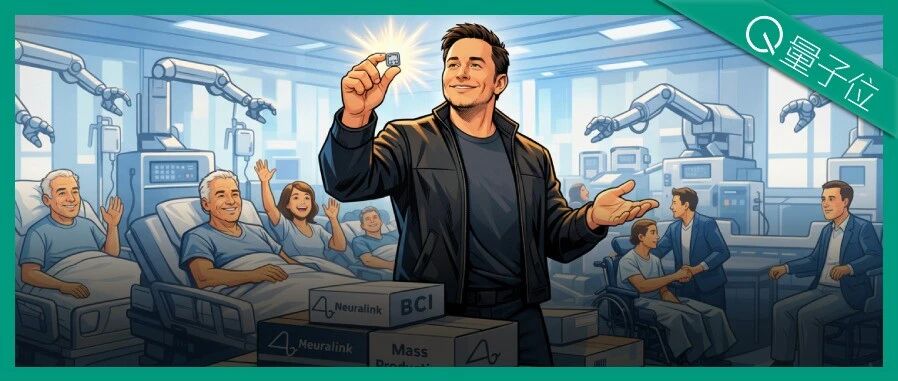
Core Viewpoint - Neuralink is set to begin mass production of brain-machine interface devices in 2026, transitioning from laboratory to clinical applications, with a focus on simplifying and automating the surgical process [2][4][46]. Group 1: Development Timeline - Neuralink was founded in 2016 with the goal of creating brain chips that allow direct control of computers through neural signals [20][37]. - The company has made significant progress over the years, including animal experiments in 2019, demonstrations with a pig in 2020, and enabling a monkey to play a game using its thoughts in 2021 [38][39][40]. - In 2023, Neuralink received FDA approval to conduct human clinical trials, marking a pivotal moment in its development [42]. Group 2: Surgical Process and Technology - The current surgical procedure for implanting the brain chip involves complex steps, including the removal of part of the skull and the dura mater, which makes it difficult to scale [11][12]. - Neuralink aims to simplify this process by allowing the electrode wires to penetrate the dura mater without needing to cut it, reducing risks and costs associated with the surgery [15][17]. - This new "minimally invasive" approach is expected to lower the barriers for standardization and increase the accessibility of the technology [17][26]. Group 3: Market Potential and Applications - There is a significant market demand for brain-machine interfaces, particularly for treating neurological disorders such as paralysis, muscular atrophy, Parkinson's disease, dementia, and vision impairment [9][21]. - The first human volunteer for Neuralink's trials, Noland Arbaugh, was able to post on social media and play video games using only his brain signals after the implant [22][25]. - If Neuralink can successfully scale production and reduce surgical costs, it could transform the lives of many individuals with neurological conditions [26]. Group 4: Future Vision - Beyond medical applications, Neuralink is also exploring the concept of cyborgs, positioning its technology as a defense against potential threats from advanced AI [27][28]. - Elon Musk envisions a future where humans can enhance their cognitive abilities through brain-machine interfaces, allowing for rapid skill acquisition and adaptation [30][31]. - This could lead to a significant leap in human civilization, fundamentally changing how skills and knowledge are accessed and utilized [31].
「北京版幻方」冷不丁开源SOTA代码大模型!一张3090就能跑,40B参数掀翻Opus-4.5和GPT-5.2
量子位· 2026-01-02 03:41
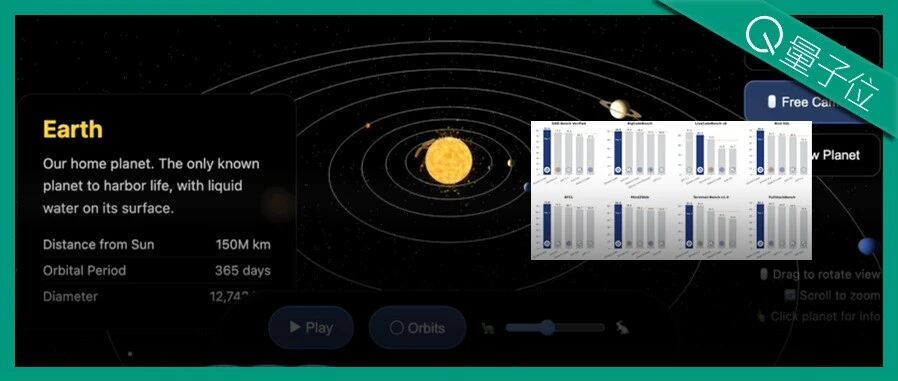
Core Insights - The article highlights the emergence of the IQuest-Coder-V1 model series, which has gained significant attention in the tech community for its performance in code generation and understanding tasks [1][2]. Model Performance - The IQuest-Coder-V1 model, particularly the 40B parameter version, achieved an impressive score of 81.4% on the SWE-Bench Verified leaderboard, surpassing models like Claude Opus-4.5 and GPT-5.2, which are speculated to have parameter scales in the hundreds of billions to trillions [2][50]. - The model series includes versions with 7B, 14B, and 40B parameters, each offering Instruct and Thinking variants tailored for different use cases [14][15]. Technical Specifications - The IQuest-Coder-V1 series emphasizes "engineering-friendly" design and long context usability, supporting a maximum context length of 128K tokens and a vocabulary size of 76,800 tokens [22][25]. - The 40B parameter version features a Loop variant that enhances parameter utilization efficiency, achieving significant reductions in HBM and KV Cache overhead while improving throughput [19][20]. Training Methodology - The training strategy, termed "code-flow multi-stage training," focuses on learning from the evolution of code rather than static code snippets, incorporating a triplet data structure to capture changes over a project's lifecycle [38][43]. - This approach allows the model to understand the dynamic evolution of software logic, capturing differences before and after modifications [46][47]. Deployment and Accessibility - The models are designed for deployment on consumer-grade GPUs, with the Int4 version capable of running on a single H20 inference card [53][54]. - The IQuest-Coder series has been open-sourced on platforms like GitHub, making it accessible for developers and researchers [11]. Company Background - IQuest-Coder is developed by Ubiquant Holding Limited (九坤投资), a prominent quantitative investment firm in China, known for its focus on AI and high-frequency trading [57][64]. - The company has established multiple research labs, including an AI Lab, and has a strong team with a high percentage of members holding advanced degrees from top universities [62][64].
AI正在占领你的视频推荐流
量子位· 2026-01-02 03:41
你的视频推荐流,正在被AI"吞噬"。 这不是危言耸听,正经新调查发现: YouTube算法向新用户展示的视频中,有超过 20% 的内容是 AI制造 的低质量视频。 再扎心点说就是,我们平时在YouTube刷到的每5条视频中,可能有1条就是AI随手糊出来的。(不活了.jpg) 梦瑶 发自 凹非寺 量子位 | 公众号 QbitAI 不仅如此,这样没啥营养的AI小视频还在逐渐 产业化 ,甚至被做成了一门越——滚——越——大的《生意》。 好好好,这个世界到底还有什么是真实的啊!!! 当AI低质量视频开始按"产量"出现 结论来自美国的一家创意软件公司Kapwing。 他们调查了全球15,000个最受欢迎的 YouTube 频道,结果您猜怎么着: 其中278个频道的内容几乎全部由AI生成……(纯·AI原创)。 对了,Kapwing并不是把所有AI产的内容都视作低质量,而是做了进一步区分,主要分三类: 第一类,是几乎 未经审核、直接被丢进平台 分发系统的AI生成内容。 第二类,是虽然经过审核,但只 勉强踩在最低质量线 上的AI内容(哪怕它是可口可乐的AI圣诞广告)。 第三类更激进,指的是所有被 大规模 、 低成本生产 出来 ...

「AI 100」榜单启动招募,AI产品“年会”不能停丨量子位智库
量子位· 2026-01-02 03:41
Core Insights - The article discusses the emergence of numerous keywords in the AI product sector by 2025, highlighting transformative AI products that are reshaping the industry [4] - The "AI 100" list by Quantum Bit Think Tank aims to evaluate and recognize the top AI products in China, reflecting the current landscape and future trends in AI [4][12] Group 1: AI 100 List Overview - The "AI 100" list is divided into three main categories: "Flagship AI 100," "Innovative AI 100," and the top three products in ten popular sub-sectors [6] - The "Flagship AI 100" will focus on the strongest AI products of 2025, showcasing those that have achieved significant technological breakthroughs and practical application value [7] - The "Innovative AI 100" aims to identify emerging products with potential for significant impact in 2026, representing cutting-edge AI technology [8] Group 2: Sub-sector Focus - The ten hottest sub-sectors for the top three products include AI browsers, AI agents, AI smart assistants, AI workstations, AI creation, AI education, AI healthcare, AI entertainment, Vibe Coding, and AI consumer hardware [9] Group 3: Application and Evaluation - The evaluation of the "AI 100" list employs a dual assessment system combining quantitative and qualitative measures, focusing on user data and expert evaluations [13] - Quantitative metrics include user scale, growth, activity, and retention, while qualitative assessments consider long-term potential, technology, market space, and user experience [13]
量子位编辑作者招聘
量子位· 2026-01-02 03:41
Core Viewpoint - The article emphasizes the ongoing AI boom and invites individuals to join the company "Quantum Bit," which focuses on tracking AI advancements and has established itself as a leading content platform in the industry [1]. Group 1: Job Opportunities - The company is hiring for three main directions: AI Industry, AI Finance, and AI Product, with positions available for both experienced professionals and fresh graduates [2][4]. - Positions are open for various levels, including editors, lead writers, and chief editors, with a focus on matching roles to individual capabilities [6]. Group 2: Job Responsibilities - **AI Industry Direction**: Responsibilities include tracking innovations in infrastructure, such as chips, AI infrastructure, and cloud computing, as well as interpreting technical reports from conferences [6][7]. - **AI Finance Direction**: Focuses on venture capital, financial reports, and capital movements within the AI industry, requiring strong analytical skills and a passion for interviews [11]. - **AI Product Direction**: Involves monitoring AI applications and hardware developments, requiring a keen understanding of product experiences and market trends [11]. Group 3: Benefits and Growth - Employees can expect to engage with cutting-edge AI technologies, enhance their work efficiency through new tools, and build personal influence in the AI field [6]. - The company offers competitive salaries, comprehensive benefits, and a supportive environment for professional growth, including mentorship from senior editors [6][12]. Group 4: Company Impact - By 2025, Quantum Bit aims to have over 2.4 million subscribers on WeChat and more than 7 million users across platforms, with a daily reading volume exceeding 2 million [12].

DeepSeek改造何恺明残差连接!梁文峰亲自署名,十年首次重大升级
量子位· 2026-01-01 10:32
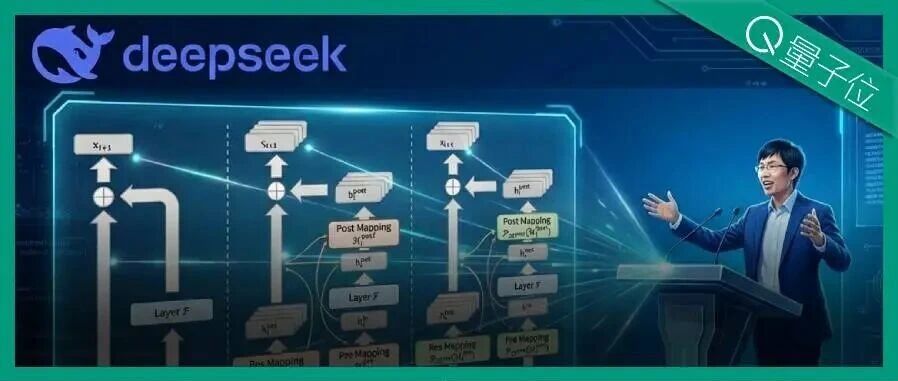
Core Viewpoint - The article discusses the evolution and enhancement of the residual connection, a fundamental component in deep learning introduced by He Kaiming in ResNet, and presents a new approach called Hyper-Connections (HC) that aims to improve performance while addressing potential issues related to signal amplification and stability in deep learning architectures [2][7][11]. Group 1: Residual Connections and Their Evolution - Residual connections have been a cornerstone of deep learning since the introduction of ResNet in 2016, allowing signals to pass directly from shallow to deep layers without modification [7][9]. - The rise of Transformer architectures has made residual connections a standard feature in large language models like GPT and LLaMA [10]. - Hyper-Connections (HC) expand the residual flow width from C dimensions to n×C dimensions, introducing three learnable mapping matrices to manage information flow [11]. Group 2: Performance and Stability Challenges - Experiments by the DeepSeek team indicate that the Hres matrix, responsible for internal information exchange in HC, significantly enhances performance [12]. - However, when HC is extended to multiple layers, the composite mapping loses its identity property, leading to potential issues such as sudden loss spikes and gradient fluctuations during training [14]. - The peak amplification factor of signals in HC can reach 3000, which poses risks of signal distortion during inter-layer propagation [16]. Group 3: Theoretical Framework and Constraints - The core idea of the DeepSeek paper is to constrain the residual mapping matrix to a specific manifold formed by double stochastic matrices, which ensures three key theoretical properties: norm preservation, combinatorial closure, and geometric interpretation [17][19]. - The Sinkhorn-Knopp algorithm is employed to project any matrix onto this manifold, effectively reducing the signal amplification issue observed in HC [21]. Group 4: Engineering Optimizations - The paper details the memory access costs associated with expanding the residual flow width, highlighting significant increases in read and write operations for HC compared to standard residual connections [24]. - To mitigate these costs, the team developed infrastructure optimizations, including the TileLang framework for merging operations and specialized kernels for the Sinkhorn-Knopp algorithm [25][26]. - The paper also discusses pipeline parallelism enhancements to overlap computation and communication, improving overall efficiency [27]. Group 5: Experimental Validation - The paper validates the proposed methods on MoE models of sizes 3B, 9B, and 27B, with an expansion rate of n set to 4 [30]. - In the 27B MoE model, the modified HC (mHC) demonstrated a stable training curve, achieving a loss reduction of 0.021 compared to the baseline while maintaining gradient stability [31]. - Performance improvements were noted in downstream tasks, with mHC outperforming both the baseline and HC in various benchmarks [32][35].
老黄超200亿美元的推理闭环成型了
量子位· 2026-01-01 06:15
Core Viewpoint - Nvidia has made significant acquisitions in a short period, spending over $20 billion to acquire Groq and AI21 Labs, aiming to strengthen its position in the AI market and counter competition from companies like Google and Broadcom [1][2][27]. Group 1: Acquisitions and Investments - Nvidia's recent acquisitions include Groq, which was acquired for $20 billion, and AI21 Labs, estimated to cost between $2-3 billion, along with the acquisition of Enfabrica for $900 million [2][3][21]. - The acquisition of Groq not only brought in the LPU technology but also 90% of Groq's employees, enhancing Nvidia's talent pool [6][23]. - AI21 Labs, valued at $1.4 billion, is a hub for top AI PhDs, further bolstering Nvidia's capabilities in AI architecture [7][10]. Group 2: Market Position and Strategy - Nvidia holds over 90% of the AI training market share, but the inference market is becoming increasingly fragmented, with custom ASIC chips capturing 37% of the deployment share [4]. - The company aims to address this fragmentation by acquiring talent and technology, positioning itself to compete effectively against Google’s TPU and other competitors [5][27]. - The combination of Groq's LPU and AI21's Jamba architecture is expected to enhance Nvidia's inference capabilities, allowing for significant improvements in processing efficiency [16][26]. Group 3: Talent Acquisition and Technology Integration - Nvidia's strategy includes not just acquiring companies but also securing their talent, as seen with the recruitment of 200 top AI PhDs from AI21 Labs [12][17]. - The Jamba architecture from AI21 is particularly suited for memory-constrained inference chips, which aligns with Nvidia's needs in the evolving AI landscape [16][28]. - The integration of these acquisitions is designed to create a closed loop of hardware, network, and architecture, solidifying Nvidia's competitive edge in the AI market [26].


最新英伟达经济学:每美元性能是AMD的15倍,“买越多省越多”是真的
量子位· 2026-01-01 04:15
Core Insights - The article emphasizes that NVIDIA remains the dominant player in AI computing power, providing significantly better performance per dollar compared to AMD [1][30]. - A report from Signal65 reveals that under certain conditions, NVIDIA's cost for generating the same number of tokens is only one-fifteenth of AMD's [4][30]. Performance Comparison - NVIDIA's platform offers 15 times the performance per dollar compared to AMD when generating tokens [1][30]. - The report indicates that for complex models, NVIDIA's advantages become more pronounced, especially in the context of the MoE (Mixture of Experts) architecture [16][24]. MoE Architecture - The MoE architecture allows models to split parameters into specialized "expert" sub-networks, activating only a small portion for each token, which reduces computational costs [10][11]. - However, communication delays between GPUs can lead to idle time, increasing costs for service providers [13][14]. Cost Analysis - Despite NVIDIA's higher pricing, the overall cost-effectiveness is better due to its superior performance. For instance, the GB200 NVL72 costs $16 per GPU per hour, while AMD's MI355X costs $8.60, making NVIDIA's price 1.86 times higher [27][30]. - The report concludes that at 75 tokens per second per user, the performance advantage of NVIDIA is 28 times, resulting in a cost per token that is one-fifteenth of AMD's [30][35]. Future Outlook - AMD's competitiveness is not entirely negated, as its MI325X and MI355X still have applications in dense models and capacity-driven scenarios [38]. - AMD is developing a cabinet-level solution, Helios, which may narrow the performance gap in the next 12 months [39].

