生物世界

Search documents
今年第5篇Cell、Nature、Science正刊!姜长涛团队最新Cell论文,利用AI工具,挖掘出超60万种胆汁酸代谢酶
生物世界· 2025-08-08 04:04
Core Viewpoint - The article discusses the significant role of bile acids produced by gut microbiota in regulating host health and disease, highlighting a recent study that identifies gut microbial bile acid metabolic enzymes using an AI-assisted pipeline [2][3]. Group 1: Research Development - The research team developed an AI-assisted workflow named BEAUT, predicting over 600,000 candidate bile acid metabolic enzymes and discovering the first bile acid with unique skeletal modifications, 3-acetoDCA, and its synthesizing enzyme, ADS [3][7]. - The study reveals that 3-acetoDCA is widely present in the population and can regulate gut microbiota composition by increasing the abundance of Lactobacillus at physiological concentrations [8][12]. Group 2: Methodology and Findings - The study addresses the gap in identifying bile acid biosynthetic pathways in bacteria, with fewer than 10 enzymes characterized, which limits the development of engineered bacteria and targeted interventions for related diseases [5]. - BEAUT utilizes a protein language model to classify bile acid metabolic enzymes from metagenomic data, learning from known enzyme sequences to identify those capable of modifying bile acids [6][10]. Group 3: Implications and Future Directions - The application of BEAUT and the identification of previously unreported bile acid metabolic enzymes significantly expand the understanding of microbial bile acid metabolism and chemical diversity [10]. - This research provides a top-down approach to studying microbial-derived metabolites, offering a scalable framework for investigating other microbial metabolic enzymes [10].


广州医科大学×广州国家实验室发表最新Cell论文
生物世界· 2025-08-08 00:15
Core Viewpoint - The research presents a novel method for constructing embryonic models using chemically induced embryonic founder cells (EFC), which allows for a more efficient and accurate simulation of mouse embryogenesis and organogenesis [2][3][6]. Group 1: Research Methodology - The study utilized small molecules (CHIR-99021, E-616452, Lif, AM580) to induce mouse embryonic stem cells into 8-16 cell stage embryonic founder cells (EFC) [6]. - EFC cells can determine all lineages of blastocysts both in vivo and in vitro, enabling the construction of a complete embryonic model [6][9]. - The model accurately replicates the developmental process starting from organ formation, including the formation of three germ layers and early organ structures [6][9]. Group 2: Research Highlights - The system using EFCs allows for direct, rapid, efficient, and accurate construction of in vitro embryonic development models [8]. - Induced EFCs (iEFC) can generate a scalable and faithful embryonic model (iEFC-EM) that reproduces mouse embryonic development up to the organ formation stage [9]. - The model demonstrates the transformation of epithelial cells to mesenchymal cells during gastrulation, leading to the development of various early organ precursors and structures [6][9].

华人学者一天发表了6篇Nature论文
生物世界· 2025-08-07 08:45
撰文丨王聪 编辑丨王多鱼 排版丨水成文 2025 年 8 月 6 日,国际顶尖学术期刊 Nature 上线了 22 篇论文 , 其中 6 篇来自华人学者 (包括作为通讯作者和第一作者的论文) 。 8 月 6 日,加州大学旧金山分校 Xianhua Piao 作为通讯作者, Diankun Yu 作为共同通讯作者兼共同第一作者, 在 Nature 期刊 发表了题为: Microglia regulate GABAergic neurogenesis in prenatal human brain through IGF1 ( 小胶质细胞通过胰岛素样生长因子-1 调节人类胎儿大脑中的 γ-氨基丁酸能神经 发生 ) 的研究论文 【1】 。 8 月 6 日, 美国国立卫生研究院国家神经疾病与中风研究所 Xiao-Feng Tan 作为第一作者兼共同通讯作者,在 Nature 期刊发表了题为: Structural basis of fast N-type inactivation in Kv channels (钾离子 通道中快速 N 型失活的结构基础 ) 的研究论文 【3】 。 8 月 6 日,斯坦福大学 Hany ...

华人学者发表Nature封面论文:AI从头设计水凝胶,在水中也能保持超强粘性
生物世界· 2025-08-07 04:02
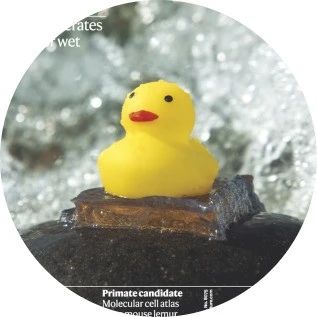
Core Viewpoint - The article discusses the development of super-adhesive hydrogels that can maintain adhesion in wet environments, inspired by natural adhesive proteins, and designed using AI models to enhance material properties and applications [4][15]. Group 1: Research Background - The research was published in the prestigious journal Nature, highlighting the innovative approach to designing hydrogels that can be used in various applications, including biomedical and industrial fields [3][4]. - The study focuses on the challenges of creating hydrogels that are both soft and adhesive, which traditionally required extensive trial and error, making the process costly and time-consuming [2][4]. Group 2: Methodology - The research team analyzed 24,707 natural adhesive protein sequences to identify characteristics that could be replicated in synthetic hydrogels [10]. - They designed 180 different hydrogels based on the identified features from natural proteins, utilizing machine learning to optimize the design process [10][13]. Group 3: Key Findings - One of the developed hydrogels, named R1-max, successfully adhered a rubber duck to a rock underwater, demonstrating its ability to withstand waves and tides [13]. - Another hydrogel, R2-max, was able to seal a 20 mm diameter hole in a water-filled pipe, maintaining its leak-proof capability for over five months [13][15]. Group 4: Implications - The super-adhesive hydrogels have the potential to revolutionize biomedical applications, such as prosthetic coatings and wearable biosensors, as well as industrial applications where stable adhesion in wet conditions is critical [15]. - The research signifies a shift in how AI is utilized in material science, moving from exploratory use to actively improving and assisting in material design and generation [15].
Nature重磅:逆转阿尔茨海默病!补充金属锂,恢复记忆丧失,让大脑回到更年轻、更健康状态
生物世界· 2025-08-07 04:02
Core Viewpoint - The recent study from Harvard Medical School suggests that lithium deficiency in the brain is linked to cognitive decline and the onset of Alzheimer's disease, indicating that lithium supplementation, specifically lithium orotate, may reverse memory loss and restore brain health [2][6][9]. Group 1: Alzheimer's Disease Overview - Alzheimer's disease (AD) accounts for 60%-80% of dementia cases, affecting approximately 10% of individuals over 65 years old [2]. - Current FDA-approved antibody therapies for AD have limited effectiveness and potential severe side effects, highlighting the need for alternative treatments [2]. Group 2: Lithium's Role in Cognitive Health - Historical context shows lithium was once promoted as a mood enhancer and later recognized as a standard treatment for bipolar disorder, with epidemiological studies suggesting lower dementia rates in areas with trace lithium in drinking water [5]. - The recent study confirms that lithium is naturally present in the brain and plays a crucial physiological role, with lower lithium levels found in areas affected by Alzheimer's compared to unaffected regions [6]. Group 3: Research Findings - The study found that lithium deficiency leads to increased formation of amyloid plaques in mouse models, creating a vicious cycle where lower lithium levels result in more plaque formation, further exacerbating cognitive decline [6][7]. - Lithium orotate was shown to be more effective than lithium carbonate in reversing Alzheimer's-related brain damage and memory loss in mice, potentially explaining inconsistent results in previous clinical trials [6][9]. Group 4: Implications and Future Research - The study did not find toxic effects associated with lithium supplementation, which could simplify future clinical trials for Alzheimer's treatment [9]. - The potential benefits of lithium may extend beyond Alzheimer's, as higher lithium levels were associated with better performance in memory tests among individuals without cognitive impairment [9].

清华大学×北京大学合作发表最新Cell论文
生物世界· 2025-08-07 00:01
Core Viewpoint - The research highlights the role of bivalent chromatin in regulating cell fate through composite transposons, specifically focusing on the SVA transposon and its implications in hematopoiesis and aging [3][6]. Group 1: Research Findings - The study reveals that composite transposons carry bivalent histone marks, with activating and inhibiting marks located in different regions [6][9]. - A genome-wide CRISPR-Cas9 screening identified multiple genes that control bivalent chromatin at the SVA locus [9]. - Different subsets of SVA are activated to enhance the expression of various genes during myeloid hematopoiesis [9]. Group 2: Mechanisms and Implications - The SVA transposon exhibits RNA-dependent cis-regulatory functions that promote hematopoietic aging [9]. - The presence of H3K9me3 at the 5' end and H3K27ac at the 3' end of SVA is crucial for its transcriptional regulation [6][9]. - Activation of certain bivalent SVA elements is essential for the expression of multiple erythroid genes, while their inhibition leads to insufficient erythropoiesis [6].

曹雪涛院士出任主编,中国免疫学会推出高水平新期刊,聚焦免疫与炎症
生物世界· 2025-08-06 09:00
编辑丨王多鱼 排版丨水成文 Immunity & Inflammation 是由中国免疫学会主办,与国际出版商施普林格自然出版集团 (Springer Nature) 合作出版的完全开放获取 (OA) 英文期刊。 Immunity & Inflammation 期刊组建了专业的编委团队, 由 曹雪涛 院士和 Jules A. Hoffmann 教授 (因 发现 Toll 通路在先天免疫激活中的作用,荣获 2011 年诺贝尔生理或医学奖) 担任主编,由国内外一流免 疫学家 Luke O'Neill 、 Frederick Alt 、 陈志坚 、 Tadatsugu Taniguchi 、 邵峰 院士担任副主编, 程根 宏 教授任执行主编 , 并由来自全球的 95 名免疫与炎症领域知名专家组成了编委会。 免疫与炎症中的介质和调控因子(细胞因子、炎性小体、无菌性炎症、免疫衰老、神经炎症和炎症消 退); 炎症疾病中的免疫反应(肿瘤免疫学、自身免疫、过敏、黏膜免疫学和神经免疫学); 细胞疗法和免疫疗法(免疫检查点阻断、细胞因子疗法、抗炎药物和疫苗); 免疫学中的先进技术(组学、活细胞成像、基因编辑和合成免疫学)。 Im ...

Cell重磅:AI从头设计生成小型结合蛋白,大幅提高先导编辑效率
生物世界· 2025-08-06 04:05
Core Viewpoint - The article discusses advancements in prime editing (PE) technology, particularly focusing on the development of MLH1 small binders (MLH1-SB) using AI tools to enhance editing efficiency in genome editing applications [2][4]. Group 1: Prime Editing Technology - Prime editing is a novel genome editing technique that allows for precise modifications, including base substitutions and small insertions or deletions [2]. - The efficiency of prime editing is often limited by the mismatch repair (MMR) pathway, which can hinder the integration of desired edits at target sites [6][7]. Group 2: AI-Driven Innovations - The research utilized the AI protein design tool RFdiffusion to create MLH1 small binders that inhibit MMR activity, thereby improving prime editing efficiency [3][9]. - AlphaFold3 was employed to efficiently screen the designed proteins, leading to the identification of an optimal MLH1-SB composed of only 82 amino acids, which integrates well with existing PE architectures [10][11]. Group 3: Efficiency Improvements - The newly developed PE-SB platforms, such as PEmax-SB, PE6-SB, and PE7-SB, demonstrated significant improvements in editing efficiency, with PE7-SB2 showing an increase of approximately 18.8 times compared to PEmax and 2.5 times compared to PE7 in human cells [11]. - In vivo studies indicated that PE7-SB2's efficiency was about 3.4 times greater than that of PE7 in mouse models [11]. Group 4: Implications for Gene Therapy - The compact size of the MLH1-SB allows for easier integration and delivery in gene therapy applications, which is crucial for effective in vivo gene editing [11]. - The advancements in AI-driven protein design are expected to facilitate the development of efficient gene editing therapies, potentially transforming the landscape of genetic medicine [15].

中国科学院分区Top期刊领衔丨生物学好刊榜已出炉,抓住投稿“黄金期”!
生物世界· 2025-08-06 04:05
Core Viewpoint - The article presents the latest journal metrics for the field of biology, highlighting the significance of the Chinese Academy of Sciences' top journal, Virulence, which offers a direct submission channel and QR code for faster review and greater impact [1]. Group 1: Journal Metrics - Virulence has a 2024 impact factor of 5.4, ranking 12th out of 137 in Infectious Diseases, 23rd out of 163 in Microbiology, and 36th out of 183 in Immunology, with a CiteScore of 10.5 [4]. - Redox Report focuses on the role of free radicals in human pathology, with a 2024 impact factor of 7.4, ranking 37th out of 319 in Biochemistry & Molecular Biology and a CiteScore of 8.3 [7][8]. - Nucleus emphasizes cell biology, with a 2024 impact factor of 4.5, ranking 76th out of 204 in Cell Biology and a CiteScore of 4.6 [11][12]. Group 2: Research Focus Areas - Cell Adhesion & Migration investigates interactions between cells and their microenvironment, with a 2024 impact factor of 3.5, ranking 105th out of 204 in Cell Biology and a CiteScore of 5.8 [14][15]. - RNA Biology covers cutting-edge RNA research, with a 2024 impact factor of 3.4, ranking 137th out of 319 in Biochemistry & Molecular Biology and a CiteScore of 8.6 [17][18]. - Channels publishes research on ion channels, with a 2024 impact factor of 3.2, ranking 151st out of 319 in Biochemistry & Molecular Biology and a CiteScore of 6.8 [20][21]. Group 3: Additional Journals - Epigenetics focuses on heritable changes in gene expression, with a 2024 impact factor of 3.2, ranking 66th out of 191 in Genetics & Heredity and a CiteScore of 6.1 [23][24]. - Animal Cells and Systems is an open-access journal covering various biological fields, with a 2024 impact factor of 3.2, ranking 9th out of 181 in Zoology and a CiteScore of 4.7 [26][27]. - Adipocyte publishes research on adipose tissue physiology and its relation to diseases, with a 2024 impact factor of 3.1, ranking 88th out of 191 in Endocrinology & Metabolism and a CiteScore of 7.4 [29][30].

Nature子刊:溶瘤细菌来了
生物世界· 2025-08-06 04:05
Core Viewpoint - The emergence of immune checkpoint inhibitors and CAR-T cell therapies has transformed cancer treatment paradigms, establishing these therapies as the fourth pillar alongside surgery, chemotherapy, and radiotherapy [2]. Group 1: Limitations of Current Therapies - The application of cancer immunotherapies in solid tumors is limited due to their insufficient ability to penetrate and act within immunosuppressive tumor microenvironments, particularly in hypoxic core regions [2]. - Cancer patients undergoing aggressive chemotherapy and/or radiotherapy often experience immunosuppression, posing a significant challenge to the efficacy of immunotherapies [2]. Group 2: Historical Context and Current Research - Historical observations by Dr. William Coley in the late 19th century noted that bacterial infections could lead to tumor regression in some inoperable cancer patients, leading to the development of Coley's toxins [2]. - Current research published in Nature Biomedical Engineering describes a tumor-resident oncolytic bacteria consortium composed of A-gyo and UN-gyo, which demonstrated potent anticancer effects through selective intratumoral thrombosis and necrosis in mouse models [3][5]. Group 3: Mechanism and Efficacy of New Bacterial Therapy - The bacterial consortium showed complete tumor regression and extended survival in both immunocompetent and immunodeficient mouse models without systemic toxicity or cytokine release syndrome [5]. - Mechanistically, the bacteria induce cytokine production, fibrin deposition, and platelet aggregation, leading to selective intratumoral thrombosis and extensive tumor necrosis [5]. - The natural, non-genetically modified bacteria provide a self-regulating and controllable strategy for safe, tumor-targeted therapy [7].