生物世界

Search documents
Immunity:黄波团队利用生物机械力信号强势扩增干性 CAR-T 细胞,有望颠覆实体肿瘤细胞治疗
生物世界· 2025-08-09 11:00
Core Viewpoint - The article discusses a groundbreaking research achievement in CAR-T cell therapy, particularly focusing on the development of stem cell-like CAR-T cells that can effectively target solid tumors, overcoming previous limitations in the field [3][11]. Group 1: Research Breakthrough - The research led by Professor Huang Bo's team successfully utilized biomechanical signals to decouple the proliferation and differentiation of CAR-T cells, allowing for the rapid generation of stem cell-like CAR-T cells in just 4.5 days [3][11]. - This innovative approach addresses the challenges faced by traditional CAR-T therapies in solid tumors, which often struggle with cell exhaustion and limited infiltration into tumor tissues [3][11]. Group 2: Mechanism of Action - The study reveals that biomechanical signals, particularly through β2 integrin, play a crucial role in promoting CAR-T cell proliferation while simultaneously inhibiting differentiation [8][9]. - The phosphorylation of β2 integrin leads to the activation of the YAP protein, which in turn promotes the expression of stemness genes such as SOX2 and NANOG, essential for maintaining the stem cell-like characteristics of CAR-T cells [8][9]. Group 3: Clinical Implications - The newly developed CAR-T cells demonstrated significant efficacy in various mouse models of solid tumors, including colorectal cancer, glioblastoma, and pancreatic cancer, indicating their potential for clinical application [8][11]. - The method of producing these CAR-T cells is cost-effective, requiring no expensive external factors and utilizing lower cell quantities, which could make CAR-T therapy more accessible to a broader patient population [8][11].


华人学者本周发表7篇Cell论文:AI挖掘代谢酶、新型类全能细胞、癌症恶病质、细胞命运调控、大片段DNA编辑等
生物世界· 2025-08-09 08:00
Group 1 - The article highlights nine research papers published in the journal Cell, with seven authored by Chinese scholars, covering various topics in biology and genetics [2] - A study on the mechano-resistance mechanism in skin adaptation to terrestrial locomotion was published, revealing insights into the SLURP1 gene and its implications for palmoplantar keratoderma [4][7] - A new programmable chromosome engineering technology (PCE) was introduced, enabling precise manipulation of DNA at kilobase to megabase scales, which could enhance crop traits and genetic disease treatments [9][12] Group 2 - Research on composite transposons revealed their role as enhancers in cell fate regulation, highlighting the significance of bivalent chromatin in hematopoietic differentiation and aging [14][17] - A study demonstrated that vagal nerve blockade can alleviate cancer-associated cachexia in mouse models, restoring appetite and extending survival [19][22] - A novel model of mouse embryogenesis was developed using chemically induced embryonic founder cells, providing new tools for studying organ development and regenerative medicine [23][26] Group 3 - A genetic history study of the Southern Caucasus revealed 5,000 years of genetic continuity despite high population mobility, based on ancient DNA analysis from archaeological sites [28][31] - An AI-assisted pipeline was created to identify gut microbial bile acid metabolic enzymes, expanding knowledge of microbial metabolism and its implications for gut health [33][36]

Science重磅:破解阿尔茨海默病抗体药的脑出血副作用——突破血脑屏障,靶向递送抗Aβ抗体
生物世界· 2025-08-09 04:06
Core Viewpoint - Alzheimer's disease (AD) is a severe neurodegenerative disorder with significant impacts on individuals and society, yet drug development has faced numerous failures despite substantial investments from major pharmaceutical companies [2][3]. Drug Development and FDA Approvals - In June 2021, the FDA accelerated the approval of Aducanumab, developed by Eisai and Biogen, marking the first new drug for Alzheimer's since 2003, although its approval was controversial due to associated risks like ARIA (Amyloid-related Imaging Abnormalities) [3][6]. - Following Aducanumab, the FDA approved two additional antibody drugs targeting Aβ: Donanemab by Eli Lilly and Lecanemab by Eisai and Biogen, both of which also present ARIA-related side effects [3][6]. Denali Therapeutics' Research - Denali Therapeutics published a study in August 2025 on a new antibody transport carrier, ATV cisLALA, which utilizes transferrin receptor (TfR) to enhance brain delivery of anti-Aβ antibodies while mitigating ARIA risks [4][9]. - The ATV cisLALA carrier shows improved distribution in brain tissue compared to traditional Aβ antibodies, which tend to accumulate around blood vessels, potentially triggering inflammatory responses and ARIA [9][11]. Mechanism of Action - Traditional Aβ antibodies enter the brain through cerebrospinal fluid and perivascular spaces, where amyloid deposits are located, leading to inflammation and ARIA. In contrast, the ATV carrier enhances delivery through capillaries, reducing ARIA side effects [11][12]. - Denali's TfR-based approach is not limited to Aβ; the company is also developing therapies targeting tau protein using the same delivery mechanism, aiming to address two key toxic proteins in Alzheimer's simultaneously [11].


干细胞治疗糖尿病新突破:邓宏魁团队首次实现利用人iPSC制备内分泌细胞类型完备具有低血糖防护功能的胰岛
生物世界· 2025-08-09 04:06
Core Viewpoint - The research on pluripotent stem cell-derived islets (PSC-islets) shows promising potential for treating diabetes by restoring blood glucose control through the transplantation of functional insulin-producing β cells [2][4]. Group 1: Research Findings - A study published in September 2024 demonstrated successful treatment of a type 1 diabetes patient using chemically reprogrammed pluripotent stem cell-derived islets (CiPSC-islets), resulting in the patient no longer needing external insulin therapy after one year [2]. - The research published in August 2025 established a method to generate islets with complete endocrine cell types from human pluripotent stem cells (iPSCs), which effectively respond to blood glucose changes and provide hypoglycemia protection in diabetic mouse models [3][4]. - The newly constructed PSC-islets contain all five endocrine cell types (α, β, δ, ε, and γ), showcasing a robust protective effect against hypoglycemia, with only 3% of measurements falling below 54 mg/dL compared to 59% in the control group [4][10]. Group 2: Implications for Diabetes Treatment - The study highlights a strategy for controlling the relative abundance of endocrine subtypes in PSC-islets, laying the groundwork for calibrating blood glucose homeostasis and providing clear hypoglycemia protection post-transplantation [6]. - The engineered islet cell composition replicates the dual blood glucose regulation function of natural islets, which is crucial for achieving precise blood glucose control and minimizing hypoglycemia risks [8]. - This advancement offers further safety assurance for the clinical translation of stem cell-derived islets, potentially accelerating the clinical application of diabetes cell therapies [8].

Cell:沈西凌团队揭开癌症患者暴瘦的原因,并提出治疗方法
生物世界· 2025-08-09 04:06
撰文丨王聪 编辑丨王多鱼 排版丨水成文 据统计,50%-80% 的癌症患者会遭受 癌症相关恶病质 ( Cancer-associated Cachexia, CAC) 的困扰,这是一种 以不可控制的体重减轻、食欲不振和肌肉 消耗为特征的衰弱综合征,其会导致癌症治疗抵抗,增加癌症患者的死亡率。该综合征导致了近三分之一的癌症相关死亡,且目前无法治愈或逆转的方法。 2025 年 8 月 7 日,德克萨斯大学 MD 安德森癌症中心 沈西凌 教授团队等在国际顶尖学术期刊 Cell 上发表了题为 : Vagal blockade of the brain-liver axis deters cancer-associated cachexia 的研究论文。 该研究揭示了癌症诱导的炎症导致迷走神经功能紊乱,引发恶病质表型,而阻断迷走神经能够可恢复癌症相关恶病质小鼠模型的进食,减轻恶病质并延长其生存 期。 在这项最新研究中,研究团队在 癌症相关恶病质 ( Cancer-associated Cachexia, CAC) 小鼠模型中发现,癌症诱导的全身性炎症会改变 迷走神经张力 ( vagal tone ) 。这种迷走神经功能 ...

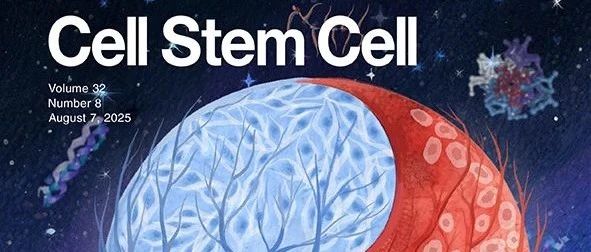
太极阴阳:北京大学王凯团队血管类器官研究登上Cell Stem Cell封面
生物世界· 2025-08-09 01:00
Core Viewpoint - The research presents a novel method for rapidly generating functional vascular organoids from induced pluripotent stem cells (iPSCs) through the orthogonal activation of transcription factors ETV2 and NKX3.1, demonstrating significant potential for applications in ischemia treatment and transplantation [3][11]. Group 1: Research Methodology - The study developed a simplified method to generate vascular organoids (VO) by using doxycycline-inducible or modRNA regulatory systems to activate transcription factors ETV2 and NKX3.1 [8]. - This method allows for the efficient co-differentiation of induced endothelial cells (iEC) and induced mural cells (iMC), producing functional 3D vascular organoids within 5 days without the need for extracellular matrix (ECM) embedding [8]. - Single-cell RNA sequencing revealed vascular heterogeneity, indicating that the timing of transcription factor activation influences the identity and heterogeneity of vascular cells [8]. Group 2: Research Findings - The vascular organoids formed perfusable blood vessels when implanted in immunodeficient mice, promoting vascular regeneration in models of hindlimb ischemia and islet transplantation [10][11]. - The research established a rapid and versatile vascular organoid platform with broad potential for vascular modeling, disease research, and regenerative cell therapy [13]. Group 3: Visual Representation - The cover image of the study illustrates the dual differentiation of human pluripotent stem cells into two vascular lineages—endothelial cells and mural cells—symbolizing a balanced and dynamic system inspired by the concept of yin and yang [7].
北京航空航天大学发表最新Science论文
生物世界· 2025-08-08 10:45
撰文丨王聪 编辑丨王多鱼 排版丨水成文 磁电传感 技术 有望用于 柔性传感器 ,能够以极低的能耗实现对电场和磁场的精确检测。然而,其实际应用受到弱磁电效应和整体性能有限的制约,尤其是在机 械应变的情况下。 2025 年 8 月 7 日,北京航空航天大学 刘明杰 教授、 赵立东 教授以及 李景 准聘教授作为共同通讯作者,在国际顶尖学术期刊 Science 上发表了题为 : Strain-coupled, crystalline polymer-inorganic interfaces for efficient magnetoelectric sensing 的研究论文。 该研究利用表面官能化的铁磁单层与铁电聚合物之间的共结晶策略制备出一种机械强度高、节能的磁电传感器, 所得复合薄膜的磁电容系数高达 23.6%, 能够 实现超快磁电检测, 比传统传感器快近 10 倍,且可通过腕戴式器件实现与标准高斯计相媲美的磁场检测精度。 该研究为柔性可穿戴设备集成热电冷却器等多功 能材料开辟了新途径,有望推动磁电传感技术在医疗监测、物联网等领域的实际应用。 设置 星标 ,不错过精彩推文 开放转载 欢迎转发到朋友圈和微信群 在 ...

华东师范大学×上海交大×湖北大学合作发表最新Cancer Cell论文
生物世界· 2025-08-08 08:00
Core Viewpoint - The article discusses the development of pan-KRAS inhibitors and degraders that target multiple KRAS mutations, highlighting their potential in treating KRAS-driven cancers and overcoming resistance to existing therapies [4][9]. Group 1: KRAS Mutations and Their Impact - KRAS gene mutations are prevalent in human malignancies, particularly pancreatic, colorectal, and non-small cell lung cancers, with common mutations occurring at codons 12, 13, and 61 [3]. - The most frequent mutation is G12D, followed by G12V and G12C, which disrupt the guanine nucleotide exchange cycle and lead to tumorigenesis [3]. Group 2: Research Findings - A study published in Cancer Cell reports the discovery of a pan-KRAS inhibitor and its derived degrader, which exhibit broad-spectrum inhibitory effects against various KRAS mutations and significant anti-tumor activity in multiple models [4][5]. - MCB-294, a potent dual-state pan-KRAS inhibitor, effectively inhibits KRAS signaling and tumor growth in preclinical models, outperforming existing inhibitors [5][6]. - MCB-36, a pan-KRAS degrader, induces sustained degradation of KRAS, enhancing the therapeutic potential against KRAS-driven tumors [5][7]. Group 3: Therapeutic Implications - Both MCB-294 and MCB-36 demonstrate significant anti-tumor activity across various KRAS mutation types and can effectively target cancer cells resistant to KRAS G12C inhibitors [6][7]. - The findings suggest a promising therapeutic strategy for broadly targeting KRAS-driven tumors and addressing resistance issues [9].

Cancer Cell:于君团队证实,补充这种益生菌,可增强结直肠癌免疫治疗效果
生物世界· 2025-08-08 04:04
Core Viewpoint - The study highlights the potential of the probiotic Clostridium butyricum to enhance the efficacy of anti-PD-1 therapy in colorectal cancer by inhibiting IL-6-mediated immunosuppression [3][4][6]. Group 1: Research Findings - Clostridium butyricum is identified as a probiotic that can improve the effectiveness of anti-PD-1 therapy in colorectal cancer models [6]. - The study demonstrated that Clostridium butyricum enhances tumor suppression in both microsatellite instability-high (MSI-H) and microsatellite stable (MSS) colorectal cancer models [6]. - Single-cell RNA sequencing revealed that Clostridium butyricum activates cytotoxic CD8+ T lymphocytes and inhibits tumor-associated macrophages, particularly when used in combination with anti-PD-1 therapy [6][7]. Group 2: Mechanism of Action - The surface protein secD of Clostridium butyricum binds to the receptor GRP78 on colorectal cancer cells, leading to the inactivation of GRP78 and suppression of the PI3K-AKT-NF-κB pathway, which reduces the secretion of the immunosuppressive cytokine IL-6 [7]. - IL-6 is known to inhibit cytotoxic T lymphocytes and induce tumor-associated macrophages, thus its reduction is crucial for enhancing anti-tumor immunity [7]. Group 3: Clinical Implications - The study's findings suggest that Clostridium butyricum could be a promising adjunct to immune checkpoint blockade therapies in colorectal cancer, potentially improving patient outcomes [10]. - The research establishes a foundation for the clinical application of Clostridium butyricum in enhancing anti-PD-1 therapy effectiveness [7][10].

Cancer Cell:魏嘉/李颜团队揭示未成熟中性粒细胞在癌症骨转移中的关键作用,并提出治疗新策略
生物世界· 2025-08-08 04:04
Core Viewpoint - The study reveals the critical role of immature neutrophils in the bone metastatic microenvironment and suggests a potential therapeutic strategy to improve cancer immunotherapy by regulating these cells [3][7]. Group 1: Research Findings - Immature neutrophils dominate the bone metastatic microenvironment in both mouse models and cancer patients [5]. - DKK1 induces neutrophils to exhibit an immature functional state, which possesses strong immunosuppressive capabilities, inhibiting CD8+ T cell anti-tumor responses [5]. - The DKK1-CKAP4-STAT6 signaling pathway drives CHI3L3 expression, essential for the immunosuppressive role of immature neutrophils in bone metastases [5]. Group 2: Therapeutic Implications - Blocking DKK1 can promote neutrophil maturation, improve the immune microenvironment, induce tumor shrinkage, and enhance responses to immune checkpoint blockade therapy [3][5]. - The findings propose a promising new strategy for combined immunotherapy targeting bone metastases by modulating neutrophil activity [7].