机器之心

Search documents
将数据优势发挥到极致:「杭州六小龙」开源搭建空间智能的第一步
机器之心· 2025-08-26 09:38
Core Insights - The article emphasizes the importance of high-quality spatial data in the development of AI models, particularly in the context of three-dimensional (3D) space understanding [1][4][6] - It discusses the emergence of powerful models like SpatialLM and SpatialGen, which leverage vast amounts of spatial data to enhance AI capabilities in understanding and generating 3D environments [10][20] Group 1: Spatial Data and AI Models - The availability of extensive spatial data is crucial for training robust AI models, which can then improve tools and applications in various fields [2][4] - The article highlights the concept of a "data flywheel," where tools, data, and models continuously enhance each other, particularly in the realm of spatial intelligence [4][6] - The launch of SpatialLM 1.5 marks a significant advancement in spatial language understanding, allowing the model to interpret and generate structured spatial information [13][15] Group 2: Model Features and Capabilities - SpatialLM 1.5 can generate structured scene scripts from simple text descriptions, enabling users to create and manipulate 3D environments interactively [16][17] - SpatialGen focuses on generating multi-view images that maintain spatial consistency across different perspectives, addressing challenges in traditional 3D scene generation [20][21] - The models utilize extensive datasets, such as SpatialGen's dataset, which includes over 1 million images, to ensure high-quality outputs [22][28] Group 3: Open Source and Collaboration - The company aims to foster collaboration by open-sourcing its models and datasets, encouraging innovation and development within the AI community [32][36] - The leadership expresses a commitment to making spatial intelligence accessible, emphasizing that no single company can dominate this emerging market [33][36] - The open-source approach is expected to stimulate advancements in AI, providing opportunities for researchers and developers to contribute to the field [36]

英伟达再出手!新型混合架构模型问世,两大创新实现53.6倍吞吐提速
机器之心· 2025-08-26 09:38
Core Insights - The article introduces Jet-Nemotron, a new hybrid architecture language model developed by researchers from NVIDIA, which achieves state-of-the-art (SOTA) accuracy while significantly improving efficiency compared to existing full-attention models [2][8][9]. Model Performance - Jet-Nemotron-2B outperforms several leading open-source full-attention models, including Qwen3, Qwen2.5, Gemma3, and Llama3.2, while achieving a throughput acceleration of up to 53.6 times on H100 GPUs with a context length of 256K and maximum batch size [2][9]. - In benchmark tests such as MMLU and MMLU-Pro, Jet-Nemotron's accuracy surpasses that of advanced MoE full-attention models, despite those models having larger parameter sizes [2][5]. Innovations and Techniques - Jet-Nemotron is built on two core innovations: Post Neural Architecture Search (PostNAS) and JetBlock, a new linear attention module that significantly enhances performance compared to previous designs like Mamba2 [6][21]. - PostNAS allows for efficient architecture exploration and adaptation on pre-trained Transformer models, reducing the cost and risk associated with developing new language model architectures [12][16]. Efficiency and Accuracy - The architecture of Jet-Nemotron enables immediate improvements in efficiency and accuracy, leading to better service quality and reduced operational costs [17]. - The hardware-aware search conducted by PostNAS identifies architectures that maintain similar throughput while achieving higher accuracy with more parameters [18]. Comparative Results - Jet-Nemotron-2B and Jet-Nemotron-4B demonstrate competitive accuracy against leading efficient language models, with Jet-Nemotron-4B being 21 times faster and Jet-Nemotron-2B being 47 times faster than Qwen3-1.7B-Base [23][24].

FlashAttention-4震撼来袭,原生支持Blackwell GPU,英伟达的护城河更深了?
机器之心· 2025-08-26 09:38
Core Viewpoint - FlashAttention-4, introduced by Tri Dao at the Hot Chips 2025 conference, demonstrates significant performance improvements over previous versions and competitors, particularly in the context of NVIDIA's GPU architecture [1][2][10]. Summary by Sections FlashAttention-4 Introduction - FlashAttention-4 is reported to be up to 22% faster than NVIDIA's cuDNN library implementation on the Blackwell architecture [2]. - The new version incorporates two key algorithmic improvements: a new online softmax algorithm that skips 90% of output rescaling and a software simulation for better throughput [4][5]. Performance Enhancements - The kernel developed by Tri Dao's team outperforms NVIDIA's latest cuBLAS 13.0 library in specific computation scenarios, particularly when the reduction dimension K is small [7]. - FlashAttention-4 utilizes CUTLASS CuTe Python DSL, which is significantly more challenging to port to ROCm HIP compared to CUDA C++ [6]. Competitive Landscape - The development of FlashAttention is seen as a core advantage for NVIDIA, as Tri Dao and his team primarily use NVIDIA GPUs and have open-sourced much of their work for the developer community [10]. - There are implications for AMD, suggesting that financial incentives may be necessary to encourage Tri Dao's team to develop for ROCm [10]. Historical Context and Evolution - FlashAttention was first introduced in 2022, addressing the quadratic time and memory overhead of traditional attention mechanisms by reducing memory complexity from O(N²) to O(N) [12]. - Subsequent versions, including FlashAttention-2 and FlashAttention-3, have continued to enhance performance, with FlashAttention-2 achieving speed improvements of 2-4 times over its predecessor [21]. Technical Innovations - FlashAttention-3 achieved a speed increase of 1.5-2.0 times over FlashAttention-2, reaching up to 740 TFLOPS on H100 GPUs [23]. - FlashAttention-4 introduces native support for Blackwell GPUs, addressing previous compilation and performance issues [24]. Community Engagement - The GitHub repository for FlashAttention has garnered over 19,100 stars, indicating strong community interest and engagement [25].

谷歌偷偷搞了个神秘模型Nano-Banana?实测:强到离谱,但有3大硬伤
机器之心· 2025-08-26 08:53
Core Viewpoint - The article discusses the emergence of a mysterious AI model named Nano-Banana, which has gained attention for its image generation and editing capabilities, leading to confusion with fake websites claiming to offer its services [1][24]. Group 1 - Nano-Banana was initially discovered on the LMArena platform but has not been officially attributed to any developer [3][4]. - Speculations suggest that Nano-Banana may be a research model from Google, supported by recent social media posts from Google AI personnel [5][7]. - The model excels in text editing, style fusion, and scene understanding, allowing users to upload images and input prompts for element integration [8][9]. Group 2 - Nano-Banana can accurately interpret complex text prompts, demonstrating its ability to manipulate images effectively [9][13]. - The model performs well in commercial scenarios such as product photography and advertising, although it is not without flaws, occasionally producing visual inconsistencies [15][20]. - Users currently have to rely on random experiences through LMArena, as there is no official API or website for Nano-Banana [22][23]. Group 3 - The article includes firsthand evaluations of Nano-Banana's capabilities, comparing its outputs with those from ChatGPT and highlighting its superior performance in generating detailed and contextually appropriate images [30][32]. - Users have experimented with various prompts, showcasing Nano-Banana's versatility in creating images that blend seamlessly with their environments [34][44]. - The integration of Nano-Banana with other tools like Google’s Veo3 is suggested to enhance video production workflows [47][61].


一天之内,Meta痛失两员大将,小扎钞能力失效?
机器之心· 2025-08-26 08:53
Core Viewpoint - Meta is experiencing significant talent attrition, particularly among top AI researchers, due to internal management issues and a lack of alignment with the company's vision and culture [1][9][39]. Group 1: Talent Departure - Two senior researchers, Rishabh Agarwal and Bert Maher, recently announced their departure from Meta, with Agarwal moving to an unspecified location and Maher joining Anthropic [3][24]. - Agarwal's exit highlights the argument that even high salaries cannot retain top talent, as he follows Zuckerberg's advice on taking risks in a rapidly changing world [14][39]. - Maher, who worked at Meta for 12 years, contributed to significant projects like PyTorch and HHVM, indicating the loss of valuable expertise [25][27]. Group 2: Internal Management Issues - Meta's internal management culture is cited as a reason for its low employee retention rate of 64%, compared to Anthropic's 80% [30][33]. - Previous complaints from former employees, including John Carmack and Tijmen Blankevoort, point to issues such as poor resource utilization, performance evaluation pressures, and internal competition [33][34]. - The lack of a strong CTO to balance the power of the CEO is seen as a potential risk for the company's future stability [11]. Group 3: Cultural Misalignment - Many top researchers are leaving Meta due to a misalignment with the company's focus on speed and profitability, which contrasts with their values of safety, independence, and long-term research [39][40]. - The absence of a compelling mission at Meta makes it difficult for some employees to justify staying, as exemplified by Tesla engineer Yun-Ta Tsai's decision to remain with his current employer for its meaningful goals [40][42]. - The perception that Meta's culture prioritizes financial gain over meaningful work is leading to a reluctance among potential recruits to join the company [39][42].


英伟达通用机器人芯片来了:AI算力提升7.5倍,宇树、银河通用已搭载
机器之心· 2025-08-26 04:11
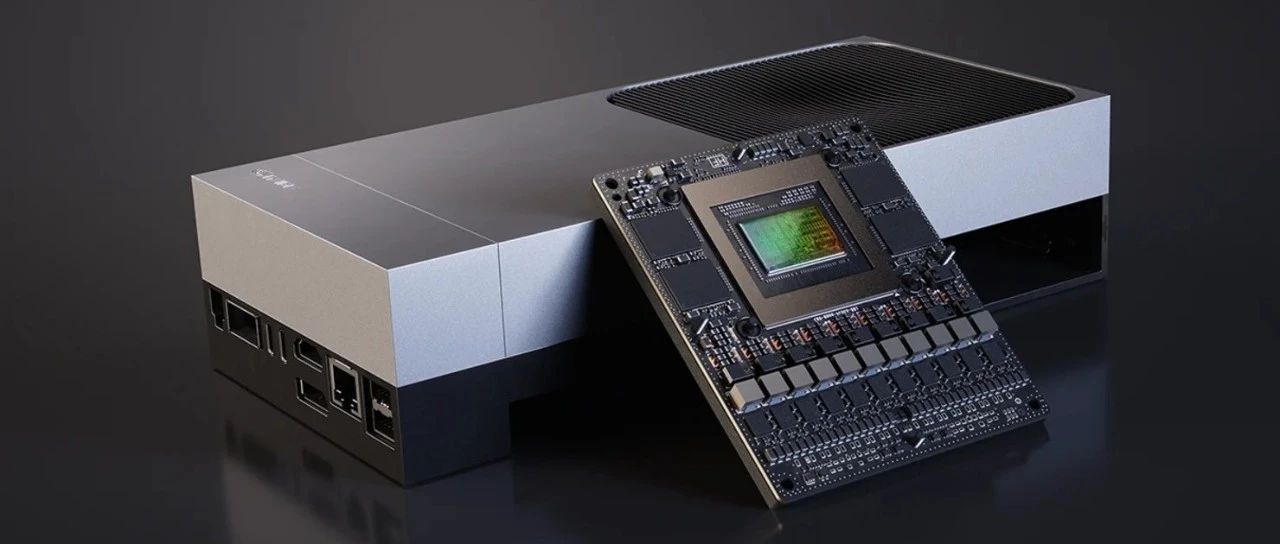
Core Viewpoint - Nvidia has launched its new robot-specific chip, Jetson Thor, which significantly enhances computing power compared to its predecessor, Jetson Orin, to support advanced humanoid robots and other forms of embodied intelligence [4][12]. Group 1: Product Features - Jetson Thor features a new Blackwell architecture GPU with AI computing capabilities up to 2070 FP4 TFLOPS, which is 7.5 times more powerful than the previous generation [4][8]. - The power consumption of Jetson Thor is 130W, with an energy efficiency improvement of 3.5 times compared to the previous model [4]. - Memory capacity has doubled to 128GB, and memory bandwidth is 273GB/s [4][8]. - The chip is designed for generative AI models and supports real-time operations with minimal reliance on cloud computing [8][12]. Group 2: Software and Ecosystem - Jetson Thor supports all major generative AI frameworks and inference models, enabling developers to conduct local experiments and run inferences efficiently [9][11]. - The product includes a developer kit priced at $3,499 and a module priced at $2,999 for bulk orders [12]. Group 3: Market Impact and Partnerships - Major robotics companies, including Yushu Technology and Galaxy General Robotics, have announced plans to adopt Jetson Thor for their products [14][15]. - Nvidia's strategy includes a focus on the trillion-dollar markets of robotics and autonomous vehicles, with a significant portion of its revenue coming from major tech companies [18][19].
清华辍学、斯坦福睡地板,华人小哥用AI社交挑战Meta,融资数千万美元
机器之心· 2025-08-26 04:11
Core Viewpoint - The article discusses the innovative AI-native instant messaging tool, Intent, developed by Brandon Chen, which aims to enhance social interactions by seamlessly integrating AI capabilities into communication [2][23]. Group 1: Company Overview - Brandon Chen, the founder and CEO of Intent Inc., has a background in biology and previously co-founded a gaming studio, Ottor Game, which raised approximately $1 million [22][24]. - Intent has secured tens of millions of dollars in funding since its inception in September 2022 [4]. Group 2: Product Features - Intent combines chat functionalities similar to WeChat with AI capabilities that automatically execute user intentions, such as merging photos and managing travel plans [21][23]. - The AI can capture user intent during conversations, allowing for tasks like photo editing and travel arrangements to be completed without switching applications [6][12][16]. - For example, the AI can merge photos shared in a chat and assist in booking transportation by recognizing addresses mentioned in the conversation [6][13][16]. Group 3: User Experience - Users can create shared shopping lists directly within the chat interface, enhancing collaborative purchasing experiences [16][19]. - The application aims to eliminate barriers in collaboration by transforming user intentions into actionable results seamlessly [23].

视频「缺陷」变安全优势:蚂蚁数科新突破,主动式视频验证系统RollingEvidence
机器之心· 2025-08-26 04:11
Core Viewpoint - Ant Group's AIoT technology team has developed an innovative active video verification system called RollingEvidence, which utilizes the rolling shutter effect of cameras to embed high-dimensional physical watermarks in videos, effectively countering deepfake and video tampering attacks [2][4][6]. Group 1: Innovation and Technology - RollingEvidence transforms the "defect" of CMOS cameras into a security advantage by injecting rolling stripe detection signals into each video frame, creating a "digital pulse" for real-time verification [4][6]. - The system employs a self-regressive encryption mechanism to ensure that the content is non-falsifiable and tampering is traceable, enhancing the accuracy and security of video verification compared to traditional passive recognition technologies [4][6]. - The system's architecture includes a specialized deep neural network that extracts stripe features and decodes probe information, allowing for precise identification of tampered frames [21][28]. Group 2: Performance and Application - RollingEvidence has been validated through theoretical analysis, prototype implementation, and extensive experiments, demonstrating its effectiveness in generating and verifying trustworthy video evidence [6][46]. - The system is applicable in critical scenarios such as notarization, identity verification, and judicial evidence collection, addressing the challenges posed by advanced AI video generation technologies [6][46]. - Experimental results indicate that RollingEvidence can accurately detect most tampering behaviors without misjudging normal videos, achieving high accuracy rates across various testing scenarios [38][40][41]. Group 3: Experimental Results - The system's tampering detection performance was evaluated through two sets of experiments, showing it can accurately identify frame insertion, deletion, and modification, as well as face swapping and lip-sync detection [37][38]. - In various scenes, the system achieved an accuracy rate of up to 99.84% with a false rejection rate (FRR) of 0.00% and a false acceptance rate (FAR) as low as 0.22% [38]. - The performance of the verification submodule was also assessed, demonstrating high precision in stripe extraction and excellent denoising effects, even under varying background and lighting conditions [44].

热议!DeepSeek V3.1惊现神秘「极」字Bug,模型故障了?
机器之心· 2025-08-26 04:11
Core Viewpoint - The article discusses a significant bug in DeepSeek's V3.1 model, where the character "极" is inexplicably inserted into outputs during various tasks, raising concerns within the community about data quality and model reliability [1][3][16]. Group 1: Model Release and Issues - DeepSeek released the V3.1-Base model, which was not the anticipated V4, and it has been available on web, app, and mini-program platforms [2]. - Users have reported that the model randomly replaces certain output tokens with "极," causing confusion and frustration [3][4]. - The issue has been observed across different platforms, including the official API and third-party implementations, with varying frequencies of occurrence [5][11]. Group 2: User Experiences and Observations - Users on platforms like Zhihu and Reddit have shared their experiences, noting that the "极" character appears unexpectedly in outputs, including code and exam papers [3][8][14]. - Some users speculate that the problem may stem from "data pollution," suggesting that the training data may not have been adequately cleaned [15][16]. - The bug has prompted discussions about the importance of data quality in AI model development, highlighting that even minor issues can lead to significant operational problems [16]. Group 3: Community Reactions and Speculations - The community has actively engaged in discussions about the potential causes of the bug, with various theories being proposed, including the possibility of token confusion during model training [12][14]. - Users have noted that the model also exhibits issues with mixing languages, further complicating its reliability [14]. - The incident serves as a reminder for AI developers about the critical role of data integrity in ensuring model performance and behavior [16].
ChatGPT到底学了多少「污言秽语」?清华团队首提大语言模型中文语料污染治理技术
机器之心· 2025-08-25 23:38
Core Viewpoint - The research highlights that the Chinese vocabulary of advanced ChatGPT models is contaminated with 46.6% polluted tokens, primarily related to pornography and gambling, which significantly affects the model's performance [3][6][41]. Group 1: Research Findings - The study identifies that the Chinese vocabulary of models like GPT-4o/o1/o3/4.5/4.1/o4-mini contains a high level of pollution, with specific examples of contaminated tokens including terms related to adult content and online gambling [3][6][12]. - A total of 1659 Chinese long tokens were analyzed, revealing that 773 tokens (46.6%) are polluted, with 219 tokens (13.2%) specifically related to adult content [13][14]. - The performance of ChatGPT models drops significantly when polluted tokens are input, with approximately 50% loss in interpretation and repetition tasks [17][18]. Group 2: Pollution Detection and Analysis - The research team developed a model to automatically detect polluted Chinese tokens, achieving a recognition accuracy of 97.3% [23]. - The study also proposes a pollution tracking scheme that estimates training data pollution based on vocabulary contamination, providing a lightweight solution for data governance [29][35]. - The analysis of open-source pre-training corpora revealed that polluted tokens cluster at the beginning and end of certain web pages, leading to misinterpretation by the models [19][21]. Group 3: Future Implications - The research raises questions about whether the presence of polluted data is entirely detrimental, suggesting that a moderate amount of harmful data might help in distinguishing harmful representations in models [37][40]. - The findings aim to provide a systematic approach for addressing the governance of large language model training data, potentially influencing future model training practices [41].