机器之心

Search documents
谷歌偷偷搞了个神秘模型Nano-Banana?实测:强到离谱,但有3大硬伤
机器之心· 2025-08-26 08:53
Core Viewpoint - The article discusses the emergence of a mysterious AI model named Nano-Banana, which has gained attention for its image generation and editing capabilities, leading to confusion with fake websites claiming to offer its services [1][24]. Group 1 - Nano-Banana was initially discovered on the LMArena platform but has not been officially attributed to any developer [3][4]. - Speculations suggest that Nano-Banana may be a research model from Google, supported by recent social media posts from Google AI personnel [5][7]. - The model excels in text editing, style fusion, and scene understanding, allowing users to upload images and input prompts for element integration [8][9]. Group 2 - Nano-Banana can accurately interpret complex text prompts, demonstrating its ability to manipulate images effectively [9][13]. - The model performs well in commercial scenarios such as product photography and advertising, although it is not without flaws, occasionally producing visual inconsistencies [15][20]. - Users currently have to rely on random experiences through LMArena, as there is no official API or website for Nano-Banana [22][23]. Group 3 - The article includes firsthand evaluations of Nano-Banana's capabilities, comparing its outputs with those from ChatGPT and highlighting its superior performance in generating detailed and contextually appropriate images [30][32]. - Users have experimented with various prompts, showcasing Nano-Banana's versatility in creating images that blend seamlessly with their environments [34][44]. - The integration of Nano-Banana with other tools like Google’s Veo3 is suggested to enhance video production workflows [47][61].



一天之内,Meta痛失两员大将,小扎钞能力失效?
机器之心· 2025-08-26 08:53
Core Viewpoint - Meta is experiencing significant talent attrition, particularly among top AI researchers, due to internal management issues and a lack of alignment with the company's vision and culture [1][9][39]. Group 1: Talent Departure - Two senior researchers, Rishabh Agarwal and Bert Maher, recently announced their departure from Meta, with Agarwal moving to an unspecified location and Maher joining Anthropic [3][24]. - Agarwal's exit highlights the argument that even high salaries cannot retain top talent, as he follows Zuckerberg's advice on taking risks in a rapidly changing world [14][39]. - Maher, who worked at Meta for 12 years, contributed to significant projects like PyTorch and HHVM, indicating the loss of valuable expertise [25][27]. Group 2: Internal Management Issues - Meta's internal management culture is cited as a reason for its low employee retention rate of 64%, compared to Anthropic's 80% [30][33]. - Previous complaints from former employees, including John Carmack and Tijmen Blankevoort, point to issues such as poor resource utilization, performance evaluation pressures, and internal competition [33][34]. - The lack of a strong CTO to balance the power of the CEO is seen as a potential risk for the company's future stability [11]. Group 3: Cultural Misalignment - Many top researchers are leaving Meta due to a misalignment with the company's focus on speed and profitability, which contrasts with their values of safety, independence, and long-term research [39][40]. - The absence of a compelling mission at Meta makes it difficult for some employees to justify staying, as exemplified by Tesla engineer Yun-Ta Tsai's decision to remain with his current employer for its meaningful goals [40][42]. - The perception that Meta's culture prioritizes financial gain over meaningful work is leading to a reluctance among potential recruits to join the company [39][42].


英伟达通用机器人芯片来了:AI算力提升7.5倍,宇树、银河通用已搭载
机器之心· 2025-08-26 04:11
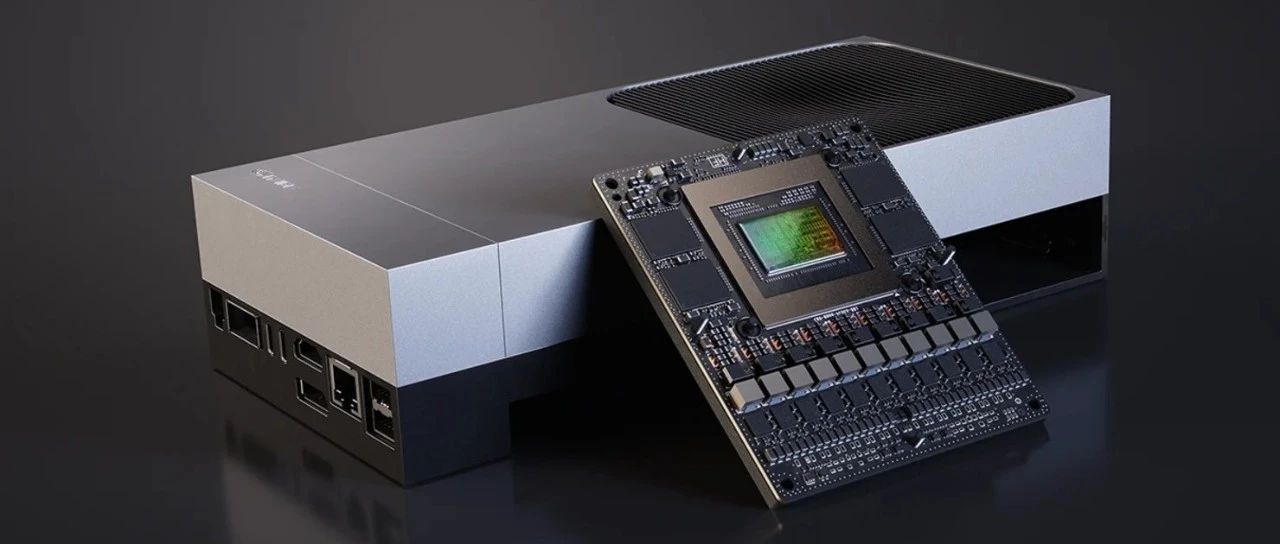
Core Viewpoint - Nvidia has launched its new robot-specific chip, Jetson Thor, which significantly enhances computing power compared to its predecessor, Jetson Orin, to support advanced humanoid robots and other forms of embodied intelligence [4][12]. Group 1: Product Features - Jetson Thor features a new Blackwell architecture GPU with AI computing capabilities up to 2070 FP4 TFLOPS, which is 7.5 times more powerful than the previous generation [4][8]. - The power consumption of Jetson Thor is 130W, with an energy efficiency improvement of 3.5 times compared to the previous model [4]. - Memory capacity has doubled to 128GB, and memory bandwidth is 273GB/s [4][8]. - The chip is designed for generative AI models and supports real-time operations with minimal reliance on cloud computing [8][12]. Group 2: Software and Ecosystem - Jetson Thor supports all major generative AI frameworks and inference models, enabling developers to conduct local experiments and run inferences efficiently [9][11]. - The product includes a developer kit priced at $3,499 and a module priced at $2,999 for bulk orders [12]. Group 3: Market Impact and Partnerships - Major robotics companies, including Yushu Technology and Galaxy General Robotics, have announced plans to adopt Jetson Thor for their products [14][15]. - Nvidia's strategy includes a focus on the trillion-dollar markets of robotics and autonomous vehicles, with a significant portion of its revenue coming from major tech companies [18][19].

清华辍学、斯坦福睡地板,华人小哥用AI社交挑战Meta,融资数千万美元
机器之心· 2025-08-26 04:11
Core Viewpoint - The article discusses the innovative AI-native instant messaging tool, Intent, developed by Brandon Chen, which aims to enhance social interactions by seamlessly integrating AI capabilities into communication [2][23]. Group 1: Company Overview - Brandon Chen, the founder and CEO of Intent Inc., has a background in biology and previously co-founded a gaming studio, Ottor Game, which raised approximately $1 million [22][24]. - Intent has secured tens of millions of dollars in funding since its inception in September 2022 [4]. Group 2: Product Features - Intent combines chat functionalities similar to WeChat with AI capabilities that automatically execute user intentions, such as merging photos and managing travel plans [21][23]. - The AI can capture user intent during conversations, allowing for tasks like photo editing and travel arrangements to be completed without switching applications [6][12][16]. - For example, the AI can merge photos shared in a chat and assist in booking transportation by recognizing addresses mentioned in the conversation [6][13][16]. Group 3: User Experience - Users can create shared shopping lists directly within the chat interface, enhancing collaborative purchasing experiences [16][19]. - The application aims to eliminate barriers in collaboration by transforming user intentions into actionable results seamlessly [23].

视频「缺陷」变安全优势:蚂蚁数科新突破,主动式视频验证系统RollingEvidence
机器之心· 2025-08-26 04:11
Core Viewpoint - Ant Group's AIoT technology team has developed an innovative active video verification system called RollingEvidence, which utilizes the rolling shutter effect of cameras to embed high-dimensional physical watermarks in videos, effectively countering deepfake and video tampering attacks [2][4][6]. Group 1: Innovation and Technology - RollingEvidence transforms the "defect" of CMOS cameras into a security advantage by injecting rolling stripe detection signals into each video frame, creating a "digital pulse" for real-time verification [4][6]. - The system employs a self-regressive encryption mechanism to ensure that the content is non-falsifiable and tampering is traceable, enhancing the accuracy and security of video verification compared to traditional passive recognition technologies [4][6]. - The system's architecture includes a specialized deep neural network that extracts stripe features and decodes probe information, allowing for precise identification of tampered frames [21][28]. Group 2: Performance and Application - RollingEvidence has been validated through theoretical analysis, prototype implementation, and extensive experiments, demonstrating its effectiveness in generating and verifying trustworthy video evidence [6][46]. - The system is applicable in critical scenarios such as notarization, identity verification, and judicial evidence collection, addressing the challenges posed by advanced AI video generation technologies [6][46]. - Experimental results indicate that RollingEvidence can accurately detect most tampering behaviors without misjudging normal videos, achieving high accuracy rates across various testing scenarios [38][40][41]. Group 3: Experimental Results - The system's tampering detection performance was evaluated through two sets of experiments, showing it can accurately identify frame insertion, deletion, and modification, as well as face swapping and lip-sync detection [37][38]. - In various scenes, the system achieved an accuracy rate of up to 99.84% with a false rejection rate (FRR) of 0.00% and a false acceptance rate (FAR) as low as 0.22% [38]. - The performance of the verification submodule was also assessed, demonstrating high precision in stripe extraction and excellent denoising effects, even under varying background and lighting conditions [44].

热议!DeepSeek V3.1惊现神秘「极」字Bug,模型故障了?
机器之心· 2025-08-26 04:11
Core Viewpoint - The article discusses a significant bug in DeepSeek's V3.1 model, where the character "极" is inexplicably inserted into outputs during various tasks, raising concerns within the community about data quality and model reliability [1][3][16]. Group 1: Model Release and Issues - DeepSeek released the V3.1-Base model, which was not the anticipated V4, and it has been available on web, app, and mini-program platforms [2]. - Users have reported that the model randomly replaces certain output tokens with "极," causing confusion and frustration [3][4]. - The issue has been observed across different platforms, including the official API and third-party implementations, with varying frequencies of occurrence [5][11]. Group 2: User Experiences and Observations - Users on platforms like Zhihu and Reddit have shared their experiences, noting that the "极" character appears unexpectedly in outputs, including code and exam papers [3][8][14]. - Some users speculate that the problem may stem from "data pollution," suggesting that the training data may not have been adequately cleaned [15][16]. - The bug has prompted discussions about the importance of data quality in AI model development, highlighting that even minor issues can lead to significant operational problems [16]. Group 3: Community Reactions and Speculations - The community has actively engaged in discussions about the potential causes of the bug, with various theories being proposed, including the possibility of token confusion during model training [12][14]. - Users have noted that the model also exhibits issues with mixing languages, further complicating its reliability [14]. - The incident serves as a reminder for AI developers about the critical role of data integrity in ensuring model performance and behavior [16].
ChatGPT到底学了多少「污言秽语」?清华团队首提大语言模型中文语料污染治理技术
机器之心· 2025-08-25 23:38
Core Viewpoint - The research highlights that the Chinese vocabulary of advanced ChatGPT models is contaminated with 46.6% polluted tokens, primarily related to pornography and gambling, which significantly affects the model's performance [3][6][41]. Group 1: Research Findings - The study identifies that the Chinese vocabulary of models like GPT-4o/o1/o3/4.5/4.1/o4-mini contains a high level of pollution, with specific examples of contaminated tokens including terms related to adult content and online gambling [3][6][12]. - A total of 1659 Chinese long tokens were analyzed, revealing that 773 tokens (46.6%) are polluted, with 219 tokens (13.2%) specifically related to adult content [13][14]. - The performance of ChatGPT models drops significantly when polluted tokens are input, with approximately 50% loss in interpretation and repetition tasks [17][18]. Group 2: Pollution Detection and Analysis - The research team developed a model to automatically detect polluted Chinese tokens, achieving a recognition accuracy of 97.3% [23]. - The study also proposes a pollution tracking scheme that estimates training data pollution based on vocabulary contamination, providing a lightweight solution for data governance [29][35]. - The analysis of open-source pre-training corpora revealed that polluted tokens cluster at the beginning and end of certain web pages, leading to misinterpretation by the models [19][21]. Group 3: Future Implications - The research raises questions about whether the presence of polluted data is entirely detrimental, suggesting that a moderate amount of harmful data might help in distinguishing harmful representations in models [37][40]. - The findings aim to provide a systematic approach for addressing the governance of large language model training data, potentially influencing future model training practices [41].

刚刚,马斯克将OpenAI和苹果告上法庭:指控ChatGPT垄断iPhone,自家Grok被打压
机器之心· 2025-08-25 23:38
Core Viewpoint - Musk's xAI has filed a lawsuit against OpenAI and Apple, accusing them of illegal monopolistic practices through the integration of ChatGPT into iPhones and the App Store's biased ranking system [1][4][12]. Group 1: Lawsuit Details - xAI claims that OpenAI and Apple have formed an agreement that stifles competition in the AI industry by embedding ChatGPT as the default chatbot on iPhones [4][8]. - The lawsuit alleges that despite Grok and X receiving high ratings, they are not featured in the App Store's "Must-Have Apps" section, which is dominated by ChatGPT [9][12]. - xAI argues that the partnership between Apple and OpenAI creates a "moat" for OpenAI, leveraging Apple's market dominance to gain unfair advantages [12]. Group 2: Market Positioning - Musk highlighted that Grok has received 1 million comments with a rating of 4.9, yet Apple refuses to rank it favorably in the App Store [2][5]. - In the latest App Store rankings, ChatGPT is positioned first, while xAI and X are ranked 31st and 36th, respectively [5]. - The lawsuit suggests that iPhone users have no incentive to download third-party AI applications due to Apple's preferential treatment of ChatGPT [8]. Group 3: Responses and Reactions - OpenAI's spokesperson dismissed the lawsuit as part of Musk's "harassment pattern," indicating a lack of merit in the claims [12]. - Musk previously accused Apple of manipulating App Store rankings to favor OpenAI, threatening legal action against Apple for its monopolistic behavior [12].


唯快不破:上海AI Lab 82页综述带你感受LLM高效架构的魅力
机器之心· 2025-08-25 09:10
Core Insights - The article discusses the advancements and challenges in large language models (LLMs), emphasizing their transformative impact on human-computer interaction and the need for efficient architectures to overcome high training and inference costs [2][3][8]. Group 1: LLM Architecture and Efficiency - The efficiency of LLMs is primarily attributed to the Transformer architecture, which, despite its breakthroughs, faces challenges due to its O(N^2) complexity in long sequence tasks [3][4]. - Recent innovations in Transformer architecture have emerged, but a comprehensive review summarizing these advancements has been lacking [4][5]. - A collaborative effort by Shanghai AI Lab and several institutions has resulted in a survey of over 440 papers, focusing on the latest progress in efficient LLM architectures [5][6]. Group 2: Categories of Efficient Architectures - The survey categorizes efficient LLM architectures into seven types, including linear sequence modeling, sparse sequence modeling, efficient full attention, sparse expert models, mixed model architectures, diffusion language models, and applications to other modalities [6][8]. - Linear sequence modeling aims to reduce attention training and inference complexity without incurring KV cache overhead [6][8]. - Sparse sequence modeling leverages the inherent sparsity of attention maps to accelerate computation [21][22]. Group 3: Innovations in Attention Mechanisms - Efficient full attention methods optimize memory access and KV storage while maintaining complete attention [22][23]. - Sparse expert models enhance model capacity without proportionally increasing computational costs through conditional activation of experts [27][28]. - Mixed architectures find a balance between linear/sparse attention and full attention, optimizing both efficiency and performance [35][36]. Group 4: Applications and Future Directions - Diffusion language models represent a novel approach by applying diffusion models from visual tasks to language generation, significantly improving generation speed [38][39]. - Efficient architectures are being applied across various modalities, including vision and audio, demonstrating their versatility and effectiveness [44][45]. - The overarching goal is to achieve substantial acceleration in AI development, akin to the phrase "Speed Always Wins," suggesting a focus on efficiency in training and deploying powerful models [45].

全球开源大模型,前十五名全是中国的
机器之心· 2025-08-25 09:10
Core Viewpoint - The article highlights the significant emergence of domestic open-source large language models (LLMs) in China, with all top-ranked models on the Design Arena leaderboard being Chinese [1][3]. Group 1: Overview of Design Arena - Design Arena is the largest crowdsourced AI-generated design benchmark platform, utilizing a user evaluation system based on Elo Rating, similar to chess scoring [2]. - The platform allows users to vote on which of two model-generated responses is better, creating a dynamic ranking system that reflects real user experiences [2]. Group 2: Rankings of Open-Source Models - The top 15 open-source models on Design Arena are all from China, with DeepSeek-R1-0528 ranked first, followed by Zhipu's GLM 4.5 and Alibaba's Qwen 3 Coder 480B [4][5]. - The ranking details show that DeepSeek has 5 models, Alibaba has 6 models, and Zhipu has 3 models in the top 15 [6][7]. Group 3: Recent Developments in Open-Source Models - Recently, domestic AI companies have been actively releasing new open-source LLMs, with 33 models launched by various firms including Alibaba and Tencent [7]. - A total of 19 leading open-source model laboratories in China have been identified, showcasing a diverse range of contributors to the open-source AI landscape [9]. Group 4: Impact on AI Research and Development - The rise of open-source models like DeepSeek and Qwen is shifting the focus of application companies towards model tuning and optimization, accelerating the deployment of AI technologies [10]. - The article suggests that the increasing prominence of Chinese AI models may reshape the global AI landscape, with a potential shift towards open-source as a standard in advanced model development [10].