机器之心

Search documents
拒稿警告,靠大模型「偷摸水论文」被堵死,ICLR最严新规来了
机器之心· 2025-08-27 08:36
Core Viewpoint - The article discusses the newly established policies regarding the use of large language models (LLMs) in academic research, particularly in the context of the ICLR conference, aiming to ensure academic integrity and mitigate risks associated with LLMs [2][4][14]. Group 1: ICLR Conference Policies - ICLR 2026 has introduced specific policies for the use of LLMs, which are based on the conference's ethical guidelines [2][4]. - The conference received 11,565 submissions in 2025, with an acceptance rate of 32.08% [2]. - The policies emphasize that any use of LLMs must be disclosed, and authors and reviewers are ultimately responsible for their contributions [6][7]. Group 2: Specific Policy Applications - Authors must disclose the use of LLMs in writing assistance, and they are responsible for all content, including any errors generated by the LLM [9]. - When LLMs are used for research ideas or data analysis, authors must verify the validity and accuracy of the contributions made by the LLM [9]. - Reviewers must also disclose their use of LLMs in writing reviews and are responsible for maintaining the confidentiality of submitted papers [11]. Group 3: Prohibited Practices - The article highlights the prohibition of "prompt injection," where authors manipulate the review process through hidden prompts, which is considered collusion and a serious academic misconduct [12]. - Violations of these policies can lead to severe consequences, including desk rejection of submissions [7]. Group 4: Broader Context - The article notes that ICLR is not alone in implementing such policies; other major conferences like NeurIPS and ICML have also established guidelines for LLM usage [13][15]. - The increasing reliance on LLMs raises concerns about academic integrity, including issues like false citations and plagiarism, prompting the need for clear guidelines [14].


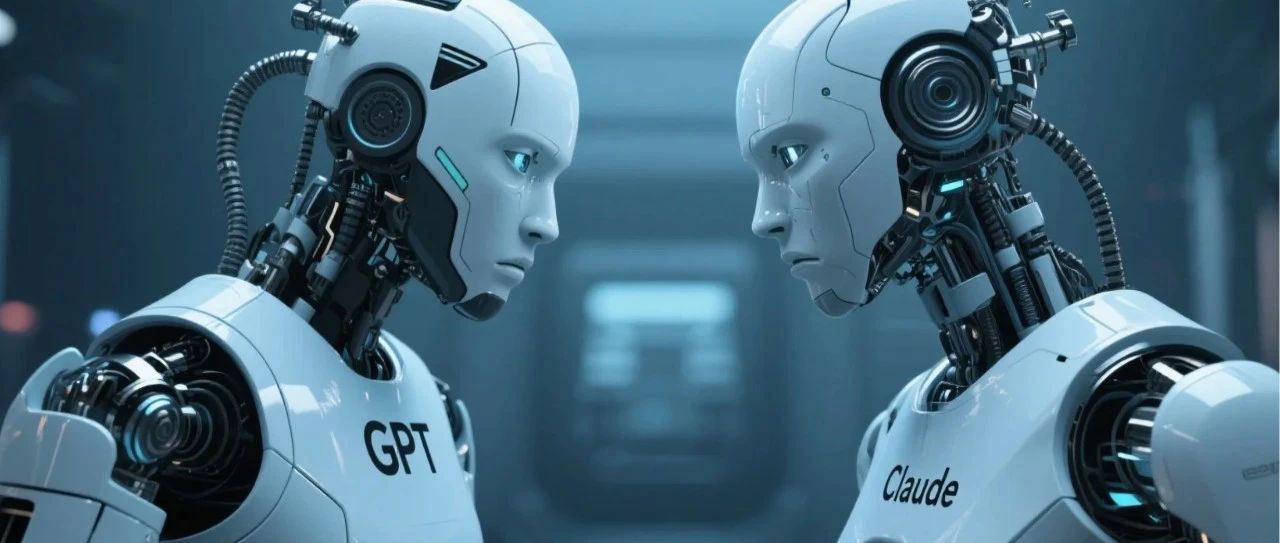
「开发者私下更喜欢用GPT-5写代码」,Claude还坐得稳编程王座吗?
机器之心· 2025-08-27 03:18
Core Viewpoint - The article discusses the competitive landscape between Anthropic's Claude and OpenAI's GPT-5 in the programming model space, highlighting a shift in user preference towards GPT-5 due to its superior performance in various programming tasks [1][3][8]. Summary by Sections Performance Comparison - Claude Opus 4.1 has shown significant improvements in programming tasks, particularly in multi-file code refactoring, as per the SWE-bench Verified tests [1]. - However, GPT-5 has gained popularity among users, with many reporting a preference for its capabilities over Claude, especially in handling complex programming tasks [3][8]. User Feedback - Users have noted that GPT-5 is perceived as the best programming model available, with one developer stating it is the most effective model they have used [5]. - Feedback indicates that GPT-5 excels in instruction following and large-scale refactoring tasks, outperforming Claude in these areas [6]. User Experience - Some users express a continued appreciation for Claude, particularly for its speed in code completion tasks, but acknowledge that GPT-5 is gaining their trust for more complex tasks [4]. - A software engineer highlighted that Claude tends to perform poorly outside of coding tasks, exhibiting high hallucination rates in other domains, while GPT-5 maintains lower hallucination rates and better search capabilities [9][10]. General Sentiment - There is a growing consensus among users that GPT-5's programming capabilities are superior, with many shifting their focus from Claude to GPT-5 for coding tasks [7][8]. - Users who initially doubted GPT-5 have reported positive experiences after using it, indicating a shift in perception regarding its effectiveness across various fields [11].
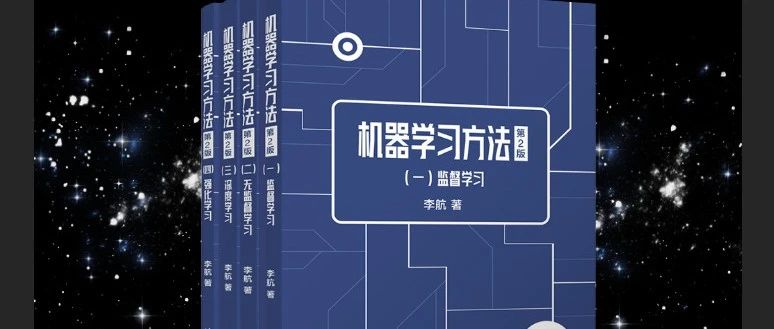
打磨7年,李航新书《机器学习方法(第2版)》发布,有了强化学习,赠书20本
机器之心· 2025-08-27 03:18
Core Viewpoint - The article discusses the release of the second edition of "Machine Learning Methods" by Li Hang, which expands on traditional machine learning to include deep learning and reinforcement learning, addressing the growing interest in these areas within the AI community [4][5][22]. Summary by Sections Overview of the Book - The new edition of "Machine Learning Methods" includes significant updates and additions, particularly in reinforcement learning, which has been gaining attention in AI applications [4][5]. - The book is structured into four main parts: supervised learning, unsupervised learning, deep learning, and reinforcement learning, providing a comprehensive framework for readers [5][22]. Supervised Learning - The first part covers key supervised learning methods such as linear regression, perceptron, support vector machines, maximum entropy models, logistic regression, boosting methods, hidden Markov models, and conditional random fields [7]. Unsupervised Learning - The second part focuses on unsupervised learning techniques, including clustering, singular value decomposition, principal component analysis, Markov chain Monte Carlo methods, EM algorithm, latent semantic analysis, and latent Dirichlet allocation [8]. Deep Learning - The third part introduces major deep learning methods, such as feedforward neural networks, convolutional neural networks, recurrent neural networks, Transformers, diffusion models, and generative adversarial networks [9]. Reinforcement Learning - The fourth part details reinforcement learning methods, including Markov decision processes, multi-armed bandit problems, proximal policy optimization, and deep Q networks [10]. - The book aims to provide a systematic introduction to reinforcement learning, which has been less covered in previous textbooks [4][10]. Learning Approach - Each chapter presents one or two machine learning methods, explaining models, strategies, and algorithms in a clear manner, supported by mathematical derivations to enhance understanding [12][19]. - The book is designed for university students and professionals, assuming a background in calculus, linear algebra, probability statistics, and computer science [22]. Author Background - Li Hang, the author, is a recognized expert in the field, with a background in natural language processing, information retrieval, machine learning, and data mining [24].
谷歌nano banana正式上线:单图成本不到3毛钱,比OpenAI便宜95%
机器之心· 2025-08-27 00:46
Core Insights - The article discusses the launch of Google's new image generation and editing model, named gemini-2.5-flash-image-preview, which boasts state-of-the-art capabilities and impressive speed [2][3]. Model Features - The model offers SOTA image generation and editing capabilities, with remarkable character consistency and fast processing speed [3]. - Users can access gemini-2.5-flash-image-preview for free through Google AI Studio and Gemini API, supporting a context of up to 32k [5]. - The model currently does not support image generation and editing for Chinese input, providing text responses instead [6]. - Pricing for the model is set at $0.3 for input text, $2.5 for output text, $0.3 for input images, and $30 for output images, with an estimated cost of $0.039 (approximately ¥0.28) per generated image [10][11]. Editing Capabilities - The model emphasizes maintaining character consistency across different images, allowing users to edit photos of themselves or familiar individuals without noticeable discrepancies [16]. - Users can upload a photo and specify modifications, enabling unique personal styles while keeping the essence of the original image [16]. - Various functionalities include changing outfits or scenes, merging multiple photos into a new scene, and applying styles from one image to another [17][21][23]. Performance and Rankings - Upon launch, gemini-2.5-flash-image-preview quickly rose to the top of the Artificial Analysis image editing leaderboard with an ELO score of 1212 [37]. - In the text-to-image and image editing categories, the model has become a champion in the LM Arena rankings, showcasing its competitive edge [40][42]. - The model demonstrates significant advantages in character consistency, creativity, and environmental rendering, while GPT-4o leads in stylization [42].


手把手教机器人:斯坦福大学提出RTR框架,让机械臂助力人形机器人真机训练
机器之心· 2025-08-27 00:46
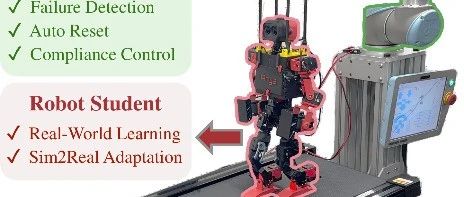
Core Viewpoint - The application of reinforcement learning (RL) algorithms in humanoid robot motion control is emerging as a key research area, with a focus on the "Sim-to-Real" paradigm, which aims to train general control models in diverse simulated environments to adapt to the real world [2][3]. Group 1: Current Challenges and Innovations - Existing methods primarily utilize domain randomization to train models in simulation, achieving impressive results in various tasks but often sacrificing performance in specific real-world environments [2][3]. - Recent efforts have begun to explore fine-tuning models with limited real-world data after simulation pre-training, with notable contributions from institutions like NVIDIA and CMU [3]. - The challenge of conducting RL training in real environments has been a significant barrier due to the instability of humanoid robots, which can lead to hardware damage from minor errors [3]. Group 2: Proposed Solution - RTR System - The RTR (Robot-Trains-Robot) system introduces a novel approach where a "teacher" robotic arm guides a "student" humanoid robot through online reinforcement learning, inspired by how human parents teach infants to walk [4][6]. - The teacher arm plays multiple roles: it provides safety support, assists in resetting the student after failures, collects valuable training data, and sets a curriculum to enhance learning efficiency [5][6]. Group 3: Hardware and Algorithm Design - The RTR system consists of a hardware setup with a teacher and student robot, where the teacher is a UR5 robotic arm equipped with force-torque sensors, and the student is based on the open-source ToddlerBot [8][9]. - The system's algorithm involves a three-stage Sim-to-Real process: training adaptable strategies in simulation, optimizing a general initial latent variable, and performing online fine-tuning in the real world with minimal data [9][11]. Group 4: Experimental Validation - Experiments demonstrated the effectiveness of the RTR system in tasks like walking and swinging, showing that the teacher's flexible assistance significantly improves learning outcomes compared to fixed supports [15][19]. - The proposed fine-tuning method using latent variables outperformed traditional methods in data efficiency and final performance, achieving a twofold speed increase in walking strategies with just 20 minutes of real-world training [15][18]. Group 5: Future Prospects - The RTR framework not only addresses the current challenges in deploying humanoid robots but also introduces a new paradigm of physical assistance for real-world learning, with potential applications in larger humanoid robots and other complex robotic systems [17].
将数据优势发挥到极致:「杭州六小龙」开源搭建空间智能的第一步
机器之心· 2025-08-26 09:38
Core Insights - The article emphasizes the importance of high-quality spatial data in the development of AI models, particularly in the context of three-dimensional (3D) space understanding [1][4][6] - It discusses the emergence of powerful models like SpatialLM and SpatialGen, which leverage vast amounts of spatial data to enhance AI capabilities in understanding and generating 3D environments [10][20] Group 1: Spatial Data and AI Models - The availability of extensive spatial data is crucial for training robust AI models, which can then improve tools and applications in various fields [2][4] - The article highlights the concept of a "data flywheel," where tools, data, and models continuously enhance each other, particularly in the realm of spatial intelligence [4][6] - The launch of SpatialLM 1.5 marks a significant advancement in spatial language understanding, allowing the model to interpret and generate structured spatial information [13][15] Group 2: Model Features and Capabilities - SpatialLM 1.5 can generate structured scene scripts from simple text descriptions, enabling users to create and manipulate 3D environments interactively [16][17] - SpatialGen focuses on generating multi-view images that maintain spatial consistency across different perspectives, addressing challenges in traditional 3D scene generation [20][21] - The models utilize extensive datasets, such as SpatialGen's dataset, which includes over 1 million images, to ensure high-quality outputs [22][28] Group 3: Open Source and Collaboration - The company aims to foster collaboration by open-sourcing its models and datasets, encouraging innovation and development within the AI community [32][36] - The leadership expresses a commitment to making spatial intelligence accessible, emphasizing that no single company can dominate this emerging market [33][36] - The open-source approach is expected to stimulate advancements in AI, providing opportunities for researchers and developers to contribute to the field [36]
FlashAttention-4震撼来袭,原生支持Blackwell GPU,英伟达的护城河更深了?
机器之心· 2025-08-26 09:38
Core Viewpoint - FlashAttention-4, introduced by Tri Dao at the Hot Chips 2025 conference, demonstrates significant performance improvements over previous versions and competitors, particularly in the context of NVIDIA's GPU architecture [1][2][10]. Summary by Sections FlashAttention-4 Introduction - FlashAttention-4 is reported to be up to 22% faster than NVIDIA's cuDNN library implementation on the Blackwell architecture [2]. - The new version incorporates two key algorithmic improvements: a new online softmax algorithm that skips 90% of output rescaling and a software simulation for better throughput [4][5]. Performance Enhancements - The kernel developed by Tri Dao's team outperforms NVIDIA's latest cuBLAS 13.0 library in specific computation scenarios, particularly when the reduction dimension K is small [7]. - FlashAttention-4 utilizes CUTLASS CuTe Python DSL, which is significantly more challenging to port to ROCm HIP compared to CUDA C++ [6]. Competitive Landscape - The development of FlashAttention is seen as a core advantage for NVIDIA, as Tri Dao and his team primarily use NVIDIA GPUs and have open-sourced much of their work for the developer community [10]. - There are implications for AMD, suggesting that financial incentives may be necessary to encourage Tri Dao's team to develop for ROCm [10]. Historical Context and Evolution - FlashAttention was first introduced in 2022, addressing the quadratic time and memory overhead of traditional attention mechanisms by reducing memory complexity from O(N²) to O(N) [12]. - Subsequent versions, including FlashAttention-2 and FlashAttention-3, have continued to enhance performance, with FlashAttention-2 achieving speed improvements of 2-4 times over its predecessor [21]. Technical Innovations - FlashAttention-3 achieved a speed increase of 1.5-2.0 times over FlashAttention-2, reaching up to 740 TFLOPS on H100 GPUs [23]. - FlashAttention-4 introduces native support for Blackwell GPUs, addressing previous compilation and performance issues [24]. Community Engagement - The GitHub repository for FlashAttention has garnered over 19,100 stars, indicating strong community interest and engagement [25].


英伟达再出手!新型混合架构模型问世,两大创新实现53.6倍吞吐提速
机器之心· 2025-08-26 09:38
Core Insights - The article introduces Jet-Nemotron, a new hybrid architecture language model developed by researchers from NVIDIA, which achieves state-of-the-art (SOTA) accuracy while significantly improving efficiency compared to existing full-attention models [2][8][9]. Model Performance - Jet-Nemotron-2B outperforms several leading open-source full-attention models, including Qwen3, Qwen2.5, Gemma3, and Llama3.2, while achieving a throughput acceleration of up to 53.6 times on H100 GPUs with a context length of 256K and maximum batch size [2][9]. - In benchmark tests such as MMLU and MMLU-Pro, Jet-Nemotron's accuracy surpasses that of advanced MoE full-attention models, despite those models having larger parameter sizes [2][5]. Innovations and Techniques - Jet-Nemotron is built on two core innovations: Post Neural Architecture Search (PostNAS) and JetBlock, a new linear attention module that significantly enhances performance compared to previous designs like Mamba2 [6][21]. - PostNAS allows for efficient architecture exploration and adaptation on pre-trained Transformer models, reducing the cost and risk associated with developing new language model architectures [12][16]. Efficiency and Accuracy - The architecture of Jet-Nemotron enables immediate improvements in efficiency and accuracy, leading to better service quality and reduced operational costs [17]. - The hardware-aware search conducted by PostNAS identifies architectures that maintain similar throughput while achieving higher accuracy with more parameters [18]. Comparative Results - Jet-Nemotron-2B and Jet-Nemotron-4B demonstrate competitive accuracy against leading efficient language models, with Jet-Nemotron-4B being 21 times faster and Jet-Nemotron-2B being 47 times faster than Qwen3-1.7B-Base [23][24].
谷歌偷偷搞了个神秘模型Nano-Banana?实测:强到离谱,但有3大硬伤
机器之心· 2025-08-26 08:53
Core Viewpoint - The article discusses the emergence of a mysterious AI model named Nano-Banana, which has gained attention for its image generation and editing capabilities, leading to confusion with fake websites claiming to offer its services [1][24]. Group 1 - Nano-Banana was initially discovered on the LMArena platform but has not been officially attributed to any developer [3][4]. - Speculations suggest that Nano-Banana may be a research model from Google, supported by recent social media posts from Google AI personnel [5][7]. - The model excels in text editing, style fusion, and scene understanding, allowing users to upload images and input prompts for element integration [8][9]. Group 2 - Nano-Banana can accurately interpret complex text prompts, demonstrating its ability to manipulate images effectively [9][13]. - The model performs well in commercial scenarios such as product photography and advertising, although it is not without flaws, occasionally producing visual inconsistencies [15][20]. - Users currently have to rely on random experiences through LMArena, as there is no official API or website for Nano-Banana [22][23]. Group 3 - The article includes firsthand evaluations of Nano-Banana's capabilities, comparing its outputs with those from ChatGPT and highlighting its superior performance in generating detailed and contextually appropriate images [30][32]. - Users have experimented with various prompts, showcasing Nano-Banana's versatility in creating images that blend seamlessly with their environments [34][44]. - The integration of Nano-Banana with other tools like Google’s Veo3 is suggested to enhance video production workflows [47][61].

一天之内,Meta痛失两员大将,小扎钞能力失效?
机器之心· 2025-08-26 08:53
Core Viewpoint - Meta is experiencing significant talent attrition, particularly among top AI researchers, due to internal management issues and a lack of alignment with the company's vision and culture [1][9][39]. Group 1: Talent Departure - Two senior researchers, Rishabh Agarwal and Bert Maher, recently announced their departure from Meta, with Agarwal moving to an unspecified location and Maher joining Anthropic [3][24]. - Agarwal's exit highlights the argument that even high salaries cannot retain top talent, as he follows Zuckerberg's advice on taking risks in a rapidly changing world [14][39]. - Maher, who worked at Meta for 12 years, contributed to significant projects like PyTorch and HHVM, indicating the loss of valuable expertise [25][27]. Group 2: Internal Management Issues - Meta's internal management culture is cited as a reason for its low employee retention rate of 64%, compared to Anthropic's 80% [30][33]. - Previous complaints from former employees, including John Carmack and Tijmen Blankevoort, point to issues such as poor resource utilization, performance evaluation pressures, and internal competition [33][34]. - The lack of a strong CTO to balance the power of the CEO is seen as a potential risk for the company's future stability [11]. Group 3: Cultural Misalignment - Many top researchers are leaving Meta due to a misalignment with the company's focus on speed and profitability, which contrasts with their values of safety, independence, and long-term research [39][40]. - The absence of a compelling mission at Meta makes it difficult for some employees to justify staying, as exemplified by Tesla engineer Yun-Ta Tsai's decision to remain with his current employer for its meaningful goals [40][42]. - The perception that Meta's culture prioritizes financial gain over meaningful work is leading to a reluctance among potential recruits to join the company [39][42].