锦秋集

Search documents
ARR 140亿美元,新融300亿美元,Anthropic CEO说AI行业2030年将是万亿美元生意 | Jinqiu Select
锦秋集· 2026-02-14 09:08
Core Insights - Anthropic recently completed a $30 billion Series G funding round, achieving a valuation of $380 billion, marking the second-largest single funding round in venture capital history, with an annual revenue of $14 billion [2] - The CEO of Anthropic, Dario Amodei, predicts that the AI industry will likely reach a trillion-dollar revenue level by 2030, driven by technological and diffusion indices [3][17] - Amodei's aggressive forecast suggests that within 1 to 3 years, AI systems will reach or exceed the capabilities of Nobel Prize winners in various fields [5] Company Strategy and Growth - Anthropic's revenue is projected to grow approximately tenfold each year, from nearly zero to $1 billion in 2023, $10 billion in 2024, and around $90-100 billion in 2025, with significant increases already noted in January 2025 [14][48] - The company has adopted an aggressive yet calculated investment strategy in computing resources, emphasizing the importance of early procurement to avoid potential bankruptcy due to demand forecasting errors [15] - The internal perception at Anthropic indicates that AI tools have significantly enhanced productivity, contributing to an overall acceleration of 15-20% in operations [12] Industry Dynamics and Predictions - The AI industry's competitive landscape is expected to resemble that of cloud computing, characterized by a few dominant players and high entry barriers, ensuring that profits will not be driven to zero [16] - Amodei believes that while AI diffusion into the economy is rapid, it will not happen instantaneously due to factors like corporate procurement processes and compliance reviews [13] - The anticipated "genius nation in data centers" is expected to emerge within 1 to 3 years, fundamentally transforming various professional fields [8][41] Technological Insights - The scaling laws for pre-training and reinforcement learning (RL) remain effective, supporting the hypothesis that large computational blocks are essential for AI development [9] - Continuous learning is not deemed necessary for models, as pre-training and RL generalization, combined with longer context windows, are likely sufficient for performance [10] - The spectrum of coding capabilities ranges from AI writing 90% of code to potentially replacing software engineering entirely, though full replacement is still some distance away [11] Safety and Ethical Considerations - Amodei advocates for transparency in AI safety standards, suggesting that regulations should evolve as risks are validated, rather than imposing blanket bans [21][22] - The potential for AI to dissolve authoritarian structures is viewed optimistically, akin to the early expectations surrounding social media [23] - The importance of building data centers in developing countries is emphasized to ensure they do not fall behind in the AI-driven economy [24] Cultural and Operational Insights - Maintaining company culture is a priority for Anthropic, with regular all-hands meetings and open communication to foster cohesion among employees [27] - Decision-making speed is highlighted as critical, with the potential for significant historical decisions to be made in brief moments [28]


锦秋的年度书单推荐,被我们用Codex做成了一场读书实验|锦秋AI实验室
锦秋集· 2026-02-13 14:50
Core Viewpoint - The article emphasizes that while AI can summarize books quickly, it cannot replace the personal insights and emotional connections gained through reading, which expand one's thinking boundaries and perspectives [2][3][4]. Group 1: The Role of AI in Reading - AI can enhance the reading experience by connecting fragmented thoughts and insights into a shared network, transforming personal reflections into collective "intellectual assets" [6]. - The article proposes an AI experiment to integrate reading with AI, aiming to make the slow process of reading more engaging and actionable [5][6]. Group 2: Reading Recommendations and Context - The "Reading-compass" skill is designed to recommend books based on the reader's emotional state and context, showcasing how AI can personalize reading experiences [7]. - Specific book recommendations are provided for various personal dilemmas, illustrating how literature can offer insights into real-life situations [8][12][14][17][20]. Group 3: Concept Curation and Decision-Making - The article discusses the importance of defining problems correctly in decision-making, suggesting that high-quality judgments come from comprehensive understanding rather than emotional responses [36][40]. - It highlights that true leadership involves aligning team goals and maintaining a consistent direction, rather than merely exerting control [43][44]. Group 4: Sustainable Growth and Personal Development - Sustainable growth is framed as a series of small, repeatable actions rather than sporadic bursts of effort, emphasizing the value of daily choices over grand plans [45][46]. - The article concludes that the ultimate goal of reading is to develop a personal operating system that allows for quick retrieval and application of knowledge [47].

OpenClaw 启示录:Agent 的扩散速度取决于入口与社区 | Jinqiu Select
锦秋集· 2026-02-12 12:25
Core Insights - OpenClaw has gained significant traction since its launch in early 2026, achieving high visibility in the global developer community, including over 180,000 stars on GitHub, and leading to the emergence of social experiments like Moltbook, showcasing a new trend in interactive AI agents [3][15] - The creator, Peter Steinberger, emphasizes that the success of OpenClaw is not solely due to technology but rather its community engagement and low entry barriers, allowing users to modify the software easily [6][9] - The project has sparked discussions about the future of AI agents, the redefinition of traditional applications, and the evolution of human-agent interactions, which many entrepreneurs have yet to fully grasp [5][6] Project Origin - The inception of OpenClaw began with Peter's personal need for an AI assistant in April 2024, leading to a series of early experiments that culminated in the project's creation due to frustration over its absence [9][10] - The first working prototype was developed in just one hour, demonstrating the core functionality of interacting with a computer through a chat application [11][12] - The project experienced viral growth after an unexpected feature emerged, showcasing the agent's ability to autonomously handle tasks without prior instruction [12][13] Technical Architecture - OpenClaw's architecture includes several sophisticated components, such as a chat client gateway for decentralized access, a core decision engine, and a skills system for functionality expansion [16][17] - The agent's self-awareness allows it to read and modify its own source code, which is a significant advancement in software engineering [17][18] - The project has faced challenges related to security and brand protection, particularly after its rapid rise in popularity, highlighting the need for integrated security measures [6][27] Community and Social Impact - MoltBook, a social network for AI agents, has emerged as a phenomenon, where agents interact in a Reddit-like environment, leading to discussions that sometimes cause public concern [27][28] - The term "AI psychosis" was coined by Peter to describe the mix of genuine concern and sensationalism surrounding AI developments, reflecting societal fears about AI's role in the digital age [28][29] - OpenClaw represents a balance between freedom and responsibility, as users gain control over their data while also being accountable for its security [30][31] Business Model and Future Outlook - Despite the project's popularity, Peter has chosen to reject significant funding offers, prioritizing the open-source ethos and community engagement over commercial pressures [32][33] - The current financial status shows monthly revenues between $10,000 and $20,000, with ongoing discussions for partnerships with major tech labs, provided the project remains open-source [33][34] - Peter envisions a future where traditional applications may be replaced by AI agents, fundamentally altering the app market landscape [39][40]

锦秋基金领投AI潮玩品牌奇妙拉比数千万元天使轮融资|Jinqiu Spotlight
锦秋集· 2026-02-10 10:05
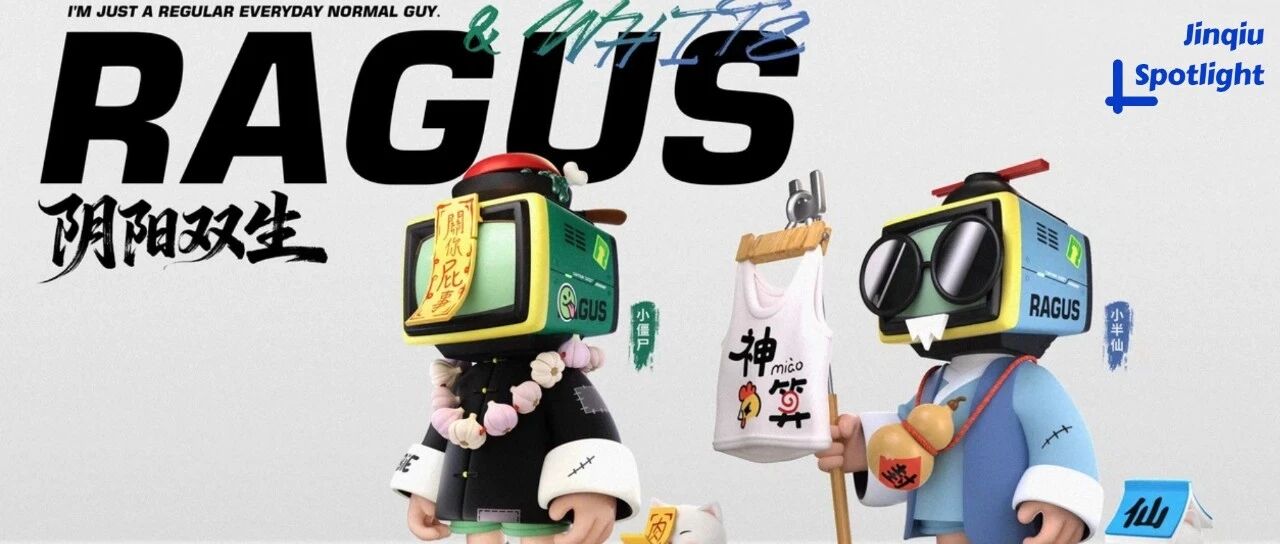
Core Viewpoint - The article highlights the emergence and growth of the AI toy brand Qimiao Labi, emphasizing its innovative approach to integrating AI technology with collectible toys, thereby creating a new category known as "AI潮玩" (AI Trendy Toys) [4][5][7]. Financing and Investment - On February 4, Qimiao Labi announced the completion of its angel round financing, raising several tens of millions of RMB, led by Jinqiu Fund, with Shoucheng Holdings and Canglan Capital participating [4][5][15]. - The successful financing is seen as a strong endorsement of the brand's position in the AI toy industry and will fund content ecosystem development and SKU matrix expansion [16]. Product Development and Innovation - Qimiao Labi's core IP, RAGUS, is designed to integrate deeply with AI and robotics, allowing for a diverse IP universe that differentiates it from traditional toys [4][7]. - The newly launched "Yin Yang Duality" series is based on the RAGUS IP and showcases the brand's commitment to evolving character narratives within a multi-universe setting [10][11]. Market Performance - Since its inception, Qimiao Labi has demonstrated strong market performance, with its RAGUS product achieving high sales and popularity on platforms like Xiaohongshu, even causing pre-sale systems to crash due to high traffic [9]. - The product has consistently ranked among the top sellers in various retail spaces, indicating a strong acceptance of the AI toy category in the market [9]. User Engagement and Experience - The brand emphasizes user interaction and emotional connection through its products, which are designed to evolve over time, enhancing the user experience [7][11]. - The "Yin Yang Duality" series introduces new gameplay mechanics, such as a magnetic system for interchangeable accessories, which aims to increase the long-term playability of the products [13]. Future Outlook - Qimiao Labi plans to continue expanding its product offerings and content ecosystem, aiming to solidify its leadership position in the AI toy market and transition from a niche category to a mainstream consumer choice [16].
沈洽金的创业往事:12年漫漫AI路,为“99%的普通人”造梦|「锦供参考」Vol.03
锦秋集· 2026-02-09 10:41
Core Viewpoint - The article discusses the journey of Shen Qiajin, a serial entrepreneur in the AI space, highlighting his transition from traditional business to creating a community-driven platform that empowers ordinary users to express themselves through AI technology [4][5]. Group 1: Shen Qiajin's Entrepreneurial Journey - Shen Qiajin has been involved in AI for 12 years, transitioning from "doing business for profit" to seeking deeper connections with users [2][3]. - His third startup, "Zao Meng Ci Yuan," aims to create a space for the 99% of ordinary people who lack representation on mainstream social media platforms [4][5]. - The shift in AI technology from "lab myths" to practical applications has influenced his approach to entrepreneurship, focusing on user empathy and community engagement [3][4]. Group 2: AI Technology and User Engagement - The emergence of AI 2.0, characterized by advancements like Diffusion models and ChatGPT, has fundamentally changed user interactions with technology [11][26]. - Shen emphasizes the importance of translating advanced AI capabilities into user-friendly experiences, rather than overestimating AI's potential [15][19]. - The platform encourages creators to develop native character IPs, fostering a community where users can engage and co-create content [27][28]. Group 3: Community and Content Creation - "Zao Meng Ci Yuan" is defined as an AI-driven content community, focusing on character IPs and rich content production [27][28]. - The platform aims to facilitate social interactions among users through AI, evolving into a "human-AI-human" social network [29][30]. - The community's success relies on high-quality user-generated content (UGC) and the creation of engaging topics that resonate with the younger generation [35][36]. Group 4: Organizational Management and AI-native Culture - The article discusses the evolution of AI-native organizations, emphasizing the need for a collaborative environment that reduces friction in workflows [47][48]. - High-agency individuals, who are proactive and resourceful, are essential for the success of AI-native companies [52][53]. - The company culture is built on principles of authenticity, effectiveness, resilience, and excellence, ensuring alignment among team members [57][58].

AI 漫剧:从野蛮生长到多模态加速,创业公司有望跑出亿级年利润 | 锦秋小饭桌
锦秋集· 2026-02-06 11:16
Core Insights - The article discusses the rapid growth and transformation of the AI comic drama industry, highlighting the success of Jiangyou Culture as a leading player in this space, with significant revenue and user engagement metrics [1][3][4]. Group 1: Industry Growth and Market Dynamics - The AI comic drama market has seen explosive growth, with Douyin's daily consumption reaching 35 million, up from zero a year prior, indicating a significant shift in content consumption patterns [4][10]. - Jiangyou Culture has rapidly expanded its team from 50 to 1200 people and aims to achieve 1 billion in revenue with 200-300 million in profit this year [3][9]. - The overall market for AI comic dramas is projected to reach 33 billion in 2026, driven by a surge in demand for high-visual-impact, fast-paced content [11]. Group 2: Cost Reduction and Production Efficiency - Traditional dynamic animation costs between 3000 to 10,000 yuan per minute, while AI comic dramas have reduced this to approximately 1000 yuan per minute, with aspirations to lower it further to 500 yuan [12][14]. - The production workflow has been streamlined, allowing for rapid content generation with minimal human intervention, significantly reducing collaboration costs and time [21][22]. - A skilled "抽卡师" (card drawing artist) can produce usable frames at a rate significantly faster than traditional animators, enhancing overall production efficiency [20]. Group 3: Technological Advancements - Key technological breakthroughs in video generation models have led to improved quality and reduced costs, enabling the production of high-quality content at a fraction of previous costs [16][18]. - The industry has adopted a batch generation and manual selection approach to address the variability in AI-generated content quality, enhancing the reliability of the output [19]. Group 4: Content Expansion and New Opportunities - AI technology allows for the creation of previously unfeasible genres, such as fantasy and sci-fi, which require extensive special effects that were cost-prohibitive in traditional filmmaking [25][26]. - The ability to produce diverse content types has opened up new market opportunities, allowing for the exploration of a wider range of narratives and themes [24][28]. Group 5: Future Trends and Strategic Directions - The article suggests that the future of content production will involve a combination of technology and intellectual property (IP) strategies, with a focus on both short-term technological advancements and long-term IP development [40][42]. - The potential for AI-generated content to penetrate international markets is highlighted, with the possibility of creating localized versions of stories at significantly lower costs [48][50]. - The overall landscape of the film and content industry is expected to undergo a revolutionary change, with AI enabling personalized content experiences and expanding market size dramatically [51][60].

OpenAI Codex App启示录:当代码可以被白领并行生成,软件迎来“通胀时代”
锦秋集· 2026-02-05 15:01
Core Insights - OpenAI's Codex App represents a significant shift in software development, enabling both developers and non-technical users to create and manage AI agents, marking the transition from linear to parallel development [2][3] - The introduction of Skills functionality allows non-technical users to generate tools, indicating a new era of software supply explosion and redefined value [3] Group 1: Paradigm Shift in Software Development - The development methodology is changing from serial to parallel, breaking the constraints of "man-days" and potentially increasing efficiency by 30%-50% or more [5] - Software is evolving from a "product" to a "service" or "instant response," where code can be generated on demand based on user needs [6] - The scarcity of software is diminishing, leading to a dilution of individual software value, akin to inflation in currency [7][8] Group 2: New Market Dynamics - The SaaS subscription model for SMBs may be challenged as on-demand generation of software becomes more prevalent [12] - Skills represent a low-cost, customizable alternative to traditional SaaS products, potentially disrupting the lower end of the SaaS market [13][16] - The value of software is shifting from functional capabilities to data, relationships, and network effects, as functionalities can be easily replicated [17] Group 3: Changing Roles and Skills - The role of programmers is evolving from code writing to AI collaboration, requiring new skills in AI utilization and output evaluation [23][24] - The demand for code review may become a bottleneck as AI-generated code proliferates, necessitating new quality control processes [28] - The educational focus for programmers may shift from coding to designing reusable skills and understanding business processes [27] Group 4: New Opportunities and Challenges - The emergence of a "Skill market" could create new platforms for sharing and monetizing skills, similar to an App Store [38] - The competitive landscape is shifting as model providers like OpenAI move into application layers, posing threats to intermediate tool companies [43][44] - The geographic arbitrage logic in software development is changing from labor cost to AI efficiency, impacting outsourcing dynamics [37] Group 5: Future Considerations - The value of data and unique insights will become more critical as code generation costs approach zero, with private, real-time, and relational data becoming increasingly valuable [53][54] - The software industry is at the beginning of a transformative phase, comparable to historical shifts brought by the printing press and the internet [55][56]

超越 Chatbot:Long-horizon Agent 如何重新定义 AI 产品形态|Jinqiu Select
锦秋集· 2026-02-05 11:40
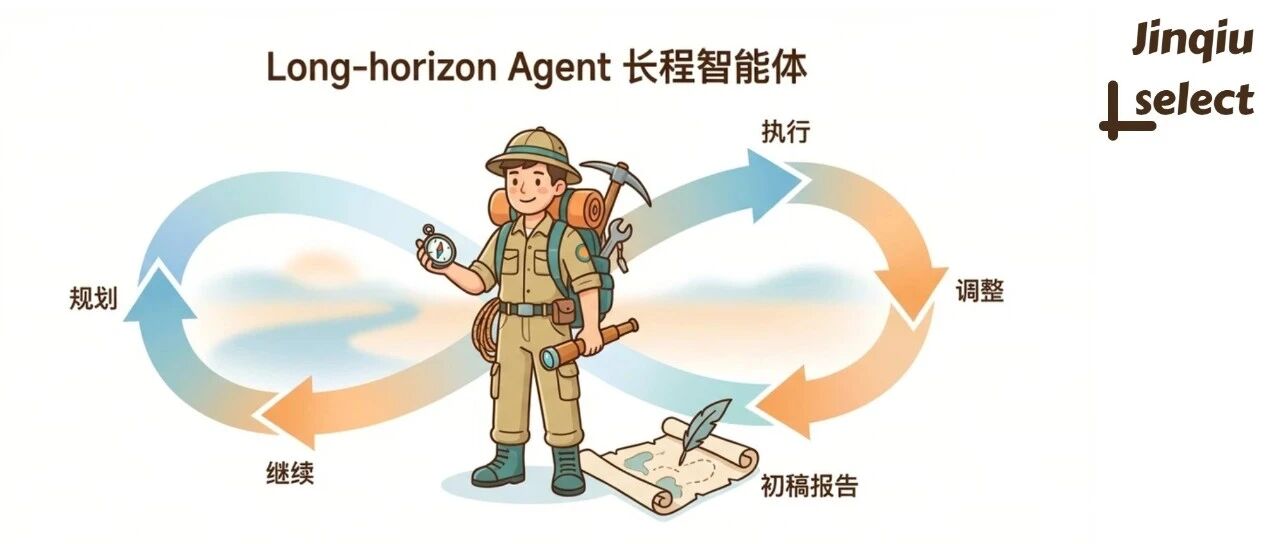
「Jinqiu Select」 跨越语言与时差,传递科技圈最值得被听到的声音。 < Overview > Harrison Chase 作为 LangChain 的联合创始人 兼 CEO,是 AI Agent(AI 智能体)基础设施领域最具影响力的工程实践者之一。 自 2022 年开源 LangChain 以来,他 亲历了从早期 GPT-3.5 的简单链式调用,到如今 Claude Code、Deep Research 等长程 Agent 爆发的完整技术周期。 Chatbot 已经不适合 作为新一代 AI 产品的主流形态了。 这不是模型能力的问题,而是产品形态的问题。 Chatbot 的本质是"即时响应",追求的是低延迟和高流畅度。 但真正有价值的一些日常工作从来不是这样运转的。一份优质的研究报告需要反复检索、交叉验证、结构化整理;一个可靠的代码 PR 需要理解上下文、规划方 案、测试验证、处理边界情况。 这些任务的共同特点是:它们需要时间,需要多步骤的自主决策,需要在过程中不断调整策略。换句话说, 它们需要的不是一个"即时响应者",而是一个"长程执 行者"。 这正是 Long-horizon Agent 崛 ...
锦秋被投生数科技完成超过6亿元人民币A+轮融资|Jinqiu Spotlight
锦秋集· 2026-02-05 04:33
Core Insights - Jinqiu Fund's portfolio company, Shengshu Technology, has completed over 600 million RMB in A+ round financing, indicating strong investor confidence and growth potential in the AI content generation sector [2][6] - Shengshu Technology, an early-stage investment by Jinqiu Fund, is recognized for its innovative approach to multi-modal AI, particularly with its "Reference to Video" concept, which aims to redefine content creation paradigms [3][4] Financing and Investment - The A+ round financing was led by Zhongguancun Science City and Xinglian Capital, with strategic investments from listed companies such as Wanxing Technology and Vision China, alongside existing investors increasing their stakes [6] - Shengshu Technology's early investment by Jinqiu Fund positions it favorably for future growth and market leadership in AI-driven content solutions [3] Technological Advancements - Shengshu Technology is a pioneer in multi-modal generation algorithms, having introduced the U-ViT architecture ahead of competitors like OpenAI [7] - The Vidu model, launched in 2024, has achieved significant milestones, including being the first to address multi-subject consistency in commercial video needs and maintaining global leadership in key performance metrics [7][9] - The latest Vidu Q3 model is recognized for its rapid generation speed, outperforming competitors like OpenAI's Sora 2 by ten times, and is now a preferred choice for content creators globally [8][9] Market Position and Applications - Vidu has seen over tenfold growth in users and revenue in 2025, establishing a comprehensive application matrix that empowers content creators and enterprises across more than 200 countries [9] - The model is widely adopted in various industries, including film, internet, advertising, and gaming, with partnerships involving major companies like Sony Pictures, Tencent Animation, and Alibaba [10] - Shengshu Technology's commitment to innovation positions it to redefine content production processes and enhance user experiences in the global content industry [10]

为什么这一代头部 AI 公司的 ARR 增长比我们想象的更快?|Jinqiu Spotlight
锦秋集· 2026-02-04 14:11
Core Insights - The article discusses the rapid growth of AI companies' Annual Recurring Revenue (ARR) and identifies three underestimated variables contributing to this phenomenon [4][12][32] Group 1: Investment Strategy and Market Position - Jinqiu Fund is an AI-native investment institution, typically investing between $1 million to $25 million in early-stage companies [2][3] - The fund aims to support founders with deep insights and strong execution capabilities, while also leveraging its global investment network [3][4] - Jinqiu has invested in approximately 70 companies, with nearly half being AI application companies, indicating a strong focus on the AI sector [44] Group 2: Underestimated Variables in AI Growth - The first underestimated variable is the true demand and ceiling for AI, which has expanded beyond traditional IT budgets into labor budgets, significantly lowering labor costs [18][22][26] - The second variable is the speed of technological iteration and the growth slope of AI products, with advancements leading to rapid increases in efficiency and capability [32][47] - The third variable is the leverage efficiency of social media, which has transformed user acquisition and product awareness, allowing for faster growth in AI product adoption [66][69] Group 3: Historical Context and Future Implications - Historical shifts in labor sources have often led to GDP surges, and the introduction of AI as a new labor source is expected to have a similar impact [24][30] - The article emphasizes that the service industry is likely to expand significantly as AI capabilities increase, with the potential to create new consumption scenarios [30][41] - The cost of AI-driven services is expected to decrease dramatically, leading to a vast expansion of market opportunities [31][56] Group 4: Examples of AI Impact - AI tools are transforming traditional tasks, such as coding and content creation, making them more efficient and accessible [58][63] - The article highlights the rapid evolution of AI applications, where a small team can achieve what previously required large teams, thus altering the cost structure of software development [60][62] - The potential for AI to operate continuously, breaking the limitations of human work hours, is seen as a significant factor in expanding service industry capabilities [40][41]