锦秋集

Search documents
锦秋基金被投企业星尘智能完成数亿元A++轮融资|Jinqiu Spotlight
锦秋集· 2025-11-18 01:41
Core Insights - The article highlights the successful A++ round financing of Astribot, led by Guoke Investment and Ant Group, with continued support from existing investor Jinqiu Fund, indicating strong investor confidence in the company's growth potential [2][3]. Financing and Investment - Astribot has completed multiple rounds of financing within a year, including A and A+ rounds, with significant backing from Jinqiu Fund and Ant Group [2]. - The recent financing will focus on building a talent pipeline, preparing for large-scale manufacturing, and enhancing industrial capabilities [3]. Technology and Product Development - Astribot is recognized as the first company globally to mass-produce rope-driven AI robots, which feature a unique design that mimics human tendon movement, providing advantages in flexibility and safety [5][13]. - The company has developed a comprehensive platform integrating body, remote operation, and modeling, showcasing its advancements at the IROS conference [7]. Market Applications and Collaborations - Astribot has secured thousands of orders across various high-value sectors, including research, commercial services, and industrial logistics [8]. - The company has established strategic partnerships with leading firms like Jinma Leisure and major tech companies, facilitating the deployment of its robots in diverse scenarios [9]. Vision and Future Outlook - The CEO of Astribot emphasizes the importance of collaborative development between AI and robotics, aiming for the practical application of AI robots in real-world settings [11]. - Investors express optimism about Astribot's unique capabilities and its potential to revolutionize the robotics industry through innovative technology and strategic partnerships [12].


李飞飞最新播客:从洞穴实验理解世界模型|Jinqiu Select
锦秋集· 2025-11-17 08:43
Core Insights - The essence of AI is not "artificial" but an extension of "intelligence," enhancing human understanding of the world [3][11] - The concept of "world models" is crucial for advancing AI, particularly in spatial and visual understanding beyond language models [4][39] - The development of AI has transitioned from skepticism to widespread acceptance, with companies now identifying as AI firms [9][30] Group 1: AI Development and Historical Context - AI's evolution has been marked by significant milestones, including the creation of ImageNet, which provided a vast dataset for training models [6][23] - The combination of big data, neural networks, and GPUs has been pivotal in the modern AI landscape, leading to breakthroughs like ChatGPT [24][25] - The early days of AI were characterized by limited public interest and funding, with a resurgence occurring in the last decade [9][19] Group 2: World Models and Their Importance - World models are foundational capabilities that enable reasoning, interaction, and world creation, essential for both AI and robotics [40][41] - The development of world models aims to bridge the gap between language understanding and spatial intelligence, enhancing AI's ability to operate in real-world scenarios [39][43] - The recent launch of Marble, a product that generates navigable 3D worlds, exemplifies the application of world models in various fields, including gaming and virtual production [53][60] Group 3: Challenges in Robotics - The "Bitter Lesson" suggests that simple models with large datasets outperform complex models with limited data, but this principle faces challenges in robotics due to data scarcity [45][47] - Robotics requires not only advanced algorithms but also physical systems and real-world applications, complicating the training process [48][49] - The current state of robotics is still experimental, with significant hurdles remaining before achieving desired capabilities [47][50] Group 4: Future Directions and Innovations - Continuous innovation is necessary for AI to reach new heights, as current models still lack capabilities like abstract reasoning and emotional intelligence [35][36] - The focus on spatial intelligence and world modeling is expected to drive future advancements in AI, particularly in enhancing human-machine collaboration [39][44] - The integration of AI into various sectors, including psychology and design, highlights its potential to transform industries and improve efficiency [60][61]

看完AI总结的Founder Park、量子位、数字生命卡兹克爆款逻辑,「锦秋集」成为科技大号有希望了| Jinqiu Scan
锦秋集· 2025-11-14 07:24
Core Viewpoint - The article explores the application and evaluation of AI products in real-world scenarios, specifically focusing on how AI can enhance content creation and analysis for WeChat public accounts [1]. Evaluation Design - The evaluation faced typical performance bottlenecks of large language models (LLMs), particularly in large-scale data processing and rendering [3][4]. - The goal is to determine if AI can effectively analyze and provide insights into the content strategies of leading tech accounts [5]. Methodology - A "Hybrid Pipeline" approach was adopted, consisting of two phases: - Phase One: Python handles all quantifiable analysis tasks, producing a structured summary in JSON format [7]. - Phase Two: LLMs analyze the JSON data to generate reports, combining analytical rigor with AI insights [8]. Analysis Goals - The analysis aims to compute key metrics from WeChat articles, including topic distribution, posting rhythm, interaction metrics, and title style recognition [12][13]. Evaluation Process - The evaluation highlighted differences in performance among three models (Claude, Minimax, and Step 3) in code generation and file parsing [25]. - Claude and Minimax were chosen for their superior long-context architecture and multi-format file parsing capabilities [25]. Evaluation Results - The analysis of the three leading tech accounts (Quantum Bit, Founder Park, and Digital Life Kazk) revealed insights into their content strategies, including topic selection, posting frequency, and interaction structures [49]. - Key themes identified include the phenomenon of DeepSeek, AI agent applications, open-source model ecosystems, and the dynamics of industry giants like OpenAI [52][54]. Insights and Recommendations - Claude and Minimax suggested a balance between "traffic" and "depth" to enhance brand influence, noting the "efficiency paradox" where higher readership often correlates with lower engagement metrics [27]. - Recommendations include focusing on high-performing topics, optimizing posting times, and maintaining a rational narrative style while incorporating timely elements to enhance engagement [29][40]. Conclusion - The analysis concluded that successful accounts utilize data to identify topic potential, control content structure, establish professional trust through verification, and manage audience expectations through rhythm [72][74].

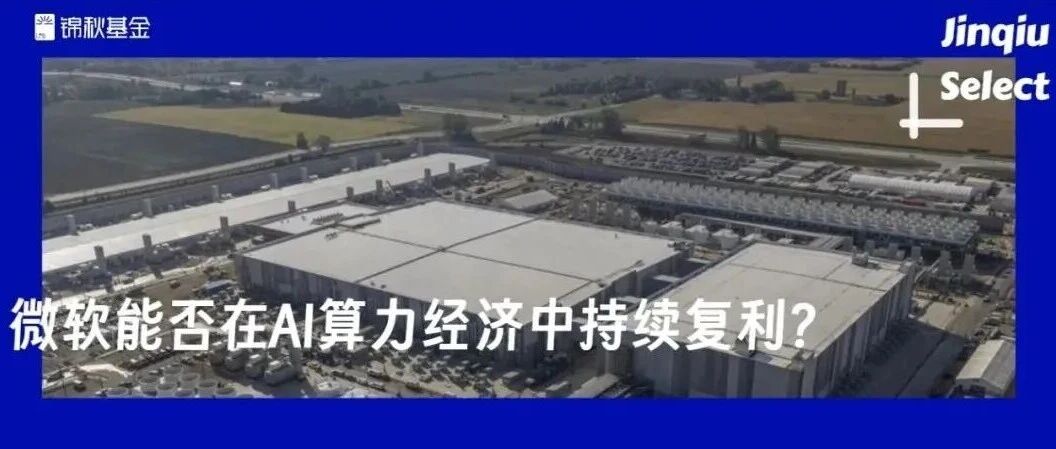
SemiAnalysis 全文:解构微软的AI战略——从错失OpenAI合约到重构AI算力经济体系|Jinqiu Select
锦秋集· 2025-11-13 10:33
Core Insights - Microsoft is undergoing a significant shift in its AI infrastructure strategy, moving from a period of expansion to a more cautious approach, and now accelerating its investments again [2][4][5] - The company's experience highlights that the core of the AI computing economy is not about scale but about capital efficiency, emphasizing the need for lower GPU capital to generate higher token output and better cash flow [2][3] - Microsoft is actively seeking short-term capacity solutions, considering various options such as self-built, leased, and remote resources to enhance its AI capabilities [7][10] AI Infrastructure Strategy - Microsoft has paused its data center construction and slowed investments in OpenAI over the past year, but is now re-engaging with significant investments in AI infrastructure [3][4] - The company is involved in every aspect of the AI token-based economic stack, from chips to infrastructure and application layers, indicating a comprehensive approach to AI development [5][6] - The "Fairwater" project represents a major investment, with plans for two of the largest data centers globally, aimed at supporting OpenAI's needs [11][19][24] Market Position and Competition - Microsoft faces increasing competition from other cloud service providers like Oracle, Amazon, and Google, which have secured significant contracts with OpenAI, reducing Microsoft's reliance on this partnership [3][54] - The company has experienced a decline in its market share for AI infrastructure, dropping from over 60% to below 25% in pre-leased capacity among major cloud providers [30][32] - Despite its challenges, Microsoft is leveraging its extensive global data center network and existing enterprise relationships to maintain a competitive edge in the AI market [67][68] Financial Metrics and Projections - The report outlines various financial metrics related to AI infrastructure, including total server capital costs, revenue per GPU, and gross margins for different layers of the AI token economy [9][44] - Microsoft’s AI investments are projected to yield significant returns, with potential annual gross profits exceeding $30 billion from its AI initiatives [54] - The company is expected to face challenges in maintaining profitability as it shifts from a heavy reliance on OpenAI to a more diversified approach in its AI offerings [56][80] Future Outlook - Microsoft is focusing on enhancing its AI capabilities through vertical integration, aiming to reduce third-party margins and provide more intelligent solutions at lower costs [7][10] - The company is also exploring the development of its own AI models and services, which could help mitigate the impact of losing contracts with OpenAI [87][88] - As the AI landscape evolves, Microsoft must adapt its strategies to address the growing competition and changing market dynamics, particularly in the enterprise sector [83][84]

锦秋基金被投企业流形空间3个月融资亿元,证明世界模型也需要预训练 |Jinqiu Spotlight
锦秋集· 2025-11-12 12:44
Core Insights - The article discusses the emergence and potential of world models in AI, particularly focusing on the company Manifold AI and its CEO Wu Wei's vision for developing a robust world model that can understand and predict the physical world [7][10][22]. Investment and Company Overview - Jinqiu Fund has invested in Manifold AI, which has quickly raised over 100 million in seed and angel rounds within three months of its establishment [4][6]. - Jinqiu Fund emphasizes a long-term investment philosophy, seeking breakthrough technologies and innovative business models in general artificial intelligence startups [5]. Technology and Market Trends - The concept of world models is gaining traction, with significant discussions in Silicon Valley about their capabilities, including generative, multimodal, and interactive features [8][9]. - Wu Wei argues that world models can provide superior predictive capabilities compared to Vision-Language-Action (VLA) models, which are limited by their reliance on past experiences [18][22]. Technical Development and Challenges - The development of world models is still in its early stages, with various approaches being explored, including explicit physical modeling and latent space interaction [25][30]. - Manifold AI aims to create a "bodily world model" that can transfer and unify across different scales, contrasting with the top-down strategies of many international teams [33]. Strategic Focus and Market Positioning - Manifold AI prioritizes the robotics and drone sectors over autonomous driving due to the fragmented nature of these markets, which allows for more opportunities for innovation [43][44]. - The company is focused on enabling hardware to possess autonomous reasoning capabilities, moving away from human-controlled operations [46]. Future Goals and Product Development - The company plans to release its first generation of base models based on the World Model Architecture (WMA) by late 2025 to early 2026, aiming to drive advancements in Physical AI Agents [51]. - Wu Wei emphasizes the importance of pre-training models to understand physical world dynamics, which can reduce deployment costs significantly [37][40].

锦秋基金被投企业深度原理获欧莱雅 2025 BIG BANG 中国大陆赛区AWARD|Jinqiu Spotlight
锦秋集· 2025-11-12 06:36
Core Insights - Jinqiu Fund participated in a strategic financing round for the AI for Science startup "Deep Principle," focusing on breakthrough technologies and innovative business models in the AI sector [3] - "Deep Principle" emerged as one of the top three winners in the "Foreseeing New Product Research" track at the 2025 BIG BANG Beauty Tech Co-Creation Program, which had over 700 participating startups [3] - The founder and CEO of "Deep Principle," Dr. Jia Haojun, highlighted the transformative impact of AI on material research during a roundtable forum, emphasizing the balance of depth, speed, and budget in beauty formulation development [6][8] Investment Highlights - Jinqiu Fund's long-term investment philosophy is centered on identifying promising AI startups with innovative approaches [3] - The AI-driven platform ReactiveAI developed by "Deep Principle" enhances research efficiency by predicting and explaining the effects of ingredients on formulation performance, leading to quantifiable benefits such as reduced R&D cycles and lower costs [6] Industry Trends - The 2025 BIG BANG event showcased the importance of open innovation in the beauty industry, as emphasized by L'Oréal's global R&D executive, who noted that collaboration is key to driving disruptive solutions [8][9] - The integration of AI in material research is seen as a significant shift from discovery to rational design, indicating a future where AI continuously improves through experimentation [6]

更挑剔的投资人和更大规模的手笔:2025年Q3 AI风投市场全解析 | Jinqiu Select
锦秋集· 2025-11-11 12:18
Core Insights - The global AI market is experiencing a stark contrast, with a 22% decline in transaction volume but an 86% year-over-year increase in average deal size, reaching $49.3 million in 2025 YTD [2][10][37] - Investors are becoming more selective, focusing their capital on fewer, high-quality projects, indicating a shift in the investment landscape [3][12] - The report highlights key trends such as high M&A activity, the rise of "valuation per employee" as a new metric, and the emergence of the Generative Engine Optimization (GEO) sector [4][6][24] Group 1: Investment Trends - Total AI financing reached $47.8 billion in Q3 2025, maintaining a high level above $45 billion for four consecutive quarters [10] - The number of transactions dropped to 1,295, reflecting a more cautious investment approach [11] - The average deal size surged to $49.3 million, a significant increase from $26.5 million in 2024, indicating a preference for larger investments in fewer projects [12][37] Group 2: M&A Activity - M&A activity in the AI sector remained robust with 172 transactions in Q3 2025, close to the historical high of 181 in Q2 2025 [16][32] - Major software companies are actively acquiring AI agents to enhance their AI capabilities, with three of the top five acquisitions in Q3 focused on AI agent technology [17] Group 3: Valuation Metrics - "Valuation per employee" has emerged as a new valuation metric, with companies like Figure and Cognition achieving valuations of $104.3 million and $98.1 million per employee, respectively [20][23] - This trend reflects a market shift towards valuing talent density over team size, with investors willing to pay a premium for top AI talent [19] Group 4: Emerging Markets - The GEO sector has gained traction, with seven transactions recorded in Q3 2025, as brands seek to enhance their visibility in AI-driven search engines [24][25] - The rise of GEO indicates a new commercial channel for AI platforms, highlighting ongoing investment opportunities in the AI ecosystem [25] Group 5: Capital Concentration - Mega-rounds (transactions over $100 million) accounted for 77% of total funding in Q3 2025, underscoring the concentration of capital towards a few identified "winners" in the AI space [29][30] - The top three transactions in Q3 included significant funding rounds for Anthropic, OpenAI, and Mistral AI, reflecting the high barriers to entry in the AI market [31] Group 6: Exit Trends - M&A activity is at a historical high, while the IPO market is showing signs of recovery with 13 companies going public in Q3 2025, the highest since Q2 2021 [32][46] - This dual trend indicates a dynamic exit environment for investors, with both acquisition and IPO opportunities emerging [32]
我们用21款AI修图工具修了100张图:谁才是真正的“修图神器”?|Jinqiu Scan
锦秋集· 2025-11-10 11:38
Core Viewpoint - The article focuses on evaluating 21 AI image editing tools across six real-life scenarios to determine their effectiveness in understanding and executing user requests for image modifications [4][11][141]. Group 1: Evaluation Methodology - The evaluation consists of six rounds, each using the same prompt for image editing, with all models set to their latest default configurations [11][12]. - Three general evaluation dimensions are used: visual consistency, local quality, and content consistency [12][13][14]. Group 2: Performance Results - Top performers include Tencent Yuanbao, Meitu Xiu Xiu, and Qwen Image Edit, scoring 15 points for effectively meeting user prompts without noticeable discrepancies [23]. - Nano Banana, Sora, Lovart, Manus, and Runway scored 14 points, with minor issues in image retrieval capabilities [28]. - Tools like Jiemeng 4.0, Wake Map, and Pixel Cake scored around 10 points, showing significant errors despite being dedicated image editing software [30]. Group 3: Specific Findings - In the first round, Tencent Yuanbao and Meitu Xiu Xiu excelled in removing unwanted elements while enhancing image clarity [23]. - The second round highlighted Qwen Image Edit and Genspark as top performers in foreground extraction, maintaining original details [41]. - The third round saw Jiemeng 4.0 and Tencent Yuanbao achieving high scores for effectively replacing elements while preserving the original image's integrity [65]. Group 4: Future Directions - The article indicates plans for future evaluations of AI tools in areas such as game development, knowledge bases, and companionship products [7].

群星闪耀时:黄仁勋、李飞飞、杨立昆、G.Hinton、Y.Bengio、B.Dally深度对话|Jinqiu Select
锦秋集· 2025-11-10 07:44
Core Insights - The article discusses the evolution of AI, emphasizing that the breakthroughs are not solely due to algorithms but rather the availability of vast amounts of data and significant computational power accumulated over decades [6][10]. - The focus is on how AI should enhance human capabilities rather than replace them, with a call for a shift in perspective regarding AI's role in society [11][60]. Group 1: Key Elements of AI Development - The first critical element for AI advancement is data, highlighted by Fei-Fei Li's creation of the ImageNet dataset, which contained 15 million images and was pivotal for deep learning [7][8]. - The second key element is computational power, as noted by Geoffrey Hinton, who pointed out that the lack of sufficient data and computational resources delayed AI's progress for 40 years [9][10]. - The article argues that the real breakthrough in AI comes from the strategic accumulation of data and the explosive growth of computational power, rather than from a singular genius algorithm [10]. Group 2: Perspectives on AI's Future - Bill Dally emphasizes that the goal of AI is not to surpass human intelligence but to augment human capabilities, allowing machines to handle tasks humans struggle with [12][13]. - The discussion reveals a consensus among AI pioneers that the pursuit of "superhuman" AI is a misunderstanding of AI's true purpose, which is to complement human intelligence [15][60]. - The article also addresses the current AI hype, with Jensen Huang asserting that the demand for GPUs is real and growing, distinguishing this phase from the dot-com bubble [16][50]. Group 3: Future Directions in AI - Yann LeCun points out that the next leap in AI will not come from larger language models but from robots that can interact with the physical world, highlighting the need for machines to develop spatial intelligence [20][22]. - The article suggests that while current AI models are impressive, they still lack the ability to understand and interact with the physical world as effectively as animals do [21][57]. - The future of AI is seen as a gradual evolution rather than a sudden breakthrough, with expectations for new paradigms to emerge in the coming years [58][62].


Leonis AI 100:2025 年最具影响力AI初创企业基准报告|Jinqiu Select
锦秋集· 2025-11-08 05:40
Core Insights - The report "Leonis AI 100" outlines the structural trends in AI startups from 2022 to 2025, highlighting the shift towards researcher-founders and the importance of technology over traditional business backgrounds [2][4][20] - AI startups are redefining traditional entrepreneurial models, focusing on computational power and data rather than human resources, with a significant increase in revenue generation expected in 2024 [5][30][35] Group 1: Founder Characteristics - The rise of researcher-founders is evident, with 82% of the AI 100 companies led by technical CEOs, and 86% of founders possessing technical backgrounds [10][11] - The average age of top AI founders is younger, with a median age of 29, compared to 34 in the SaaS era, indicating a shift towards younger, technically proficient entrepreneurs [28] - The educational background of founders is predominantly in technical fields, with over 60% holding degrees from elite institutions, emphasizing the importance of technical expertise in AI [25][26] Group 2: Revenue Growth and Business Model - 2024 is projected to be a turning point for revenue growth in AI startups, with many achieving significant annual recurring revenue (ARR) milestones in record time [34][35] - AI products are expected to provide higher value than traditional software, leading to quicker customer adoption and willingness to pay [35][37] - Despite rapid revenue growth, many AI startups face challenges with low or negative gross margins, highlighting the need for sustainable business models [35][36] Group 3: Team Structure and Efficiency - AI startups are characterized by smaller, more efficient teams, achieving revenue per employee ratios that are 3-10 times higher than traditional SaaS companies [39][41] - The organizational structure of AI companies is flatter, with fewer management layers, allowing for quicker decision-making and product development [42][49] - The use of AI tools within teams enhances productivity, enabling companies to maintain low headcounts while maximizing output [38][41] Group 4: Market Dynamics and Competition - The AI landscape is marked by a "many winners" scenario, where multiple companies can thrive simultaneously in the same market segment, contrasting with previous tech waves dominated by single platforms [58][62] - The emergence of diverse AI applications across various sectors, such as programming, content creation, and healthcare, indicates a broadening of market opportunities [63][64] - The competitive environment is evolving, with companies needing to adapt quickly to technological advancements and market demands to maintain their positions [66][67] Group 5: Transformation and Adaptability - Many AI startups undergo significant pivots within their first year, often redefining their core products in response to emerging technologies [67][68] - The ability to quickly adapt to new model capabilities is crucial for success, with many founders leveraging their technical backgrounds to identify and capitalize on opportunities [71][72] - The flexibility of AI teams allows for rapid shifts in focus, enabling companies to respond to market changes and technological advancements effectively [74][75] Group 6: Market Timing and Execution - The timing of market entry is critical, with successful companies entering the market just before key technological thresholds are crossed [76][79] - Understanding the sequence of market explosions in AI applications is essential for founders and investors to capitalize on emerging opportunities [79][80]