中国基金报

Search documents
易方达、华夏、南方、嘉实、高瓴、红杉等,火速驰援!
中国基金报· 2025-11-28 13:26
Core Viewpoint - Various public and private equity funds in China have actively contributed to the relief efforts following a severe fire in Hong Kong's Tai Po district, demonstrating their commitment to social responsibility and community support [1]. Group 1: Public Fund Contributions - E Fund announced a donation of 5 million HKD to support fire rescue and post-disaster reconstruction efforts [3]. - Huaxia Fund contributed 2 million RMB to assist affected residents with emergency living needs and community rebuilding [5]. - Southern Fund donated 3 million HKD for emergency disaster relief and reconstruction efforts [7]. - Harvest Fund pledged 3 million HKD to support emergency rescue, transitional housing, and basic supplies for the affected [7]. - Huitianfu Fund also committed 3 million HKD for fire rescue and post-disaster reconstruction [9]. - Da Cheng Fund initiated a donation of 2 million HKD to aid in fire rescue and rebuilding efforts [11]. - China Europe Fund donated 100,000 HKD to help affected communities with immediate living needs, ensuring all funds go directly to support without administrative deductions [13]. - Ruiyuan Fund decided to donate 1 million HKD for fire rescue and subsequent support [14]. Group 2: Private Fund Contributions - Hillhouse Capital initiated a donation of 10 million HKD for emergency assistance, medical help, and post-disaster reconstruction [17]. - Sequoia Capital announced a donation of 10 million HKD to support emergency relief, medical aid, and rebuilding efforts for affected residents [19].


大行看好!中国科技资产仍存在超预期空间
中国基金报· 2025-11-28 12:51
Core Viewpoint - The capital expenditure demand in the AI investment sector is shifting from US suppliers to Chinese suppliers, indicating significant growth potential for Chinese technology assets, particularly in the domestic substitution direction [1][2]. Group 1: Chinese Technology Assets - Chinese technology assets, especially in the domestic substitution sector, are expected to have unexpected growth potential despite short-term market volatility [2]. - The US's entry into a rate-cutting cycle will lead to increased market liquidity, prompting funds to pursue assets with higher potential returns [2]. - Chinese assets are currently underrepresented in global allocations, indicating significant room for increased investment [2]. - The recognition of China's model capabilities by global tech companies, particularly in the open-source field, is a positive sign for the future [2]. Group 2: Hardware Breakthroughs - By 2025, capital expenditure demand in the AI investment sector is expected to gradually shift from overseas suppliers to domestic suppliers [3]. - The current trend among Chinese tech companies is moving from hoarding imported hardware to actively embracing domestic solutions, which is optimistic for the AI industry [3]. - As leading companies begin large-scale procurement of domestic servers equipped with local chips, profits and capital will flow back to local suppliers, creating a virtuous cycle for technological breakthroughs [3]. Group 3: Global AI Market Dynamics - The global model market has transitioned from a "hundred schools of thought" to a commercialization phase, with a focus on vertical companies [4]. - The funding focus in the AI market is expected to shift towards hardware, with anticipation for the emergence of application-level breakthrough products [4]. - The integration phase of the global model market is nearly complete, with only a few institutions remaining in model development [4]. - Vertical industry data will become key to creating differentiated advantages as model capabilities become more homogeneous [4]. Group 4: AI Commercialization - The path to AI commercialization is clearer for B-end applications compared to C-end applications, making implementation easier [6][7]. - In the e-commerce sector, AI can replace traditional models, reducing operational costs significantly [6]. - The logic behind B-end commercialization is clear and reasonable, focusing on cost savings rather than creating entirely new AI revenue streams [7]. - C-end commercialization faces challenges due to unclear directions and intense competition, with user willingness to pay being low in the Chinese market [7].

重要新规!证监会公开征求意见
中国基金报· 2025-11-28 12:51
Core Viewpoint - The China Securities Regulatory Commission (CSRC) has drafted an announcement for the pilot program of Commercial Real Estate Investment Trusts (REITs), aiming to enhance the role of REITs in supporting a new model of real estate development and improving the quality and efficiency of multi-tiered capital markets in serving the real economy [1][9]. Summary by Sections Introduction - The CSRC is seeking public opinions on the draft announcement regarding the launch of Commercial Real Estate REITs [1][2]. Definition and Purpose - Commercial Real Estate REITs are defined as closed-end publicly raised securities investment funds that invest in commercial real estate assets to obtain ownership or operational rights, generating stable cash flows from rents and fees, and distributing the main profits to fund shareholders [3][5]. Market Demand - There is a significant internal demand in China to revitalize and expand equity financing channels through REITs, given the large existing stock of commercial real estate [4][9]. Regulatory Framework - The draft includes eight main provisions, detailing the definition of the product, registration and operational management requirements, and the responsibilities of fund managers and professional institutions [5][6]. - Fund managers must conduct comprehensive due diligence on the commercial real estate they intend to hold and submit registration materials to the CSRC [6][7]. Regulatory Responsibilities - The CSRC and its local agencies are tasked with the regulatory oversight and risk monitoring of Commercial Real Estate REITs, while self-regulatory organizations will manage compliance [7][9]. Market Development - The REITs market in China has seen steady development over five years, with 77 listed REITs raising a total of 207 billion yuan and a total market value of 220.1 billion yuan as of November 27, 2025 [9].

香港将下半旗志哀
中国基金报· 2025-11-28 12:11
Group 1 - The Hong Kong Special Administrative Region (SAR) government announced that all government buildings and facilities will fly the national and regional flags at half-mast from November 29 to December 1 to express deep condolences for the victims of the fire at Hong Fu Court in Tai Po [1]

严重财务造假!300344,或终止上市!
中国基金报· 2025-11-28 11:27
Core Viewpoint - ST Lifan is facing severe financial fraud allegations, which may lead to its delisting from the stock market due to continuous financial misconduct from 2021 to 2023 [2][5][10]. Financial Misconduct - From 2021 to 2023, ST Lifan inflated its revenue by a total of 638 million yuan and costs by 628 million yuan through various fraudulent activities [10]. - The breakdown of inflated figures includes: - 2021: Revenue inflated by 280 million yuan, costs inflated by 277 million yuan - 2022: Revenue inflated by 312 million yuan, costs inflated by 305 million yuan - 2023: Revenue inflated by 46 million yuan, costs inflated by 45 million yuan [10]. Regulatory Actions - The Anhui Securities Regulatory Bureau plans to impose a total fine of 40 million yuan on ST Lifan and related responsible individuals due to the financial fraud [5]. - ST Lifan has been warned and fined 10 million yuan, while 10 responsible individuals, including the chairman and general manager, face a combined fine of 30 million yuan and a 10-year market ban [10]. - The case involving the accounting firm associated with ST Lifan is under formal investigation for failing to fulfill its duties [10]. Delisting Risk - ST Lifan is at risk of being forcibly delisted due to serious violations of securities laws, with the Shenzhen Stock Exchange initiating delisting procedures [5][12]. - The company's stock will be suspended from trading starting December 1 and will be subject to delisting risk warnings upon resumption [12]. Financial Performance - ST Lifan has reported continuous losses over the years, with a recent financial summary indicating a total revenue of 2.03 billion yuan and a net loss of 620 million yuan for the latest reporting period [14]. - The company has seen a decline in its stock price, closing at 3.36 yuan per share, with a total market capitalization of 2.2 billion yuan as of November 28 [15]. Shareholder Information - As of October 20, ST Lifan had over 30,000 shareholders, with a slight decrease in the number of shareholders noted in recent periods [16][17].


私募业,最新规模揭晓!
中国基金报· 2025-11-28 11:27
Core Insights - The total scale of private equity products has reached a historical high of 22.05 trillion yuan as of October 2025, with 19,367 registered private fund managers and 137,905 funds [2][4] - The scale of securities private equity has surpassed 7 trillion yuan for the first time, marking a significant milestone [3][4] - The private equity industry is experiencing increased regulatory scrutiny, leading to a faster industry cleanup, with 1,053 private fund managers deregistered in 2025 [2][4][8] Group 1 - As of October 2025, the number of registered private fund managers is 19,367, including 7,592 securities private fund managers, 11,594 private equity and venture capital fund managers, 6 asset allocation fund managers, and 175 other private investment fund managers [4] - In October alone, 1,389 new private funds were registered, with a total new scale of 67.01 billion yuan, predominantly in securities private funds [4][5] - The recent market upturn has positively impacted private fund performance, particularly among large private funds, attracting more capital and leading to active new product registrations [4][5] Group 2 - The private equity industry is transitioning from a focus on quantity to a focus on quality, with a notable decrease in the number of securities private fund managers from 8,059 in October 2024 to 7,592 in October 2025 [8] - The concentration of private fund managers is increasingly evident, with 72.34% of registered managers located in major cities such as Shanghai, Beijing, and Shenzhen [9] - The number of large private equity firms is on the rise, with quantitative private equity becoming a significant force, comprising 48.67% of the 113 large private equity firms [10][12]

又见“清仓式”转让!
中国基金报· 2025-11-28 11:27
Core Viewpoint - Huachen Trust plans to transfer 40% equity of Huachen Future Fund at a listing price of 17.2 million yuan, indicating a "clearance-style" divestment by shareholders due to the fund's small scale and poor performance in the industry [1][3]. Group 1: Transfer Details - The transfer is set to occur from November 24, 2025, to December 19, 2025, with a total of 8 million shares involved [3]. - The transfer is approved by the Inner Mongolia Finance Department, and the ownership of the transfer target is confirmed to be clear and legally owned by the transferor [5][6]. Group 2: Fund Performance and Scale - Huachen Future Fund, established over 13 years ago, has a total scale of only 195 million yuan as of the end of Q3 this year, ranking at the bottom of the industry [1][10]. - The fund has reported a net loss of 20.01 million yuan for 2024 and a net loss of 11.4 million yuan for the first three quarters of 2025, with owner equity at -3.8863 million yuan [7]. - The fund's performance has been poor, with one bond fund ranking in the bottom 3% and a mixed fund performing at 21.21%, ranking in the top 45% [10]. Group 3: Historical Context - Since its establishment, Huachen Future Fund has only launched 11 funds, with only 4 approved for issuance, and no new products approved since 2022 [9]. - The fund's assets peaked at 1.318 billion yuan in Q1 2024 but have since declined significantly [10].

机器人概念股,逆市大涨!
中国基金报· 2025-11-28 10:46
Market Overview - The Hang Seng Index closed down 0.34% at 25,858.89 points, while the Hang Seng Tech Index rose slightly by 0.02% to 5,599.11 points. The Hang Seng China Enterprises Index fell by 0.38% to 9,130.18 points. The total market turnover for the day was HKD 146.2 billion, with net inflows from southbound funds amounting to HKD 2.727 billion [2][3]. Robotics Sector Performance - Robotics concept stocks showed strong performance, with Yujian rising by 9.75% and Horizon Robotics -W increasing by 4.23%. Other notable gains included Ubtech up by 3.76%, SUTENG up by 4.93%, and Sanhua Intelligent Control up by 2.35% [3][15]. - A report from CITIC Securities highlighted that leading manufacturers have secured billion-level orders, indicating that 2025 will be a critical year for the commercialization of embodied intelligence. The report also noted that the Hong Kong market is becoming a hub for new players in the robotics sector [15]. Semiconductor Sector Insights - The semiconductor sector experienced gains, with Huahong Semiconductor rising by 2.34%. The establishment of Huahong Hongli Semiconductor (Wuxi) Co., Ltd. was reported, focusing on integrated circuit manufacturing and sales [10][12]. - Huahong Semiconductor's stock rose by 2.69% on the same day, reflecting positive market sentiment in the semiconductor industry [10]. Company-Specific Developments - Haiwei Co., Ltd. saw a significant drop of 22.97% on its first trading day, closing at HKD 11.00 per share. The company is the second-largest capacitor film manufacturer in China, with applications in various sectors including new energy vehicles and household appliances [5][8]. Future Market Outlook - JPMorgan expressed a constructive view on the CSI 300 Index for 2026, projecting a target of 5,200 points by the end of the year. Key investment themes include the execution of "anti-involution" policies, growth in AI infrastructure, and a recovery in K-shaped consumption [16][17]. - The report indicated that the market style is expected to shift from value stocks to growth stocks by early 2026, with a focus on sectors such as automotive, battery materials, lithium, and photovoltaic industries [18].
美团发布2025年Q3财报:季度营收955亿元,年交易用户数破8亿
中国基金报· 2025-11-28 09:22
Core Viewpoint - Meituan reported a revenue of 95.5 billion RMB for Q3 2025, showing a year-on-year growth of 2%, but faced a core local business operating loss of 14.1 billion RMB due to intensified industry competition [1][2] Group 1: Financial Performance - The core local business segment generated a revenue of 67.4 billion RMB, with a significant operating loss of 14.1 billion RMB attributed to direct subsidies in the food delivery sector [2] - The new business segment achieved a revenue of 28 billion RMB, marking a year-on-year growth of 15.9%, with losses narrowing to 1.3 billion RMB quarter-on-quarter [2] - The adjusted net loss for Q3 was 16 billion RMB [2] Group 2: User Engagement and Growth - Daily active users (DAU) of the Meituan app increased by over 20% year-on-year, with the monthly transaction user count for food delivery reaching a historical high [1] - The platform accumulated over 25 billion genuine user reviews, with 3.5 billion added in the past 12 months, solidifying its position as a preferred local service platform [3] Group 3: Strategic Initiatives - Meituan is focusing on a "retail + technology" strategy to enhance product and service offerings, aiming for sustainable industry growth [1] - The company is investing in ecological construction and technology innovation, with R&D expenditure reaching 6.9 billion RMB, a 31% increase year-on-year [6] - Initiatives to support riders include nationwide pension insurance subsidies and a multi-tiered welfare system, benefiting over a million riders and their families [5] Group 4: New Business Developments - The instant retail segment, particularly Meituan Flash Purchase, is leading the industry with significant user growth and transaction frequency [2] - The Keeta grocery retail business is expanding globally, with operations launched in Qatar, Kuwait, UAE, and Brazil [3]

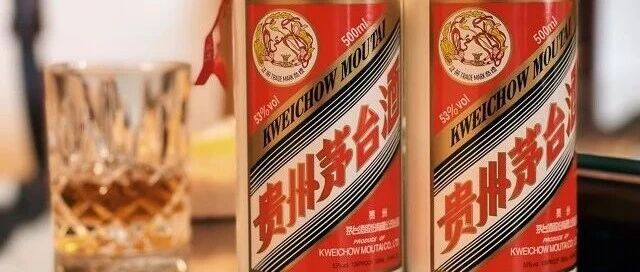
茅台董事长,最新发声!
中国基金报· 2025-11-28 09:22
Core Viewpoint - Guizhou Moutai's stock price has shown slight weakness this year, with a cumulative decline of 2.96% since the beginning of the year, prompting the company to implement a share buyback and mid-term dividend strategy to demonstrate confidence in its development [2][12]. Group 1: Shareholder Meeting Highlights - Chen Hua, the Secretary of the Party Committee and Chairman of Moutai Group, made his first appearance at the shareholder meeting, expressing gratitude to shareholders for their rationality and responsibility [5]. - The meeting reviewed six proposals, including the election of directors, the mid-term profit distribution plan, and a share buyback plan [4]. - Chen emphasized that Moutai's shareholders are rational and responsible, contributing to the company's status as a "value benchmark" in the capital market [5]. Group 2: Industry Insights - Chen noted that the liquor industry has entered a phase of "stock competition" and deep adjustment, but Moutai's opportunities outweigh challenges, with confidence stemming from three main factors: the large domestic market, the deep cultural heritage of the liquor industry, and Moutai's strong resilience [5]. - The company plans to strengthen efforts against counterfeiting, particularly in response to issues identified on platforms like Douyin [6]. Group 3: Financial Strategies - Moutai announced a share buyback plan using its own funds, with an amount ranging from 1.5 billion to 3 billion yuan, and a maximum repurchase price of 1887.63 yuan per share [10]. - The mid-term dividend plan includes a cash dividend of 23.957 yuan per share, totaling approximately 30 billion yuan [11]. - Analysts view the combination of share buyback and mid-term dividends as a sign of Moutai's confidence and commitment to shareholder returns, with expectations for demand recovery in the liquor market [12].