CHINA TELECOM(00728)

Search documents
中国电信股份有限公司 关于召开2024年年度股东大会、 2025年第一次A股类别股东会和 2025年第一次H股类别股东会的通知
Zheng Quan Ri Bao· 2025-04-29 12:38
证券代码:601728 证券简称:中国电信 公告编号:2025-017 本公司董事会及全体董事保证本公告内容不存在任何虚假记载、误导性陈述或者重大遗漏,并对其内容 的真实性、准确性和完整性承担法律责任。 重要内容提示: ● 股东大会召开日期:2025年5月21日 ● 本次股东大会采用的网络投票系统:上海证券交易所股东大会网络投票系统 一、 召开会议的基本情况 (一) 股东大会类型和届次 2024年年度股东大会、2025年第一次A股类别股东会和2025年第一次H股类别股东会 (二) 股东大会召集人:董事会 (三) 投票方式:本次股东大会所采用的表决方式是现场投票和网络投票相结合的方式 (四) 现场会议召开的日期、时间和地点 召开的日期时间:2025年5月21日 上午10点整 召开地点:香港金钟道88号太古广场香港JW万豪酒店三楼宴会厅 (五) 网络投票的系统、起止日期和投票时间。 网络投票系统:上海证券交易所股东大会网络投票系统 采用上海证券交易所网络投票系统,通过交易系统投票平台的投票时间为股东大会召开当日的交易时间 段,即9:15-9:25,9:30-11:30,13:00-15:00;通过互联网投票平台的 ...

200亿元!险资大手笔!准备投向这些上市公司→
证券时报· 2025-04-29 11:12
险资入市又有了新进展。 4月29日晚,新华保险公告称,公司拟出资不超过100亿元认购由国丰兴华(北京)私募基金管理有限公司发起 设立的私募基金的份额。该基金成立规模为200亿元,新华保险与中国人寿拟各出资100亿元认购私募基金份 额。 公告显示,该基金投资范围为中证A500指数成份股中符合条件的大型上市公司A+H股。 据了解,该私募基金的名称暂定为国丰兴华鸿鹄志远二期私募证券投资基金(简称"鸿鹄志远二期"),由国丰 兴华发起设立。鸿鹄志远二期存续期限为10年,私募基金贯彻长期投资理念,通过低频交易、长期持有的方式 以获得稳健股息收益。 鸿鹄志远二期的规模为200亿元,新华保险与中国人寿拟各出资100亿元认购私募基金份额。基金投资范围为, 中证A500指数成 份 股中符合条件的大型上市公司A+H股。 据新华保险公告,鸿鹄志远二期的投资标的应当公司治理良好、经营运作稳健、股息相对稳定、股票流动性相 对较好,与保险资金长期投资需求相适应。 新华保险表示,本次投资事项符合国家推动中长期资金入市的相关政策,以及未来本公司整体战略发展方向。 本公司坚持长期投资、价值投资和稳健投资的理念,积极发挥好长期资本、耐心资本、高能 ...



中国电信(601728):2025Q1业绩点评:经营业绩保持稳健,IDC业务加速增长
Changjiang Securities· 2025-04-29 10:14
Investment Rating - The investment rating for the company is "Buy" and is maintained [9] Core Views - The company's operating performance remains stable, with traditional mobile communication business developing steadily and new emerging businesses, particularly IDC, experiencing accelerated growth [2][6] - For Q1 2025, the company achieved operating revenue of 134.5 billion yuan, flat year-on-year, and a net profit attributable to shareholders of 8.9 billion yuan, representing a year-on-year increase of 3.1% [6][12] - The company has provided clear guidance for the year, indicating expectations for good growth in revenue, EBITDA, and net profit [2][12] Summary by Sections Operating Performance - In Q1 2025, the mobile communication business showed steady growth, with 5G network users reaching 270 million, a penetration rate of 62.0%, and mobile internet traffic increasing by 14.2% year-on-year [12] - The smart home business also performed well, with revenue growth of 11.5% year-on-year [12] Emerging Business Growth - IDC revenue reached 9.5 billion yuan in Q1 2025, a year-on-year increase of 10.4%, with significant growth in intelligent revenue (151.6% year-on-year), video internet revenue (58.4% year-on-year), satellite communication revenue (37.2% year-on-year), and quantum revenue (81.1% year-on-year) [12] - The company is leveraging its cloud-network integration advantages to drive innovation and expand new business scales [12] Cash Flow and Accounts Receivable - The net operating cash flow for Q1 2025 was 10.83 billion yuan, down 48.1% year-on-year, primarily due to longer payment cycles in the digitalization business [12] - However, the growth rate of accounts receivable has begun to decline, indicating improved control over accounts receivable [12] Financial Forecast - The company forecasts net profits attributable to shareholders for 2025-2027 to be 35.1 billion yuan, 37.2 billion yuan, and 39.3 billion yuan, corresponding to year-on-year growth rates of 6.4%, 6.1%, and 5.4% respectively [12]
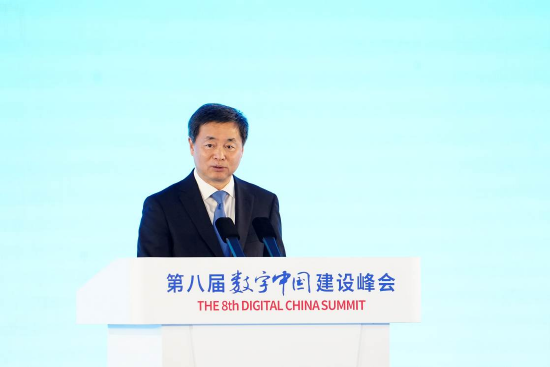
中国电信柯瑞文:数字中国建设正处在从数字化向智能化跃升的关键节点
Mei Ri Jing Ji Xin Wen· 2025-04-29 09:40
Group 1 - The core viewpoint is that the construction of a digital China is at a critical juncture, transitioning from digitization to intelligence, which will open a new chapter in development [1] - Artificial intelligence (AI) applications are identified as a key engine accelerating the construction of digital China, with 2023 being marked as the year of large-scale AI application, driven by new open-source AI technologies like DeepSeek [1] - The focus of AI application has shifted from computing power and algorithms to data elements due to explosive demand growth [1] Group 2 - The development of AI requires strengthening technological breakthroughs and promoting the intelligent upgrade of digital information infrastructure, with China Telecom achieving significant advancements in key technologies [1] - China Telecom has launched the world's first intelligent computing Ascend super node in Shaoguan, Guangdong, showcasing its full-stack cloud technology and product system [1] - The explosive growth of intelligent computing poses challenges to energy supply, necessitating innovations in AI energy-saving technologies and the integration of computing power with energy and communication [1] Group 3 - Common security issues facing the industry include cultural value biases from data bias, sensitive information leaks from model training, risks of model misalignment, and the proliferation of false information due to deep fakes [2] - To address these security challenges, China Telecom plans to integrate quantum technology into cloud network infrastructure and accelerate the construction of quantum backbone networks and metropolitan area networks in key cities [2] - An open and win-win cooperation framework is essential for promoting the construction of digital China, with a focus on inclusive computing power, open-source models, data flow, and open scenarios as key drivers for innovation in the AI industry [2]
中国电信柯瑞文:智算规模的爆发式增长对能源供给带来挑战,必须加快AI节能等绿色技术的创新与应用
Xin Lang Ke Ji· 2025-04-29 08:53
Core Insights - The construction of a digital China is at a critical juncture, transitioning from digitization to intelligence, which will open a new chapter in development [3] - Artificial intelligence (AI) applications are becoming a crucial engine for accelerating the construction of digital China, with 2023 being recognized as the year of large-scale AI application [3] - The focus of AI application has shifted from computing power and algorithms to data quality, which is essential for high-quality applications [3] Group 1 - AI applications are significantly driven by new open-source technologies like DeepSeek, which lower the barriers for computing power and algorithms, thus promoting the widespread adoption of large models [3] - China Telecom has launched the world's first intelligent computing super node in Shaoguan, Guangdong, marking a significant leap in both the quality and quantity of intelligent computing supply [3] - The explosive growth of intelligent computing poses challenges to energy supply, necessitating innovations in energy-saving technologies and the integration of computing power with energy and communication [3] Group 2 - The importance of security in high-quality development is increasingly highlighted in the AI era, with China Telecom establishing a comprehensive protection system from infrastructure to data, content, algorithms, and applications [4] - Building an open and win-win cooperation framework is essential for advancing the construction of digital China, requiring extensive collaboration across various industries and fields [4] - China Telecom emphasizes the principles of openness, sharing, and cooperative win-win, enhancing collaboration in technology, cloud networks, data, and scenarios with partners and customers [4]

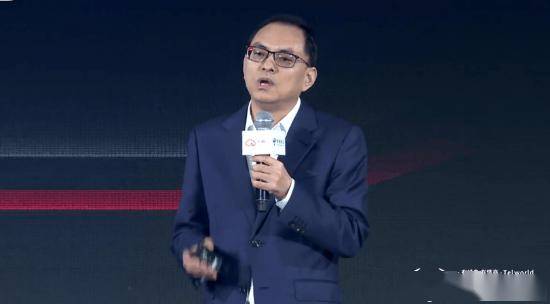
天翼云董事长胡志强透露云业务最新实践成果 称将聚焦三大领域升级
Sou Hu Cai Jing· 2025-04-29 08:30
Core Viewpoint - The conference highlighted the importance of accelerating the infrastructure of artificial intelligence (AI) technology through four key breakthroughs, as presented by the general manager of Tianyi Cloud, Hu Zhijiang [3]. Group 1: AI Infrastructure Breakthroughs - The first breakthrough is the standardization of AI capabilities, aiming to provide users with standardized AI service capabilities similar to communication services, without the need to understand underlying technologies [3]. - The second breakthrough focuses on the universal accessibility of AI services, which involves unified scheduling and efficient operation of computing resources to continuously lower computing costs [3]. - The third breakthrough emphasizes the popularization of AI applications, transitioning AI technology from a mere auxiliary tool for consumer (C-end) use to a productivity tool for business (B-end) applications [3]. - The fourth breakthrough is the self-sufficiency of the entire AI industry chain, recognizing AI as a critical battleground for major powers and advocating for the autonomy of key technologies and ecological reconstruction of the industry chain [3]. Group 2: Key Focus Areas for Tianyi Cloud - Tianyi Cloud is focusing on three key areas: platform architecture, domestic core technologies, and AI application ecology to achieve significant breakthroughs [4]. - The platform architecture has been enhanced with the introduction of the Triless architecture, which allows developers to focus solely on business logic without managing servers, thus lowering the barriers for large model application services [4]. - The domestic core technology initiative is moving towards integrated research and development of foundational software, ensuring self-sufficiency across the entire industry chain [4]. - The AI application ecology has been upgraded with the second generation of cloud computers and an AI application center, targeting various scenarios such as government, education, research, and management [4].
中国电信(601728):基础业务稳健发展,科技创新研发投入提升
EBSCN· 2025-04-29 02:12
Investment Rating - The report maintains a "Buy" rating for both A-shares and H-shares of the company [3][5] Core Views - The company's core business is developing steadily, with a slight increase in user numbers and a focus on technological innovation and R&D investment [1][2] - The company is expected to see improvements in free cash flow and a continuous increase in cash dividends, aligning with long-term trends in the telecommunications sector [3][2] - The report forecasts a slight adjustment in net profit estimates for 2025 and 2026, with projected net profits of 359 billion and 376 billion RMB respectively [3] Summary by Sections Financial Performance - In Q1 2025, the company achieved operating revenue of 134.5 billion RMB, a year-on-year increase of 0.01%, with service revenue at 124.7 billion RMB, up 0.3% [1] - The net profit attributable to shareholders was 8.9 billion RMB, reflecting a 3.1% year-on-year growth [1] - The weighted average return on equity (ROE) was 1.94%, an increase of 0.02 percentage points year-on-year [1] User Growth and Business Segments - The mobile communication business showed steady growth, with mobile users reaching 430 million, a net increase of 4.95 million [1] - The number of 5G network users reached 270 million, with a net increase of 15.48 million, resulting in a penetration rate of 62.0% [1] - Fixed-line and smart home services also maintained good growth, with broadband users at 200 million, a net increase of 670,000 [1] R&D and Innovation - The company reported IDC revenue of 9.5 billion RMB in Q1 2025, a year-on-year increase of 10.4% [2] - Smart revenue grew by 151.6%, while satellite communication revenue increased by 37.2% [2] - R&D expenses were 1.8 billion RMB, up 11.5% year-on-year, reflecting a commitment to technological innovation [2] Capital Expenditure and Dividends - Capital expenditure guidance for 2024 is set at 93.5 billion RMB, a decrease of 5.4% year-on-year, with expectations for 2025 to be 83.6 billion RMB [2] - The company plans to increase cash dividends, aiming for a distribution of over 75% of the profit attributable to shareholders within three years [2] Profit Forecast and Valuation - The report provides a profit forecast with operating revenue expected to grow from 507.84 billion RMB in 2023 to 579.9 billion RMB in 2027 [4] - The projected net profit for 2025 is 35.93 billion RMB, with a corresponding A-share PE ratio of 20X [4][3]
港股概念追踪|“东数西算”枢纽节点智算规模超八成 机构看好算力产业链高速增长(附概念股)
智通财经网· 2025-04-29 02:12
Group 1: Industry Overview - China's computing power resource layout is being optimized, with the national integrated computing power network accelerating construction, achieving a total computing power scale of 215.5 billion billion floating-point operations per second as of Q1 this year [1] - The intelligent computing power accounts for 80.8% of the total computing power at the hub nodes, and a 20-millisecond latency circle between hub nodes has been largely realized, enhancing user experience [1] - The data center capital expenditure is entering an upward channel driven by strong orders, with diverse financing channels supporting the expansion of capital expenditure [1] Group 2: Company Developments - China Mobile's "Super Thousand Card Domestic Intelligent Computing Center Project" and China Unicom's "Wujiang Computing Power Center Project" have received approval, with total investments exceeding 14.1 billion yuan [2] - AsiaInfo Technology has successfully entered Alibaba Cloud's Star River Plan, launching a comprehensive solution for large models, with expected revenue from AI large model delivery business reaching 200 to 300 million yuan by 2025 [3] - GDS Holdings has developed data center businesses in multiple countries, with total IT power in overseas locations reaching approximately 1.2 gigawatts [4] Group 3: Market Performance - Recent financial reports from AI computing power-related companies indicate strong performance, confirming the industry's high prosperity status [2] - Weichai Power has made significant progress in the domestic and international data center high-end market, contributing to stable growth in business unit price and profitability [5]
通用算力相对过剩 智能算力相对短缺 中国算力市场的成长烦恼
Shang Hai Zheng Quan Bao· 2025-04-28 20:33
Core Insights - The Chinese computing power market is experiencing a structural imbalance characterized by both surplus and shortage, with general computing power being relatively overabundant while intelligent computing power is in short supply [3][4][6]. Group 1: Market Dynamics - Several listed companies have announced winning bids for data center projects or signed computing power service contracts, indicating ongoing demand in the market [2][4]. - Major state-owned enterprises like China Mobile and China Telecom are significantly increasing their investments in computing power, with China Mobile planning a budget of 37.3 billion yuan for 2025, accounting for 25% of its total capital expenditure [5][4]. - The International Data Corporation (IDC) predicts that China's intelligent computing power will reach 1,037.3 EFLOPS by 2025 and 2,781.9 EFLOPS by 2028, reflecting a growing market scale [5][4]. Group 2: Structural Issues - The average rack utilization rate in China's IDC market is around 58%, indicating a significant amount of idle computing power [6]. - There is a notable disparity in computing power quality and regional distribution, with general computing power being overabundant in some areas while intelligent computing power is scarce, particularly in eastern regions where demand is high [6][7]. Group 3: Causes of Imbalance - The rapid growth and iteration of computing power demand, coupled with the transition from older to newer hardware, have led to mismatches in supply and demand [8]. - A lack of understanding among both buyers and sellers regarding the requirements and capabilities of intelligent computing centers has contributed to the imbalance [9][10]. - Some companies prioritize low costs in western regions for building computing centers, neglecting the necessary conditions for effective operation, which leads to mismatched resources [10]. Group 4: Future Outlook - The industry is expected to optimize and iterate on computing power scheduling, hardware, and supporting software to address the current challenges [11][14]. - The trend of "East Data West Computing" is emerging, where eastern data centers handle frequently accessed data while western centers manage less time-sensitive tasks [12]. - Domestic high-end computing hardware is accelerating in development, with companies like Huawei introducing competitive chips to fill the supply gap [13].