
CHINA TELECOM(00728)

Search documents
多行业领域中央企业发出产业协作发展新邀请
Zheng Quan Shi Bao Wang· 2025-11-04 08:37
Group 1: Modern Industrial System - The 20th Central Committee emphasizes building a modern industrial system with advanced manufacturing as the backbone and strengthening the foundation of the real economy [1] - The focus is on promoting collaborative development among large, medium, and small enterprises, and sharing opportunities with countries worldwide [1] Group 2: Energy Sector - The National Energy Group aims to implement the latest directives on building an "energy powerhouse," transitioning towards a strong, green, low-carbon, and market-oriented operation [2] - The group is advancing coal-based new materials and modern coal power industry chains, while also establishing a hydrogen energy alliance to enhance collaboration with global partners [2] Group 3: Information and Communication Industry - The information and communication sector is crucial for integrating the digital economy with the real economy, with major companies like China Telecom, China Unicom, and China Mobile extending their collaborative efforts [2] - China Telecom is promoting integrated innovation across various fields, forming a technology innovation alliance with over 60 enterprises to enhance technical synergy [2] Group 4: Agricultural Supply Chain - COFCO Group has established a global operational network connecting over 140 countries, with an annual operating volume of 18 million tons [3] - The group plans to deepen cooperation in five dimensions, including comprehensive agricultural services, stabilizing grain supply, enhancing global supply chain collaboration, and fostering technological innovation [3] Group 5: Central Enterprise Collaboration - The State-owned Assets Supervision and Administration Commission initiated a collaborative action for central enterprises to enhance industrial chain integration, organizing over 40 matching activities and releasing nearly 10,000 supply-demand lists [4]



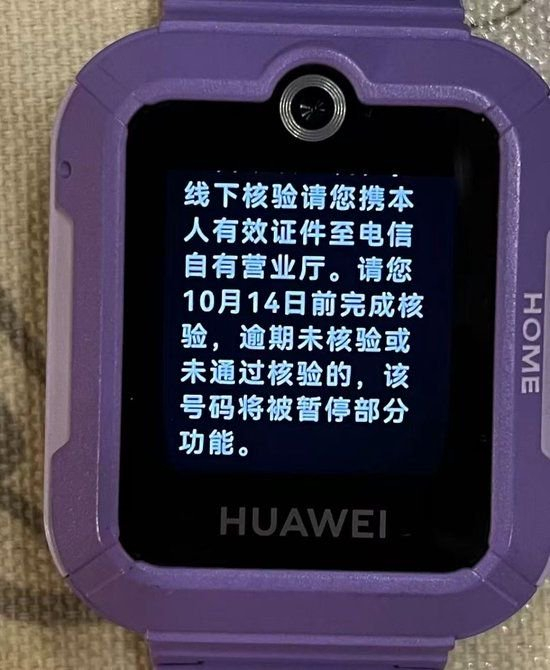
家长称孩子电话手表副卡突遭停机 电信客服回应
Xin Lang Cai Jing· 2025-11-04 08:05
Core Viewpoint - A consumer reported that their child's smartwatch, which uses a secondary SIM card from China Telecom, was unexpectedly deactivated, leading to concerns about the child's safety and communication issues [1][3]. Group 1: Incident Description - The consumer, Mr. Zhang, activated a secondary SIM card for his child's smartwatch in late August, primarily for location tracking and communication [3]. - On October 15, Mr. Zhang discovered that the smartwatch could not display location data and was unable to make calls due to the SIM card being deactivated [3][4]. - Initial customer service responses suggested the deactivation was due to inactivity, despite the SIM card being used daily for communication [4]. Group 2: Customer Service Response - China Telecom's customer service indicated that the deactivation might be due to violations of network security regulations, but they could not provide specific reasons for the deactivation [5][6]. - The customer service representative mentioned that the deactivation notice would only be sent to the deactivated number, not the primary account holder [6]. - Multiple users have reported similar issues with their children's smartwatch SIM cards being deactivated without clear explanations, raising concerns about safety and communication [5][6]. Group 3: User Experiences - Another user, Ms. Li, experienced a similar issue where her child's smartwatch SIM card was deactivated during a trip, leading to a dangerous situation where she lost contact with her child [5]. - Ms. Li was also informed that the deactivation was due to network security violations and was required to return to the original service location to reactivate the SIM card, which was inconvenient [5].

中国电信AI与视联公司相继“引战” “云改数转智惠”战略落地提速
Sou Hu Cai Jing· 2025-11-04 05:23
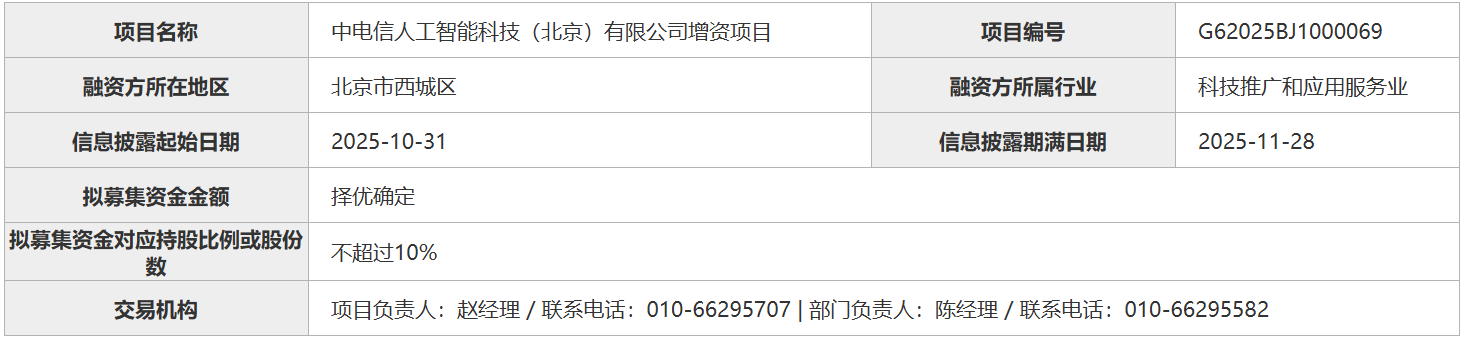
Core Insights - Recent capital increases by two subsidiaries of China Telecom have attracted market attention, indicating a strategic move towards deeper marketization in cutting-edge technology sectors [1][3] Group 1: Capital Increase Projects - China Telecom's AI company is seeking strategic investors through a public solicitation to accelerate the development of key AI technologies and enhance market mechanisms [2] - The funding goal for the AI company is not fixed, but it aims to raise capital corresponding to a shareholding of no more than 10%, while China Telecom will retain at least 88% ownership post-investment [2] Group 2: Strategic Importance - The capital increases signify China Telecom's long-term strategic investments in artificial intelligence, cloud computing, and quantum technology [3] - The AI company serves as a critical capability within China Telecom's intelligent cloud system, supporting internal business intelligence and offering standardized products and industry solutions externally [3] Group 3: Future Outlook - China Telecom is implementing a comprehensive "cloud transformation and intelligent upgrade" strategy, aiming to leverage technology to empower various industries and enhance societal services [4] - The company is committed to becoming a world-class technology enterprise while fulfilling its mission as a central state-owned enterprise [4]

智通港股通持股解析|11月4日
智通财经网· 2025-11-04 00:35
Core Insights - The top three companies by Hong Kong Stock Connect holding ratios are China Telecom (71.15%), COSCO Shipping Energy (70.05%), and GCL-Poly Energy (69.20%) [1] - The largest increases in holding amounts over the last five trading days were seen in the Tracker Fund of Hong Kong (+39.80 billion), China National Offshore Oil Corporation (+17.62 billion), and Hua Hong Semiconductor (+16.45 billion) [1] - The largest decreases in holding amounts were recorded for Alibaba-W (-15.35 billion), Li Auto-W (-12.16 billion), and Innovent Biologics (-7.70 billion) [2] Group 1: Hong Kong Stock Connect Holding Ratios - China Telecom (00728) has a holding ratio of 71.15% with 9.874 billion shares [1] - COSCO Shipping Energy (01138) has a holding ratio of 70.05% with 908 million shares [1] - GCL-Poly Energy (01330) has a holding ratio of 69.20% with 280 million shares [1] Group 2: Recent Increases in Holdings - Tracker Fund of Hong Kong (02800) saw an increase of +39.80 billion in holding amount, with a change of +15.154 million shares [1] - China National Offshore Oil Corporation (00883) increased by +17.62 billion, with +8.613 million shares added [1] - Hua Hong Semiconductor (01347) increased by +16.45 billion, with +2.138 million shares added [1] Group 3: Recent Decreases in Holdings - Alibaba-W (09988) experienced a decrease of -15.35 billion, with a reduction of -0.94078 million shares [2] - Li Auto-W (02015) saw a decrease of -12.16 billion, with -1.50328 million shares reduced [2] - Innovent Biologics (01801) had a decrease of -7.70 billion, with -0.85364 million shares reduced [2]


国内14+液冷数据中心项目盘点
DT新材料· 2025-11-03 14:17
Core Insights - The article emphasizes the growing importance of liquid cooling technology in data centers due to the increasing demands for computing power and energy efficiency in the digital economy [3][4][5]. Background - Traditional air cooling methods face limitations such as inefficiency, high energy consumption, and large space requirements, leading to a shift towards liquid cooling solutions [3]. - Liquid cooling technology is becoming a key driver for the green upgrade and efficient iteration of global digital infrastructure [3]. Domestic Liquid Cooling Projects - **China Mobile Intelligent Computing Center (Qingdao)**: Launched on March 29, 2024, with a total investment of 3.14 billion yuan, deploying 16,000 cabinets with a power density of 25 kW and achieving a PUE of 1.23 [3]. - **Gansu Qingyang "East Data West Calculation" Big Data Park**: Total investment of approximately 5.5 billion yuan, covering 110 acres, with a total power of 60,000 kW [4]. - **Guangxi Laibin New Energy Data Center**: Started construction on March 29, 2024, with a total investment of 1.45 billion yuan, deploying 500 intelligent computing cabinets [5]. - **China Telecom Lingang Intelligent Computing Center (Shanghai)**: Features a new generation of intelligent liquid cooling technology, achieving a unit computing energy consumption of below 1.5 kW/P and a PUE below 1.15 [6]. - **Hong Kong University of Science and Technology (Guangzhou)**: Officially opened on April 18, 2024, utilizing a 40 kW spray liquid cooling system, achieving a PUE as low as 1.08 [7]. - **China Telecom Guangdong-Hong Kong-Macao Greater Bay Area Integrated Data Center**: Launched on May 22, 2024, with a total computing power of 15,000 P and a PUE controlled below 1.25 [8]. - **Lubei Big Data Center**: Scheduled for a lighting ceremony on December 27, 2024, with an average PUE below 1.1 [9]. - **Alashan Green Low-Carbon Intelligent Computing Center (Xinjiang)**: Total investment of 2.5 billion yuan, aiming for a PUE below 1.2 [9]. - **China Mobile Yangtze River Delta (Wuhu) Data Center Project**: Total investment of approximately 6 billion yuan, with a planned building area of 91,470 square meters [10]. - **Alibaba Zhejiang Cloud Computing Data Center**: Planned to support an annual capacity of 100,000 servers [11]. - **China Unicom Guangdong-Hong Kong-Macao Greater Bay Area Hub (Shaoguan) Data Center**: Total investment of 4.8 billion yuan, with a PUE target of less than 1.25 [12]. - **Sinopec Artificial Intelligence Infrastructure Project**: Expected to complete by May 2025, utilizing advanced cooling technology to achieve a PUE of 1.15 [13]. - **China Mobile (Xining) Green Energy Intelligent Computing Integration Demonstration Base**: Total investment exceeding 700 million yuan, aiming for a PUE below 1.2 [14]. - **Guangzhou Next-Generation Liquid Cooling High-Performance R&D Computing Center**: First phase supports 256 units with approximately 4,000 P computing power [15]. Events and Conferences - The 6th Thermal Management Industry Conference and Exposition is set to take place, focusing on innovations in thermal management and liquid cooling technologies [16].
离谱!多地办电话卡要工作证明、无犯罪证明、银行流水
Xin Lang Cai Jing· 2025-11-03 14:12
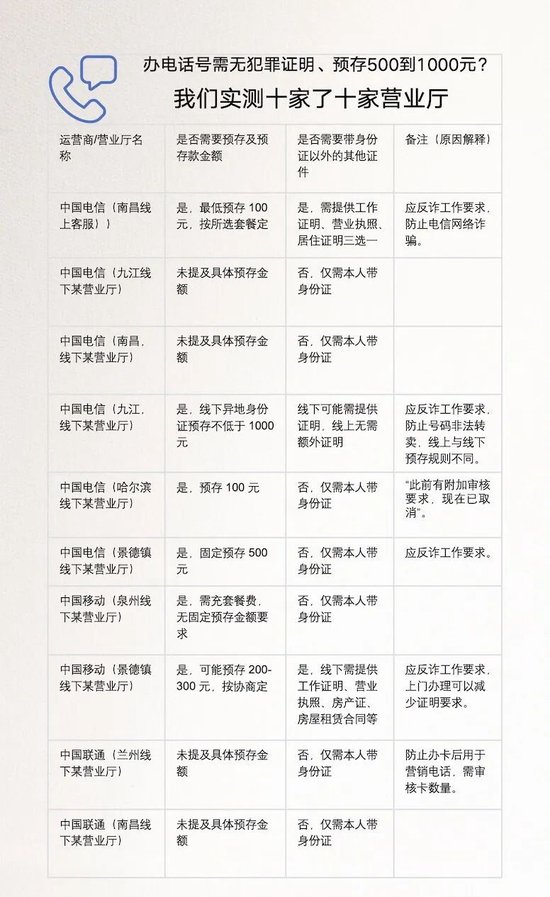
Core Viewpoint - The article discusses the discrepancies in requirements for obtaining a phone card across different regions in China, particularly focusing on the additional documentation and prepayment requirements imposed by telecom operators in Jiangxi province, which are not uniformly mandated by national regulations [1][6][9]. Group 1: Requirements for Obtaining Phone Cards - Telecom operators in Jiangxi have implemented stricter requirements for obtaining phone cards, including the need for documents such as a "no criminal record" certificate, work proof, or property documents, along with a prepayment of 500 to 1000 yuan [1][4][6]. - In contrast, regions like Fujian, Gansu, and Heilongjiang have more lenient requirements, often only requiring an ID and no additional documentation or prepayment [5][6][9]. - The inconsistency in requirements has led to confusion among consumers, with some operators providing conflicting information regarding what is necessary to obtain a phone card [6][8]. Group 2: Justification and Legality of Requirements - Operators justify the additional requirements as measures to combat telecom fraud, but the specific regulations backing these requirements are unclear and not uniformly enforced [1][6][9]. - Experts have pointed out that there is currently no national regulation that explicitly authorizes telecom operators to impose such additional conditions for obtaining phone cards, raising questions about the legality of these practices [1][7][9]. - The lack of a unified standard for phone card applications across different regions has been criticized, with suggestions for regulatory bodies to establish basic standards to streamline the process and reduce unnecessary burdens on consumers [9].
中国电信集团有限公司注册资本增至约2140.5亿元
Zheng Quan Ri Bao· 2025-11-03 13:40
Core Insights - China Telecom Group Co., Ltd. has recently undergone a business change, increasing its registered capital from 213.1 billion to approximately 214.05 billion yuan [2] - The company has expanded its business scope to include services related to artificial intelligence, such as AI industry application system integration services, general AI application systems, and AI foundational software development [2]
平治信息(300571.SZ):子公司与中国电信签订智能机顶盒产品采购框架协议
Ge Long Hui A P P· 2025-11-03 13:04
Core Viewpoint - Pingzhi Information (300571.SZ) has signed a procurement framework agreement with China Telecom Group and China Telecom Co., Ltd. for the supply of embedded micro smart set-top box products and related services, with a total contract value of approximately 74 million RMB [1] Group 1 - The subsidiary Shenzhen Zhaoneng Xuntong Technology Co., Ltd. will act as the service provider for China Telecom [1] - The procurement framework agreement covers the period from 2025 to 2026 [1] - The total amount of the framework agreement is approximately 74 million RMB [1]

量子加密宽窄带融合平台首次赋能应急指挥,护航智慧十五运
Nan Fang Du Shi Bao· 2025-11-03 10:49
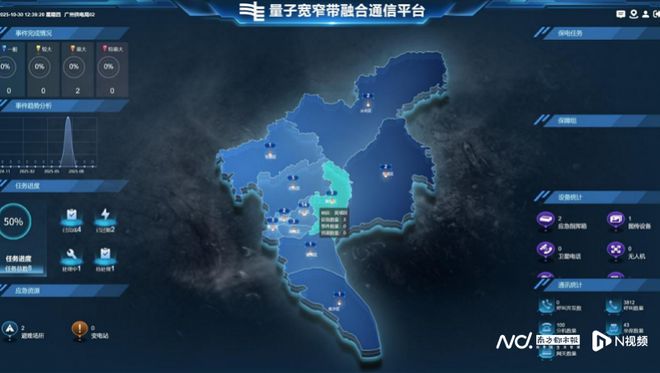
Core Viewpoint - The integration of quantum communication and digital power grid technologies by Guangzhou Telecom and Southern Power Grid aims to provide a robust communication support system for the upcoming National Games, showcasing innovation in the Guangdong-Hong Kong-Macao Greater Bay Area [1][5]. Group 1: Technological Innovations - The application of quantum encryption technology in the emergency command system marks a significant advancement in achieving "absolute security" against quantum computing attacks [1][3]. - The quantum encryption platform combines SM4 national secret algorithm with quantum true random number dynamic keys, creating a self-refreshing dynamic password lock for secure command transmission [1][3]. - The new communication model integrates quantum technology with 5G public networks and 800MHz TETRA private networks, enhancing coverage and reducing blind spots in communication [3][4]. Group 2: Operational Efficiency - The innovative communication platform has reduced network construction costs by 45% and improved emergency response efficiency by 60%, establishing a replicable model for power emergency communication [3][4]. - The system has been tested in over 80 major security tasks, including significant events like the Greater Bay Area Science Forum and the visit of the French President, proving its reliability in urban emergency management [4]. Group 3: Market Position and Growth - China Telecom has strategically focused on emerging industries, completing a strategic acquisition of GuoDun Quantum, and positioning itself as a leader in quantum communication and computing [5]. - In the third quarter, China Telecom reported a revenue of 1248.48 billion yuan, with quantum revenue increasing by 134.6% year-on-year, reflecting the company's commitment to integrating AI and advancing its service-oriented transformation [5]. - The user base for quantum communication has surpassed 6 million, serving over 3,000 clients across various sectors, including government, finance, and energy [5].
全国一体化算力网络粤港澳大湾区枢纽节点(韶关)招商推介会暨智能算力领域应用场景供需对接活动成功举行
Zhong Guo Fa Zhan Wang· 2025-11-03 09:25
Core Insights - The event held in Guangzhou focused on the development of the computing power industry in the Guangdong-Hong Kong-Macao Greater Bay Area, highlighting the latest progress and achievements of the Shaoguan data center cluster [1][2] Group 1: Industry Development - Shaoguan is designated as a key data center cluster under the "East Data West Computing" initiative, aiming to optimize the computing power industry ecosystem with policies such as computing power vouchers [2][3] - The Shaoguan data center cluster has a capacity to support 120,000 standard racks and 180,000 P of intelligent computing power, with significant infrastructure developments including dual power and water supply systems [2][3] - The local government is committed to supporting the computing power industry, focusing on attracting quality resources and promoting high-quality development in the digital economy [3][4] Group 2: Investment Opportunities - The comprehensive cost of the data industry in Shaoguan is approximately 60% of that in the Greater Bay Area, making it an attractive location for data industry development [4] - A list of computing power application scenarios and capabilities was released, covering various sectors such as education, advanced manufacturing, and energy infrastructure, providing clear collaboration directions for quality projects [4]


