
PETROCHINA(00857)

Search documents
从12万吨到“三个1亿吨”——中国石油七十五载书写奋进答卷
Zhong Guo Jin Rong Xin Xi Wang· 2025-09-25 09:56
Core Viewpoint - China National Petroleum Corporation (CNPC) has celebrated its 75th anniversary, reflecting on its significant contributions to China's oil industry and its evolution into a leading global energy company [1][2]. Group 1: Historical Development - CNPC was established 75 years ago, marking the beginning of a centralized oil industry in China, which was crucial for the country's industrial development [1]. - In the early years, China's annual crude oil production was only 120,000 tons, highlighting the urgent need for oil as an industrial resource [1]. - By 1978, China's crude oil production exceeded 100 million tons, positioning the country as the eighth-largest oil producer globally [1]. Group 2: Achievements and Growth - CNPC ranks among the top two in the Fortune Global 500 for 15 consecutive years and is the second-largest international chemical company as of 2024 [1][2]. - The company has established a robust oil and gas supply capacity, with domestic oil and gas production accounting for approximately half and two-thirds of the national output, respectively [2]. - Major refining projects have been completed, including the ethylene production capacity surpassing 10 million tons per year, maintaining a global refining capacity ranking of second [2]. Group 3: Technological Advancements - CNPC emphasizes self-reliance in technology, achieving breakthroughs in unconventional oil and gas exploration and development, as well as in new materials and products [4]. - The company is leading a digital and intelligent revolution in the energy sector, utilizing advanced models and simulation software to enhance safety and operational efficiency [5]. Group 4: Future Directions - CNPC is actively pursuing a green transformation in response to global energy changes and carbon neutrality goals, aiming to build a clean and low-carbon energy system [2]. - The company is investing in renewable energy sources, with 7% of its domestic energy supply coming from new energy developments, and is exploring advanced technologies such as controlled nuclear fusion [2].



中国石油化工股份(00386)9月25日斥资3297.11万港元回购810万股
智通财经网· 2025-09-25 09:54
Group 1 - The company, China Petroleum & Chemical Corporation, announced a share buyback plan, intending to repurchase 8.1 million shares at a cost of HKD 32.9711 million [1] - The buyback is scheduled to take place on September 25, 2025 [1] - This move indicates the company's strategy to enhance shareholder value through capital management [1]
中国石油:着力打造第二、第三增长曲线
Zhong Guo Xin Wen Wang· 2025-09-25 09:45
Core Insights - China National Petroleum Corporation (CNPC) is celebrating its 75th anniversary and is focusing on developing new growth curves beyond traditional oil and gas, aiming to transform into a comprehensive international energy and chemical company [1][4] Group 1: Company Achievements - CNPC has established a "three 100 million tons" structure in its oil and gas business, with domestic oil and gas production accounting for approximately half and two-thirds of the national totals, respectively [1] - The company has successfully built five major oil and gas cooperation zones and four cross-border oil and gas transportation channels, becoming China's largest multinational operating enterprise [2][1] Group 2: Future Strategies - In response to the global energy revolution and carbon neutrality goals, CNPC's renewable energy development now accounts for 7% of its domestic energy supply, with advancements in green hydrogen, carbon capture, utilization and storage (CCUS), and geothermal technologies [4] - The company is also focusing on innovation in shale oil and gas, ultra-deep drilling, and high-end chemical materials, while promoting digital transformation and intelligent development across its operations [4]
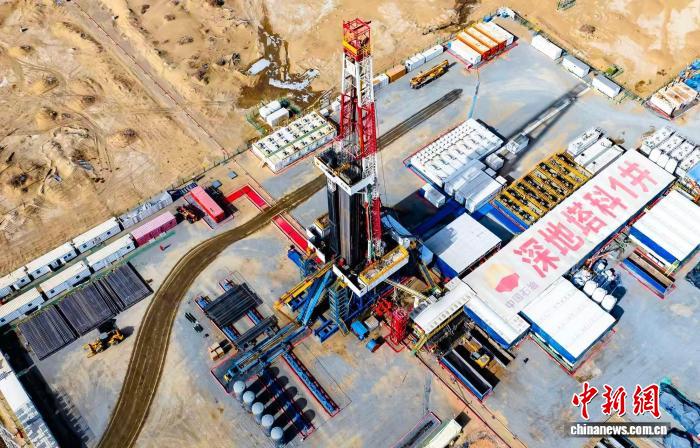
从12万吨到“三个1亿吨”,中国石油如何书写75载能源报国使命担当?
中国能源报· 2025-09-25 09:24
Core Viewpoint - The article commemorates the 75th anniversary of China National Petroleum Corporation (CNPC), highlighting its evolution from a struggling oil industry to a leading global energy company, emphasizing its contributions to national energy security and economic development [4][10]. Group 1: Historical Development - CNPC was established on September 25, 1950, marking the beginning of a centralized oil management system in China, which was crucial for the country's industrial development [5]. - The company has grown significantly, ranking among the top two in the Fortune Global 500 for 15 consecutive years and achieving the second position among international chemical companies in 2024 [4]. - The oil production in China surpassed 1 million tons in 1978, positioning the country as the eighth largest oil producer globally [7]. Group 2: Contributions to Energy Security - CNPC has become a cornerstone of national energy security, with domestic oil and gas production accounting for approximately half and two-thirds of the national output, respectively [7]. - The company has developed significant refining and chemical projects, achieving an ethylene production capacity of over 10 million tons per year and maintaining the second-largest refining capacity globally [7]. Group 3: Green Transition and Technological Innovation - In response to global energy transformations and carbon neutrality goals, CNPC is actively pursuing a green transition, with renewable energy sources now constituting 7% of its domestic energy supply [8]. - The company is at the forefront of technological advancements, focusing on unconventional oil and gas exploration, new materials, and digital transformation initiatives [10]. Group 4: Social Responsibility and National Mission - CNPC emphasizes its role as a state-owned enterprise, contributing to disaster relief, rural revitalization, and international events like the Beijing Winter Olympics, showcasing its commitment to national and public service [10]. - The company aims to continue its mission of ensuring national energy security while contributing to the construction of a strong nation and the rejuvenation of the Chinese nation [10].

港股通央企红利ETF天弘(159281)跌1.03%,成交额4068.29万元
Xin Lang Cai Jing· 2025-09-25 09:16
Core Viewpoint - The Tianhong CSI Hong Kong Stock Connect Central State-Owned Enterprises Dividend ETF (159281) experienced a decline of 1.03% in its closing price on September 25, with a trading volume of 40.68 million yuan [1]. Group 1: Fund Overview - The Tianhong CSI Hong Kong Stock Connect Central State-Owned Enterprises Dividend ETF was established on August 20, 2025, with an annual management fee of 0.50% and a custody fee of 0.10% [1]. - As of September 24, the fund's latest share count is 344 million shares, with a total size of 335 million yuan [1]. - The current fund manager is He Yuxuan, who has managed the fund since its inception, with a performance return of -2.80% during the management period [1]. Group 2: Fund Holdings - The top holdings of the Tianhong ETF include: - China COSCO Shipping (0.85% holding, 218,000 shares, market value of 2.9175 million yuan) - Orient Overseas International (0.40% holding, 10,500 shares, market value of 1.3717 million yuan) - China Foreign Transport (0.33% holding, 270,000 shares, market value of 1.1396 million yuan) - China National Petroleum (0.32% holding, 162,000 shares, market value of 1.0973 million yuan) - CITIC Bank (0.32% holding, 175,000 shares, market value of 1.1136 million yuan) - CNOOC (0.29% holding, 58,000 shares, market value of 1.0041 million yuan) - China Shenhua Energy (0.29% holding, 30,500 shares, market value of 982,600 yuan) - China People's Insurance Group (0.29% holding, 164,000 shares, market value of 1.0107 million yuan) - China Unicom (0.28% holding, 104,000 shares, market value of 952,800 yuan) - Agricultural Bank of China (0.27% holding, 189,000 shares, market value of 933,900 yuan) [2].


75年,石油人正年轻
Zhong Guo Qing Nian Bao· 2025-09-25 09:16
Core Insights - The article commemorates the 75th anniversary of China National Petroleum Corporation (CNPC), highlighting its evolution from a "poor oil country" to a global energy powerhouse [1][2] - The narrative emphasizes the contributions of early oil pioneers and the ongoing efforts of new generations in ensuring energy security for the nation [2][7] Group 1: Historical Context - CNPC was officially established 75 years ago, with an initial crude oil production of only 120,000 tons per year [2] - The discovery of major oil fields, such as Daqing, significantly boosted production, surpassing 10 million tons in 1978, which was crucial for China's industrialization [2] Group 2: Current Operations and Achievements - CNPC has established a stable supply structure with domestic crude oil, domestic natural gas, and overseas oil and gas equity production, each exceeding 100 million tons [2] - The company is actively engaged in oil and gas exploration and development, with notable contributions from employees like Yang Yixing, who generated 180 million yuan in value through his work [2] Group 3: Technological Advancements and Future Directions - CNPC is transitioning from a traditional oil and gas producer to a comprehensive energy company, integrating oil, gas, electricity, and hydrogen [5] - The company is advancing digital transformation and smart development, exemplified by the development of the "Kunlun Big Model" with 300 billion parameters, enhancing the entire industry chain [5] - Innovations in material science, such as breakthroughs in copolyester technology, are positioning CNPC as a leader in new materials [5] Group 4: Cultural Legacy and Employee Engagement - The legacy of the "Iron Man" Wang Jinxi continues to inspire new generations of oil workers, who are committed to the mission of ensuring national energy security [7] - The third "Touching Petroleum" awards ceremony recognized the dedication of employees, reinforcing the cultural values and commitment within the company [7]
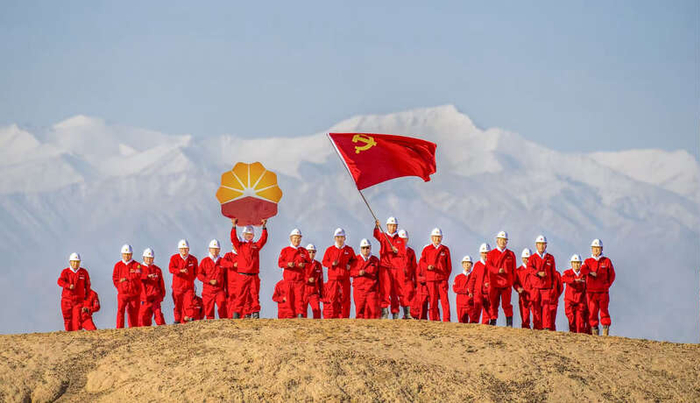
从12万吨到“三个1亿吨”,中国石油书写七十五载能源报国使命担当
Zhong Guo Neng Yuan Wang· 2025-09-25 08:20
Core Insights - The 75th anniversary of China National Petroleum Corporation (CNPC) highlights its evolution from a struggling oil industry to a leading global energy company, showcasing significant milestones and achievements over the decades [2][4]. Group 1: Historical Development - CNPC was established 75 years ago, marking a pivotal moment in China's oil industry, transitioning from a fragmented system to a centralized one that played a crucial role in supporting the new nation's industrial needs [4]. - The company has grown to rank among the top two in the Fortune Global 500 for 15 consecutive years and is now the second-largest international chemical company as of 2024 [4]. - The early years saw a drastic increase in oil production, with annual crude oil output rising from 12,000 tons to over 100 million tons by 1978, positioning China as the eighth-largest oil producer globally [4]. Group 2: Current Operations and Achievements - CNPC's oil and gas production capabilities have reached a "three 100 million tons" structure, contributing approximately half of the country's oil and two-thirds of its gas production [6]. - The company has established significant refining projects, achieving an ethylene production capacity exceeding 10 million tons per year and maintaining the second-largest refining capacity globally [6]. - CNPC has developed a global network of oil and gas cooperation zones and international operational centers, solidifying its status as China's largest multinational enterprise [6]. Group 3: Future Directions and Innovations - In response to global energy transitions and carbon neutrality goals, CNPC is actively pursuing a green transformation, focusing on a clean and low-carbon energy system [6]. - The company is investing in renewable energy projects, with its renewable energy supply now accounting for 7% of domestic energy provision, and is exploring advanced technologies such as green hydrogen and carbon capture [6][7]. - CNPC is committed to technological innovation, with significant advancements in unconventional oil and gas exploration and digital transformation initiatives, including the development of a large-scale AI model for the industry [7].
奋进七十五载:中国石油书写能源报国的使命担当
Sou Hu Cai Jing· 2025-09-25 07:44
Core Insights - China is the world's largest energy producer and consumer, consuming 756 million tons of oil and 426.05 billion cubic meters of natural gas annually, which supports its position as the largest manufacturing country and the second-largest oil consumer market globally [1][3]. Historical Development - China National Petroleum Corporation (CNPC) celebrated its 75th anniversary, marking its evolution from a nascent oil industry in 1949 with an annual crude oil production of only 120,000 tons to a significant player in the global oil market [3][4]. - The establishment of major oil fields such as Karamay and Daqing, along with strategic decisions like the "Eastward Strategy," were pivotal in developing China's oil industry and ensuring energy security [6][7]. Economic Contributions - The oil industry has been crucial for China's industrialization, with crude oil production surpassing 10 million tons in 1978, solidifying its status among the world's oil-producing nations [4][7]. - CNPC has actively engaged in international markets, establishing a presence in regions such as South America, Africa, and the Middle East, contributing to energy security through diversified channels [7][8]. Transition to Modernization - In recent years, CNPC has embraced a new energy strategy focusing on "four revolutions and one cooperation," emphasizing energy security, green transformation, and technological self-reliance [8][10]. - The company is transitioning towards becoming a comprehensive energy and chemical company, integrating oil, gas, electricity, hydrogen, and refining [10][11]. Technological Advancements - CNPC has made significant strides in deep earth oil and gas exploration, achieving world-leading results in drilling technology and unconventional resource development [12]. - The company is also advancing digital transformation and smart development, enhancing operational efficiency across its value chain [12]. Social Responsibility - CNPC has demonstrated its commitment to social responsibility through various initiatives, including disaster relief, poverty alleviation, and support for major national events, reflecting its role as a state-owned enterprise dedicated to national and social development [12][13]. Future Outlook - Looking ahead, CNPC aims to continue ensuring national energy security while contributing to China's modernization efforts, aspiring to become a world-class enterprise [13].
75年石油史诗:从12万吨到“三个1亿吨”的中国答卷
Xin Lang Cai Jing· 2025-09-25 03:14
Core Viewpoint - The article highlights the evolution and achievements of China National Petroleum Corporation (CNPC) over the past 75 years, emphasizing its significant contributions to national energy security and its transformation into a global energy player. Group 1: Historical Development - 75 years ago, China had only four oil fields with an annual crude oil production of 120,000 tons, serving a population of 540 million, resulting in a per capita oil resource of only 22 milliliters [1] - The first generation of oil workers, represented by "Iron Man" Wang Jinxi, dedicated themselves to the mission of achieving energy independence for China, embodying the spirit of hard work and sacrifice [1] - The discovery of the Daqing oil field in 1959 marked a significant milestone in China's oil industry, leading to a large-scale oil production campaign [4] Group 2: Current Achievements - CNPC has established a production structure of "three 100 million tons," which includes domestic crude oil, domestic natural gas, and overseas oil and gas equity production, reinforcing national energy security [2] - The company has advanced its refining technology, moving from a follower to a leader in the industry, with its refining capacity ranking second globally and ethylene production capacity ranking fifth [2] - CNPC has built a vast pipeline network of 400,000 kilometers, facilitating energy distribution across the country and supporting the "Belt and Road" initiative [2] Group 3: Future Strategy - CNPC aims to achieve high-quality development by 2025, with a strategic plan to become a world-class enterprise by 2035 [9] - The company has outlined five strategic initiatives focusing on innovation, resource management, market expansion, internationalization, and green development [17] - CNPC is investing in emerging industries and technologies, including unconventional oil and gas, new materials, and green energy solutions, to adapt to global energy transitions [18] Group 4: Cultural Legacy - The spirit of the "Iron Man" and the Daqing spirit has become an integral part of CNPC's corporate culture, emphasizing patriotism, entrepreneurship, and dedication [22] - The company continues to honor its historical figures and their contributions, fostering a culture of resilience and commitment among its workforce [27]
行业分析框架:国信化工:数据中心及AI服务器液冷冷却液
Guoxin Securities· 2025-09-25 02:57
Investment Rating - The report maintains an "Outperform" rating for the industry [1] Core Insights - The rapid growth of data centers and the increasing power demands necessitate efficient cooling technologies, with liquid cooling addressing high energy consumption and heat generation issues. By 2024, China's computing centers are expected to consume 166 billion kWh, accounting for 1.68% of the total electricity consumption [2][2] - The main liquid cooling technologies include cold plate and immersion cooling, with cold plate cooling being the most widely used due to its mature technology. Liquid cooling offers multiple advantages such as high heat transfer efficiency, energy savings, and reduced noise [2][2] - The market for cooling liquids is projected to grow significantly, with an estimated demand of approximately 89,000 tons for AI data centers by 2028, alongside 19,000 tons from traditional server installations [2][2] Summary by Sections 1. Main Cooling Paths - Liquid cooling technology is categorized into indirect cooling (mainly cold plate) and direct cooling (including immersion and spray cooling). Cold plate cooling is the most prevalent, while immersion cooling offers higher heat dissipation capabilities but comes with higher operational costs [2][2][2] 2. Water-Based Cooling Liquids - Water-based cooling liquids are primarily used in single-phase cold plate cooling, offering good thermal conductivity and low cost. However, they may pose risks of microbial growth [50][50] 3. Oil-Based Cooling Liquids - Oil-based cooling liquids, including mineral oil and synthetic oil, are mainly applied in single-phase immersion cooling. They are cost-effective and environmentally friendly but have lower thermal conductivity compared to synthetic alternatives [56][56] 4. Market Space Estimation - The liquid cooling market in China is expected to exceed 100 billion yuan by 2027, with a compound annual growth rate of 51.4% from 2019 to 2027 [17][17] 5. Commercialization of Liquid Cooling Technology - The commercialization of liquid cooling technology is increasing, with major IT companies like Alibaba, Baidu, and Tencent implementing successful liquid cooling applications [27][27]


