
CCB(00939)

Search documents
多家银行上调代销公募基金风险等级
Zhong Guo Jing Ying Bao· 2025-11-28 10:51
Group 1 - Several banks, including China Construction Bank and Minsheng Bank, have announced adjustments to the risk ratings of certain mutual fund products, with a total of 87 products adjusted by China Construction Bank alone [1][2] - China Construction Bank has raised the risk ratings of 32 products from R2 (medium-low risk) to R3 (medium risk) and 55 products from R3 (medium risk) to R4 (medium-high risk) [1] - Minsheng Bank is adjusting the risk ratings of 8 mutual fund products, including 7 bond funds and 1 mixed fund, from lower risk to medium risk, effective November 19 [2] Group 2 - The adjustments are in line with regulatory requirements, specifically the "higher of" principle, which mandates that if the potential risk of a fund increases due to market conditions, a higher risk rating should be applied [2] - The banks are responding to dynamic market changes, particularly in the equity and bond markets, to protect investors by prompting them to reassess their risk tolerance in light of the new ratings [2] - Additionally, banks are offering fee reductions on mutual fund transactions, with some institutions providing discounts of up to 50% on front-end subscription fees, driven by competitive market conditions and regulatory reforms [3] Group 3 - The fee reductions are a direct result of the China Securities Regulatory Commission's reforms aimed at lowering the maximum subscription fee rates for various funds, which will take effect by September 2025 [3] - Despite the prevalence of low fees, sustainability is a concern as regulations prevent selling funds below cost, and banks must cover operational costs associated with fund distribution [3] - The industry is expected to shift from a price war to value competition, focusing on enhancing service quality, product selection, and asset allocation capabilities to create real value for investors [3]



建设银行(601939) - 建设银行董事会会议决议公告
2025-11-28 10:15
中国建设银行股份有限公司 董事会会议决议公告 (2025 年 11 月 28 日) 本行董事会及全体董事保证本公告内容不存在任何虚假记载、误导性陈述或 者重大遗漏,并对其内容的真实性、准确性和完整性承担法律责任。 股票代码:601939 股票简称:建设银行 公告编号:临 2025-067 特此公告。 中国建设银行股份有限公司董事会 2025 年 11 月 28 日 本次会议审议通过《关于向香港大埔宏福苑火灾公益捐赠的议 案》。 表决情况:同意 13 票,反对 0 票,弃权 0 票。 本次会议同意捐赠 1,000 万港元,用于受灾民众紧急救援、过渡 安置及灾后恢复工作。 中国建设银行股份有限公司(以下简称本行)董事会会议(以下 简称本次会议)以书面议案方式召开。本行于 2025 年 11 月 28 日发 出本次会议通知,并于当日收到全体董事的书面表决意见。本次会议 的召开符合《中华人民共和国公司法》《中国建设银行股份有限公司 章程》等规定。 ...
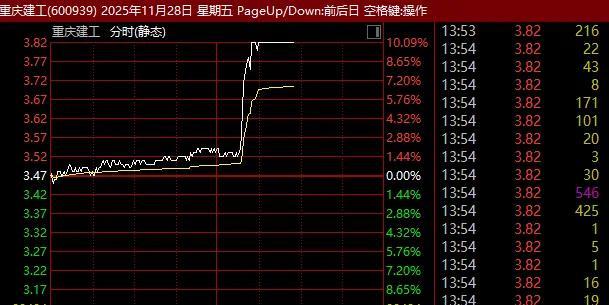
600939,午后直线涨停
Zheng Quan Shi Bao· 2025-11-28 10:07
午后,重庆突然集体异动拉升。重庆建工(600939)直线拉升涨停,财信发展、渝开发、重庆路桥、中设咨询等冲高。 3﹒建设全国一体化算力网络成渝国家枢纽节点 强化数据开发利用。发挥企业"数据要素×"主体作用,在重点领域建设一批行业高质量数据集。建设全国一体化算力网络成渝国家枢纽节点,加快推进"疆 算入渝"工程,迭代国家(西部)算力调度平台。推进智能网联汽车"车路云一体化"试点,打造智能汽车大数据云控基础平台,建设国家工业互联网大数 据区域及行业分中心。建成国家区块链网络区域枢纽。深化中新(重庆)国际互联网数据专用通道应用。发挥重庆人工智能学院、重庆通用人工智能研究 院、重庆市医学影像大数据与医疗AI研究中心平台作用,引进和培育数据企业,建设国家级数据产业集聚区。 | 重庆建工(600939) 2025年11月28日 星期五 PageUp/Down:前后日 空格键:操作 | | | | | | --- | --- | --- | --- | --- | | 東宋津 分时(静态) | 10.09% | 13:53 | 3.82 | 216 | | 3.82 | | 13:54 | 3.82 | 22 | | 3.7 ...

上调!多家银行公告!
Zhong Guo Jing Ying Bao· 2025-11-28 10:00
Group 1 - Several banks, including China Construction Bank and Minsheng Bank, have announced adjustments to the risk ratings of certain mutual fund products, with a total of 87 products being affected by Construction Bank's recent changes [1][2] - Construction Bank adjusted 32 products from R2 (medium-low risk) to R3 (medium risk) and 55 products from R3 (medium risk) to R4 (medium-high risk), indicating a significant shift in risk assessment [1] - Minsheng Bank's adjustments include 7 bond funds and 1 mixed fund, all upgraded from lower risk to medium risk, emphasizing the need for investors to reassess their risk tolerance [2] Group 2 - The adjustments are in line with regulatory requirements, specifically the "higher principle," which mandates that financial institutions must adopt higher risk ratings when market conditions indicate increased potential risks [2] - The dynamic assessment of fund risks is crucial for protecting investors, especially in a volatile market environment, as it prompts investors to reconsider whether their investments align with their risk tolerance [2] - In addition to risk adjustments, banks are also reducing fund transaction fees, with some offering discounts of up to 50% on front-end subscription fees, driven by competitive market conditions and regulatory reforms [3] Group 3 - The reduction in fees is a response to intense market competition, particularly among smaller banks, aiming to attract more customers [3] - Regulatory changes set to take effect by September 2025 will lower the maximum subscription fees for various funds, further influencing fee structures in the industry [3] - Despite the prevalence of low fees, sustainability is a concern as banks must balance cost reductions with operational expenses and the need for profitability in their intermediary business [3]
分红“港”知道丨最近24小时内,中国银行、建设银行、波司登等25家港股上市公司公告分红预案
Mei Ri Jing Ji Xin Wen· 2025-11-28 07:13
Group 1: Dividend Announcements - Bank of China announced a dividend of RMB 0.1094 per share, with an ex-dividend date of December 2, 2025, and a payment date of January 23, 2026 [1] - China Construction Bank declared a dividend of RMB 0.1858 per share, with an ex-dividend date of December 3, 2025, and a payment date of January 26, 2026 [1] - DYNAM JAPAN announced a dividend of HKD 0.1243 per share, with an ex-dividend date of December 15, 2025, and a payment date of January 14, 2026 [1] Group 2: Industry Classification - Bank of China and China Construction Bank are classified under the banking sector [1] - DYNAM JAPAN is classified under the casino and gaming sector [1] - Hong Kong Credit is classified under the credit sector [2] Group 3: Additional Dividend Information - Cheng Shi Wai Education announced a final dividend of HKD 0.002 per share and a special dividend of HKD 0.003 per share, with an ex-dividend date of January 27, 2026, and a payment date of February 10, 2026 [3] - Ling Bang Group declared a dividend of HKD 0.012 per share, with an ex-dividend date of December 15, 2025, and a payment date of January 16, 2026 [3] - Youhe Group announced a dividend of HKD 0.015 per share, with an ex-dividend date of December 22, 2025, and a payment date of January 23, 2026 [3] Group 4: Sector-Specific Dividends - Various companies in the heavy infrastructure sector, such as Sanhe Construction Group and Asia United Infrastructure Holdings, announced dividends of HKD 0.12 and HKD 0.0083 per share, respectively [2][9] - Companies in the restaurant sector, including 大快活集团 and 大家乐集团, announced dividends of HKD 0.05 and HKD 0.1 per share, respectively [4][7] - Companies in the real estate sector, such as Kai Lian International Hotel and Tian De Real Estate, announced dividends of HKD 0.14 and HKD 0.05 per share, respectively [6][7] Group 5: Index Inclusion - Bank of China and China Construction Bank are components of the CSI Hong Kong Stock Connect Central Enterprise Dividend Index, the Hang Seng High Dividend Yield Index, and the S&P Hong Kong Stock Connect Low Volatility Dividend Index [1] - DYNAM JAPAN is not included in any of the mentioned indices [1] - Other companies like 波司登 are included in the Hang Seng High Dividend Yield Index and the S&P Hong Kong Stock Connect Low Volatility Dividend Index [9]
突发大消息!600939,午后直线涨停!重庆板块,集体异动!
Zheng Quan Shi Bao Wang· 2025-11-28 06:57
Core Viewpoint - The Chongqing government has issued a comprehensive reform pilot action plan for the market-oriented allocation of factors, leading to a significant rise in the stock prices of local companies such as Chongqing Construction Engineering and others [1] Group 1: Housing Market Reforms - The plan includes measures to convert existing commercial housing into affordable housing and optimize the mechanism for revitalizing existing land [2] - It supports the use of special bonds to recover and acquire eligible idle land and explores short-term utilization of reserved land [2] Group 2: Capital Market Development - The initiative aims to accelerate the development of the capital market through the "Thoroughbred" action, promoting innovative business models and facilitating mergers, acquisitions, and refinancing for listed companies [3] - It emphasizes the integration of investment and financing functions in the capital market and aims to optimize the REITs project service chain [3] Group 3: Data and Technology Infrastructure - The plan focuses on building a national integrated computing network in Chongqing, enhancing data utilization, and establishing a regional hub for blockchain networks [4] - It aims to develop high-quality industry data sets and promote smart connected vehicles and industrial internet applications [4] Group 4: Energy Sector Initiatives - The government supports the expansion of the Chongqing oil and gas trading center and the exploration of direct sales of overseas oil and gas resources [5] - It aims to facilitate cross-border settlement of oil and gas commodities in RMB and improve the natural gas pricing mechanism [5] Group 5: Digital Platform Development - By 2027, the plan aims to establish a digital platform for factor allocation, enhancing market mechanisms and significantly improving allocation efficiency [6] - The goal is to position Chongqing as a comprehensive hub for factors, serving both domestic and international markets [6]
从建行辞职去房企领高额“安家费”的女高管,已被判刑14年
Nan Fang Du Shi Bao· 2025-11-28 06:32
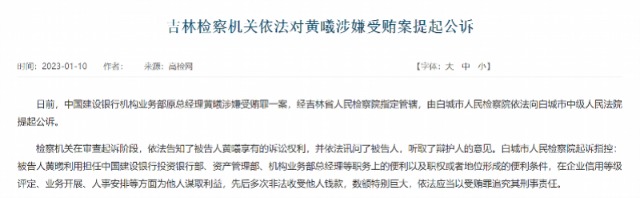
Core Points - Huang Xi, former general manager of the Institutional Business Department of China Construction Bank, was sentenced to 14 years in prison for bribery, highlighting a typical case of corruption involving the "revolving door" between politics and business [1][12][10] Group 1: Case Details - Huang utilized his position as general manager from January 2016 to July 2018 to provide benefits to a company controlled by Huang Qisen, receiving illegal payments under the guise of "settlement fees" and "salaries" [2][3] - He received a total of over 42.68 million yuan in various forms, including 30 million yuan as "settlement fees" and an annual salary of 5 million yuan after leaving the bank [2][3] - The court found that Huang's actions constituted a serious crime of bribery, leading to a 14-year prison sentence and a fine of 4 million yuan [3][10] Group 2: Background and Implications - Huang's career at China Construction Bank spanned over 32 years, with significant roles in various departments before his resignation in July 2018 [4][6] - After leaving the bank, he joined Taihe Group as executive vice president, which has faced financial difficulties and legal issues [4][5] - The case is part of a broader effort by judicial authorities to combat corruption in the financial sector, particularly involving the "revolving door" phenomenon, which complicates the detection and prosecution of such crimes [12][13]
政商“旋转门”受贿!年薪千万女副总,被判14年
Zhong Guo Ji Jin Bao· 2025-11-28 04:35
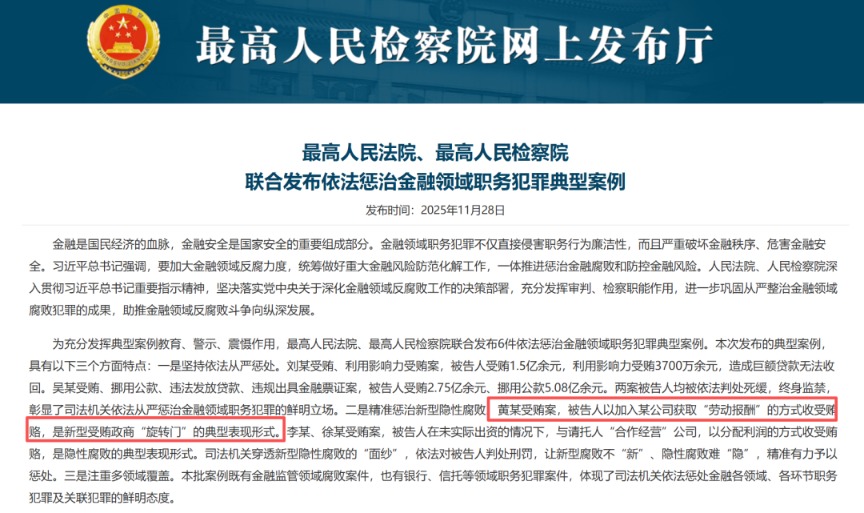
【导读】"两高"联合发布金融领域职务犯罪典型案例 中国基金报记者晨曦 依法惩处政商"旋转门"受贿犯罪,最新通报来了! 11月28日,最高人民法院、最高人民检察院联合发布6件依法惩治金融领域职务犯罪典型案例。其中提到,"黄某受贿 案"中,被告人以加入某公司获取"劳动报酬"的方式收受贿赂,是新型受贿政商"旋转门"的典型表现形式。此次案例中提 到,黄某被判有期徒刑14年,被处罚金400万元。 据悉,"黄某"即为建设银行机构业务部原总经理黄曦。自建行离职后,黄曦于2018年加入泰禾集团,担任执行副总裁。她 于2022年5月被查,同年11月被开除党籍。此前通报称,黄曦在职时"提前筑巢"、离职后"权力变现",是银企"旋转门"式腐 败的典型。 首先来看该案的基本案情: 2016年1月至2018年7月,被告人黄某利用担任某国有商业银行资产管理部、机构业务部总经理职务上的便利,以及职权、 地位形成的便利条件,直接或者通过其他国家工作人员职务上的行为,为黄某森实际控制公司进入某国有商业银行特定客 户名单等事项提供帮助。黄某与黄某森约定,由黄某森先以"安家费"名义给予黄某部分费用,待黄某离职进入黄某森实际 控制公司后,再以"薪酬" ...
政商“旋转门”受贿!年薪千万女副总,被判14年
中国基金报· 2025-11-28 04:30
【 导读 】" 两高 " 联合发布金融领域职务犯罪典型案例 中国基金报记者 晨曦 依法惩处政商"旋转门"受贿犯罪,最新通报来了! 11月28日,最高人民法院、最高人民检察院联合发布6件依法惩治金融领域职务犯罪典型案 例。其中提到,"黄某受贿案"中,被告人以加入某公司获取"劳动报酬"的方式收受贿赂,是 新型受贿政商"旋转门"的典型表现形式。此次案例中提到,黄某被判有期徒刑14年,被处罚 金400万元。 据悉,"黄某"即为建设银行机构业务部原 总经理黄曦 。自建行离职后,黄曦于2018年加入 泰禾集团,担任执行副总裁。她于2022年5月被查,同年11月被开除党籍。此前通报称,黄 曦在职时"提前筑巢"、离职后"权力变现",是银企"旋转门"式腐败的典型。 来看详情—— 黄某受贿案 依法惩处政商"旋转门"受贿犯罪 首先来看该案的基本案情: 黄某受贿数额特别巨大,鉴于其受贿犯罪中有未遂情节,归案后如实供述犯罪事实,主动交 代办案机关尚未掌握的部分犯罪事实,认罪悔罪,退缴全部赃款,依法可以从轻处罚。以受 贿罪判处被告人黄某有期徒刑十四年,并处罚金人民币四百万元。依法追缴犯罪所得及收 益。宣判后,黄某提出上诉。吉林省高级人民 ...

智通港股沽空统计|11月28日
智通财经网· 2025-11-28 00:23
Summary of Key Points Core Viewpoint - The report highlights the short-selling ratios and amounts for various companies, indicating significant bearish sentiment in the market, particularly for JD Health, Tencent, and Lenovo, which have the highest short-selling ratios. Group 1: Short-Selling Ratios - JD Health-R (86618) has the highest short-selling ratio at 100.00% [1][2] - Tencent Holdings-R (80700) follows closely with a short-selling ratio of 98.01% [1][2] - Lenovo Group-R (80992) has a short-selling ratio of 88.02% [1][2] Group 2: Short-Selling Amounts - Alibaba-SW (09988) leads in short-selling amount with 2.651 billion [2] - Meituan-W (03690) has a short-selling amount of 1.308 billion [2] - Pop Mart (09992) follows with a short-selling amount of 979 million [2] Group 3: Short-Selling Deviation Values - Meilan Airport (00357) has the highest deviation value at 42.95% [1][2] - GF Securities (01776) has a deviation value of 38.39% [1][2] - The unnamed company has a deviation value of 36.78% [1][2]

