PICC(01339)

Search documents
中国人保(601319) - H股公告
2025-08-15 11:01
承董事會命 中國人民保險集團股份有限公司 香港交易及結算所有限公司及香港聯合交易所有限公司對本公告的內容概不負責,對其 準確性或完整性亦不發表任何聲明,並明確表示,概不對因本公告全部或任何部分內容 而產生或因倚賴該等內容而引致的任何損失承擔任何責任。 1339 董事會會議通知 中國人民保險集團股份有限公司(「本公司」)董事會(「董事會」)茲通告謹定於2025年8月27 日(星期三)舉行董事會會議,以審議及批准本公司及其附屬公司截至2025年6月30日止六 個月的中期業績及其刊發,考慮派付中期股息(如有),並處理任何其他事項。 丁向群 董事長 中國北京,2025年8月15日 於本公告日,本公司執行董事為丁向群女士、趙鵬先生及肖建友先生,非執行董事為王 少群先生、喻強先生及宋洪軍先生,獨立非執行董事為邵善波先生、徐麗娜女士、王鵬 程先生及高平陽先生。 ...
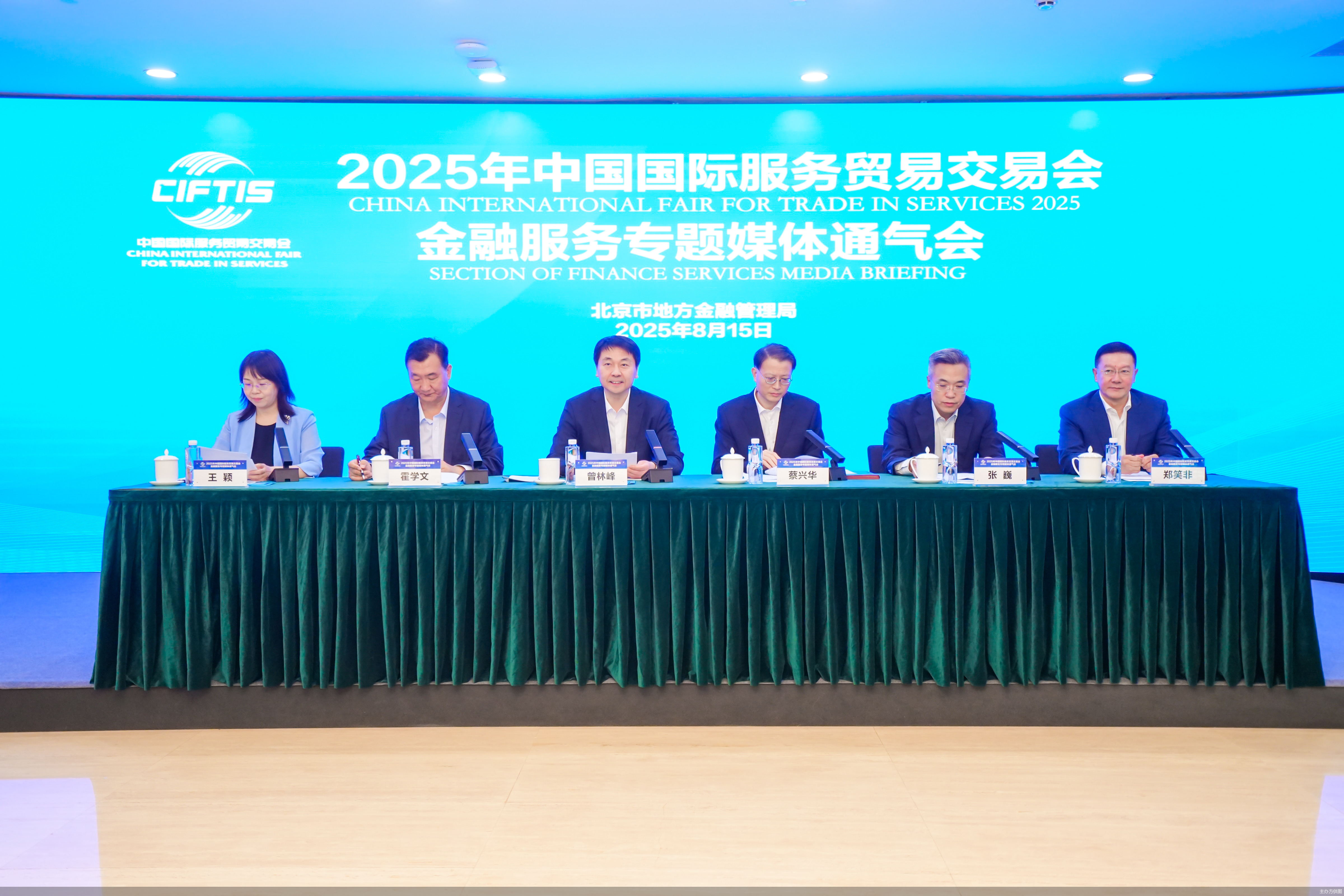
2025年服贸会金融服务专题要来了!近千平方米数币体验展区“存在感”拉满
Bei Jing Shang Bao· 2025-08-15 10:57
Group 1: Event Overview - The 2025 China International Service Trade Fair Financial Services Special Event will be held from September 10 to 14 in Beijing Shougang Park [1] - The theme for this year's financial services special event is "Digital Intelligence Driven, Open and Win-Win" [1] - The event aims to create four platforms: global financial innovation product and service display, important policy and industry rule release, partner negotiation, and cutting-edge financial experience [1] Group 2: Participation and Scale - A total of 92 domestic and foreign financial institutions will participate in the event, with 68 being Fortune 500 companies and industry leaders [4] - The exhibition area will cover 11,000 square meters, featuring two main halls with themes of "Open Integration" and "Intelligent Sharing" [4] - The internationalization rate of participating institutions is 45.7%, with 50 domestic institutions and 42 foreign institutions [1][4] Group 3: Innovative Financial Products and Services - Notable exhibits include the "Mifang Card," a three-in-one service product for foreign visitors, developed by Bank of China in collaboration with China Unicom and Beijing Yikatong [5] - China Insurance will showcase the first commercial aerospace insurance consortium in China and innovative technology insurance products [5] - Mastercard and UnionPay will present new products and services aimed at enhancing the payment experience for foreign visitors [5] Group 4: Technology Integration - The event will leverage AI technology to create an immersive exhibition experience, showcasing the deep integration of AI and the financial industry [6] - Agricultural Bank of China will feature VR technology for real estate viewing, enhancing customer engagement [6] - Beijing Bank will present an interactive digital robot to demonstrate various financial services [6] Group 5: Digital Currency and Interactive Activities - A 1,000 square meter immersive digital RMB experience area will be featured, enhancing visitor engagement through AI interactions [7] - Newcomer CCB Fund will utilize a "Wutong Bus" design for its booth, incorporating interactive elements to educate investors [7] - Various interactive activities will be organized to engage both professional and general audiences, including a financial empowerment event for professionals and fun activities for the general public [9]


中国人民保险集团(01339.HK)8月27日举行董事会会议审议及批准中期业绩
Ge Long Hui· 2025-08-15 10:52
格隆汇8月15日丨中国人民保险集团(01339.HK)公布,谨定于2025年8月27日(星期三)举行董事会会议, 以审议及批准公司及其附属公司截至2025年6月30日止六个月的中期业绩及其刊发,考虑派付中期股息 (如有),并处理任何其他事项。 ...
定了!9月10日开幕!
Jin Rong Shi Bao· 2025-08-15 09:41
Core Insights - The 2025 China International Service Trade Fair's financial services section will take place from September 10 to September 14 in Beijing, focusing on "Digital Intelligence Driving Open Win-Win" as its theme [1] - The event aims to create four platforms: global financial innovation product and service showcase, important policy and industry rule releases, partner negotiations, and cutting-edge financial experiences [1] Group 1: Exhibition Overview - The financial services exhibition has attracted 92 domestic and international financial institutions, covering an area of 11,000 square meters [2] - Two main thematic exhibition areas: Hall 5 focuses on "Open Integration," showcasing achievements in building a strong financial nation and expanding financial services [2] - Hall 6 emphasizes "Smart Benefits and Sharing," highlighting deep cooperation between financial institutions and leading technology companies [2] Group 2: International Participation - Over 40 international and foreign financial institutions, including AIIB, HSBC, and Mastercard, will present their innovative practices in cross-border financial services and fintech [3] Group 3: Technological Integration - This year's exhibition will leverage AI technology to enhance interactive experiences, creating an immersive platform for financial innovation [4] - Notable exhibits include ICBC's trillion-level financial model and Agricultural Bank's VR-enabled home viewing service [4] Group 4: Beijing's Role in Financial Innovation - Beijing, as the national financial management center, will showcase original and advanced "Beijing Service" cases that support national strategies and urban development [5] - Key exhibits include Bank of China's "three-in-one" service card for foreign tourists and PICC's commercial space insurance initiatives [5][6] Group 5: Interactive Experiences - The exhibition will feature engaging activities to enhance public interaction with financial services, such as fun games and educational experiences [7] - Examples include Minsheng Bank's interactive activities and ICBC Credit Management's anti-money laundering themed maze [7]


智通港股52周新高、新低统计|8月15日



智通财经网· 2025-08-15 08:47
Key Points - As of August 15, a total of 133 stocks reached their 52-week highs, with notable performers including 瑞港建设 (RuiGang Construction) at 94.74%, 力劲科技 (LiJing Technology) at 60.74%, and 派格生物医药-B (PAG Biopharma-B) at 39.18% [1] - The highest closing prices were recorded for 瑞港建设 at 0.260, 力劲科技 at 6.790, and 派格生物医药-B at 32.000 [1] - Other significant stocks that reached new highs include FIT HON TENG at 5.970 (26.04%), 远大中国 at 0.153 (25.81%), and 百心安-B at 6.060 (25.60%) [1] - The report also highlights stocks that reached their 52-week lows, with 今海医疗科技 (JinHai Medical Technology) dropping to 0.890 (-49.45%) and 恒泰裕集团 (HengTai Yu Group) at 0.014 (-12.50%) [4] - The overall market trend indicates a mix of strong performers and struggling stocks, reflecting varying investor sentiments across different sectors [1][4]
中国人民保险集团(01339) - 董事会会议通知
2025-08-15 08:30
董事會會議通知 中國人民保險集團股份有限公司(「本公司」)董事會(「董事會」)茲通告謹定於2025年8月27 日(星期三)舉行董事會會議,以審議及批准本公司及其附屬公司截至2025年6月30日止六 個月的中期業績及其刊發,考慮派付中期股息(如有),並處理任何其他事項。 承董事會命 1339 中國人民保險集團股份有限公司 香港交易及結算所有限公司及香港聯合交易所有限公司對本公告的內容概不負責,對其 準確性或完整性亦不發表任何聲明,並明確表示,概不對因本公告全部或任何部分內容 而產生或因倚賴該等內容而引致的任何損失承擔任何責任。 丁向群 中國北京,2025年8月15日 於本公告日,本公司執行董事為丁向群女士、趙鵬先生及肖建友先生,非執行董事為王 少群先生、喻強先生及宋洪軍先生,獨立非執行董事為邵善波先生、徐麗娜女士、王鵬 程先生及高平陽先生。 董事長 ...
国家医保局首设商业健康保险创新药目录 保险板块强势拉升
Shen Zhen Shang Bao· 2025-08-14 16:39
Group 1 - The insurance sector experienced a strong rally, with China Pacific Insurance rising by 4.87%, China Life Insurance and China Ping An both increasing by over 1%, and others like China People’s Insurance and New China Life also showing gains [1] - The National Medical Insurance Drug List adjustment for 2025 has commenced, introducing a commercial health insurance innovative drug list for the first time, with 121 drug names passing preliminary review, including 5 high-value innovative cell therapies [1] - In 2024, basic medical insurance covered 1.326 billion people with a participation rate of 95%, and total fund expenditure reached 2.97 trillion yuan. The commercial health insurance premium income is projected to be 977.3 billion yuan, reflecting an 8.2% year-on-year growth [1] Group 2 - Year-to-date stock performance shows New China Life Insurance up by 36.24%, China Pacific Insurance over 20%, and both China Ping An and China People’s Insurance up by over 10% [1] - Market analysts believe that the dual drivers of policy support and market demand may lead to valuation recovery and performance growth opportunities for the insurance sector [1]


保险板块强势拉升 中国太保、新华保险等涨超5%
Zheng Quan Shi Bao Wang· 2025-08-14 03:36
Group 1 - The insurance sector experienced significant gains on the 14th, with China Pacific Insurance and New China Life Insurance rising over 5%, while Ping An Insurance and China Life Insurance increased by more than 3% [1] - In the Hong Kong market, Sunshine Insurance surged over 8%, and China Pacific Insurance rose nearly 7%, with New China Life Insurance and China Life Insurance both increasing over 5% [1] - Year-to-date, insurance capital has been actively acquiring shares, with Ping An Insurance purchasing 1.7414 million shares of China Pacific Insurance at an average price of HKD 32.0655 per share, totaling over HKD 55.83 million, resulting in a 5.04% stake in China Pacific Insurance [1] Group 2 - The insurance industry has received positive news on the liability side, with the predetermined interest rate for life insurance being lowered from 2.5% to 2% [2] - Short-term effects of the interest rate cut may lead to a temporary halt in certain products, while long-term benefits include encouraging insurance companies to optimize product structures and increase the development of dividend and universal insurance products [2] - The ongoing relaxation of policies for insurance capital entering the market has led to frequent acquisitions of bank stocks by insurance companies, which is expected to enhance investment returns and strengthen the stability of the investment side of insurance companies [2]

9月降息预期升温!全市场唯一港股通非银ETF(513750)年内涨近57%,机构:流动性改善非银板块有望直接受益
Sou Hu Cai Jing· 2025-08-14 01:53
Group 1 - The Hong Kong Stock Connect Non-Bank ETF (513750) has seen a significant increase of 1.78% as of August 13, 2025, and a cumulative rise of 56.70% since its low on April 10 [1] - The ETF's trading volume was active, with a turnover rate of 17.57% and total transactions amounting to 2.628 billion yuan [1] - The latest inflation data from the US showed a mild increase, with a month-on-month rise of 0.2% and a year-on-year increase of 2.7%, which is below market expectations [1] Group 2 - As of August 13, 2025, the Hong Kong Stock Connect Non-Bank ETF reached a record high in size at 14.879 billion yuan, with a year-to-date growth of over 1785.80% [2] - The ETF has seen continuous net inflows over the past six days, with a peak single-day net inflow of 906 million yuan, totaling 1.720 billion yuan in net inflows year-to-date [2] - The ETF's net asset value has increased by 94.24% over the past year, ranking 37 out of 2956 index equity funds, placing it in the top 1.25% [2] Group 3 - The CSI Hong Kong Stock Connect Non-Bank Financial Theme Index (931024) has its top ten weighted stocks accounting for 78.19%, with major holdings including China Ping An, AIA, and Hong Kong Exchanges [3] - Insurance stocks are viewed as having dual dividend advantages, benefiting from both high dividends and the performance of high-dividend assets in which leading insurers have invested [3] - The non-bank sector is expected to benefit from macroeconomic stability and potential interest rate cuts by the Federal Reserve, which could enhance market activity in both A-shares and Hong Kong stocks [3] Group 4 - The Hong Kong Stock Connect Non-Bank ETF (513750) is the first and only ETF tracking the non-bank index, with over 60% of its composition in insurance stocks [4] - The ETF selects up to 50 listed companies that meet the non-bank financial theme from the Hong Kong Stock Connect securities range to reflect the overall performance of this sector [4]



中国平安等三家上市险企停发月保费收入数据
Bei Ke Cai Jing· 2025-08-13 05:25
Core Viewpoint - Several listed insurance companies in China, including China Ping An, China Life, and China Pacific Insurance, have suspended the disclosure of monthly premium income data, indicating a shift in focus towards value indicators rather than scale metrics [1][1]. Group 1: Company Responses - China Ping An stated that the switch to new standards means that original insurance premium income does not fully reflect the insurance service income, especially for life insurance companies [1]. - The last premium income announcement from China Ping An was on January 14, 2025, reporting the original insurance contract premium income for the year 2024 [1]. - Other listed insurance companies, such as China Life and China Pacific Insurance, have also ceased to disclose monthly premium income data this year [1]. Group 2: Industry Trends - The decision to stop disclosing monthly premium income is not unique to China Ping An, as it reflects a broader trend among several listed insurance companies in China [1]. - In contrast, Xinhua Insurance and China Taiping Insurance continue to disclose relevant data, highlighting a divergence in reporting practices within the industry [1].