
资负共振

Search documents
国泰海通证券:26年1至2月寿险保费景气增长 财险增速放缓
Zhi Tong Cai Jing· 2026-04-01 03:57
Group 1 - The core viewpoint of the report is that the life insurance premium is expected to grow steadily in 2026, driven by strong demand for insurance savings and the resonance of assets and liabilities, leading to improved profitability. The industry maintains a "buy" rating [1] - The report highlights that the insurance industry's cumulative premium income for January-February 2026 reached 16,422 billion yuan, a year-on-year increase of 8.4%. The life insurance sector's premium income was 13,108 billion yuan, up 9.7% year-on-year, with life, health, and accident insurance premiums at 11,323 billion yuan, 1,724 billion yuan, and 61 billion yuan, respectively, showing year-on-year changes of 10.9%, 3.1%, and -12.4% [1] - The company expects the growth in life insurance premiums to benefit from strong insurance savings demand due to the "deposit migration" phenomenon, while demand for protection-type products remains weak in the short term [1] Group 2 - In the property insurance sector, cumulative premium income for January-February 2026 was 3,314 billion yuan, a year-on-year increase of 3.5%, with a decline in growth rate of 1.2 percentage points compared to the same period in 2025. The premium income from auto insurance and non-auto insurance was 1,418 billion yuan and 1,896 billion yuan, respectively, with year-on-year changes of -0.9% and 7.0% [2] - The report indicates that the non-auto insurance segment's share of total property insurance premiums increased by 1.9 percentage points year-on-year, with liability and health insurance being the core growth drivers, showing year-on-year growth rates of 10.2% and 20.5% [2] - The company anticipates that the decline in auto insurance premiums is primarily due to fluctuations in new car sales, which saw a year-on-year decrease of 13.9% in January and 25.4% in February [2]

2025年四季度保险行业偿付能力及资金运用点评:股票投资持续增长,重视回调后的保险板块
Orient Securities· 2026-03-06 11:33
Investment Rating - The report maintains a "Positive" outlook for the insurance sector, indicating a favorable investment environment despite some challenges ahead [7]. Core Insights - The solvency of life insurance companies is expected to weaken in 2025, leading to an accelerated need for capital replenishment, while property insurance companies will see a slight increase in solvency [7]. - The total investment balance in the insurance industry is projected to grow steadily, with life insurance contributing significantly to this increase [16]. - The asset allocation structure of life insurance companies shows a high bond allocation, with a continuous increase in stock positions [25]. - The report emphasizes the importance of focusing on leading companies with stable channels and teams, as well as those with better asset flexibility and duration matching [31]. Summary by Sections 1. Solvency of Life and Property Insurance Companies - The solvency ratio for life insurance companies decreased from 196.6% in Q1 2025 to 169.3% in Q4 2025, while property insurance companies saw a slight increase from 239.3% to 243.5% during the same period [10][12]. 2. Investment Balance in the Insurance Industry - The total investment balance in the insurance sector rose from 32.2 trillion yuan at the end of Q4 2024 to 37.1 trillion yuan at the end of Q4 2025, with life insurance companies holding over 90% of this total [16][19]. 3. Asset Allocation Structure of Life Insurance Companies - As of Q4 2025, the allocation of bonds, stocks, and funds for life insurance companies was 51.1%, 10.1%, and 5.1% respectively, with significant year-on-year increases in stock investments [25][27]. 4. Asset Allocation Structure of Property Insurance Companies - By Q4 2025, property insurance companies had a bond allocation of 40.6% and a stock allocation of 9.4%, reflecting a strategic shift towards standardized assets [28][30]. 5. Investment Recommendations and Targets - The report suggests focusing on leading companies with strong product structures and stable channels, as well as those with higher equity flexibility and better duration matching [31]. Potential targets include China Ping An, New China Life, China Pacific Insurance, China Life, and China People’s Insurance [31].





国联民生证券:保险业存款配比边际明显提升 权益类资产配比边际下降
智通财经网· 2026-02-13 06:46
Core Viewpoint - The report from Guolian Minsheng Securities indicates that by 2026, the resonance between assets and liabilities is expected to support the continued recovery of insurance valuations [1] Group 1: Insurance Fund Scale and Growth - The balance of insurance funds is projected to reach 38.5 trillion yuan by the end of Q4 2025, representing a 15.7% increase from Q4 2024 and a 2.7% increase from Q3 2025 [1] - By the end of Q4 2025, the fund utilization balance for life insurance companies and property insurance companies is expected to be 34.7 trillion yuan and 2.4 trillion yuan, respectively, with increases of 15.7% and 8.8% from Q4 2024, and 2.8% and 1.2% from Q3 2025 [1] - Life insurance companies account for 90.1% of the total insurance fund utilization balance, reflecting a strong demand for life insurance products driven by residents' "savings transfer" needs and adjustments in product interest rates [1] Group 2: Asset Allocation of Life Insurance Companies - As of Q4 2025, life insurance companies have allocated 20.37 trillion yuan to fixed income assets and 7.98 trillion yuan to equity assets, marking increases of 3.4% and 1.2% from Q3 2025 [2] - The proportion of fixed income assets and equity assets in the total fund utilization balance of life insurance companies is 58.8% and 23.0%, respectively, with a slight increase of 0.4 percentage points and a decrease of 0.3 percentage points from Q3 2025 [2] - The increase in the allocation to fixed income assets is attributed to heightened volatility in the equity market, prompting life insurance companies to stabilize investment returns [2] Group 3: Asset Allocation of Property Insurance Companies - By the end of Q4 2025, property insurance companies have allocated 1.37 trillion yuan to fixed income assets and 0.55 trillion yuan to equity assets, with increases of 1.9% and 0.3% from Q3 2025 [3] - The allocation proportions for fixed income and equity assets in the total fund utilization balance of property insurance companies are 56.7% and 22.9%, reflecting an increase of 0.4 percentage points and a decrease of 0.2 percentage points from Q3 2025 [3] - The increase in the allocation to cash and stocks is driven by the high demand for liquid assets during the year-end claims peak and regulatory adjustments to attract insurance capital into the market [3]

保险资金2025Q4点评:存款配比边际明显提升,权益类资产配比边际下降
Guolian Minsheng Securities· 2026-02-13 00:51
Investment Rating - The report maintains a "Recommendation" rating for the insurance sector, indicating a positive outlook for investment opportunities [4]. Core Insights - The insurance fund utilization balance reached 38.5 trillion yuan by the end of Q4 2025, reflecting a year-on-year increase of 15.7% and a quarter-on-quarter increase of 2.7% [6]. - Life insurance companies dominate the sector, with a fund utilization balance of 34.7 trillion yuan, up 15.7% year-on-year and 2.8% quarter-on-quarter [6]. - The report highlights a shift in asset allocation, with life insurance companies increasing their allocation to fixed-income assets while decreasing their equity asset allocation [6]. Summary by Sections Insurance Fund Utilization - As of Q4 2025, the total insurance fund utilization balance is 38.5 trillion yuan, with life insurance companies holding 34.7 trillion yuan and property insurance companies holding 2.4 trillion yuan [6]. - The proportion of life insurance companies' fund utilization balance is 90.1%, while property insurance companies account for 6.3% [6]. Asset Allocation Trends - Life insurance companies have increased their allocation to fixed-income assets (20.37 trillion yuan) by 3.4% and decreased their equity assets (7.98 trillion yuan) by 1.2% [6]. - The allocation ratios for life insurance companies are 58.8% for fixed-income assets and 23.0% for equity assets, showing a marginal increase in fixed-income assets and a slight decrease in equity assets [6]. - Property insurance companies have also increased their allocation to fixed-income assets (1.37 trillion yuan) by 1.9% while their equity assets (0.55 trillion yuan) increased by only 0.3% [6]. Future Outlook - The report anticipates that the resonance between assets and liabilities will support the continued recovery of insurance valuations in 2026 [6]. - It is expected that the sales of participating insurance products will support the growth of new premium income and net profit value (NBV) for life insurance [6]. - The report suggests that property insurance companies' efforts to optimize their business structure will lead to stable improvements in their combined ratio (COR) [6].
资负共振驱动保险板块估值修复
Huafu Securities· 2026-01-15 10:10
Group 1 - The insurance sector has entered a valuation recovery phase since 2025, with a cumulative increase of 31.31% in the insurance sector, continuing strong momentum into 2026, driven by improved capital market sentiment and rising equity markets, leading to a collective strength in insurance stocks, with major companies like China Ping An reaching multi-year highs [1][7]. - The new individual insurance premium growth for major insurers such as China Life, Ping An, Taikang, and Xinhua has exceeded expectations, with first-day growth rates reaching 40-60%, driven by the "deposit migration" effect, product structure optimization, and the ongoing reinforcement of anti-involution policies in the insurance industry [1][8][16]. Group 2 - Regulatory measures have opened up space for asset-side expansion, with significant potential for increasing equity allocation by insurance funds. The total investment return rate for listed insurance companies has shifted to a range of 5%-6%, with a systematic increase in investment yield driven by regulatory policy collaboration [2][22]. - The insurance sector is expected to benefit from the recovery of the real estate market, with improved financing conditions for property companies and a narrowing of credit risk premiums, enhancing the valuation framework for the insurance sector [2][27]. Group 3 - The recent strong performance of the insurance sector reflects a resonance repair driven by multiple positive factors on both the asset and liability sides. The "deposit migration" trend has brought continuous incremental premiums, while the adjustment of product interest rates has effectively controlled long-term cost pressures [3][27]. - The regulatory adjustments have significantly expanded the equity allocation space for insurance funds, allowing for a more flexible allocation of equity assets and enhancing overall portfolio returns [21][22].
国泰海通|非银:资负共振下保险估值修复,居民重配资产亦利好券商
国泰海通证券研究· 2025-12-28 14:49
Group 1 - The core viewpoint of the article highlights a significant shift in residents' asset allocation towards savings-type insurance, particularly dividend insurance, in the context of a large amount of bank deposits maturing in 2026. Insurance companies are increasingly focusing on the bancassurance channel and enhancing cooperation with state-owned banks, indicating a broad expansion potential for their networks. It is expected that bancassurance will become a notable growth driver in 2026 [1] - The insurance sector has been systematically undervalued due to market concerns over long-term interest rate declines and rising liability costs, which create profit uncertainties. However, with interest rates stabilizing and the positive impact of increased equity allocations on investment returns, along with adjustments in liability rates and the transformation of dividend insurance, the industry is expected to see a reduction in liability costs. This resonance between assets and liabilities is anticipated to gradually expand the interest margin, leading to a recovery in insurance stock valuations [1] - Additionally, in the context of deposit migration, there is optimism regarding the opportunities for brokerage firms as residents' funds are expected to enter the capital markets directly or indirectly [2]


股价连刷高点,保险股正走向资负共振的价值修复
第一财经· 2025-12-25 13:34
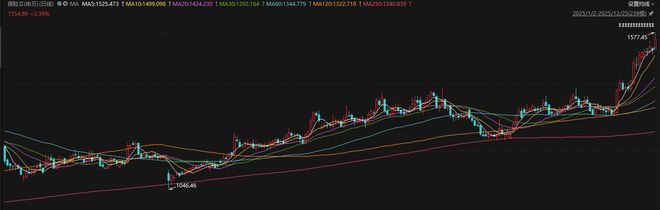
Core Viewpoint - The insurance sector in A-shares has shown significant strength this year, with multiple stocks reaching new highs, driven by external policy benefits and internal asset-liability resonance [3][5][10]. Group 1: Performance Overview - As of December 25, the A-share insurance sector index closed at 1554.89 points, the highest since April 2021 [5]. - The insurance sector has outperformed other financial sectors, with a year-to-date increase of 30.54%, significantly higher than the banking sector's 11.74% and the overall non-bank financial sector's 13.74% [5][8]. - From September of last year to now, the insurance sector has seen a cumulative increase of 58.7% [5]. Group 2: Individual Stock Performance - Notable stocks such as China Pacific Insurance and Ping An have reached new price highs, with China Pacific touching 43 CNY per share and Ping An reaching 71.98 CNY per share [7][8]. - Year-to-date, New China Life and Ping An have recorded price increases of 50% and 40%, respectively, leading the sector [8]. Group 3: Policy and Market Drivers - The rise in insurance stock prices is attributed to a combination of policy support and asset-liability resonance [10][11]. - Regulatory policies have positively impacted both the asset and liability sides of the insurance business, with new guidelines promoting the development of health insurance and improving underwriting profitability in non-auto insurance [11]. - The asset side has benefited from increased investment in A-shares, with insurance companies' stock investments rising to 3.62 trillion CNY, an increase of 1.19 trillion CNY from the previous year [12]. Group 4: Future Outlook - Analysts predict that the insurance sector will enter a golden development period starting in 2026, driven by synchronized improvements in asset and liability conditions [13][15]. - The demand for insurance products remains high, and regulatory support is expected to continue, leading to improved profitability and valuation for insurance companies [15][16]. - The P/EV valuation for major insurance companies is currently low, ranging from 0.6 to 0.8, with expectations for gradual recovery towards 1.0 by 2026 [16].

前瞻2026┃股价连刷高点,保险股正走向资负共振的价值修复
Di Yi Cai Jing Zi Xun· 2025-12-25 12:44
Core Viewpoint - The insurance sector in A-shares has shown significant strength this year, with multiple stocks reaching new highs, driven by external policy benefits and internal asset-liability resonance [1][2][6]. Performance Summary - As of December 25, the A-share insurance sector index closed at 1554.89 points, the highest since mid-April 2021 [2]. - The insurance sector has increased by 30.54% this year, outperforming the banking sector's 11.74% and the overall non-bank financial sector's 13.74% [2]. - From September of last year to now, the cumulative increase in the A-share insurance sector has reached 58.7% [2]. Individual Stock Performance - On December 25, China Pacific Insurance reached a new high of 43 CNY per share, while Ping An Insurance hit 71.98 CNY per share, the highest since March 2021 [4]. - New China Life Insurance also reached a new high of 73.45 CNY per share on December 23 [4]. - Year-to-date, New China Life and Ping An have recorded increases of 50% and 40%, respectively, leading the sector [4]. Policy Support and Asset-Liability Resonance - The rise in insurance stock prices is attributed to the highlighting of their allocation value, supported by policy backing and asset-liability resonance [6]. - Regulatory policies have been favorable, with recent guidelines promoting high-quality development in health insurance and improving profitability in non-auto insurance [7]. - The asset side has seen increased investment in A-shares by large state-owned insurance companies, with a significant rise in stock investments [8]. Future Outlook - Analysts predict that the insurance sector will enter a golden development period starting in 2026, driven by synchronized improvements in asset and liability sides [10]. - The demand for insurance products remains high, and regulatory policies are expected to continue to support the sector, leading to potential valuation recovery [10][12]. - The P/EV (price to embedded value) ratio for major listed insurance companies is currently low, ranging from 0.6 to 0.8, with expectations for gradual recovery towards 1.0 by 2026 [12].
保险证券ETF(515630)涨超2%,险资前三季度豪掷超4100亿入市
Xin Lang Cai Jing· 2025-12-17 06:45
Core Viewpoint - The insurance and securities sector is experiencing a strong upward trend, with significant increases in stock prices and a positive outlook for 2026 driven by fundamental recovery and regulatory support [1][2]. Group 1: Market Performance - As of December 17, 2025, the CSI 800 Securities and Insurance Index rose by 2.14%, with notable stock increases: Huatai Securities up 6.50%, China Pacific Insurance up 4.27%, and China Life Insurance up 3.61% [1]. - The Insurance Securities ETF increased by 2.04%, with the latest price at 1.45 yuan [1]. Group 2: Investment Trends - In the first three quarters of 2025, listed insurance companies added over 410 billion yuan in equity investments, with high-dividend assets accounting for more than half of the new positions [1]. - The top ten weighted stocks in the CSI 800 Securities and Insurance Index account for 63.12% of the index, including major players like Ping An Insurance and CITIC Securities [2]. Group 3: Future Outlook - Starting in 2026, the sector is expected to see value recovery driven by easing concerns over interest margin losses and positive growth in new business value (NBV) [1]. - Regulatory policies are anticipated to support stable industry growth, with expectations of continued high-speed development in bancassurance and significant transformation in individual insurance channels [1]. - The asset side is projected to continue contributing to profits and stock price elasticity, with expectations of interest rate stabilization and rising equity values [1].
上市险企2025年三季报综述:资负共振推动业绩高增
HUAXI Securities· 2025-11-06 15:29
Investment Rating - The industry rating is "Recommended" [5] Core Insights - The net profit of five A-share listed insurance companies reached CNY 426.04 billion in the first three quarters of 2025, a year-on-year increase of 33.5% [12] - The net profit growth rates for the companies from high to low are: China Life +60.5%, New China Life +58.9%, PICC +28.9%, China Pacific +19.3%, and Ping An +11.5% [12] - The total investment income significantly increased due to the rise in the stock market, with China Life at +40.7%, New China Life at +40.3%, PICC at +36.6%, China Pacific at +26.8%, and Ping An at +19.5% [32] Summary by Sections 1. Net Profit Growth - In Q3 2025, the net profit of the five listed insurance companies totaled CNY 247.85 billion, a year-on-year increase of 68.3% [12] - The net asset of these companies reached CNY 23,110 billion by the end of Q3 2025, showing a growth of 10.3% compared to the beginning of the year [13] 2. Life Insurance NBV Growth - The NBV growth rates for life insurance companies in the first three quarters of 2025 are: PICC Life +76.6%, New China Life +50.8%, Ping An +46.2%, China Life +41.8%, and China Pacific +31.2% [16] - The silver insurance channel performed well, with PICC and New China Life's new single premium income increasing by 52.4% and 66.7% respectively [18] 3. Property Insurance Performance - The original premium income for property insurance companies showed positive growth, with PICC +3.5%, Ping An +7.1%, and China Pacific +0.1% [23] - The combined ratio (COR) for these companies improved, with PICC at 96.1%, Ping An at 97.0%, and China Pacific at 97.6% [25] 4. Investment Performance - The total investment assets of the five listed insurance companies reached CNY 20.26 trillion by the end of Q3 2025, an increase of 10.4% from the beginning of the year [29] - The total investment income for the companies increased significantly, with China Life at CNY 368.58 billion, a 40.7% year-on-year increase [33] 5. Investment Recommendations - The report suggests that the dynamic adjustment of the life insurance preset interest rate and the transformation of dividend insurance will help reduce liability costs and enhance NBV value rates [37] - The current public fund holdings in insurance stocks are still low, with the insurance index PB valuation at 1.42x, which is at a historical low level [37]