
GUSHENGTANG(02273)

Search documents
固生堂(02273):AI赋能中医服务龙头
Zhao Yin Guo Ji· 2025-04-02 01:02
2025 年 4 月 2 日 招银国际环球市场 | 睿智投资 | 公司更新 固生堂 (2273 HK) AI 赋能中医服务龙头 资料来源:公司资料、彭博及招银国际环球市场预测 | 目标价 | 52.38 港元 | | --- | --- | | (此前目标价 | 56.50 港元) | | 潜在升幅 | 57.5% | | 当前股价 | 33.25 港元 | 中国医药 武 煜, CFA (852) 3900 0842 jillwu@cmbi.com.hk 黄本晨, CFA huangbenchen@cmbi.com.hk 公司数据 固生堂发布 24 年度业绩,收入同比增长 30.1%至 30.2 亿元,经调整净利润同比 增长 31.4%至 4.0 亿元。公司的收入符合我们的预期,但利润端比我们的预测高 3.1%。公司业绩在医保监管趋严的情况下保持了高速的增长,体现出固生堂作为 龙头企业的合规性以及强劲发展势头。受益于强劲增长的客户需求,公司线下收 入同比增长 35%,其中老店收入同比增长 28%,门诊人次同比增长 25.9%,客单 价同比增长 3.3%。公司持续推进医联体合作,全年新增 8 家医联体合作单位。 ...
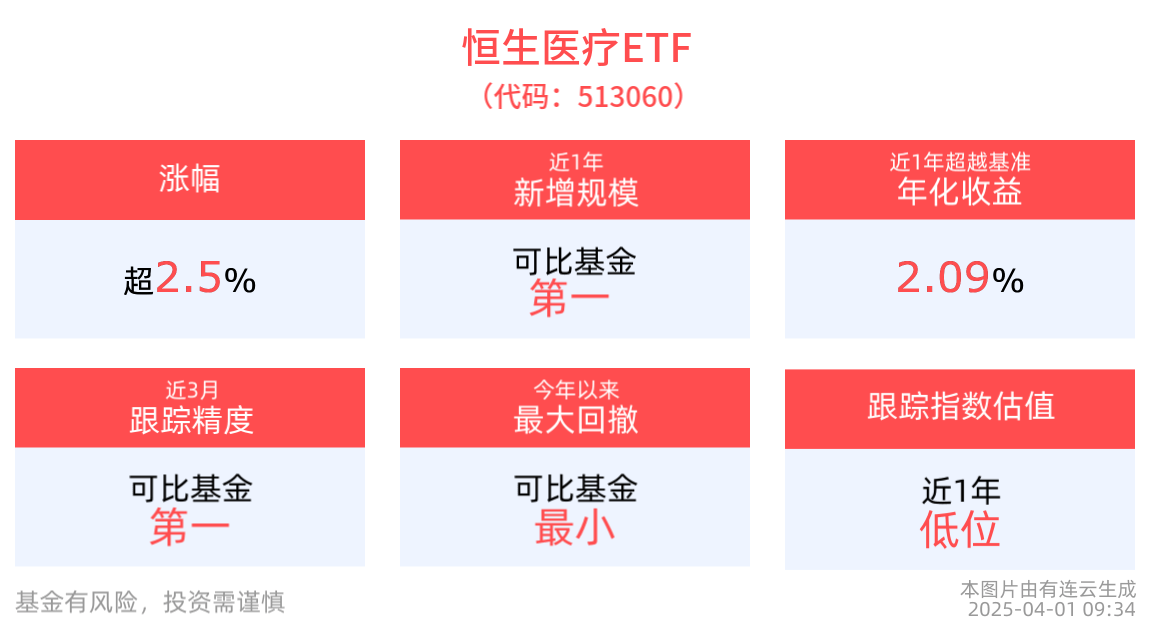
医药板块强势拉升,恒生医疗ETF(513060)高开高走上涨2.53%,固生堂涨超8%
Sou Hu Cai Jing· 2025-04-01 01:56
Core Viewpoint - The Hang Seng Healthcare Index (HSHCI) has shown strong performance, with significant increases in constituent stocks and the Hang Seng Healthcare ETF, indicating positive market sentiment in the healthcare sector [1][4]. Group 1: Market Performance - As of April 1, 2025, the HSHCI rose by 2.09%, with notable gains in stocks such as Genscript Biotech (8.36%) and Haijia Medical (7.74%) [1]. - The Hang Seng Healthcare ETF (513060) opened high and increased by 2.53%, with a latest price of 0.49 HKD and a trading volume of 1.28 billion HKD, achieving a turnover rate of 0.97% [1]. Group 2: ETF Growth and Performance Metrics - The Hang Seng Healthcare ETF has seen a significant growth of 2.648 billion HKD in size over the past year, ranking in the top third among comparable funds [4]. - The ETF's financing buy-in amount reached 322 million HKD, with a financing balance of 545 million HKD [4]. - Since its inception, the ETF recorded a highest monthly return of 28.34% and an average monthly return of 7.01% [4]. - The ETF's Sharpe ratio for the past year is 1.40, indicating strong risk-adjusted returns [4]. Group 3: Valuation and Industry Outlook - The latest price-to-earnings ratio (PE-TTM) for the HSHCI is 25.11, placing it in the 2.17% percentile over the past year, suggesting it is undervalued compared to historical levels [5]. - The National Medical Products Administration reported that 48 innovative drugs were approved in 2024, covering various therapeutic areas, indicating a robust pipeline for the pharmaceutical industry [5]. - Recent policies are shifting from cost control to encouraging innovation, with a focus on leading companies with strong international capabilities [5]. Group 4: Index Composition - As of March 31, 2025, the top ten weighted stocks in the HSHCI include WuXi Biologics, BeiGene, and Innovent Biologics, collectively accounting for 56.21% of the index [6].



固生堂(02273) - 2024 - 年度业绩
2025-03-31 13:10
Financial Performance - The group's revenue increased by 30.1% from RMB 2,323.4 million for the year ended December 31, 2023, to RMB 3,022.4 million for the year ended December 31, 2024[3]. - Gross profit rose by 29.9% from RMB 700.0 million in 2023 to RMB 909.3 million in 2024[3]. - Adjusted net profit increased by 31.4% from RMB 304.7 million for the year ended December 31, 2023, to RMB 400.4 million for the year ended December 31, 2024[3]. - The total comprehensive income for the year was RMB 319.5 million, compared to RMB 258.0 million in the previous year, reflecting a growth of 23.7%[5]. - Basic earnings per share increased from RMB 1.06 in 2023 to RMB 1.26 in 2024, representing an increase of 18.9%[6]. - The group's profit before tax for 2024 was RMB 306,780,000, an increase from RMB 252,202,000 in 2023, representing a growth of approximately 21.6%[44]. - The company's net profit increased by 21.4% from RMB 252.9 million for the year ended December 31, 2023, to RMB 307.2 million for the year ended December 31, 2024[88]. - The total tax expense for the year was RMB 56,101,000, compared to RMB 31,232,000 in 2023, indicating an increase of about 79.8%[40]. Assets and Liabilities - Non-current assets grew from RMB 1,541.7 million in 2023 to RMB 1,843.5 million in 2024, an increase of 19.6%[7]. - Cash and cash equivalents decreased from RMB 1,301.3 million in 2023 to RMB 1,116.4 million in 2024, a decline of 14.2%[8]. - Trade receivables increased from RMB 179.9 million in 2023 to RMB 269.4 million in 2024, a rise of 49.7%[7]. - The company reported a significant increase in goodwill from RMB 984.7 million in 2023 to RMB 1,132.5 million in 2024, an increase of 15.0%[8]. - The group's total assets at the end of 2024 were RMB 1,132,508,000, up from RMB 984,688,000 in 2023, reflecting an increase of approximately 15.0%[45]. - Trade payables increased to RMB 268,764 thousand in 2024 from RMB 247,145 thousand in 2023, representing an increase of 8.2%[49]. - The total trade payables and notes payable reached RMB 307,673 thousand in 2024, up from RMB 286,619 thousand in 2023, marking a growth of 7.3%[49]. Revenue Breakdown - Revenue from healthcare solutions amounted to RMB 2,987,656 thousand in 2024, up from RMB 2,287,100 thousand in 2023, reflecting a growth of 30.7%[28]. - Revenue from the sale of healthcare products was RMB 34,721 thousand in 2024, slightly down from RMB 36,251 thousand in 2023[28]. - Revenue from offline medical institutions increased by 34.5% from RMB 2,037.1 million for the year ended December 31, 2023, to RMB 2,740.5 million for the year ending December 31, 2024[72]. - Revenue from offline medical institutions accounted for 90.7% of total revenue in 2024, increasing from 87.7% in 2023, with a growth of 34.5%[71]. - The group's revenue from customer contracts for 2024 reached RMB 3,022,377 thousand, a significant increase of 30.1% compared to RMB 2,323,351 thousand in 2023[27]. Operational Developments - The company has integrated offline medical institutions with an online health platform, enhancing customer reach and service efficiency[50]. - The company aims to provide comprehensive healthcare solutions, particularly focusing on chronic disease management, through a combination of traditional Chinese medicine and Western medical practices[52]. - The establishment of a digital staff system has improved customer interaction and increased patient visits and retention rates at offline medical institutions[53]. - The company has implemented a full-process ERP system to enhance digital operations and management, improving efficiency across supply chain, sales, inventory, and accounting[54]. - The company collaborates with public hospitals and establishes expert committees to enhance its service capabilities and align with national policies for talent development in traditional Chinese medicine[56]. - As of December 31, 2024, the company operates 78 medical institutions across major cities in China and has expanded its services to Singapore, enhancing its international presence[59]. Customer Engagement - The company reported a total of 889,070 new customers in 2024, up from 803,973 in 2023, indicating a growth rate of approximately 10.6%[61]. - Cumulative customers reached 4,425,867 by the end of 2024, compared to 3,536,797 in 2023, reflecting a year-over-year increase of about 25.1%[61]. - The average spending per visit increased to RMB 559 in 2024 from RMB 541 in 2023, showing a growth of approximately 3.3%[61]. - Customer retention rate improved to 67.1% in 2024 from 65.2% in 2023, indicating enhanced customer loyalty[61]. - The number of members who consumed services in the medical network increased to 459,522 in 2024 from 364,482 in 2023, representing a growth of 26.1%[63]. - Member visits increased to 2,131,000 in 2024 from 1,568,000 in 2023, a rise of 35.8%[63]. Future Plans and Investments - The company plans to propose a dividend of RMB 89.96 million for the year ended December 31, 2024[8]. - The company plans to maintain a dividend of HKD 0.41 per share for the final dividend, pending shareholder approval[42]. - The company aims to increase R&D investment for the productization and standardization of healthcare solutions, having already obtained licenses for several traditional Chinese medicine formulations[66]. - The company plans to integrate big data and AI technologies into traditional Chinese medicine over the next three to five years, aiming to accelerate the digital transformation of its services[58]. - The company has established a governance framework to ensure compliance with corporate governance codes, although it deviates from the code regarding the separation of the roles of Chairman and CEO[109]. Compliance and Governance - The group has adopted revised Hong Kong Financial Reporting Standards for the first time in the current financial statements[14]. - The group plans to apply new and revised HKFRS that have been issued but are not yet effective, including HKFRS 18 and HKFRS 19, when they come into effect[18]. - The company has established an audit committee to assist the board in reviewing compliance, accounting policies, and financial reporting procedures[118]. - The company has maintained a public float of at least 25% of its total issued shares during the reporting period[117]. - No significant litigation or arbitration involving the company or its subsidiaries has been reported as of the announcement date[115].
固生堂:事件点评报告:智能赋能中医诊疗,名医“AI分身”值得期待-20250314
EBSCN· 2025-03-14 08:49
Investment Rating - The report maintains a "Buy" rating for the company [5]. Core Insights - The company is leveraging AI technology to create "AI avatars" of top traditional Chinese medicine (TCM) doctors, which is expected to enhance the efficiency and accessibility of TCM services [2][3]. - The integration of AI is anticipated to significantly improve patient experience by providing personalized health management and reducing the workload of doctors [3]. - The company is projected to release several AI avatars of leading experts by July 2025, which could help alleviate the supply bottleneck of quality TCM resources and accelerate revenue growth [2]. Financial Projections - The adjusted net profit forecasts for 2024, 2025, and 2026 are 409 million, 548 million, and 691 million CNY respectively, with corresponding EPS of 1.68, 2.28, and 2.88 CNY [3][4]. - Revenue is expected to grow from 3,042 million CNY in 2024 to 5,006 million CNY in 2026, reflecting a growth rate of 30.95% in 2024 and 27.80% in 2026 [4][9]. - The company is expected to benefit from the aging population and supportive policies in the TCM sector, enhancing its growth potential [3].
固生堂(02273):事件点评报告:智能赋能中医诊疗,名医“AI分身”值得期待
EBSCN· 2025-03-13 12:14
2025 年 3 月 13 日 公司研究 智能赋能中医诊疗,名医"AI 分身"值得期待 ——固生堂(2273.HK)事件点评报告 要点 事件:近期,固生堂中医集团宣布重磅合作——欧洲科学院外籍院士、清华大 学人工智能研究院常务副院长孙茂松受聘出任集团人工智能高级顾问。此前, 公司宣布正式接入 DeepSeek,成为行业发展的又一里程碑,公司正积极为"中 医+AI"探索智能化诊疗、个性化服务与高效化管理做出新尝试。 点评: 打造名医的"AI 分身",助力中医医疗新变革。基于真实、庞大的数据源,固生 堂正在打造名医的"AI 分身"。AI 可以基于专家共识通过深度学习算法,对专 家专属数据进行反复训练,能够复制头部专家的诊疗能力,模拟专家思维方式, 更好地服务广大患者。DeepSeek 深度学习算法构建的能力可以方便基层医生 和青年医生迅速掌握名医的诊疗思路,实现名医经验的传承与创新发展,大幅 缩短临床经验积累周期,提升优质医疗资源供给能力。公司预计有望在 25 年 7 月发布数名头部专家的"AI 分身"接入线上线下的诊疗场景,我们认为积极打 造名医的"AI 分身"有望推动中医诊疗突破优质中医资源的供给瓶颈,助力公 ...
固生堂20250312
2025-03-12 07:52
固生堂 20250312 北京地区近期联采政策对固生堂有何影响?公司如何应对? 北京地区近期联采政策涉及 45 个中药品种,对固生堂可能产生一定影响。根 据内部测算,即使在极端情况下(所有品种均通过联采渠道采购且使用最低 价),北京区域综合毛利率相较于 2024 年历史同期仅下降约 0.6 个百分点。 这一影响相对较小。 为了应对此次联采政策,公司计划采用多项灵活策略,包 括调整服务类别收入结构、增加外治疗法和院内制剂等高毛利自费项目占比, 以及优化医生分层机制以降低成本。此外,公司还将继续借鉴宁波经验,通过 精细化管理和成本控制来减轻联采带来的负面影响。 固生堂在 AI 与中医融合方面有哪些进展? 摘要 • 固生堂通过优化医生分层、增加外治疗法和院内制剂等高毛利项目占比, 以及精细化管理和成本控制,成功应对医保新政和联采政策带来的挑战, 并实现了利润率的提升。例如,宁波区域在 2023 年底利润率恢复并提升 至 19.47%,2024 年底进一步提升至 23.02%。 • 北京地区联采政策对固生堂的影响相对较小,预计综合毛利率下降约 0.6 个百分点。公司计划通过调整服务类别收入结构、优化医生分层机制以及 ...
固生堂(02273):持续加码AI,开创中医医疗服务“智”高点
Great Wall Securities· 2025-03-10 09:29
Investment Rating - The report maintains a "Buy" rating for the company, indicating an expected stock price increase of over 15% relative to the industry index in the next six months [4][20]. Core Insights - The company is focusing on integrating AI into traditional Chinese medicine, aiming to enhance medical services through data-driven and standardized approaches [2][3]. - The strategic development layout includes leveraging rich and high-quality traditional Chinese medicine resources alongside AI and innovative traditional Chinese medicine products [2]. - The appointment of a senior AI advisor from Tsinghua University is expected to strengthen the company's AI capabilities and enhance its competitive edge in the market [8]. Financial Summary - The company’s projected revenue growth is robust, with expected revenues of 3.06 billion yuan in 2024, 3.99 billion yuan in 2025, and 5.19 billion yuan in 2026, reflecting year-on-year growth rates of 31.5%, 30.6%, and 30.1% respectively [12]. - Adjusted net profit is forecasted to reach 400 million yuan in 2024, 536 million yuan in 2025, and 713 million yuan in 2026, with corresponding growth rates of 31.0%, 34.2%, and 33.0% [12]. - The company’s return on equity (ROE) is expected to improve from 10.9% in 2023 to 18.7% in 2026, indicating increasing profitability [12]. Strategic Developments - The company has established partnerships with major institutions, including a collaboration with Baidu to develop a clinical evaluation and intelligent decision-making platform for traditional Chinese medicine [7][8]. - The company is actively converting traditional prescriptions into innovative proprietary medicines, with plans to develop 10 new proprietary products annually, enhancing its product offerings and market presence [9][10].
AI的风刮向老中医,睿远基金举牌固生堂
Zheng Quan Shi Bao Wang· 2025-03-03 11:11
Group 1 - The core viewpoint is that Ruifeng Fund has increased its stake in Gushengtang, reflecting growing interest in the integration of AI and traditional Chinese medicine [2][3][5] - Following the announcement, Gushengtang's stock price surged by 6.91% to HKD 37.15 per share on March 3 [3] - Ruifeng Fund's latest shareholding in Gushengtang stands at 6.04%, with a total of 14.7183 million shares after acquiring 410,000 shares at an average price of HKD 38.6889 per share, totaling approximately HKD 15.8624 million [3][4] Group 2 - Gushengtang has experienced a significant stock price increase of 38.62% over the last 20 trading days [7] - The company reported a semi-annual revenue of CNY 1.365 billion for the first half of 2024, with approximately 98% of revenue coming from healthcare solutions [8] - The Chinese government is actively promoting the digital transformation of traditional Chinese medicine, with initiatives aimed at integrating AI and big data into the sector [9]
固生堂20250221
2025-02-23 14:59
Summary of Conference Call Company and Industry - The company is involved in the integration of AI technology into traditional Chinese medicine (TCM) through a partnership with Deepseeker, focusing on intelligent diagnosis and efficient management in the healthcare sector [1][2]. Core Points and Arguments - The company's vision has evolved since 2019 to incorporate AI into TCM, aiming to enhance the accessibility of quality medical resources across the country [2]. - AI is expected to address significant pain points in TCM, particularly in improving patient service and clinical outcomes, thereby alleviating supply issues in healthcare [3][4]. - The company is developing AI models that can closely match the prescriptions of renowned doctors, enhancing the effectiveness of TCM treatments [6]. - Historical data from public hospitals is being utilized to train AI systems, with a focus on improving the accuracy of AI-generated prescriptions [8][9]. - The current dataset comprises over 20 million records, with millions added annually, which is crucial for training AI models effectively [11]. - The matching accuracy of AI prescriptions is currently estimated at 70-80%, with potential for improvement as more data is incorporated [13][14]. - The company is also exploring the integration of image data for dermatological diagnoses, indicating a broader application of AI in TCM [15]. - The AI assistant is designed to enhance efficiency in initial and follow-up consultations, although quantifying this improvement is challenging at this stage [16][19]. - The company has a dedicated IT team of around 50-60 people, with a budget of 20-30 million annually for AI development [23]. Additional Important Content - The company emphasizes that AI will serve as a tool to assist rather than replace young doctors, enhancing their learning curve and efficiency [26]. - The regulatory environment is seen as stable, with expectations that the company can adapt to changes in healthcare policies and reimbursement structures [30][31]. - The company anticipates a positive trend in the demand for TCM services, driven by an increasing number of qualified practitioners entering the field [33]. - The competitive landscape is tightening, with some peers struggling under regulatory scrutiny, which may present acquisition opportunities for the company [37][39]. - Recent policy changes in healthcare pricing are expected to lead to an overall increase in service prices, which could benefit the company [40]. This summary encapsulates the key insights from the conference call, highlighting the company's strategic direction, operational focus, and the broader implications for the TCM industry.
固生堂20250218
2025-02-18 16:26
Summary of Conference Call Records Company and Industry Overview - The conference call discusses Zhejiang Merchants Securities and its subsidiary, Hu Sheng Tang, which operates in the traditional Chinese medicine (TCM) sector, focusing on chain medical treatment institutions with a strong emphasis on quality physician resources [1][2]. Core Insights and Arguments - The TCM industry is experiencing a robust growth trend, driven by an aging population and the increasing prevalence of chronic diseases, which enhances the demand for long-term and gentle treatment solutions compared to Western medicine [1]. - The company has established a significant first-mover advantage by collaborating with leading traditional Chinese medicine hospitals and universities, with a total of 26 cooperative medical alliances and approximately 5,400 offline doctors as of June last year [2]. - The growth rate of the company’s offline doctor partnerships has shown a decline, with year-on-year growth rates of 42%, 25%, and 25% in the first three quarters, raising concerns about potential downward pressure on performance in Q4 2024 and 2025 [3]. - The core growth drivers for the company include the continuous increase in the number of offline partnerships, collaborations with leading public medical institutions, and the enhancement of average productivity among offline doctors [3]. Additional Important Points - The company has a strong focus on artificial intelligence (AI) applications, having started its AI initiatives in 2019 and recently signing a cooperation agreement with Baidu. The company aims to improve diagnostic efficiency and personalized services through AI [4]. - The company’s revenue structure is relatively insulated from policy changes, with only about 20% of its income coming from medical insurance, allowing for flexibility in adapting to regulatory changes [6]. - Concerns regarding new medical insurance policies and their potential impact on profitability are deemed manageable, with estimates suggesting a maximum impact of only 2 percentage points on gross margins [7]. - The company is in a favorable position for national expansion, having reached 80 stores nationwide, and is expected to see significant growth in external partnerships, particularly in the Tianjin market and overseas in Singapore [8]. - Revenue growth projections for 2024 to 2026 are estimated at 32%, 31%, and 27%, with net profits expected to reach 330 million, 470 million, and 630 million respectively, indicating strong growth potential [8]. - The company anticipates a reduction in stock incentive expenses, which will enhance net profit growth in the coming years [9]. - Key risks include potential adverse impacts from policy changes, the quality and quantity of new doctor partnerships, and the pace of urban expansion [9]. This summary encapsulates the key points from the conference call, highlighting the company's strategic positioning, growth prospects, and potential risks within the TCM industry.