
China Life(02628)

Search documents
中国人寿原总裁杨超被开除党籍
21世纪经济报道· 2025-12-26 09:46
据中央纪委国家监委驻中国人寿纪检监察组、江西省纪委监委消息:日前,中央纪委国家监委 驻中国人寿纪检监察组、江西省上饶市监委对中国人寿保险(集团)公司原党委书记、总裁杨 超严重违纪违法问题进行了纪律审查和监察调查。 来源丨央视新闻 编辑丨江佩佩 见习编辑张嘉钰 SFC 经查,杨超身为金融央企党员领导干部,丧失理想信念,背弃初心使命,政治信仰动摇,对党 不忠诚不老实;纪律意识淡薄,无视中央八项规定精神,违规收受礼品和接受宴请,长期违规 配备、使用公务用车;违背组织原则,在组织函询时不如实说明问题,在干部职级晋升、职工 录用等工作中为他人谋取利益并收受财物;廉洁底线失守,退而不休,违规兼职取酬,违规经 商办企业;家风不正,长期纵容默许亲属利用其职权或影响力谋取私利;插手投资活动,非法 收受巨额财物,系投资领域腐败的典型。 杨超严重违反党的政治纪律、组织纪律、廉洁纪律和生活纪律,构成严重职务违法并涉嫌受贿 罪、利用影响力受贿罪,且在党的十八大后不收敛、不收手,性质严重,影响恶劣,应予严肃 处理。依据《中国共产党纪律处分条例》《中华人民共和国监察法》《中华人民共和国公职人 员政务处分法》等有关规定,经中国人寿保险(集团 ...



中国人寿保险(集团)公司原党委书记、总裁杨超被开除党籍
新华网财经· 2025-12-26 09:40
经查,杨超身为金融央企党员领导干部,丧失理想信念,背弃初心使命,政治信仰动摇,对党不忠诚不老实;纪律意识淡薄,无视中央八 项规定精神,违规收受礼品和接受宴请,长期违规配备、使用公务用车;违背组织原则,在组织函询时不如实说明问题,在干部职级晋 升、职工录用等工作中为他人谋取利益并收受财物;廉洁底线失守,退而不休,违规兼职取酬,违规经商办企业;家风不正,长期纵容默 许亲属利用其职权或影响力谋取私利;插手投资活动,非法收受巨额财物,系投资领域腐败的典型。 据 中央纪委国家监委驻中国人寿纪检监察组、江西省纪委监委消息: 日前,中央纪委国家监委驻中国人寿纪检监察组、江西省上饶市监委 对中国人寿保险(集团)公司原党委书记、总裁杨超严重违纪违法问题进行了纪律审查和监察调查。 同仁堂致歉 罗永浩吐槽"宽带缩水",上海电信回应 杨超严重违反党的政治纪律、组织纪律、廉洁纪律和生活纪律,构成严重职务违法并涉嫌受贿罪、利用影响力受贿罪,且在党的十八大后 不收敛、不收手,性质严重,影响恶劣,应予严肃处理。依据《中国共产党纪律处分条例》《中华人民共和国监察法》《中华人民共和国 公职人员政务处分法》等有关规定,经中国人寿保险(集团)公司党 ...

中纪委打虎!杨超退而不休,家风不正,系投资领域腐败典型,被开除党籍
Zhong Guo Xin Wen Wang· 2025-12-26 09:35
来源:中央纪委国家监委网站 据中央纪委国家监委驻中国人寿纪检监察组、江西省纪委监委消息:日前,中央纪委国家监委驻中国人 寿纪检监察组、江西省上饶市监委对中国人寿保险(集团)公司原党委书记、总裁杨超严重违纪违法问 题进行了纪律审查和监察调查。 经查,杨超身为金融央企党员领导干部,丧失理想信念,背弃初心使命,政治信仰动摇,对党不忠诚不 老实;纪律意识淡薄,无视中央八项规定精神,违规收受礼品和接受宴请,长期违规配备、使用公务用 车;违背组织原则,在组织函询时不如实说明问题,在干部职级晋升、职工录用等工作中为他人谋取利 益并收受财物;廉洁底线失守,退而不休,违规兼职取酬,违规经商办企业;家风不正,长期纵容默许 亲属利用其职权或影响力谋取私利;插手投资活动,非法收受巨额财物,系投资领域腐败的典型。 杨超严重违反党的政治纪律、组织纪律、廉洁纪律和生活纪律,构成严重职务违法并涉嫌受贿罪、利用 影响力受贿罪,且在党的十八大后不收敛、不收手,性质严重,影响恶劣,应予严肃处理。依据《中国 共产党纪律处分条例》《中华人民共和国监察法》《中华人民共和国公职人员政务处分法》等有关规 定,经中国人寿保险(集团)公司党委研究,决定给予杨超 ...

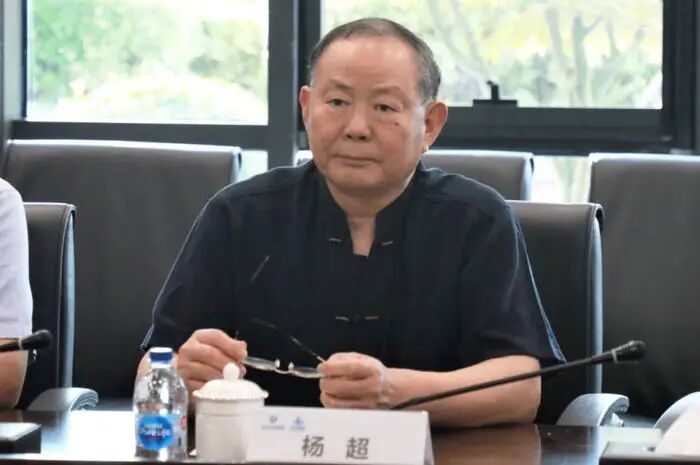
中国人寿原总裁杨超,被开除党籍
第一财经· 2025-12-26 09:27
据 中央纪委国家监委驻中国人寿纪检监察组、江西省纪委监委消息: 日前,中央纪委国家监委驻中国 人寿纪检监察组、江西省上饶市监委对中国人寿保险(集团)公司原党委书记、总裁杨超严重违纪违法 问题进行了纪律审查和监察调查。 经查,杨超身为金融央企党员领导干部,丧失理想信念,背弃初心使命,政治信仰动摇,对党不忠诚不 老实;纪律意识淡薄,无视中央八项规定精神,违规收受礼品和接受宴请,长期违规配备、使用公务用 车;违背组织原则,在组织函询时不如实说明问题,在干部职级晋升、职工录用等工作中为他人谋取利 益并收受财物;廉洁底线失守,退而不休,违规兼职取酬,违规经商办企业;家风不正,长期纵容默许 亲属利用其职权或影响力谋取私利;插手投资活动,非法收受巨额财物,系投资领域腐败的典型。 杨超严重违反党的政治纪律、组织纪律、廉洁纪律和生活纪律,构成严重职务违法并涉嫌受贿罪、利用 影响力受贿罪,且在党的十八大后不收敛、不收手,性质严重,影响恶劣,应予严肃处理。依据《中国 共产党纪律处分条例》《中华人民共和国监察法》《中华人民共和国公职人员政务处分法》等有关规 定,经中国人寿保险(集团)公司党委研究,决定给予杨超开除党籍处分,按规定取消 ...

中国人寿保险(集团)公司原党委书记、总裁杨超被开除党籍
Xin Lang Cai Jing· 2025-12-26 09:09
Core Viewpoint - The investigation into Yang Chao, former Party Secretary and President of China Life Insurance (Group) Company, revealed serious violations of discipline and law, leading to his expulsion from the Party and potential criminal prosecution [1][2][4][5]. Group 1: Investigation Findings - Yang Chao, as a leader in a financial state-owned enterprise, lost his ideals and beliefs, showing disloyalty to the Party and a lack of discipline awareness [1][4]. - He violated the Central Eight Regulations by improperly accepting gifts and dining invitations, and misused official vehicles [1][4]. - Yang breached organizational principles by failing to provide truthful information during inquiries and engaged in corrupt practices for personal gain in promotions and hiring [1][4]. Group 2: Disciplinary Actions - Yang Chao was found to have committed serious violations of political, organizational, and ethical discipline, constituting severe job-related offenses and suspected bribery [2][5]. - The Party decided to expel him, revoke his benefits, and confiscate his illegal gains, with criminal issues being referred to the prosecutorial authorities for further investigation [2][5].
近三年业绩同类第一的冠军基金经理再“亮”剑,华宝优势产业基金(026286)迎新首发
Xin Lang Cai Jing· 2025-12-26 05:56
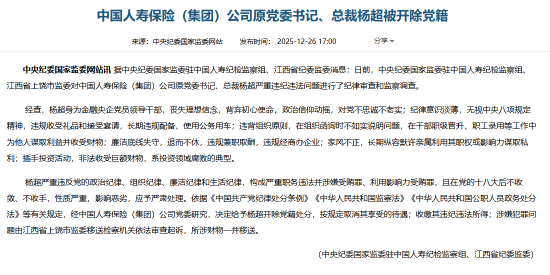
Group 1 - The core investment theme for 2026 in A-shares and overseas markets is expected to focus on technology breakthroughs, with global cycles and domestic demand transformation as supplementary factors [10][11][26] - The newly launched Huabao Advantage Industry Fund aims to invest in stocks benefiting from China's economic development and structural transformation, with a stock investment ratio of 60%-95% and a cap of 50% for Hong Kong Stock Connect stocks [3][18] - Fund manager Zheng Yingliang has demonstrated exceptional investment capabilities, with the Huabao Core Advantage Fund achieving a 144.70% return over the past three years, ranking first among 410 similar funds [1][10][19] Group 2 - The investment strategy combines top-down and bottom-up approaches, focusing on industries with good fundamentals and sustainable growth potential [3][18] - Zheng emphasizes the importance of industry lifecycle positioning, aiming to capture rapid growth phases while avoiding industry reshuffling periods [18][26] - The Huabao Core Advantage Fund has successfully leveraged this strategy, heavily investing in leading companies in the optical communication and lithium battery sectors, aligning well with long-term market trends [4][19] Group 3 - The fund's top holdings as of Q3 2025 include companies like Xinyi Technology (9.16%), CATL (9.07%), and Zhongji Xuchuang (8.28%), reflecting a strong focus on communication and new energy sectors [5][20] - The fund has consistently held its top positions for multiple quarters, indicating a stable investment strategy [20][21] - The macroeconomic environment is expected to improve in 2026, with signs of recovery in industrial profits and potential upward pressure on prices, which could lead to a "Davis Double" effect in the domestic market [10][25]
辽宁金融监管局同意撤销中国人寿沈阳市苏家屯区支公司林盛堡镇营销服务部
Jin Tou Wang· 2025-12-26 04:12
二、接此批复文件后,中国人寿保险股份有限公司沈阳市苏家屯区支公司林盛堡镇营销服务部应立即停 止一切经营活动,于15个工作日内向辽宁金融监管局缴回许可证,并按照有关法律法规要求办理相关手 续。 2025年12月17日,辽宁金融监管局发布批复称,《中国人寿(601628)保险股份有限公司辽宁省分公司 关于撤销中国人寿保险股份有限公司沈阳市苏家屯区支公司林盛堡镇营销服务部的请示》(国寿人险辽 发〔2025〕378号)收悉。经审核,现批复如下: 一、同意撤销中国人寿保险股份有限公司沈阳市苏家屯区支公司林盛堡镇营销服务部。 ...
打破保险营销惯性,看中国人寿如何以内容撬动人心?
Cai Fu Zai Xian· 2025-12-26 03:00
Core Insights - The article discusses the success of China Life's self-produced IP "Insurance Night Talk: Let's Go to Her Home," which has garnered 150 million total views and 2.57 million likes across platforms, marking it as a breakout content in the insurance industry [2][19] - The program effectively shifts the focus from traditional insurance marketing to genuine life planning discussions, resonating with users and breaking the typical sales-oriented narrative [2][4] Group 1: Content Strategy - The content strategy involves a multi-dimensional upgrade, transitioning from a "brand-centric" approach to a "user-centric" one, fostering trust and engagement [4][22] - The program reconstructs scenes by literally visiting different women's homes, allowing guests to take the lead in conversations, which creates a more authentic and relatable atmosphere [6][11] - The choice of guests is strategic, featuring influential women from various fields who resonate with the target audience, thus enhancing relatability and engagement [7][9] Group 2: Emotional Engagement - The program follows a clear emotional-cognitive-action chain, starting with relatable life stories that build emotional resonance before discussing insurance topics [12][14] - Real-life anecdotes shared by guests, such as financial planning and personal challenges, evoke empathy and prompt viewers to reflect on their own life choices [14][15] - The content encourages discussions around risk awareness and insurance needs without overtly promoting products, making the information feel more relevant and useful to viewers [15][19] Group 3: Long-term Value and Brand Positioning - The initiative aims to establish a content moat for the brand, differentiating itself in a market where users struggle to distinguish between products [20][22] - By positioning insurance as part of life planning rather than a mere product to sell, the brand enhances its image as a life companion rather than just a transactional entity [22][23] - The long-term trust built through this content strategy is seen as a significant competitive advantage, as users are likely to remember the brand when making future decisions [22][23]

国寿、太保宣布:撤销监事会
Jin Rong Shi Bao· 2025-12-26 02:14
Group 1 - The core point of the article is the significant shift in the governance structure of the insurance industry in China, with multiple companies, including China Life and China Pacific Insurance, announcing the abolition of their supervisory boards [1][2][3] - As of December 25, 2023, a total of 13 insurance companies have announced the dissolution of their supervisory boards, indicating a profound transformation in the long-standing "three meetings and one layer" governance framework [1][2] - The trend of abolishing supervisory boards began with Japan's insurance company in April 2023 and has been rapidly adopted by state-owned insurance groups, expanding from group companies to specialized subsidiaries [1][2] Group 2 - The new policy guidance is driven by the upcoming implementation of the revised Company Law in July 2024, which allows wholly state-owned companies to replace supervisory boards with audit committees [3] - The decision to abolish supervisory boards is motivated by the need to reduce costs and improve efficiency, addressing the weaknesses of traditional supervisory functions [3] - Experts believe that the abolition of supervisory boards represents an exploration of modern financial governance, with a focus on enhancing compliance and risk management capabilities within the insurance industry [3]

“长钱”叙事下的险资
Shang Hai Zheng Quan Bao· 2025-12-26 02:01
Group 1 - The core narrative of insurance capital is shifting towards "long money," characterized by more precise asset-liability matching, diversified investment channels, and extended investment horizons, which are expected to persist for a long time [1] - Regulatory policies are guiding this shift by loosening restrictions on insurance capital investments, encouraging long-term investments in the capital market [2][6] - As of Q3 2025, the balance of stock investments for life and property insurance companies has increased by approximately 50% and 30% respectively compared to the beginning of the year [2] Group 2 - Insurance capital is increasingly focusing on gold investments as a new area of interest, with the wealth storage function of gold regaining importance amid global macro uncertainties [3] - The OCI strategy, which emphasizes long-term dividend returns over short-term price differences, has led to a record number of approximately 40 equity stakes taken by insurance capital this year [4] - The new "National Nine Articles" has transformed dividend requirements from regulatory guidance to rigid constraints, enhancing the market environment for stable dividend targets [4] Group 3 - Long-term investment philosophy is becoming a core criterion for talent selection within insurance institutions, emphasizing the importance of a shared long-term investment vision among team members [5] - The investment strategy is evolving from a generic approach to a more refined asset-liability matching strategy, necessitated by changes in liability characteristics and the development of floating yield products [6][7] - A dynamic asset-liability matching mechanism is being established to adapt to the characteristics of floating yield products and market conditions, ensuring investment returns effectively cover liability costs [7]
