STANCHART(02888)

Search documents
渣打集团(02888) - 翌日披露报表
2025-06-24 09:58
FF305 翌日披露報表 (股份發行人 ── 已發行股份或庫存股份變動、股份購回及/或在場内出售庫存股份) 表格類別: 股票 狀態: 新提交 公司名稱: 渣打集團有限公司 呈交日期: 2025年6月24日 如上市發行人的已發行股份或庫存股份出現變動而須根據《香港聯合交易所有限公司(「香港聯交所」)證券上市規則》(「《主板上市規則》」)第13.25A條 / 《香港聯合交易所有限公司GEM證券 上市規則》(「《GEM上市規則》」)第17.27A條作出披露,必須填妥第一章節 。 | 第一章節 | | | | | | | | | | --- | --- | --- | --- | --- | --- | --- | --- | --- | | 1. 股份分類 | 普通股 | 股份類別 | 不適用 | | | 於香港聯交所上市 | 是 | | | 證券代號 (如上市) | 02888 | 說明 | | | | | | | | A. 已發行股份或庫存股份變動 | | | | | | | | | | | | 已發行股份(不包括庫存股份)變動 | | | | 庫存股份變動 | | | | | 事件 | 已發行股份(不包括庫存 ...
外资银行眼中的人民币国际化新征途:加速向全球贸易融资货币、储备货币“进阶”
Jing Ji Guan Cha Wang· 2025-06-24 01:13
Core Viewpoint - The international enthusiasm for the use of the Renminbi (RMB) has significantly increased following the implementation of "reciprocal tariffs" by the United States, with a notable rise in demand for RMB in cross-border investments and trade financing [2][3][4]. Group 1: RMB in Cross-Border Trade and Investment - After the U.S. introduced "reciprocal tariffs," more Chinese enterprises are willing to use RMB for overseas direct investment (ODI), leading to increased demand for RMB in cross-border investments [3]. - The RMB is evolving from a popular trade settlement currency to a multi-functional role, including trade financing and reserve currency [4][6]. - As of the end of 2024, RMB is projected to become the third-largest trade financing currency globally, with cross-border payment amounts reaching 64.1 trillion yuan, a 23% increase year-on-year [4]. Group 2: Central Bank and Reserve Currency Trends - More emerging market central banks are incorporating RMB into their foreign exchange reserves, reflecting a trend towards diversification away from the U.S. dollar [4][9]. - Currently, RMB accounts for less than 3% of global foreign exchange reserves, indicating significant potential for growth in this area [9]. Group 3: RMB Liquidity and Financing - The liquidity of RMB in overseas markets is increasing, which is encouraging foreign enterprises to use RMB for trade financing, thereby reducing their financing costs [8][11]. - The Hong Kong Monetary Authority has introduced measures to support RMB trade financing liquidity, which will further meet the financing needs of foreign enterprises [7][8]. Group 4: Challenges and Future Outlook - The internationalization of RMB faces challenges in meeting the diverse needs of foreign enterprises for RMB settlement, investment, and reserve management [11][12]. - Enhancing RMB liquidity in overseas markets is crucial for encouraging foreign institutions to hold RMB assets, which requires the development of a diverse range of RMB financial products [12].


渣打集团(02888) - 翌日披露报表
2025-06-23 10:13
FF305 | 1). | 於2025年6月16日購回但尚未註銷 | | 769,864 | 0.0329 % | GBP | 11.781659 | | --- | --- | --- | --- | --- | --- | --- | | | 變動日期 | 2025年6月16日 | | | | | | 2). | 於2025年6月17日購回但尚未註銷 | | 744,345 | 0.0318 % | GBP | 11.643327 | | | 變動日期 | 2025年6月17日 | | | | | | 3). | 於2025年6月18日購回但尚未註銷 | | 764,776 | 0.0327 % | GBP | 11.634824 | | | 變動日期 | 2025年6月18日 | | | | | | 4). | 於2025年6月19日購回但尚未註銷 | | 772,000 | 0.033 % | GBP | 11.602767 | | | 變動日期 | 2025年6月19日 | | | | | | 5). | 於2025年6月20日購回但尚未註銷 | | 776,000 | 0.0332 % | GBP ...
大成研究 | 王杰等:稳定币发行实务全解析
Sou Hu Cai Jing· 2025-06-23 04:59
Core Viewpoint - The discussion on stablecoins highlights their role in enhancing global monetary policy coordination, innovating cross-border payments, and constructing regulatory frameworks, with a focus on the implications of dollar-pegged stablecoins and the need for careful consideration of their impact on economic sovereignty and financial stability [5][6][7]. Group 1: Introduction and Definition - Stablecoins are a special type of cryptocurrency designed to maintain price stability by pegging to fiat currencies, physical assets, or algorithmic mechanisms, making them suitable for payment mediums and value storage tools [14][15]. - The global stablecoin market has seen significant growth, with a total market value exceeding hundreds of billions, and USDT and USDC accounting for nearly 90% of the market share [19][19]. Group 2: Market Environment and Demand - Traditional cross-border payments face challenges such as long processing times and high fees, while stablecoins can facilitate near-instantaneous and low-cost transactions, enhancing global supply chain efficiency [20]. - The decentralized finance (DeFi) ecosystem relies heavily on stablecoins as core assets for lending, trading, and derivatives, directly affecting the health of the DeFi market [21]. - Traditional financial institutions are exploring stablecoin issuance to improve payment efficiency and expand business boundaries, as seen with JPM Coin [22]. Group 3: Types of Companies Issuing Stablecoins - Financial technology companies, such as SFJC and XD Technology, are well-positioned to issue stablecoins due to their expertise in blockchain and digital currency technologies [23]. - Cross-border payment companies, like HLJH and LKL, have the necessary licenses and technology to support stablecoin circulation in international transactions [24]. - Companies with relevant licenses or compliance qualifications, such as the issuer of USDC, are also capable of issuing stablecoins [25]. Group 4: Positive Impacts of Issuing Stablecoins - Stablecoins can significantly enhance cross-border payment efficiency and reduce costs, as they allow for real-time transactions without relying on traditional banking systems [31]. - They provide a stable trading medium in the volatile cryptocurrency market, allowing investors to mitigate risks associated with price fluctuations [32]. - The issuance of stablecoins can drive financial inclusion by lowering barriers to entry for financial services, particularly in underserved regions [33]. - Stablecoins can attract new participants and capital into the financial market, bridging traditional finance and cryptocurrency [34]. - Companies can generate revenue through interest on reserves, as demonstrated by Circle's USDC, which significantly contributes to its overall revenue [35]. Group 5: Regulatory Environment and Challenges - The regulatory landscape for stablecoins varies significantly across jurisdictions, with the U.S. and Hong Kong implementing specific requirements for issuance, including licensing and reserve management [86][91]. - Companies must navigate complex compliance requirements, including maintaining high liquidity reserves and adhering to anti-money laundering regulations [108][109]. - The potential for regulatory changes poses risks to stablecoin projects, as seen in instances where sudden policy shifts have impacted market confidence [39]. Group 6: Future Trends and Considerations - The future of stablecoins is likely to involve stricter regulations and a focus on compliance, as well as the expansion of application scenarios beyond traditional finance [115]. - Companies must consider market demand and operational capabilities when planning stablecoin issuance, ensuring alignment with existing business models [66][67]. - The competitive landscape will require companies to differentiate their stablecoin offerings and stay informed about regulatory developments to ensure sustainable operations [70][71].



渣打集团(02888) - 翌日披露报表
2025-06-20 08:49
FF305 翌日披露報表 (股份發行人 ── 已發行股份或庫存股份變動、股份購回及/或在場内出售庫存股份) | 1). | 於2025年6月16日購回但尚未註銷 | | 769,864 | 0.0329 % | GBP | 11.781659 | | --- | --- | --- | --- | --- | --- | --- | | | 變動日期 | 2025年6月16日 | | | | | | 2). | 於2025年6月17日購回但尚未註銷 | | 744,345 | 0.0318 % | GBP | 11.643327 | | | 變動日期 | 2025年6月17日 | | | | | | 3). | 於2025年6月18日購回但尚未註銷 | | 764,776 | 0.0327 % | GBP | 11.634824 | | | 變動日期 | 2025年6月18日 | | | | | | 4). | 於2025年6月19日購回但尚未註銷 | | 772,000 | 0.033 % | GBP | 11.602767 | | | 變動日期 | 2025年6月19日 | | | | | FF305 第 ...
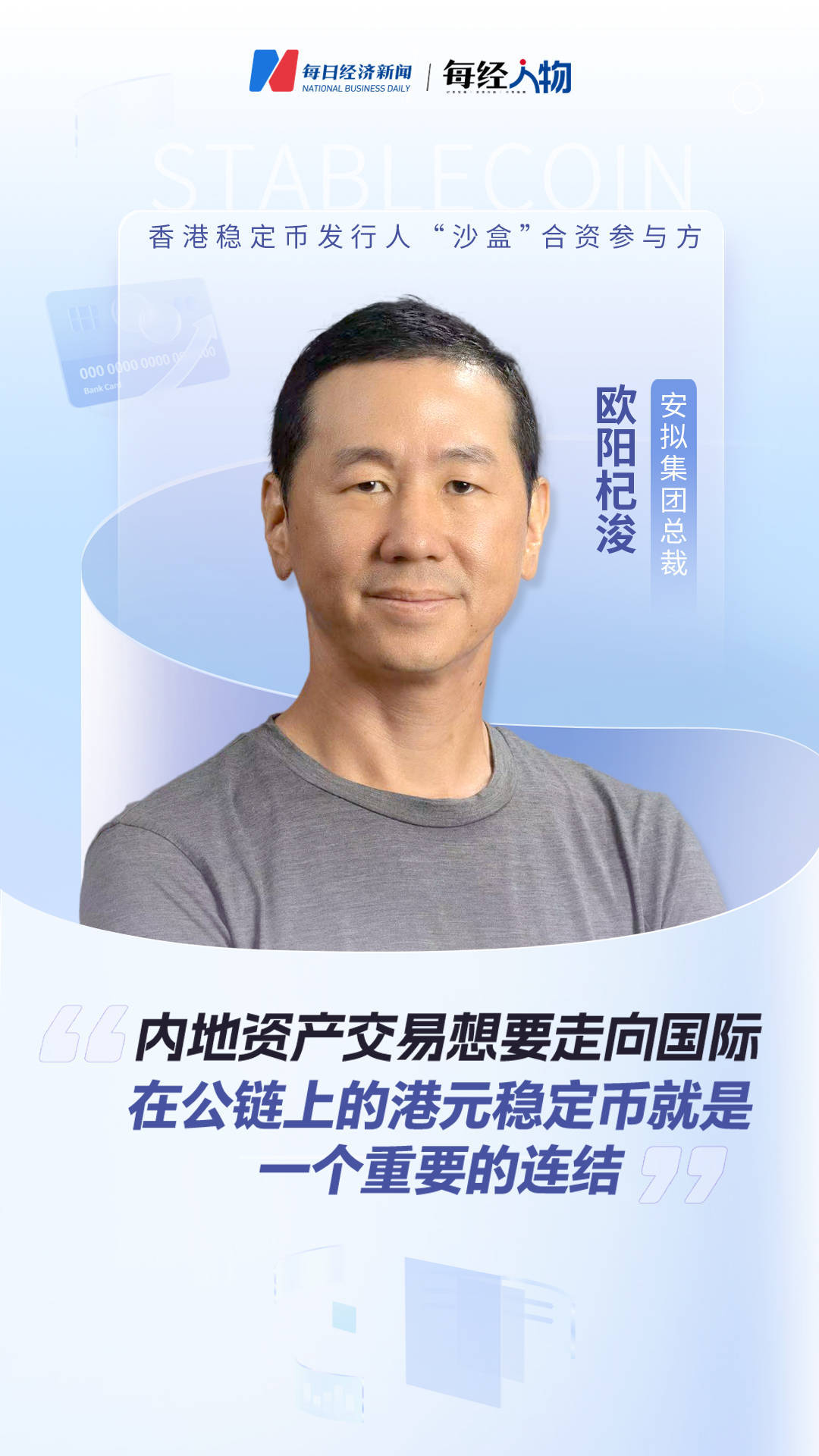
专访安拟集团总裁欧阳杞浚:香港金管局监管的港元稳定币,有望成为内地资产交易走向国际的关键
Sou Hu Cai Jing· 2025-06-19 13:02
Core Viewpoint - The article discusses the emergence of stablecoins in Hong Kong, particularly focusing on the collaboration between Animoca Brands, Standard Chartered Bank, and Hong Kong Telecom to issue a Hong Kong dollar-pegged stablecoin, which is seen as a crucial link for cross-border transactions and financial settlements in the region [6][7][18]. Group 1: Stablecoin Development - The Hong Kong government has announced that the Stablecoin Regulation will take effect on August 1, 2025, marking a significant step in the regulatory framework for stablecoins [6]. - Animoca Brands is one of the first participants in the stablecoin issuance sandbox, alongside Standard Chartered Bank and Hong Kong Telecom, and they have formed a joint venture to prepare for the issuance of the stablecoin [6][7]. - The stablecoin is expected to facilitate various applications, including virtual asset transactions within gaming ecosystems and cross-border trade settlements [16][17]. Group 2: Company Overview - Animoca Brands initially gained recognition in the blockchain gaming sector and has since expanded into Web3, focusing on decentralized identity and education projects [14][15]. - The company's business model includes self-developed projects, returns from investments in over 570 Web3 companies across various sectors, and consulting services akin to investment banking [15][16]. - The collaboration with Standard Chartered and Hong Kong Telecom aims to leverage their respective strengths in banking and retail to enhance the stablecoin's market reach [16][19]. Group 3: Market Implications - The stablecoin is positioned as a vital tool for connecting mainland asset transactions to international markets, especially given Hong Kong's status as a major offshore RMB trading center [7][18]. - The article highlights the potential for the stablecoin to support a wide range of financial products and services, indicating a trend towards the digitization of financial assets on public blockchains [17][18]. - Animoca Brands emphasizes the need for a neutral currency in Hong Kong to facilitate international transactions, particularly in light of geopolitical influences [18][19]. Group 4: Regulatory Environment - The article notes that the Hong Kong Monetary Authority (HKMA) is actively working on a regulatory framework for stablecoins, which is crucial for building a compliant financial ecosystem [24][25]. - The company has gained valuable compliance experience during the sandbox testing phase, focusing on investor protection and regulatory requirements [21][26]. - There is a recognition that while stablecoins can offer high security, the lack of regulatory oversight poses risks, necessitating a push for legally compliant stablecoin solutions [26].

渣打集团(02888) - 翌日披露报表
2025-06-19 10:19
FF305 | 1). | 於2025年6月16日購回但尚未註銷 | | 769,864 | 0.0329 % | GBP | 11.781659 | | --- | --- | --- | --- | --- | --- | --- | | | 變動日期 | 2025年6月16日 | | | | | | 2). | 於2025年6月17日購回但尚未註銷 | | 744,345 | 0.0318 % | GBP | 11.643327 | | | 變動日期 | 2025年6月17日 | | | | | | 3). | 於2025年6月18日購回但尚未註銷 | | 764,776 | 0.0327 % | GBP | 11.634824 | | | 變動日期 | 2025年6月18日 | | | | | FF305 第 2 頁 共 7 頁 v 1.3.0 翌日披露報表 (股份發行人 ── 已發行股份或庫存股份變動、股份購回及/或在場内出售庫存股份) 表格類別: 股票 狀態: 新提交 公司名稱: 渣打集團有限公司 呈交日期: 2025年6月19日 如上市發行人的已發行股份或庫存股份出現變動而須根據《香港聯合交易所 ...
渣打银行禤惠仪:为新质生产力企业“出海”保驾护航
Xin Hua Cai Jing· 2025-06-19 04:38
Core Viewpoint - The financial industry plays a crucial role in promoting the development of new quality productivity, with Shanghai and Hong Kong as key international financial centers facilitating the integration of these enterprises into global markets and supply chains [1][4]. Group 1: Macro Changes - Supply chains are rapidly upgrading, leading to adjustments in industrial chains and changes in trade and capital flows, significantly enhancing regional trade and promoting "South-South cooperation" [2]. - Global capital is being reallocated, with significant potential for both overseas funds to invest in Chinese assets and Chinese capital to invest in overseas assets [2]. - There is an increase in risk aversion among investors [3]. - The development of financial technology is creating new trade payment systems and operational models [4]. Group 2: Role of Financial Institutions - Financial institutions are essential in driving supply chain innovation and promoting industrial upgrades, requiring a more efficient, precise, and systematic financial system to support new quality productivity [4]. - Financial support for startups and technology projects can be provided through equity investments, venture capital, and green bonds, helping them transition from laboratory to large-scale commercial application [4]. Group 3: Shanghai and Hong Kong as Financial Hubs - Shanghai and Hong Kong are positioned as dual engines of China's financial industry, with significant roles in the national financial development strategy and collaborative potential [4]. - Shanghai is a key layout for international financial center construction, boasting a comprehensive financial market system and significant breakthroughs in financial technology innovation [4]. - Hong Kong serves as a bridge connecting international markets with mainland China, featuring a robust financial ecosystem, regulatory framework, and global perspective [4]. Group 4: Standard Chartered Bank's Commitment - Standard Chartered Bank has been deeply rooted in Shanghai and Hong Kong for over 165 years, actively participating in China's financial opening and benefiting from it [4]. - As the first foreign bank to directly participate in the cross-border RMB payment system in both mainland China and Hong Kong, Standard Chartered can provide RMB services in 35 global markets, enhancing support for new quality productivity enterprises in their international endeavors [5]. - The demand for cross-border financial services and products from new quality productivity enterprises is continuously rising, and Standard Chartered aims to grow alongside these clients while contributing to their development [5].
渣打禤惠仪:金融正成为推动供应链创新、促进产业升级的关键
news flash· 2025-06-19 03:18
Core Insights - Standard Chartered Bank's executive director highlighted four macro changes observed in international finance, including supply chain enhancements, global capital reallocation, increased risk aversion, and advancements in financial technology [1] Group 1: Macro Changes - Supply chains are accelerating and adjusting, leading to significant increases in regional trade and changes in trade and capital flows [1] - Global capital is being reallocated, with substantial potential for both overseas funds investing in Chinese assets and Chinese capital investing in overseas assets [1] - There is a notable increase in risk aversion, reflected in the demand for currency diversification and the need for the renminbi in transaction settlements and investment hedging [1] - Financial technology is creating new trade payment systems and operational models [1] Group 2: Financial Sector Role - Financial institutions are becoming key drivers of supply chain innovation and industrial upgrades, providing funding support to startups and technology projects through equity investments, venture capital, and green bonds [1]
2025年中国富裕客群及企业家国际银行服务需求洞察与趋势报告
Sou Hu Cai Jing· 2025-06-19 00:55
Core Insights - The report by Standard Chartered reveals the current status and trends of international banking service demands among China's affluent clientele and entrepreneurs, based on a survey of 1,520 individuals with investable assets of HKD 1 million or more [1][9]. Group 1: Current Status of International Banking Services - Approximately 87% of respondents have held international bank accounts for at least three years, with 65% for over five years, indicating a strong familiarity with international banking services [15][16]. - The primary reasons for opening international bank accounts include wealth management and investment (57%), financial security (54%), and business purposes (49%) [16][19]. - The most commonly used services are deposits (56%), cross-border transfers (40%), and local transfers (39%) [19][34]. Group 2: Preferences for Banking Locations - Hong Kong remains the preferred location for international banking services, with 70% of respondents selecting it, followed by Singapore at 63% [23][25]. - Key factors influencing the choice of banking locations include multi-currency services, local banking regulations, and access to international wealth management advice [23][26]. Group 3: Evolving Service Demands - There is a shift from single product usage to a demand for integrated, one-stop service experiences, with nearly half of the respondents considering this very important [2][41]. - Over 89% of respondents are open to digital account opening processes, particularly among millennials, where the acceptance rate is 93% [42][44]. - The demand for personalized services is significant, with language support being a core requirement, as 25% of affluent clients face communication barriers [44][46]. Group 4: Asset Allocation and Investment Strategies - More than 52% of affluent clients plan to allocate at least 20% of their income towards cross-border savings or investments, with cash, insurance, and funds being the primary asset classes for future allocation [2][35]. - The trend indicates a growing interest in insurance (54%), stocks (43%), and funds (43%) for the upcoming year, reflecting a desire for diversified asset management [31][36]. Group 5: Demand for Professional Consulting Services - There is a rising demand for value-added consulting services, particularly in tax and legal advice, with over 95% of entrepreneurs considering these services important [2][37]. - The satisfaction level with current consulting services is low, indicating a gap that banks can address to enhance client relationships [2][37]. Group 6: Integration of Services - The affluent clientele seeks a seamless integration of services across digital platforms, emphasizing the importance of comprehensive online and offline banking experiences [41][42]. - The expectation for banks to provide innovative digital services, such as virtual consultations and AI recommendations, is high among clients [42][43].