INTEL(04335)

Search documents
英特尔大涨22%!英伟达50亿美元入股;香港黄金大劫案13人被捕;上海通报“部分学校午餐问题”丨每经早参
Mei Ri Jing Ji Xin Wen· 2025-09-18 22:37
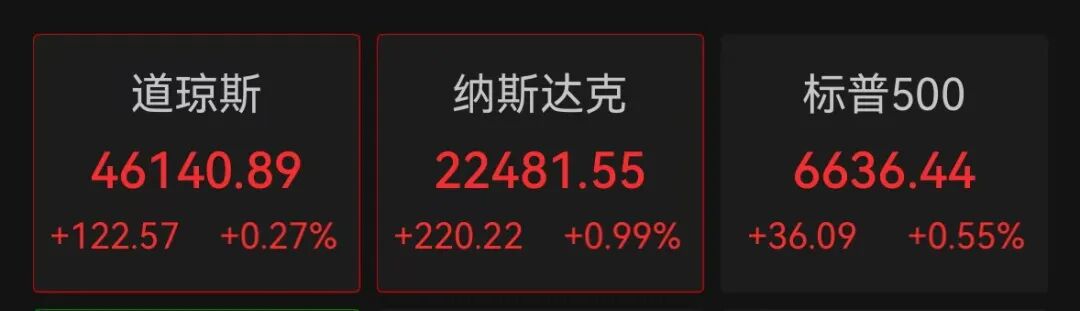
Group 1 - US stock markets closed higher with the Dow Jones up 0.27%, Nasdaq up 0.94%, and S&P 500 up 0.48% [5] - Chip stocks performed strongly, with Intel rising over 22%, Applied Materials and ASML up over 6%, Micron Technology up over 5%, and Nvidia up over 3% [5] - The Nasdaq Golden Dragon China Index fell by 1.79%, with notable declines in stocks like NetEase down over 4% and Bilibili down over 3% [5] Group 2 - The international gold futures fell by 1.07%, settling at $3678.2 per ounce, while silver futures dropped by 0.12% to $42.1 per ounce [6] - International oil prices saw a slight decline, with WTI crude oil down 0.61% at $63.31 per barrel and Brent crude down 0.71% at $66.98 per barrel [7] Group 3 - The Chinese Ministry of Commerce urged the EU not to weaponize tariffs and to eliminate market barriers, emphasizing the importance of fair competition in the electric vehicle sector [10] - The Ministry of Science and Technology reported that China's R&D investment exceeded 3.6 trillion yuan in 2024, a 48% increase from 2020, with a research intensity of 2.68% [10] Group 4 - Huawei's rotating chairman announced that the Atlas 950 SuperPoD, with a computing power of 8192 cards, is expected to launch in Q4 2025, claiming it will be the strongest computing node globally [19] - Nvidia announced a partnership with Intel, where Intel will customize x86 CPUs for Nvidia, which will invest $5 billion in Intel shares at $23.28 per share [18] Group 5 - Alibaba's market capitalization returned to 3 trillion HKD, with reports of Jack Ma's increased involvement in the company, potentially impacting its business strategy [21] - Cambricon Technologies reported a staggering revenue increase of 4347.82% year-on-year for the first half of 2025, driven by demand for AI chips [23]



英伟达(NVDA.US)入股英特尔(INTC.US)震惊市场 美国政府成最大赢家
Zhi Tong Cai Jing· 2025-09-18 22:29
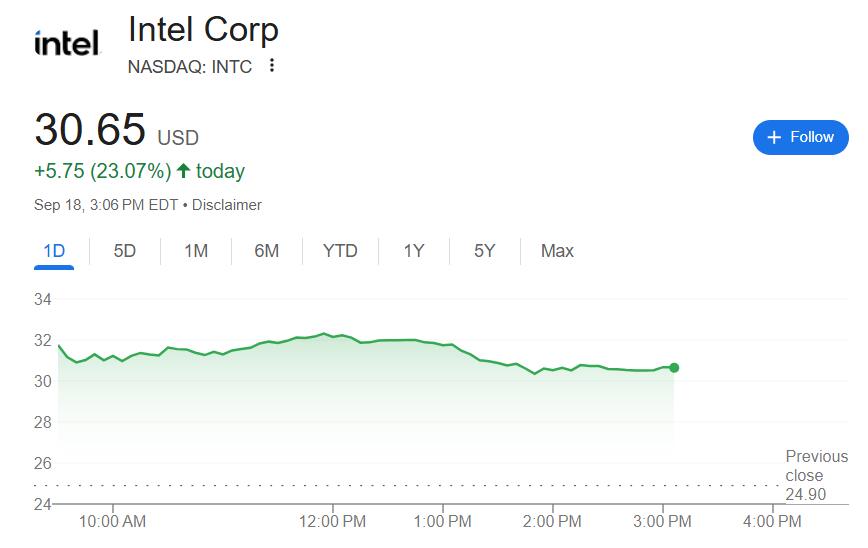
美国芯片行业在周四经历剧烈震动。英伟达(NVDA.US)意外宣布收购英特尔(INTC.US)5%股份,引发华 尔街高度关注,而美国政府成为此次交易中最大的赢家。 根据最新披露的数据,美国联邦政府上月以每股20.47美元的价格购入4.33亿股英特尔股票,总投资额约 为89亿美元。截至周四收盘,英特尔股价一度冲高至32.38美元,最终收于30.57美元,单日暴涨 22.77%。这意味着,短短一个月时间,政府账面浮盈已接近50%,即44亿美元,持股市值突破130亿美 元。 英伟达股价在消息公布后同样上涨,收涨3.49%至176.24美元,带动美股主要指数走高。标普500指数上 涨0.48%,纳指上涨0.94%。 Gordon Haskett分析师Don Bilson表示:"虽然这次收益不及国防部投资稀土矿商MP Materials(MP.US)带 来的账面增长,其意义依然重大。"国防部今年7月曾以每股30美元购入MP Materials约2500万股,旨在 保障美国军方稀土磁体供应,该笔投资目前价值已翻倍,账面盈利接近10亿美元。 近年来,美国政府逐步加大对关键产业的直接投资,这一趋势令投资者颇感复杂。过去,政府通 ...
隔夜美股 | 三大指数与罗素2000齐创新高 英特尔(INTC.US)涨22.77%
智通财经网· 2025-09-18 22:26
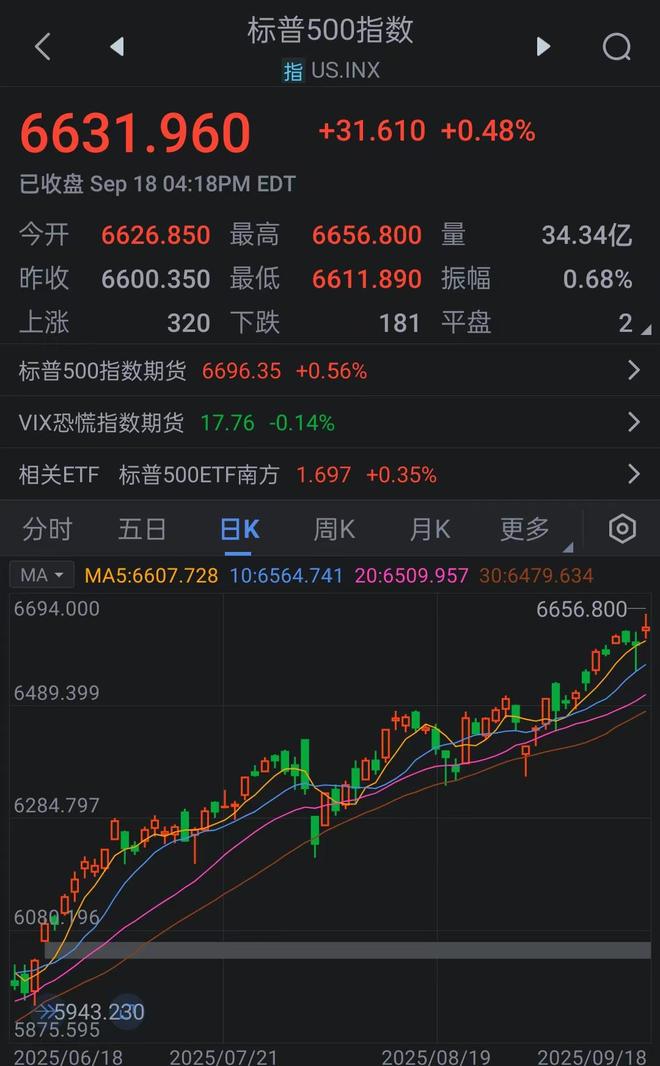
Market Performance - Major US indices including the Dow Jones, Nasdaq, S&P 500, and Russell 2000 reached all-time highs following the Federal Reserve's announcement of a 25 basis point interest rate cut [1] - The Dow Jones increased by 124.10 points (0.27%) to 46,142.42, Nasdaq rose by 209.40 points (0.94%) to 22,470.73, S&P 500 gained 31.61 points (0.48%) to 6,631.96, and Russell 2000 climbed 59.317 points (2.46%) to 2,466.662 [1] European Market - The German DAX30 index rose by 343.44 points (1.47%) to 23,690.39, while the UK FTSE 100 increased by 17.53 points (0.19%) to 9,225.90 [2] - The French CAC40 index gained 67.63 points (0.87%) to 7,854.61, and the Euro Stoxx 50 index rose by 91.65 points (1.71%) to 5,461.35 [2] Commodity Prices - Light crude oil futures for October fell by $0.48 to $63.57 per barrel (0.75% decrease), while Brent crude for November dropped by $0.51 to $67.44 per barrel (0.75% decrease) [2] - Spot gold decreased by 0.42% to $3,644.4, with long-term bullish sentiment on gold prices due to factors like US fiscal deficits and central bank purchases [4] Employment Data - A technical error led to a significant underreporting of unemployment claims in North Carolina, with the correct number expected to increase by approximately 20,000 once adjusted [5] - The reported number for the week ending September 6 was only 205, while the actual figure should have been around 19,355 [5] Corporate News - ExxonMobil plans to focus on long-term growth in fossil fuels, expecting stable energy demand through 2050, and aims to double LNG sales by 2030 [7] - Google is integrating its Gemini AI model into the Chrome browser, enhancing user experience by providing explanations and information consolidation [7] - Nvidia's unexpected investment in Intel has led to a significant stock price increase, with the US government's stake now valued at approximately $14 billion, reflecting a paper gain of $4.9 billion [8]

美股三大股指齐创新高,英伟达入股推动英特尔暴涨22.8%,中概股多数下跌
Feng Huang Wang· 2025-09-18 22:19
Economic Overview - The U.S. stock market indices reached new highs, buoyed by the Federal Reserve's interest rate cut and Nvidia's investment in Intel, which sparked a rally in chip stocks [1] - The latest data from the U.S. Labor Department indicated a decrease in initial jobless claims, but the overall labor market is showing signs of cooling, with weakened demand and supply for labor [1] - The Federal Reserve cut the federal funds rate by 25 basis points and is expected to maintain a steady rate cut pace through 2025 to support the labor market [1] Market Dynamics - The Dow Jones increased by 124.10 points (0.27%) to close at 46,142.42, the Nasdaq rose by 209.40 points (0.94%) to 22,470.73, and the S&P 500 gained 31.61 points (0.48%) to 6,631.96 [3] - Among the 11 sectors of the S&P 500, 7 sectors saw gains, with the information technology sector up by 1.36% and the financial sector up by 0.6% [3] Company News - Nvidia's stock rose by 3.49%, while Intel surged by 22.77%, marking its best single-day performance in nearly 38 years after Nvidia announced a $5 billion investment in Intel for joint development of PC and data center chips [4] - Microsoft announced plans to invest over $7 billion to build the "world's strongest AI data center" in Wisconsin, with an initial investment of $3.3 billion for the first data center and an additional $4 billion for a second [7] - Google integrated its self-developed AI model, Gemini, into the Chrome browser, enhancing user experience by providing explanations of web pages and integrating with other Google services [7] Sector Performance - Small-cap stocks, represented by the Russell 2000 index, rose by 2.4%, reaching a record high, benefiting from a low-interest-rate environment [1] - The cybersecurity sector saw significant gains, with NetSkope's IPO rising by 18.37% and CrowdStrike increasing by 12.8% after multiple investment banks raised their target prices [4][5]
英特尔大涨22%!英伟达50亿美元入股;俄罗斯一海域发生7.8级地震;香港黄金大劫案13人被捕;上海通报“部分学校午餐问题”丨每经早参
Mei Ri Jing Ji Xin Wen· 2025-09-18 22:14
Group 1 - The U.S. stock market saw all three major indices close higher, with the Dow Jones up 0.27%, Nasdaq up 0.94%, and S&P 500 up 0.48%, marking new closing highs [3] - Chip stocks performed strongly, with Intel rising over 22%, Applied Materials and ASML up over 6%, Micron Technology up over 5%, and Nvidia up over 3% [3] - Chinese concept stocks mostly declined, with the Nasdaq Golden Dragon China Index down 1.79%, and notable declines in companies like NetEase and Bilibili [3] Group 2 - International precious metal futures generally fell, with COMEX gold futures down 1.07% at $3678.2 per ounce, and COMEX silver futures down 0.12% at $42.1 per ounce [4] - International oil prices slightly decreased, with WTI crude oil down 0.61% at $63.31 per barrel, and Brent crude oil down 0.71% at $66.98 per barrel [5] Group 3 - The European stock indices all closed higher, with Germany's DAX up 1.35% at 23674.53 points, France's CAC40 up 0.87% at 7854.61 points, and the UK's FTSE 100 up 0.21% at 9228.11 points [6] Group 4 - The Chinese Ministry of Commerce expressed hope that the EU would not weaponize tariffs and called for the elimination of market barriers, emphasizing the importance of fair competition in the electric vehicle sector [8] - The Chinese Ministry of Science and Technology reported that national R&D investment exceeded 3.6 trillion yuan in 2024, a 48% increase from 2020, with a research intensity of 2.68% [9] Group 5 - The National Health Commission and the Ministry of Finance issued new regulations on childcare subsidies, streamlining the application process and emphasizing online applications [10] - The Shanghai Education Commission reported issues with school lunches supplied by a specific company, indicating ongoing investigations and quality control measures [10] Group 6 - The Hong Kong police arrested 13 individuals in connection with a gold theft case, recovering approximately 65 kilograms of stolen gold valued at around 50 million HKD [11] - Beijing announced the social insurance contribution limits for 2025, with a maximum monthly contribution base of 35,811 yuan and a minimum of 7,162 yuan [7] Group 7 - The film "731" achieved a single-day box office of over 3 billion yuan, setting two records in Chinese film history [13] - The U.S. vetoed a UN Security Council resolution regarding a ceasefire in Gaza, with 14 votes in favor and the U.S. voting against [13] Group 8 - Nvidia announced a partnership with Intel, where Intel will customize x86 CPUs for Nvidia, which will integrate them into AI infrastructure platforms [16] - Huawei's Xu Zhijun stated that the Atlas 950 super node will surpass Nvidia in computing power, with a scale of 8192 cards expected to launch in Q4 of this year [17][18] Group 9 - Alibaba's market value returned to 3 trillion HKD amid reports of Jack Ma's increased involvement in the company, which may positively impact its business strategy [19] - Cambrian Technology reported a staggering revenue increase of 4347.82% year-on-year, driven by AI chip products and partnerships with leading tech firms [20] Group 10 - DeepSeek issued a statement warning users about scams involving impersonation and fraudulent activities related to their services [21] - The pre-prepared food controversy continues to affect the restaurant industry, with notable establishments removing claims of serving freshly made dishes [23] Group 11 - Nestlé Group has experienced significant management changes, including the dismissal of its CEO and the appointment of a new chairman, raising concerns about strategic execution [24] - The trial of former executives from Zhongzhi Enterprise Group for illegal public deposit collection commenced, highlighting ongoing legal issues in the corporate sector [26]
美股收盘:三大股指齐创新高 英特尔大涨22%
Di Yi Cai Jing· 2025-09-18 21:43
(本文来自第一财经) 美股周四收盘,道指收涨0.27%、标普500指数涨0.48%,纳指涨0.94%,均创下历史收盘新高。英特尔 (INTC.O)涨22.7%,英伟达(NVDA.O)涨超3%,特斯拉(TSLA.O)跌2%。纳斯达克中国金龙指数收跌 1.79%,阿里巴巴(BABA.N)跌超2%,网易(NTES.O)跌4%。 ...
9月19日外盘头条:特朗普要求允许解雇美联储理事 英伟达与英特尔将联合开发产品 谷歌浏览器将支...
Xin Lang Cai Jing· 2025-09-18 21:41
Group 1 - The Trump administration is requesting the Supreme Court to allow the dismissal of Federal Reserve Governor Lisa Cook, following a lower court's ruling that blocked her removal [4][6] - Cook participated in the Federal Open Market Committee meeting where a decision was made to lower the benchmark overnight lending rate by 0.25 percentage points [4] Group 2 - The U.S. government is approaching a shutdown crisis, with Democratic leaders considering strategies to counter the Republican agenda, particularly regarding healthcare [8] - This marks a significant shift for the Democrats, who previously agreed to a temporary funding bill under pressure from the Trump administration [8] Group 3 - Google is adding Gemini to its Chrome browser to enhance AI search capabilities, aiming to compete with startups like OpenAI and Perplexity [10][11] - The new feature will assist users in understanding webpage content and performing tasks across tabs, while maintaining Chrome's speed and security [11] Group 4 - NVIDIA and Intel are collaborating to develop products, with NVIDIA becoming one of Intel's largest shareholders after a significant investment, leading to a 23% surge in Intel's stock price [13] - The partnership will focus on joint development of PC and data center chips, although Intel's foundry services will not produce chips for NVIDIA [13] Group 5 - The Bank of England's Governor Andrew Bailey indicated that the interest rate cut cycle is not over, citing risks from a cooling labor market [17][18] - The Monetary Policy Committee voted to maintain the interest rate at 4%, with ongoing concerns about inflation and labor market conditions [17]

美股三大股指收盘上涨 英特尔涨超22%
Xin Lang Cai Jing· 2025-09-18 20:24
来源:滚动播报 F 5875.5943.230 2025/06/18 2025/07/21 2025/09/18 2025/08/19 周四美股三大股指收盘上涨,道指涨0.27%,纳指涨0.94%,标普涨0.48%。标普500指数、纳斯达克100 指数、道琼斯指数和罗素2000指数均创下收盘纪录。英特尔股价涨超22%,英伟达表示将向该公司投资 50亿美元。英伟达涨超3%,谷歌涨超1%,特斯拉跌超2%。 ...
黄仁勋称同英特尔协议侧重定制芯片,否认特朗普政府参与,郭明錤称台积电风险可控
Hua Er Jie Jian Wen· 2025-09-18 19:38
Core Viewpoint - NVIDIA and Intel have announced a historic partnership focused on the development of custom chips, which is expected to open new markets for NVIDIA and make it a major customer for Intel's server CPUs, potentially addressing a market opportunity of $25 billion to $50 billion [1][5]. Group 1: Partnership Details - The collaboration will involve NVIDIA gaining access to x86 architecture, allowing for greater flexibility in expanding supercomputer capabilities [3]. - Both companies aim to create a new generation of integrated notebook chips that combine CPU and GPU processing [3]. - NVIDIA plans to invest $5 billion in Intel's common stock at a price of $23.28 per share, which is at a discount compared to the previous closing price [4]. Group 2: Market Reactions - Following the announcement, Intel's stock jumped 27.6% at the open, with intraday gains reaching 30%, marking the largest single-day increase since October 1987 [1]. - NVIDIA's stock also saw a rebound, rising approximately 3.9% during the day, while AMD's stock fell over 5.8% initially before narrowing its losses [12]. Group 3: Analyst Insights - Analysts believe the partnership could redefine the AI PC ecosystem and create significant synergies in the x86/mid-range/inference AI server market [7]. - The collaboration is seen as having manageable risks for TSMC, with expectations that TSMC's advanced process advantages will last at least until 2030 [8]. - There are questions regarding whether NVIDIA will utilize Intel's foundries for production, but NVIDIA has stated it will be a major buyer of Intel chips [6]. Group 4: Commitment to Arm Architecture - NVIDIA's CEO emphasized that the company's commitment to its Arm architecture roadmap remains unchanged despite the new partnership [9][10].
纳指创新高 英特尔大涨26% 中概股走低
2 1 Shi Ji Jing Ji Bao Dao· 2025-09-18 17:03
Group 1: Intel and Nvidia Collaboration - Intel's stock surged by 26% following the announcement of a partnership with Nvidia to develop AI infrastructure and personal computing products [2][5] - Nvidia will invest $5 billion in Intel at a price of $23.28 per share, focusing on integrating Nvidia's AI capabilities with Intel's CPU technology [8] - The collaboration aims to create customized x86 CPUs for data centers and integrate Nvidia's RTX GPU Chiplet into new x86 SoCs for personal computing [9] Group 2: Semiconductor Sector Impact - Intel's rise positively influenced semiconductor stocks, with notable increases in stocks such as Marvell Technology (up 5.6%), Micron Technology (up 4.76%), and ON Semiconductor (up 4.72%) [4] - The partnership is expected to enhance the competitive landscape in the semiconductor industry, combining Nvidia's strengths in AI with Intel's established CPU architecture [9] Group 3: Market Reactions and Trends - The broader market saw mixed reactions, with major tech stocks like Meta and Alphabet rising over 1%, while Tesla and TSMC saw less than 1% increase [2] - The collaboration between Intel and Nvidia is viewed as a significant step in the evolution of computing, with both companies aiming to expand their ecosystems and prepare for the next computing era [9]