MICROSOFT(04338)

Search documents
14B打败671B,微软rStar2-Agent在数学推理上超过DeepSeek-R1
3 6 Ke· 2025-09-02 07:36
Core Insights - The article discusses the advancements in reasoning capabilities of large language models (LLMs) through test-time scaling and the introduction of agentic reinforcement learning, specifically highlighting the development of the rStar2-Agent model by a Microsoft research team [1][2]. Group 1: Model Development - Microsoft has developed a powerful agentic reinforcement learning method called rStar2-Agent, which includes a 14 billion parameter reasoning model that achieves state-of-the-art performance, surpassing even the 671 billion parameter DeepSeek-R1 model [2][17]. - The rStar2-Agent model demonstrates significant improvements in mathematical reasoning tasks, achieving an accuracy of 80.6% on the AIME24 benchmark, outperforming several leading models [19]. Group 2: Innovations and Techniques - The research team introduced three key innovations for the rStar2-Agent: 1. A high-throughput, independent code environment capable of handling 45,000 concurrent tool calls with an average feedback execution time of 0.3 seconds [10]. 2. A group relative policy optimization method (GRPO-RoC) that combines GRPO with correct resampling to address noise in the environment caused by sparse rewards [12][14]. 3. A training scheme that enhances a pre-trained 14 billion parameter model to achieve advanced reasoning capabilities with minimal computational resources [15][16]. Group 3: Performance Metrics - The rStar2-Agent-14B model achieved remarkable results in various reasoning benchmarks, including: - 80.6% accuracy on AIME24, 69.8% on AIME25, and 52.7% on HMMT25, demonstrating consistent high performance across tasks [19]. - It also outperformed DeepSeek-V3 in scientific reasoning benchmarks and showed competitive results in general alignment tests [22]. Group 4: Broader Implications - Despite being trained primarily on mathematical tasks, the rStar2-Agent model exhibits effective generalization capabilities, indicating its potential for broader applications in cognitive reasoning [21].



CEO卷款夜逃迪拜,15亿美元独角兽爆雷,700印度码农冒充AI,坑惨微软
3 6 Ke· 2025-09-01 09:58
Core Insights - Builder.ai, once valued at $1.5 billion, has filed for bankruptcy, raising concerns about the authenticity of its AI claims, which may have been misleading or fraudulent [1][3][9] Group 1: Builder.ai's Rise and Fall - Builder.ai was initially celebrated as a top innovator in AI, but its rapid decline highlights the risks associated with companies that overstate their technological capabilities [1][9] - The company engaged in "AI washing," presenting itself as an AI firm while primarily offering traditional tech outsourcing services [3][11] - Despite its marketing success, Builder.ai's financial practices were found to be deceptive, with actual revenues significantly lower than reported figures [27] Group 2: Industry Trends and Investment - The AI sector is experiencing unprecedented investment, with major companies expected to spend around $320 billion on infrastructure in 2023, more than double the amount from two years ago [7] - Venture capital investment in AI companies reached $65 billion in Q1 2025, a 33% increase from the previous quarter and a 550% increase from the quarter before the launch of ChatGPT [7] - The hype surrounding AI has led to a proliferation of startups claiming to leverage AI technologies, often without substantial backing or real innovation [11][30] Group 3: Misleading AI Claims - The term "AI" has become a marketing buzzword, leading to instances of fraud where companies misrepresent their capabilities to attract investment [9][30] - Builder.ai's promotional strategies focused heavily on marketing rather than product development, with significant spending on advertising [18] - Similar fraudulent activities have been reported in other AI startups, indicating a broader trend of misleading claims within the industry [31][36] Group 4: The Role of Leadership - Builder.ai's CEO, Sachin Dev Duggal, portrayed himself as a visionary leader, but his management practices and the company's financial misrepresentation have come under scrutiny [19][44] - The company's downfall has raised questions about the accountability of leadership in tech startups, especially those in the rapidly evolving AI space [30][44]
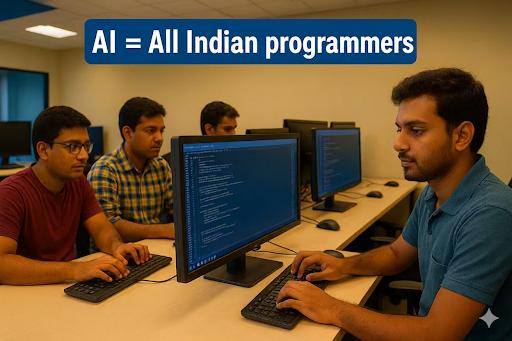
CEO卷款夜逃迪拜,15亿美元独角兽爆雷!700印度码农冒充AI,坑惨微软
Sou Hu Cai Jing· 2025-09-01 09:47
Core Insights - Builder.ai, once valued at over $1.5 billion, has filed for bankruptcy amid allegations of financial fraud and misleading claims about its AI capabilities [1][10][27] - The company's collapse reflects a broader trend of inflated valuations and potential fraud in the AI sector, as many startups leverage the AI label for investment without substantial technology [3][11][30] Group 1: Company Overview - Builder.ai was founded in 2016, initially named Engineer.ai, and aimed to provide custom applications and software tools [14] - The company heavily marketed itself as an AI-driven solution, despite primarily offering traditional technology outsourcing services [3][20] - CEO Sachin Dev Duggal promoted Builder.ai as a transformative AI company, claiming it could simplify software development [21][24] Group 2: Financial Misconduct - Investigations revealed that Builder.ai significantly inflated its revenue figures, reporting $157 million for FY2023 while actual revenue was only $42 million [27] - The company also owed $75 million to Amazon Web Services, indicating severe financial distress [27] - The marketing budget consumed 80% of its revenue, with $42 million spent on promotions in 2024 alone [20] Group 3: Industry Context - The AI sector has seen unprecedented investment, with major companies like OpenAI, Meta, and Amazon expected to spend around $320 billion on infrastructure in 2023, more than double the amount from two years prior [9] - The phenomenon of "AI washing" has become prevalent, where companies exaggerate their AI capabilities to attract funding [11][30] - Builder.ai's downfall is seen as a warning sign for the industry, highlighting the risks associated with overhyped AI startups [3][10] Group 4: Broader Implications - The collapse of Builder.ai has raised concerns about the sustainability of the AI boom, with experts warning of a potential downturn in the sector [3][10] - Similar cases of alleged fraud in the AI space have emerged, indicating a pattern of misleading claims and financial misconduct among startups [11][38][41] - The situation underscores the need for clearer definitions and standards regarding what constitutes an AI company [30]

AI公司创始人现跑路迪拜,80%收入烧广告、假账骗投资人,微软都被坑:硅谷的第一个AI大泡沫出现了
3 6 Ke· 2025-09-01 07:54
Core Insights - Builder.ai, once a leading AI startup valued at $1.5 billion, has filed for bankruptcy due to inflated sales figures and mounting debts, leading to the resignation of its CEO [3][19] - The company spent 80% of its revenue on marketing rather than product development, which contributed to its downfall [10][21] - Allegations of financial misconduct and misrepresentation of AI capabilities have surfaced, drawing comparisons to other failed tech startups [13][23] Company Overview - Builder.ai was founded by Sachin Dev Duggal, who aimed to simplify software development for businesses without requiring programming skills [5][6] - The company gained significant attention and investment, totaling $450 million, particularly after the rise of AI technologies like ChatGPT [7][18] - Despite its initial success, Builder.ai's actual revenue was significantly lower than reported, with discrepancies of $1.15 billion in FY2023 and $1.66 billion in FY2024 [18][19] Financial Mismanagement - The company faced severe cash flow issues, with debts including $85 million owed to Amazon and $30 million to Microsoft [4][18] - Internal investigations revealed that Builder.ai's revenue was grossly exaggerated, leading to a loss of investor confidence [19][21] - The current CEO, Manpreet Ratia, has stated that Builder.ai should serve as a cautionary tale for investors and executives [3][18] Marketing Strategy - Builder.ai's marketing strategy focused heavily on promoting its AI capabilities, spending approximately $42 million on marketing in 2024, which was 80% of its revenue [10][21] - The company participated in major tech events to showcase its AI project management tool, "Natasha," which was marketed as simplifying app development [9][10] - Despite the marketing efforts, the actual product development and delivery were criticized for being inefficient and heavily reliant on manual labor [21][22] Industry Context - The rise of AI technologies has led to a surge in investments in AI startups, but also an increase in scrutiny and allegations of fraud within the sector [23][25] - Builder.ai's collapse highlights the risks associated with overhyping AI capabilities without delivering tangible results [23][24] - The situation reflects a broader trend in Silicon Valley where companies may leverage AI terminology to attract funding, regardless of their actual technological capabilities [23][25]

微软35岁工程师凌晨倒在硅谷园区,死于突发性心脏病(红星新闻)
Xin Lang Cai Jing· 2025-09-01 06:21
Core Points - A 35-year-old engineer from Microsoft collapsed and died from a sudden heart attack in Silicon Valley [1] Group 1 - The incident highlights potential health risks associated with high-pressure work environments in the tech industry [1] - The engineer's death raises concerns about employee well-being and mental health in the fast-paced tech sector [1]
曾获微软注资的Builder.ai轰然倒塌 映射出“AI宏大叙事”的脆弱性
智通财经网· 2025-09-01 03:29
Core Insights - Builder.ai, once valued at $1.5 billion and supported by Microsoft, has entered bankruptcy liquidation due to exaggerated sales figures, highlighting the speculative nature of AI investments during the current hype cycle [1][2][3] Company Overview - Founded in 2016 as Engineer.ai, Builder.ai aimed to assist small businesses in quickly building applications and websites using AI technology [2] - The company raised $450 million from notable investors, including Microsoft and Qatar's sovereign wealth fund, during the AI boom ignited by ChatGPT [2] - Builder.ai claimed to have launched the "world's first AI product manager," named "Natasha," which promised to simplify software creation [2] Financial Discrepancies - Internal documents revealed that Builder.ai's reported revenue of approximately $217 million for 2024 was significantly inflated, with actual revenue closer to $51 million [2] - The company owed around $75 million to Amazon's AWS, raising concerns about its financial health [2] - Following the discovery of these discrepancies, the CEO, Sachin Dev Duggal, resigned in February [2] Industry Concerns - The collapse of Builder.ai has intensified concerns among venture capitalists regarding "fake AI" companies that attract funding without substantial business operations [3] - The sentiment in the industry suggests that merely labeling a company as "AI" can facilitate fundraising, regardless of actual product viability [3] Market Dynamics - Since the beginning of the year, global AI startups have raised an astonishing $122 billion in venture capital, with the U.S. accounting for $104.3 billion, or 85.5% of the total [4] - There are growing doubts about how much of this funding has gone to "fake AI" companies like Builder.ai, raising the possibility of a wave of bankruptcies in the AI startup sector [4] Future Outlook - The venture capital landscape is increasingly favoring established AI leaders like OpenAI and Anthropic, which have demonstrated significant user growth and revenue [5][6] - As of July, ChatGPT had over 700 million weekly active users, a substantial increase from 500 million in March, indicating a rapid commercialization process [6] - The concentration of capital in leading AI startups is creating a challenging environment for smaller companies to secure funding, especially amid high interest rates and economic uncertainty [6]
微软印度工程师猝死园区,生前曾诉苦压力巨大
Mei Ri Jing Ji Xin Wen· 2025-09-01 00:49
Core Viewpoint - The tragic death of a 35-year-old Microsoft engineer, Pratik Pandi, highlights the potential mental health and work-life balance issues within the tech industry, particularly regarding the pressures of working long hours and managing multiple projects [1] Group 1: Incident Details - Pratik Pandi was found deceased in the Microsoft Silicon Valley campus on August 20, with preliminary assessments indicating sudden cardiac arrest as the cause of death [1] - Pandi had entered the office on August 19 at 7:50 PM and was reported to have worked late into the night, a common practice among employees in the tech sector [1] Group 2: Employee Well-being Concerns - Pandi had expressed feelings of immense pressure to his roommates and colleagues, indicating a struggle to balance multiple projects [1] - Family members and acquaintances have called for tech companies to recognize the signs of employee burnout and take measures to alleviate stress and anxiety, suggesting that such actions could potentially save lives [1] Group 3: Company Response - Microsoft has not provided specific comments regarding the incident but stated that an investigation is ongoing [1]
微软AI自研大模型亮相,语音模型定制化程度高,CEO谈与OpenAI关系
Sou Hu Cai Jing· 2025-08-31 18:36
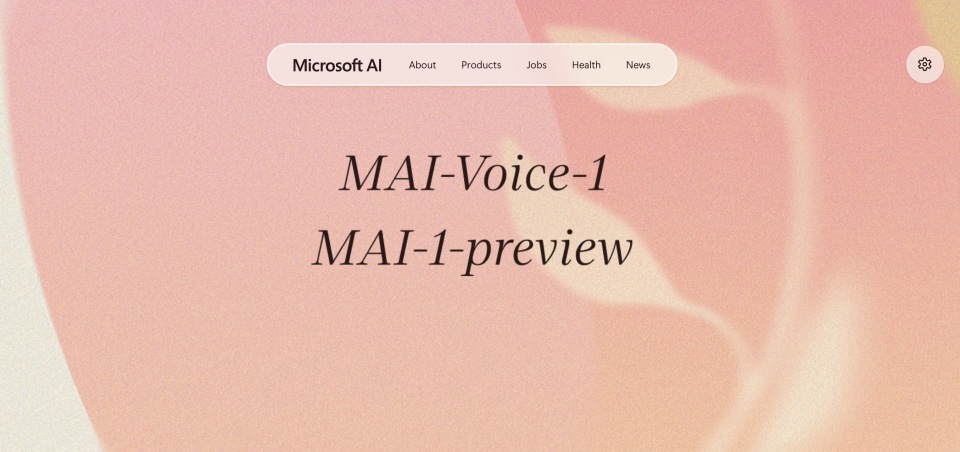
Core Insights - Microsoft AI has announced significant advancements in artificial intelligence by launching two self-developed AI models, marking an important milestone in its AI technology journey [1][6] Model Details - The first model, MAI-1-preview, is an end-to-end trained foundational model, while the second model, MAI-Voice-1, is a voice generation model that offers high-fidelity audio and extensive customization options [1][3] - MAI-Voice-1 allows users to select emotional modes, voice templates, and up to 40 different speech styles, providing a rich auditory experience [1][3] - MAI-1-preview is a mixed expert model that has been pre-trained and fine-tuned on approximately 15,000 NVIDIA H100 GPUs, focusing on instruction following and everyday question answering capabilities [3][4] Deployment and User Experience - MAI-Voice-1 is already available on platforms like Copilot Daily and Podcasts, although it currently does not support Chinese output [3] - MAI-1-preview will be integrated into some text scenarios within Copilot in the coming weeks to gather feedback and enhance user experience [3][4] Strategic Direction - Microsoft AI CEO Mustafa Suleyman emphasized the importance of self-developed models for ensuring choice and maintaining a proactive stance in future developments, while continuing collaborations with companies like OpenAI [3][4] - Suleyman highlighted the focus on efficiency and high-quality training data in model development, aiming to maximize the utility of each computation [4] - Microsoft AI has a five-year roadmap with quarterly investments, anticipating the emergence of millions of AI models with diverse personality traits across various fields [4][6]

微软推出两款MAI-1系列自研模型,下一代模型MAI-2研发工作已启动
3 6 Ke· 2025-08-30 16:37
Core Insights - Microsoft has made significant advancements in its self-developed AI technology by launching two key products: the MAI-1 preview version, a fully self-trained large language model, and the MAI-Voice-1, a voice generation model integrated into various applications [3][4][5] - The MAI-1 model was trained on approximately 15,000 NVIDIA H100 GPUs and is currently ranked 13th in text tasks on the LMArena leaderboard, indicating that while Microsoft is making progress, it still has a way to go to catch up with industry leaders [4][5][9] - The launch of these models signifies a strategic shift for Microsoft, reducing its reliance on OpenAI and aiming to establish a stronger independent position in the AI market [5][8] Product Development - The MAI-1 preview version is Microsoft's first fully self-trained foundational model, while MAI-Voice-1 is noted for its efficiency, generating one minute of high-fidelity audio in under one second on a single GPU [4][5] - Microsoft plans to gradually deploy the MAI-1 model into various text scenarios within its Copilot applications, using user feedback for continuous improvement [3][4] Strategic Positioning - Microsoft is actively working to decrease its dependency on OpenAI, which has historically been its largest partner, having invested over $13 billion in the company [8] - The relationship dynamics between Microsoft and OpenAI are evolving, with Microsoft now listing OpenAI among its competitors in its annual report [8][9] - The company aims to create a "one-size-fits-all AI" that is reliable, responsible, and personalized, positioning itself to reach billions of users [7] Talent Acquisition and Team Expansion - Microsoft has expanded its AI team significantly, recruiting talent from various leading organizations, including DeepMind and Inflection [7][12] - The company emphasizes the importance of building a strong team culture to attract top talent and drive innovation in AI development [23] Future Outlook - Microsoft is committed to launching more specialized models to meet diverse user needs and is currently developing the next generation of models [9][25] - The company is also exploring the possibility of open-sourcing its models in the future, depending on the performance and user feedback [24]
微软宣布将终止Windows域控制器注册表键支持 彻底修复Kerberos高危漏洞
Huan Qiu Wang· 2025-08-30 02:37
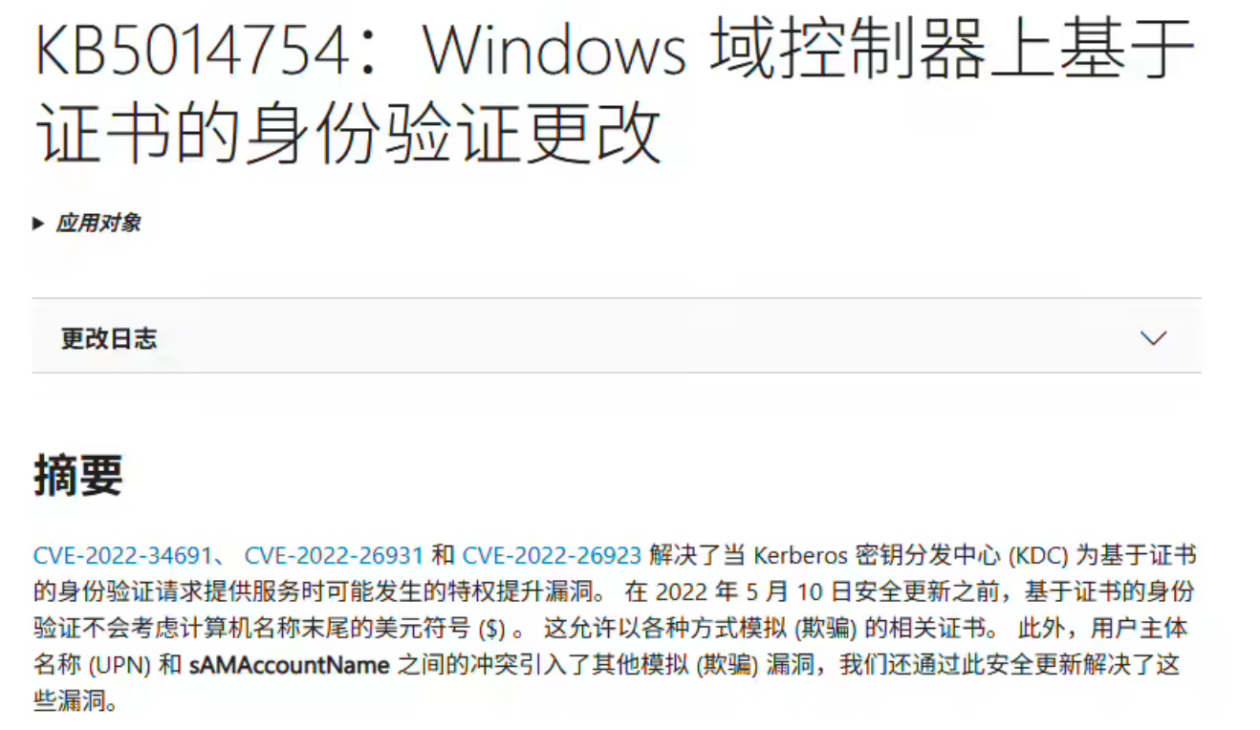
Core Points - Microsoft will officially stop technical support for two specific registry keys in Windows domain controllers starting from September 9, 2024, as part of its "Patch Tuesday" updates [1][3] - This decision aims to address multiple high-risk vulnerabilities related to the Kerberos authentication protocol that were disclosed previously [3] Vulnerabilities Details - The adjustments involve three vulnerabilities identified as CVE-2022-34691, CVE-2022-26931, and CVE-2022-26923, all associated with the Kerberos authentication protocol used in Windows domain controllers [3] - Kerberos is the core authentication mechanism for Windows Active Directory, and if exploited, attackers could bypass authentication processes to gain domain administrator privileges or forge tickets for lateral movement [3] - Microsoft had released patches for these vulnerabilities in August 2022 but retained temporary support for certain registry keys to maintain compatibility with older systems [3] Recommendations and Implications - Following the disclosure of these vulnerabilities in 2022, Microsoft advised enterprises to disable the affected features to mitigate risks, although some legacy systems still relied on these registry keys [3] - With the upcoming update on September 9, the related configurations will no longer be effective, and systems will be required to use Kerberos implementations that meet the latest security standards [3]