
ASCENTAGE(06855)

Search documents
亚盛医药(06855) - 2025 - 中期业绩
2025-08-20 23:00
香港交易及結算所有限公司及香港聯合交易所有限公司對本公告的內容概不負責,對其準確性 或完整性亦不發表任何聲明,並明確表示,概不就因本公告全部或任何部份內容而產生或因倚 賴該等內容而引致的任何損失承擔任何責任。 ASCENTAGE PHARMA GROUP INTERNATIONAL 亞盛醫藥集團 (在開曼群島註冊成立的有限公司) (股份代號:6855) 截至2025年6月30日止六個月未經審核中期業績公告 董事會欣然宣佈亞盛醫藥集團截至2025年6月30日止六個月的未經審核綜合業 績,連同截至2024年6月30日止六個月的比較數字。 財務摘要 截至2025年6月30日止六個月,收益為人民幣233.7百萬元(32.6百萬美元), 較截至2024年6月30日止六個月減少人民幣590.0百萬元(80.7百萬美元)或 71.6%,主要是由於截至2024年6月30日止六個月產生的人民幣678.4百萬元 (95.3百萬美元)的知識產權收益導致。耐立克® (奧雷巴替尼)在中國的產品銷售 較截至2024年6月30日止六個月的人民幣112.9百萬元(15.5百萬美元),增加人 民幣104.5百萬元(14.9百萬美元)或93%至 ...
亚盛医药上涨5.35%,报47.4美元/股,总市值44.06亿美元
Jin Rong Jie· 2025-08-18 15:54
Core Viewpoint - As of August 18, 2023, AAPG's stock price increased by 5.35%, reaching $47.4 per share, with a total market capitalization of $4.406 billion. The company reported a total revenue of 981 million RMB for the year ending December 31, 2024, representing a year-on-year growth of 341.77%, while the net profit attributable to shareholders was -405 million RMB, showing a year-on-year increase of 56.2% [1]. Financial Performance - AAPG's total revenue for the fiscal year ending December 31, 2024, is projected to be 981 million RMB, reflecting a significant year-on-year growth of 341.77% [1]. - The net profit attributable to shareholders is expected to be -405 million RMB, which indicates a year-on-year increase of 56.2% [1]. Upcoming Events - AAPG is scheduled to disclose its mid-year report for the fiscal year 2025 on August 20, 2023, after the market closes (Eastern Time) [2]. Company Overview - AAPG is a biopharmaceutical company based in China, focusing on developing innovative drugs for cancer, hepatitis B, and age-related diseases. The company was listed on the Hong Kong Stock Exchange on October 28, 2019, under the stock code 6855.HK [3]. - AAPG has established a proprietary drug design platform targeting protein-protein interactions and is at the forefront of developing new drugs in the apoptosis pathway. The company has a pipeline of nine clinical-stage Class 1 small molecule drugs, including inhibitors targeting key proteins in the apoptosis pathway [3]. - The core product, Olarebatin (brand name: Nairike), has been approved in China and is included in the National Basic Medical Insurance, Work Injury Insurance, and Maternity Insurance Drug List (2022). It has also received various designations from the FDA and the EU [3]. - AAPG has engaged in over 40 clinical trials across China, the U.S., Australia, and Europe, and has established collaborations with leading biotech and pharmaceutical companies and academic institutions globally [3].
亚盛医药-B高开逾4% 利生妥治疗中高危MDS III期临床研究获美国FDA和欧洲EMA批准
Zhi Tong Cai Jing· 2025-08-18 06:09
Core Viewpoint - Ascentage Pharma-B (06855) saw a significant increase in stock price, opening over 4% higher and reaching a historical high of 90 HKD, with a trading volume of 16.89 million HKD, following the announcement of a global Phase III clinical trial approval for its drug, APG-2575 [1] Group 1: Clinical Development - The company announced that its self-developed Bcl-2 selective inhibitor, APG-2575 (trade name: Lisatuzumab), has received approval from both the FDA and EMA to initiate a global Phase III clinical study (GLORA-4) for treating newly diagnosed high-risk myelodysplastic syndromes (HR-MDS) patients in combination with Azacitidine [1] - GLORA-4 is the second global Phase III study for Lisatuzumab approved by regulatory agencies in Europe and the U.S., which will expedite the drug's market entry [1] - Lisatuzumab is a novel oral Bcl-2 selective inhibitor that selectively inhibits the Bcl-2 protein, restoring the normal apoptosis process in cancer cells to achieve tumor treatment [1] Group 2: Market Position - The product has already been approved for marketing in China for adult chronic lymphocytic leukemia/small lymphocytic lymphoma (CLL/SLL) patients who have previously undergone at least one systemic treatment, including a Bruton tyrosine kinase (BTK) inhibitor [1] - Lisatuzumab is the first domestically developed original Bcl-2 inhibitor approved for marketing in China and is currently the only Bcl-2 inhibitor advancing to a Phase III clinical trial for high-risk MDS internationally [1]
亚盛医药-B(06855)股价翻倍再创上市新高,利生妥全球临床开发持续发力
智通财经网· 2025-08-18 04:23
Core Insights - The approval of the second global Phase III clinical trial for the drug Lisatoclax (brand name: Lishengtuo®) has led to a significant increase in the stock price of Ascentage Pharma-B (06855), reaching a new high of 95.35 HKD on August 18, with a year-to-date increase of 100.88% [1][2] Company Developments - Ascentage Pharma announced that the global Phase III clinical study (GLORA-4) for Lisatoclax in combination with Azacitidine (AZA) for newly diagnosed high-risk myelodysplastic syndromes (HR-MDS) patients has received approval from the FDA and EMA [1][2] - The GLORA-4 study is a multi-center, randomized, double-blind trial aimed at evaluating the efficacy and safety of Lisatoclax combined with AZA compared to placebo plus AZA in adult HR-MDS patients [2][3] - The study has already commenced patient enrollment globally, with the first patients enrolled in China and Europe [2] Market Context - MDS is characterized by a significant age-related incidence, with a yearly incidence rate of 22 per 100,000 in individuals over 65 years old, and a median diagnosis age of 70 years [2] - The transformation rate to acute myeloid leukemia (AML) in high-risk MDS patients is alarmingly high, with a 5-year transformation rate of 40-60% [2][3] Product Efficacy - Lisatoclax is a novel oral Bcl-2 selective inhibitor that restores normal apoptosis in cancer cells, showing promising clinical benefits in previous studies [3][4] - In preliminary studies presented at major conferences, Lisatoclax combined with AZA achieved an overall response rate (ORR) of 75% in treatment-naive MDS patients, significantly higher than existing therapies [4][5] Future Prospects - The successful execution of the GLORA-4 study is expected to accelerate the clinical development and registration process for Lisatoclax in MDS indications [6] - The company aims to address unmet clinical needs globally, with hopes that Lisatoclax will become the first approved targeted therapy for first-line treatment of high-risk MDS patients [5][6]
亚盛医药-B(06855)股价翻倍再创上市新高,利生妥®全球临床开发持续发力
智通财经网· 2025-08-18 04:20
Core Viewpoint - The recent approval of the second global Phase III clinical trial for the drug Lisatoclax (brand name: Lishengtuo®) has led to a significant increase in the stock price of Ascentage Pharma-B (06855), reaching a new high of 95.35 HKD, with a year-to-date increase of 100.88% [1][2]. Group 1: Clinical Development - The GLORA-4 study, which is a global Phase III clinical trial for Lisatoclax in combination with Azacitidine (AZA) for newly diagnosed high-risk myelodysplastic syndromes (HR-MDS) patients, has received approval from the FDA and EMA [1][2]. - This study is notable as it is the only ongoing Phase III clinical trial for a Bcl-2 inhibitor in the high-risk MDS category, aiming to address a significant clinical gap in this area [2]. - The trial is designed as an international, multi-center, randomized, double-blind study to evaluate the efficacy and safety of Lisatoclax combined with AZA compared to placebo plus AZA in adult HR-MDS patients [2]. Group 2: Disease Context - Myelodysplastic syndromes (MDS) are characterized by a significant age-related incidence, with a rate of 22 per 100,000 in individuals over 65 years old, and a median diagnosis age of 70 years [3]. - The transformation rate to acute myeloid leukemia (AML) in high-risk MDS patients is alarmingly high, with a 5-year transformation rate of 40-60%, leading to poor prognosis [3]. - Current first-line treatments for high-risk MDS, such as demethylating agents, show limited efficacy, with overall response rates of only 30-40% and complete response rates of 10-17% [3]. Group 3: Drug Profile - Lisatoclax is a novel oral Bcl-2 selective inhibitor developed by Ascentage Pharma, designed to restore normal apoptosis in cancer cells [4]. - The drug has already been approved in China for use in adult chronic lymphocytic leukemia/small lymphocytic lymphoma (CLL/SLL) patients who have undergone prior systemic therapy [4]. - Preliminary data from the 2024 American Society of Hematology (ASH) and 2025 American Society of Clinical Oncology (ASCO) meetings indicate that Lisatoclax combined with AZA achieves an overall response rate of 75% in treatment-naive MDS, significantly outperforming existing therapies [4]. Group 4: Market Potential - The approval of the GLORA-4 study is expected to accelerate the clinical development and registration process for Lisatoclax in MDS indications, addressing a substantial unmet clinical need in the market [5][6]. - The company aims to position Lisatoclax as the first targeted therapy approved for first-line treatment of high-risk MDS patients, potentially reshaping the treatment landscape in this area [5][6].
异动盘点0818|声通科技早盘涨近30%,机器人概念股涨幅居前;迅雷美股涨超26%,应用材料跌超14%
贝塔投资智库· 2025-08-18 04:16
Group 1: Hong Kong Stocks - Ascentage Pharma-B (06855) opened over 5% higher after receiving FDA and EMA approval for its drug, Lisenglitazone, for high-risk MDS in Phase III clinical trials [1] - Haijia Medical (06078) fell over 5% following a profit warning, expecting a mid-term net profit decline of approximately 34% to 39% due to factors like centralized procurement and increased depreciation from new hospitals [1] - Hua Hong Semiconductor (01347) dropped over 6% as it announced plans to acquire a controlling stake in Shanghai Huali Microelectronics to address industry competition [1] - Zhonghui Biotech-B (02627) rose over 8% after receiving IND approval for its recombinant respiratory syncytial virus vaccine in both the US and China [1] - NetDragon (00777) surged over 10% after forming a strategic alliance with Zhongke Wenge to promote AI technologies abroad [1] - Great Wall Motors (02333) increased over 12% following the completion of its factory in Brazil, with an initial production capacity of 30,000 vehicles per year [1] - Yuewen Group (00772) rose over 20% as its first-half performance exceeded expectations, benefiting from growth in licensing business and steady performance of short dramas [1] Group 2: Other Notable Stocks - Huirui Group (00806) increased over 8% after reporting first-half results that met market expectations and is applying for MRF mutual recognition for other products [2] - Soundon Technology (02495) surged nearly 30% after announcing a projected net profit exceeding 50 million yuan for the first half, marking a turnaround from losses [2] - Robotics concept stocks saw significant gains, with Jinshang Machine Tool (01651) up over 11% and Lijin Technology (00558) up over 3% [2] Group 3: US Stocks - Intel (INTC.US) rose 2.93% amid reports of negotiations with the Trump administration for government investment to support domestic manufacturing [3] - Hesai Technology (HSAI.US) increased 9.73% after reporting over 50% year-on-year revenue growth for Q2 2025 [3] - UnitedHealth (UNH.US) surged 11.98% following Berkshire Hathaway's new investments in the company [3] - NIO (NIO.N) rose 8.09% as it announced the upcoming launch of its new ES8 model [4] - Xunlei (XNET.US) continued to rise by 26.53% after reporting a 30.6% year-on-year revenue increase for Q2 2025 [5]



医保商保“双轨制”引爆创新药行情!港股创新药ETF(520690)单日飙2.5%,亚盛医药9%领涨
Xin Lang Cai Jing· 2025-08-18 02:55
Group 1 - The Hong Kong stock market experienced a rise and then a pullback, with the Hang Seng Index reaching a new high [1] - The National Healthcare Security Administration is publishing a list of drugs that have passed preliminary review for the "2025 National Medical Insurance Directory and Commercial Insurance Innovative Drug Directory," which will enter expert review and negotiation stages [1][2] - The Hong Kong Innovative Drug Selected ETF (520690) saw a nearly 2.5% increase, with a trading volume exceeding 20 million and a turnover rate over 5%, indicating strong market interest [1] Group 2 - The dual-track policy of basic medical insurance and commercial insurance for innovative drugs signals a payment closure model, suggesting that "true innovation is easier to scale" [2] - The performance of innovative drugs is expected to be positively impacted by the dual-track payment system and significant business development opportunities, leading to a systematic revaluation of the Chinese innovative drug sector [2] - The Hang Seng Medical ETF (513060) is benefiting from the dual advantages of technology penetration and market expansion, particularly in AI healthcare and innovative drug companies [3]

ETF盘中资讯 “港股科技双雄”同步走强!港股通创新药ETF(520880)涨逾2%,亚盛医药飙升9%创新高
Jin Rong Jie· 2025-08-18 02:39
海通国际指出,展望下半年,港股牛途继续向上。尽管6月末以来港股表现偏弱,但美联储降息或临 近,港币汇率持续承压现状或有望扭转,汇率对港股的压制作用也将弱化。借鉴历史上港股占优行情, 本轮港股强劲源于港股资产更具稀缺性,吸引增量资金不断流入。港股科技、消费类资产与当前AI应 用、新消费等产业趋势相关度更高,且基本面更优,相较A股而言仍具有稀缺性,有望吸引南向资金继 续流入。AI应用加速落地中,充分受益AI周期的港股科技是主线。 8月18日,港股早盘高开,港股科技双雄——科网、创新药再度携手走强,截至发稿,创新药新势力 ——港股通创新药ETF(520880)场内价格涨逾2%;重仓港股互联网龙头的港股互联网ETF (513770)场内价格现涨1.54%。 亚盛医药-B一度上探9%,创历史新高,消息面上,公司自主研发的利生妥治疗中高危MDS III期临床研 究获美国FDA和欧洲EMA批准。此外,权重股集体走强,三生制药涨近5%,信达生物涨超4%,再鼎医 药涨超3%。 科网龙头延续活跃,美团-W、阿里巴巴-W涨超1%,小米集团-W、哔哩哔哩-W跟涨。 中泰证券指出,港股市场有望继续受益于AI商业化进程加速和南向资金的持 ...
“港股科技双雄”同步走强!港股通创新药ETF(520880)涨逾2%,亚盛医药飙升9%创新高
Xin Lang Ji Jin· 2025-08-18 02:10
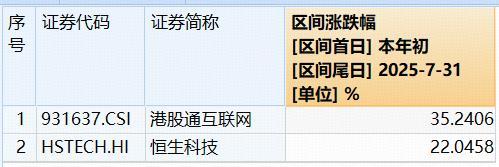
Group 1 - The Hong Kong stock market is experiencing a strong performance, particularly in the technology and innovative pharmaceutical sectors, with significant gains in related ETFs [1][2][3] - As of August 18, the Hong Kong Internet ETF (513770) has risen by over 1.54%, while the Hong Kong Innovation Drug ETF (520880) has increased by more than 2% [1][2] - The Hong Kong stock market is expected to benefit from the acceleration of AI commercialization and continued inflow of southbound funds, indicating a clear recovery in valuations [3][4] Group 2 - As of July 31, the Hong Kong Internet Index has shown a cumulative increase of over 35% since the beginning of the year, outperforming the Hang Seng Tech Index, which rose by 22.05% [4][5] - The top four holdings in the Hong Kong Internet ETF (513770) include Xiaomi Group-W, Tencent Holdings, Alibaba-W, and Meituan-W, collectively accounting for 54.74% of the fund [6][5] - The Hong Kong Innovation Drug Index has surged by 101.58% year-to-date, significantly outperforming the Hang Seng Index and Hang Seng Tech Index by 78.08% and 79.53% respectively [8][9] Group 3 - The Hong Kong Innovation Drug ETF (520880) is the first ETF tracking the Hang Seng Hong Kong Innovation Drug Select Index, focusing on innovative drug development companies [6][8] - The fund size of the Hong Kong Internet ETF (513770) has exceeded 7.4 billion yuan, with an average daily trading volume of 593 million yuan [6][5] - The performance of the Hong Kong stock market is expected to continue upward in the second half of the year, driven by favorable conditions such as potential interest rate cuts by the Federal Reserve [3][4]





亚盛医药-B:涨逾9% 利生妥治疗中高危MDS的III期临床研究获美国FDA和欧洲EMA批准
Jin Rong Jie· 2025-08-18 02:07
Core Insights - The company Ascentage Pharma-B (06855.HK) announced that its self-developed Bcl-2 selective inhibitor, Lisatoclax (brand name: Lifespan®; research code: APG-2575), has received approval from the FDA and EMA to initiate a global Phase III clinical trial (GLORA-4) for the treatment of newly diagnosed high-risk myelodysplastic syndromes (HR-MDS) patients [1] Group 1 - The GLORA-4 study is the second global Phase III trial for Lifespan® approved by regulatory agencies in Europe and the United States [1] - The trial will enroll patients simultaneously across multiple countries and centers, which is expected to accelerate the drug's market launch process [1] - As of the announcement date, Lifespan® is the only Bcl-2 inhibitor in the world advancing to a Phase III clinical trial for high-risk MDS [1] Group 2 - The GLORA-4 study is anticipated to address a long-standing clinical gap in the high-risk MDS field, marking another significant milestone in the global clinical development of Lifespan® [1] - Following the announcement, Ascentage Pharma's stock rose by 9.18%, reaching HKD 94 [1]