HUA XIA BANK(600015)

Search documents
官宣!严重违纪违法,华夏银行原董事长李民吉被审查!
Sou Hu Cai Jing· 2025-12-23 10:55
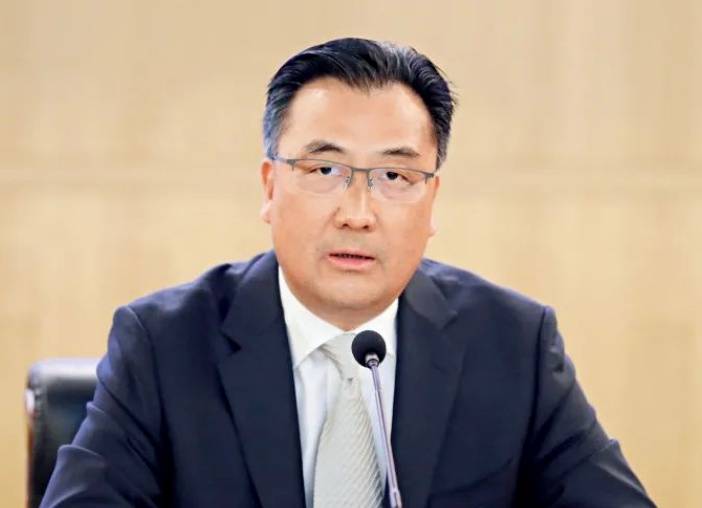
突然辞职后时隔11个月,华夏银行(600015.SH)原董事长李民吉被官宣"落马"。 据12月22日召开的中国共产党北京市第十三届委员会第八次全体会议,全会审议并通过了《中共北京市纪委关于李民吉严重违纪违法问题的审查报告》。 这也代表着这位曾执掌华夏银行近八年的高管,因违纪违法黯然落幕。李民吉此番落马早有征兆,今年1月27日,华夏银行在春节前的最后一个工作日突发 公告称,李民吉因个人原因辞去该行董事长、执行董事及董事会专门委员会相关职务,关于其"失联被查"的风波也就此发酵。 回溯来看,李民吉自2017年3月起出任华夏银行董事长,执掌这家目前总规模超4.59万亿的全国性股份制银行。他的职业生涯亦涉及多家金融国企,在加入 华夏银行之前,其还曾在北京国资公司、北京国际信托等担任要职。 2025年也是华夏银行治理结构迎来深度调整的一年,该行高管层等接连"换血"。5月,来自北京银行的杨书剑正式获准履新华夏银行董事长;10月,华夏银 行又一次性任命了首席运营官、首席风险官、首席财务官3位"首席"。 图片来源:图虫创意 在华夏银行任职近8年 李民吉履历堪称光鲜,是一位地地道道的"金融老将",曾深耕北京国资金融系统多年,亦曾 ...


官方披露:李民吉,严重违纪违法
Xin Lang Cai Jing· 2025-12-23 03:49
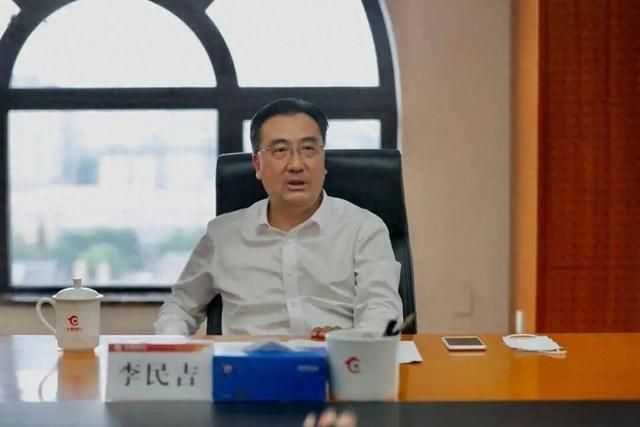
Group 1 - The core point of the article is the serious disciplinary and legal violations involving Li Minji, former Party Secretary and Chairman of Huaxia Bank, as confirmed by the Beijing Municipal Committee's recent meeting [1][3] - The Beijing Municipal Committee's eighth plenary session approved the resolution regarding Li Minji's violations, indicating significant political repercussions for him [1] - Li Minji has a strong background in finance and state-owned assets, having held various significant positions in financial institutions, including Huaxia Bank [3] Group 2 - Li Minji was born in January 1965 and has advanced degrees in economics and management, highlighting his academic qualifications [3] - His career includes roles such as Deputy General Manager at Beijing State-owned Assets Management Co. and Chairman of Beijing International Trust Co., showcasing his extensive experience in the financial sector [3] - In January 2025, Li Minji resigned from his position as Chairman of Huaxia Bank for personal reasons, which may have been influenced by the ongoing investigations [3]
锚定“十五五”蓝图 华夏银行以“京华行动”助力首都高质量发展
Jin Rong Jie· 2025-12-23 03:40
Core Viewpoint - Huaxia Bank emphasizes its commitment to supporting the capital's development through various strategic actions, particularly the "Jinghua Action," which aims to leverage resources for the benefit of Beijing's growth and high-quality development [1] Group 1: Financial Support and Initiatives - Huaxia Bank has launched ten key actions this year, focusing on business development, cost reduction, risk control, internal management, and style construction, with the "Jinghua Action" being the most significant [1] - As of the end of October, Huaxia Bank has provided a total of 400 billion yuan in various financing services to the Beijing area, representing a 13% year-on-year increase [1] - The bank's technology finance initiatives are positioned as a core engine for supporting new productive forces in the capital, with a strategic focus on enhancing technology finance across the organization [2] Group 2: Technology Finance Development - Huaxia Bank has established a comprehensive product matrix to address the financing needs of technology enterprises throughout their lifecycle, including various loan products tailored to different growth stages [3] - The bank's technology enterprise loan balance reached nearly 240 billion yuan, with a growth rate of nearly 50%, serving over 8,400 clients [3] - In 2025, Huaxia Bank has issued nearly 4 billion yuan in credit loans to support the technology development of specific companies, such as Moer Technology [3] Group 3: Green Finance Initiatives - Huaxia Bank has positioned green finance alongside technology finance as a key feature, with a green finance balance exceeding 490 billion yuan and green loan balance surpassing 350 billion yuan, accounting for nearly 16% of total loans [4] - The bank has collaborated with the World Bank on significant projects aimed at air pollution prevention, with annual CO2 emissions reductions of 2.88 million tons [5] - Huaxia Bank has also supported major green infrastructure projects and led the underwriting of green asset-backed securities, demonstrating its commitment to sustainable development [5] Group 4: Consumer Finance Efforts - To support the construction of Beijing as an international consumption center, Huaxia Bank has launched 18 key tasks aimed at promoting consumer spending and enhancing financial services for major projects [6] - The bank has engaged in various promotional activities, including collaborations with supermarkets and cultural events, to stimulate consumer engagement and spending [6][7] Group 5: Regional Development and Collaboration - Huaxia Bank has provided nearly 90 billion yuan in financing services for key projects in the Beijing-Tianjin-Hebei region, marking a 31% year-on-year increase [8] - The bank has initiated the "Jinghua Action" to ensure comprehensive service coverage for state-owned enterprises in the capital and has supported various relocation projects to enhance regional integration [8] - Future plans include further advancing the "Jinghua Action" with more precise strategic layouts and innovative financial products to support the capital's development goals [8]
锚定“十五五”蓝图 华夏银行以“京华行动” 助力首都高质量发展
Zhong Jin Zai Xian· 2025-12-23 02:11
Core Viewpoint - Huaxia Bank emphasizes its commitment to supporting the capital's development through various strategic initiatives, particularly the "Jinghua Action," which aims to leverage resources for the benefit of Beijing's economic growth and infrastructure [1]. Group 1: Financial Support and Initiatives - Huaxia Bank has launched the "Ten Actions" initiative, focusing on business development, cost reduction, risk control, internal management, and style construction, with the "Jinghua Action" being the most significant [1]. - As of the end of October 2025, Huaxia Bank has provided a total of 400 billion yuan in various financing services to the Beijing area, marking a 13% year-on-year increase [1]. - The bank's technology finance strategy is positioned as a core engine for supporting new productive forces in the capital, with a goal to enhance its strategic focus on technology finance by 2025 [2]. Group 2: Technology Finance Development - Huaxia Bank has established a product matrix covering the entire lifecycle of enterprises, offering tailored financial products from startup to maturity stages, including "Sci-Tech Easy Loan" and "M&A Loans" [3]. - The bank's technology enterprise loan balance reached nearly 240 billion yuan by the end of October 2025, with a growth rate of nearly 50%, serving over 8,400 clients [3]. Group 3: Green Finance Initiatives - Huaxia Bank has positioned green finance alongside technology finance as a key feature, with a green finance balance exceeding 490 billion yuan and green loans surpassing 350 billion yuan, accounting for nearly 16% of total loans [4]. - The bank has collaborated with the World Bank on projects aimed at air pollution prevention, which are expected to reduce carbon dioxide emissions by 2.88 million tons annually [5]. Group 4: Consumer Finance Efforts - To support the construction of an international consumption center in Beijing, Huaxia Bank has launched 18 key tasks aimed at promoting consumer spending and enhancing financial support for major projects [6]. - The bank has engaged in various promotional activities, including collaborations with supermarkets and cultural events, attracting significant consumer participation and boosting transaction volumes [6][7]. Group 5: Regional Development and Collaboration - Since 2025, Huaxia Bank has provided nearly 90 billion yuan in financing services for key projects in the Beijing-Tianjin-Hebei region, reflecting a 31% year-on-year increase [8]. - The bank has initiated the "Jinghua Action" to ensure comprehensive service coverage for 37 state-owned enterprises in the capital, with over 4.8 billion yuan in credit allocated to 16 key projects [8].
官宣!华夏银行原董事长李民吉,严重违纪违法
Zheng Quan Shi Bao Wang· 2025-12-23 01:44
Core Viewpoint - The former chairman of Huaxia Bank, Li Minji, has been officially confirmed to be under investigation for serious violations of discipline and law, following his sudden resignation 11 months prior [1][4]. Group 1: Resignation and Investigation - Li Minji resigned from his position as chairman of Huaxia Bank on January 27, 2025, citing "personal reasons," which occurred during a controversial period of extended service [1][5]. - His resignation came just over a month after being elected as the chairman of the ninth board of directors on December 13, 2024 [1][5]. - The official announcement of his resignation lacked the customary expression of gratitude typically included for departing executives, raising suspicions about his situation [2][5]. Group 2: Background and Career - Li Minji has a significant background in finance and state-owned assets, having held multiple positions, including chairman of Beijing International Trust [6]. - He was born in January 1965 and holds advanced degrees in economics and management [6]. - His tenure at Huaxia Bank lasted nearly 8 years, exceeding the regulatory limit of 7 years for key personnel [1][5]. Group 3: Regulatory Issues - Since 2025, Huaxia Bank has faced regulatory penalties totaling approximately 118 million yuan, primarily related to issues in loan management, payment processing, and anti-money laundering practices [3][6]. - The bank has stated its commitment to addressing these regulatory issues and implementing corrective measures [3][6].
官宣!华夏银行原董事长李民吉,严重违纪违法
券商中国· 2025-12-23 01:25
Group 1 - The former chairman of Huaxia Bank, Li Minji, has been confirmed to be under investigation after resigning suddenly 11 months ago [1][2] - The Beijing Municipal Committee recently reviewed and approved a report on Li Minji's serious disciplinary violations, marking the first official acknowledgment of his issues [2] - Li Minji resigned from his position as chairman of Huaxia Bank on January 27, 2025, citing "personal reasons," shortly after being elected to the role [2][3] Group 2 - Notably, the resignation announcement for Li Minji lacked the customary expression of gratitude typically included for departing executives, which raised suspicions about his situation [3] - By June 2025, the National Committee of the Chinese People's Political Consultative Conference confirmed the revocation of Li Minji's status as a committee member [3] - Li Minji has a significant background in finance and has held various positions, including roles at Beijing International Trust and the China Trust Association [3] Group 3 - Several executives from Beijing International Trust, where Li Minji previously worked, have also been investigated for serious violations [4] - Both Huaxia Bank and Beijing Trust are under the jurisdiction of the Beijing State-owned Assets Supervision and Administration Commission [4] - Since 2025, Huaxia Bank has faced regulatory penalties totaling approximately 118 million yuan, primarily related to issues in core business areas such as loan management and anti-money laundering [4]

官方披露:华夏银行原党委书记、董事长李民吉涉嫌严重违纪违法
Xin Lang Cai Jing· 2025-12-23 00:32
Core Viewpoint - The Beijing Municipal Committee of the Communist Party of China held its eighth plenary session, which reviewed and approved a report on the serious disciplinary violations and illegal activities of Li Minji [1][2]. Group 1: Background Information - Li Minji, born in January 1965, has held various significant positions including Executive Vice President of Beijing State-owned Assets Management Co., Ltd., Chairman of Beijing International Trust Co., Ltd., and Vice President of the China Trust Industry Association [1][2]. - Li Minji later served as the Party Secretary, Chairman, Executive Director of Huaxia Bank [1][2]. Group 2: Recent Developments - In January 2025, Huaxia Bank announced that it received Li Minji's written resignation due to personal reasons, leading to his resignation from the positions of Chairman, Executive Director, and related roles in the board's special committees [1][2]. - On June 25, the 12th meeting of the Standing Committee of the 14th National Committee of the Chinese People's Political Consultative Conference concluded, confirming the decision to revoke the qualifications of Li Minji and four others as members of the 14th National Committee [1][2].
李民吉,严重违纪违法!
Zhong Guo Ji Jin Bao· 2025-12-22 16:25
Group 1 - Li Minji, the former Party Secretary and Chairman of Huaxia Bank, is confirmed to be involved in serious disciplinary and legal violations according to the Beijing Daily [2] - Li Minji was born in January 1965 and has held various significant positions, including Vice President of Beijing International Trust Co., and Vice President of the China Trust Industry Association [2] - Li Minji joined Huaxia Bank in 2017 and was elected Chairman in March of the same year, with his resignation effective from January 24, 2025, due to personal reasons [4][5] Group 2 - Huaxia Bank has faced significant regulatory scrutiny this year, with fines exceeding 100 million yuan, including a notable fine of 87.25 million yuan in September for issues related to loan management and regulatory compliance [5] - As of December 22, Huaxia Bank's stock price was 6.83 yuan per share, with a total market capitalization of 108.7 billion yuan [5] - The bank's financial metrics include an earnings per share of 1.71, a dividend yield of 5.93%, and a price-to-earnings ratio of 4.53 [6]

官方首次披露:华夏银行原董事长李民吉涉嫌严重违纪违法
Sou Hu Cai Jing· 2025-12-22 16:22
Group 1 - The former chairman of Huaxia Bank, Li Minji, is under investigation for serious violations of discipline and law, as disclosed by the Beijing Daily on December 22 [2] - Li Minji, born in 1965, held various significant positions before becoming the chairman of Huaxia Bank in April 2017, serving nearly 8 years [2] - After being re-elected as chairman in December last year, Li Minji resigned in January this year due to personal reasons, just over a month into his new term [2] Group 2 - Following Li Minji's resignation, Yang Shujian, the former deputy secretary of the Beijing Bank, was appointed as the new chairman of Huaxia Bank, with regulatory approval received in May [3] - As of the end of September, Huaxia Bank's total assets reached 4.59 trillion yuan, with a network of 43 first-level branches and 79 second-level branches across 120 cities [3] - In the first three quarters of this year, Huaxia Bank reported operating income of 64.881 billion yuan, a year-on-year decrease of 8.79%, and a net profit of 17.982 billion yuan, down 2.86% year-on-year, marking the first decline in both metrics since 2010 [3] Group 3 - The bank's stock performance has been poor, with a cumulative decline of 10.29% year-to-date, ranking last among 42 A-share listed banks [4] - As of December 22, Huaxia Bank's stock price was 6.83 yuan per share, with a market capitalization of 108.7 billion yuan [4]
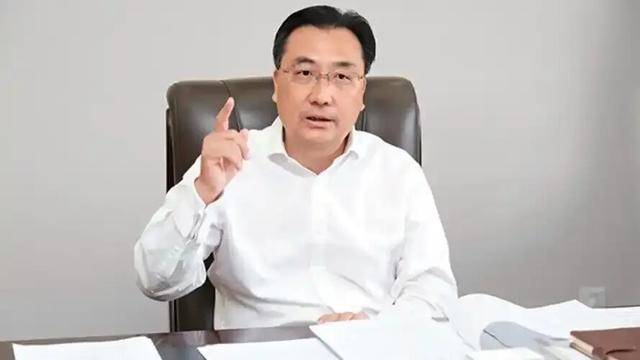
华夏银行原董事长李民吉,已涉严重违纪违法,今年1月辞职,6月被撤销全国政协委员资格
Sou Hu Cai Jing· 2025-12-22 14:21
Group 1 - The Beijing Municipal Committee held its eighth plenary session, approving resolutions regarding serious disciplinary violations by Li Minji, former chairman of Huaxia Bank [1] - Li Minji has a background in finance and state-owned assets, having held various significant positions in financial institutions, including the chairman of Huaxia Bank [3] - Li Minji resigned from his position as chairman of Huaxia Bank in January 2025 for personal reasons [3] Group 2 - The National Committee of the Chinese People's Political Consultative Conference confirmed the revocation of the membership of Li Minji and others on June 25, 2025 [3]