
China Spacesat(600118)

Search documents
中国卫星3连板,市值逼近1000亿元
Ge Long Hui A P P· 2025-12-26 05:47
格隆汇12月26日|中国卫星午后封涨停板,走出三连板,股价站上80元,创历史新高,市值逼近1000亿元。 ...


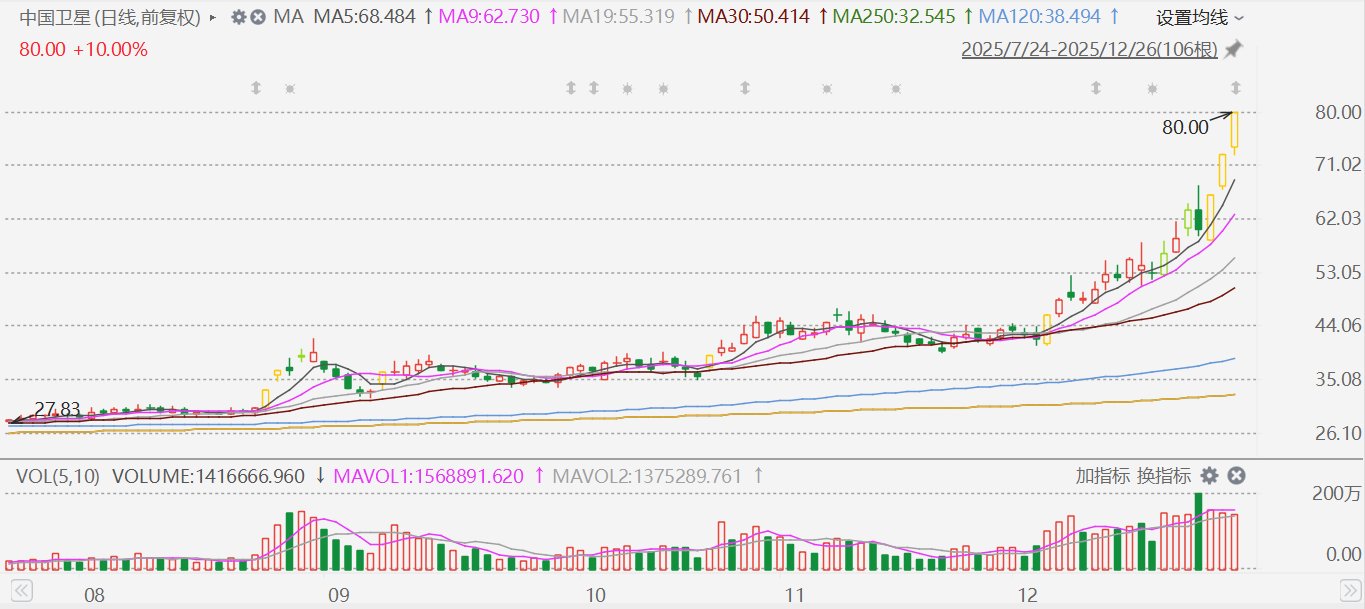
中国卫星走出3连板续创历史新高 总市值逼近1000亿
Xin Lang Cai Jing· 2025-12-26 05:47
午后商业航天概念人气股中国卫星封涨停,走出3连板,续创历史新高,总市值逼近1000亿。 ...
商业航天概念午后再度走强,中国卫星创历史新高
Mei Ri Jing Ji Xin Wen· 2025-12-26 05:28
每经AI快讯,12月26日,商业航天概念午后再度走强,中国卫星冲击涨停,股价创出历史新高,总市 值逼近千亿大关;中国卫通涨近7%。 (文章来源:每日经济新闻) ...

六战六捷!长八甲火箭年度发射任务圆满收官
Ke Ji Ri Bao· 2025-12-26 02:45
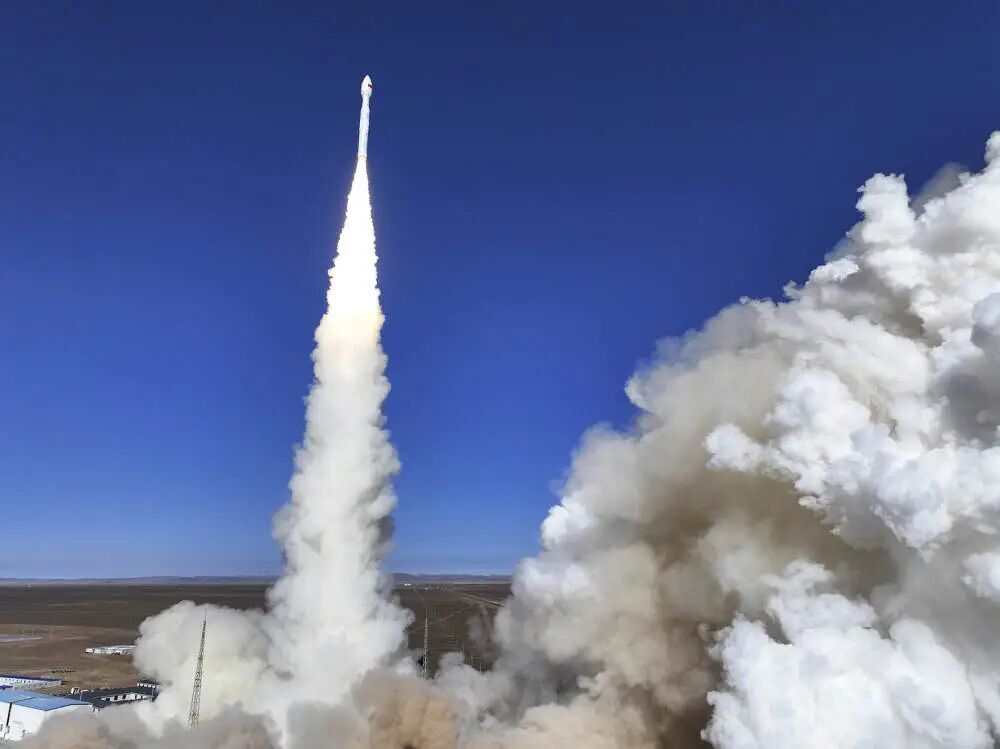
Group 1 - The Long March 8A rocket successfully launched 17 low-orbit satellite internet satellites into the designated orbit on December 26, 2025, marking a successful mission [1] - The Long March 8A rocket is a two-and-a-half stage liquid launch vehicle developed by China Aerospace Science and Technology Corporation [3] - The rocket has demonstrated high reliability, adaptability, and rapid execution capabilities, achieving six successful launches in its debut year [3] Group 2 - The launch team optimized the launch process, shortening the timeline by 8 days through parallel testing and integration of testing processes, significantly enhancing launch efficiency [3] - Adjustments to the rocket's status improved its payload capacity, increasing the satellite's orbital height and reducing the distance to the target orbit, which effectively lowers satellite fuel consumption [3] - This launch marks the 620th mission of the Long March series of rockets [3]
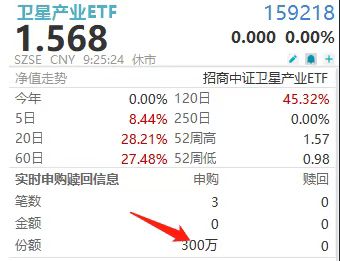
持续异动!卫星产业ETF(159218)连续多日盘前“吸金”!中国卫星三连升
Jin Rong Jie· 2025-12-26 01:53
12月26日,卫星板块再度活跃。数据显示,截至9时25分,表征板块的卫星产业ETF(159218)盘前再揽 金! | DB = VETF 108 | | 159218 0.000 0.00% | | --- | --- | --- | | SZSE CNY 9:25:24 休市 | | / 0 + | | 净值走势 | | 招商中证卫星产业ETF | | 交生 | 0.00% 120日 | 45.32% | | 5日 | 8.44% 250H | 0.00% | | 20日 | 28.21% 52周高 | 1.57 | | 60日 | 27.48% 52周低 | 0.98 | | 实时申购随回信息 | 由陶 | 度日 | | 警教 | ന | 0 | | 全额 | 0 | 0 | | 份额 | 300万 | | 消息面上,上海市发布措施支持航空航天产业发展,蓝箭航天宣布计划2026年中期实现可重复使用助推 器回收。此外,国防部对日本进攻性太空政策表示关切,凸显航天领域战略重要性。多重利好推动下, 卫星产业关注度持续提升。 风险提示:基金有风险,投资需谨慎。 资讯所属栏目还有更多独家策划、专家专栏,免费查阅>> ...
中国卫星:第十届董事会第一次会议决议公告
Zheng Quan Ri Bao· 2025-12-25 13:22
证券日报网讯 12月25日,中国卫星发布公告称,中国卫星第十届董事会第一次会议审议通过《关于公 司第十届董事会成立及推选董事长的议案》等议案。 (文章来源:证券日报) ...
商业航天再掀涨停潮,中国卫星2连板,超10家独角兽集体启动IPO
2 1 Shi Ji Jing Ji Bao Dao· 2025-12-25 12:59
Core Viewpoint - The commercial aerospace sector is experiencing significant growth, with a surge in stock prices for related companies and a wave of IPO preparations among various firms in the industry [2][5][8]. Group 1: Market Performance - The Shanghai Composite Index is on a seven-day upward trend, with commercial aerospace stocks leading the gains in the A-share market [2]. - Notable stocks such as Chaojie Co. and Guanglian Aviation have reached the daily limit of 20% increase, while other companies like Tian'ao Electronics and Aerospace Technology also saw significant gains [2][5]. Group 2: IPO Developments - The China Securities Regulatory Commission (CSRC) has updated the IPO guidance status for Blue Arrow Aerospace, indicating that it is one step away from formally submitting its IPO application [5]. - Over 600 domestic commercial aerospace companies are now operational, covering the entire industry chain from satellite manufacturing to rocket launches and ground equipment [5][8]. - More than ten commercial aerospace unicorns are currently pursuing IPOs, with firms like Xinghe Power and Micro Nano Aerospace also in the process of preparing for A-share listings [8][10]. Group 3: Policy Support and Market Growth - The introduction of the "1+6" reform rules for the Sci-Tech Innovation Board has expanded the eligibility for unprofitable companies in cutting-edge sectors, including commercial aerospace, to list [6][9]. - The commercial aerospace market in China is projected to reach 1.2 trillion yuan by 2024 and exceed 3.5 trillion yuan by 2030, with an annual compound growth rate of approximately 18% [11][13]. - Recent government policies have been implemented to support the quality management of commercial aerospace projects, further encouraging industry growth [10][11]. Group 4: Investment Trends - The commercial aerospace sector is attracting significant investment, with 138 financing events reported in 2024, totaling 20.239 billion yuan, marking a historical high [13]. - Major firms in the sector, such as Blue Arrow Aerospace, are valued at around 22 billion yuan, with substantial funding rounds completed to support their growth [14][15].

商业航天再掀涨停潮,中国卫星2连板,超10家独角兽集体启动IPO
21世纪经济报道· 2025-12-25 12:50
| 卫星互联网 | | | 大飞机 +4.70% | | 卫星导航 +3.90% | +3.85% | | --- | --- | --- | --- | --- | --- | --- | | 十大军工集 人形机器人 | | | | 通用航空 +3.27% | +3.22% | +3.17% | | | 商业航天 +4.95% 低空经济 +3.76% 航母 +3.59% | | | | | | | | | 军工信息化 +3.38% 中航系 | | | | | | T 4.0 | | | 宇树机器人 | | 汽车配件精 | | | +2.65% | | +3.15% | | +3.03% | +2.78% | | | G | 商业航天指数(8841877) | | | | --- | --- | --- | --- | | | 19392.20 914.87 4.95% | | | | 资料 | 成分 资讯 相关基金 | | 月度收益 | | 名称 | | 现价 | 涨跌幅 == | | 超捷股份 | | 134.93 | 20.00% | | 301005.SZ | | | | | 广联航空 | | 31. ...
商业航天延续强势领涨
Tebon Securities· 2025-12-25 12:11
Market Analysis - The A-share market is experiencing a strong upward trend, with the Shanghai Composite Index rising for seven consecutive days, closing at 3959.62 points, up 0.47% [6] - The overall market sentiment is positive, with a total trading volume of 1.94 trillion yuan, reflecting a 2.5% increase from the previous trading day [6] - The market is expected to continue its upward trajectory, driven by improved risk appetite and external factors stabilizing [7] Sector Performance - The commercial aerospace sector is leading the market with a significant increase of 4.95%, driven by high trading volumes in companies like China Satellite and Aerospace Electronics [5] - The paper products index also saw a rise of 3.63%, supported by a favorable exchange rate for imports [5] - Conversely, the non-ferrous metals sector declined by 0.92%, attributed to fluctuations in international gold prices [5] Bond Market - The government bond futures market is experiencing slight adjustments, with the 30-year main contract closing down 0.24% [10] - The central bank's liquidity injection of nearly 200 billion yuan indicates a continued loose monetary policy [10] - The market is expected to maintain a long-term easing bias, with potential for further adjustments in the first quarter of the following year [14] Commodity Market - The commodity index has slightly decreased by 0.16%, with significant volatility observed in platinum and palladium prices [10] - The price of polysilicon has surged, reflecting tight supply expectations, while the market remains optimistic about industry recovery [10] - Recent regulatory changes in trading for platinum and palladium have led to increased volatility, suggesting a cautious approach to these commodities [10] Investment Opportunities - Key investment themes include commercial aerospace, artificial intelligence, and large consumer sectors, driven by government support and market dynamics [12] - The report highlights the attractiveness of dividend stocks and the potential for further capital inflows into the A-share market due to the appreciation of the yuan [14] - The focus on technological innovation and the development of a modern industrial system is expected to catalyze growth in targeted sectors [7]

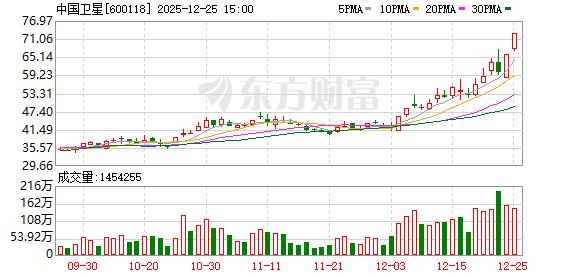
中国卫星:12月25日召开董事会会议
Mei Ri Jing Ji Xin Wen· 2025-12-25 11:35
(记者 张明双) 截至发稿,中国卫星市值为860亿元。 每经头条(nbdtoutiao)——对话马斯克脑机接口"一号受试者":大脑植入芯片23个月,我正重新夺回 人生的独立 每经AI快讯,中国卫星(SH 600118,收盘价:72.73元)12月25日晚间发布公告称,公司第十届第一次 董事会会议于2025年12月25日在北京市海淀区中关村南大街31号神舟大厦12层大会议室以现场加通讯方 式召开。会议审议了《中国卫星关于聘任于丽慧女士担任公司财务总监的议案》等文件。 2024年1至12月份,中国卫星的营业收入构成为:小卫星制造及其应用占比98.89%,其他业务占比 1.11%。 ...