
China Spacesat(600118)

Search documents
长征十号箭体,降落细节披露
财联社· 2026-02-12 04:57
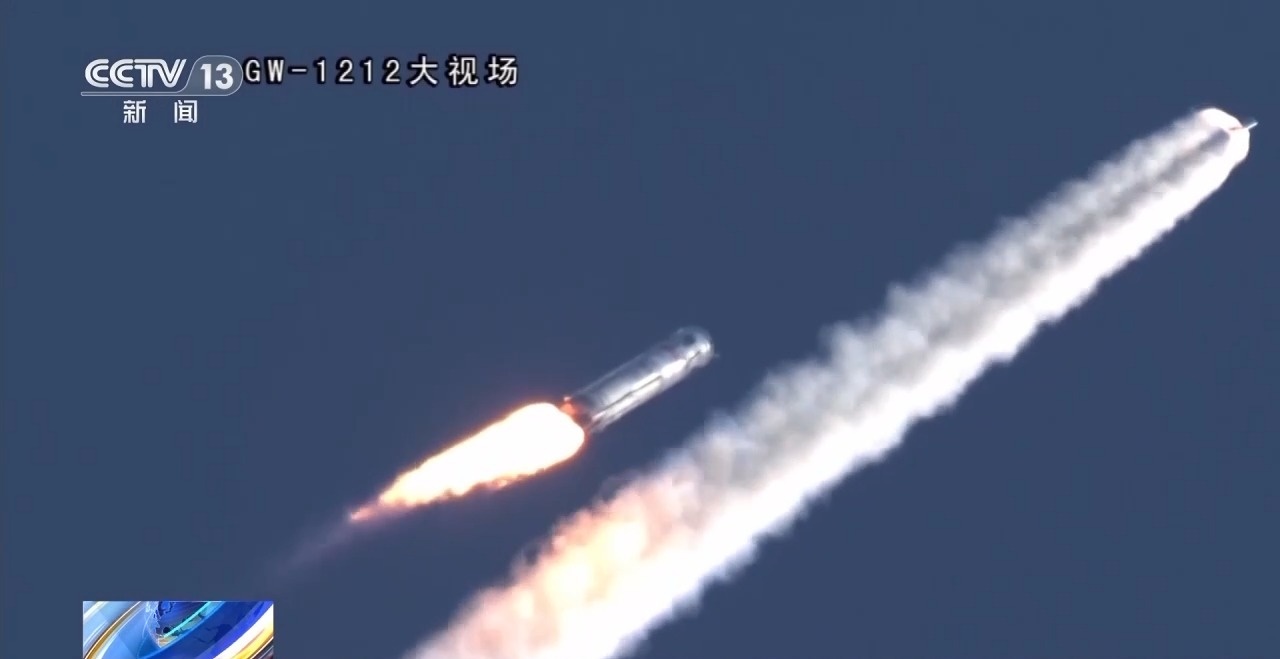
约65秒后,飞船成功逃逸,掌声响起。但团队来不及放松,火箭即将掉头返回,试验进入最关键的回收阶段。 据央视新闻, 昨天,我国在文昌航天发射场成功组织实施长征十号运载火箭系统低空演示验证与梦舟载人飞船系统最大动压逃逸飞行试验,我国载 人月球探测工程研制工作取得重要阶段性突破。 此次试验成功验证了火箭回收技术,总台央视记者在指挥方舱内,记录了从准备到成功的全过 程。 2月11日上午,在文昌航天发射场,长征十号低空飞试验箭静立在发射区。临时搭建的指挥方舱内,研制团队正进行最后准备。这次试验要 完成两个关键动作:将梦舟飞船送至最大动压区实施逃逸,同时验证火箭一子级的回收能力。 火箭点火升空。大家匆匆透过窗户看了一眼发射后,就赶紧凑到屏幕前,监视火箭的飞行状态。 经过约470秒飞行,火箭一级准确溅落于预定海域。 方舱内顿时充满掌声和欢呼。 记者 :火箭成了吗? 中国航天科技集团 容易 :我在等进一步的数据,从落区传回来的消息来看,我们实现了预定的目的,火箭表现非常好! 中国航天科技集团 聂莹 :感觉非常自豪,非常有成就感! 中国航天科技集团 杨树涛 :今天能有这么好的一个结果,我觉得是非常非常开心! 中国航天科技集团 ...



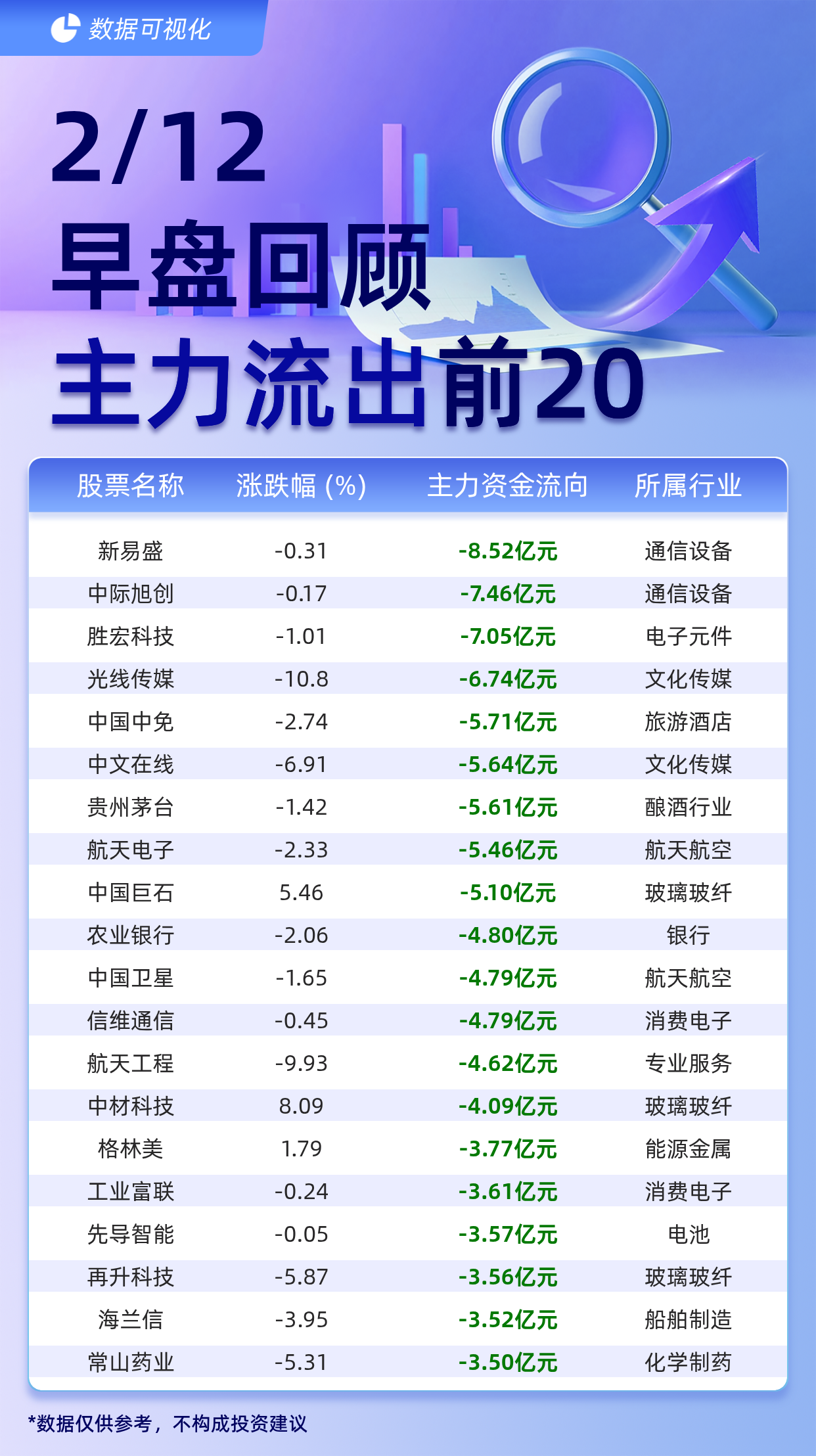
主力个股资金流出前20:新易盛流出8.52亿元、中际旭创流出7.46亿元
Jin Rong Jie· 2026-02-12 03:58
Group 1 - The main stocks with significant capital outflows include Xinyi Technology (-8.52 billion), Zhongji Xuchuang (-7.46 billion), and Shenghong Technology (-7.05 billion) [1] - Other notable stocks with capital outflows are Light Media (-6.74 billion), China Duty Free Group (-5.71 billion), and Zhongwen Online (-5.64 billion) [1] - Guizhou Moutai experienced a capital outflow of -5.61 billion, while Aerospace Electronics saw -5.46 billion [1] Group 2 - The stock performance shows that Xinyi Technology had a decline of -0.31%, and Zhongji Xuchuang decreased by -0.17% [2] - Light Media faced a significant drop of -10.8%, while Zhongwen Online fell by -6.91% [2] - Guizhou Moutai's stock decreased by -1.42%, and Aerospace Electronics dropped by -2.33% [2] Group 3 - Other companies with notable capital outflows include Agricultural Bank (-4.80 billion) and China Satellite (-4.79 billion) [3] - Industrial Fulian had a slight decline of -0.24%, while Xian Dao Intelligent saw a minimal change of -0.05% [3] - The overall trend indicates a significant capital outflow from various sectors, including telecommunications, media, and banking [1][2][3]



470秒!中国火箭成功回收
Yang Shi Xin Wen Ke Hu Duan· 2026-02-12 03:32
Core Insights - The successful test of the Long March 10 rocket system marks a significant milestone in China's manned lunar exploration program, validating key technologies for rocket recovery and escape flight of the Mengzhou spacecraft [1][9]. Group 1: Test Details - The test was conducted at the Wenchang Space Launch Site, where the Long March 10 rocket was prepared for two critical actions: sending the Mengzhou spacecraft to the maximum dynamic pressure zone for escape and verifying the recovery capability of the rocket's first stage [1]. - Approximately 65 seconds after launch, the spacecraft successfully escaped, leading to applause from the team [3]. - After about 470 seconds of flight, the rocket's first stage accurately splashed down in the designated sea area, resulting in cheers and applause within the command center [5]. Group 2: Company Statements - Representatives from China Aerospace Science and Technology Corporation expressed pride and a sense of achievement following the successful test, highlighting the challenges ahead in the development of reusable rocket technology [9][11]. - The team emphasized the importance of this success in the context of international advancements in space technology, noting the complexity and difficulty of the task [11].
马斯克刚转向月球,中国商业航天交出满分答卷!载人登月探测两大关键任务圆满成功,探月节奏全面领跑!
Xin Lang Cai Jing· 2026-02-11 10:16
Group 1 - Aerospace Electronics (600879) is a core listed platform of the Aerospace Science and Technology Group, focusing on aerospace electronic information systems, inertial navigation, integrated circuits, and electromechanical components. It is a leading supplier for manned lunar landing projects, providing key equipment for the Long March 10 rocket and the Dream Chaser spacecraft, with a leading market share in aerospace electronic support [1][25]. - Aerospace Power (600343) specializes in aerospace liquid propulsion systems and is a key supplier for the Long March 10 rocket's propulsion system. The company is recognized for its high-temperature and high-reliability products, suitable for manned lunar landing conditions, and is expected to see strong growth in orders as the lunar landing program progresses [2][26]. - Aerospace Engineering (603698) relies on resources from the Aerospace Science and Technology Group and is involved in system integration and launch support for manned lunar landing projects. The company is recognized as a leader in aerospace engineering contracting and is expected to expand its system integration business as demand for launch support services increases [3][27]. Group 2 - Aerospace Electromechanical (600151) focuses on special materials and energy systems for spacecraft, serving as a core supplier for the Dream Chaser and lunar probe. The company is recognized for its lightweight and high-strength products, which are essential for manned lunar missions, and is expected to see rapid growth in its aerospace support business [4][28]. - Aerospace Electrical (002025) specializes in high-end relays, connectors, and micro motors, with a market share exceeding 70% in aerospace connectors. The company is viewed as a critical supplier for manned lunar projects, with strong reliability and high technical barriers, and is expected to see increased demand as the lunar landing program advances [5][30]. - Quanxin Co., Ltd. (300447) focuses on aerospace special cables and transmission components, providing high-temperature and interference-resistant cables for lunar landing projects. The company is recognized as a leader in the aerospace cable segment, with stable orders expected to grow as demand for aerospace information technology increases [6][31]. Group 3 - Zhenhua Technology (000733) is a leading military electronics company, providing essential electronic components and power systems for spacecraft. The company is expected to see significant growth in product demand as the lunar landing program progresses, supported by its strong technical capabilities and customer resources [7][32]. - Torch Electronics (603678) specializes in ceramic capacitors and aerospace components, recognized as a core supplier for ceramic capacitors in lunar landing projects. The company is expected to see growing demand for its aerospace-grade capacitors as the lunar landing program advances [8][33]. - Guojijiang Precision (002046) focuses on aerospace special bearings and precision manufacturing equipment, with a market share exceeding 90% in high-reliability aerospace bearings. The company is expected to see strong demand for its special bearings as the lunar landing spacecraft development accelerates [9][34]. Group 4 - China Satellite (600118) is a leading satellite manufacturer under the Aerospace Science and Technology Group, providing satellite development and application services for lunar landing projects. The company is expected to see rapid growth in its satellite manufacturing and application business as demand for space-based systems increases [10][35]. - China Satcom (601698) specializes in satellite communication services, providing critical communication links for lunar landing missions. The company is recognized as a leader in satellite communication operations, with expected growth in service revenue as lunar landing tasks progress [11][36]. - Haige Communication (002465) focuses on satellite navigation and wireless communication, serving as a core supplier for navigation and communication terminals in lunar landing projects. The company is expected to see strong growth in its core business as demand for lunar landing measurement and control systems increases [12][37]. Group 5 - Beidou Xingtong (002151) is a core enterprise in the Beidou navigation industry chain, providing high-precision navigation solutions for rockets and spacecraft. The company is expected to see rapid growth in its aerospace navigation business as demand for high-precision navigation increases with the lunar landing program [13][38]. - Guangwei Composite Materials (300699) is a leading carbon fiber manufacturer, providing lightweight materials for the Long March 10 rocket and Dream Chaser. The company is expected to see growing orders for its composite materials as demand for lightweight solutions in aerospace increases [14][39]. - Guangqi Technology (002625) specializes in metamaterials and aerospace structural components, providing lightweight and radiation-resistant parts for spacecraft. The company is expected to see increasing demand for its metamaterial solutions as the lunar landing program progresses [15][40]. Group 6 - Steel Research High-Nickel (300034) focuses on high-temperature alloys and aerospace special alloys, providing critical materials for rocket engines. The company is expected to see strong demand for its high-temperature alloys as the lunar landing rocket production accelerates [16][41]. - Western Materials (002149) specializes in titanium alloys and rare metal composite materials, providing lightweight components for lunar landing vehicles. The company is expected to see growing demand for its special materials as the lunar landing spacecraft development accelerates [17][42]. - Hailanxin (300065) focuses on marine electronic information and aerospace recovery measurement and control systems, providing critical support for lunar landing return missions. The company is expected to see rapid growth in its measurement and control business as lunar landing return tasks are implemented [18][43]. Group 7 - Jieli Rigging (002342) specializes in special rigging and lifting equipment, providing critical components for the safe recovery of lunar landing rockets. The company is expected to see increasing demand for its special rigging solutions as the technology for reusable rockets becomes more prevalent [19][44]. - China Shipbuilding (600150) is a leading shipbuilding company, focusing on the construction of marine recovery platforms for lunar landing missions. The company is expected to see continued growth in its recovery platform construction business as lunar landing tasks progress [20][45]. - Chaojie Co., Ltd. (301005) specializes in high-strength fasteners and precision structural components, providing critical fasteners for rockets and spacecraft. The company is expected to see growing demand for its fasteners as the lunar landing program moves into mass production [21][46]. - Yingliu Co., Ltd. (603308) focuses on high-temperature alloy castings and aerospace precision components, providing critical parts for rocket engines. The company is expected to see strong demand for its core components as the lunar landing rocket production accelerates [22][47].


视频丨载人月球探测取得重要进展 长征十号火箭与梦舟飞船完成关键试验
Yang Shi Xin Wen Ke Hu Duan· 2026-02-11 07:47
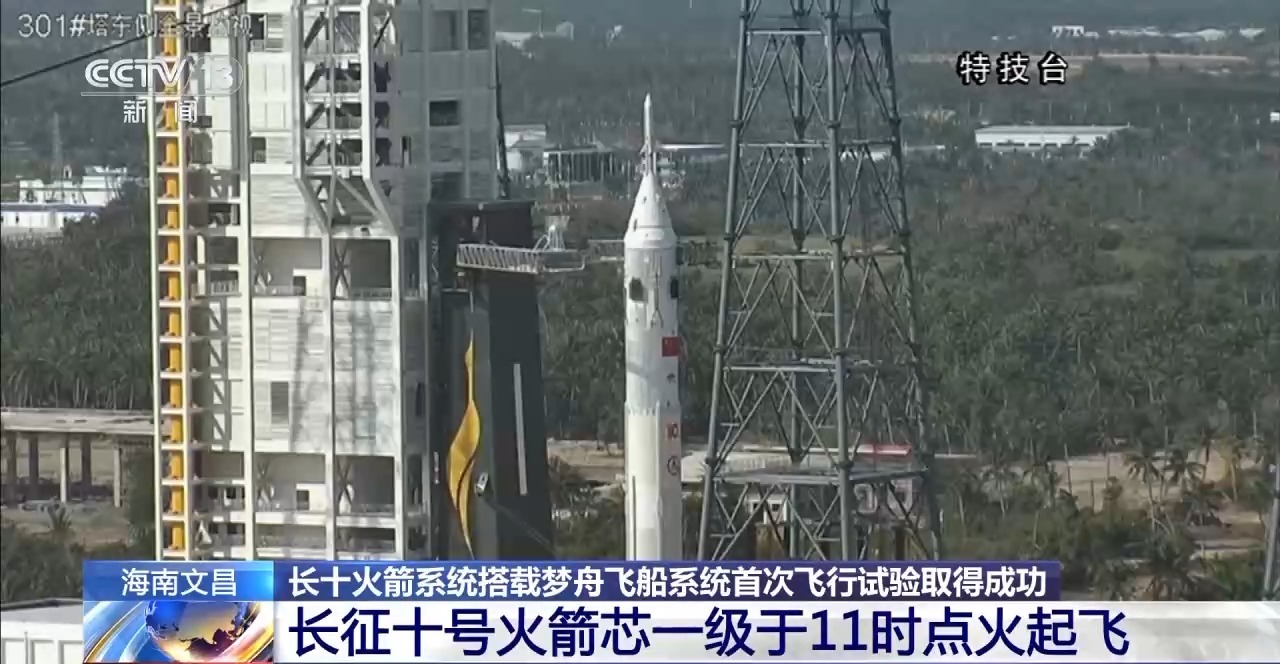
Core Viewpoint - China's successful implementation of the Long March 10 rocket system low-altitude demonstration test and the maximum dynamic pressure escape flight test of the Dream Boat manned spacecraft marks a significant breakthrough in the country's manned lunar exploration program [1]. Group 1: Test Details - The Long March 10 rocket, carrying the Dream Boat spacecraft, conducted its first flight test at the Wenchang Space Launch Site [3]. - During the test, five out of seven engines in the first stage of the rocket were ignited, initiating the low-altitude demonstration verification [3]. - The maximum altitude reached by the first stage of the rocket was approximately 105 kilometers, which is consistent with normal flight missions, although it is termed "low-altitude" due to the absence of the second stage [6]. Group 2: Technical Challenges - The maximum dynamic pressure escape test was designed to evaluate the spacecraft's ability to escape safely in the event of an emergency failure during ascent near the maximum dynamic pressure point [12]. - Key challenges included ensuring safe separation during high-speed ascent, maintaining stability during the escape phase, and ensuring all procedures were tightly coordinated throughout the flight [12]. Group 3: Technological Breakthroughs - The test assessed the reliability of multiple engine ignitions and high-altitude ignitions, as well as high-precision navigation control during the return phase [15]. - The successful completion of this test signifies a critical breakthrough in China's reusable rocket technology [15].
我国载人月球探测工程研制工作取得阶段性突破 创下多个国内、国际“首次”
Huan Qiu Wang Zi Xun· 2026-02-11 07:08
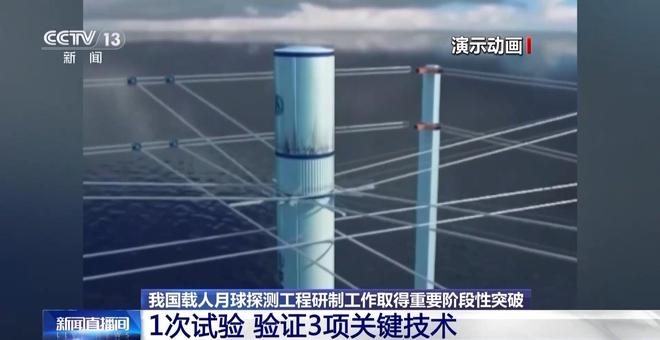
Core Viewpoint - The successful test of the Long March 10 rocket system and the Dream Boat manned spacecraft marks a significant milestone for China's manned lunar program, achieving multiple key technology validations and setting several domestic and international "firsts" [1][4][5]. Group 1: Key Technology Validation - The test successfully validated three core technologies: emergency escape under maximum dynamic pressure, networked collaborative assessment, and the real profile return flight of the rocket's first stage [4][5]. - This flight test is described as a crucial safety verification for the manned lunar mission, demonstrating real flight conditions [4][5]. Group 2: Challenges and Innovations - The complexity of the flight profile and high precision control requirements posed unprecedented challenges, leading to the achievement of three "firsts" in both domestic and international contexts [5][7]. - The test included the first-ever maximum dynamic pressure escape test in China's manned rocket development, validating the world's first networked recovery method [7]. Group 3: Flight Profile and Dynamics - The test flight reached a maximum altitude of approximately 105 kilometers, which is consistent with future actual flight heights, although termed "low-altitude" [9]. - The maximum dynamic pressure, a critical test point during the rocket's ascent, was reached at around 11 kilometers, allowing for the escape of the spacecraft under conditions that are still manageable for future missions [10][12]. Group 4: Detailed Flight Process - The entire test process lasted approximately 470 seconds, starting with the ignition of five engines and culminating in the successful separation of the spacecraft from the rocket [13]. - The rocket ascended to about 105 kilometers, followed by a series of maneuvers including a glide phase and a powered descent to prepare for re-entry [15][17]. Group 5: Recovery and Safety Measures - In future missions, the first stage of the rocket will be recovered on a sea-based platform, with safety measures ensuring a 200-meter distance from the recovery ship during the test [19]. - This approach aims to prevent any potential mishaps during the return phase, ensuring the safety of both the rocket and the recovery vessel [21].
载人月球探测重要进展 长征十号火箭与梦舟飞船完成关键试验
Yang Shi Xin Wen· 2026-02-11 06:50
Core Viewpoint - China's successful implementation of the Long March 10 rocket system low-altitude demonstration test and the maximum dynamic pressure escape flight test for the Mengtian crewed spacecraft marks a significant breakthrough in the country's crewed lunar exploration program [1] Group 1: Test Overview - The Long March 10 rocket, carrying the Mengtian crewed spacecraft, conducted its first flight test at the Wenchang Space Launch Site [1] - The rocket's first stage ignited five out of seven engines, initiating the low-altitude demonstration verification [1] Group 2: Low-Altitude Flight Explanation - The term "low-altitude flight" refers to the test's lack of a second stage, resulting in a maximum altitude of approximately 105 kilometers, which is consistent with normal flight missions [2] Group 3: Engine Ignition Details - Two engines were not ignited to maintain consistent acceleration during the ascent due to the rocket's lighter weight without the second stage [3] Group 4: Maximum Dynamic Pressure - The maximum dynamic pressure occurs when the rocket experiences peak aerodynamic resistance during ascent, which is influenced by increasing speed and altitude [4] Group 5: Purpose of Maximum Dynamic Pressure Escape Test - The test aims to evaluate the spacecraft's ability to escape safely in the event of an emergency near the maximum dynamic pressure point during ascent, focusing on three main challenges: safe separation during high-speed ascent, stability during the escape phase, and precise program matching throughout the flight [5] Group 6: Technological Breakthroughs and Significance - The successful test assessed the reliability of multiple engine ignitions and high-altitude ignition, as well as high-precision navigation control during re-entry, marking a key breakthrough in China's reusable rocket technology [6]
非常罕见!黑洞“干饭”现场,被中国卫星捕捉
Ke Ji Ri Bao· 2026-02-11 03:50
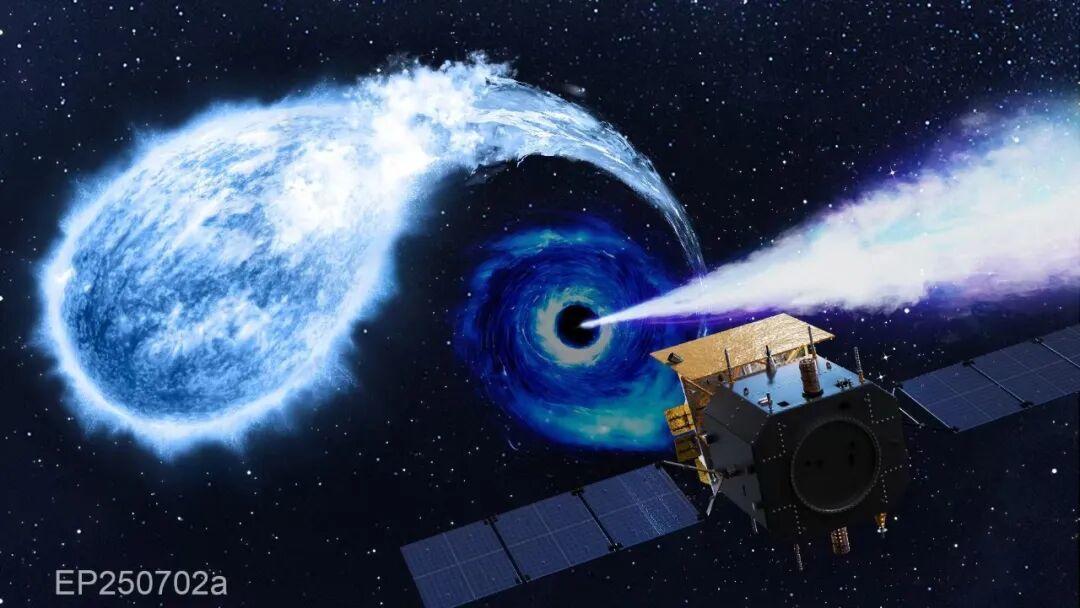
Core Insights - The "Tian Guan" satellite may have captured a rare event of a medium-mass black hole tearing apart and consuming a white dwarf star, which, if confirmed, would be the first clear observation of such an extreme cosmic phenomenon, significantly enhancing the understanding of black hole activity and high-energy astrophysical mechanisms [1][3] Group 1 - The "Tian Guan" satellite's wide-field X-ray telescope, "Wan Xing Tong," discovered an exceptionally bright and rapidly changing X-ray source, designated EP250702a, on July 2, 2025, in the outskirts of a distant galaxy [1] - Observations indicated that X-ray radiation was present at the location approximately one day before a significant gamma-ray burst, suggesting that the physical engine of the explosion was activated much earlier than traditional gamma-ray bursts [1] - The characteristics of the event, including its high brightness and rapid evolution, could not be explained by common astrophysical explosion models, leading the scientific team to propose that a medium-mass black hole was involved in the disruption of a white dwarf star [1][3] Group 2 - The research team noted that the rapid decay and high brightness of the event imply that the consumed celestial body had a very high density, which aligns with the characteristics of a white dwarf star [3] - The estimated mass of the black hole involved is less than approximately 75,000 times that of the Sun, based on gamma-ray data from the Fermi satellite, and the event's location in the outskirts of the galaxy rules out the possibility of a supermassive black hole [3] - Only a medium-mass black hole would possess the capability to tear apart a dense body like a white dwarf, resulting in the observed brief, intense, and high-energy jets [3]
AI与机器人深度结合,太空探索:进入无人化时代
Tou Bao Yan Jiu Yuan· 2026-02-10 13:41
Investment Rating - The report indicates a positive investment outlook for the aerospace robotics industry, highlighting its transition from auxiliary exploration to core support in space missions [17]. Core Insights - The aerospace robotics sector is experiencing significant growth, with the global market projected to expand from approximately $5 billion in 2023 to $10.9 billion by 2033, reflecting a compound annual growth rate (CAGR) of 8.10% from 2024 to 2030 [21]. - The report emphasizes the increasing role of autonomous and semi-autonomous robots in space exploration, capable of performing complex tasks in extreme conditions, thereby reducing risks and costs associated with human astronauts [8][9]. - Key technological advancements such as AI integration, autonomous navigation, and edge computing are driving the evolution of space robots, enabling them to operate independently and efficiently in space environments [4][14]. Summary by Sections Industry Overview - Aerospace robots are designed for tasks in space environments, including satellite maintenance, space station construction, and planetary exploration [4][8]. - These robots exhibit strong environmental adaptability, capable of withstanding extreme temperatures and radiation, and are equipped with advanced sensors and AI for autonomous decision-making [9][10]. Market Dynamics - The global aerospace robotics market is transitioning towards a more integral role in space missions, with increasing demand for automation and intelligent equipment [21]. - The report forecasts a robust growth trajectory for the market, driven by the rising number of space exploration missions and the need for automated solutions in satellite servicing and space debris management [22]. Technological Trends - Key technological trends include enhanced autonomy through AI, modular designs for flexible task execution, and collaborative capabilities among multiple robots to tackle complex missions [27][26]. - The report highlights the importance of advancements in materials and sensor technologies to improve the reliability and efficiency of space robots [14][29]. Future Directions - Future developments in the aerospace robotics industry will focus on deep space exploration, in-orbit servicing, and the construction of space infrastructure, which will require high-performance, multifunctional robots [22][24]. - The report outlines a roadmap for the evolution of space robots, emphasizing the shift from mechanical assistance to intelligent, autonomous partners in space missions [25][24].

宇航机器人行业创新发展:行业洞察-AI与机器人深度结合,太空探索进入无人化时代
Tou Bao Yan Jiu Yuan· 2026-02-10 12:24
Investment Rating - The report does not explicitly state an investment rating for the aerospace robotics industry Core Insights - The aerospace robotics industry is transitioning from "auxiliary exploration" to "core support," driven by increasing demand for automation and intelligent equipment in space exploration tasks [17][21] - The global market for aerospace robots is projected to grow from approximately $5 billion in 2023 to $10.9 billion by 2033, with a compound annual growth rate (CAGR) of 8.10% from 2024 to 2030, indicating strong growth potential [21][22] - The report highlights the critical role of aerospace robots in various applications, including satellite maintenance, space exploration, and in-orbit services, emphasizing their ability to operate in high-risk environments [21][23] Summary by Sections Industry Overview - Aerospace robots are designed for tasks in space environments, capable of performing complex operations such as satellite maintenance, space station construction, and planetary exploration [4][8] - These robots exhibit strong environmental adaptability, able to withstand extreme temperatures ranging from -150°C to +120°C, vacuum conditions, and high radiation levels [9][10] Technological Advancements - Key technologies in aerospace robotics include autonomous navigation, edge computing, computer vision, reinforcement learning, and remote operation, which enhance the robots' capabilities in space [4][9] - The integration of AI technologies allows for improved decision-making and operational efficiency, enabling robots to adapt to dynamic space environments [14][26] Market Trends - The aerospace robotics market is expected to expand significantly, with a focus on deep space exploration, in-orbit services, and space manufacturing, which will require high-performance, multifunctional robots [22][24] - The report identifies three main growth areas: ongoing deep space exploration missions, the rapid rise of in-orbit service markets, and the emergence of orbital construction and space manufacturing applications [22][24] Development Path - The evolution of aerospace robots is characterized by a shift from "mechanical arm assistance" to "intelligent exploration" and "human-robot collaboration," positioning them as core components in space operations [24][26] - Future developments will focus on enhancing autonomy, modular design, and collaborative capabilities among multiple robots to tackle complex space tasks [27][28]

