
TALOPH(600222)

Search documents
太龙药业:2025年前三季度拟实施差异化分红774.09万元
Xin Lang Cai Jing· 2025-12-31 09:12
Core Viewpoint - The company announced a differentiated dividend distribution due to discrepancies between total share capital and shares eligible for distribution resulting from share buybacks in 2023 and 2025 [1] Group 1: Dividend Distribution - The company plans to distribute a cash dividend of 0.14 yuan (including tax) for every 10 shares to all shareholders, without issuing bonus shares or capitalizing reserves [1] - The total share capital as of the announcement date is 574 million shares, with 20.96 million shares deducted for the buyback account, leading to a proposed cash dividend payout of 7.7409 million yuan (including tax) [1] - The dividend amount represents 30.57% of the net profit attributable to shareholders for the first three quarters of 2025 [1] Group 2: Legal Compliance - Legal advisors believe that the dividend distribution complies with regulations and will have a minimal impact on the ex-dividend reference price [1]

中药板块12月31日跌0.3%,*ST长药领跌,主力资金净流出3.99亿元
Zheng Xing Xing Ye Ri Bao· 2025-12-31 08:59
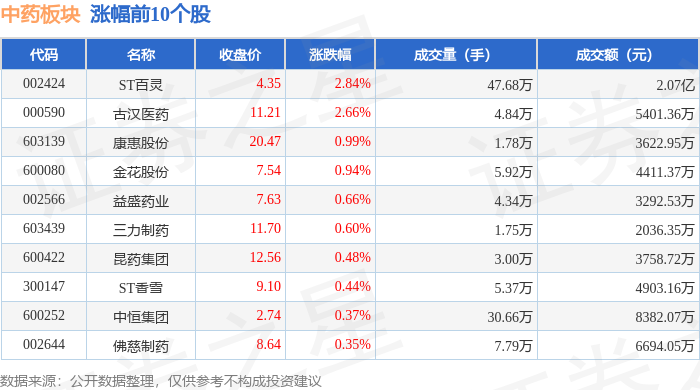
Market Overview - The Chinese medicine sector experienced a decline of 0.3% on December 31, with *ST Changyao leading the drop [1] - The Shanghai Composite Index closed at 3968.84, up 0.09%, while the Shenzhen Component Index closed at 13525.02, down 0.58% [1] Stock Performance - Notable gainers in the Chinese medicine sector included: - ST Ziling: closed at 4.35, up 2.84% with a trading volume of 476,800 shares and a turnover of 207 million yuan [1] - Guohan Pharmaceutical: closed at 11.21, up 2.66% with a trading volume of 48,400 shares and a turnover of 54.01 million yuan [1] - Major decliners included: - *ST Changyao: closed at 0.87, down 8.42% with a trading volume of 828,300 shares and a turnover of 73.23 million yuan [2] - ST Huluwa: closed at 7.62, down 4.63% with a trading volume of 176,200 shares and a turnover of 134 million yuan [2] Capital Flow - The Chinese medicine sector saw a net outflow of 399 million yuan from institutional investors, while retail investors contributed a net inflow of 376 million yuan [2] - The sector's capital flow details indicate: - Dong'e Ejiao had a net inflow of 27.6 million yuan from institutional investors, but a net outflow of 14.69 million yuan from speculative funds [3] - Guohan Pharmaceutical experienced a net inflow of 8.03 million yuan from institutional investors, but a net outflow of 9.69 million yuan from retail investors [3]




太龙药业(600222)披露使用闲置自有资金委托理财公告,12月30日股价上涨1.52%
Sou Hu Cai Jing· 2025-12-30 14:39
Core Viewpoint - Tai Long Pharmaceutical (600222) has announced the use of idle self-owned funds for entrusted wealth management, aiming to invest up to 250 million yuan in low-risk financial products to enhance returns while ensuring fund safety [1] Group 1: Stock Performance - As of December 30, 2025, Tai Long Pharmaceutical's stock closed at 6.66 yuan, up 1.52% from the previous trading day, with a total market capitalization of 3.822 billion yuan [1] - The stock opened at 6.55 yuan, reached a high of 6.77 yuan, and a low of 6.50 yuan, with a trading volume of 1.55 billion yuan and a turnover rate of 4.08% [1] Group 2: Wealth Management Announcement - The company held its sixth meeting of the tenth board of directors on December 30, 2025, where it approved the use of no more than 250 million yuan of idle self-owned funds for entrusted wealth management [1] - The investment will focus on low-risk financial products provided by listed financial institutions, including bank wealth management, money market funds, and reverse repos, with a single term not exceeding 6 months [1] - The wealth management period is set for within 12 months from the date of board approval, and the funds can be rolled over within the approved limit [1] - This matter does not require submission for shareholder meeting approval, and the company has established relevant risk control measures to ensure fund safety without affecting the normal operation of its main business [1]
太龙药业(600222) - 太龙药业关于使用闲置自有资金委托理财的公告
2025-12-30 09:31
本公司董事会及全体董事保证本公告内容不存在任何虚假记载、误导性陈述 或者重大遗漏,并对其内容的真实性、准确性和完整性承担法律责任。 证券代码:600222 证券简称:太龙药业 公告编号:2025-073 河南太龙药业股份有限公司 关于使用闲置自有资金委托理财的公告 重要内容提示: 基本情况 | 投资金额 | 不超过 25,000 万元 | | --- | --- | | 投资种类 | 已上市金融机构(商业银行、证券公司等金融机构) 提供的安全性高、流动性好的低风险理财产品 | | 资金来源 | 自有资金 | 已履行及拟履行的审议程序: 已经河南太龙药业股份有限公 司(以下简称"公司")第十届董事会第六次会议审议通过。本议案 无需提交公司股东会审议。 特别风险提示: 公司拟购买的理财产品范围虽然是安全性高、 流动性好、低风险的理财产品,但不排除该投资受宏观经济、市场波 动、金融政策变化等因素引起的影响收益的情况。敬请广大投资者注 意投资风险。 一、投资情况概述 (一)投资目的 为提高自有资金使用效率,合理利用在生产经营过程中暂时闲 置的自有资金,在保证资金流动性和安全性的基础上,公司(含合 (三)资金来源 公司 ...
中药板块12月30日跌0.32%,*ST长药领跌,主力资金净流出2.31亿元
Zheng Xing Xing Ye Ri Bao· 2025-12-30 09:00
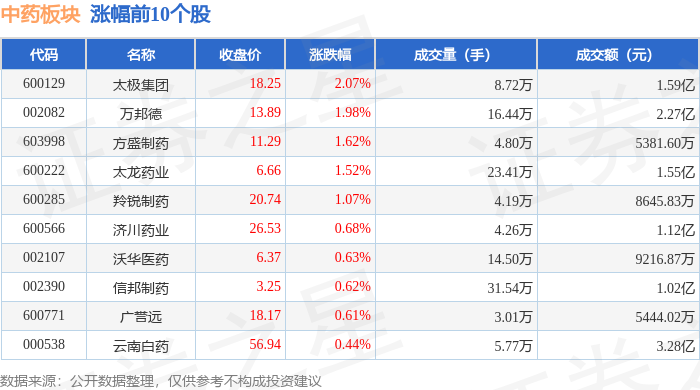
Market Overview - The Chinese medicine sector experienced a decline of 0.32% on December 30, with *ST Changyao leading the drop [1] - The Shanghai Composite Index closed at 3965.12, down 0.0%, while the Shenzhen Component Index closed at 13604.07, up 0.49% [1] Stock Performance - Notable gainers in the Chinese medicine sector included: - Taiji Group (600129) with a closing price of 18.25, up 2.07% [1] - Wanbangde (002082) at 13.89, up 1.98% [1] - Fangsheng Pharmaceutical (603998) at 11.29, up 1.62% [1] - Conversely, *ST Changyao (300391) saw a significant drop of 19.49%, closing at 0.95 [2] Trading Volume and Value - The trading volume and value for key stocks were as follows: - Taiji Group: 87,200 shares traded, with a transaction value of 159 million [1] - Wanbangde: 164,400 shares traded, with a transaction value of 227 million [1] - Fangsheng Pharmaceutical: 48,000 shares traded, with a transaction value of 53.82 million [1] Capital Flow - The Chinese medicine sector experienced a net outflow of 231 million from institutional investors, while retail investors saw a net inflow of 280 million [2] - The capital flow for specific stocks included: - Wanbangde with a net inflow of 48.79 million from institutional investors [3] - Taiji Group with a net inflow of 18.53 million from institutional investors [3] - *ST Changyao had a net outflow of 19.49% [2]


太龙药业涨2.13%,成交额1.01亿元,主力资金净流入870.42万元
Xin Lang Cai Jing· 2025-12-30 05:59
Group 1 - The core viewpoint of the news highlights the recent stock performance and trading activity of Tai Long Pharmaceutical, showing a 2.13% increase in stock price to 6.70 CNY per share, with a total market capitalization of 3.845 billion CNY [1] - The company has seen a year-to-date stock price increase of 31.63%, but has experienced a decline of 2.33% over the last five trading days and 11.26% over the last twenty days [1] - Tai Long Pharmaceutical has been featured on the "Dragon and Tiger List" three times this year, with the most recent instance on December 10, where it recorded a net buy of -8.4516 million CNY [1] Group 2 - Tai Long Pharmaceutical, established on August 31, 1998, and listed on November 5, 1999, operates in the pharmaceutical manufacturing sector, focusing on traditional Chinese medicine, chemical drug manufacturing, and pharmaceutical wholesale [2] - The company's revenue composition includes 70.59% from drug manufacturing, 14.71% from drug research services, and 14.42% from drug material circulation [2] - As of September 30, 2025, Tai Long Pharmaceutical reported a revenue of 1.187 billion CNY, a year-on-year decrease of 11.47%, and a net profit of 25.3255 million CNY, down 12.36% year-on-year [2] Group 3 - Tai Long Pharmaceutical has distributed a total of 112 million CNY in dividends since its A-share listing, with 15.5307 million CNY distributed over the past three years [3] - As of September 30, 2025, the company had 40,400 shareholders, a decrease of 1.08% from the previous period, with an average of 14,190 circulating shares per shareholder, an increase of 1.09% [2][3] - Notable institutional holdings include Guangfa Pension Index A as the eighth largest shareholder with 2.9719 million shares, down by 264,000 shares, and Huatai-PineBridge CSI Traditional Chinese Medicine ETF as the ninth largest shareholder with 2.8616 million shares, marking a new entry [3]
年内A股控制权变更持续升温 产业协同和治理优化成主线
Zheng Quan Ri Bao· 2025-12-29 13:06
Group 1 - The core viewpoint of the article highlights the increasing trend of control rights transactions in the A-share market since 2025, with nearly 170 companies disclosing plans for control changes this year, indicating a significant resource optimization in the capital market [1] - The entry of state-owned capital has become a notable trend, with new controlling shareholders often bringing in capital injections and governance optimizations, which contribute to the high-quality development of companies [1][4] - Control rights changes are seen as market-driven behaviors for resource reallocation, with quality capital entering to empower companies and promote industrial integration, aligning with the current demand for high-quality development in the real economy [1] Group 2 - Specific cases illustrate that new controlling shareholders often accompany capital injections and governance optimizations, leading to substantial benefits for company development [2] - For instance, Guo Ao Technology announced a control change with a capital raise of up to 432 million yuan to enhance liquidity, while Xue Rong Biotechnology's control change aims to improve governance and operational capabilities [2] - The driving factors behind the increase in control rights changes include a resonating effect between policy and market forces, with regulatory changes providing a more inclusive environment for mergers and acquisitions [3] Group 3 - State-owned capital has emerged as a strategic partner for many listed companies, leveraging financial strength and industrial resources [4] - Examples include Jiangxi Xinsheng Investment's acquisition of control in Lianchuang Electronics, and Jiang Pharmaceutical's investment of over 1 billion yuan in Tai Long Pharmaceutical to enhance strategic development in the healthcare sector [4] - The deep involvement of state-owned capital reflects the top-level design direction of deepening state-owned enterprise reform and optimizing the layout of the state economy [5] Group 4 - Looking ahead, the A-share control rights market is expected to remain active, shifting focus from "scale expansion" to "quality improvement," emphasizing ownership structure optimization to drive technological upgrades and modern governance [6] - Strengthening corporate governance will become a crucial aspect of high-quality development for listed companies [6]


3家收入超百亿的国资收购上市公司
Xin Lang Cai Jing· 2025-12-29 03:28
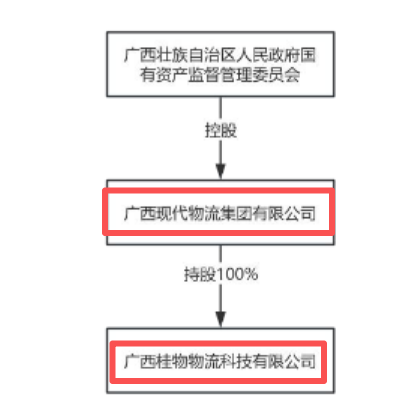
Core Viewpoint - There has been a significant increase in control transactions among listed companies as the year-end approaches, with over 20 companies disclosing changes in control since December [1][28]. Group 1: Control Transactions - Guangxi Modern Logistics plans to acquire 14.33% of Dongfang Zhizao for 7.32 billion yuan, with the actual controller changing from Li Bin to the Guangxi State-owned Assets Supervision and Administration Commission [3][4][28]. - Jiang Pharmaceutical Group intends to acquire 8.73% of Tailong Pharmaceutical through a two-step transfer at a price of 11.04 yuan per share, totaling 5.53 billion yuan [12][33]. - Jingjiang Industrial is set to acquire 18.66% of ST Yishite for 24.37 billion yuan, with a share price of 5.61 yuan, resulting in a total valuation of 131 billion yuan [20][42]. Group 2: Financial Data of Companies - Guangxi Modern Logistics reported a revenue of 476 billion yuan in 2024, with total assets of approximately 335 billion yuan and net profit of 1.01 billion yuan [7][8][31]. - Jiang Pharmaceutical Group's revenue for 2024 was 127 billion yuan, with total assets of approximately 10.29 billion yuan and net profit of 50 million yuan for the first nine months of 2025 [18][36]. - ST Yishite's revenue was 30.44 billion yuan in 2024, with net assets of 67.83 billion yuan as of September 2025 [26][42].


太龙药业跌2.06%,成交额7652.14万元,主力资金净流出1510.45万元
Xin Lang Zheng Quan· 2025-12-29 03:12
Core Viewpoint - TaiLong Pharmaceutical experienced a stock price decline of 2.06% on December 29, with a current price of 6.65 CNY per share and a market capitalization of 3.816 billion CNY [1] Group 1: Financial Performance - For the period from January to September 2025, TaiLong Pharmaceutical reported a revenue of 1.187 billion CNY, representing a year-on-year decrease of 11.47% [2] - The net profit attributable to the parent company for the same period was 25.3255 million CNY, down 12.36% year-on-year [2] - The company has distributed a total of 112 million CNY in dividends since its A-share listing, with 15.5307 million CNY distributed over the last three years [3] Group 2: Stock Market Activity - The stock price of TaiLong Pharmaceutical has increased by 30.65% year-to-date, but has seen a decline of 5.41% over the last five trading days and 9.77% over the last 20 days [1] - The company has appeared on the "Dragon and Tiger List" three times this year, with the most recent appearance on December 10, where it recorded a net buy of -8.4516 million CNY [1] - As of September 30, 2025, the number of shareholders decreased to 40,400, while the average circulating shares per person increased by 1.09% to 14,190 shares [2] Group 3: Business Overview - TaiLong Pharmaceutical, established on August 31, 1998, operates in the pharmaceutical manufacturing sector, focusing on traditional Chinese medicine, chemical drug manufacturing, and pharmaceutical wholesale [2] - The company's revenue composition includes 70.59% from drug manufacturing, 14.71% from drug research services, and 14.42% from drug material circulation [2] - The company is categorized under the pharmaceutical and biological industry, specifically in traditional Chinese medicine [2]
太龙药业20251212
2025-12-15 01:55
Summary of TaLong Pharmaceutical Conference Call Company Overview - **Company**: TaLong Pharmaceutical - **New Controlling Shareholder**: Jiangxi JiangYao Group, acquiring nearly 20% of shares through an investment of approximately 1 billion RMB [2][3] Key Points and Arguments Strategic Acquisition and Investment - Jiangxi JiangYao Group plans to enhance TaLong's market position by leveraging its sales network, particularly in the outpatient market, aiming to expand the market share of key products like Shuanghuanglian [2][3] - The acquisition is currently undergoing state-owned asset approval processes, expected to be completed by the end of the year [2][5] Business Expansion Plans - TaLong aims to integrate Jiangxi's pharmaceutical resources, expanding its product lines and market reach, particularly in the OTC market, which currently holds a 40% share of TaLong's sales [2][3][10] - The company plans to promote its traditional Chinese medicine (TCM) products nationwide, utilizing JiangYao's existing distribution channels [2][10] Financial Performance and Challenges - TaLong's accounts receivable are high due to long payment cycles from public hospitals, with efforts underway to accelerate collections [3][16] - The company has a current cash position of over 300 million RMB, sufficient for daily operations while planning to increase investments in R&D and health-related sectors [16][17] Product Portfolio and Market Position - Core products include the Shuanghuanglian series, which ranks first in the market data for 2024 and second in the OTC association for 2025 [3][14] - The company is focusing on expanding its product offerings, including various formulations of Shuanghuanglian and other TCM products, to achieve nationwide coverage [14][17] Future Development and Integration - Post-acquisition, TaLong will play a crucial role in Jiangxi's pharmaceutical industry strategy, aiming for resource integration and enhanced market influence [6][8] - JiangYao Group's future asset expansion will focus on integrating quality generic drugs, health-related products, and innovative biopharmaceuticals into TaLong [11][12] Additional Important Insights - JiangYao Group's background includes significant state-owned enterprise support, with assets exceeding 700 billion RMB and a focus on creating a comprehensive pharmaceutical ecosystem [8][9] - The collaboration aims to enhance both companies' capabilities in product development and market penetration, particularly in the outpatient and OTC sectors [3][10][11] This summary encapsulates the strategic direction, financial considerations, and market positioning of TaLong Pharmaceutical as discussed in the conference call.