ATLANTIC(600558)

Search documents
未知机构:中信证券新材料机械电新核电行业重点推荐高端制造估值重估短期业绩高-20260224
未知机构· 2026-02-24 03:35
Summary of Nuclear Power Industry Conference Call Industry Overview - The nuclear power sector is characterized as a low-position, undervalued, and high-tech capacity segment with significant domestic and international catalysts [1][2] - The industry is expected to experience high short-term performance growth, with contributions from fourth-generation reactors, small modular reactors (SMRs), nuclear applications, exports, and spent fuel management [1][2] Key Insights - In 2025, nuclear power is projected to account for approximately 4.82% of China's electricity generation, compared to the world average of 10% and over 20% in developed countries, indicating substantial growth potential driven by AI demand [2] - The industry has high barriers to entry, resulting in core equipment gross margins exceeding 30% [2] - Despite stable historical growth and high gross margins, the valuation of component manufacturers is expected to remain constrained due to market skepticism regarding long-term growth in nuclear power [2] Delivery and Approval Trends - It is anticipated that component manufacturers will enter a peak delivery phase starting in 2026, with nuclear project approvals normalizing and the number of projects starting construction increasing from 5 in 2022 to 9 in 2025 [2] Technological Developments - China has made progress in fourth-generation reactors, with demonstration projects for high-temperature gas-cooled reactors and thorium molten salt reactors already underway, and preliminary designs for commercial fast reactors expected to be completed by 2025 [3] - The International Energy Agency (IEA) predicts that global investment in SMRs will reach $670 billion by 2050 [3] Additional Growth Drivers - Nuclear power exports and spent fuel reprocessing are expected to contribute significantly to industry growth [4] Valuation and Investment Opportunities - A shift in capital expenditure benchmarks towards fusion technology is anticipated to significantly enhance nuclear power valuations, with over 300 billion yuan in domestic capital expenditure expected to accelerate positive developments [5] - The industry is viewed as undervalued, with potential for high growth and restructured long-term valuations, making it an attractive investment direction [5] - Recommended companies include Jiangsu Shentong, Jiuli Special Materials, China National Nuclear Corporation, Atlantic, Dongfang Electric, China General Nuclear Power Group, and China Nuclear Engineering Group, along with leading companies in fusion-related components [5]




德国银行协会主席:新宣布的关税对大西洋两岸的经济体来说都是一种负担。
Xin Lang Cai Jing· 2026-02-23 12:24
Group 1 - The newly announced tariffs are considered a burden for economies on both sides of the Atlantic [1]
市场消息:福特号航母仍在大西洋。
Xin Lang Cai Jing· 2026-02-18 21:49
Core Viewpoint - The Ford-class aircraft carrier remains stationed in the Atlantic Ocean, indicating ongoing military operations and strategic presence in the region [1] Group 1 - The deployment of the Ford-class aircraft carrier highlights the U.S. Navy's commitment to maintaining a strong naval presence in the Atlantic [1] - The carrier's operations may influence geopolitical dynamics and military readiness in the area [1]
(国际观察)慕安会欧美正面交锋 跨大西洋关系加速重塑
Zhong Guo Xin Wen Wang· 2026-02-16 03:16
Core Viewpoint - The 62nd Munich Security Conference highlighted the deepening rift in transatlantic relations, with both the U.S. and Europe openly addressing their significant differences, indicating an inevitable adjustment in their relationship [1] Group 1: U.S. Criticism of Europe - U.S. Secretary of State Rubio criticized Europe's immigration policies, claiming that large-scale immigration threatens social cohesion and cultural continuity, echoing Trump's anti-immigration stance [2] - European leaders, including German Chancellor Merz and French Minister Haddad, expressed a lack of agreement with Rubio's views, emphasizing that Europe's focus should be on strengthening its own capabilities rather than engaging in U.S.-led cultural wars [2] Group 2: Ukraine Crisis and Greenland Issue - The Ukraine crisis and the Greenland issue were major focal points at the conference, with Europe expressing ongoing distrust towards the U.S. regarding these matters [2][3] - European leaders, including President Zelensky of Ukraine, voiced dissatisfaction with the U.S. approach, feeling that the U.S. often demands concessions from Ukraine rather than Russia, and called for greater European involvement in negotiations [2] Group 3: European Strategic Autonomy - European leaders, including EU Commission President von der Leyen and President Macron, emphasized the need to enhance European strategic autonomy and defense capabilities, a long-standing advocacy of Macron [3] - Discussions on European nuclear deterrence were initiated between Merz and Macron, indicating a shift towards more independent European defense strategies [3] Group 4: U.S. Political Landscape - Several U.S. Democratic politicians attended the conference, attempting to reassure European attendees by criticizing Trump's foreign policy, with California Governor Newsom stating that Trump is a temporary figure [3] - Despite some support for these views among European attendees, concerns about the future of transatlantic relations remain prevalent, as noted by von der Leyen's comment on irretrievable crossed lines [3]
第62届慕安会在跨大西洋分歧中闭幕
Xin Lang Cai Jing· 2026-02-15 14:47
Group 1 - The core theme of the 62nd Munich Security Conference (MSC) is "being destroyed," highlighting significant tensions in transatlantic relations [1] - The conference discussed various topics including European security and defense, the future of transatlantic relations, revitalizing multilateralism, and differing visions of global order [1] - The MSC report indicates that the world has entered an era of "destructive politics," with complete destruction becoming mainstream and the international order facing significant threats [1] Group 2 - Approximately 60 heads of state and government leaders attended this year's conference, which has evolved from its origins in 1963 as a forum focused on transatlantic partnerships [2]
一语中的 |独行无法“伟大”!默茨慕安会呼吁摆脱对美依赖 推动平等跨大西洋合作
Xin Lang Cai Jing· 2026-02-15 12:41
Core Viewpoint - The excessive reliance of Europe on the U.S. is described as "self-inflicted," and there is a call for Europe to accelerate its strategic autonomy [1] Group 1: Strategic Autonomy - German Chancellor Friedrich Merz emphasizes the need for Europe to pursue strategic autonomy to reduce dependence on the U.S. [1] - The rhetoric of "Make America Great Again" is stated to be irrelevant to European interests [1] Group 2: Global Cooperation - Merz highlights that unity and cooperation are essential for addressing global challenges [1] - The assertion is made that America acting alone cannot achieve "greatness," underscoring the importance of collaborative efforts [1]
跨大西洋关系正经历“离心运动”
Xin Lang Cai Jing· 2026-02-15 06:20
Group 1 - The 62nd Munich Security Conference has opened in Germany, evolving from a small military seminar in the 1960s to a significant platform for global security discussions among political leaders [1] - The atmosphere before this year's conference is described as "uneasy," with transatlantic relations experiencing the most severe centrifugal movement since the end of the Cold War [1] - U.S. Secretary of State Rubio leads the American delegation, which includes over 50 U.S. Congress members and California Governor Newsom, highlighting the importance of their statements on current transatlantic relations [1] Group 2 - The annual report from the Munich Security Conference indicates that conflicts between Europe and the U.S. have evolved from specific policy disagreements to a fundamental rift in the understanding of alliance principles [2] - The U.S. has shown inconsistency on the Ukraine issue and has threatened Greenland, leading Europeans to realize the necessity of establishing a strong Europe to counter U.S. threats [2] - The absence of official delegations from Russia and Iran at this year's conference is noted, with Russia having not participated since 2022, which diminishes dialogue opportunities regarding the Ukraine conflict [3]
跨大西洋关系裂痕加剧 欧洲高调提“战略自主”
Yang Shi Xin Wen· 2026-02-15 00:12
Core Points - The 62nd Munich Security Conference highlighted the growing rift in transatlantic relations, with the U.S. maintaining its "America First" stance while Europe emphasizes "strategic autonomy" [1] - The issue of Ukraine remains contentious, with Ukrainian President Zelensky stating that the U.S. often demands concessions from Ukraine rather than Russia [4] Group 1: Transatlantic Relations - The annual report from the Munich Security Conference indicates that conflicts between the U.S. and Europe have evolved from specific policy disagreements to a fundamental rift in the understanding of alliance principles [3] - European leaders are increasingly recognizing the need to establish a strong Europe to counter perceived threats from the U.S., particularly regarding issues like Greenland and tariffs [3] Group 2: European Leaders' Responses - Danish Prime Minister Frederiksen emphasized that Greenland cannot be priced and must respect the sovereignty and self-determination of its people [3] - Spanish Prime Minister Sanchez supported Denmark's position on Greenland, asserting that sovereignty and territorial integrity must be respected and should not be subject to negotiation [3] Group 3: European Defense and Autonomy - European Commission President von der Leyen warned of external threats aimed at undermining the EU and stressed the need for Europe to become more independent [6] - UK Prime Minister Starmer called for Europe to build "hard power" to deter aggression and prepare for self-reliance [6] - French President Macron stated that Europe must learn to be a geopolitical force and implement "European-first" policies to reduce external dependencies [6] Group 4: U.S. Influence and European Strategy - European leaders expressed skepticism about U.S. Secretary of State Rubio's speech, with some viewing it as lacking reassuring content and not indicative of improved transatlantic relations [7] - The Munich Security Report highlighted the detrimental impact of U.S. actions on global security and the declining confidence in the U.S. as a security guarantor [7]
德国副总理:跨大西洋关系仍存分歧 欧美难以有效协作
Yang Shi Xin Wen· 2026-02-14 18:00
Core Viewpoint - The transatlantic relationship faces numerous issues and divergences, making effective collaboration between Europe and the U.S. challenging [1] Group 1 - German Vice Chancellor and Finance Minister, Christian Lindner, emphasized the need for Europe to continue leveraging its strengths amidst changing dynamics in the transatlantic relationship [1] - Lindner fully supports German Chancellor Merz's remarks, acknowledging that the long-standing close transatlantic ties are indeed undergoing changes [1]
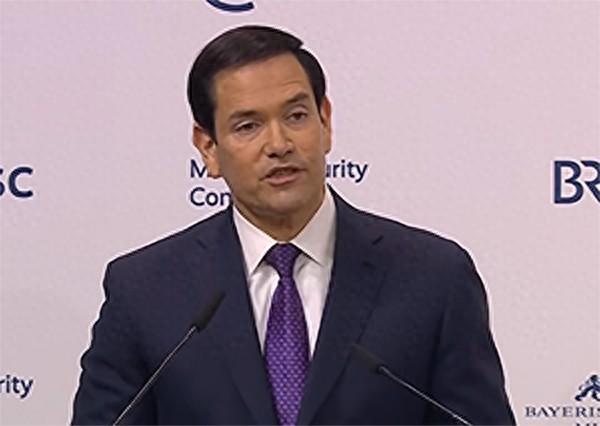
欧洲“长舒了一口气”,鲁比奥呼吁重振跨大西洋联盟
Xin Lang Cai Jing· 2026-02-14 16:41
Group 1 - The core message of the news is that U.S. Secretary of State Rubio aims to reassure Europe of America's commitment to the transatlantic alliance while also urging European leaders to adjust their policies [1][3][5] - Rubio's speech at the Munich Security Conference emphasized the historical ties between the U.S. and Europe, stating that America will always be closely connected to Europe [3][6] - Despite a more conciliatory tone compared to previous U.S. officials, Rubio's speech was perceived as lacking specific content regarding pressing security issues such as Russia and NATO [6][7] Group 2 - European officials responded positively to Rubio's speech, appreciating its reassuring tone, but expressed skepticism about the lack of concrete proposals [6][8] - The speech highlighted the ongoing dependency of Europe on the U.S. for security and defense, with European leaders acknowledging the need for greater independence [8][9] - The context of the speech reflects a broader geopolitical landscape where Europe is balancing its relationship with both the U.S. and China, particularly in areas like climate change and digital transformation [10][11] Group 3 - Chinese officials, represented by Foreign Minister Wang Yi, advocated for a multipolar world and genuine multilateralism, emphasizing the importance of collaborative global governance [11][12] - The participation of Chinese representatives at the Munich Security Conference aims to influence European perspectives and promote a more objective view of China [12]