CHINA MOBILE(600941)

Search documents
中国移动发布量子通信创新成果,金融科技ETF(516860)反弹上涨超1%,格尔软件涨停
Xin Lang Cai Jing· 2025-10-15 02:38
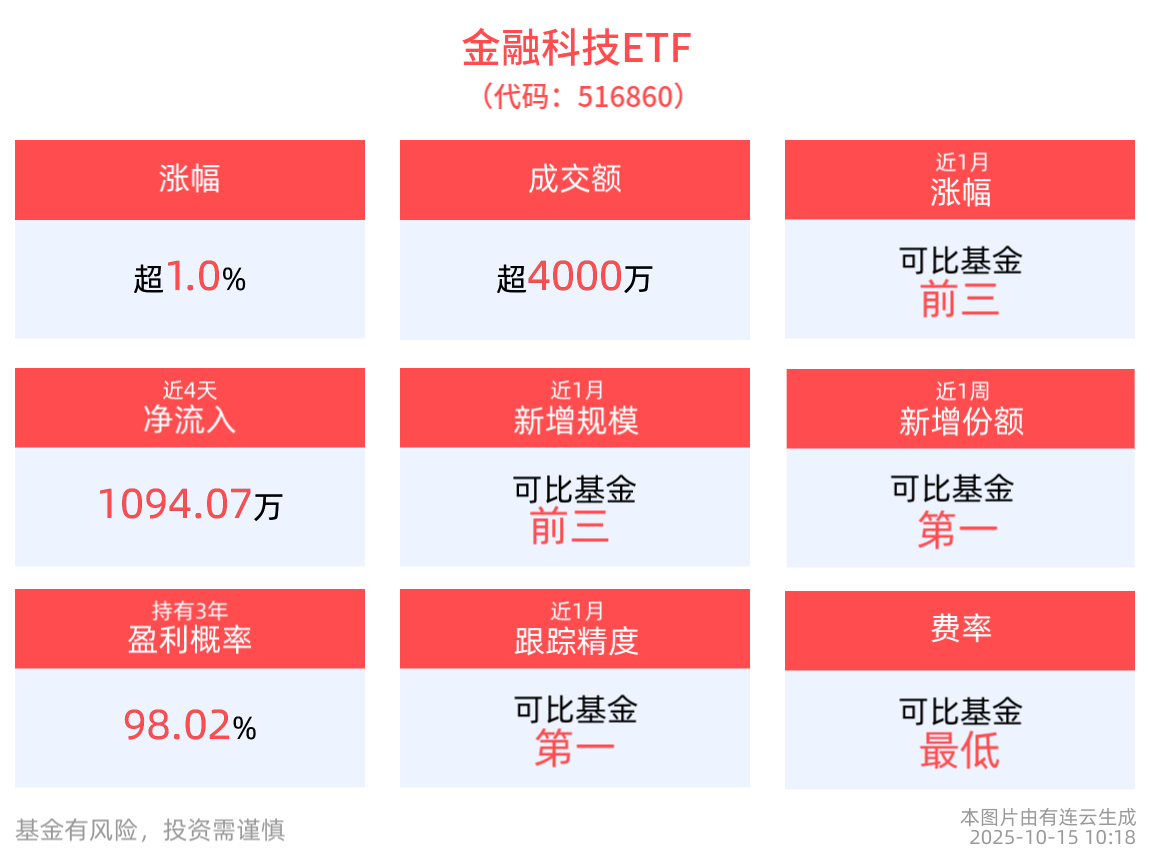
Group 1 - The China Securities Financial Technology Theme Index has seen a strong increase of 1.23%, with notable gains from stocks such as Geer Software (up 10.00%) and Xinan Century (up 7.97%) [2] - The Financial Technology ETF (516860) has risen by 1.07%, with a latest price of 1.52 yuan, and has accumulated a 3.81% increase over the past three months, ranking 3rd among comparable funds [2] - The Financial Technology ETF has recorded a turnover rate of 1.67% during the trading session, with a transaction volume of 40.4864 million yuan, and an average daily transaction of 271 million yuan over the past month, ranking 2nd among comparable funds [2] Group 2 - SWIFT is introducing a blockchain-based shared ledger in its technical infrastructure, aiming to enable real-time, 24/7 cross-border payments, collaborating with over 30 global financial institutions [3] - A report from AVIC Securities highlights the synergistic innovation between quantum and AI industries, suggesting that quantum computing could drive new developments in the AI sector [3] - The Financial Technology ETF has seen a significant increase in scale, growing by 63.5629 million yuan over the past month, ranking 3rd among comparable funds [3] Group 3 - The Financial Technology ETF has experienced a net outflow of 18.2793 million yuan recently, but has attracted a total of 10.9407 million yuan over the last four trading days [4] - The China Securities Financial Technology Theme Index includes companies involved in financial technology, with the top ten weighted stocks accounting for 55.55% of the index [4]


中国移动咪咕多部短剧获奖,闪耀2025视听中国马栏山微短剧之夜
Huan Qiu Wang· 2025-10-15 02:35
Core Insights - The event "2025 Audiovisual China Malanshan Micro Short Drama Night" aimed to promote high-quality development in the micro short drama industry through industry exchanges and recognition of outstanding works [1] - Migu's works received multiple awards, showcasing its strong capabilities in content innovation and quality control within the micro short drama sector [1][5] - Migu Reading has a robust content production system, having incubated over 20,000 full copyright works and collaborating with Mango TV on successful IP adaptations [5][7] Industry Developments - The launch of Mango TV's "Thousand IP Joint Creation Ecological Plan" highlights a collaborative effort to enhance content creation in the industry, with Migu Reading's work "Spring Ripple" being selected [3] - The integration of AI technology in micro short drama creation is emphasized, with the announcement of the "Micro Short Drama + AIGC" initiative, indicating a shift towards innovative content production methods [7][8] - Migu is actively exploring the fusion of micro short dramas with various themes, such as non-heritage and wartime narratives, to expand the genre's application and commercial value [8][9] Future Directions - Migu plans to strengthen collaborations across the industry to promote standardization and innovation in micro short dramas, aiming to deliver more high-quality and creative works to audiences [9]

eSIM业务正式落地 运营商:eSIM和实体SIM卡服务一致、套餐一致 业内:手机做薄 电池做大 有更大空间|一探
Di Yi Cai Jing· 2025-10-15 02:20
近期,eSIM 手机业务成为通信行业热点话题,中国联通、中国移动、中国电信三大运营商于 10月13日 同步宣布获得工信部 eSIM 手机商用试验批复许可,标志着无卡通信时代正式迈入新阶段。中国移动工 作人员对第一财经记者表示,用户可在线预约办理时间,携带身份证和新手机前往营业厅即可完成业务 办理,当天已有众多客户咨询该业务。更现场、更财经,一探究竟! ...


AI赋能能源变革:技术生态如何重塑传统能源格局
3 6 Ke· 2025-10-15 02:03
Core Insights - The energy industry is undergoing unprecedented transformation driven by dual goals of carbon neutrality and digital transformation, with artificial intelligence (AI) emerging as a key engine for high-quality development [1][4] Group 1: Challenges and Necessity of AI Empowerment - Traditional energy sectors face high operational costs, safety management difficulties, and low resource coordination efficiency, particularly in the power system where renewable energy capacity is growing but operational challenges remain [2][3] - The transition pain points focus on three main areas: the contradiction between efficiency and cost, the need for upgraded safety and resilience, and the challenges faced by new business models like virtual power plants [2][3] Group 2: Investment Trends and Innovations - Global energy transition investments are projected to exceed $2 trillion in 2024, marking a doubling since 2020, with significant investments in electrified transportation, renewable energy, and grid infrastructure [4][5] - China is identified as a core engine for this growth, contributing $134 billion, driven by strong performance in renewable energy, storage, and nuclear sectors [4] Group 3: Future Landscape of Energy Intelligence - The integration of AI into energy systems is expected to lead to full-chain intelligence, enhancing renewable energy consumption capacity by over 15% by 2030 [7][8] - The future energy system will feature integrated coordination of distributed energy resources, carbon management, and a collaborative ecosystem supported by technologies like blockchain and AI [7][8]
eSIM商用落地,手机进入“无卡时代”?
Ke Ji Ri Bao· 2025-10-15 01:32
Core Viewpoint - The announcement by China Unicom, China Mobile, and China Telecom regarding the approval for eSIM mobile service trials marks a significant step in the commercial deployment of eSIM technology in China, transitioning from IoT and wearable devices to mobile phones [1] Group 1: eSIM Technology Overview - eSIM, or embedded SIM, integrates the SIM card directly into the device's chip, eliminating the need for a physical SIM card [2] - eSIM technology allows for multiple SIM profiles, providing greater internal space for other components and enhancing waterproof and dustproof capabilities due to the absence of a SIM card slot [2] Group 2: Security Aspects of eSIM - eSIM reduces the risks of loss, theft, or tampering compared to traditional SIM cards, as it is embedded in the device and requires physical damage to remove [3] - The security of eSIM is enhanced through encryption protocols and requires user authorization for activation, making it more difficult to clone or hack compared to traditional SIM cards [3] Group 3: User Experience and Business Operations - Users must visit physical stores to activate eSIM services, as online activation is not yet available [4] - Users can convert existing physical SIM cards to eSIM and manage their eSIM profiles through service providers, with specific procedures for deactivating or transferring eSIM numbers [4]
研判2025!中国通感算控一体化行业产业链、市场规模及重点企业分析:行业技术取得突破,中国市场规模稳步增长[图]
Chan Ye Xin Xi Wang· 2025-10-15 01:28
Core Insights - The integrated sensing, communication, computing, and control (ISCCC) technology has seen significant development in China, with the market size projected to reach approximately 15.79 billion yuan in 2024, reflecting a year-on-year growth of 10.57% [1][7] - A major breakthrough in this field was achieved in 2023 when China Mobile Research Institute and ZTE completed the industry's first low-frequency ISCCC technology verification, demonstrating multi-target trajectory perception in complex mobile environments with a detection range exceeding 1.4 kilometers and sub-meter level accuracy [1][7] Industry Overview - ISCCC is a collaborative system that deeply integrates communication, sensing, computing, and control functions, enabling the fusion of communication and sensing capabilities through shared resources and joint design [2] - The technology supports smart cities, intelligent transportation, and industrial IoT by creating a closed-loop interaction between the physical and digital worlds [2] Industry Development History - The development of the ISCCC industry in China from 2021 to 2025 follows a path of "technology foundation - scenario verification - ecosystem construction," with significant milestones including the establishment of the ISCCC task force in July 2021 and various technological breakthroughs in subsequent years [3] - By 2025, the industry is expected to transition from technology verification to ecosystem collaboration and large-scale commercialization [3] Industry Value Chain - The upstream of the ISCCC industry includes core hardware such as base station RF and antennas, chips, and satellite communication equipment, while the midstream consists of system integrators and solution providers [4] - Downstream applications are primarily in smart cities, intelligent transportation, low-altitude economy, and smart manufacturing [4] Market Size - The ISCCC market in China is projected to reach approximately 15.79 billion yuan in 2024, with a year-on-year growth of 10.57% [7] - The successful verification of low-frequency ISCCC technology in 2023 has laid a solid foundation for future commercialization [7] Key Companies' Performance - The competitive landscape of the ISCCC industry is characterized by leading companies like Huawei, ZTE, and China Mobile, which leverage their technological advantages to dominate the market [8] - ZTE has made significant advancements in ISCCC technology, achieving notable results in various application scenarios and completing over 80 low-altitude ISCCC pilot projects across multiple provinces [10] - China Mobile has played a pivotal role in network architecture upgrades and has deployed ISCCC traffic perception systems during the Hangzhou Asian Games [9] Industry Development Trends - The ISCCC industry is expected to leverage 6G technology for accelerated development, creating a closed-loop system that integrates communication, sensing, and computing [11] - Low-altitude economy and smart city applications are anticipated to be core areas for ISCCC technology, enhancing logistics and urban management efficiency [13] - The industry is moving towards a collaborative ecosystem involving hardware, software, protocols, and applications, supported by government policies and standardization efforts [14]



移动通信向“多模态”eSIM模式演进
Zheng Quan Ri Bao· 2025-10-15 01:28
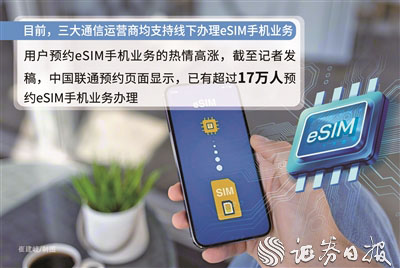
Core Points - The introduction of eSIM technology in China marks a significant shift in mobile communication, allowing users to download their phone numbers directly onto their devices without the need for a physical SIM card [2][3][5] - Major telecom operators in China, including China Mobile, China Telecom, and China Unicom, have launched eSIM services, indicating a collaborative effort to enhance user experience and expand service offerings [3][4][6] - The eSIM technology is expected to drive innovation in the mobile device industry, creating new opportunities for manufacturers and software developers within the supply chain [7][9] Telecom Operators - China Mobile has launched a comprehensive eSIM product line that includes not only smartphones but also smartwatches, tablets, and automotive devices, emphasizing seamless connectivity across various devices [3] - China Telecom has expanded its eSIM services to include smartphones, building on its previous offerings for wearables and automotive devices, thus promoting a transition from traditional SIM cards to eSIM technology [3][5] - China Unicom has received approval to operate eSIM services for smartphones, marking a significant milestone in its efforts to create a full-spectrum eSIM ecosystem [3][6] User Engagement - There is a high level of interest among users for eSIM services, with over 170,000 reservations reported for eSIM mobile services as of the latest updates [4] - The eSIM functionality provides users with the same communication services as traditional SIM cards, including voice calls, data usage, and SMS [4][5] Industry Opportunities - The launch of eSIM services is seen as a catalyst for growth in the mobile device supply chain, with companies like Unisoc and others actively developing eSIM products and technologies [8][9] - The eSIM technology is anticipated to become a standard feature in domestic smartphones and IoT devices within the next 3 to 5 years, potentially unlocking a multi-billion yuan market opportunity [9]


eSIM手机,来了!
新华网财经· 2025-10-15 01:25
Group 1 - The three major telecom operators in China, China Unicom, China Mobile, and China Telecom, have officially received approval to conduct commercial trials for eSIM mobile services [4][5]. - eSIM, or embedded SIM, is integrated directly into the device's chip, eliminating the need for a physical SIM card [6][7]. - eSIM technology reduces the size of the SIM card to only 10% of the traditional SIM card, allowing for better waterproofing and reliability in devices [9]. Group 2 - eSIM offers convenience for users, allowing them to switch numbers online without visiting physical stores, which is referred to as "over-the-air provisioning" [9]. - The integration of eSIM can lower hardware costs, especially for wearable devices, making them more compact and efficient [9]. - Users can easily switch to local carriers while traveling, avoiding the hassle of roaming charges or purchasing local SIM cards [9].

密集发射期将至,行业顶层盛会召开,航天产业10月将迎多个大事件
Xuan Gu Bao· 2025-10-15 01:12
Event Overview - The Satellite Application Conference is scheduled to take place from October 25 to 27, 2023, in Beijing, focusing on "Artificial Intelligence and Computing Power Empowering the Satellite Application Industry" [1] - Significant launches in the Chinese space industry are set for October, including the Long March 3B rocket carrying the Fengyun-4 03 satellite on October 26 and the Long March 2F rocket launching the Shenzhou-21 manned spacecraft on October 31 [1] Industry Trends - China's space launch frequency has significantly increased in 2023, with 10 missions executed in September alone, including various military and meteorological satellites [4] - The satellite internet sector has been included in the new infrastructure category since 2020, with supportive policies being implemented [4] - The government aims to develop a "commercial space" growth engine, with plans to enhance satellite communication management by 2030, targeting over 10 million satellite communication users [4] Satellite Constellation Projects - China has applied for over 50,000 low-orbit satellites, with major projects including the China Star Network's "GW Constellation" (13,000 satellites), Shanghai Yuanxin's "Qianfan Constellation" (15,000 satellites), and Blue Arrow Aerospace's "Honghu Constellation" (10,000 satellites) [4] - It is estimated that at least 28,000 satellite launches will need to be completed by 2035, with only 0.6% of this target achieved so far [4] Launch Forecast - The forecasted satellite launch volumes from 2025 to 2034 indicate a gradual increase, with 1,392 launches expected in 2025 and reaching 3,340 launches by 2034 [7] Key Companies in the Satellite Industry - Major companies in the satellite industry include: - China Satellite (600118): Leading domestic satellite manufacturer with strong technical barriers [10] - Shanghai Huguang (603131): Early commercial satellite assembler capable of assembling multiple satellites simultaneously [10] - China Satcom (601698): Leading satellite communication operator with extensive frequency resources [12] - China Telecom (601728) and China Mobile (600941): Early holders of satellite mobile communication licenses [12] - The industry is seeing significant interest from companies involved in satellite internet, with a focus on low-cost solutions for countries along the Belt and Road Initiative [9]


eSIM手机,来了!
券商中国· 2025-10-14 23:48
Core Viewpoint - The introduction of eSIM technology by major Chinese telecom operators marks a significant advancement in mobile connectivity, promising enhanced user experiences and potential for widespread adoption in the future [2][4]. Group 1: eSIM Launch and Adoption - China Unicom, China Mobile, and China Telecom have all received approval to conduct commercial trials for eSIM mobile services, indicating a collective move towards this new technology [2]. - As of the latest updates, nearly 70,000 users have registered for eSIM through China Unicom, while China Mobile's appointment system saw over 150,000 users in just four hours [2]. Group 2: Understanding eSIM - eSIM, or embedded SIM, is a digital SIM that is integrated directly into devices, eliminating the need for physical SIM cards [4][5]. - This technology allows devices to connect to networks without the traditional SIM card, functioning similarly to conventional SIM cards in terms of capabilities [4]. Group 3: Advantages of eSIM - eSIM technology reduces the physical space required for SIM cards to just 10% of traditional SIM cards, enhancing device design and potentially improving waterproofing [7]. - The integration of eSIM can lower costs for manufacturers, especially for wearable devices, and simplifies the process of changing service providers or plans through online applications [6][7]. - Users can easily switch to local carriers while traveling without the hassle of obtaining a physical SIM card, thus enhancing convenience [7].