BOB(601169)

Search documents
北京银行将在11月7日及11月16日进行业务系统维护
Jin Tou Wang· 2025-11-07 03:23
Core Points - Beijing Bank announced a scheduled maintenance for its business systems on November 7 and November 16, 2025, from 00:40 to 01:10 [1] - During the maintenance period, all financial services will be temporarily suspended except for credit card transactions and repayments through Alipay, WeChat, and Cloud Flash Payment [1] - Customers are advised to plan their transactions accordingly to avoid inconvenience during the maintenance [1]

北京银行将在11月8日凌晨暂停数字人民币业务系统对外服务
Jin Tou Wang· 2025-11-07 03:19
Core Points - Beijing Bank plans to suspend its digital RMB business system from November 8, 2025, 00:30 to 00:40 for system upgrades [1] - During the suspension, services related to corporate online banking and mobile banking for digital RMB will be unavailable [1] - Customers are advised to make arrangements in advance to avoid any inconvenience during the maintenance period [1]

私行业务成银行“香饽饽”?七家客户数破10万大关
Xin Lang Cai Jing· 2025-11-07 00:20
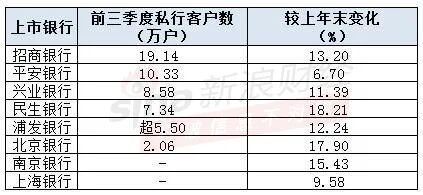
Core Insights - The private banking sector in China is experiencing significant growth, with several listed banks reporting an increase in private banking clients exceeding 10% [1][2][3] - Notably, Minsheng Bank, Beijing Bank, and Nanjing Bank have all reported client growth rates above 15% [1][2][3] - As of the end of September, the total number of private banking clients at Minsheng Bank reached 73,409, marking an 18.21% increase from the previous year [3][5] Private Banking Client Growth - Multiple banks have shown robust growth in private banking clients, with Minsheng Bank, Beijing Bank, and Nanjing Bank leading with growth rates over 15% [1][2][3] - As of September 30, 2023, the number of private banking clients at major banks is as follows: - China Merchants Bank: 191,418 clients, up 13.2% - Ping An Bank: 103,300 clients, up 6.7% - Minsheng Bank: 73,409 clients, up 18.21% - Beijing Bank: 20,586 clients, up 17.9% - Nanjing Bank: growth of 15.43% [3][5][6] Wealth Management Market Expansion - The wealth management market in China continues to expand, with listed banks reporting steady growth in wealth clients [8][9] - As of September 30, 2023, Ping An Bank reported 1.4911 million wealth clients, a 2.4% increase from the previous year [9] - Nanjing Bank's wealth clients grew by 16.31%, while Guiyang Bank's wealth clients increased by 7.77% [9] Asset Under Management (AUM) Growth - The total assets under management (AUM) for private banking clients at Minsheng Bank reached 1,014.72 billion yuan, an increase of 148.75 billion yuan, or 17.18% [3][5] - Beijing Bank's private banking AUM was 224 billion yuan, up 14.39% from the beginning of the year [4] Revenue from Wealth Management Services - Several banks reported positive growth in wealth management fee income, with many exceeding 15% growth [10][12] - For instance, China Merchants Bank's wealth management fee income reached 20.67 billion yuan, an 18.76% year-on-year increase [10] - Ping An Bank's wealth management fee income was 3.979 billion yuan, up 16.1% [10] Distribution and Sales Growth - The distribution of financial products has become a significant revenue source for banks, with many reporting substantial increases in sales [11][12] - For example, Ping An Bank's income from personal insurance sales grew by 48.7%, while its income from personal fund sales increased by 6.7% [12] - China Merchants Bank's income from fund sales rose by 38.76%, driven by increased sales and improved product structure [12]





2025年H1中国手机银行APP流量监测报告
艾瑞咨询· 2025-11-07 00:06
Core Insights - The mobile banking app has become a core platform for commercial banks to serve users, optimize experiences, and enhance competitiveness in the context of national digital transformation and financial technology innovation [1] - The integration of AI technology, refined operational strategies, and diversified user demands are reshaping the market landscape and value of mobile banking apps [1] User Flow and Behavior - The user flow of mobile banking apps in China is stabilizing between 650 million to 700 million from 2023 to 2025, indicating a saturated market [2] - The decline in user engagement is evident, with average daily usage time dropping from 4.93 minutes to 2.70 minutes and daily usage frequency decreasing from 4.54 times to 2.86 times [4] Operational Strategies - Refined operations are crucial for banks to break through in a saturated market, focusing on precise user insights and intelligent technology applications [6][7] - AI technology is enhancing refined operations by upgrading interaction experiences, strengthening risk control, expanding diverse scenarios, and improving data operations [9] Rankings and Performance - The top three banks by average monthly active users (MAU) are Agricultural Bank of China (24 million), Industrial and Commercial Bank of China (18.9 million), and China Construction Bank (10.6 million) [11][15] - Among joint-stock commercial banks, China Merchants Bank leads with over 7 million MAU, while other banks like Ping An Bank and CITIC Bank follow closely [16][17] - City commercial banks show strong performance, with Jiangsu Bank leading at 349.6 thousand MAU, and several banks achieving significant growth rates [19][20] Case Studies of Successful Apps - Agricultural Bank of China is integrating financial services with daily life scenarios, achieving a 4.8% growth in MAU [28][29] - China Merchants Bank continues to innovate its app to meet customer needs and leverage AI technology [31] - Beijing Bank is focusing on a digital transformation strategy that combines technology, scenarios, and services [35]




北京银行大宗交易成交95.00万股 成交额596.60万元
Zheng Quan Shi Bao Wang· 2025-11-06 14:51
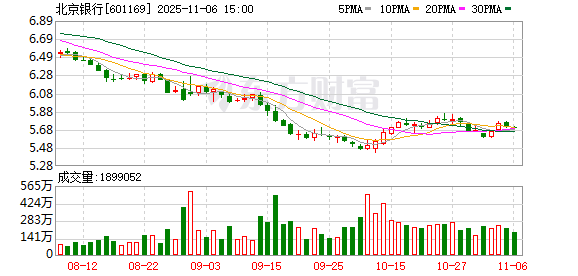
Group 1 - Beijing Bank executed a block trade on November 6, with a transaction volume of 950,000 shares and a transaction amount of 5.966 million yuan, at a price of 6.28 yuan, representing a premium of 10.37% over the closing price of the day [2][3] - The closing price of Beijing Bank on the same day was 5.69 yuan, down 0.35%, with a turnover rate of 0.90% and a total trading volume of 1.081 billion yuan, showing a net inflow of main funds of 8.6139 million yuan [2] - Over the past five days, the stock has increased by 0.35%, with a total net inflow of funds amounting to 187 million yuan [2] Group 2 - The latest margin financing balance for Beijing Bank is 3.314 billion yuan, with an increase of 67.162 million yuan over the past five days, reflecting a growth rate of 2.07% [3] - Four institutions have rated the stock in the past five days, with the highest target price set by GF Securities at 6.57 yuan as of November 4 [3] - Beijing Bank was established on January 29, 1996, with a registered capital of 21.14298 billion yuan [3]
城商行“王座”易主后,北京银行还没放弃
Hua Er Jie Jian Wen· 2025-11-06 11:21
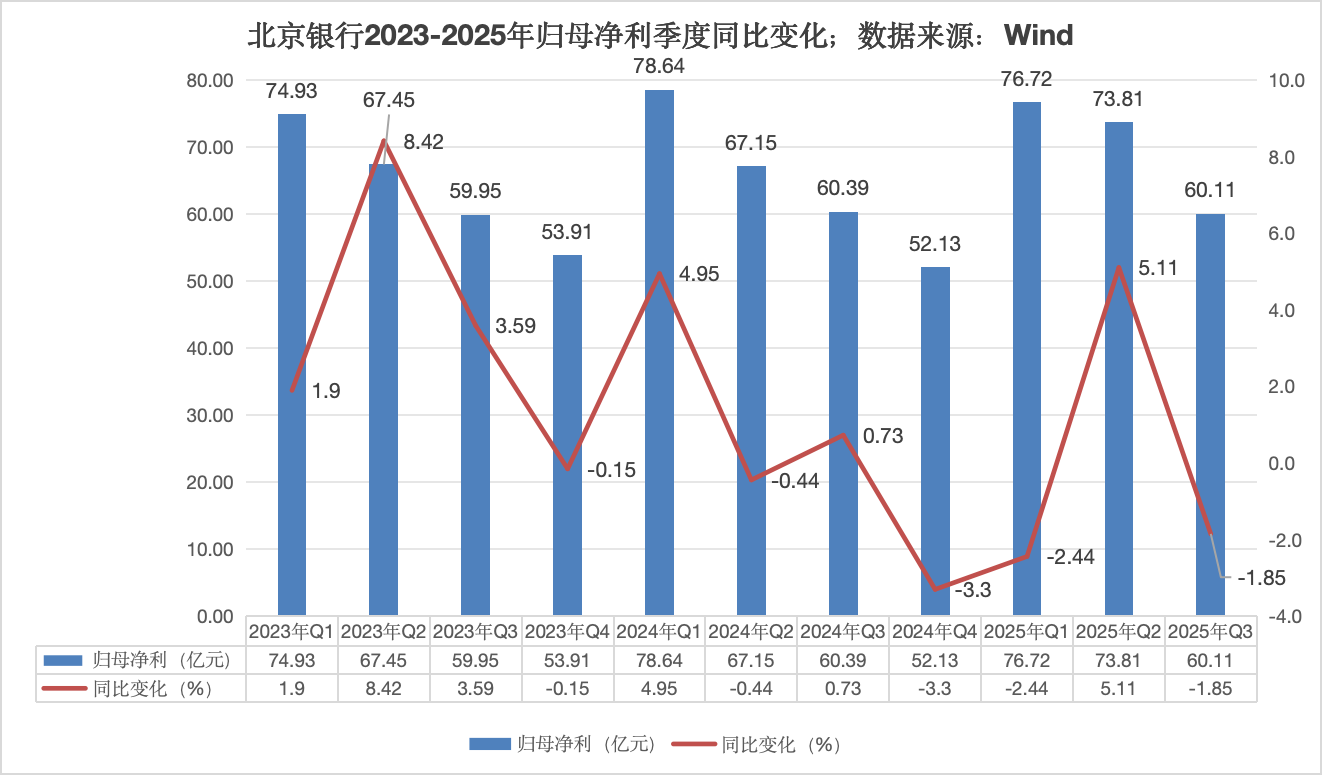
Core Viewpoint - Beijing Bank has reported a mixed performance in the first three quarters, with operating income and net profit showing slight declines, indicating challenges in maintaining growth amidst competitive pressures from peers like Jiangsu Bank [1][4][16]. Financial Performance - For the first three quarters, Beijing Bank's operating income was 51.588 billion yuan, and net profit attributable to shareholders was 21.064 billion yuan, with year-on-year growth rates of -1.08% and 0.26%, ranking 31st and 33rd among 42 listed banks in A-shares [1]. - In Q3, both operating income and net profit declined by 5.71% and 1.85% year-on-year, respectively, marking a significant downturn in performance [4]. - The bank's asset scale grew by 15.89% year-to-date, ranking third among A-share listed banks, but this growth was primarily driven by financial investments rather than traditional lending [6]. Asset Quality and Risk Management - The non-performing loan ratio decreased by 0.02 percentage points to 1.29%, indicating improvements in asset quality [1][14]. - The bank's capital adequacy ratio stood at 12.83%, which, while above the regulatory requirement of 8%, is still below the average of listed banks [9]. Strategic Initiatives - Since the appointment of the new chairman in 2022, Beijing Bank has initiated a series of strategic transformations, focusing on digitalization and regional collaboration, particularly in the Yangtze River Delta [2][20]. - The bank aims to enhance its competitive edge by developing specialized financial services for "specialized, refined, and innovative" enterprises, particularly in technology finance [18][23]. Regional Expansion Efforts - Beijing Bank has been actively pursuing growth in the Yangtze River Delta, with plans to establish a regional approval center and strengthen partnerships with local banks [21][24]. - Despite these efforts, the bank's loan growth in the Yangtze River Delta remains below that of local competitors, indicating challenges in gaining market share [24]. Conclusion - Overall, while Beijing Bank has made strides in asset quality and strategic initiatives, it faces significant challenges in revenue growth and competitive positioning, particularly against stronger peers in the Yangtze River Delta region [25].

今日共65只个股发生大宗交易,总成交24.31亿元




Di Yi Cai Jing· 2025-11-06 10:13
Summary of Key Points Core Viewpoint - The A-share market experienced significant block trading activity on November 6, with a total transaction volume of 2.431 billion yuan, highlighting notable trading in companies such as Zhongwei Company, CATL, and Bull Group [1]. Group 1: Trading Activity - A total of 65 stocks underwent block trading, with transaction amounts reaching 2.431 billion yuan [1]. - The top three companies by transaction volume were Zhongwei Company (321 million yuan), CATL (288 million yuan), and Bull Group (254 million yuan) [1]. - Among the stocks, 7 were traded at par value, 3 at a premium, and 55 at a discount [1]. Group 2: Premium and Discount Rates - The stocks with the highest premium rates were Yuchen Intelligent (18.21%), Beijing Bank (10.37%), and AVIC Chengfei (8.69%) [1]. - The stocks with the highest discount rates included Longzhu Technology (26.25%), Electric Alloy (24.03%), and Youfang Technology (21.97%) [1]. Group 3: Institutional Trading - The top institutional buy amounts were led by Zhongwei Company (299 million yuan), CATL (288 million yuan), and Zhongji Xuchuang (183 million yuan) [2]. - The leading institutional sell amounts were dominated by CATL (288 million yuan), Zijin Mining (217 million yuan), and Zhongji Xuchuang (183 million yuan) [2].
北京银行今日大宗交易溢价成交95万股,成交额596.6万元
Xin Lang Cai Jing· 2025-11-06 09:32
Group 1 - The core transaction of Beijing Bank involved a block trade of 950,000 shares, with a total transaction value of 5.966 million yuan, representing 0.55% of the total trading volume for the day [1] - The transaction price was 6.28 yuan per share, which is a premium of 10.37% compared to the market closing price of 5.69 yuan [1]

城商行板块11月6日跌0.11%,厦门银行领跌,主力资金净流出6.08亿元
Zheng Xing Xing Ye Ri Bao· 2025-11-06 08:51
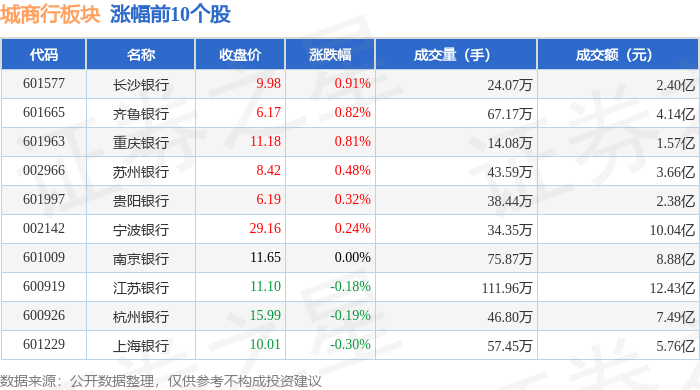
Core Viewpoint - The city commercial bank sector experienced a slight decline of 0.11% on November 6, with Xiamen Bank leading the drop, while the overall market indices showed positive movements with the Shanghai Composite Index up by 0.97% and the Shenzhen Component Index up by 1.73% [1][2]. Group 1: Market Performance - The closing price of Xiamen Bank was 7.16, reflecting a decrease of 2.59% with a trading volume of 539,700 shares and a transaction value of 387 million yuan [2]. - Other notable banks included Changsha Bank, which closed at 9.98 with a rise of 0.91%, and Qilu Bank, which closed at 6.17 with an increase of 0.82% [1]. - The city commercial bank sector saw a net outflow of 608 million yuan from major funds, while retail investors contributed a net inflow of 473 million yuan [2][3]. Group 2: Individual Bank Performance - Beijing Bank had a net inflow from major funds of 20.80 million yuan, while it experienced a net outflow from retail investors of 30.79 million yuan [3]. - Chongqing Bank recorded a net inflow of 11.91 million yuan from major funds but faced a net outflow of 12.20 million yuan from retail investors [3]. - Jiangsu Bank had a net inflow of 202.55 million yuan from major funds, while retail investors contributed a net inflow of 3.33 million yuan [3].

五家银行跻身绿色信贷“万亿俱乐部” 绿色债券存量规模近2万亿
2 1 Shi Ji Jing Ji Bao Dao· 2025-11-05 23:42
Core Insights - Green finance has transitioned from an optional choice to a mandatory requirement for the banking industry, serving as a new engine for strategic transformation and a blue ocean market for future growth [1] - The balance of green financing at Industrial Bank has reached nearly 2.5 trillion yuan, with green loans exceeding 1 trillion yuan and a non-performing loan rate of only 0.57% [1] - The People's Bank of China and other departments have issued a unified policy framework for green finance, effective from October 1, 2025, to standardize various financial products [2] Group 1: Green Credit Growth - As of the end of 2024, the total balance of green credit among 42 A-share listed banks exceeded 27 trillion yuan, reflecting a year-on-year growth of approximately 20% [3] - State-owned banks dominate the green credit market, with the six major state-owned banks accounting for over 21 trillion yuan, representing 77.6% of the total [3] - Industrial Bank's green loan balance has risen to 1.08 trillion yuan, joining the "trillion club" [3] Group 2: Performance and Sector Focus - The average growth rate of green credit for A-share listed banks in 2024 was 20.6%, a slowdown from approximately 28% in 2023, yet leading institutions maintained strong growth [4] - The focus of green credit issuance is concentrated in four key areas: clean energy, green transportation, energy conservation and environmental protection, and green buildings [4] - The Yangtze River Delta, Guangdong-Hong Kong-Macau Greater Bay Area, and Chengdu-Chongqing Economic Circle are identified as core regions for green credit [4] Group 3: Product Innovation - A-share listed banks are deepening innovation in green financial products, creating a multi-dimensional product system that includes loans, bonds, asset securitization, insurance, and carbon finance [5] - Sustainable Development Linked Loans (SLL), carbon emission rights pledge financing, and environmental rights collateral loans are gaining traction [5] - Industrial Bank has launched the first green loan with biodiversity protection insurance, while Bohai Bank introduced a green loan linked to data center energy efficiency [6] Group 4: Broader Financial Tools - The issuance of green bonds has expanded, with the cumulative issuance of labeled green bonds in 2024 surpassing 4 trillion yuan [6] - Banks are actively participating in green wealth management and fund products, enhancing investor engagement through innovative offerings [6] - Carbon finance tools are transitioning from pilot programs to broader applications, with various banks introducing carbon emission rights pledge financing products [6] Group 5: Future Directions - The banking industry is expected to continue innovating green financial products to support sustainable economic development, moving beyond traditional green credit [7] - The development of ESG-linked loans and financing models using carbon emission rights as collateral will be explored [7] - These innovations will not only assist in achieving national carbon reduction goals but also cultivate new growth momentum for banks [7]