
BANK COMM(601328)

Search documents
交通银行“云跨行3.0”:“重构时间”,赋能企业财资管理数智跃迁
Xin Lang Cai Jing· 2025-12-11 10:07
Core Viewpoint - The global industrial chain is undergoing rapid restructuring, with Chinese manufacturing transitioning from a reliance on demographic dividends to an "efficiency dividend" focused on the effective collaboration of capital flow, information flow, and credit flow. The competition centers around "time and efficiency" [1] Group 1: Financial Management Innovations - The launch of the "Yun Kuan Hang 3.0" system by Bank of Communications aims to enhance financial management through a comprehensive upgrade of treasury management, addressing the core needs of enterprises to improve overall efficiency and solve "time dilemmas" [2][3] - The system integrates various payment channels, enabling enterprises to achieve "second-level transfers, real-time receipts, and instant collections," significantly reducing the time and cost associated with traditional cross-border payments [2] Group 2: Customized Solutions for Enterprises - Bank of Communications provides tailored solutions for different industries and client sizes, exemplified by a petrochemical company that achieved centralized financial control and met international settlement growth needs through the bank's integrated financial management platform [3] Group 3: Process Automation and Risk Management - The "Yun Kuan Hang 3.0" system automates high-frequency financial processes, moving from manual operations to cloud-based solutions, thereby enhancing efficiency and reducing risks associated with manual reconciliations [5][6] - The system's AI-driven features allow for real-time monitoring and preemptive risk management, shifting from reactive to proactive governance in financial management [6] Group 4: Real-Time Decision Making - The system enables real-time decision-making through a dynamic visual dashboard that tracks key financial indicators, allowing for immediate responses to market changes and enhancing strategic decision-making capabilities [7][8] - It supports a complete feedback loop in financial management, transforming it from a cost center to a core value-creating function for enterprises [8] Group 5: Ecosystem Collaboration - The "Yun Kuan Hang 3.0" promotes ecosystem collaboration by integrating financial management across enterprises, supply chains, banks, and partners, thereby enhancing overall efficiency and addressing financing challenges faced by small and medium-sized enterprises [9][10] - The system is designed to be an open connector, allowing seamless integration with various platforms, thus facilitating collaborative evolution across the supply chain without the need for extensive IT overhauls [10] Group 6: Strategic Alignment with National Goals - The capabilities of "Yun Kuan Hang 3.0" align with national strategies, enhancing industrial chain efficiency and supporting the dual circulation development pattern by providing secure and efficient global funding channels for enterprises [11][12] - The system represents a shift in the banking sector from singular functional offerings to creating ecological value, thereby empowering Chinese enterprises to seize opportunities in the global value chain [12]
交通银行:注册资本获批变更为883.64亿元
Xin Lang Cai Jing· 2025-12-11 09:59
12月11日金融一线消息,交通银行今日发布关于变更注册资本的公告。公告指出,近日,该行收到《国 家金融监督管理总局关于交通银行变更注册资本的批复》(金复〔2025〕703号),国家金融监督管理 总局同意该行注册资本增加14101057578元人民币,由74262726645元人民币变更为88363784223元人民 币。 责任编辑:曹睿潼 12月11日金融一线消息,交通银行今日发布关于变更注册资本的公告。公告指出,近日,该行收到《国 家金融监督管理总局关于交通银行变更注册资本的批复》(金复〔2025〕703号),国家金融监督管理 总局同意该行注册资本增加14101057578元人民币,由74262726645元人民币变更为88363784223元人民 币。 责任编辑:曹睿潼 ...

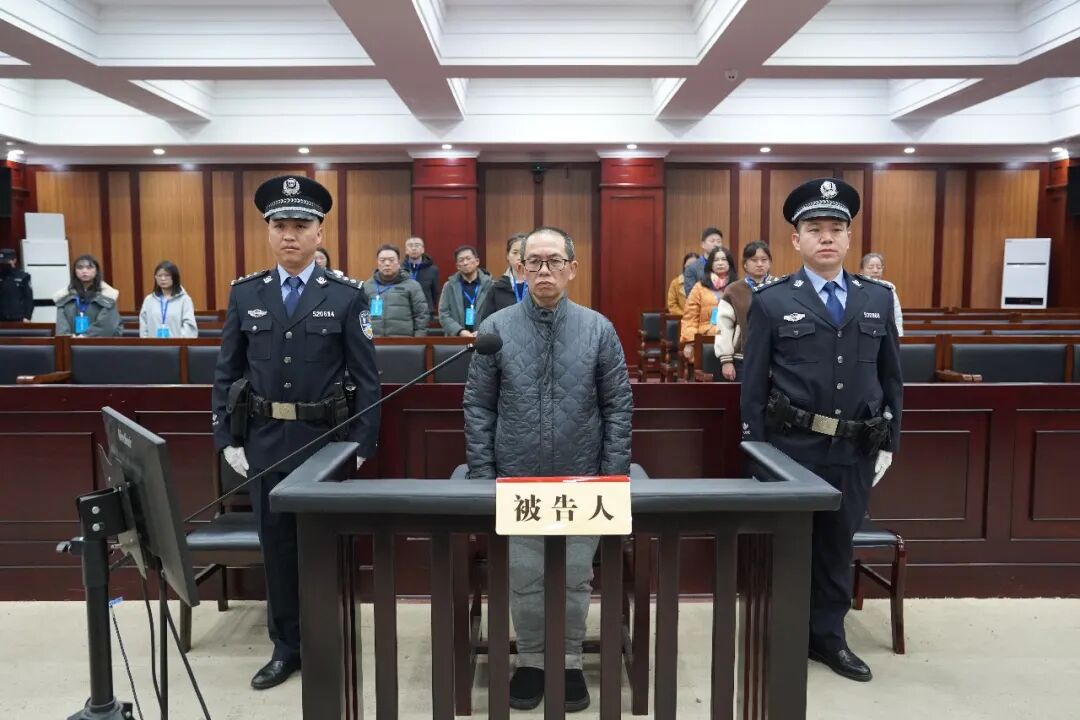
中信银行股份有限公司资产管理业务中心原副总裁罗金辉受贿案一审宣判
Huan Qiu Wang· 2025-12-11 09:36
Core Points - The case involves Luo Jinhui, former Vice President of the Asset Management Business Center at CITIC Bank, who was sentenced to 12 years and 9 months in prison for bribery, along with a fine of 2 million RMB [1][3] - The court found that from 2014 to 2020, Luo utilized his positions at various banks to facilitate financing and stock transactions for companies and individuals, receiving bribes totaling over 44.37 million RMB [1][3] Summary by Sections - **Bribery Conviction**: Luo Jinhui was convicted of bribery with a particularly large amount involved, leading to a significant prison sentence and financial penalties [3] - **Details of the Offense**: The investigation revealed that Luo exploited his roles at China Industrial Bank, Bank of Communications, and CITIC Bank to provide illegal assistance in financial transactions, accumulating substantial illicit gains [1][3] - **Court's Ruling**: The court acknowledged Luo's confession and cooperation during the investigation, which contributed to a lighter sentence despite the severity of the crime [3]


交通银行(601328) - 交通银行股份有限公司章程
2025-12-11 09:32
交通银行股份有限公司章程 (2025 年 12 月修订) | 4 | . | | --- | --- | | . | 1 - | | . | | | 第一章 | 总则 | | --- | --- | | 第二章 | 经营宗旨和范围… | | 第三章 | 股份和注册资本 | | 第四章 | 减资和购回股份………………………………………………………………………………… 11 | | 第五章 | 购买本行股份的财务资助. | | 第六章 | 股票和股东名册 | | 第七章 | 股东的权利和义务…………………………………………………………………………………………………………………………………………………………………………………………… 19 | | 第八章 | 党组织( 党委 ) | | 第九章 | 股东会 . | | 第十章 | 类别股东表决的特别程序 | | | 第十一章 董事会………………………………………………………………………………………………………………………………………………………………………………………………………………………………………………………………… 46 | | 第一节 | 董事. | | ...
交通银行(601328) - 交通银行关于变更注册资本的公告
2025-12-11 09:31
股票代码:601328 股票简称:交通银行 编号:临 2025-076 特此公告 交通银行股份有限公司董事会 交通银行股份有限公司 关于变更注册资本的公告 2025 年 12 月 11 日 本行在完成向特定对象发行14,101,057,578股A股股票后,就变更注册资本 事项向国家金融监督管理总局提出了申请。 近日,本行收到《国家金融监督管理总局关于交通银行变更注册资本的批复》 (金复〔2025〕703号),国家金融监督管理总局同意本行注册资本增加 14,101,057,578元人民币,由74,262,726,645元人民币变更为88,363,784,223 元人民币。本行根据批复修订了公司章程相应条款,修订后的《公司章程》全文 请参见上海证券交易所网站(www.sse.com.cn)和本行网站(www.bankcomm.com)。 本行随后将办理注册资本变更登记等相关手续。 交通银行股份有限公司(以下简称"交通银行"或"本行")董事会及全体董事保证本 公告内容不存在任何虚假记载、误导性陈述或者重大遗漏,并对其内容的真实性、准确性和 完整性承担法律责任。 ...
银行行业资金流入榜:浦发银行、交通银行等净流入资金居前
Zheng Quan Shi Bao Wang· 2025-12-11 09:27
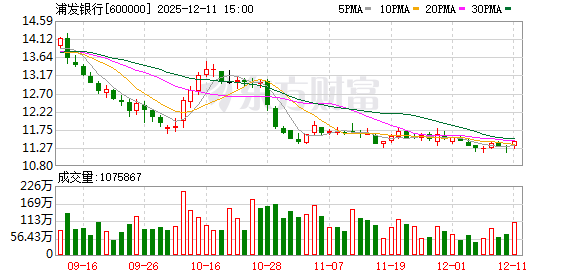
Core Viewpoint - The banking sector showed resilience with a slight increase of 0.17% on December 11, despite a broader market decline, indicating potential strength in this industry amidst overall market challenges [2][3]. Market Performance - The Shanghai Composite Index fell by 0.70% on the same day, with only one sector, banking, experiencing an increase [2]. - The banking sector was the top performer among industries, while the comprehensive and communication sectors faced significant declines of 4.31% and 3.14%, respectively [2]. Capital Flow - There was a net outflow of 744.67 billion yuan from the two markets, with only the banking sector seeing a net inflow of 67.49 million yuan [2]. - The electronic industry faced the largest net outflow of 13.586 billion yuan, followed by the communication sector with 11.340 billion yuan [2]. Individual Stock Performance - Within the banking sector, 42 stocks were tracked, with 21 stocks rising and 20 stocks falling [3]. - The top three banks by net inflow were: - Shanghai Pudong Development Bank with a net inflow of 119 million yuan [4]. - Bank of Communications with 80.991 million yuan [4]. - Nanjing Bank with 67.811 million yuan [4]. - The banks with the highest net outflows included: - China Merchants Bank with a net outflow of 303 million yuan [6]. - Minsheng Bank with 45.949 million yuan [6]. - Hangzhou Bank with 40.973 million yuan [6]. Detailed Capital Flow in Banking Sector - The following banks had notable capital flows: - Shanghai Pudong Development Bank: +1.42% with a turnover rate of 0.32% and a capital flow of 118.58 million yuan [4]. - Bank of Communications: +0.68% with a turnover rate of 0.45% and a capital flow of 80.99 million yuan [4]. - Agricultural Bank of China: +1.41% with a turnover rate of 0.09% and a capital flow of 49.85 million yuan [5].





交通银行管理层调整:北京分行迎新行长 交银国信拟迎新总裁
Xin Lang Cai Jing· 2025-12-11 09:25
Group 1 - Tang Shuo, the business director of the Bank of Communications, has been appointed as a member of the Party Committee of the China Construction Bank [1][11] - Xu Jiming is no longer the deputy secretary of the Party Committee of the Bank of Communications, with adjustments in his roles [3][13] - Wang Guan, the general manager of the personal financial business department, is set to become the new president of the Beijing branch [5][15] Group 2 - As of June 2025, the Bank of Communications has an Asset Under Management (AUM) of 57,925.53 billion yuan, a year-on-year increase of 5.52% [16] - The number of retail customers in domestic banking institutions reached 202 million, growing by 1.30% compared to the previous year [16] - The personal loan balance stood at 28,460.27 billion yuan, reflecting a year-on-year growth of 3.40% [16] Group 3 - Zhang Wei has been appointed as the head of the Audit Supervision Bureau of the Bank of Communications [7][18] - The Audit Supervision Bureau has a two-tier audit supervision system with 1,344 audit personnel, accounting for 1.51% of the total staff [18] - Yu Sang, the general manager of the Asset Protection Department, has been appointed as the deputy secretary of the Party Committee of the Jiao Yin International Trust [8][19] Group 4 - As of June 2025, Jiao Yin International Trust has total assets of 21.122 billion yuan and net assets of 17.249 billion yuan [10][20] - The trust's managed asset scale reached 644.4 billion yuan, with a year-on-year growth of 7.05% [10][20] - The net profit for the first half of the year was 398 million yuan, a decrease of 10.16% compared to the same period last year [10][20]

交通银行:注册资本增加141.01亿元获主管部门同意
Di Yi Cai Jing· 2025-12-11 09:16
交通银行公告,本行在完成向特定对象发行14101057578股A股股票后,就变更注册资本事项向国家金 融监督管理总局提出了申请。近日,本行收到《国家金融监督管理总局关于交通银行变更注册资本的批 复》,国家金融监督管理总局同意本行注册资本增加14101057578元人民币,由74262726645元人民币变 更为88363784223元人民币。 ...
交通银行:完成A股发行,注册资本增至883.64亿元
Xin Lang Cai Jing· 2025-12-11 09:06
交通银行公告称,完成向特定对象发行141.01亿股A股股票后,申请变更注册资本。近日,收到国家金 融监督管理总局批复,同意注册资本增加141.01亿元,由742.63亿元变更为883.64亿元。该行已修订公 司章程相应条款,后续将办理注册资本变更登记等相关手续。 ...
银行净息差专题报告:负债管理能力成为业绩分化的关键
GUOTAI HAITONG SECURITIES· 2025-12-11 08:03
Investment Rating - The report assigns an "Overweight" rating for the banking sector [7]. Core Insights - The report emphasizes the significant improvement in the cost of liabilities for banks in 2025, with a notable decrease of 28 basis points (bp) in the first half of the year, compared to only 4 bp in the same period last year. This improvement is primarily driven by reductions in deposit and interbank liabilities costs, contributing 19 bp and 7 bp respectively [3][11]. - The net interest margin (NIM) is expected to decline by approximately 5 bp in 2026, with the downward pressure on margins continuing to ease marginally, suggesting that some banks may stabilize their NIMs [2][10]. Summary by Sections 1. Liability Cost Improvement in 2025 - The first half of 2025 saw a significant reduction in the cost of interest-bearing liabilities, with the cost rate dropping to 1.70%, a decrease of 28 bp from 2024. This was supported by improvements in both deposit and interbank liability costs [11]. 2. Liability Side: Deposit Maturity and Repricing Benefits 1) **Term Structure**: The proportion of long-term deposits entering the repricing cycle has increased, with the share of deposits with a remaining maturity of 1-5 years declining by 1.5 percentage points (pct) to 22.6% by the end of Q2 2025. Some banks, such as those in Ningbo and Chongqing, experienced declines exceeding 10 pct [4]. 2) **Price Factors**: Regulatory focus on maintaining reasonable NIM levels has increased, with expectations of further interest rate cuts. The maximum reduction for three-year deposits could exceed 100 bp, indicating substantial room for cost improvement [5]. 3. Asset Side: Yield Pressure Expected to be Better than 2025 1) **Loans**: The repricing pressure on loans is expected to ease, with the five-year Loan Prime Rate (LPR) declining by only 10 bp in 2025, significantly less than the 50 bp drop the previous year [6]. 2) **Debt Replacement**: The shift from high-interest to low-interest debt is anticipated to have a limited impact on net interest margins, estimated to drag down margins by about 4 bp [6]. 3) **Bond Maturity**: The widening gap between new bond issuance rates and existing bond yields is expected to exert downward pressure on investment yields, with an estimated drag of 6 bp on margins from the reallocation of bonds maturing within one year [6]. 4. NIM Projections - The report forecasts a 5 bp decline in NIM for 2026, with the downward trend continuing to converge. The asset yield is expected to decrease by 17 bp, while the cost of liabilities is projected to improve by 13 bp, with deposit costs improving by 17 bp [7][10].


