
Bank of Chengdu(601838)

Search documents
地方消费贷“红包”能申领了
Xin Lang Cai Jing· 2025-12-29 19:18
Group 1 - The core point of the article is the introduction of a local consumer loan subsidy policy in Sichuan Province, allowing citizens to apply for a "new year red envelope" in the form of interest subsidies on personal consumer loans [1] - The policy execution period is from October 1, 2025, to March 31, 2026, during which eligible personal consumer loans can apply for interest subsidies [1] - Eligible personal consumer loans can enjoy an interest subsidy of 1 percentage point per annum, with a maximum not exceeding 50% of the loan contract interest rate [1] Group 2 - There is a cumulative subsidy cap mechanism in place, where individual borrowers can receive a maximum subsidy of 500 yuan for loans below 50,000 yuan, corresponding to a maximum cumulative loan amount of 100,000 yuan [1] - The overall cumulative subsidy limit is set at 1,500 yuan, applicable to a maximum cumulative loan amount of 300,000 yuan [1] - Citizens can apply for the subsidy through the mobile banking app by selecting the "subsidy application" option and uploading consumption vouchers or invoices as required [2]
9家A股ESG强信披银行碳排同比上升
2 1 Shi Ji Jing Ji Bao Dao· 2025-12-29 08:20
Group 1: Climate Disclosure Standards - The Ministry of Finance, along with nine other departments, issued the "Corporate Sustainable Disclosure Standard No. 1 - Climate (Trial)" on December 25, marking a significant step towards a unified sustainable disclosure standard system in China [1] - The "Climate Standard" is currently positioned as a trial document, with voluntary implementation by companies until specific requirements are established [1] - The Ministry of Finance plans to adopt a gradual approach to implementation, expanding from listed companies to non-listed companies, and from large enterprises to small and medium-sized enterprises [1] Group 2: ESG Disclosure in A-Share Banks - The A-share ESG strong disclosure list has expanded to 27 banks, including 6 state-owned banks, 9 joint-stock banks, 10 city commercial banks, and 2 rural commercial banks [2] - Among the 27 banks, 16 reported a year-on-year decrease in carbon emissions, while 9 banks, including 1 state-owned bank and 6 city commercial banks, reported an increase in carbon emissions [2] - The top five banks with the highest year-on-year increase in carbon emissions are Beijing Bank (13.88%), Nanjing Bank (13.23%), Qingdao Bank (11.92%), Chongqing Bank (10.96%), and Hangzhou Bank (10.02%) [3] Group 3: Regulatory Actions and Penalties - First Capital's subsidiary was fined 12.7358 million yuan for failing to diligently supervise a convertible bond project [4] - Jinghua Pharmaceutical's subsidiary was fined 500,000 yuan for environmental pollution, which is not expected to significantly impact the company's net profit for 2025 [5] - Tianyi Medical is facing a potential fine of 8.7852 million yuan for not producing medical devices according to registered technical requirements [6][7] Group 4: Energy Sector ESG Developments - The "National Energy Sustainable Development Index" was officially launched, achieving a cumulative return rate of 40% [8] - Five thermal power companies have been included in the ESG strong disclosure category, which will require them to improve ESG governance and reporting by 2026 [9] - A report evaluated the low-carbon transition performance of 33 thermal power companies, indicating significant disparities in transition progress and a slower development of non-fossil energy compared to national averages [9]



地方消费贷“红包”能申领了!成都银行已首批落地新政
Xin Lang Cai Jing· 2025-12-29 07:04
Core Insights - The article discusses the implementation of a personal consumption loan interest subsidy policy in Sichuan Province, which aims to stimulate consumer spending by providing financial incentives to borrowers [2][4]. Group 1: Policy Implementation - The Sichuan Provincial Finance Department and other agencies have launched a personal consumption loan interest subsidy policy, effective from October 1 to March 31 of the following year, covering key consumption periods like New Year and Spring Festival [2]. - Eligible personal consumption loans can receive an interest subsidy of 1% per annum, capped at 50% of the loan contract interest rate, with specific limits on the total subsidy amount for borrowers [2][4]. Group 2: Application Process - The application process for the interest subsidy is streamlined, allowing users to complete it in three simple steps via a mobile banking app, enhancing user experience and operational efficiency [3]. - Borrowers must upload consumption vouchers for loans under 50,000 yuan, while loans above this amount require invoice submission, with a clear stipulation that the consumption must occur within Sichuan [3]. Group 3: Consumer Engagement and Financial Services - Chengdu Bank has adopted a multi-faceted approach to enhance consumer financial services, including the rapid implementation of the subsidy policy and the introduction of an intelligent approval system [4][5]. - The bank has invested over 11 million yuan in subsidies, benefiting 1.5 million citizens and driving consumption exceeding 1.5 billion yuan [5]. Group 4: Financial Performance and Stability - Chengdu Bank reported a total asset size of 1.38 trillion yuan as of September 2025, with a loan and advance total of 847.48 billion yuan, reflecting a growth rate of 14.13% year-on-year [6]. - The bank's net profit for the first three quarters of 2025 reached 9.49 billion yuan, with a return on equity (ROE) of 15.2%, indicating strong capital efficiency and profitability [6]. Group 5: Future Outlook - Chengdu Bank plans to continue enhancing its consumer financial products and services, focusing on improving urban economic vitality and promoting quality consumption [7].
城商行板块12月26日跌0.67%,厦门银行领跌,主力资金净流出5996.58万元
Zheng Xing Xing Ye Ri Bao· 2025-12-26 09:07
Core Viewpoint - The city commercial bank sector experienced a decline of 0.67% on December 26, with Xiamen Bank leading the drop, while the Shanghai Composite Index rose by 0.1% and the Shenzhen Component Index increased by 0.54% [1] Group 1: Market Performance - The closing price of Xiamen Bank was 7.56, reflecting a decrease of 2.45% with a trading volume of 139,200 shares and a transaction amount of 106 million yuan [2] - Other notable banks included Guizhou Bank at 5.90 (-1.17%), Ningbo Bank at 28.00 (-1.10%), and Chongqing Bank at 10.85 (-0.91%) [2] - The overall city commercial bank sector saw a net outflow of 59.97 million yuan from main funds, while retail funds experienced a net outflow of 80.69 million yuan [2] Group 2: Fund Flow Analysis - Hangzhou Bank had a main fund net inflow of 11.5 million yuan, but retail funds saw a net outflow of 76.27 million yuan [3] - Ningbo Bank recorded a main fund net inflow of 56.33 million yuan, while retail funds had a net outflow of 6.51 million yuan [3] - The overall trend indicates that while some banks attracted main fund inflows, retail investors were largely withdrawing their investments [3]


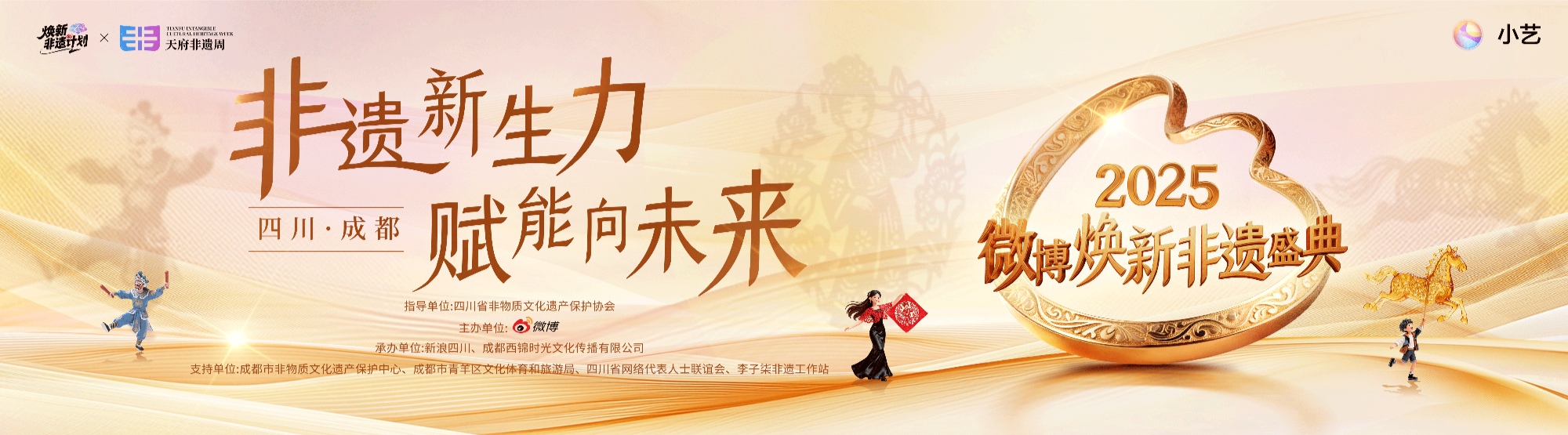
平台赋能 生态共建:2025微博焕新非遗盛典探索非遗产业融合新范式
Yang Guang Wang· 2025-12-26 05:39
Core Insights - The 2025 Weibo Revitalization Intangible Cultural Heritage (ICH) Gala and related events successfully concluded in Chengdu, focusing on the theme "New Vitality of ICH, Empowering the Future" [1] - The event gathered over 600 representatives from government, media, academia, enterprises, and ICH inheritors, aiming to bridge ICH with various industries and create a high-value platform for ICH [1][3] Event Highlights - The gala featured nine annual ICH honors awarded to individuals and organizations making significant contributions to the field [3] - Keynote speeches emphasized the role of youth as core transmitters and innovators of ICH in the internet era [3] - Weibo's commitment to building an open and collaborative ICH communication system was highlighted, focusing on deep integration and cross-industry empowerment [3][12] Awards and Recognitions - Eight projects received the "Annual ICH Local Newborn Model Project" honor, showcasing diverse media efforts in promoting ICH [4] - Various organizations and individuals were recognized for their contributions, including "Annual ICH Youth Power Model" and "Annual ICH Charm Performance Figure" awards [6][7] Technological Integration - The event showcased the potential of AI technology in enhancing ICH transmission, with interactive demonstrations highlighting its capabilities [7] - Experts discussed the synergy between intangible and tangible cultural heritage, emphasizing the importance of storytelling in engaging younger audiences [7] Future Initiatives - The launch of the "Weibo ICH Resident Program" aims to invite influential content creators to collaborate with local governments, enhancing cultural transmission and economic development [11] - A report on the integration of ICH and industry was released, focusing on sustainable development and the dual empowerment of ICH and industry [14][15]


激发消费潜力 多地消费贷贴息新政落地
Jing Ji Wang· 2025-12-26 02:04
Core Viewpoint - The implementation of the personal consumption loan interest subsidy policy is a significant measure to stabilize growth and promote consumption, with local governments actively participating to enhance consumer credit accessibility and stimulate economic activity [1][3]. Group 1: Policy Implementation - Various regions have detailed the consumption loan interest subsidy policy following the national framework, with specific guidelines tailored to local conditions [2]. - The Chongqing Municipal Finance Bureau and other authorities have announced a subsidy for personal consumption loans issued from September 1, 2025, to August 31, 2026, aimed at loans used for consumption [2]. - The Sichuan Provincial Finance Department has also introduced a similar subsidy for loans obtained from banks outside the major state-owned banks, effective from October 1, 2025, to March 31, 2026 [2]. Group 2: Economic Impact - The local implementation of the subsidy policy signifies a collaborative effort between central and local governments, creating a "national subsidy + local subsidy" model to effectively stimulate economic demand [3]. - Tailored subsidy policies can better align with regional economic characteristics and consumer needs, thereby enhancing consumer willingness to spend [3]. - The anticipated outcome of a coordinated national and local approach is to stabilize consumer expectations and boost domestic demand [3]. Group 3: Participation of Financial Institutions - Several local banks have joined the consumption loan subsidy initiative, expanding the coverage to regional commercial banks and rural commercial banks, which enhances the diversity of financial services available to consumers [4]. - Chengdu Bank has announced a subsidy rate of 1% on eligible personal consumption loans, with a cap of 1,500 yuan for each borrower [4]. - Chengdu Rural Commercial Bank has specified that the subsidy applies to various consumer categories, including home appliances and education, while Guizhou Bank has set a timeframe for eligible loans from September 1 to December 31, 2025 [5]. Group 4: Market Dynamics - The involvement of regional banks is expected to create new business growth opportunities, as these institutions have a deeper understanding of local markets and consumer demands [5]. - The subsidy policy is likely to lower borrowing costs, encouraging more consumers to choose loans from these regional banks, thus expanding their customer base and market share [5]. - Financial institutions are prompted to enhance their service quality and optimize business processes to better meet consumer needs and improve competitiveness [5].
平台赋能,生态共建:2025微博焕新非遗盛典探索非遗产业融合新范式
Xin Lang Cai Jing· 2025-12-25 14:16
Core Insights - The 2025 Weibo Revitalization Intangible Cultural Heritage Ceremony and the Weibo Intangible Cultural Heritage and Industry Integration Development Exchange Conference successfully concluded in Chengdu, with over 600 attendees from various sectors [1][23] - The event aimed to connect multiple resources, including government, media, and cultural heritage practitioners, to create a high-value platform for the intangible cultural heritage industry, promoting the integration of intangible cultural heritage into various industries [1][23] Group 1: Event Highlights - The theme of the event was "New Vitality of Intangible Cultural Heritage, Empowering the Future," featuring speeches, honor awards, and online discussions [1][23] - Nine annual honors were awarded to individuals and organizations for their outstanding contributions to the field of intangible cultural heritage [2][24] Group 2: Youth and Media Engagement - The president of the China Intangible Cultural Heritage Protection Association emphasized the role of youth as key transmitters and innovators of intangible cultural heritage in the internet age [2][24] - Weibo's vice president highlighted the platform's commitment to building an open and collaborative system for the dissemination of intangible cultural heritage, moving from one-way promotion to deep integration [2][24] Group 3: Awards and Recognitions - Eight projects received the "Annual Intangible Cultural Heritage Local Newborn Model Project" honor, showcasing diverse media forms that bridge the gap in heritage transmission [3][25] - Various organizations and individuals, including media outlets and cultural practitioners, were recognized for their contributions to the promotion and innovation of intangible cultural heritage [5][27] Group 4: Technological Integration - The event showcased the potential of AI technology in the transmission of intangible cultural heritage, with interactive demonstrations highlighting its capabilities [6][28] - The collaboration between Weibo and various cultural institutions aims to explore innovative paths for integrating intangible cultural heritage with modern life and local economic development [10][32] Group 5: Industry Dialogue and Future Directions - The exchange conference focused on innovation and integration, aiming to break down barriers between industries and create a win-win ecosystem for intangible cultural heritage [12][34] - A report was released discussing the dual empowerment of intangible cultural heritage and industry, emphasizing the importance of cultural heritage in enhancing urban cultural identity and driving innovation in cultural tourism products [14][36] Group 6: Sustainable Development Initiatives - Weibo's initiatives aim to create a sustainable ecosystem for intangible cultural heritage, transitioning from visibility to experience and ultimately to necessity [19][41] - The "Weibo Intangible Cultural Heritage Resident Program" was launched to invite influential content creators to collaborate with local governments, enhancing the visibility and sustainability of local cultural heritage [10][32][42]

成都银行今日大宗交易折价成交25万股,成交额370万元
Xin Lang Cai Jing· 2025-12-25 09:38
12月25日,成都银行大宗交易成交25万股,成交额370万元,占当日总成交额的1.5%,成交价14.8元, 较市场收盘价16.43元折价9.92%。 | Ph 212"s with a dollar 11 list 1 high | | | | | | | | | | --- | --- | --- | --- | --- | --- | --- | --- | --- | | 交易日期 | 证券简称 | 证券代码 | | 成交价(元) 成交金额(万元) 成交量( *) 买入营业部 | | | 卖出营业部 | 是否为专场 | | 025-12-25 | 成都报行 | 601838 | 14.8 | 370 25 | 有限量最新 | 器商量和智能器 | | Ka | ...

城商行板块12月25日涨0.07%,上海银行领涨,主力资金净流出1.11亿元
Zheng Xing Xing Ye Ri Bao· 2025-12-25 09:14
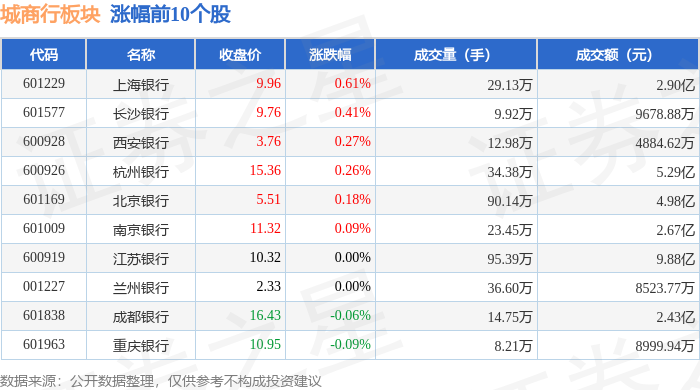
Market Performance - The city commercial bank sector increased by 0.07% compared to the previous trading day, with Shanghai Bank leading the gains [1] - The Shanghai Composite Index closed at 3959.62, up 0.47%, while the Shenzhen Component Index closed at 13531.41, up 0.33% [1] Individual Stock Performance - Shanghai Bank (601229) closed at 9.96, up 0.61% with a trading volume of 291,300 shares and a transaction value of 290 million [1] - Other notable performers include: - Changsha Bank (601577) at 9.76, up 0.41% [1] - Xi'an Bank (600928) at 3.76, up 0.27% [1] - Hangzhou Bank (600926) at 15.36, up 0.26% [1] - Beijing Bank (601169) at 5.51, up 0.18% [1] Capital Flow Analysis - The city commercial bank sector experienced a net outflow of 111 million from institutional investors, while retail investors saw a net inflow of 121 million [2] - The overall capital flow indicates a mixed sentiment, with institutional investors withdrawing funds while retail investors are increasing their positions [2] Detailed Capital Flow by Bank - Hangzhou Bank (600926) had a net inflow of 38.46 million from institutional investors, but a net outflow of 43.46 million from speculative funds [3] - Beijing Bank (601169) saw a net inflow of 23.41 million from institutional investors, with a net outflow of 18.77 million from speculative funds [3] - Guizhou Bank (601997) had a significant net inflow of 22.19 million from institutional investors, but a net outflow of 36.07 million from retail investors [3]

年末银行零售信贷竞技:经营贷低至2.35%,消费贷优惠来袭
2 1 Shi Ji Jing Ji Bao Dao· 2025-12-24 14:10
Core Viewpoint - The competition among banks for operating loan rates has intensified, with rates as low as 2.35% being offered, driven by a combination of policy guidance, market competition, and the need for banks to support small and micro enterprises [1][3]. Group 1: Operating Loan Rates - Current operating loan rates are competitive, with banks offering rates around 2.5% for secured loans and approximately 3% for unsecured loans, with potential for further negotiation based on client creditworthiness [1][2]. - A notable case is a small business owner who secured a loan at around 3% linked to the LPR, highlighting the favorable lending environment compared to previous years [1]. - Different banks are focusing on various aspects of their operating loan products, but the common themes are "low rates and high limits" [1]. Group 2: Bank Strategies and Offerings - Major state-owned banks are maintaining stable operating loan rates around 3%, with some offering rates as low as 2.5% for qualified clients [2]. - Banks are enhancing customer engagement through promotional activities, such as referral rewards for existing clients who bring in new customers [2]. - Flexibility in loan eligibility criteria is evident, with banks like Ping An Bank requiring only two years of company establishment and a certain level of account turnover [2]. Group 3: Market Dynamics and Future Outlook - The current favorable operating loan rates are attributed to a combination of shrinking traditional mortgage assets and regulatory encouragement for banks to support small businesses [3]. - Experts predict limited room for significant rate decreases in the short term, with rates likely to stabilize at low levels due to ongoing regulatory support for financial institutions to benefit the real economy [3]. - Concerns about excessively low rates potentially leading to risks such as fund arbitrage are noted, indicating that banks need to maintain a balance in their pricing strategies [3]. Group 4: Consumer Loan Market - Consumer loans are also becoming a competitive area for financial institutions, with rates generally above 3%, and efforts to stimulate consumption through various financial products [4][5]. - Major state-owned banks are offering consumer loan rates in the range of 3.3% to 4.5%, with some flexibility based on individual credit profiles [5]. - Financial institutions are actively promoting consumer loans, especially in anticipation of peak consumption periods, with various incentives and promotional campaigns being launched [6][7].
