
Daqo Energy(688303)

Search documents
反内卷下多晶硅市场回暖,大全能源三季度扭亏为盈
Di Yi Cai Jing· 2025-10-28 07:53
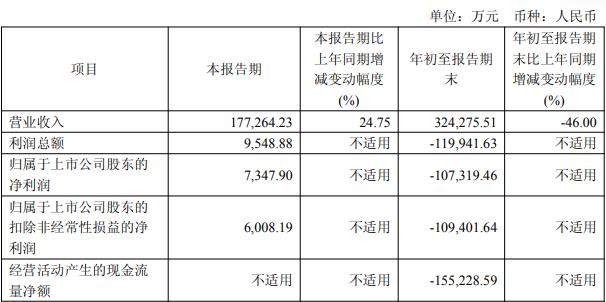
Core Viewpoint - Daqo Energy (688303.SH) reported a significant recovery in its third-quarter performance, with revenue of 1.773 billion yuan, a year-on-year increase of 24.75%, and a net profit of 73.479 million yuan, indicating a turnaround from previous losses due to the recovery of the polysilicon market and the effectiveness of the photovoltaic "anti-involution" policy [1][2]. Financial Performance - The company's revenue for the first three quarters was 3.243 billion yuan, reflecting a year-on-year decline of 46.00%, with a net loss of 1.073 billion yuan [1]. - In the third quarter, the unit sales price of polysilicon rose to 41.49 yuan/kg, a nearly 36.8% increase compared to the second quarter [2]. - The production and sales rate of polysilicon products was 138%, indicating that the sales volume exceeded the production volume, utilizing some of the previous inventory [2]. Market Dynamics - The polysilicon market has shown signs of recovery, with a cumulative inventory reduction of approximately 12,000 tons in the domestic market during the first three quarters of the year [1]. - The average transaction price of polysilicon increased from below 40,000 yuan/ton in June to around 50,000 yuan/ton in September [1]. - Daqo Energy's production volume for polysilicon in the first half of 2025 is projected to be between 121,000 tons and 124,000 tons, with an expected output of 39,500 to 42,500 tons in the fourth quarter of this year [3]. Strategic Focus - The company has adjusted its R&D project timelines and reduced R&D expenditures by over 55.37% in the first three quarters of the year [2]. - Daqo Energy plans to focus on its core business and maintain a strong cash position and low debt ratio, with no immediate plans for overseas expansion [3]. - The company aims to increase its N-type polysilicon product share to 70% by the end of 2024 [2].

大全能源第三季度净赚7347万元多晶硅市场回暖
Zhong Guo Jing Ying Bao· 2025-10-28 04:25
Group 1 - The core viewpoint of the article highlights that Daqo Energy (688303.SH) has turned a profit in the third quarter of 2025, achieving a net profit of 73.48 million yuan, driven by a recovery in the polysilicon market with both volume and price increases [1] - Daqo Energy reported a revenue of 1.773 billion yuan in the third quarter, marking a year-on-year increase of 24.75% [1] - Despite the positive performance in Q3, Daqo Energy faced a significant loss of 1.147 billion yuan in the first half of 2025 due to an imbalance in supply and demand in the polysilicon market, leading to a total loss of 1.073 billion yuan for the first three quarters [1] Group 2 - The current polysilicon prices are stabilizing, with the average transaction price for n-type re-investment material at 53,200 yuan per ton and n-type granular silicon at 50,500 yuan per ton, remaining unchanged week-on-week [1] - The polysilicon industry is undergoing a critical period of structural reshaping, with supply significantly contracting year-on-year, yet inventory is slightly accumulating, indicating relatively weak terminal demand [1] - Industry policies and market expectations are expected to be the main factors supporting the stable operation of the polysilicon market in the short term [1] Group 3 - In addition to Daqo Energy, GCL-Poly Energy (03800.HK) also reported a profit of approximately 960 million yuan from its photovoltaic materials business during the same period, which includes a non-recurring tax benefit of about 640 million yuan from the sale of an associate [2]


大全能源亏损1年连3季 2021年上市2募资共174.5亿
Zhong Guo Jing Ji Wang· 2025-10-28 02:41
Core Viewpoint - Daqo Energy (688303.SH) reported a significant decline in annual performance for 2024, with a net profit loss of 2.718 billion yuan, while showing a positive growth in Q3 2025 with a revenue increase of 24.75% year-on-year [1][2]. Financial Performance Summary - For Q3 2025, the company achieved a revenue of 1.773 billion yuan, representing a year-on-year growth of 24.75% [1][2]. - The net profit attributable to shareholders for Q3 2025 was 73.48 million yuan, with a net profit excluding non-recurring items of 60.08 million yuan [1][2]. - Year-to-date revenue until the reporting period was 3.243 billion yuan, showing a decrease of 46.00% compared to the previous year [1][2]. - The net profit attributable to shareholders for the year-to-date was a loss of 1.073 billion yuan, with a net profit excluding non-recurring items also showing a loss of 1.094 billion yuan [1][2]. - The net cash flow from operating activities for the year-to-date was -1.552 billion yuan [1][2]. Historical Financial Data - In 2024, Daqo Energy reported a revenue of 7.411 billion yuan, a decline of 54.62% compared to 2023 [3]. - The net profit attributable to shareholders for 2024 was a loss of 2.718 billion yuan, a significant drop from a profit of 5.763 billion yuan in the previous year [3]. - The net cash flow from operating activities for 2024 was -5.386 billion yuan, compared to a positive cash flow of 8.741 billion yuan in 2023 [3]. Capital Raising Activities - Daqo Energy raised a total of 6.447 billion yuan through its initial public offering, exceeding its initial target by 1.067 billion yuan [4]. - The funds raised are intended for projects including the production of high-purity semiconductor materials and polycrystalline silicon [4]. - In 2022, the company issued A-shares, raising approximately 10.999 billion yuan, with a net amount of about 10.937 billion yuan after deducting issuance costs [5].
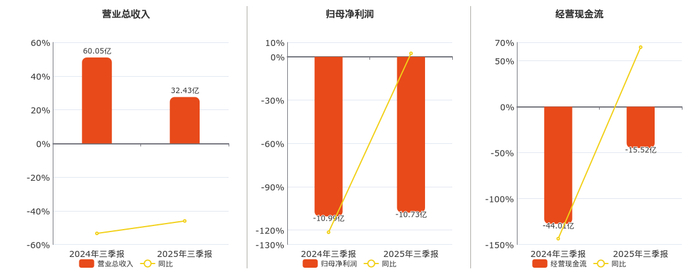
大全能源(688303.SH):2025年三季报净利润为-10.73亿元
Xin Lang Cai Jing· 2025-10-28 02:15
Core Insights - Daqo New Energy (688303.SH) reported a significant decline in revenue and net profit for Q3 2025, with total revenue at 3.243 billion yuan, down 46.00% year-on-year [1] - The company recorded a net profit attributable to shareholders of -1.073 billion yuan, indicating ongoing financial challenges [1] Financial Performance - Total revenue for Q3 2025 was 3.243 billion yuan, a decrease of 2.762 billion yuan compared to the same period last year [1] - Operating cash flow was negative at -1.552 billion yuan, reflecting cash management issues [1] - The latest debt-to-asset ratio stands at 8.20%, an increase of 0.15 percentage points from the previous quarter [3] - Gross margin is reported at -7.59%, down 11.77 percentage points year-on-year [3] - Return on equity (ROE) is -2.75%, a decrease of 0.12 percentage points compared to the same period last year [3] - Diluted earnings per share (EPS) is -0.50 yuan [3] Efficiency Metrics - Total asset turnover ratio is 0.07 times, down 39.27% year-on-year, indicating reduced efficiency in asset utilization [3] - Inventory turnover ratio is 3.14 times, a decline of 21.10% compared to the same period last year [3] Shareholder Structure - The number of shareholders is 40,000, with the top ten shareholders holding 1.716 billion shares, accounting for 79.99% of total equity [3] - The largest shareholder is Dago New Energy Corp., holding 71.40% of shares [3]
大全能源发布前三季度业绩,归母净亏损10.73亿元
智通财经网· 2025-10-27 18:08
智通财经APP讯,大全能源(688303.SH)披露2025年第三季度报告,公司前三季度实现营收32.43亿元, 同比下降46%;归母净利润亏损10.73亿元;扣非净利润亏损10.94亿元;基本每股收益-0.50元。 ...
大全能源(688303.SH)发布前三季度业绩,归母净亏损10.73亿元
智通财经网· 2025-10-27 18:02
Group 1 - The company Daqo Energy (688303.SH) reported a revenue of 3.243 billion yuan for the first three quarters of 2025, representing a year-on-year decline of 46% [1] - The company recorded a net loss attributable to shareholders of 1.073 billion yuan [1] - The company's net profit excluding non-recurring items was a loss of 1.094 billion yuan, with a basic earnings per share of -0.50 yuan [1]
大全能源(688303.SH):第三季度净利润为7347.90万元
Ge Long Hui A P P· 2025-10-27 14:09
Core Viewpoint - Daqo Energy (688303.SH) reported a significant increase in revenue and net profit for Q3 2025, indicating strong financial performance and growth potential in the energy sector [1] Financial Performance - The company's operating revenue reached 1.773 billion yuan, representing a year-on-year increase of 24.75% [1] - The net profit attributable to shareholders was 73.479 million yuan [1] - The net profit attributable to shareholders after deducting non-recurring gains and losses was 60.082 million yuan [1]
大全能源:Q3净利润7348万元 多晶硅产品产销率达138%
Ge Long Hui A P P· 2025-10-27 13:51
格隆汇10月27日|大全能源(688303.SH)发布2025年第三季度报告,第三季度营收为17.73亿元,同比增 长24.75%;净利润为7347.90万元。前三季度营收为32.43亿元,同比下降46.00%;净亏损10.73亿元。业 绩变动原因主要为:前三季度受多晶硅市场价格下降及销量减少影响,营业收入下滑;第三季度随着多 晶硅市场回暖,量价齐升,公司调整生产与销售策略,把握价格回升窗口,实现单季度盈利,产销率达 138%,资产运营效率提升。 ...
大全能源(688303) - 大全能源关于取消监事会及制定、修订部分治理制度的公告
2025-10-27 13:46
新疆大全新能源股份有限公司 关于取消监事会及制定、修订部分治理制度的公告 本公司董事会及全体董事保证公告内容不存在任何虚假记载、误导性陈述 或者重大遗漏,并对其内容的真实性、准确性和完整性依法承担法律责任。 新疆大全新能源股份有限公司(以下简称"公司")于 2025 年 10 月 27 日召 开第三届董事会第二十次会议,审议通过了《关于取消公司监事会的议案》及 《关于制定、修订公司部分内部治理制度的议案》。现将相关情况公告如下: 一、取消监事会并修订《公司章程》的情况 证券代码:688303 证券简称:大全能源 公告编号:2025-046 二、制定、修订公司部分内部治理制度的情况 鉴于公司取消监事会,同时为进一步提升公司管理水平、完善公司治理结构, 公司结合实际情况,紧跟监管要求,拟对公司部分治理制度进行制定及修订,具 体制定及修订情况如下: | 序号 | 制度名称 | 变更情况 | 是否需提交股东会审议 | | | --- | --- | --- | --- | --- | | 1. | 《股东会议事规则》 | 修订 | | 是 | | 2. | 《董事会议事规则》 | 修订 | | 是 | | 3. | ...
大全能源(688303) - 大全能源关于召开2025年第一次临时股东大会的通知
2025-10-27 13:46
证券代码:688303 证券简称:大全能源 公告编号:2025-047 新疆大全新能源股份有限公司 关于召开2025年第一次临时股东大会的通知 本公司董事会及全体董事保证公告内容不存在任何虚假记载、误导性陈述或 者重大遗漏,并对其内容的真实性、准确性和完整性依法承担法律责任。 采用上海证券交易所网络投票系统,通过交易系统投票平台的投票时间为股 东大会召开当日的交易时间段,即 9:15-9:25,9:30-11:30,13:00-15:00;通 股东大会召开日期:2025年11月12日 本次股东大会采用的网络投票系统:上海证券交易所股东大会网络投票 系统 重要内容提示: 一、 召开会议的基本情况 召开日期时间:2025 年 11 月 12 日 14 点 00 分 召开地点:上海市浦东新区张杨路 838 号华都大厦 29 层 AJ 座会议室 (五) 网络投票的系统、起止日期和投票时间。 网络投票系统:上海证券交易所股东大会网络投票系统 网络投票起止时间:自2025 年 11 月 12 日 至2025 年 11 月 12 日 (一) 股东大会类型和届次 2025年第一次临时股东大会 (二) 股东大会召集人:董事会 ...