Sinocelltech(688520)

Search documents
神州细胞2025年预亏超5亿,核心产品销售受挫,股价近期走弱
Jing Ji Guan Cha Wang· 2026-02-14 01:16
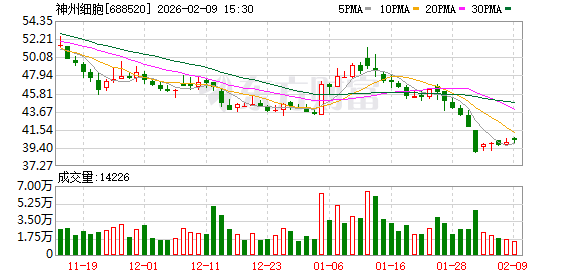
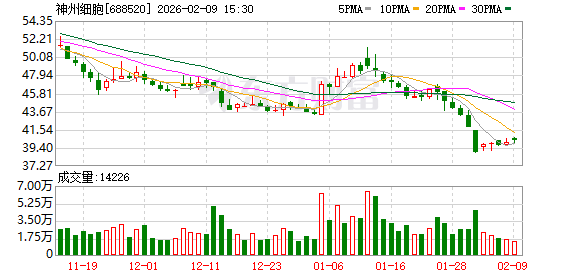
Core Viewpoint - Shenzhou Cell forecasts a net profit loss of 520 million to 580 million yuan for 2025, primarily due to significant revenue decline from its core product Anjiah, impacted by medical insurance cost control and price reductions [1] Financial Performance - The company anticipates a net profit loss of 503 million to 563 million yuan after excluding non-recurring items, with R&D investment projected between 830 million to 870 million yuan [1] - In the Q3 2025 report, revenue decreased by 32.27% year-on-year, with a net profit loss of 251 million yuan and a debt ratio of 101.46% [1] Recent Developments - During an institutional survey, Shenzhou Cell disclosed that several products (e.g., SCT1000, SCT650C, SCTB14) have entered or are planned to advance to Phase III clinical trials, with some potentially entering the registration research phase in 2026 [2] - The company plans to advance several new product IND applications this year and considers overseas business development as a medium to long-term strategy, although specific transactions remain uncertain [2] Stock Performance - Over the past seven trading days, Shenzhou Cell's stock price has declined by 1.55%, with a price range fluctuation of 4.98% [3] - The latest closing price is 39.38 yuan, with trading volume gradually decreasing and turnover rate maintained between 0.24% and 0.46% [3] - The stock has underperformed compared to the overall decline in the pharmaceutical and biotechnology sector [3]

神州细胞:公司研发能力强大,计划今年推进数款产品申报IND
Zheng Quan Ri Bao· 2026-02-09 13:11
Group 1 - The company, ShenZhou Cell, has a strong research and development capability and plans to advance several product applications for IND this year [2]

神州细胞:公司已于2026年1月获得定增注册批文并公告
Zheng Quan Ri Bao· 2026-02-09 12:37
Group 1 - The company, ShenZhou Cell, has received approval for a private placement registration as of January 2026, allowing it to issue shares worth up to 900 million RMB [2] - The controlling shareholder plans to subscribe for no more than 900 million RMB of the company's shares [2] - The company intends to initiate and complete the issuance as soon as possible, with further updates to be provided in subsequent announcements [2]
神州细胞:公司会将产品BD作为中长期发展战略之一
Zheng Quan Ri Bao· 2026-02-09 12:37
证券日报网2月9日讯 ,神州细胞在接受调研者提问时表示,公司会将产品BD作为中长期发展战略之 一,努力寻求产品的对外BD机会。但具体交易不确定性较大,以公告为准。 (文章来源:证券日报) ...
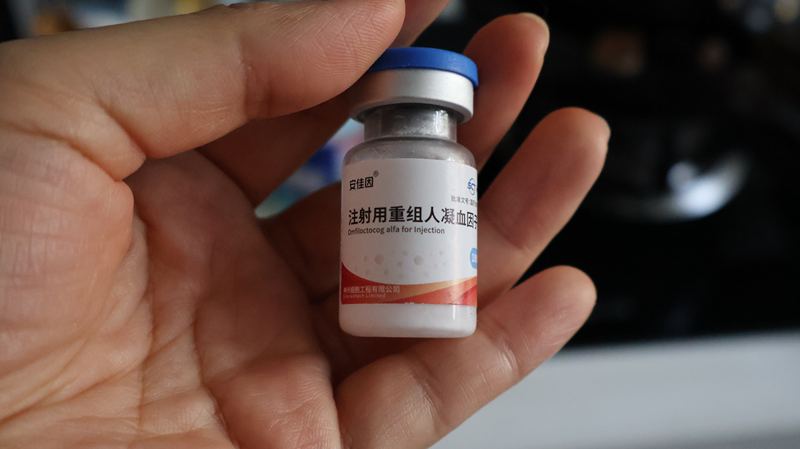
神州细胞:安佳因®2025年销售下降的主要影响因素
Zheng Quan Ri Bao Zhi Sheng· 2026-02-09 12:28
Core Viewpoint - The sales of Anjiahin® are expected to decline significantly by 2025 due to several factors, including medical insurance cost control and substantial price reductions initiated by the company in response to national healthcare policies [1] Group 1: Sales and Market Impact - The decline in Anjiahin® sales is primarily influenced by the reduction in patient usage resulting from medical insurance cost control measures [1] - Starting from the third quarter of 2025, Anjiahin® will undergo significant price cuts to align with the national healthcare bureau's initiatives, aiming to make the medication more accessible to patients [1] Group 2: Treatment Guidelines and Patient Care - The revised "Chinese Guidelines for Hemophilia Treatment (2025 Edition)" has redefined treatment approaches for coagulation disorders, shifting from traditional preventive treatment to regular replacement therapy and from on-demand treatment to temporary replacement therapy [1] - The medical community is emphasizing the importance of preventive treatment, and the company hopes that adult patients will receive similar protections as pediatric patients [1] - The company anticipates that the recombinant factor VIII will receive equal treatment as blood-derived factor VIII in the future [1]
神州细胞:安佳因2025年销售下降的主要影响因素
Zheng Quan Ri Bao· 2026-02-09 12:12
证券日报网2月9日讯 ,神州细胞在接受调研者提问时表示,安佳因®2025年销售下降较为明显,主要 受几方面因素影响:(1)医保控费导致患者用量下降;(2)自2025年第三季度起,安佳因®响应国家 医保局号召,对产品进行了大幅降价。公司期待,安佳因®产品降价未来可以惠及患者,让有需要的患 者足量用药,改善他们的生存状况。去年底修订的《血友病治疗中国指南(2025年版)》针对凝血障碍 的治疗进行了重新定义,传统的预防治疗改为规律替代治疗,按需治疗改为临时替代治疗。这也表明了 医学界对于预防治疗的重视和呼吁。公司也期待成人患者也可以像儿童患者一样获得更好的保障,也期 待重组八因子可以像血源性八因子一样获得同等的待遇。 (文章来源:证券日报) ...
神州细胞:公司已于近期披露2025年年度业绩预告
Zheng Quan Ri Bao· 2026-02-09 12:12
Core Viewpoint - The company has recently disclosed its preliminary earnings forecast for the year 2025, indicating a significant expected loss in net profit [2] Financial Performance - The preliminary estimate for the net profit attributable to shareholders for 2025 is projected to be between -58 million and -52 million yuan [2] - The net profit attributable to shareholders after deducting non-recurring gains and losses is expected to range from -56.3 million to -50.3 million yuan [2]
神州细胞:公司2025年研发投入初步测算在83000万元~87000万元区间
Zheng Quan Ri Bao· 2026-02-09 12:12
Group 1 - The core viewpoint of the article highlights that the company, ShenZhou Cell, plans to invest approximately 83 million to 87 million yuan in research and development (R&D) by 2025 [2] - The company is currently in a growth phase, and maintaining high R&D investment is essential for its future development, which is a common characteristic among innovative drug development companies [2] - As multiple projects progress into mid-to-late clinical research stages, the company's R&D expenditures are expected to remain elevated [2]
神州细胞:安佳因 2025年销售下降的主要影响因素
Zheng Quan Ri Bao Wang· 2026-02-09 12:10
Core Viewpoint - The company Shenzhou Cell indicates that the sales of its product Anjiah will decline significantly in 2025 due to several factors, including medical insurance cost control and substantial price reductions in response to national healthcare policies [1] Group 1: Sales Decline Factors - Medical insurance cost control has led to a decrease in patient usage [1] - Starting from the third quarter of 2025, Anjiah will undergo significant price reductions to align with national healthcare bureau initiatives [1] Group 2: Future Expectations - The company hopes that the price reduction of Anjiah will benefit patients, allowing them to access sufficient medication and improve their survival conditions [1] - The revised "Guidelines for the Treatment of Hemophilia in China (2025 Edition)" emphasizes the importance of preventive treatment and redefines treatment approaches for coagulation disorders [1] - The company anticipates that adult patients will receive better protection similar to that of pediatric patients and hopes that recombinant factor VIII will be treated equally to plasma-derived factor VIII [1]
巨额血友病骗保案:蓄意诈骗,还是另一版本的“我不是药神”?
Xin Jing Bao· 2026-02-05 00:51
Core Viewpoint - The article discusses a large-scale healthcare fraud case involving hemophilia patients, pharmaceutical representatives, and private hospitals in Zhejiang, China, highlighting the complexities of healthcare reimbursement policies and the ethical dilemmas faced by patients and medical professionals [1][2][20]. Group 1: Fraud Scheme Details - The fraud scheme involved pharmaceutical representatives, private hospitals, and dispensing companies colluding to induce patients to falsely claim medical expenses for hemophilia medications, leading to significant financial losses for the healthcare system [1][13][15]. - Patients were offered incentives, such as a 4% rebate on medication purchases, which encouraged them to participate in the fraudulent activities [8][9][12]. - The scheme exploited the reimbursement policies that limited adult hemophilia patients to medication use only during bleeding episodes, creating a loophole that allowed for excessive and unnecessary prescriptions [2][20][21]. Group 2: Patient Experiences and Impacts - Hemophilia patients, particularly those with severe conditions, relied on medications like recombinant factor VIII to manage their health, often leading to a high frequency of prescriptions [5][9][34]. - The fraudulent practices have resulted in patients facing difficulties in obtaining necessary medications, as hospitals have become more cautious in prescribing due to the legal implications of the fraud cases [33][34]. - The article highlights the emotional and physical toll on patients, who now struggle to access their medications and face stigma associated with the fraud allegations [33][34]. Group 3: Regulatory and Policy Implications - The case has drawn attention to the discrepancies between healthcare policies and the best treatment practices for hemophilia, particularly the need for preventive treatment versus the current reimbursement limitations [2][31]. - Experts argue that the existing healthcare reimbursement policies do not adequately address the needs of hemophilia patients, leading to a conflict between patient care and regulatory compliance [30][31]. - The fraud case has prompted stricter enforcement of healthcare policies, impacting the availability of medications for patients and raising concerns about the future of treatment for hemophilia in the region [33][34].