
LME(688589)

Search documents
力合微(688589) - 中信证券股份有限公司关于深圳市力合微电子股份有限公司2025年半年度持续督导跟踪报告
2025-09-17 11:03
中信证券股份有限公司 关于深圳市力合微电子股份有限公司 2025 年半年度持续督导跟踪报告 中信证券股份有限公司(以下简称"中信证券"或"保荐人")作为深圳市力合 微电子股份有限公司(以下简称"力合微"或"公司"或"上市公司")首次公开发行 股票并在科创板上市持续督导工作的保荐人及向不特定对象发行可转换公司债 券的保荐人,于 2022 年 8 月 16 日与公司签订保荐协议,自签署保荐协议之日起, 承接原保荐人兴业证券股份有限公司尚未完成的持续督导工作。根据《证券发行 上市保荐业务管理办法》、《上海证券交易所科创板股票上市规则》等相关规定, 中信证券履行持续督导职责,并出具本持续督导半年度跟踪报告。 一、持续督导工作概述 1、保荐人制定了持续督导工作制度,制定了相应的工作计划,明确了现场 检查的工作要求。 2、保荐人已与公司签订保荐协议,该协议已明确了双方在持续督导期间的 权利义务,并报上海证券交易所备案。 3、本持续督导期间,保荐人通过与公司的日常沟通、现场回访等方式开展 持续督导工作,并于 2025 年 9 月 3 日对公司进行了现场检查。 (3)查阅公司与主要股东及其关联方的资金往来明细及相关内部审议文 ...
力合微(688589) - 2025年第三次临时股东会决议公告
2025-09-12 10:15
| 证券代码:688589 | 证券简称:力合微 | 公告编号:2025-053 | | --- | --- | --- | | 债券代码:118036 | 债券简称:力合转债 | | 深圳市力合微电子股份有限公司 2025年第三次临时股东会决议公告 本公司董事会及全体董事保证公告内容不存在任何虚假记载、误导性陈述或 者重大遗漏,并对其内容的真实性、准确性和完整性依法承担法律责任。 重要内容提示: 本次会议是否有被否决议案:无 一、 会议召开和出席情况 (一) 股东会召开的时间:2025 年 09 月 12 日 (二) 股东会召开的地点:公司会议室(广东省深圳市南山区高新技术产业园 清华信息港科研楼 1101) (三) 出席会议的普通股股东、特别表决权股东、恢复表决权的优先股股东及 其持有表决权数量的情况: | 1、出席会议的股东和代理人人数 | 128 | | --- | --- | | 普通股股东人数 | 128 | | 2、出席会议的股东所持有的表决权数量 | 38,160,380 | | 普通股股东所持有表决权数量 | 38,160,380 | | 3、出席会议的股东所持有表决权数量占公司表决权数量的 ...
力合微(688589) - 北京市中伦(深圳)律师事务所关于深圳市力合微电子股份有限公司2025年第三次临时股东会的法律意见书
2025-09-12 10:15
北京市中伦(深圳)律师事务所 关于深圳市力合微电子股份有限公司 2025 年第三次临时股东会的 法律意见书 二〇二五年九月 关于深圳市力合微电子股份有限公司 2025 年第三次临时股东会的 北京市中伦(深圳)律师事务所 法律意见书 致:深圳市力合微电子股份有限公司 根据中国证监会发布的《上市公司股东会规则》(2025 年修订)(下称"《股 东会规则》")、上海证券交易所发布的《上海证券交易所科创板上市公司自律 监管指引第 1 号——规范运作(2025 年 5 月修订)》(下称"《规范运作指引》") 等法律、法规和规范性文件的有关规定,北京市中伦(深圳)律师事务所接受深 圳市力合微电子股份有限公司(下称"公司")的委托,指派律师出席公司 2025 年第三次临时股东会(下称"本次股东会"),并就本次股东会的召集和召开程 序、召集人资格、出席和列席会议人员资格、表决程序及表决结果等事宜发表法 律意见。 二、本次股东会的召集人资格 一、本次股东会的召集和召开程序 为召开本次股东会,公司董事会于 2025 年 8 月 28 日在上海证券交易所网站 (www.sse.com.cn)上公告了会议通知,会议通知载明了会议的召 ...
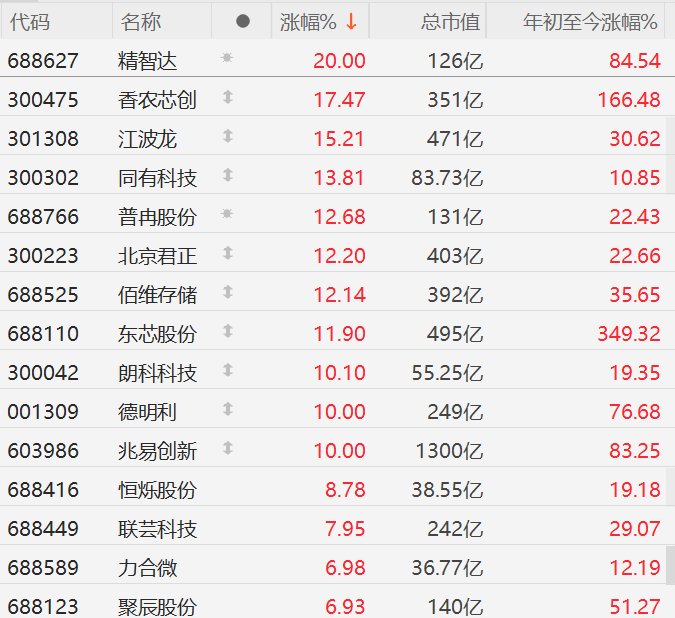
A股存储芯片板块拉升,精智达、兆易创新涨停
Ge Long Hui A P P· 2025-09-12 05:18
Group 1 - The storage chip sector in the A-share market experienced significant gains, with several companies reaching their daily limit up [1] - Notable performers included Jingzhida with a 20% increase, Shannong Xinchuan up over 17%, and Jiangbolong rising over 15% [1][2] - Other companies such as Tongyou Technology, Pulang Co., Beijing Junzheng, and Baiwei Storage also saw substantial increases, ranging from 10% to 13% [1][2] Group 2 - The total market capitalization of Jingzhida is 12.6 billion, with a year-to-date increase of 84.54% [2] - Shannong Xinchuan has a market cap of 35.1 billion and a year-to-date increase of 166.48% [2] - Jiangbolong's market cap stands at 47.1 billion, with a year-to-date increase of 30.62% [2]


力合微涨2.03%,成交额3516.94万元,主力资金净流出87.58万元
Xin Lang Cai Jing· 2025-09-11 03:23
Company Overview - Company name: Shenzhen Lihe Microelectronics Co., Ltd. - Established on August 12, 2002, and listed on July 22, 2020 - Main business involves the research and design of communication chips - Revenue composition: 94.84% from self-developed chips and core technologies, 4.85% from proprietary chips, 0.23% from other sources, and 0.08% from supporting products [2] Stock Performance - As of September 11, the stock price increased by 2.03% to 23.12 CNY per share - Year-to-date stock price increase of 2.43% - Recent performance: 5-day increase of 3.21%, 20-day decrease of 2.98%, and 60-day increase of 16.24% [1][2] Financial Performance - For the first half of 2025, the company reported revenue of 198 million CNY, a year-on-year decrease of 24.74% - Net profit attributable to shareholders was 24.85 million CNY, down 41.15% year-on-year [2] Shareholder Information - As of June 30, the number of shareholders was 11,100, a decrease of 5.22% from the previous period - Average circulating shares per person increased by 26.54% to 13,110 shares [2] Dividend Information - Cumulative cash distribution since A-share listing amounts to 131 million CNY - Over the past three years, cumulative cash distribution reached 96.43 million CNY [3]
力合微(688589) - 关于董事减持股份计划公告
2025-09-05 07:16
| 证券代码:688589 | 证券简称:力合微 | 公告编号:2025-051 | | --- | --- | --- | | 债券代码:118036 | 债券简称:力合转债 | | 深圳市力合微电子股份有限公司 关于董事减持股份计划公告 本公司董事会、全体董事及相关股东保证本公告内容不存在任何虚假记载、 误导性陈述或者重大遗漏,并对其内容的真实性、准确性和完整性依法承担法律 责任。 重要内容提示: 董事持有的基本情况 截至本公告披露之日,深圳市力合微电子股份有限公司(以下简称"力合微" 或"公司")董事冯震罡先生持有公司股份 3,448,128 股,占公司总股本比例为 2.37%。上述股份来源于冯震罡先生在公司首次公开发行前持有的股份(含上市 以来资本公积转增股本取得的股份),并已上市流通。 减持计划的主要内容 | | 董事、监事和高级管理人员 | √是 □否 | | --- | --- | --- | | | 其他:无 | | | 持股数量 | 3,448,128股 | | | 持股比例 | 2.37% | | | 当前持股股份来源 | IPO 前取得:3,448,128股 | | 上述减持主体无一致行 ...
力合微涨2.01%,成交额7154.26万元,主力资金净流入572.06万元
Xin Lang Cai Jing· 2025-09-05 06:21
Group 1 - The core viewpoint of the news highlights the recent stock performance and financial metrics of Lihua Microelectronics, indicating a mixed trend in its stock price and financial results [1][2]. - As of September 5, Lihua Micro's stock price increased by 2.01% to 22.85 CNY per share, with a total market capitalization of 3.32 billion CNY [1]. - The company experienced a net inflow of main funds amounting to 5.72 million CNY, with significant buying activity from large orders [1]. Group 2 - For the first half of 2025, Lihua Micro reported a revenue of 198 million CNY, reflecting a year-on-year decrease of 24.74%, and a net profit attributable to shareholders of 24.85 million CNY, down 41.15% year-on-year [2]. - The number of shareholders decreased by 5.22% to 11,100, while the average circulating shares per person increased by 26.54% to 13,110 shares [2]. - Since its A-share listing, Lihua Micro has distributed a total of 131 million CNY in dividends, with 96.43 million CNY distributed over the past three years [3].
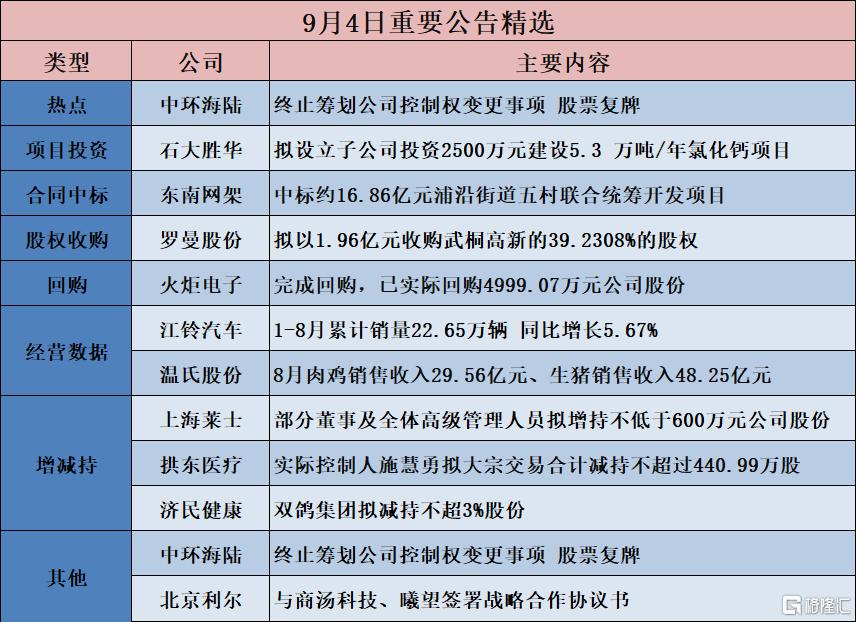
公告精选︱罗曼股份:拟以1.96亿元收购武桐高新的39.2308%的股权;中环海陆:终止筹划公司控制权变更事项 股票复牌


Ge Long Hui· 2025-09-04 23:42
Key Points - Zhonghuan Hailu terminated the planning of the change of company control and resumed trading [1][2] - Shida Shenghua plans to establish a subsidiary with an investment of 25 million yuan to build a 53,000 tons/year calcium chloride project [1] - Southeast Network Frame won a bid for approximately 1.686 billion yuan for the Pujiang Street Five Villages joint planning and development project [1] - Roman Co. intends to acquire 39.2308% equity of Wutong Gaoxin for 196 million yuan [1] - Torch Electronics completed a share repurchase, having repurchased shares worth 49.9907 million yuan [1] - Jiangling Motors reported cumulative sales of 226,500 vehicles from January to August, a year-on-year increase of 5.67% [1] - Wen's Co. reported August sales revenue of 2.956 billion yuan for broilers and 4.825 billion yuan for live pigs [2] - Some directors and senior management of Shanghai Caishi plan to increase their holdings by no less than 6 million yuan [1] - Actual controller of Gongdong Medical, Shi Huiyong, plans to reduce holdings by no more than 4.4099 million shares through block trading [1] - Shida Shenghua's subsidiary establishment and investment in the calcium chloride project indicates growth in the chemical industry [1]
力合微: 关于全资子公司变更注册资本、经营范围及法定代表人暨完成工商变更登记的公告
Zheng Quan Zhi Xing· 2025-09-04 16:18
Group 1 - The company Shenzhen Lihui Microelectronics Co., Ltd. has announced changes in its wholly-owned subsidiary, Shenzhen Lishun Communication Technology Co., Ltd., including an increase in registered capital from 5 million RMB to 10 million RMB [1] - The business scope of the subsidiary has been expanded to include integrated circuit chip design and services, manufacturing and sales of integrated circuit chips and products, as well as various technology services related to the Internet of Things (IoT) [1][2] - The changes were approved by the company's general manager and did not require board or shareholder meeting approval, with the new business license issued by the Shenzhen Market Supervision Administration [1][3] Group 2 - The new business scope includes manufacturing and sales of smart home consumer devices, electric power facility equipment, communication devices, photovoltaic equipment, and electric vehicle charging infrastructure [1][2] - The changes reflect the company's strategic focus on expanding its capabilities in the technology and IoT sectors, indicating a proactive approach to business development [1][3] - The legal representative of the subsidiary has also been updated as part of the changes [2]
力合微: 关于中标情况的自愿性披露公告
Zheng Quan Zhi Xing· 2025-09-04 16:18
Group 1 - The company has won a bid for the first batch of metering equipment framework tender project from Southern Power Grid Company, with a bid amount of RMB 51.0314 million [1] - The project represents approximately 9.30% of the company's audited operating revenue for the fiscal year 2024 [1] - The project is still in the candidate announcement stage and has not yet signed a formal contract with the tenderer, leading to uncertainties regarding its impact on the company's performance in 2025 [1][2] Group 2 - The major shareholders of the project counterpart include the State-owned Assets Supervision and Administration Commission holding 51.02%, Guangdong Hengjian Investment Holding Co., Ltd. holding 25.55%, China Life Insurance (Group) Company holding 21.30%, and Hainan Development Holdings Co., Ltd. holding 2.13% [1]